Hiboy Electric Scooter Review: Real Performance and Specs
This post contains affiliate links. As an Amazon Associate, we earn from qualifying purchases.
To decide if a Hiboy electric scooter is right for you, look at three things: the advertised range versus the real-world range, the ride quality of its solid tires, and how its warranty handles known issues like stem failure. The Hiboy S2 Pro, for example, claims a range that independent testing shows delivers closer to 12 miles for a 185 lb rider in Sport mode. Its solid tires mean zero flats but a harsh ride on rough pavement. Hiboy’s 30-day return policy is clear, but its battery warranty is only 6 months, and support for stem repairs has been inconsistent.
That 5-mile gap between the brochure and the road decides whether you’ll be happy or stranded. Most buyers focus on the top speed and the price tag, but the difference between a scooter that lasts a season and one that lasts years comes down to maintenance intervals, part availability, and how the company handles the failures its own user manuals warn about. This is a key consideration in any Hiboy electric scooter review.
What follows is a breakdown of the specs that matter, the real-world tests that contradict them, and the maintenance schedule you won’t find in the manual. By the end, you’ll know which Hiboy model, if any, fits your commute, your budget, and your tolerance for tightening a folding hinge every few weeks.
Key Takeaways
- The advertised range for the Hiboy S2 drops to around 12 real-world miles for a 185 lb rider using Sport mode on mixed terrain, according to independent testing.
- Solid tires eliminate punctures but transmit every bump; the S2 has no front suspension, making rough roads punishing.
- The folding hinge and stem are known weak points that require regular tightening; some older models experienced stem fractures, though Hiboy claims a 2022 reinforcement.
- Battery performance halves in temperatures below -4°F, and storing the battery above 104°F voids the warranty, per the S2 Pro manual.
- Hiboy’s battery warranty lasts only 6 months, a critical detail buried in the warranty page, while the scooter frame gets one year.
The Real-World Range: What a 185 lb Rider Actually Gets
Hiboy claims 17 miles for the S2. An independent reviewer at eScooterInsider put that to the test with a 185 lb rider, Sport mode, and mixed city terrain. The result was around 12 miles. That gap isn’t a fluke; it’s physics. Manufacturer tests use optimal conditions: a light rider, a smooth track, and steady speeds. Your commute has stoplights, hills, and wind.
The S2/S2 Pro manual states that when all 5 power lights are solid, the battery is between 80%-100%. When 4 lights are solid, it’s 60%-80%. This stepped indicator, not a percentage, makes precise range anxiety a guessing game mid-ride.
The battery itself is a 36V DC, 11.6 Ah unit. It takes 4-6 hours to charge with the included 42V DC, 2A charger. Where you store that battery matters more than most owners realize. The manual is explicit: leave it somewhere above 104°F (like a car in the sun) and you risk permanent damage not covered by warranty. Take it below freezing, and performance nosedives. At 32°F, it’s “poor.” Below -4°F, the riding range cuts in half.
This is simply the chemistry of the lithium-ion cells Hiboy uses, printed in their own safety instructions. If you live in a place with real winters, your scooter is a three-season vehicle at best. For a deeper look at how these specs play out across different models, check our detailed Hiboy electric scooter review and analysis.
Ride Quality and Comfort: The Solid Tire Trade-Off
You will feel every crack in the pavement. The standard Hiboy S2 and S2 Pro come with 8.5-inch solid rubber tires. The benefit is obvious: you’ll never get a flat. The cost is a ride that can be brutally stiff. There is no air to cushion impacts, and the S2 only has a basic rear suspension. The S2 Max and other models like the U2 Pro move to air-filled tires, which is a night-and-day difference for comfort.
The manual for the ECOM 14 model advises keeping your speed between 3.1-6.2 mph over speed bumps or uneven surfaces. That’s walking pace. It’s a tacit admission that the small, solid wheels and rigid frame aren’t made for rough terrain. You have to ride defensively, scanning the path ahead for potholes and seams that would be minor annoyances on a bike.
Where this goes sideways: Leaning hard into a turn on wet pavement with solid tires. The rubber doesn’t grip like a pneumatic tire can, and the back end can slide out. It happens fast, before the motor cut-off can react.
For commuting on pristine bike lanes or smooth campus paths, it’s fine. For cracked city streets, your wrists and knees will complain. If your route is rough, the step up to a model with air tires and better suspension is a necessity. Our guide on best Hiboy scooters, which complements a full Hiboy electric scooter review, breaks down which models make that jump.
Performance: Speed, Power, and Hill Climbing
The Hiboy S2/S2 Pro hits a max speed of 19 mph in Sport mode, and about 13 mph in Drive mode. It gets to that top speed in roughly 6–7 seconds, which is adequate for urban traffic but not thrilling. The ECOM 14 and VE1 Pro manuals rate their max slope at 15%.
| Model | Max Speed | Motor (Nominal / Max) | Max Slope |
|---|---|---|---|
| S2 / S2 Pro | 19 mph | 350W / 450W | Not Specified |
| ECOM 14 | 22 mph | 350W / 450W | 15% |
| VE1 Pro | 23 mph | 350W / 500W | 15% |
| U2 Pro | 25 mph | 750W / 810W | Not Specified |
The throttle on most Hiboy models requires a kick-start to 3 mph before it engages, a safety feature to prevent accidental launches. You can disable this “Zero Start” in the companion app, but I’d advise against it. That brief kick saves battery and prevents the scooter from jerking out of your hand if you brush the throttle while walking it.
Hill climbing exposes the limits of a budget commuter motor. On a 15% grade, speed will drop significantly. The scooter will make it up, but without the confident surge of a more powerful dual-motor scooter. For most city bridges and overpasses, it’s sufficient. For San Francisco-style hills, look at the more powerful Hiboy Max scooter or competitors in a higher class.
Build Quality and Common Failure Points
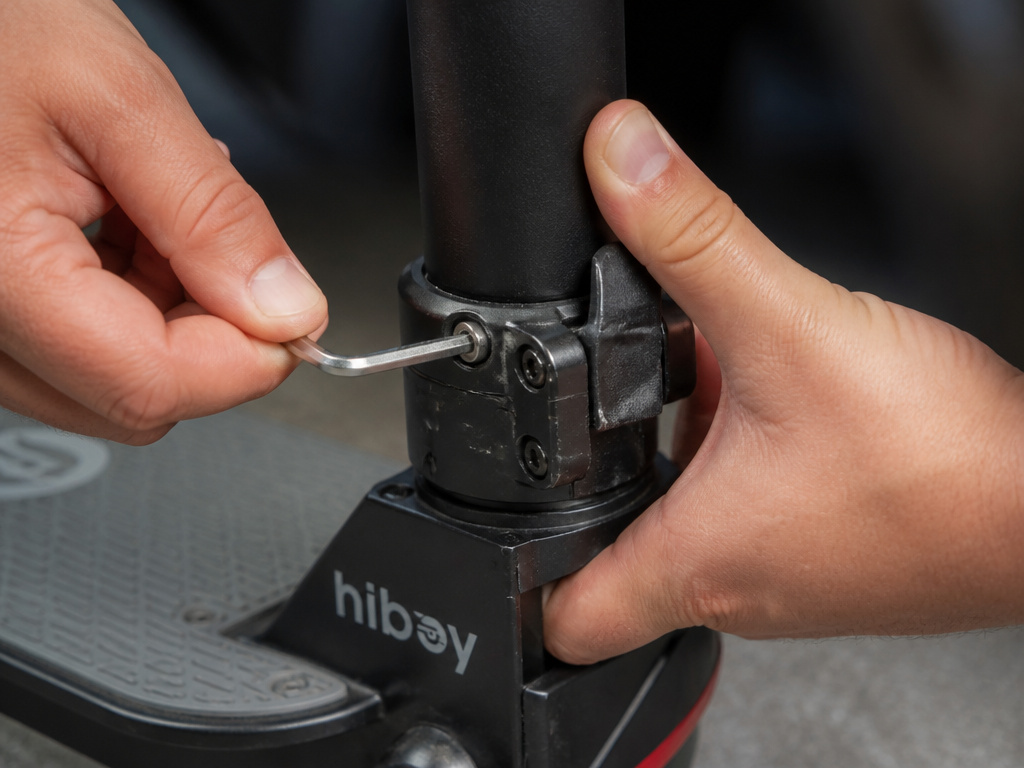
The deck and stem are aluminum. At first glance, it feels solid, a tool, not a toy. But long-term ownership reveals the weak links. The most notorious issue, documented across Reddit and owner forums, is stem cracking on older S2 models. The community analysis suggests Hiboy addressed this with reinforced aluminum in late 2022, but there was no formal recall.
The folding mechanism is the other high-wear item. The eScooterInsider review notes it plainly: “The folding hinge needs to be tightened every few weeks or the stem develops a wobble.” Hiboy includes the necessary Allen wrench. Using it is not optional; it’s part of the maintenance schedule. A loose hinge doesn’t just feel sloppy; it stresses the latch and can lead to failure.
Common mistake: Ignoring a new creak or click from the stem. That sound is the first data point of a problem. Tighten the hinge bolts and the stem clamp. If it persists, contact support, don’t wait for the wobble to become a hazard.
Hiboy’s own website hosts a surprisingly extensive repair instructions section, with videos for replacing dashboards, throttles, and even the folding mechanism. This is a double-edged sword. It’s great that parts and guidance exist, but the need for such a library hints at common points of failure. For a commuter vehicle, reliability is paramount. Needing to learn how to replace a controller cable is a big ask.
Portability, Weight, and Daily Use
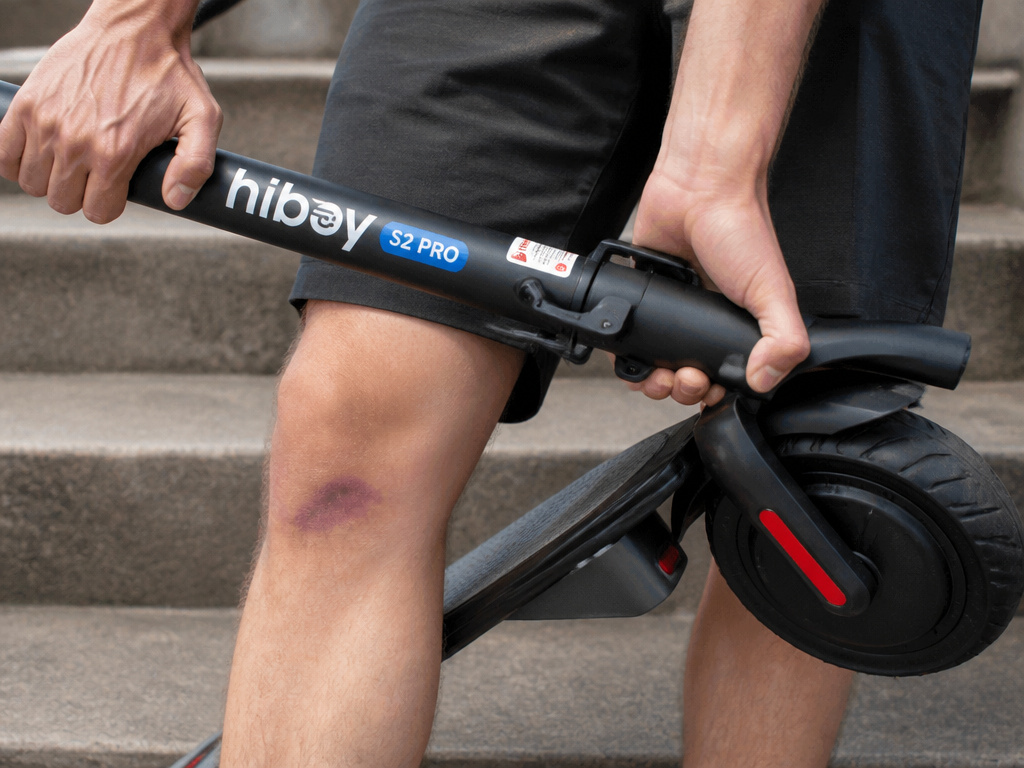
The Hiboy S2/S2 Pro weighs 17 kg (about 37.5 lbs). It folds down to a compact size, but that weight gets noticeable if you have to carry it up a flight of stairs or onto a bus regularly. The folding action itself is simple: release the lever, collapse the stem, and secure it with the hook. However, that hook can disengage if you don’t maintain upward pressure on the handlebars while carrying, letting the deck swing down, a quick way to bruise your shin.
The IPX4 water resistance rating means it can handle light splashes, but it’s not waterproof. The manuals for the ECOM 14 and VE1 Pro are unequivocal: “Do not ride in the rain.” Water can damage the electronics, motor, and battery, and water ingress voids the warranty. If you need a true all-weather commuter, this isn’t it.
For locking up, the frame has a built-in hook for a standard U-lock around the stem or deck. Because the scooter is a target for thieves, you need a strong lock. We’ve compiled tested recommendations in our guide to the best locks for Hiboy scooters.
Battery Care, Warranty, and Customer Service Realities

This is where reading the fine print pays off. Hiboy offers a 30-day return policy from the date of receipt, but the customer bears the return shipping cost if there’s no quality issue. The standard warranty is 1 year for the scooter, but only 6 months for the battery. This short battery warranty is a significant red flag for a critical, expensive component.
The manual’s storage advice is another point of contention. It instructs: “if the scooter is expected to be left idle for more than 30 days, please fully charge the battery… Keep in mind to recharge it every 60 days.” This contradicts widespread lithium-ion battery best practice from other OEMs and battery experts, which recommends storage at a partial state of charge (typically 40-60%) to minimize degradation, while Hiboy’s manual advises fully charging it. Following Hiboy’s advice could shorten your battery’s overall lifespan.
Customer service experiences are mixed. Some owners report proactive support, with Hiboy sending replacement parts or even whole scooters for issues like error codes. Others, especially those dealing with battery failures just outside the 6-month window, describe frustrating back-and-forth exchanges. The takeaway is to document everything, emails, videos of the fault, your initial purchase receipt.
Hiboy Scooter Models Compared: S2, S2 Pro, Max, and U2 Pro
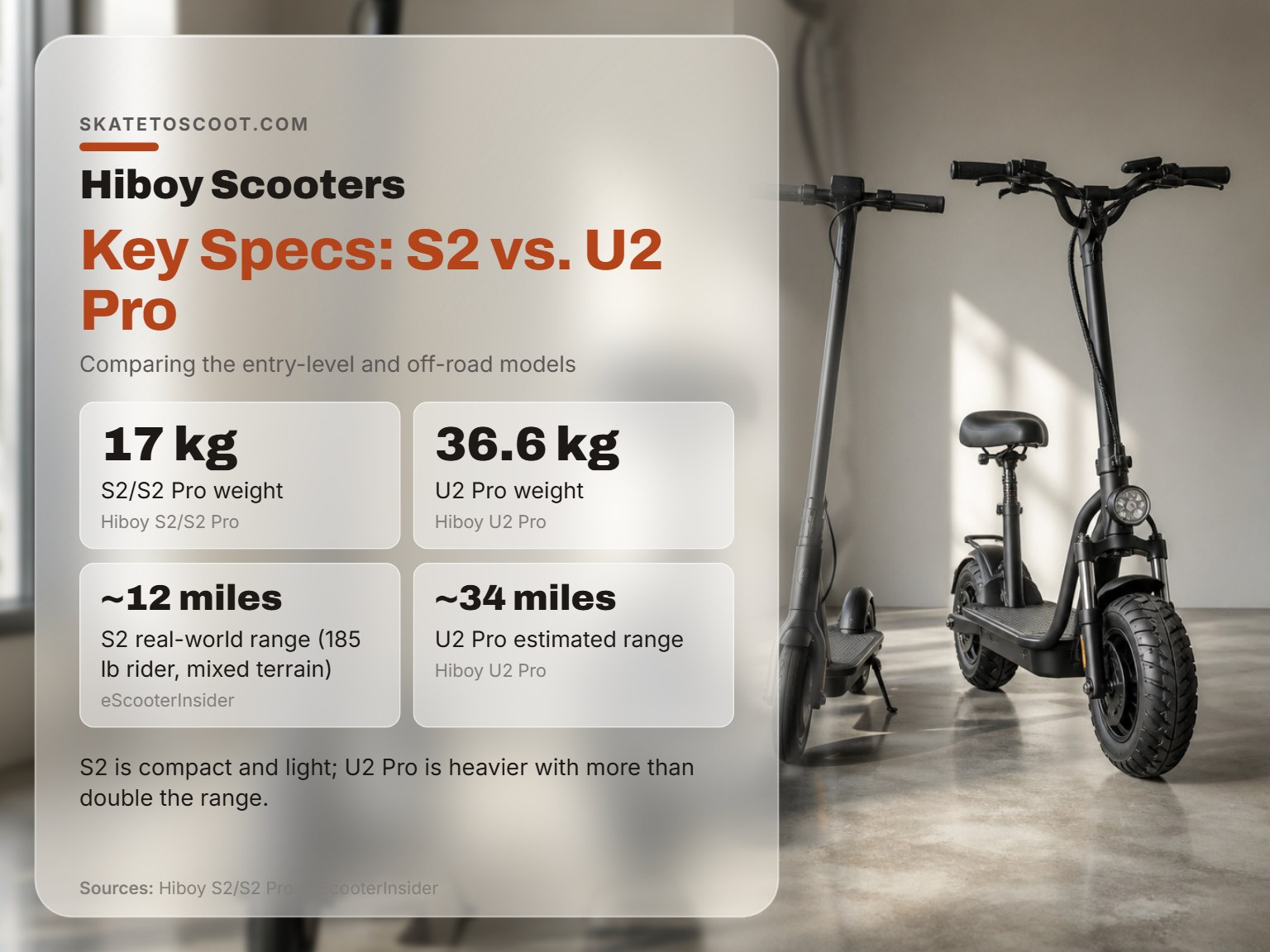
With so many model names, choosing is confusing. Here’s a quick breakdown of key differences to navigate the lineup.
| Model | Key Differentiator | Best For | Biggest Compromise |
|---|---|---|---|
| S2 / S2 Pro | Budget price, solid tires, compact. | Smooth, short commutes; first-time buyers. | Harsh ride, real-world range ~12 miles. |
| S2 Max / Max Pro | 10-inch air-filled tires, longer range. | Riders on rougher pavement needing more comfort. | Heavier, more expensive than S2. |
| U2 Pro | 16″ fat tires, seat, 750W motor, bike-like. | Off-pavement use, comfort-focused riders. | Heavy (36.6 kg), long charge time (6.5-7.5 hrs). |
| ECOM 14 / VE1 Pro | Larger frame, integrated lighting, 16″ tires. | Taller riders, those wanting a more substantial feel. | Less portable, not for carrying. |
The Hiboy S2 is the entry point. The S2 Pro is a variant of the same model. Your choice hinges on terrain, distance, and how much you value a plush ride. For a side-by-side evaluation, see our comparing Hiboy scooters article.
How effective are the brakes?
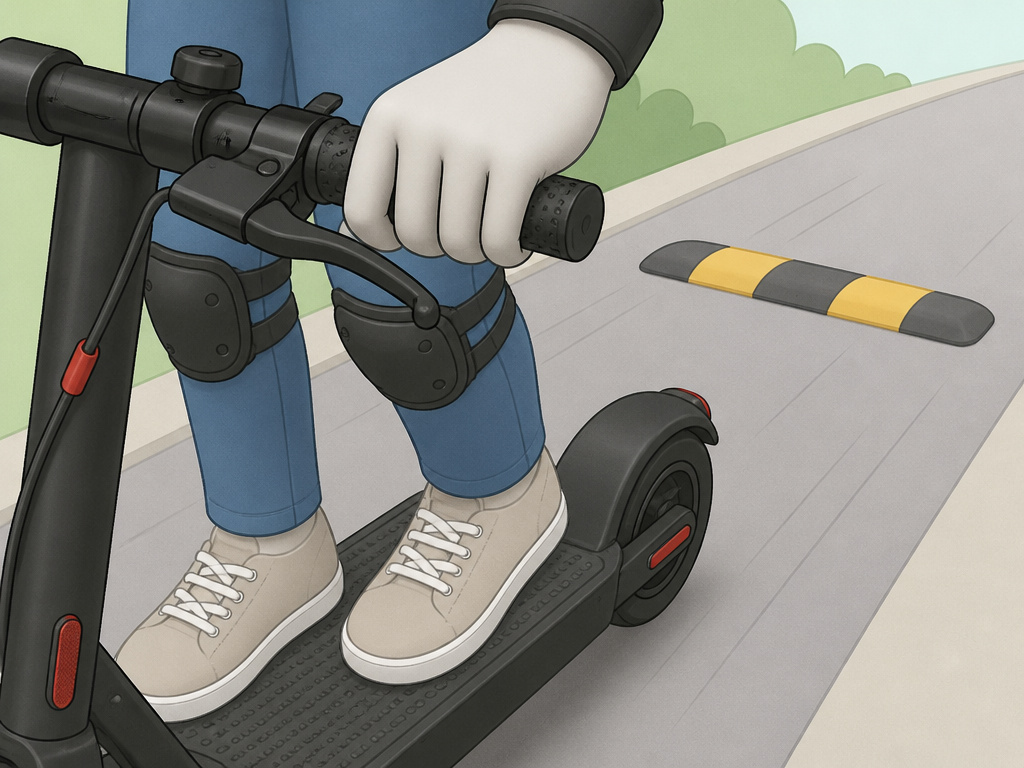
The fact sheet doesn’t detail specific braking hardware, so you’ll need to rely on general riding technique for safety. The manuals provide clear guidance: never accelerate when going downhill, as this can overwhelm any braking system. For navigating obstacles like speed bumps or uneven pavement, they advise keeping your speed low. Always keep both feet firmly on the deck for stability, especially when slowing down. Before each ride, perform a quick check of your scooter’s mechanical components to ensure everything is secure and functioning properly.
What safety features like lights and reflectors are included?
The fact sheet provides no specific details on lighting or reflector systems for Hiboy scooters. In the absence of manufacturer specs, you must assume primary responsibility for your visibility. This means using additional, personal safety gear for any riding in low-light conditions. Consider equipping yourself with a high-visibility vest, independent bike lights for the front and rear, and reflective accessories. Always check your local laws, as many jurisdictions have specific requirements for electric scooter lighting after dark to ensure you are seen by other road users.
Frequently Asked Questions
Are Hiboy electric scooters any good?
For a specific use case, yes. The Hiboy S2 Pro is good for a lightweight commuter with smooth, short routes who values low maintenance (solid tires) over comfort. Its real-world range is less than advertised, and the build requires vigilant tightening. It’s a budget tool that works if you understand and accept its limitations.
Which is better, Segway or Hiboy?
Segway (Ninebot) models like the G30 Max generally have a reputation for better build quality, more accurate range estimates, and better water resistance. They also cost more. Hiboy undercuts on price. If reliability is your top priority and budget is flexible, Segway often wins. If you’re on a strict budget and are willing to perform basic maintenance, Hiboy can be a value pick.
How long do Hiboy scooters last?
There’s no single answer. With proper care, regular tightening, proper battery storage, avoiding rain and extreme temperatures, a Hiboy scooter can last several years. The battery, however, is a consumable item with a 6-month warranty and will likely be the first major component to need replacement after 1-3 years depending on use.
Is Hiboy a trusted brand?
Hiboy is a legitimate brand that sells scooters primarily online. “Trusted” is subjective. They provide official manuals and repair guides, which many cheap brands don’t. However, their short battery warranty and mixed customer service reviews mean you shouldn’t expect premium, hassle-free support. You are trusting a value-oriented brand, which carries inherent risk.
Can you replace Hiboy scooter tires?
Yes, but it’s a project. Solid tires on the S2 require cutting the old tire off and wrestling the new one on, often using heat or lubricant. Air tires on Max models are easier but still require tools and mechanical confidence. Hiboy sells replacement parts, and their repair site has guides. For many owners, this is a job for a bike shop or a very handy friend.
The Bottom Line
The Hiboy S2 Pro is the Honda Civic of electric scooters: affordable, reliable for its class, and utterly unglamorous. It gets you from A to B on smooth ground without fuss or flat tires. But you trade comfort for that simplicity, and you must become its part-time mechanic, tightening bolts and babying the battery.
Here’s the one rule that decides it: If your daily round-trip is under 10 miles on well-paved paths, and you can store the scooter indoors away from temperature extremes, the Hiboy S2 Pro is a justifiable budget buy. If your commute is longer, rougher, or involves any hills or weather, the extra investment in a model with air tires or a brand with a longer battery warranty is a necessity.
Before you buy any model, read the manual first. The limits printed there, the 6-month battery warranty, the temperature restrictions, the “do not ride in the rain” warning, are the real specs. The scooter you get is the one described in those warnings, not the one in the marketing bulletins. For a broader view of how Hiboy stacks up against other options, explore our curated list of best electric scooters.
