How Does Lime Scooter Work: The Step-by-Step User Flow
This post contains affiliate links. As an Amazon Associate, we earn from qualifying purchases.
To use a Lime scooter, you download the Lime app, find a scooter on the map, scan its QR code to start, kick-start to engage the motor, and use the thumb throttle to ride. You pay an initial start fee plus a per-minute rate, and must end the ride in the app within a designated parking zone. The system relies on smartphone GPS, a network of contracted chargers (“Juicers”), and city permits to operate.
That direct answer covers the basic user flow, but the real experience, and cost, hinges on details most first-timers miss. The price on your screen isn’t just time and distance; it’s a product of the scooter’s generation, the city’s traffic laws, and whether you bought a pass minutes before you tapped to start. A common first question is: how does Lime scooter work?
This guide walks through the mechanics, the money, and the mistakes. You’ll see the exact specs of the scooter you’re riding, understand why a 15-minute ride can cost $12 or $4, and learn how to handle the error codes that pop up mid-ride, which is part of the full answer to how does lime scooter work.
Key Takeaways
- You need the Lime app, a payment method on file, and a smartphone with a good mobile internet connection to start and end the scooter.
- Pricing is $1 to start plus $0.55 per minute in many cities; buying a Lime Pass (e.g., 60 minutes for $15) before you ride cuts the per-minute cost by over half.
- Always inspect the scooter before riding, check the brakes, tires, and for any error codes on the display. A code other than “02E” means do not ride the scooter and you should contact Lime support.
- Park in a designated bike rack or legal street parking spot; never leave the scooter blocking a sidewalk, path, or driveway.
- For safety, wear a helmet, ride in bike lanes when available, and follow all local traffic laws. Lime’s policy prohibits riding under the influence and allows only one rider per vehicle.
The Step-by-Step User Flow (From App to Ride)
The process isn’t magic, but it is a specific sequence that defines how does lime scooter work. Skip a step, and you’ll either waste money or get stranded.
Step 1: Set Up the App and Account. Download the Lime app from your phone’s app store. You’ll need to create an account with a valid email address and add a payment method, usually a credit or debit card. This is required; the scooter won’t start without it.
Step 2: Find and Reserve a Scooter. Open the app. The map shows available scooters as icons. Tap one to see its battery level. Some cities allow you to reserve a scooter for a fee, holding it for a short time while you walk to it. If you don’t reserve, anyone can take it.
Step 3: Start the Scooter. Walk to the scooter. Open the app and tap “Scan to Ride.” Use your phone’s camera to scan the QR code on the handlebar. You’ll hear a click as the electronic lock in the front wheel disengages. A green light on the display confirms it’s ready. Your ride timer and charges start now.
The part nobody mentions: Your phone needs a strong mobile data signal at this exact moment. A spotty connection can cause the app to hang, the scan to fail, or the unlock to time out, all while the clock might be running. Find your scooter in a place with clear service.
Step 4: Start Riding. Put your front foot on the deck. Use your back foot to push off the ground 2-3 times, this “kick-start” is required to activate the 300-watt motor on most models. Once rolling, press the thumb throttle on the right handlebar to accelerate. The Lime Gen 2.5 e-scooter has a top speed of 15 mph. Use the hand brake lever on the left to slow down; it engages both an electronic front brake and a mechanical drum brake on the rear wheel.
Step 5: End the Ride and Park. When you arrive, slow to a stop. Open the app and tap “End Ride.” You must properly park the scooter, and the app may require you to confirm your parking location. Park it upright in a designated bike rack or legal parking spot, never on a sidewalk where it blocks pedestrians or wheelchair users. The front wheel will lock, but the scooter remains powered on, so you should ensure the ride is ended in the app.
Breaking Down the Costs: Lime Pass vs. Pay-As-You-Go
Most sticker shock comes from not understanding the two-tier pricing. Pay-as-you-go is simple but expensive for anything longer than a quick dash. The Lime Pass is how regular riders save money, but you have to plan ahead.
An example rate shown in the app is $1 to start, then $0.55 per minute. Here is what that actually means for a real trip.
| Ride Duration | Pay-As-You-Go Cost | With Lime Pass (60 min for $15) | Best For |
|---|---|---|---|
| 5-minute dash | ~$3.75 | ~$1.25 (prorated from pass) | Last-mile commutes |
| 15-minute commute | ~$9.25 | ~$3.75 | Regular trips under 3 miles |
| 1-hour exploration | ~$34.00 | $15.00 (flat) | Tourists or longer leisure rides |
The math is brutal for long rides on standard rates. A 60-minute ride costs more than some car-share rentals. That’s why the Lime Pass exists. You pre-purchase a block of minutes, Some promotional offers have included 60 minutes of riding time that expires 3 days after purchase for $15 or $8 for 30 minutes. You activate the pass before you start a scooter, and the timer deducts from your bank only while you’re riding.
Common mistake: Buying a Lime Pass after you’ve started a ride. The pass only applies to rides started after purchase. If you’re 10 minutes into a $0.55/min ride and buy a pass, you’re still paying the higher rate for that current trip.
The start screen in the app spells it out: “$1 to start, then $0.55/min & fees”. Ignoring that line is how people end up with a $50 charge for a leisurely park tour. The pass is in the app under your profile icon. It’s the first thing you should check if you plan to ride for more than 10 minutes.
The Machines: From Gen 2.5 to Gen4
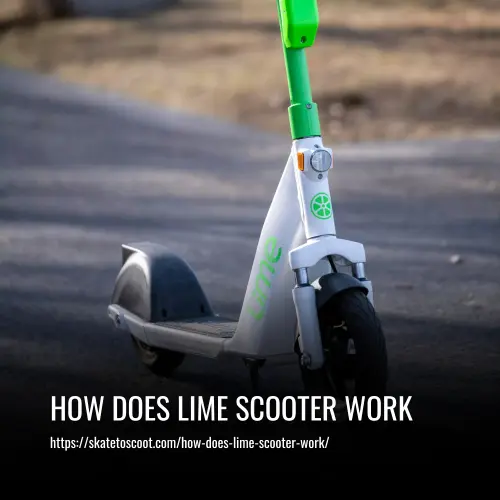
You’re not renting a generic scooter. You’re riding a specific model with known specs, and the generation affects your ride quality and safety. The most common model you’ll encounter in many cities is the Lime Gen 2.5.
| Specification | Lime Gen 2.5 | Notes / Implications |
|---|---|---|
| Weight | 37.48 lb / 17 kg | Light enough to carry up a few stairs if needed. |
| Max Load | 220 lb / 100 kg | Firm limit; exceeding it risks motor strain and brake failure. |
| Top Speed | 15 mph / 24 kmh | Electronically governed; you cannot go faster. |
| Motor | 300W front wheel | Requires a kick-start to engage; won’t power from a standstill. |
| Brakes | Front electronic, rear drum | Squeeze left lever gently to avoid sudden front-wheel lock. |
| Battery | 9.6Ah, 42V | Takes up to 6 hours for a full charge from empty. |
This model had a known history. Older Gen 2 scooters (not the 2.5) had a front-wheel brake issue in late 2018 that could cause sudden stops. Lime issued a remote software update on February 19, 2019, to fix it. The company’s data showed it affected 0.0045% of Lime rides, but it underscored why inspecting brakes before you ride isn’t paranoid, it’s necessary.
Newer cities are getting the Gen4 scooter. Newer cities are getting the Gen4 scooter, which Lime states has improved features. It often has a more robust frame and improved suspension. When you start a scooter, the app doesn’t usually shout its generation, but a heavier, more solid-feeling ride with a larger deck is likely a Gen4.
Safety, Rules, and Etiquette (The Unwritten Manual)
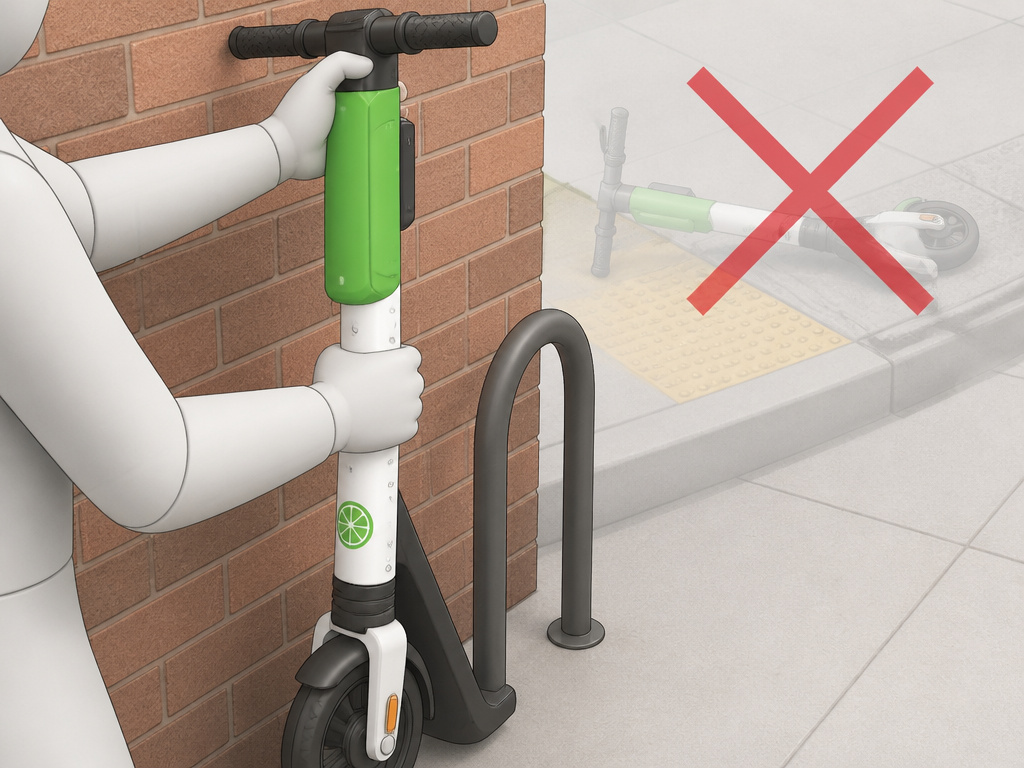
Lime’s official safety guidelines are in the app’s Safety Center. They’re straightforward: wear a helmet, don’t ride under the influence, one person per scooter. But the real-world rules, the ones that keep you safe and keep pedestrians from hating you, are more nuanced.
Where Should You Ride? The law, and common sense, say bike lanes first. Sources like local rider guides suggest if no bike lane is present, scooters should ideally use the street, but riders must follow all local traffic laws which may vary. Anecdotal rider etiquette suggests if you must ride on the sidewalk, be courteous and careful, and a suggested speed limit is 6 mph or under. Blazing past someone at 15 mph on a sidewalk is a way to cause a crash and a lawsuit.
How Should You Park? The end-of-ride photo requirement is there for a reason. Park the scooter vertically, out of the flow of foot traffic. Ideal spots are next to a bike rack, against a building wall, or in a designated corral. Never leave it lying down, blocking a curb ramp, or in the middle of a path. A scooter abandoned across a sidewalk isn’t just annoying; it’s a real barrier for wheelchair users.
Before you start: The scooter’s battery and electronics are not waterproof. Never submerge it or ride through deep puddles. Store and charge it only in dry areas, and never charge at temperatures below 32°F (0°C), the battery can be damaged.
Your safety is your responsibility. A 2019 national study estimated ER visits for scooter injuries jumped from 4,881 in 2014 to 29,628 in 2019. Nearly half of those visits happened between 4 pm and midnight, with more injuries on weekends. The study strongly recommended universal helmet use for scooter riders. Lime says it in the manual; the data screams it.
Common Problems and How to Fix Them
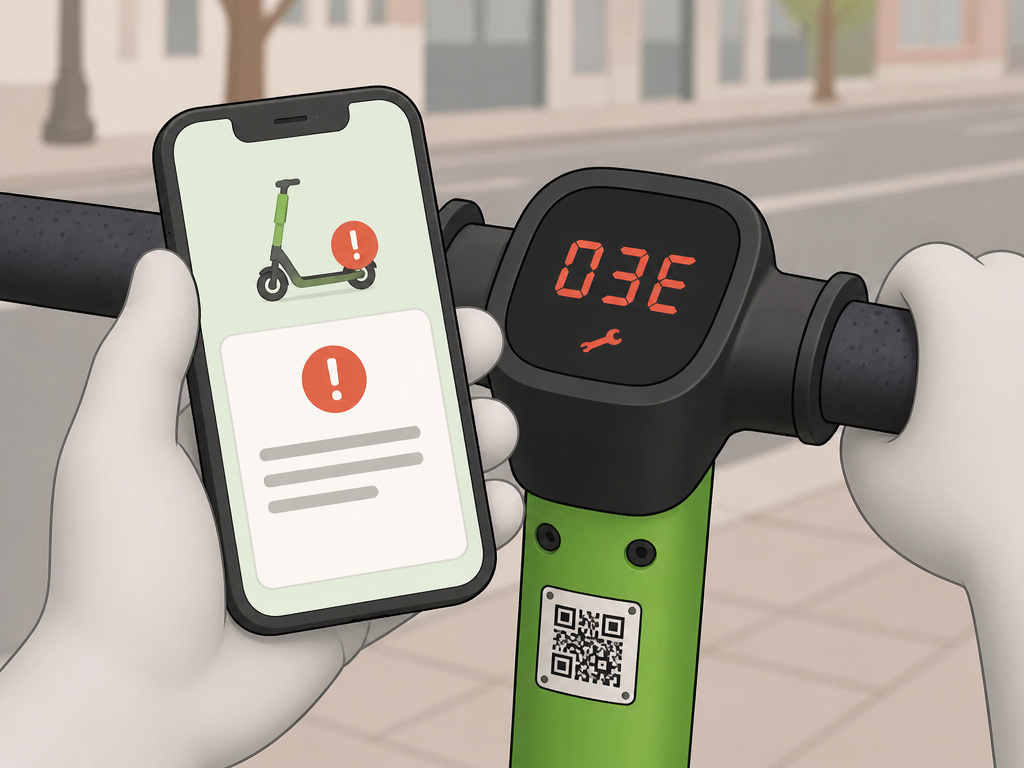
Things go wrong. The app glitches, the scooter beeps, the ride ends early. Here’s what’s happening and what to do, straight from the Gen 2.5 owner’s manual.
The scooter won’t start. First, check your phone’s data connection. Starting the scooter requires a live data handshake. If the signal is weak, move to a better spot. Second, ensure your payment method is valid. An expired card will stop the scooter from starting. Third, make sure you’re scanning the correct QR code on the scooter you selected in the app.
An error code appears on the display. The LCD screen shows a two-digit code. This is your diagnostic tool.
- 02E: This just means a low battery. End your ride, and the next user won’t be able to take it. You don’t need support.
- Any other code (01E, 03E, 04E, etc.): The manual is explicit: do not ride the scooter. Slow to a stop in a safe location, end your ride in the app, and contact Lime support. These codes indicate a motor, controller, or sensor fault.
The ride ends unexpectedly. If your ride ends unexpectedly, pull over safely and check the app to see if your ride has ended. Pull over safely. Open the app, it may show your ride as ended. If you’re charged for an incomplete trip, you can contact Lime support.
How Lime Works Behind the Scenes: Charging and Logistics
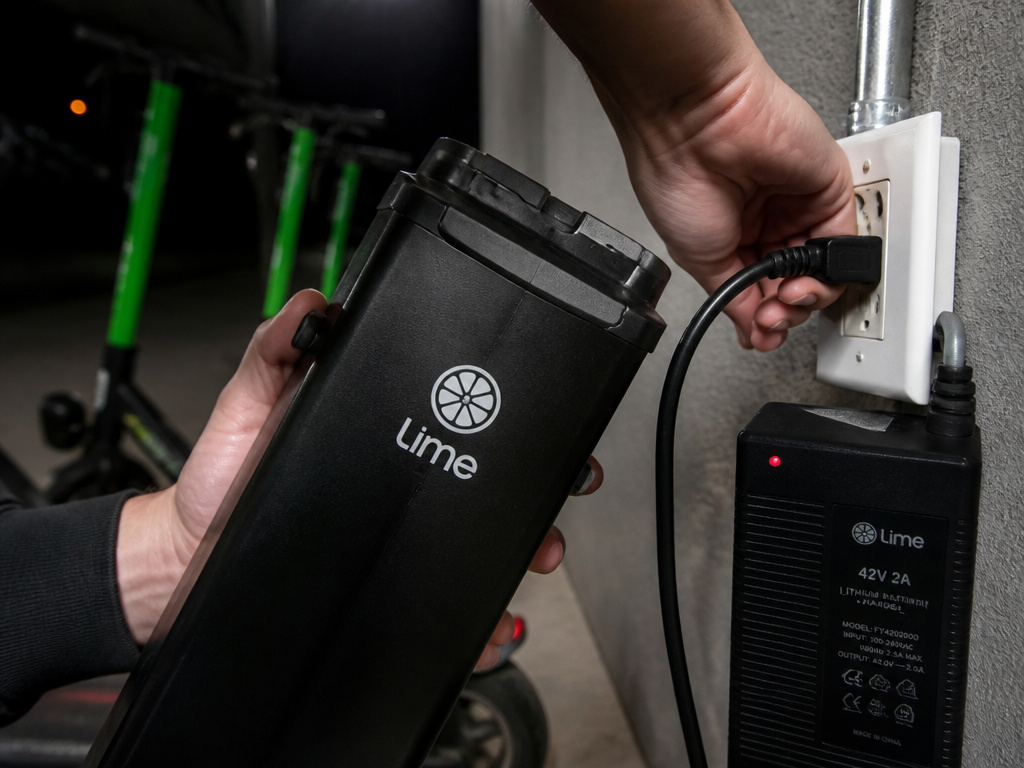
You find a scooter, ride it, and leave it. Someone else finds it later with a charged battery. That doesn’t happen by accident. Lime uses a network of independent contractors called Juicers (or Logistics Partners) to manage its fleet.
Juicers use the Lime app to locate scooters with low batteries, collect them, and charge them. They collect them in their cars or vans, take them home, and plug them into the official chargers. A fully dead Gen 2.5 battery takes up to 6 hours to charge with its 42V, 2A charger. In the morning, they redeploy the scooters to high-demand “LimeHub” locations around the city. Lime pays Juicers for charging and redistributing scooters. This system is why you might see clusters of scooters appear on street corners early in the morning, they were just dropped off.
It’s a reminder that these are complex lithium-ion devices, not toys.
What is Lime’s mission and company overview?
Lime operates a shared fleet of electric scooters, electric bikes, and electric mopeds in cities around the world. The company provides these vehicles as an alternative to car trips for short distances. Their service is designed to be accessed through a smartphone app, allowing users to find, start, and pay for rides. Lime’s goal is to offer convenient, on-demand transportation options in urban areas. Lime operates in more than 200 cities in nearly 30 countries.
Frequently Asked Questions
How much is Lime for 20 minutes?
At the standard rate of $1 start + $0.55/min, a 20-minute ride costs $12.00 ($1 + $11.00). If you have an active Lime Pass (e.g., 60 min for $15), that same 20 minutes uses a third of your pass, costing roughly $5.00.
Do you just leave Lime scooters anywhere?
No. You must park them legally. The app requires a photo of your parking job. Acceptable spots include bike racks, designated scooter parking zones, and legal street parking next to the curb where they don’t obstruct traffic or pedestrians. Leaving them blocking sidewalks, ramps, or building entrances can result in a fine from Lime.
What happens if I don’t end the ride in the app?
The timer keeps running, and you keep getting charged. Even if you walk away and the scooter is stationary, if it’s active, you’re paying. Also, if the scooter gets stolen while active under your account, you could be held liable. Always tap “End Ride.”
Can I ride a Lime scooter in the rain?
Technically, yes, but exercise extreme caution. The tires have limited traction on wet pavement, and brakes take longer to stop. Avoid painted road lines, metal surfaces, and deep puddles. Never submerge any part of the scooter.
Do I need a license to ride a Lime scooter?
In most cities, no driver’s license is required for electric scooters with speeds under 20 mph. However, you must be at least 18 years old and have a valid Lime account. Always check your local city regulations, as some areas have specific rider age requirements or helmet laws.
Before You Go
The biggest lever you control is cost. If you’re riding for more than 10 minutes, buy a Lime Pass first, it flips the economics from “expensive convenience” to “legitimate transit.” The second is inspection. The five seconds you spend checking the tire pressure and squeezing the brake lever before you unlock can be the difference between a smooth commute and a nasty spill.
Remember, you’re riding a machine with a history and a spec sheet. That 15 mph top speed is a limit, not a target, especially on crowded paths. The system works because of a mix of software, hardware, and people charging scooters overnight. Your ride is just one link in that chain. Park it right for the next person.
