Where Is the Reset Button ON Electric Scooter?
This post contains affiliate links. As an Amazon Associate, we earn from qualifying purchases.
The reset ‘button’ on an electric scooter is almost never a single, dedicated button. It’s a specific sequence of pressing existing controls, brake lever, power button, and sometimes the throttle, in a precise order and count defined by your scooter’s manufacturer.
Sources disagree on reset procedures: while many modern scooters use a button sequence, some models may have a dedicated physical reset button, which leads to the common question, ‘Where is the reset button on electric scooter?’ You’re hunting for a sequence, not a location.
What follows is the map. This guide explains the three types of resets, the exact button combinations for major brands like Segway and Xiaomi, and the one critical safety step you must do first. By the end, you’ll know whether your scooter even has a physical reset sequence or if your problem needs a different fix entirely.
Key Takeaways
- There is no standard reset button location. You’re looking for a manufacturer-defined button sequence using the brake, power, and throttle.
- Always disconnect the battery before any electrical reset. A loose battery connection is the most common cause of a non-starting scooter and the easiest to fix.
- A soft reset (power cycle) fixes glitches; a hard reset (button sequence) clears deeper errors; a factory reset via an app wipes all settings.
- Segway F3/F3 Pro uses: Brake lever 5 times, then power button once. Xiaomi 4 Pro uses: Accelerator and power button pressed together 5 times.
- If a reset doesn’t work, check the fuse or circuit breaker and the wiring harness before assuming a major controller failure.
The Universal Truth: There Is No Universal Button
Sources disagree on reset procedures: while many modern scooters use a button sequence, some models may have a dedicated physical reset button. On a modern electric scooter, the “reset” is a software command triggered by a hardware sequence.
The reset function is a diagnostic and recovery tool embedded in the scooter’s controller firmware. Manufacturers assign a unique ‘key’, a specific pattern of button presses, to trigger it without adding extra hardware. This is why a Segway sequence (brake 5x, then power) is completely different from a Xiaomi sequence (throttle + power 5x simultaneously).
This matters because pressing the wrong buttons won’t hurt anything, but it won’t help either when you’re trying to solve the ‘where is the reset button on electric scooter’ puzzle. You’ll just sit there wondering why the “reset button” isn’t working. Your first step isn’t finding a button; it’s finding your scooter’s manual.
What You’re Actually Looking For
You need to identify the controls involved in your scooter’s sequence. They are always existing buttons:
- The Power Button: This is almost always involved.
- The Brake Lever: Its electronic signal is often used as one part of the sequence.
- The Throttle/Accelerator: On some models, you press this instead of the brake.
- The Mode or Light Button: Less common, but sometimes part of longer sequences.
The sequence will be a specific count (like 5 times) and order (simultaneous or sequential). The scooter usually needs to be powered on, but not moving, to enter the reset mode.
Safety First: The Non-Negotiables
You’re about to send a command directly to your scooter’s brain. Do not skip these steps.
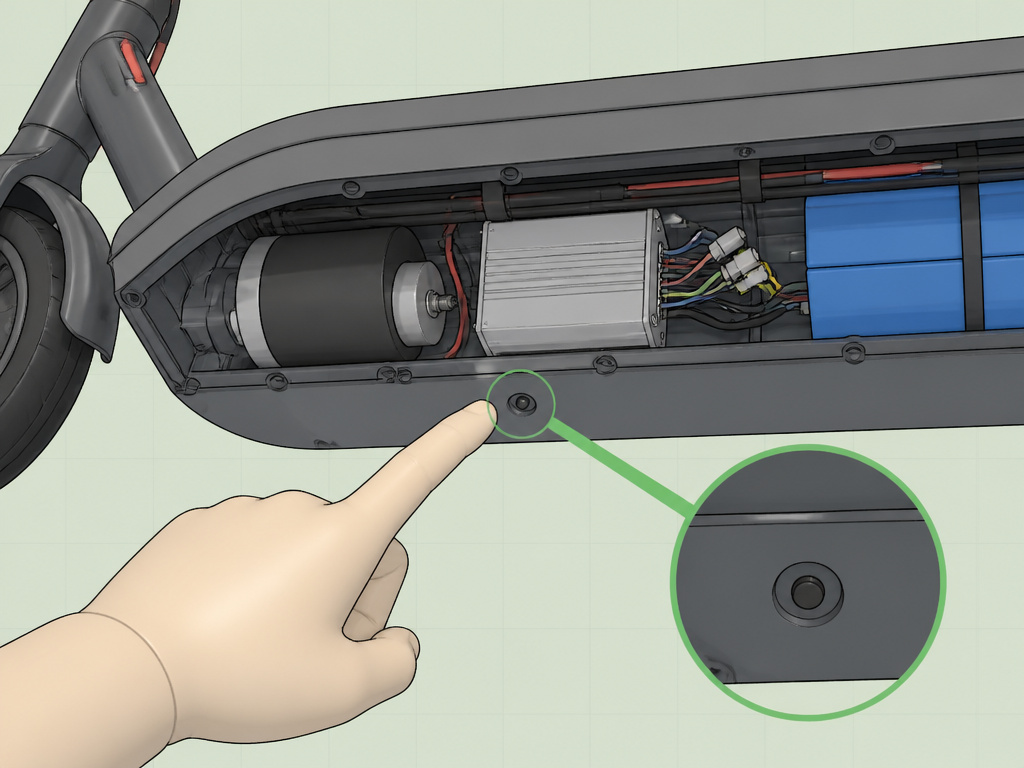
Before you start: Ensure the scooter is on a level, stable surface with the kickstand down. Turn the scooter OFF. If possible, disconnect the battery by unplugging its main connector (usually under the deck). This eliminates any risk of the scooter accidentally powering on or moving during the reset.
Do not ride the scooter with only one foot or one hand. This isn’t just a riding tip; it’s crucial for reset stability. If you need to hold the brake and press the power button, you need both hands free and your weight off the deck. Similarly, do not use a mobile phone or wear earphones when performing the reset. You need to hear confirmation beeps and see display changes.
The most common “reset” fix isn’t a reset at all, it’s re-seating a loose battery connection. Before you touch any buttons, open the battery compartment and firmly reconnect the main plug. I’ve seen a dozen scooters declared “dead” that woke up after a 10-second reconnect.
The Three Types of Resets (And When to Use Each)
Not all resets are equal. Using the wrong one is like restarting your computer when you only needed to refresh a browser tab.
| Reset Type | What It Does | When To Use It | Common Method |
|---|---|---|---|
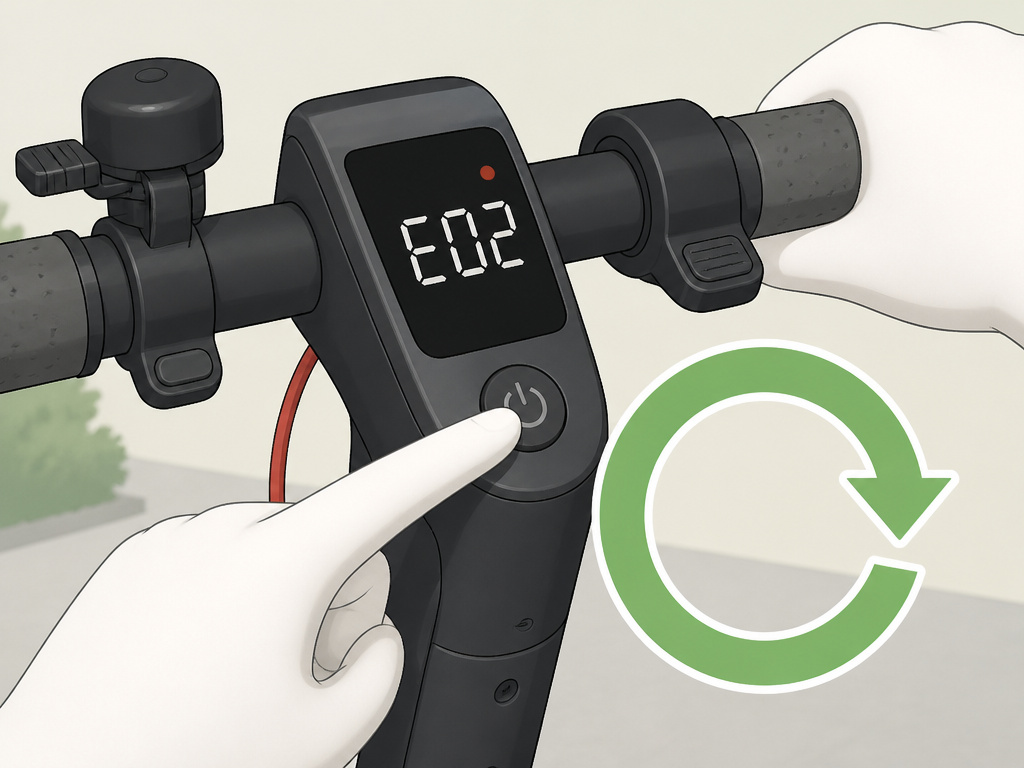
| Soft Reset | Clears the scooter’s temporary memory (RAM). Fixes minor glitches like a frozen display or unresponsive buttons. | Screen is on but frozen. Buttons don’t respond. Scooter acts “buggy” but powers on. | Power off, wait 60 seconds, power on. |
| Hard Reset | Triggers a controller reboot using a button sequence. Clears error codes and can resolve communication issues between components. | Scooter shows an error code (E1, E2, etc.). Throttle or brake sensor isn’t working. Scooter won’t accelerate properly. | Brand-specific button sequence (e.g., brake + power). |
| Factory Reset | Restores all settings to defaults via the manufacturer’s app. Erases paired phone, custom modes, and trip data. | Selling the scooter. Experiencing severe, persistent issues after all other troubleshooting. App connectivity problems. | Through the companion app (e.g., Segway Mobility App). |
A soft reset is your first step. Always. If your scooter turns on but behaves oddly, power it down completely, wait, and turn it back on.
A hard reset is for persistent, specific failures. Think of it as the scooter’s version of booting into safe mode. It’s the process we’re detailing with button sequences.
Save the factory reset for last. It’s the nuclear option. You’ll lose all your preferences and have to re-pair everything.
Common Brand Reset Sequences
Here are the exact, documented procedures for popular scooter models. These come from official manuals and support pages.
Segway/Ninebot F Series (F3, F3 Pro)
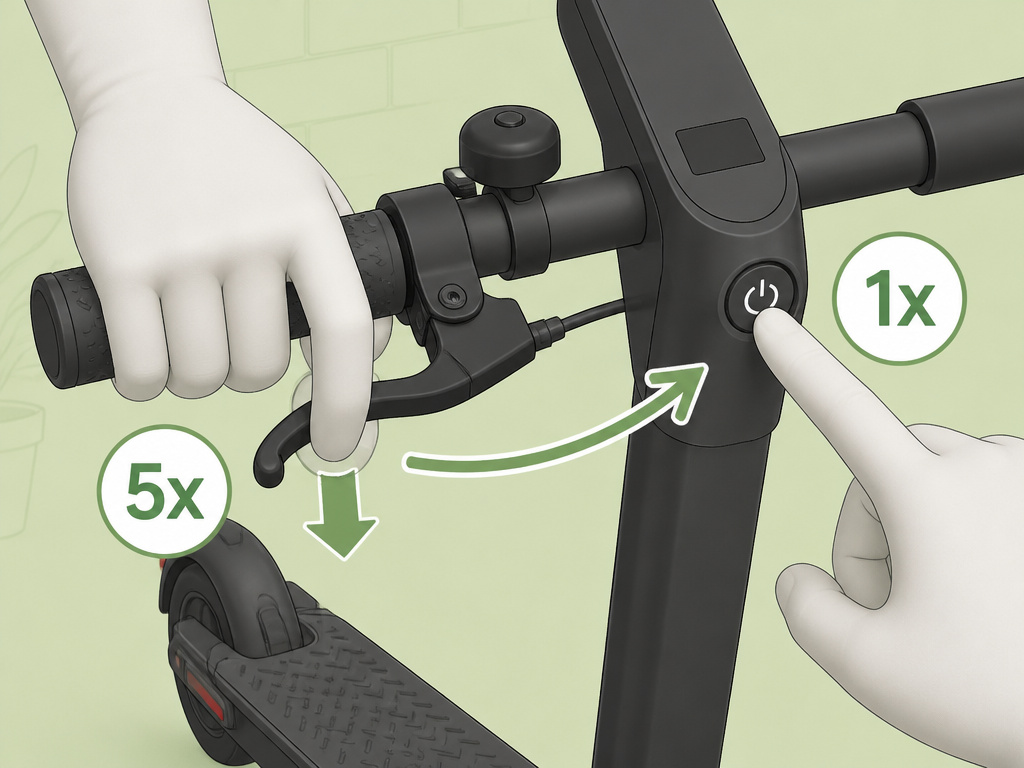
For the Segway F3 and F3 Pro, there are two reset methods. The physical reset sequence (brake lever 5 times, then power button once) is the general reset; a specific method is for disassociating the scooter from Apple’s Find My network.
Physical Reset Sequence (Method B):
- Make sure the scooter is powered ON and ready to use.
- Squeeze the brake lever 5 times in succession.
- Immediately after the 5th squeeze, press the power button once.
- The scooter will reboot. You must then manually remove the device from the Find My app on your iPhone.
Why the specific sequence? The controller is listening for a specific digital signature: five brake-actuation signals followed by a power-button interrupt. It’s a security feature to prevent accidental resets.
Xiaomi and NAVEE Scooters
Xiaomi uses a different logic, often involving the throttle. For the Xiaomi Scooter 4 Pro (2nd generation), the process is simultaneous.
Xiaomi 4 Pro Reset:
- With the scooter powered ON.
- Press and hold the accelerator (throttle).
- While holding the throttle, press the power button 5 times.
- Listen for a confirmation beep.
The NAVEE V40, which uses similar software, has its own twist: press the brake lever and power button simultaneously 5 times.
The lack of a standard here is why generic advice fails on the ‘where is the reset button on electric scooter’ question. One brand uses brake, another uses throttle.
GoCycle Controller Reset
GoCycle takes a more hardware-oriented approach. Their reset involves physically disconnecting the controller.
GoCycle Controller Reboot:
- Turn the scooter OFF.
- Locate and unplug the controller’s connection to the battery pack.
- Wait 15 seconds.
- Firmly reconnect the plug.
- Power the scooter back on.
Furthermore, GoCycle has a regional mode reset performed by holding the power button for different durations: 7-10 seconds for 1 beep (EU mode), 20-50 seconds for 2 beeps (USA mode). The manual explicitly warns that using USA mode on public roads in the EU is illegal. This isn’t just a reset; it’s a compliance change.
What a Reset Can and Cannot Fix
Set realistic expectations. A reset is a powerful tool, but it’s not a magic wand.
A reset CAN fix:
- Error Codes: Clears temporary fault codes like communication errors (E1, E2).
- Unresponsive Controls: Rebooting the controller can restore throttle or brake sensor signals.
- Display Glitches: Fixes frozen screens or incorrect data readouts.
- App Pairing Issues: Can clear a corrupted Bluetooth handshake.
A reset CANNOT fix:
- Physical Damage: A cracked motor housing or severed wire stays broken.
- Worn-Out Parts: Worn brake pads, a bald tire, or a dying battery.
- Blown Fuses: A physical fuse needs physical replacement.
- Major Controller Failure: If the controller’s hardware is dead, a reset does nothing.
If you perform a correct hard reset and the problem immediately returns, you’ve ruled out a software glitch. The issue is hardware. Stop resetting and start inspecting.
Step-by-Step Guide to Performing a Hard Reset
Follow this process exactly. Rushing causes mistakes.
- Identify Your Scooter Model: Check the side of the deck or the manual. You need the exact brand and model (e.g., Segway F3 Pro, Xiaomi 4 Pro).
- Consult the Manual: Find the official reset procedure. Use the sequences provided here as a reference, but your manual is law.
- Prepare the Scooter: Power it OFF. Place it on a stable, level surface. If possible, disconnect the battery, then reconnect it.
- Power On: Turn the scooter back ON. Ensure it’s in a ready state (not in walk mode).
- Execute the Sequence:
- For Sequential (e.g., Segway): Perform the first action the correct number of times (brake 5x), then the second action (power 1x). Do it deliberately, with a half-second between presses.
- For Simultaneous (e.g., Xiaomi): Hold the first button (throttle), then tap the second (power) the required number of times, keeping the first held down throughout.
- Wait for Confirmation: Listen for beeps. Watch for the display to go blank and reboot.
- Test Functionality: Test the throttle, brakes, and lights. Take a short, cautious test ride.
The part nobody mentions: After a reset, some scooters need a moment to “relearn” sensor ranges. Gently roll the scooter forward a few feet before using the throttle. This allows the wheel sensor to recalibrate.
Troubleshooting When a Reset Doesn’t Work
So you ran the sequence. Nothing happened. Don’t panic. Move down this checklist.
Common mistake: Assuming a reset failure means a dead controller. The power delivery chain has several simpler failure points you must check first.
- Check the Fuse or Circuit Breaker: Locate the fuse box (often near the battery). A blown fuse is a physical break in the circuit, no amount of resetting will fix it. Our guide on how to replace a scooter fuse walks you through testing and replacement.
- Inspect Wiring and Connections: Look for pinched, cut, or corroded wires, especially around the stem folding mechanism. A faulty wiring harness can cause intermittent power loss that mimics a software fault.
- Verify Battery Health: Use a multimeter to check the battery output voltage. If it’s significantly below the rated voltage (e.g., 36V battery reading 30V), the battery is depleted or damaged and can’t power the controller properly.
- Consider the Battery Sleep Mode: Some scooters, like the Segway F3, enter a deep sleep if the battery falls below 30% and sits for about a week. The fix is to plug in the charger for just three seconds to “wake” it, then charge normally.
- Seek Professional Diagnosis: If all physical components check out, the controller or a major sensor may have failed. This requires a professional with diagnostic tools.
Often, the issue is a combination. A loose wire (wiring problems) causes a power spike that blows the fuse (blown fuse). You fix the wire, replace the fuse, and the scooter works, no complex reset needed.
Where Is the Physical Reset Button Usually Located?
Sources disagree on reset procedures: while many modern scooters use a button sequence, some models may have a dedicated physical reset button. The reset function is a software command triggered by pressing combinations like the power, brake, or accelerator buttons. If your scooter has a true physical button, it will be clearly mentioned in its manual. Otherwise, assume the reset is performed through the handlebar interface using a specific pattern of presses.
Frequently Asked Questions
How do I hard reset my electric scooter?
Hard reset requires your scooter’s specific button combination. Find your model’s manual and locate the reset or reboot procedure. It will involve a sequence like pressing the brake and power buttons a set number of times. Generic “hold power for 10 seconds” instructions often only perform a soft reset.
How to fix an electric scooter that won’t turn on?
Start with the physical, not the digital. Many “won’t turn on” cases are due to a tripped circuit breaker, blown fuse, or loose battery connection. Check these before attempting any reset. Our article on power issues details this exact troubleshooting path.
What’s the difference between a reset button and a circuit breaker?
Reset button (or sequence) sends a software command to the scooter’s controller. A circuit breaker is a physical safety switch that trips during an electrical overload to prevent damage. They are often located near the battery and must be manually pushed back in to reset. They address different problems.
My scooter shuts off while riding. Will a reset help?
Possibly, but address safety first. A sudden shutdown is often caused by an overheating controller, a bad battery connection, or a faulty hall sensor in the motor. A reset might clear an error log, but if the underlying physical fault remains, it will shut down again. Diagnose the cause before relying on a reset.
I can’t find my scooter’s reset instructions. What now?
Search online for “[Your Scooter Brand and Model] user manual PDF.” The official manual is the only reliable source. Avoid forum anecdotes, as procedures can change between model years. If no manual exists, contact the manufacturer’s support directly.
Before You Go
The reset process feels obscure because it is. Manufacturers don’t standardize it, and they don’t make the sequences obvious. That’s by design, it prevents accidental resets while riding.
Your takeaway shouldn’t be a list of button presses. It should be a diagnostic mindset. When your scooter fails, your first thought should be, “Is this software or hardware?” Start with the simple, physical checks: battery connection, fuse, wiring. Then move to a soft reset. Only then, if an error persists, deploy the hard reset sequence for your specific model.
If you own a Segway, bookmark their manual for the reset process. Gotrax owners have a different Gotrax scooter reset guide. The same goes for Hover-1 scooter reset procedures. Knowing your model’s specific sequence is the difference between a five-minute fix and an afternoon of frustration.
And remember the coach’s rule: trust the process, not just the trick. The sequence is the trick, but the process, safety check, physical inspection, correct diagnosis, is what keeps you rolling.