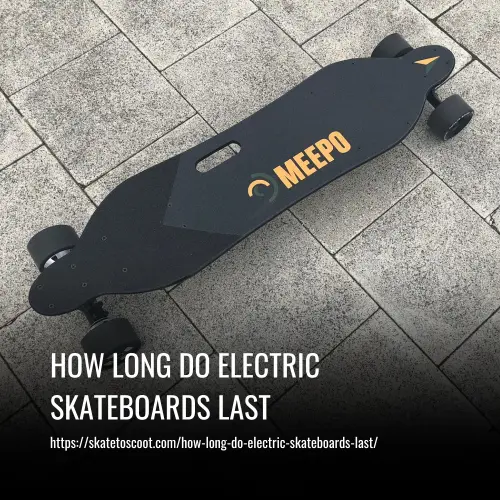
How Long Do Electric Skateboards Last? 6 Key Sections
This post contains affiliate links. As an Amazon Associate, we earn from qualifying purchases.
How long an electric skateboard lasts depends on three things: the battery chemistry, the maintenance schedule you actually follow, and the warranty that backs the key components. A well-maintained board can deliver 2–5 years of regular use, but the battery will likely need replacement within that time, while the deck and motors can last much longer.
That 2–5 year window comes from the overlap between the battery’s rated life, like the E-Glide Powerboard‘s lead-acid batteries rated for at least two years (approximately 300-350 charge cycles), and the structural limits of the deck and trucks under load. The battery is the ticking clock; everything else wears on mileage. A common question is how long do electric skateboards last.
What follows is the breakdown you don’t get from unboxing videos: the real maintenance intervals from OEM manuals, the cost of replacing a battery versus buying new, and the specific signs that tell you a board is at end-of-life, not just in need of a tune-up.
Key Takeaways
- Battery life is the primary limiter; expect 2–5 years or the manufacturer’s specified charge cycles (e.g., 300-350 cycles for E-Glide lead-acid) before range becomes unacceptable.
- Tire pressure is a silent killer of range and components; check it every two weeks and keep it at the manufacturer’s spec (e.g., 50 PSI max for E-Glide).
- Storage protocol splits by battery chemistry and manufacturer: lead-acid batteries (E-Glide) want to be topped off after every ride, while some lithium-ion manuals, like Onewheel’s, recommend storing at 40–50% charge. ONSRA advises against storing at 0% but does not specify an ideal storage percentage.
- Warranties are short and specific: ONSRA, for example, offers 4 years on CNC parts, 1 year on the battery and ESC. This sets a floor for expected lifespan.
- Water is the enemy of longevity; even boards marketed as water-resistant (like the E-Glide) have manuals that state “No electric skateboard is waterproof, not even ours.”
The Battery Lifespan Factor (Years vs. Cycles)
The battery isn’t just a component; it’s the board’s expiration date and the core of the how long do electric skateboards last question. Everything else can be fixed or replaced relatively cheaply. A dead battery pack often costs half the price of a new board.
Lead-acid batteries, like those in the E-Glide Powerboard, are rated for “at least two years (approximately 300-350 charge cycles)” according to the OEM manual. Lithium-ion pack lifespan varies by manufacturer and usage; consult your board’s manual for specific cycle life expectations.
That “cycle” count is the key. One cycle is a full 100%-to-0%-to-100% round trip. If you only use half your range each day and recharge, that’s half a cycle. A daily commuter hitting partial cycles can stretch a battery to three or four years. Someone doing weekly long rides that drain the pack fully will hit the cycle limit in under two years.
The first sign is a slow fade, not a sudden stop. You’ll notice your usual 10-mile loop now requires a recharge at mile 7. The board feels sluggish on a hill it used to climb easily. That’s cell degradation, and it’s irreversible.
Where this goes sideways: Following generic “battery tips” for the wrong chemistry. The E-Glide manual is clear: lead-acid batteries “want to be fully charged, not kept or stored in a discharged state.” It instructs you to top off the batteries after every ride, even a short one. Contrast that with lithium-ion advice from Onewheel, which specifies storing at 40-50% charge for longevity. Applying lithium-ion rules to a lead-acid board (or vice-versa) will shorten its life.
What Wears Out First (And How to Spot It)
A board doesn’t die all at once. It fails component by component, and the order is predictable. This knowledge helps you plan for repair costs rather than face unexpected expenses.
| Component | Typical Lifespan | Failure Signs | Cost to Replace |
|---|---|---|---|
| Drive Belts | 200–500 miles | Slipping under acceleration, visible fraying, snapping sound. | $10–$25 per belt |
| Urethane Wheels | 1,000–3,000 miles | Reduced diameter, flat spots, excessive vibration at speed. | $40–$100 per set |
| Battery Pack | 2–5 years / 300-1000 cycles | Reduced range, slower acceleration, failure to hold full charge. | $200–$600 |
| Brushless Motor | 3,000–10,000+ miles | Grinding noise, loss of power, overheating smell. | $100–$300 |
| Deck | 5+ years (or indefinite) | Visible cracks or delamination near trucks, soft flex spots. | $100–$300 |
Belts and wheels are consumables, like tires on a car. You can extend belt life by keeping them at the right tension and avoiding debris, but they will need periodic replacement based on mileage and riding conditions. Hub-motor boards sidestep belts but introduce their own wear item: the polyurethane sleeve on the motor wheel, which will eventually wear down and need replacement.
The deck is the chassis. The failure point is almost always where the trucks mount, that’s where stress concentrates. A deck that’s been rained on repeatedly and left wet is a deck that will delaminate and soften.
Mechanically speaking, the bearings in your wheels and motors are the canaries in the coal mine. When they start to sound gritty or feel rough when spun by hand, they’re introducing drag that steals range and strains the motor. Cleaning and lubricating them is cheap prevention. Letting them go until they seize can score the motor shaft or axle, turning a $10 bearing job into a $100 motor repair.
Maintenance That Actually Extends Life
Maintenance aims to prevent the small problems that cascade into big, expensive ones, not to make the board look new.
Tire pressure matters more than you think. The E-Glide manual is unusually specific: check pressure every two weeks, inflate to 50 PSI for max range, or 35-45 PSI for a softer ride. Why? Under-inflated tires increase rolling resistance, which forces the motor to work harder, drawing more current from the battery and generating more heat. That extra load shortens both battery and motor life. It also makes the board feel sluggish, which tempts you to ride at higher speed modes, compounding the problem.
Common mistake: Riding through puddles or in light rain. Water gets into bearing seals, motor housings, and battery compartment connectors. Corrosion starts inside a day, and a seized bearing or corroded connector can strand you. The manual for the water-resistant E-Glide still states plainly: “No electric skateboard is waterproof, not even ours.”
Your post-ride ritual is the second layer of defense. For lead-acid boards, plug in the charger. For lithium-ion boards, a common rule is don’t store it empty, but ideal storage charge levels vary; Onewheel recommends 40-50%, while E-Glide recommends keeping lead-acid batteries fully charged. The ONSRA manual warns: “Don’t ride your board down to 0%.” The Onewheel manual adds to store between 40-50% charge in a dry place between 50°-60°F (10°-15°C) and to check monthly. Letting a lithium pack sit at 0% for weeks can permanently damage cells.
The part nobody mentions: Bolt checks. Vibration from riding loosens everything. Every month, go over the board with the right hex keys: truck bolts, motor mount bolts, battery enclosure screws, and remote holder screws. A lost motor mount bolt mid-ride doesn’t just stop your trip, it can let the motor twist and shred a belt or damage the drivetrain.
Warranty vs. Real-World Lifespan
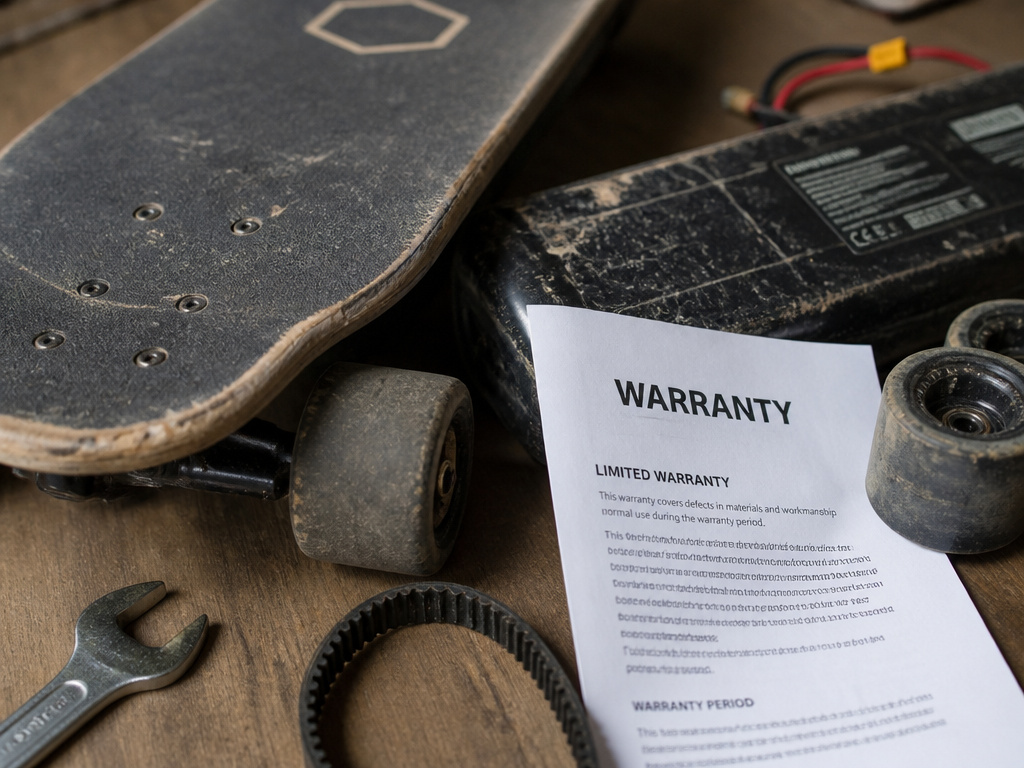
The warranty sheet is the manufacturer’s confidence interval. It tells you what they expect to fail, and when.
| Brand / Component | Warranty Period | What It Tells You |
|---|---|---|
| ONSRA CNC Parts | 4 years | The metal components (trucks, motor mounts) are built to last. |
| ONSRA Battery & ESC | 1 year | The electronics and battery are the most likely to have an early issue. |
| ONSRA Other Components | 2 years | A middle ground for everything else (deck, wheels, remote). |
| Typical Budget Board | 6–12 months | Expect minimal coverage, often only for manufacturing defects. |
Notice the hierarchy. The structural metal parts (CNC) get the longest coverage because they shouldn’t fail under normal use. The battery and ESC, the most complex and stress-prone parts, get the shortest. This isn’t a marketing trick; it’s a realistic assessment of risk. When the ONSRA warranty also states it’s non-transferable and only valid for products purchased on onsra.eu, it’s drawing a hard line on what they’ll support.
A warranty is a safety net, not a lifespan guarantee. It covers defects, not wear. Riding 2,000 miles in a year and having your motor bearings fail from dust ingress is “wear,” not a “defect.” This is why understanding basic electric skateboard components and their maintenance is more valuable than any warranty claim.
Manufacturer warranties and manuals give a basic answer for how long electric skateboards last based on expected component lifespan. Real-world lifespan in mileage varies widely based on maintenance, riding style, and component quality. The boards don’t explode at 2,001 miles; they just start requiring the owner to become a part-time mechanic, sourcing replacements for worn belts, wheels, and eventually batteries.
Signs Your Board Is Nearing End-of-Life
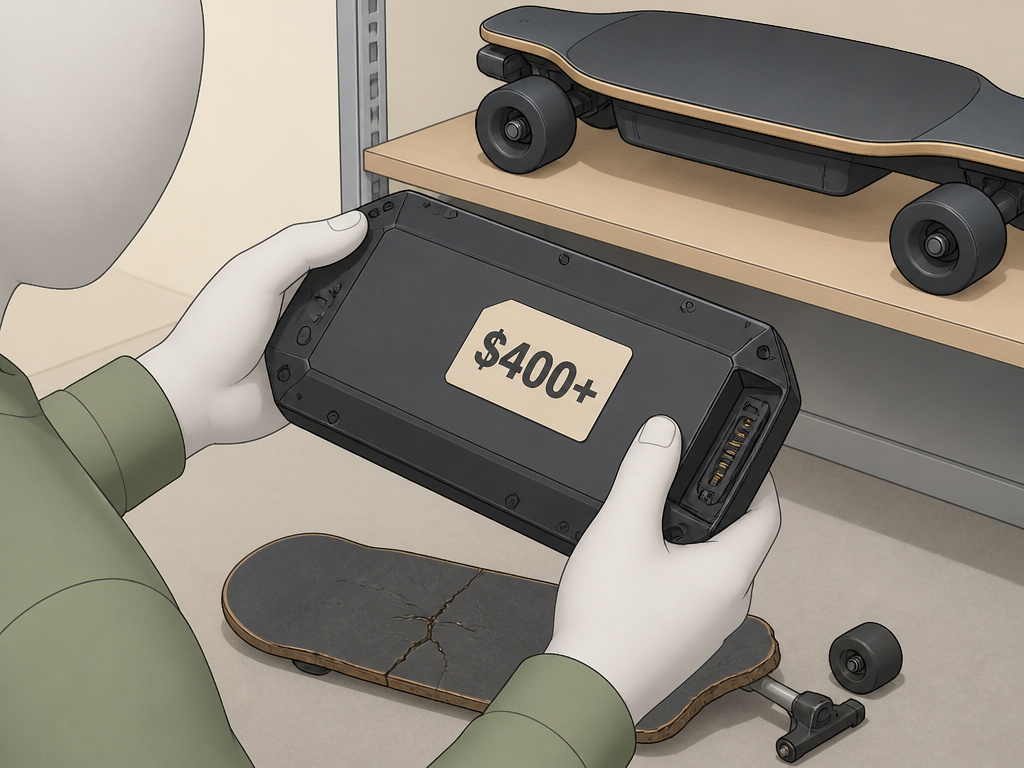
You don’t need a mileage counter. The board tells you. It’s a combination of symptoms, not one single failure.
First, the economics shift. When the cost of the next necessary repair, usually a $400+ battery replacement, approaches half the price of a new, updated board, the old board is functionally finished. Why spend $400 to restore an old battery when a new $800 board has a better motor, more range, and a fresh warranty?
Second, the failures become systemic. It’s not just a belt. It’s a belt, followed by a buzzing motor bearing, followed by a remote that disconnects. You’re fixing something every other ride. This is often the point where owners on forums decide to “part out” their board, selling the still-good components.
Third, performance degrades beyond usability. The maximum range has dropped below your shortest regular route, even with a full charge. Acceleration feels unsafe for merging into sidewalk traffic. The deck has a crack that’s getting longer with each ride. These aren’t repairable issues; they’re the core components giving out.
Before you start shopping for a new board, check if your issues are just maintenance. A halved range could be a dirty battery connection or under-inflated tires. A wobbly wheel is often a loose truck kingpin nut, not a bent axle. Rule out the cheap fixes first.
How many miles do you get per charge?
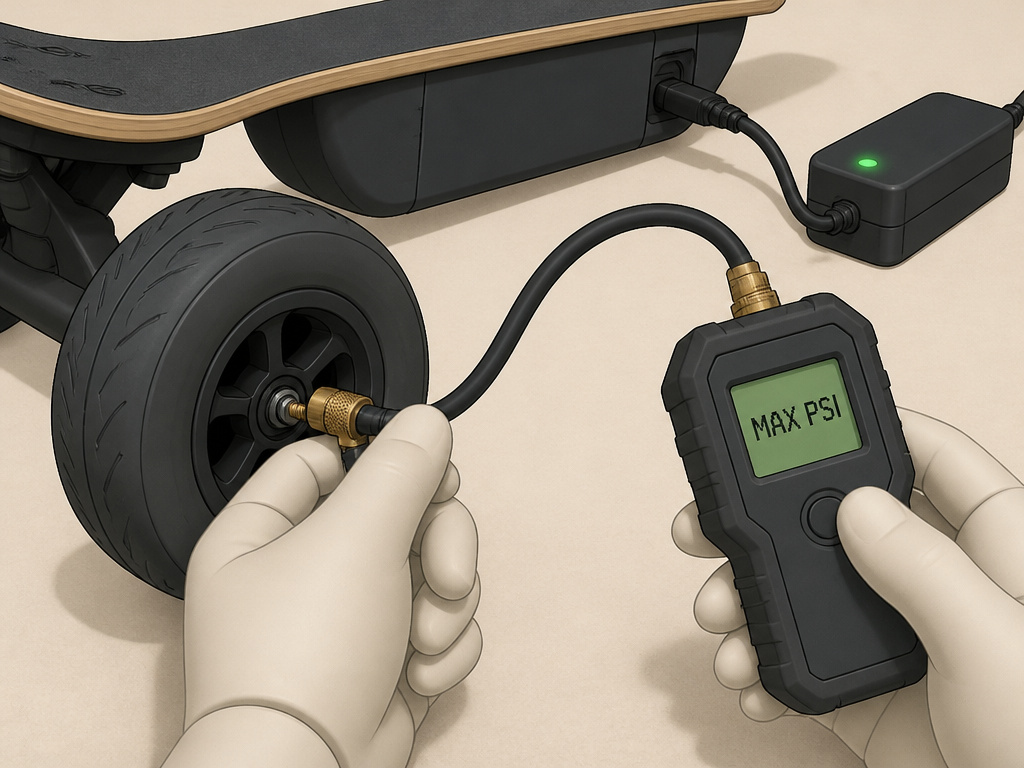
Your actual range depends heavily on your maintenance habits, especially tire pressure. For maximum range, you should inflate your tires to the manufacturer’s recommended maximum pressure. Running lower pressure for a softer ride or more off-road traction will reduce your total distance per charge. To preserve your battery’s ability to hold a charge over its lifetime, avoid riding it down to a completely dead state. Always top off the batteries after you finish riding for the day, even after a short trip. This regular charging habit helps maintain the battery’s health, which directly influences how many miles you can expect from each full charge over the years.
Frequently Asked Questions
How many miles can an electric skateboard last?
In mileage, a well-maintained board’s lifespan varies greatly with use and maintenance; the battery’s cycle life is often the primary limit. Mileage varies wildly with rider weight, terrain, and maintenance diligence.
What is the most expensive part to replace on an electric skateboard?
The battery pack is almost always the most expensive replacement part, typically costing $200 to $600 depending on capacity and brand. Replacing it often costs 30-60% of the price of a new board, which is a key decision point when a board ages.
Can you make an electric skateboard last forever?
Not forever, but you can extend its life significantly. The deck and trucks can last indefinitely if undamaged. The motor can be rebuilt or replaced. The electronic speed controller (ESC) can be swapped. However, the battery will degrade with time and cycles, and eventually finding a direct replacement battery for an outdated model can become difficult, effectively ending the board’s practical life.
Does riding in the rain ruin an electric skateboard?
Yes, riding in the rain significantly shortens lifespan. Water causes corrosion in bearings, connectors, and motor components. It can also seep into the battery enclosure and damage cells or the BMS. Even boards with water resistance ratings (like IP54) are only rated for light splashes, not sustained wet weather. The E-Glide Powerboard manual explicitly states it is not waterproof.
How does battery type affect how long an electric skateboard lasts?
It dictates the maintenance ritual. Lead-acid batteries (older/niche boards like E-Glide) require keeping them fully charged. Lithium-ion batteries (most modern boards) last longest when stored at a partial charge (40-60%) and not regularly drained to 0%. Getting this wrong can significantly reduce battery lifespan.
The Bottom Line
An electric skateboard’s lifespan is a negotiation between chemistry, mechanics, and your willingness to do the simple, boring maintenance. The 2-5 year estimate is real, but it’s not a sentence, it’s a baseline.
Your move is to pick the failure you’re willing to pay for. If you want minimal upkeep, get a hub-motor board and check tire pressure monthly. If you want repairability for the long haul, choose a belt-drive system from a brand that sells individual parts and has a strong community for tips for longer battery life. And always, always read the actual manual, the CPSC electric skateboard recall notice for Yvolve Sports shows what happens when manufacturers and users don’t get the fundamentals right.
In the end, a board is something you keep up with, not just something you buy. The difference between three years and five comes down to a tire gauge, a hex key, and knowing when to bring it inside out of the rain.
