How Long Does a Jetson Hoverboard Battery Last?
This post contains affiliate links. As an Amazon Associate, we earn from qualifying purchases.
A Jetson hoverboard battery is built to last about 300 to 500 full charge cycles.
That 300-500 cycle number is a manufacturer spec, not a guarantee. It’s the engineering target for the Lithium-Ion cells inside. Your actual mileage, in both years and miles, hinges entirely on three things: how you charge it, where you store it, and which specific Jetson model you own, which directly determines how long does a Jetson hoverboard battery last.
What follows is a breakdown of that cycle life, the range you can expect per charge, and the specific, model-by-model specs that most generic guides miss when you compare a how long does a Jetson hoverboard battery last. We’ll also cover the real-world owner reports on replacement headaches, what the warranty actually covers, and the one storage mistake that takes years off your battery’s life.
Key Takeaways
- Jetson rates its Lithium-Ion batteries for 300 to 500 charge cycles, expect 2-3 years of regular use before range noticeably drops.
- Always use the original or Jetson-approved charger. Third-party chargers that “seem to work” can damage the battery management system and void the warranty.
- For long-term storage, sources disagree: the general Jetson care guide advises charging to at least 50%, while specific manuals for the Stereofly, V8 Sport, and V6-XL instruct a full charge.
- Jetson does not sell official replacement batteries for most hoverboards, making aftermarket sourcing a common and frustrating challenge for owners.
The 300-500 Cycle Lifespan (and What That Means)
Jetson states its rechargeable Lithium-Ion batteries are “built to last: about 300 to 500 charge cycles.” This isn’t a marketing claim; it’s the standard lifespan rating for the type of 18650 cells used in most consumer electronics. One cycle means using 100% of the battery’s capacity, whether that’s from a single full drain or two 50% drains.
A single battery indicator light turns from green (≥50%) to yellow (20-49%) to red (<20%) as the charge depletes. For models with three lights, the number illuminated decreases with the charge level.
So, 300-500 cycles. If you ride your hoverboard to the point where the battery indicator flashes red about twice a week, you’re looking at roughly 3 to 5 years before the battery holds only 70-80% of its original charge. That’s when the ride gets noticeably shorter. Most owners hit this point sooner, around the 2-3 year mark, because real-world use includes partial charges, temperature extremes, and the natural cell degradation that happens even when the board is sitting on a shelf.
We should be honest about those numbers. They’re a best-case scenario from the lab. The forums are full of owners hitting the “battery barely holds a charge” wall at 18 months, especially on models like the Sphere or Sync. The gap between the 500-cycle promise and the 200-cycle reality is where proper care makes or breaks your investment in the how long does a Jetson hoverboard battery last equation.
What Determines Your Miles Per Charge?
Your hoverboard’s range per charge isn’t a fixed number. It’s a negotiation between the battery’s capacity, measured in Amp-hours (Ah), and everything working against it.
First, the hard spec. Here’s how the battery capacity varies across popular Jetson models:
| Jetson Model | Battery Voltage & Capacity | Charge Time |
|---|---|---|
| Stereofly | 25.2V, 4.0Ah | About 5 hours |
| Flash Dynamic | 24V, 4.0Ah | Up to 3 hours |
| V8 Sport | 36V, 4.4Ah | 2-3 hours (4 hours initial charge) |
| V6-XL | 36V, 4.0Ah | 2 hours (4 hours initial charge) |
| Nitro | 36V, 2.0Ah | Up to 3 hours |
| Plasmax | 36V, 2.0Ah | Up to 5 hours |
Now, the factors that cut into that range:
- Rider Weight: The 220 lb. Maximum weight limit isn’t just for safety. Every pound over 150 reduces range because the motors draw more current to maintain speed.
- Terrain: Pavement is easy. Grass, gravel, or slight inclines force the motors to work harder, sometimes cutting range by 30% or more.
- Temperature: Lithium-Ion chemistry hates the cold. Riding in temperatures below 50°F (10°C) can slash your range by half for that ride, as the chemical reactions inside the battery slow down.
- Tire Pressure & Wheel Condition: Soft, under-inflated tires or worn-down tread create more rolling resistance. It’s a small drain that adds up over a mile.
A fully charged V8 Sport might have its maximum range reduced significantly by a 180-pound rider on a grassy hill on a 45°F day. Trust the specs as a ceiling, not a floor.
Model-Specific Battery Specs and Charge Times
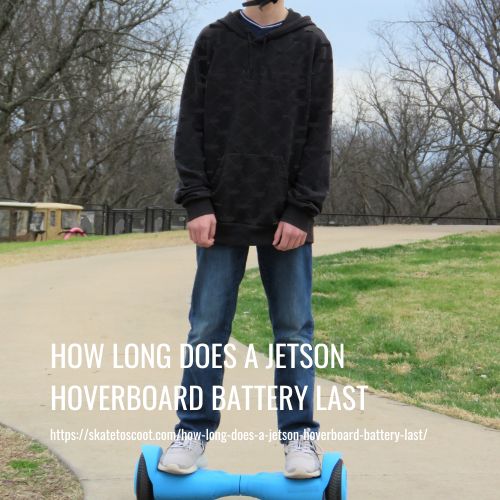
Not all Jetson hoverboards are created equal, and their manuals prove it. Burying the generic advice, here are the exact numbers straight from the source documents.
The Jetson Stereofly (JSTFLY-TEL) uses a 25.2V, 4.0Ah battery and takes about 5 hours for a full charge. The Flash Dynamic (JFLASH-BB) has a 24V, 4.0Ah pack and charges in up to 3 hours. The workhorse V8 Sport and V6-XL both use 36V batteries (4.4Ah and 4.0Ah respectively) and charge in 2-3 hours, but require a 4-hour initial charge straight out of the box.
Where this goes sideways: Using a charger from a different Jetson model. The Stereofly’s 25.2V system isn’t compatible with a 36V V8 Sport charger, even if the plug fits. The battery management system can misinterpret the voltage, leading to a cell imbalance that kills capacity within a dozen charges.
This is why the mandate to use only the original charger isn’t corporate greed, it’s circuit protection. The charge time is also your first diagnostic tool. If your V8 Sport starts taking 5+ hours to hit full charge when it used to take 3, the battery cells are aging and developing internal resistance.
The Care Regimen That Actually Extends Battery Life
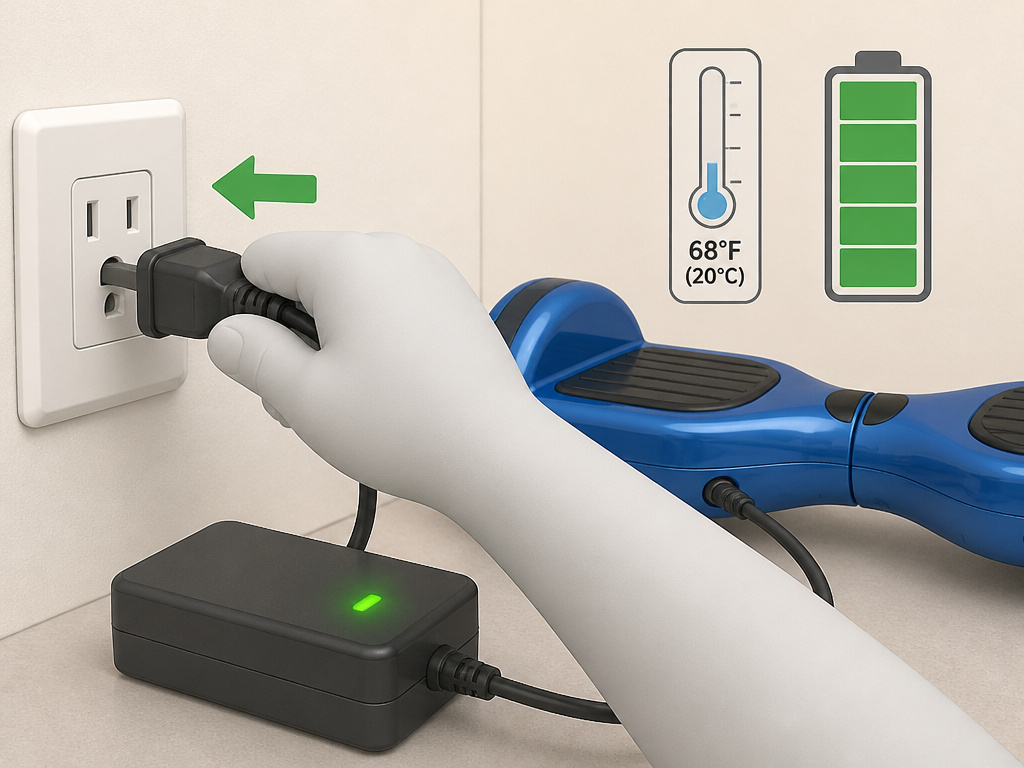
Battery care is more than “don’t leave it plugged in.” It’s a set of specific habits that counter the three big killers of Lithium-Ion cells: deep discharge, heat, and constant high voltage.
- For the Stereofly, timely charging after every ride is recommended to prolong battery life. For other models, avoid storing the hoverboard at a low state of charge for extended periods.
- Unplug at Full Charge. The charger light turns green (or stops flashing green on the Hali X). Unplug it then. Leaving it plugged in for “extended periods” or overnight keeps the battery at 100% voltage, which accelerates chemical aging.
- Mind the Temperature. Store your board between 41°F and 68°F (5°C and 20°C). Never charge it in a hot garage or a freezing shed. The Flash Dynamic manual warns to charge it above 50°F.
- Keep It Dry. This is essential. If the electric parts or battery get wet, do not power on the hoverboard. Water damage voids the warranty and can cause a short circuit that permanently bricks the battery pack.
Here’s the one most people miss: recalibration. If your board starts beeping erratically or the wheels spin on power-up, it might need a recalibration, not a new battery. Place it on a flat surface, power it off, then power it back on without leaning on it. This resets the internal gyroscopes and balance sensors that can misinterpret data and trigger low-battery warnings prematurely.
The Storage Dilemma: 50% or 100% Charge?
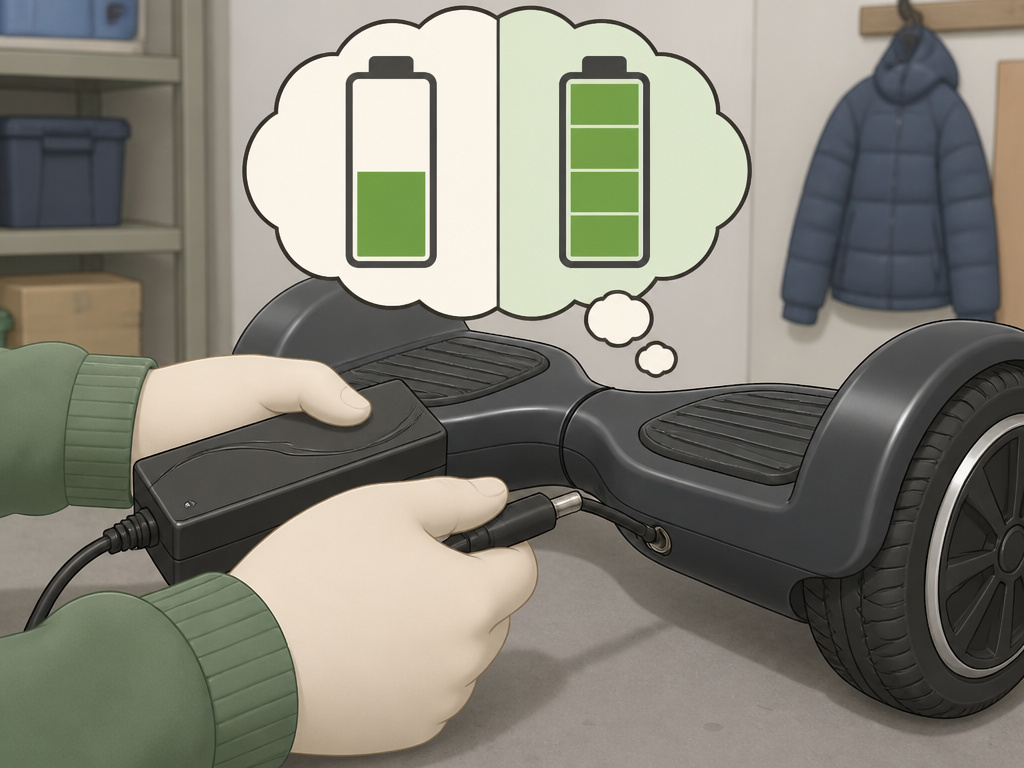
Here the sources disagree, and it matters. The general Jetson care article says to charge the battery to at least 50% before long-term storage. However, the official manuals for the Stereofly, V8 Sport, and V6-XL all instruct you to fully charge the battery before storing it for extended periods.
Who’s right? Both, for different reasons. Storing at 50% is ideal for maximizing long-term calendar life of Lithium-Ion cells, as it minimizes stress. Storing at 100% ensures the board has maximum available power when you pull it out months later, preventing a deep discharge during storage which is also harmful.
Common mistake: Storing a hoverboard in an unheated garage over winter. Temperatures below freezing can permanently damage the battery cells. If you must store it cold, bring it to room temperature (above 50°F) before you even think about plugging in the charger.
My rule of thumb: if you’re storing it for a season (3-4 months), follow your specific model’s manual, likely a full charge. If you’re packing it away for 6+ months, the 50% rule from the general guide is the safer bet for cell longevity. Whichever you choose, the maintenance charge is critical: most sources say to fully charge it once a month, but the V8 Sport manual says to charge it at least every two months.
Signs Your Battery Is Failing (And What to Do)
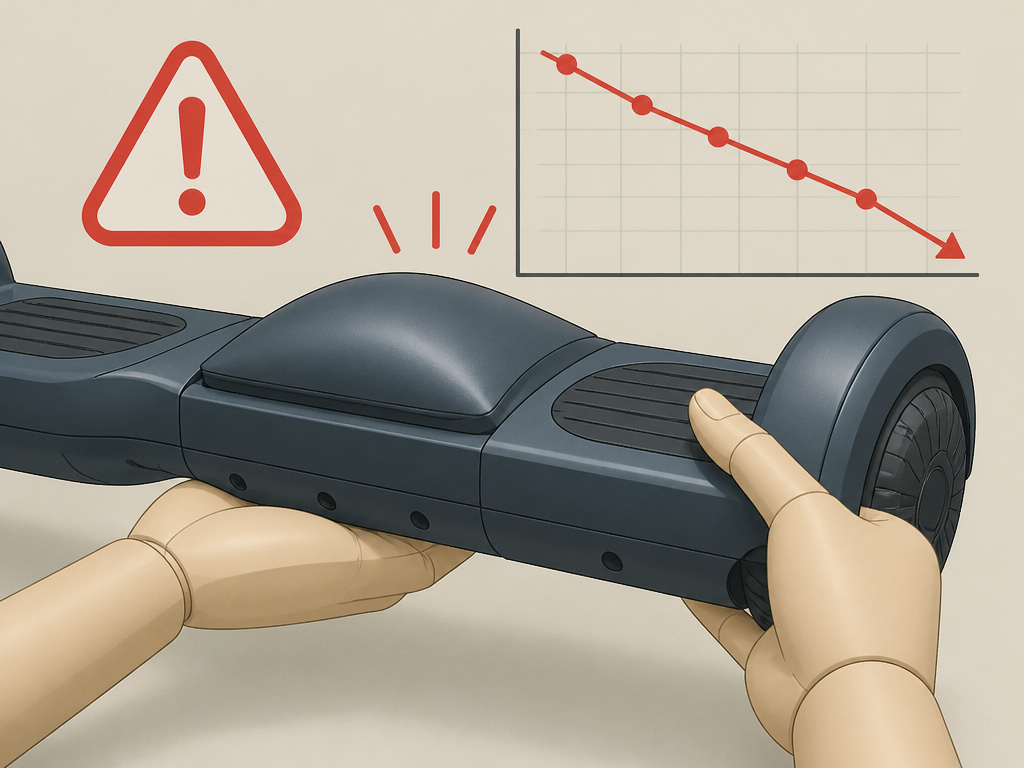
A failing hoverboard battery doesn’t always just die. It sends signals first. Recognizing them can save you a costly misdiagnosis.
- Drastic Range Drop: The most obvious sign. If your 8-mile board now conks out after 2 miles on a full charge, the battery is fading.
- Swelling or Physical Deformity. This is a critical safety issue. If the battery compartment bulges or the casing seems warped, stop using the board immediately. Do not attempt to charge it.
- Inconsistent Charge Times. A battery that charges to full in 1 hour one day and 5 hours the next has unstable internal resistance. The cells are failing.
- Sudden Shut-Offs at High Charge. If the board powers off while the indicator shows 50% or more, the battery can no longer deliver the current peak the motors demand. This is common in older batteries.
If you see these signs, your first call should be to Jetson Support. Have your receipt ready, the Limited 1 Year Warranty requires a sales receipt from an approved retailer within 90 days of purchase. Be aware: warranty is void if weather-related water damage is determined. They will likely troubleshoot with you, but the outcome for a failed battery outside warranty is often a referral to third-party repair or a recommendation to buy a new board.
The Replacement Reality: Why It’s So Hard
This is the part nobody tells you upfront. When your Jetson battery finally gives up, replacing it is an obstacle course. Jetson does not sell official replacement batteries for most of its hoverboard models. As their support team states, the battery is considered an internal part, and self-replacement voids any remaining warranty.
Owners on forums desperately search for the elusive “EL-1001S-01” pack (used in the Sphere and Sync) only to find third-party options that are the wrong physical size or have different connector types. Even if you find a 36V, 2.0Ah pack online, the height or connector might differ by a few millimeters, making it impossible to fit the stock compartment.
“Third party batteries differ in height from Jetson sync blk el1001s battery. Where can I get the original el-1001s battery for this hoverboard?”. Reddit user, 2024
This leaves you with three bad options: track down a compatible pack from a scooter parts site (like MonsterScooterParts.com), attempt a risky DIY rebuild of the existing pack with new 18650 cells, or retire the board. For many, the cost and hassle push them toward just buying a new hoverboard.
Frequently Asked Questions
What is the typical lifespan of a hoverboard battery?
For Jetson hoverboards, the battery is rated for 300 to 500 charge cycles. Calendar aging also plays a role, and the battery will slowly degrade over time even with light use.
My Jetson hoverboard battery isn’t charging. What could be the problem?
Start with the basics. Ensure you’re using the correct original charger and that you’ve plugged it into the wall before connecting it to the board. Check the charger light: red means it’s charging, green means complete. If there’s no light, the charger, wall outlet, or charging port might be faulty. If the board was stored in a cold place, ensure it is within the recommended temperature range before charging. If it was exposed to moisture, do not attempt to charge it.
How much does it cost to replace a Jetson hoverboard battery?
Jetson does not sell official batteries, so pricing is set by third-party sellers. A compatible 36V, 2.0Ah battery pack’s cost is set by third-party sellers. However, you must be certain it matches your model’s physical dimensions and connector type. Professional installation, if available, adds additional labor costs.
Does the Jetson warranty cover a bad battery?
The Limited 1 Year Warranty covers defects in materials and workmanship. If your battery fails within a year and you have proof of purchase, contact Jetson support. However, the warranty explicitly excludes damage from water, misuse, neglect, or unauthorized modifications. Battery failure due to normal capacity loss over time is not considered a defect.
Before You Go
The single biggest factor in your battery’s lifespan is you. You can’t change the 300-500 cycle chemistry, but you can control the environment that burns through those cycles. Charge with the original brick, store it somewhere cool and dry, and don’t let it sit dead for months.
If your board is past the point of care and the battery is fading, know the replacement landscape is rough before you dive in. Weigh the cost and hassle of hunting for a compatible pack against the price of a newer model. Sometimes, the upgrade is the more rational choice.
And one final, grounded tip from a decade of dealing with gear: the relationship with any battery-powered device is a countdown. Your job is to slow the clock. Do that, and you’ll squeeze every last mile out of those 500 cycles.
