How to Clean a Longboard: The 10-Minute Bearings Rule
This post contains affiliate links. As an Amazon Associate, we earn from qualifying purchases.
To clean a longboard, focus on the bearings: remove them, soak in isopropyl alcohol or a dedicated bearing cleaner for at least 10-15 minutes, dry them completely without compressed air, and lubricate before reassembly. Avoid water on the deck and never use WD-40. Regular cleaning keeps your board fast and extends its life.
That 10-15 minute soak is the essential core. Everything else, wiping the deck, brushing the grip, is upkeep, but bearings are the engine. Get them wrong and your board feels slow, gritty, and loud within a week of street riding. Knowing how to clean a longboard properly makes all the difference.
What follows is the full breakdown: the one tool you actually need, the solvent debate, and the post-rain routine most guides skip. By the end, you’ll know how to pull a full clean in under an hour and master the fundamentals of how to clean a longboard.
Key Takeaways
- Soak bearings in isopropyl alcohol or bearing cleaner for at least 10-15 minutes; acetone works but is harsher.
- Never use compressed air to dry bearings, it forces moisture deeper and can damage the shields.
- After riding in wet conditions, disassemble and dry everything within a few hours to prevent rust and wood warping.
- Clean your brand-new custom board after its first street ride to remove grip tape debris from the hardware threads.
- Loosen your kingpins as much as you comfortably can; overtightening crushes and deforms bushings permanently.
The 10-Minute Bearings Rule
Your board’s speed and smoothness live inside eight small metal rings. According to community advice, if all wheels spin for at least 10 seconds when flicked, everything is most likely fine. When they sound gritty or stop after two seconds, it’s cleaning time.
Longboards USA recommends soaking bearings in isopropyl alcohol or bearing cleaner, while OUTSIDE Skateshop suggests using cleaning kits with an acetone-based solution, and wikiHow mentions citrus-based cleaners as an option. Soak them for at least 10-15 minutes. This dissolves the grease and grime without the aggressive stripping power of acetone, which some riders still use but can degrade rubber seals over time.
Let them air dry completely. This is where a common mistake happens. Using compressed air seems like a quick fix, but Longboards USA explicitly warns against it, the forced air can drive moisture past the shields and damage the internal balls and races. Patience is the tool here.
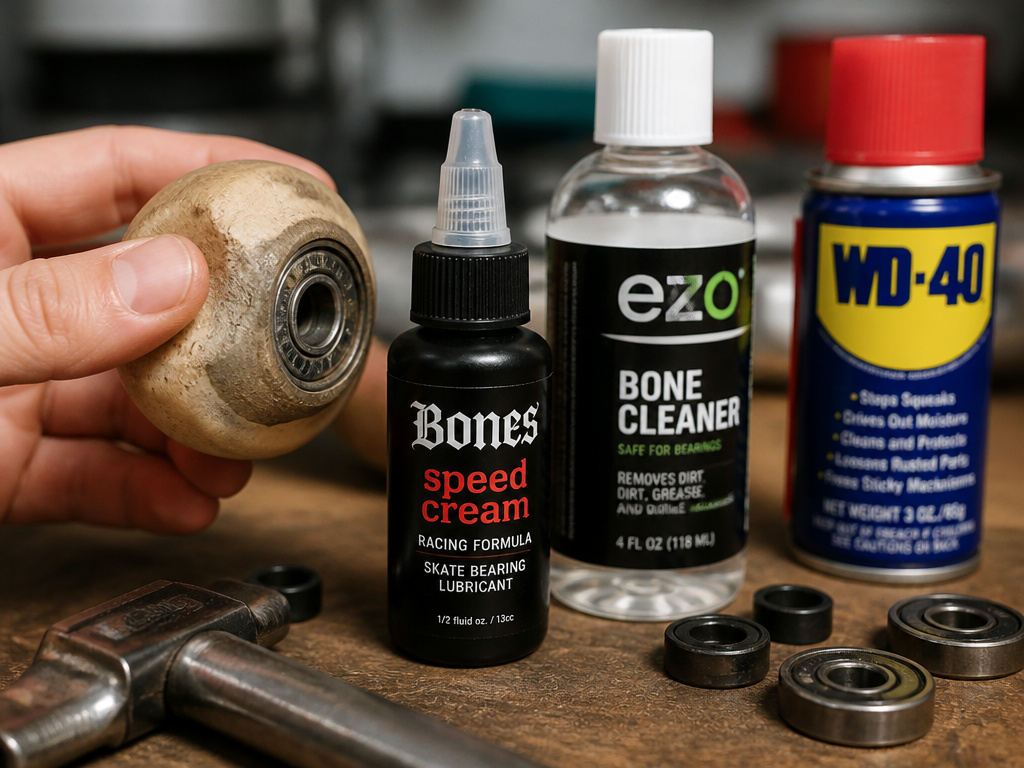
Once dry, a drop of skate-specific lubricant like Bones Speed Cream on each bearing before you clean bearings makes the difference between a quiet roll and a noisy one.
The Grip Tape Debate: Eraser vs. Soap
You’ll find two camps on cleaning the sandpaper-like top of your board. One says water is the enemy of wood and glue. The other says a little soapy water is fine.
OUTSIDE Skateshop advises against using water on grip tape, calling it “one of the worst enemies of your board” and recommends a grip tape cleaner (grip gum). However, wikiHow and Skateboards.com say you can use a mild soap and water mix for stubborn stains. This is essentially a big, rubbery eraser that scuffs off dirt and restores the black color without any liquid. It’s a visual improvement more than a performance one, but it works.
The other side, represented by wikiHow and Skateboards.com, says you can use a soft-bristle brush with a mild soap and water mix for stubborn stains. The key is to not soak the deck and to dry it thoroughly immediately after.
Here’s the breakdown of the disagreement:
| Method | Proponents | Best For | Risk If You Get It Wrong |
|---|---|---|---|
| Grip Gum / Eraser | OUTSIDE Skateshop, many retailers | Daily upkeep, dry dirt | Minimal; mostly cosmetic. |
| Soap & Water Brush | wikiHow, Skateboards.com | Deep cleaning, mud, stubborn grime | Water seeps into deck layers, causing delamination and warping over time. |
My take? For routine longboard maintenance, use the eraser. It’s fast and zero-risk. If you’ve rolled through something truly foul, the soap-and-water method is a calculated gamble, but you must disassemble the board to take it apart and dry every component in the open air afterward. Letting a wet deck sit assembled is a guarantee of rusted hardware and swollen wood.
Trucks, Bushings, and the Pivot Cup
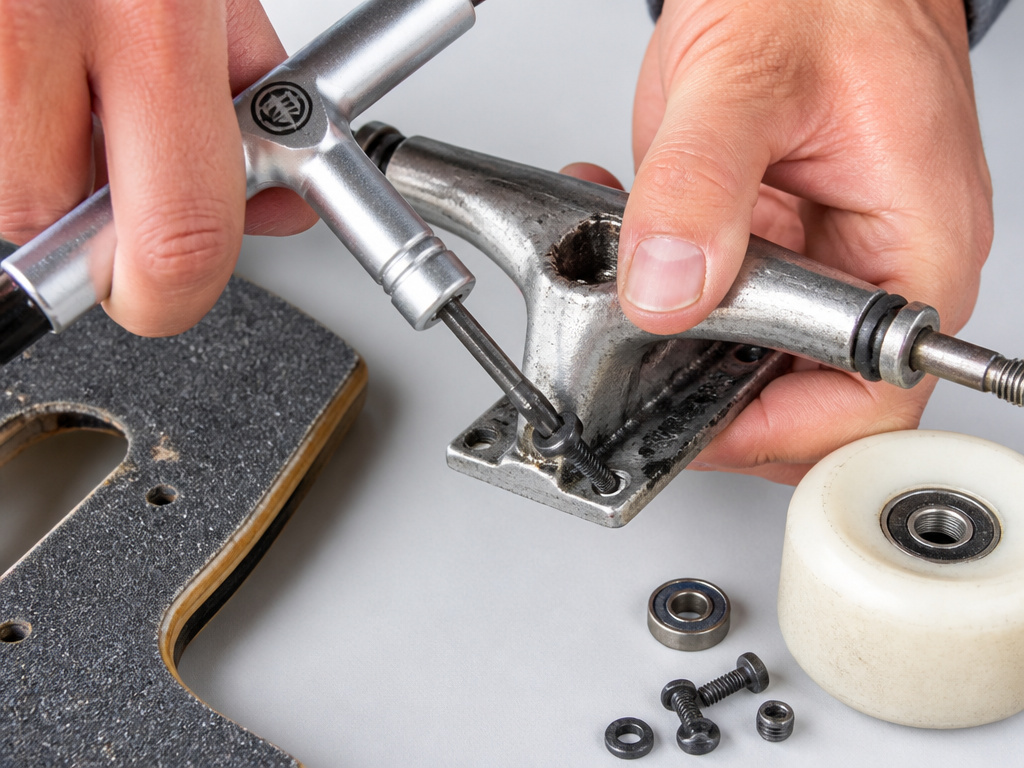
The metal trucks and their rubbery bushings get ignored until they start squeaking. That squeak is a plea for attention.
Dirt and grit build up in the pivot cup, the plastic socket where the truck’s pivot point sits, and around the bushings. This creates friction, making your turns feel sluggish and uneven. IFixit offers a brilliant, non-commodity fix for worn bushings: boiling them. Submerge old, hardened bushings in boiling water for 10-15 minutes. They soften and regain some of their original rebound. It’s a refurbishment, not a permanent solution, but it can extend their life for months.
For routine cleaning, a cloth with a small amount of rubbing alcohol will wipe grime off the bushings and pivot cup without leaving a residue. While you’re there, check the kingpin nut. A common beginner mistake is cranking it down for stability. OUTSIDE Skateshop advises the opposite: loosen the kingpins as much as you find acceptable. Overtightening permanently crushes and deforms the bushings, killing your board’s turning ability. A loose truck breaks in; a frozen truck breaks down.
The Full Disassembly Clean
Most guides tell you to clean the board. The better practice, especially after riding in the rain or when you’ve just built a new setup, is to clean the components.
OUTSIDE Skateshop gives a specific piece of advice most miss: if you’ve just built a custom board, disassemble the board after its first real street session. Why? The vibration from riding can loosen new hardware, and gritty residue from the grip tape gets embedded in the screw threads. Cleaning it now makes future adjustments and how to change your grip tape easier.
The process is straightforward but methodical:
- Use a skate tool to remove wheels and trucks.
- Clean each part separately, deck, grip, trucks, wheels, bearings.
- Dry everything completely. This step is mandatory.
- Reassemble, checking that all hardware is snug but not overtightened.
Perform a full disassembly clean every couple of months, depending on usage. But it’s the difference between a board that lasts a season and one that lasts for years.
Is It Clean or Is It Broken?
Cleaning is maintenance, not resurrection. You need to know when to stop cleaning and start replacing.
Inspect wheels for uneven wear or flat spots and replace if needed.
The most frequent question I see is about WD-40 in a how to clean a longboard guide. WD-40 is a water-displacer and light rust penetrant, not a lubricant or cleaner for precision bearings. It will thin your existing grease, attract more dirt, and leave the bearings drier than they started. Stick with the solvents and lubes designed for the job.
What Tools Do I Need to Clean My Longboard?
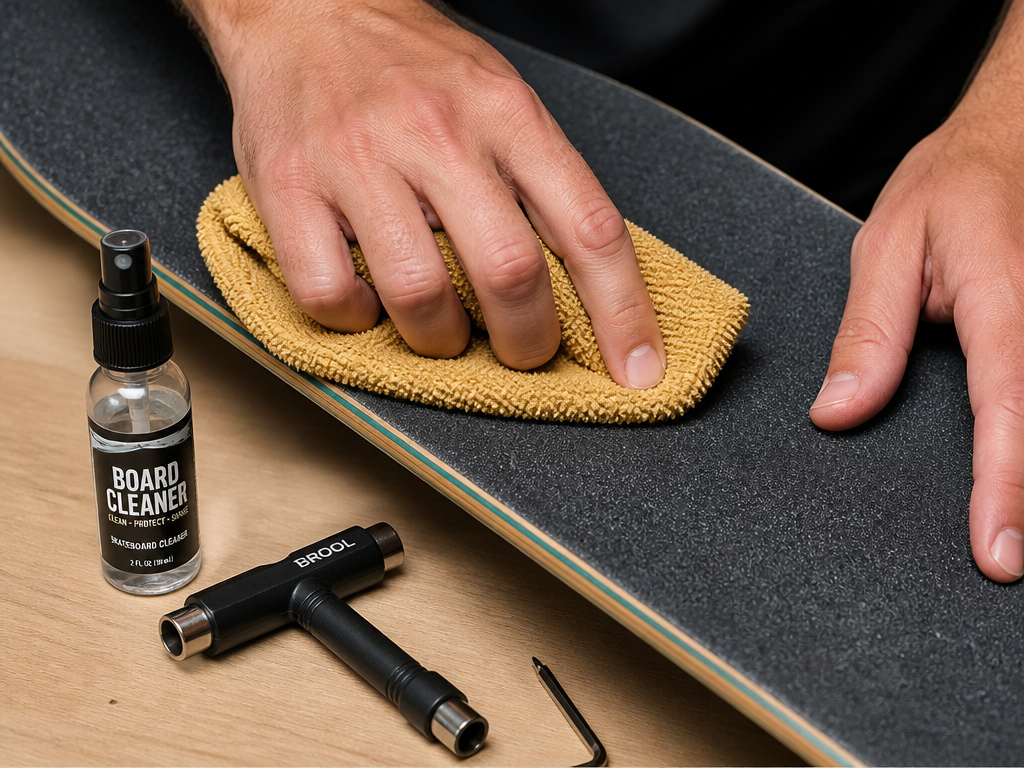
Avoid using water directly on the board’s core components, as it can promote rust and damage the wood. Keep everything simple; you don’t need many specialized products to get the job done effectively.
Frequently Asked Questions
Can I use rubbing alcohol to clean skateboard bearings?
Yes, isopropyl alcohol (rubbing alcohol) is one of the most recommended solvents by sources like Longboards USA. It’s effective at dissolving grease and grime, evaporates quickly, and is less harsh than acetone.
Is WD-40 good for cleaning skateboard bearings?
No. Multiple sources, including community feedback cited by OUTSIDE Skateshop, warn against it. WD-40 is not a dedicated bearing cleaner or lubricant. It can break down the proper grease, attract more dirt, and lead to faster bearing failure.
Is it okay to ride a longboard in the rain?
You can, but you must commit to the cleanup. OUTSIDE Skateshop advises cleaning the board, trucks, and bearings and drying them quickly after riding in wet conditions, while wikiHow recommends removing trucks before cleaning to avoid corrosion.
Will water ruin a skateboard?
It can. Prolonged or repeated exposure to water will cause the wooden deck to warp and delaminate, and the metal trucks and bearings to rust. A single, careful wet ride followed by a complete dry-out might not cause immediate ruin, but it’s a significant risk to the board’s longevity.
How often should I clean my longboard bearings?
There’s no fixed schedule; clean them based on performance. When the wheels don’t spin freely, make noise, or your ride feels slower, it’s time. For a frequent rider, this might be every few months. After any exposure to water or excessive dirt, clean them immediately.
The Bottom Line
Cleaning a longboard isn’t about making it look new. It’s about preserving the feel. A clean bearing is a fast bearing. A dry deck is a stiff deck. A grit-free pivot cup is a smooth turn.
The one habit to start this week: after your next ride, flick your wheels. If they don’t spin well, schedule a bearing clean. Everything else, the deck wipe, the truck check, can follow from that single diagnostic. Your board is a collection of simple parts. Keep those parts clean, and it will keep rolling for years. Let them get gunked up, and you’ll be shopping for replacements before the season is over.
