How to Fold a Razor Scooter: Step-by-Step (With Safety)
This post contains affiliate links. As an Amazon Associate, we earn from qualifying purchases.
To fold a Razor scooter, you must first identify its specific locking mechanism. Anti-Rattle knob, joint-release lever, or folding latch, then release it while keeping fingers clear, and lower the T-bar until it clicks into the folded position. Electric models like the E Prime III and C30 require the scooter to be moving at least 3 mph (5 km/h) for the motor to engage, but folding is a purely mechanical process done with the power off.
The difference between an easy fold and a frustrating jam comes down to matching the right release action to your scooter’s design. Three distinct mechanisms exist across Razor’s lineup, and pressing the wrong part does nothing but strain the plastic. Knowing how to fold a razor scooter correctly is therefore essential.
What follows: a walkthrough of each mechanism type, the universal safety rules straight from the manuals, and the fixes for when a scooter refuses to budge after months in the garage.
Key Takeaways
- Identify your mechanism first. Pressing a joint-release lever when you have an Anti-Rattle knob will not work and can damage the latch.
- Always keep fingers clear of the pivoting joint when folding or unfolding; the manual states this explicitly to prevent pinch injuries.
- Electric scooters fold mechanically, but their batteries have strict limits: do not charge at or below 32°F (0°C) per the C30 and E Prime III manuals.
- If the latch is stuck, apply gentle force to the release tab, not the T-bar itself; a flat-head screwdriver often works where thumb pressure fails.
- Check all fasteners before each ride and store the scooter indoors; UV exposure and rain degrade the materials over time.
Identify Your Scooter’s Mechanism First
You have three main types. Getting this wrong is the most common reason a “simple” fold turns into a wrestling match.
The Anti-Rattle knob is used on the E Prime III, according to its manual. It’s a black plastic knob threaded onto a post at the base of the T-bar. The manual for the E Prime III is clear: you turn it counterclockwise to loosen before you can pull up on the knob itself to release the fold. Tightening it clockwise after unfolding engages the anti-shake feature.
It’s a spring-loaded lever, often red or black, that you push down (or sometimes pull up) directly. There’s no twisting, just a firm press and hold while you manipulate the T-bar.
You press a button on the side of the latch, then pull the entire latch handle upwards to open the joint. It’s the most straightforward but also the most prone to getting gummed up with dirt.
Where this goes sideways: Assuming all Razor scooters fold the same. Trying to twist a joint-release lever or press a button that isn’t there wastes time and risks breaking a plastic component. The mechanism is printed in your manual for a reason.
The Core Folding Procedure
Once you know your mechanism, the physical steps are similar. The goal is to release the lock, lower the T-bar, and secure it so it doesn’t flop open.
Here is the process, step by step. I’ve seen this common mistake a hundred times when someone learns how to fold a razor scooter: people force the T-bar before the lock is fully disengaged. That’s how you strip plastic threads or bend a cheap latch.
Step 1: Power Off & Prep. If you have an electric model like the E Prime III or C30, make sure the power is OFF. Place the scooter on a flat, stable surface. Grip the deck with your foot for stability.
Step 2: Execute the Release.
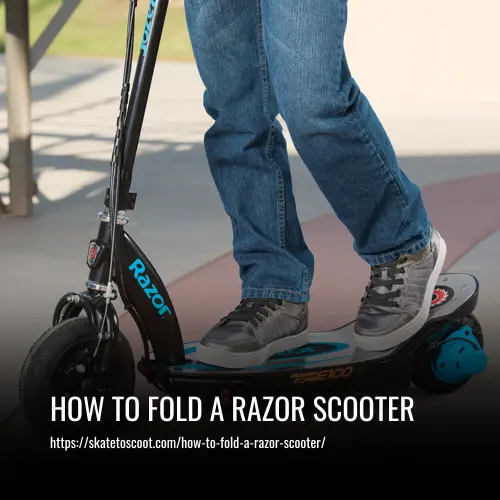
- For Anti-Rattle Knob (A6, A5 Prime, E Prime III): Turn the knob counterclockwise until it loosens. Then, pull the entire knob upwards until you feel a distinct click or release. The T-bar will now be free to pivot.
- For Joint-Release Lever (Spark Series): Press the lever firmly in the direction indicated (usually down) and hold it there. While maintaining pressure, begin to lower the T-bar with your other hand.
- For Folding Latch (Raven, C30): Press the release button with your thumb and pull the latch handle upwards. You’ll hear a metallic click. The T-bar is now free to move.
Step 3: Lower and Secure. Gently lower the T-bar towards the rear wheel or deck. On most models, it will click or snap into a locked folded position. If it seems loose, there’s often a secondary catch or groove it needs to seat into. Don’t slam it.
The Razor E Prime III manual specifies: “Keep fingers clear of the pivoting mechanism when folding or unfolding the scooter. Make sure others are standing clear.” This isn’t just legal boilerplate. The joint moves with enough force to pinch skin hard, and a startled jump can send the scooter tipping over.
Step 4: The Pre-Ride Reversal. Unfolding is essentially this process in reverse. For the Anti-Rattle knob, you pull it up to release the fold, swing the T-bar upright, and then turn the knob clockwise to tighten and engage the Anti-Rattle feature. Overtightening isn’t necessary; snug is fine.
| Model Type | Mechanism | Release Action | Key Manual Spec |
|---|---|---|---|
| A6, A5 Prime, E Prime III | Anti-Rattle Knob | 1. Turn counterclockwise. 2. Pull knob up. | “Loosen knob prior to pulling up.” |
| Spark Series | Joint-Release Lever | Press & hold lever down, lower T-bar. | Weight limit: 143 lb (65 kg) for Spark, 110 lb (50 kg) for S Spark. |
| Raven, C30 (Rambler 20) | Folding Latch with Button | Press button, pull latch handle up. | Minimum rider age: 13 years. |
Troubleshooting a Stuck Scooter
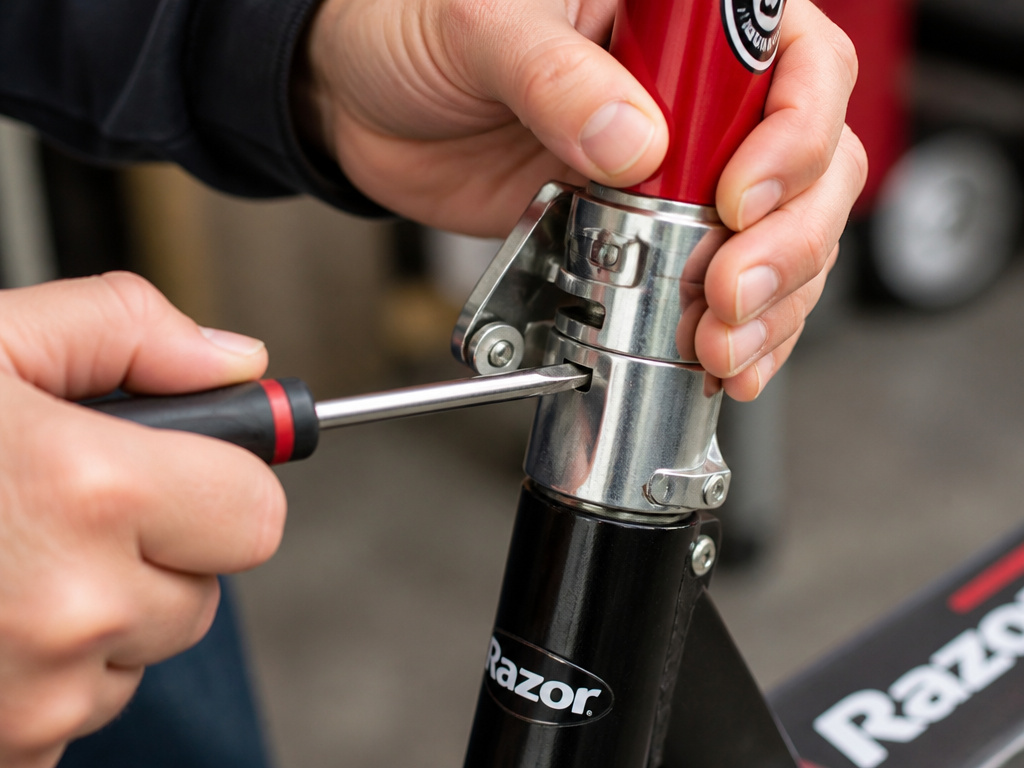
A scooter that hasn’t been folded in months might resist. The issue is almost always dirt, minor corrosion, or a bent component in the latch assembly, not a broken scooter.
First, diagnose the resistance when figuring out how to fold a razor scooter. Does the release button press but not click? Does the lever move but the T-bar stay locked? Or is everything frozen solid? Your approach changes for each.
If the release button or lever moves but doesn’t open the joint (a common forum complaint), the internal spring or hook might be jammed. Try pressing the release and simultaneously tapping the top of the T-bar near the joint with the heel of your hand. You’re not hammering it; you’re using vibration to shake a stuck hook free. If that fails, a very gentle pry with a flat-head screwdriver on the latch itself can provide the extra force needed. One Reddit user solved their stuck latch by using “a little pry bar to pop the lever up” after pushing the handlebars forward to relieve tension.
If everything is frozen, you’re likely dealing with dirt or lack of lubrication. Squirt a small amount of silicone-based lubricant (not WD-40) into the latch mechanism. Work the release button or lever back and forth a dozen times to work the lubricant in. Wipe away any excess. This often frees up a mechanism stiff from garage storage.
Common mistake: Forcing the T-bar when the latch is stuck. This torques the metal hinge pins and can permanently bend the latch plate, making a future repair impossible. The force should be applied to the release mechanism, not the main tube.
For electric models, remember the 3 mph (5 km/h) rule is for motor engagement, not folding. The E Prime III and C30 manuals both state the unit must be moving at least that fast before the motor kicks in. Folding is always done with the scooter stationary and off.
Safety Precussions You Can’t Ignore
The manuals are repetitive on safety for a reason. Folding and unfolding a scooter seems trivial until a pinch injury sends a kid to the ER or a loose scooter rolls into traffic.
Keep fingers and other body parts away from the product when folding or unfolding. I’ll say it again. The pivoting joint has a surprising amount of mechanical advantage. A fingertip caught in the wrong place gets crushed, not pinched. Adults must assist young children with this process every time.
Going over these limits, especially on an older scooter, can fatigue the latch metal until it fails during a ride.
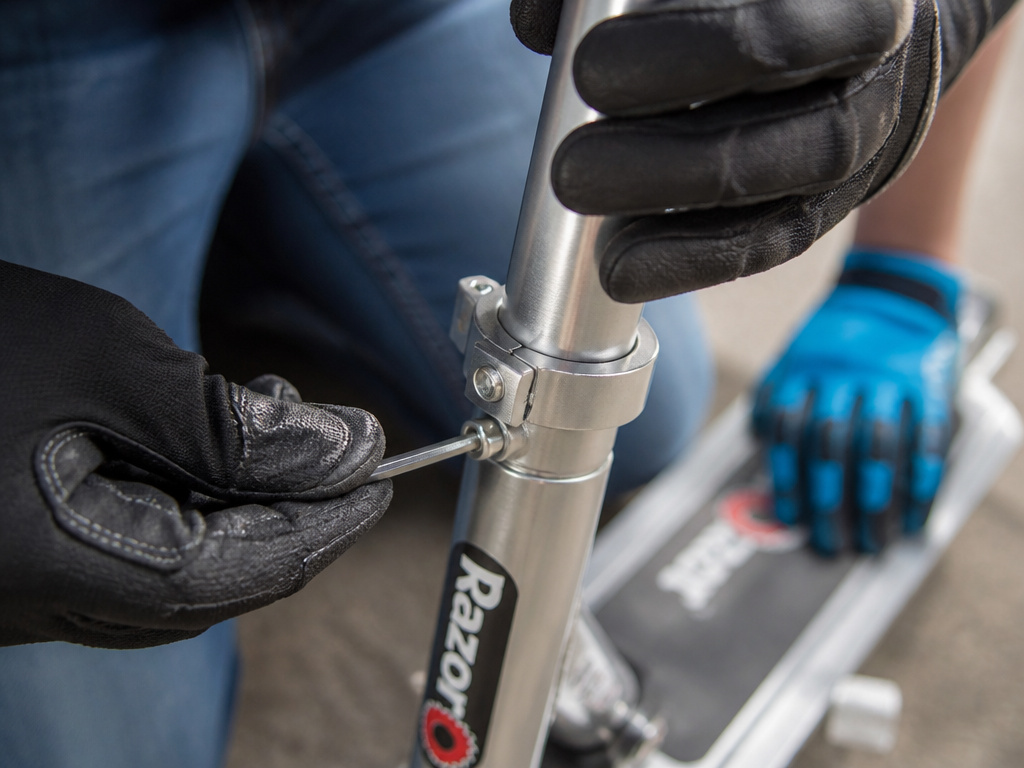
Check and secure all fasteners before every ride. This is the most-often skipped step in the manual. Before you even think about folding, give every visible bolt and clamp a twist. A loose stem clamp can let the T-bar wobble, which puts extra strain on the folding joint when it’s locked upright.
Razor’s general safety rules apply whether you’re folding or riding: always wear a helmet, knee pads, and elbow pads. Always wear shoes. Don’t ride at night or in wet weather. These aren’t just for liability; a head injury from a simple fall changes lives.
Electric Scooter Specifics: Batteries and Storage
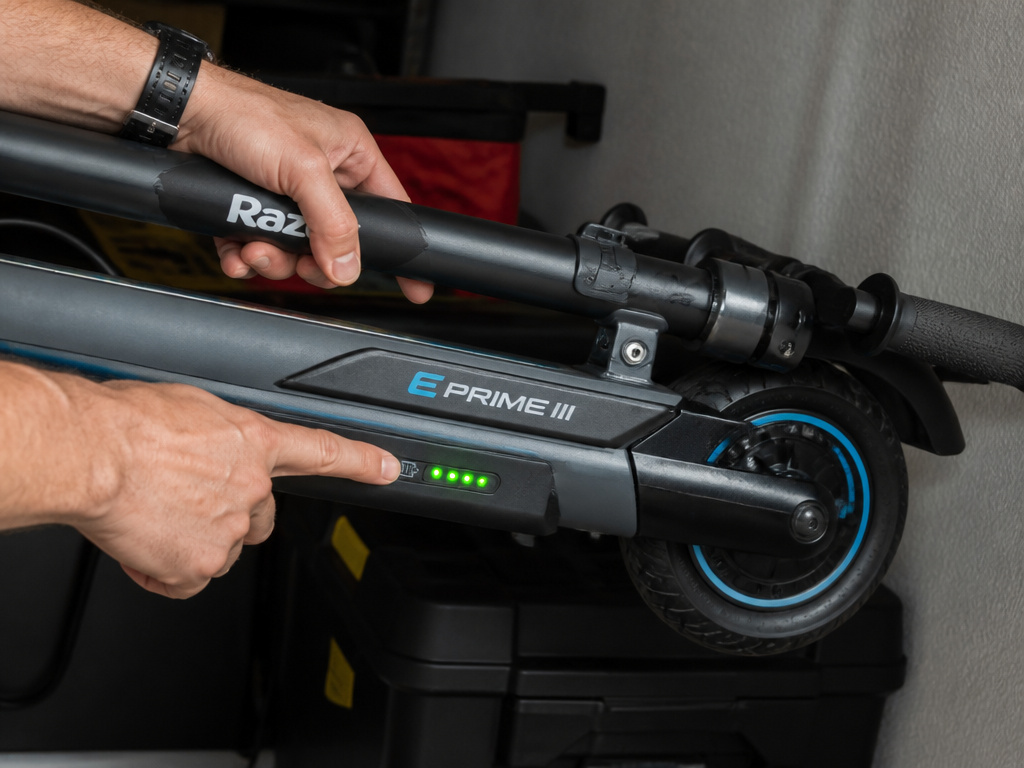
Folding an electric Razor for storage or transport adds a layer of battery care. Getting this wrong can turn a functional scooter into a paperweight faster than a crash.
The biggest point of confusion is charging state for storage. The E Prime III manual explicitly says: “Fully charge battery before storing for extended periods of time.” Why the discrepancy? Razor’s guidance prioritizes preventing a deep discharge. If a battery self-discharges to zero volts while in storage, it can become permanently damaged and refuse any charge. Their advice is a conservative, one-size-fits-all rule to avoid warranty returns. For long-term storage (months), following the manual is safest for warranty.
Temperature is critical. The C30 manual warns: “Do not charge at or below 32°F (0°C).” Charging a cold lithium battery can cause permanent internal damage. If you’re bringing a scooter in from a cold car or garage, let it warm to room temperature before plugging in the charger.
Worth knowing before you start: The E Prime III battery must be above freezing to charge safely. This isn’t a minor detail, it’s a chemical requirement.
When folding an electric model for transport, take a glance at the battery indicator lights if your model has them. You don’t want to arrive at your destination with a dead scooter.
Finally, store it indoors. The manuals for the E Prime III and C30 note that prolonged exposure to UV rays and rain can damage the plastic enclosure and electronics. A folded scooter tucked in a garage corner lasts years longer than one left on a sunny porch.
Maintenance for a Smooth-Folding Scooter
A little preventative care keeps the mechanism working for years. This takes five minutes every few months.
First, keep it clean. Wipe down the latch area and the mating surfaces of the T-bar and deck after riding on dusty paths. Grit acts like sandpaper on the plastic and metal parts. A dry cloth is usually enough.
Second, lubricate sparingly. Once a year, or if the mechanism starts to feel gritty or squeaky, apply a tiny drop of silicone lubricant to the pivot points and the moving parts of the latch. Avoid petroleum-based oils or grease, they attract more dirt. Work the mechanism a few times and wipe off any excess.
Third, inspect for wear. Look for cracks in plastic levers, deep scratches on metal hooks, or any corrosion on spring coils. Razor sells replacement parts for most models. A worn or broken part should be replaced immediately, not just because it might fail, but because a failing latch can feel “sticky” and tempt you to use unsafe force.
If your scooter develops side-to-side play in the T-bar when it’s unfolded and locked, the main pivot bolts might need tightening. Refer to your model’s manual for the specific bolt size and torque. Overtightening can strip threads, so snug is the goal.
I recommend this: the two minutes you spend on this routine after washing your car or bike pays off the next time you need to quickly toss the scooter in your trunk.
What’s the difference between folding and non-folding scooters?
Folding scooters, including many kick-powered and some electric models, feature a mechanism that lets the T-bar collapse toward the deck. This action typically involves a knob or lever at the base of the handlebar post. Adults must assist children with this folding process, and everyone should keep their fingers clear during the action. Non-folding models, which include certain electric scooters, have a fixed frame for enhanced rigidity. These are often built for higher performance and carry different weight and age recommendations. Regardless of type, always check and secure all fasteners before every ride.
Frequently Asked Questions
Why isn’t my Razor scooter folding?
The most likely cause is that you haven’t fully disengaged the locking mechanism. For Anti-Rattle knob models, you must turn the knob counterclockwise before pulling up. For others, ensure you’re pressing the release button or lever completely and holding it while you move the T-bar. If it’s stuck from disuse, try the lubrication and gentle prying method described earlier.
Can all Razor scooters fold?
No. While most modern Razor kick scooters (A-series, Spark) and many electric models (E Prime III, C30, Raven) are designed to fold, some older or specialty models do not. Always check your product manual or look for a visible release mechanism near the base of the T-bar.
How do you fold down a Razor scooter for a backpack?
Most full-size Razor scooters, when folded, are too long for a standard backpack. However, as discussed in a Reddit community thread, owners often use a dedicated scooter carry bag or a large duffel. For true backpack portability, you’d need a micro-folding scooter from another brand.
Is it bad to leave my scooter folded?
There’s no mechanical harm in keeping it folded for storage or transport. The greater risk is battery-related for electric models (see storage charge advice) and general material degradation if stored in harsh conditions. The fold joint itself is designed for repeated use.
Why is my scooter not unfolding?
This is usually the inverse of a folding problem. Ensure the release mechanism is fully activated. Sometimes, the T-bar can settle into the folded position under tension. Try lifting the rear wheel off the ground slightly while activating the release to relieve pressure on the latch. If it’s a lever-type, make sure it’s snapped back into its original position after the last fold.
Before You Go
Folding a Razor scooter correctly hinges on one thing: matching your action to the mechanism you actually have. It’s a simple mechanical process, but forcing it is how things break.
If you take away one action from this guide, let it be this: find your manual online. The PDFs for the A6, E Prime III, C30, and others are all available on Razor’s website. The five minutes you spend looking at the diagrams will save you an hour of frustration and a possible repair bill. Your fundamentals are your foundation, even for something as basic as folding.
And if your scooter has been sitting unused for a season, expect some resistance. A stuck latch is almost always fixable with cleaning and lubrication, not brute force. Apply the same patience you would when breaking in a new skate, let the tool work for you. Now you can unfold a Razor scooter with the same confidence by following these steps.
