Impala Roller Skates Review: Pros, Cons & Verdict
This post contains affiliate links. As an Amazon Associate, we earn from qualifying purchases.
Impala roller skates are stylish, affordable beginner skates built with a PVC boot, aluminum alloy trucks, 58mm 82A urethane wheels, and ABEC 7 bearings. However, they have documented durability issues, particularly boot-heel separation, which can occur within weeks or months of casual use, and their warranty explicitly excludes aggressive skating and unauthorized repairs.
That separation issue isn’t just cosmetic. It’s a structural failure where the boot’s upper detaches from its sole, and it’s the single biggest complaint you’ll find in owner forums and in any detailed impala roller skates review. The skates are designed for recreational cruising, not for park skating or heavy impacts.
What follows is a breakdown of what you’re actually buying: the specs, the common failure points, the real-world sizing advice, and the maintenance that might extend their life. We’ll also stack them up against common alternatives so you can decide if the low entry price is worth the potential trade-offs.
Key Takeaways
- Impala skates are for casual, recreational skating only. Their warranty voids for aggressive or park use, and the PVC boot construction is not built for high-impact landings.
- Boot-heel separation is the most reported failure. Owners report the issue surfacing anywhere from ten days to three months of regular use, even indoors.
- Always use the official Impala size chart. Sizing opinions vary widely, but the manufacturer’s foot-length-to-size conversion is your most reliable starting point.
- You need a specific set of tools for maintenance. The manual lists a 1/2″ axle socket wrench, 9/16″ kingpin socket wrench, Phillips and Allen-head screwdrivers, a 3/8″ hardware socket wrench, and a 15/16″ open wrench for adjustable stoppers.
- The warranty has strict, fixed conditions. It is voided by aggressive skating, service by unauthorized persons, use of non-approved parts, or purchase from unauthorized or second-hand retailers.
Build Quality & Durability Issues
Look past the candy-colored vegan leather and the sleek aluminum plates. The most critical conversation about Impala skates happens at the seam where the boot meets the sole. This is where the brand’s reputation is made or broken, and the evidence from the field is hard to ignore.
Where this goes sideways: The boot’s upper detaching from the heel. This isn’t a scuff or a worn wheel; it’s a complete structural failure that renders the skate unsafe. One Zappos customer reported the heel separating on both boots after just ten days of daily indoor use. Another saw the boot detach from the heel after three months.
That’s the official line. The unofficial reality, echoed across Reddit threads and review sites, is that the boot’s PVC construction and adhesive bonding simply don’t hold up to sustained stress, even from dedicated beginners practicing basics. The failure often starts as a small gap you can press shut with your thumb, accompanied by a faint creaking sound when you flex the boot. Within a few more sessions, that gap widens into a visible split.
The rest of the hardware is a mixed bag. The aluminum alloy trucks and baseplate are solid for the price point. The 58mm 82A durometer wheels are a hybrid suitable for indoor and smooth outdoor surfaces. The ABEC 7 bearings will get you rolling. But these components orbit a central failure point. When the boot fails, the quality of the wheels becomes irrelevant.
| Component | Specification (Model IMPROLLER1) | Common Owner Complaint |
|---|---|---|
| Boot Material | PVC upper, heel, and sole | Prone to separation at heel; stiff, non-breathable |
| Trucks/Plate | Aluminum alloy | Generally acceptable; some report loose kingpins out of the box |
| Wheels | 58mm, 82A durometer, nylon-core urethane | Wear faster than expected for casual use; not replaceable without tools |
| Bearings | ABEC 7 | Adequate for beginners; often one of the first parts owners upgrade |
| Toe Stop | PU brake stopper | Fixed (non-adjustable); wears down quickly on outdoor surfaces |
This is the core trade-off. You are buying a visually appealing package where the most expensive part to manufacture—a durable, flex-tolerant boot—has been value-engineered. For some, that’s a fair gamble for a first pair. For others, it’s a deal-breaker.
Are Impala Roller Skates Good for Beginners?
The short answer, as often noted in an impala roller skates review, is a hesitant yes, with major caveats. Their low cost and immediate availability lower the barrier to entry, which is a genuine benefit. But “good for beginners” shouldn’t just mean “cheap.” It should mean “safe and reliable while you’re learning,” and that’s where the picture gets fuzzy.
One point is clear. If you are an absolute beginner who will skate once a week on a smooth rink floor and you treat them with kid gloves, a pair of Impalas might very well last you a season. I’ve seen it happen. The Reddit community has users whose Impalas served them fine for a year of light recreational use. The problem is the wild inconsistency. For every one of those stories, there’s another where the skates disintegrated during the learning phase, potentially causing a fall and absolutely destroying a new skater’s confidence.
A beginner’s focus should be on building muscle memory and balance, not worrying if their equipment will hold. A sudden equipment failure mid-drill is more than an inconvenience; it can lead to a bad fall and a long-term fear of skating.
The stiff, unforgiving PVC boot is a double-edged sword for new skaters. On one hand, it provides more ankle support than a soft boot, which can help a wobbly beginner feel secure. On the other, it doesn’t break in and mold to your foot like leather or suede, which can lead to pressure points and blisters during longer sessions. You’re trading long-term comfort for short-term stability.
So, should a beginner buy Impalas? It depends on your risk tolerance and goals.
- Yes, if: You want to try skating with minimal financial commitment, you’ll stick to smooth, controlled environments, and you’re prepared to inspect your skates before every use for signs of separation.
- No, if: You’re serious about progressing beyond basics within a few months, you plan to skate outdoors on rough pavement, or the idea of your skates failing unexpectedly makes you anxious.
For those in the “No” camp, looking at established brands like Riedell or Sure-Grip is a wiser investment. These brands are fixtures in roller derby and artistic skating for a reason—their builds prioritize durability and performance over fast-fashion trends. You can find our guide to some of the best quad skates for a detailed comparison.
Sizing, Fit, and Comfort
Navigating Impala sizing is your first test as a new owner, and the instructions are contradictory. The official manual advises choosing based on your shoe size, height, skill level, and usage. Online, you’ll find a civil war between “runs true to size” (as reported by schimiggy.com) and “runs at least a whole size small” (as reported by a Zappos customer).
Here’s the physics of it. The boot is a rigid PVC shell with minimal interior padding. It doesn’t stretch. There’s no “break-in period” in the traditional sense where the material softens and conforms to your foot. Any comfort gain comes from the foam insole compressing, not the boot expanding.
| Sizing Guidance Source | Claim | Recommended Action |
|---|---|---|
| Impala Official Size Chart | Provides a foot-length (in cm/mm) to skate size conversion. | Follow this. Measure your foot and use their chart, not your street shoe size. |
| Blog Review (schimiggy.com) | “Runs true to size. I ordered my street size 7 and the size 7 fit.” | Risky. This is one person’s experience with one foot shape. |
| Zappos Customer Review | “They do run at least a whole size small.” (Anika) | Highlights the variability. Another Zappos customer (MD) said using the Impala chart yielded a perfect fit. |
The most important rule is to use the Impala-specific size chart from their website. Ignore the sizing guide on Zappos or Amazon. Measure your foot from heel to longest toe, and match that measurement to the chart. If you’re between sizes, the consensus is to size up. A skate that’s too small will cramp your toes and cut off circulation; a slightly roomy skate can be adjusted with a thicker sock or an aftermarket insole.
Comfort is their weakest point. The PVC boot doesn’t breathe. During longer sessions, your feet will be sweaty and you might feel pressure on your ankle bones or the ball of your foot. This isn’t a deal-breaker for a 30-minute cruise, but for longer sessions, it’s a significant drawback compared to skates with padded liners and flexible uppers.
Price, Value & Who They’re For
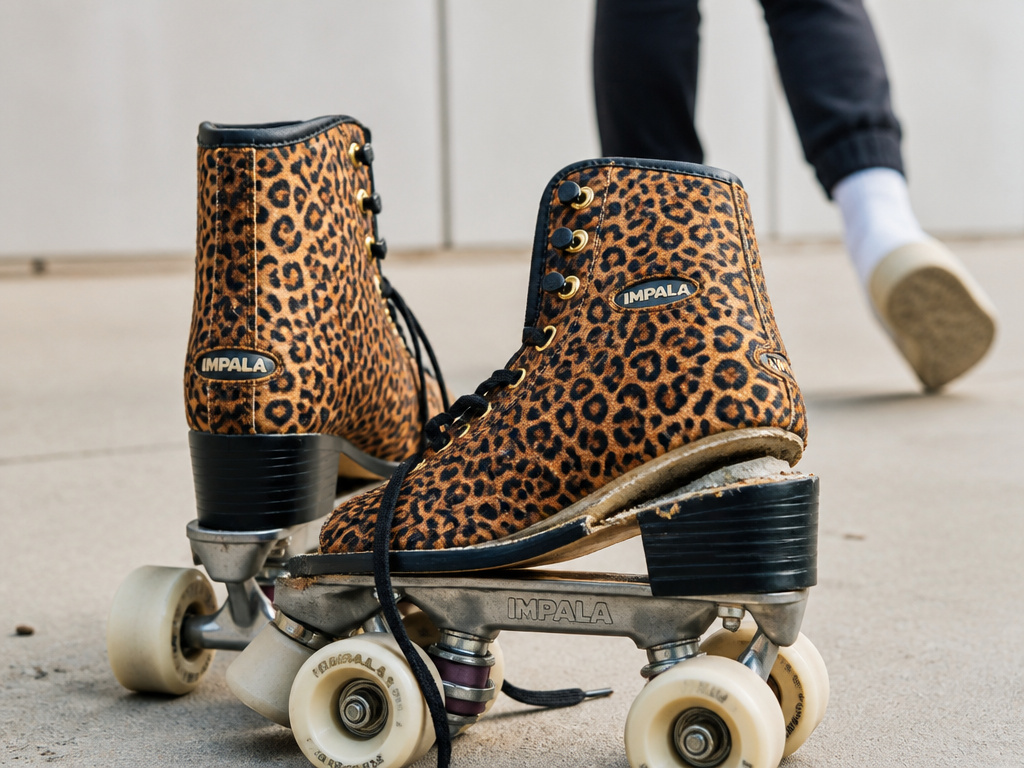
At first glance, the value proposition is simple: Impala skates cost significantly less than premium brands. A leopard Impala retails for around $95, while a Moxi Lolly starts at $349. That’s a massive difference. But value isn’t just the price tag; it’s what you get for that money over the usable lifespan of the product.
The initial cost is low. If your skates suffer a heel separation outside the warranty window, you now own a broken product. You’re not just out $95; you need to spend more on a replacement pair. That’s a bad calculation. Conversely, if you buy a more expensive pair of skates and they last for years of regular use, your cost-per-skate-session plummets.
The part nobody mentions: Budget skates like Impalas have a high attrition rate. A portion of buyers will have them fail quickly and quit skating altogether, viewing it as a failed experiment. Another portion will have them last just long enough to fall in love with the sport, then face an unplanned upgrade purchase sooner than expected.
So, who is the ideal Impala customer?
- The Casual “Try-It” Skater: Someone who wants to skate a few times a month on bike paths or at the rink, values aesthetics highly, and accepts that these might be a short-term item.
- The Costume or Fashion Skater: Someone who needs a specific color for a performance, event, or photo shoot and doesn’t need long-term durability.
- The Cautious Newbie: A person who refuses to invest hundreds into a hobby they might not stick with, is willing to baby their gear, and will diligently check for wear.
If you see yourself progressing, if you feel the itch to try a skate park, or if you just hate the idea of disposable gear, the value equation shifts. Your money is better spent on an entry-level model from a core skate company. Our picks for the best roller skates include options that bridge the gap between beginner-friendly and progression-ready.
Maintenance & Care Guide
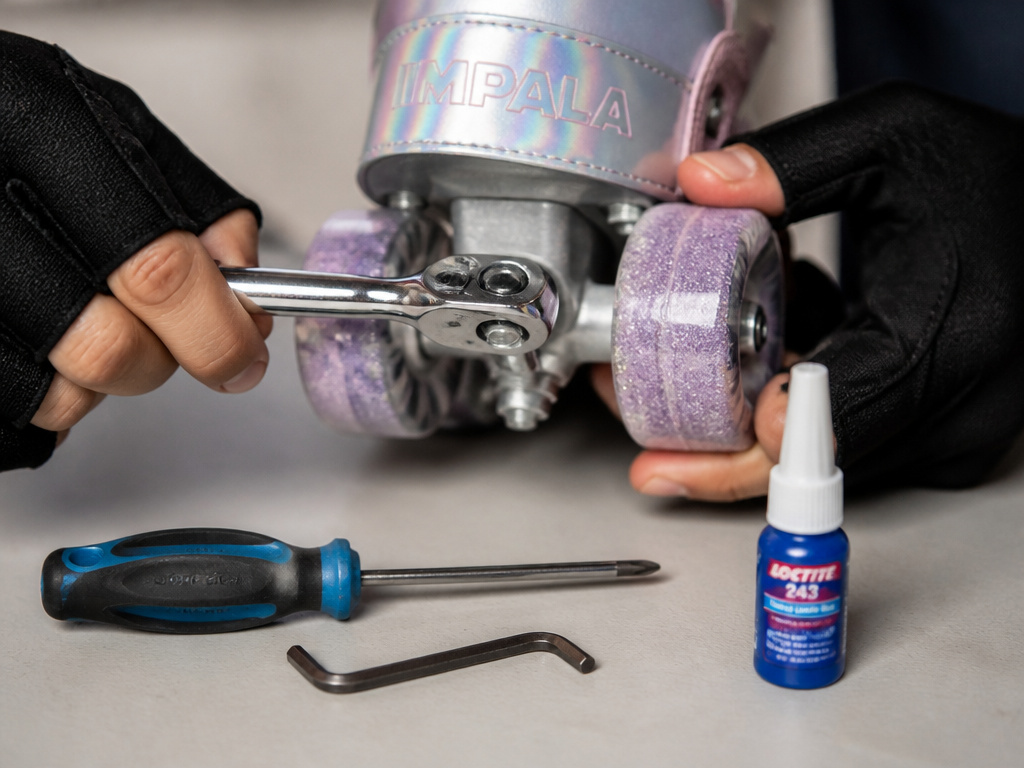
Impala skates aren’t a “buy it and forget it” product. Their longevity is directly tied to how well you maintain them, and the manufacturer provides a specific, mandatory list of care instructions. Ignoring these steps isn’t just about dirt; it can accelerate the very failures you’re trying to avoid.
First, the tools. You can’t properly maintain these skates with a standard multi-tool. The Impala Quad Skates Manual specifies you need:
- A 1/2″ axle socket wrench
- A 9/16″ kingpin socket wrench
- A Phillips-head screwdriver
- An Allen-head screwdriver (sizes will vary)
- A 3/8″ hardware socket wrench
- A 15/16″ open wrench (for adjustable stoppers)
If that list feels intimidating, that’s the point. This is not a simple, tool-free product. You need this kit to tighten loose trucks, adjust toe stops, and most importantly, to clean your bearings—a task the manual explicitly calls out.
Cleaning is where most owners damage their skates. The official Impala cleaning guide is adamant: “Avoid using water, this will rust the bearings.” If your skates or wheels get wet from rain or a damp surface, you must towel-dry them immediately. For a deeper clean, you remove the wheels and bearings and wipe away grime with a cloth. When reassembling, the guide states to use “one small drop of blue (removable) thread lock on the axle threads.” This prevents the axle nuts from vibrating loose, which is a common cause of wheel loss.
Before you start: Never use heat to dry your skates. The manual warns to keep them away from any heat source and not to leave them in a hot car. Heat warps plastic and weakens adhesive bonds. Also, replace frayed or broken laces immediately—a snapped lace mid-stride is a quick way to lose balance.
Protective accessories are recommended, not optional. Use toe guards to protect the boot from scuffs during toe stops. For outdoor use, consider different wheels than the stock 82A hybrids. This isn’t just about performance; it’s about protecting the boot. For a deep dive on wheels built for pavement, check out our selection of the best outdoor skates.
Impala vs. Moxi: A Quick Comparison
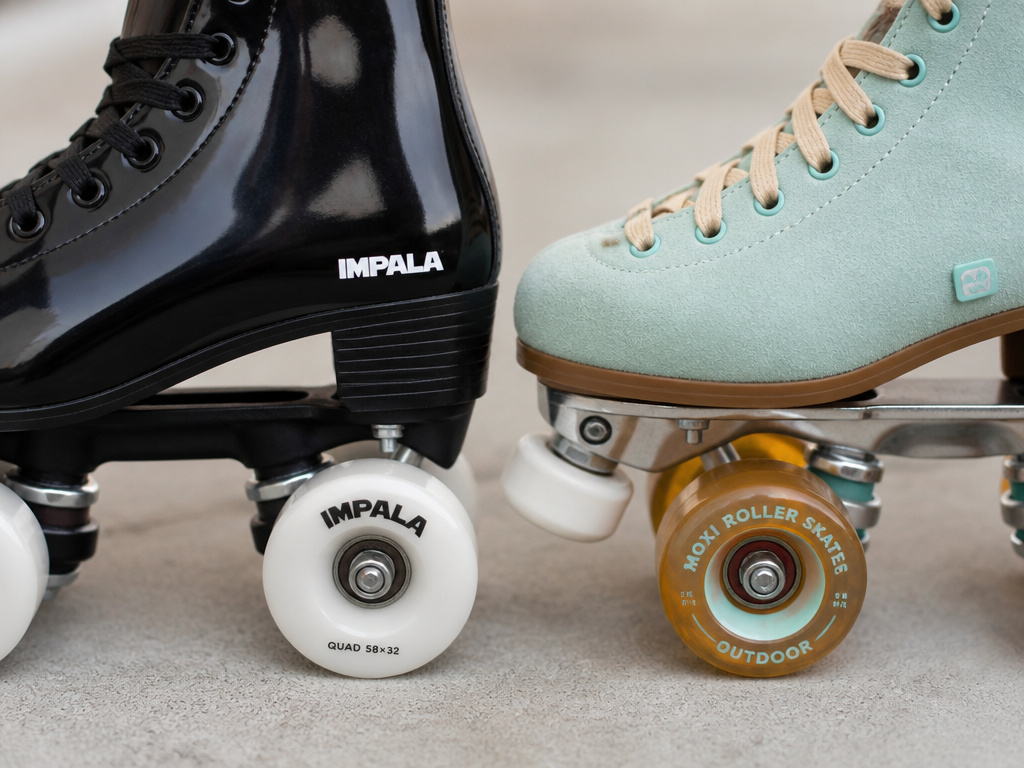
When beginners research skates online, the showdown is always Impala vs. Moxi. It’s the classic budget-vs-premium debate. Understanding the difference isn’t about brand loyalty; it’s about material science and intended use.
Moxi skates, like the Lolly, are built on proven Riedell platforms. The uppers are suede or leather, which molds to your foot over time. The construction is more durable. This translates to a different experience: a break-in period followed by better breathability and durability. You’re paying for that material quality. As noted in a comparison review, Moxi was founded in 2008 in California and are produced in the US; Impala was created in 2017 in Australia by Globe International.
The Impala, by contrast, is an off-the-shelf package. The fit is what it is on day one. They are not designed for the same activities.
| Aspect | Impala Quad Skate | Moxi Lolly |
|---|---|---|
| Boot Material | PVC (Vegan Leather) | Suede Leather |
| Break-in Period | Minimal (padding compresses) | Significant (leather molds) |
| Primary Use Case | Recreational cruising, beginner drills | Artistic skating, park skating, long-distance cruising |
| Wheel Hardness | 82A (Hybrid) | Often comes with 78A (Softer outdoor) or harder indoor wheels |
| Price Point | Budget (~$95 for leopard print) | Premium (~$349) |
The choice isn’t which is “better.” It’s which is appropriate for you right now. If $349 is an impossible sum and you need to start skating soon, Impalas are a viable path in. Just know that path may end abruptly. If you can save more, the Moxi (or a similar tier from Riedell or Sure-Grip) is a more durable option. This same principle applies when comparing them to other budget models, like the often-overlooked Chicago roller skates.
Warranty, Support & The Fine Print
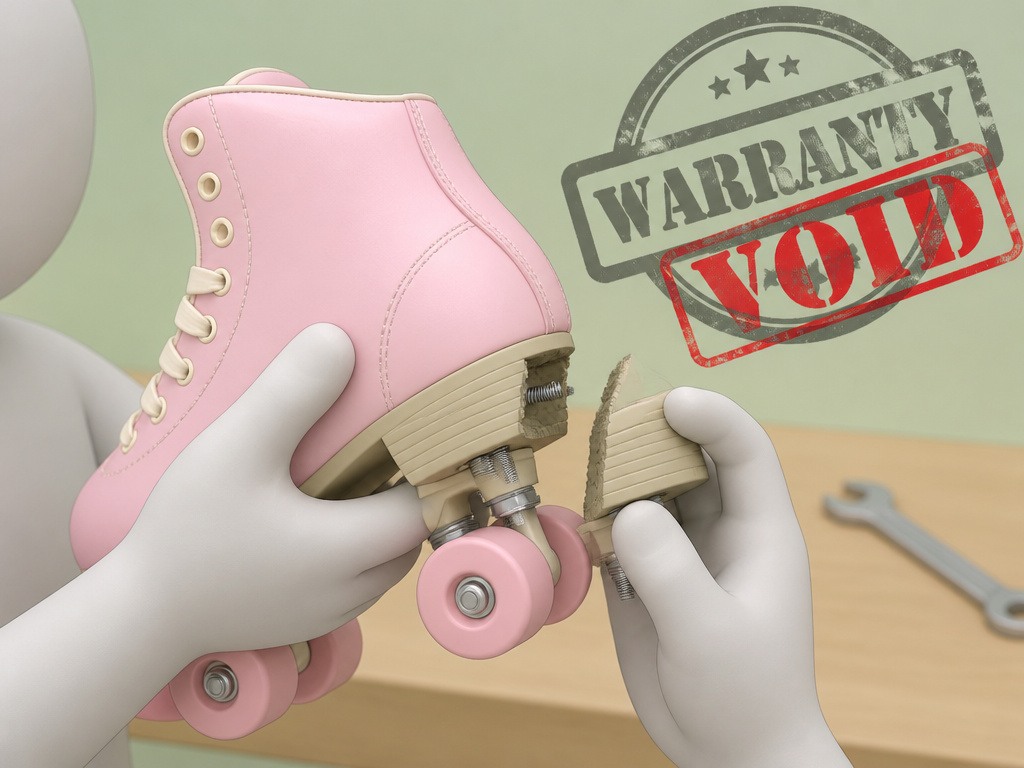
The Impala warranty is a critical document that many buyers discover only after something goes wrong. It’s not a blanket guarantee. It’s a set of strict conditions, and violating any of them leaves you with a broken product and no recourse.
The warranty warrantor differs by region. In the US, it’s Osata Enterprises, Inc. In Australia, it’s Globe International Limited. This matters for where you send a claim. The warranty covers defects in materials or workmanship for a limited period (the exact duration is not specified in the provided sources), but the exclusions are extensive:
- Aggressive or park skating voids it.
- Service, modification, or repair by an unauthorized person voids it.
- Using non-approved replacement parts voids it.
- Products purchased from unauthorized retailers or second-hand are not covered.
This creates a catch-22 for the proactive skater. You notice your trucks are loose. You’re handy, so you tighten them with your own wrench. If you later have a boot separation, Impala could deny the claim, arguing you performed unauthorized service. The safest route is to contact their support for any adjustment or repair, but that adds time and hassle.
Customer service experiences vary widely. Some report smooth replacements for defective skates within the warranty window. Others report long response times and denials based on “user error” or “improper use.” Your best protection is to purchase from an authorized retailer (like the official Impala site or major sporting goods stores) and keep your receipt. Buying from a third-party seller on Amazon or eBay often means no warranty coverage at all.
In practice, the warranty is designed to protect the company, not to guarantee a long product life for the consumer. It frames the skates as a delicate, specific-use item. Treat them as such.
Frequently Asked Questions
Are Impala roller skates good for beginners?
They can be, but with serious caveats. Their low cost lowers the entry barrier, which is a real benefit. However, their inconsistent durability and stiff, non-breathable boot mean a beginner might be dealing with equipment failure or discomfort while trying to learn basics. For a cautious, casual beginner on a tight budget, they’re an option. For someone who plans to skate regularly and progress, a more durable beginner skate from Riedell or Sure-Grip is a better investment.
What are the controversies surrounding Impala roller skates?
The primary controversy is the high incidence of boot-heel separation, where the PVC upper detaches from the sole, sometimes within weeks of purchase. This is widely reported on review sites and social media. The debate centers on whether this constitutes a design flaw or is simply the result of the skates being used outside their intended “recreational” purpose. Many in the skating community believe the company’s marketing of trendy colors and styles obscures these durability issues for new buyers.
What size Impala skates should I buy?
Ignore your standard shoe size. Use the official Impala size chart found on their website. Measure your foot from heel to longest toe in centimeters, and match that measurement to the chart. If you are between sizes, it is generally advised to size up. Do not rely on the sizing guides on Amazon or Zappos, as they are often incorrect for this specific brand.
Do Impala skates come with a warranty?
Yes, but it is a limited warranty with significant exclusions. It covers defects in materials or workmanship but is voided by aggressive/park skating, service by unauthorized persons, use of non-approved parts, or purchase from unauthorized or second-hand retailers. The warrantor is Osata Enterprises, Inc. In the US and Globe International Limited in Australia.
What are Impala skates good for?
They are good for casual, recreational skating on smooth surfaces—think rinks, bike paths, and boardwalks. They are suitable for beginners learning basic strides, stops, and crossovers in a controlled environment. They are also popular for fashion, costumes, and light outdoor cruising where style is a primary concern. They are not good for skate parks, aggressive skating, jumping, or regular use on rough asphalt.
The Bottom Line
As any thorough impala roller skates review will state, Impala roller skates are a product of compromise. You trade long-term durability, consistent comfort, and warranty security for a low upfront cost and immediate aesthetic appeal. For a specific person—the casual, careful beginner who just wants to try skating—that can be a valid trade.
But most reviews downplay this: the documented failure rate is high enough that buying them is a gamble. You might get a pair that lasts a year of gentle use. You might get a pair that separates in a month. The warranty terms are so restrictive that they offer little peace of mind.
If your budget is absolutely fixed under $100 and you accept the risk, go in with your eyes open. Buy from an authorized dealer, follow the size chart religiously, maintain them meticulously, and inspect the heel seam before every single skate session. Consider them a stepping stone, not a destination.
If you have any flexibility, however, pooling your resources for an entry-level model from Riedell, Sure-Grip, or even a reliable budget brand like Candi Girl is the smarter play. You’ll get a more comfortable, predictable, and ultimately safer learning experience. The initial investment is higher, but the cost per year of reliable skating is almost always lower. That’s not an opinion; it’s the consistent outcome reported by skaters who stick with the hobby beyond the first few months.
