Is a Drop Through Longboard Good for Beginners?
This post contains affiliate links. As an Amazon Associate, we earn from qualifying purchases.
A drop through longboard is a strong choice for most beginners. The design mounts the trucks through the deck, lowering your center of gravity for better stability and making pushing less tiring. However, not all drop-throughs are equal, a stiff, moderately sized deck is key, while a highly flexible one can make balancing tricky for newcomers.
That stability is the main event, but the devil is in the details. The “drop-through” label covers everything from ultra-stiff commuters to springy carving boards. A common question is, “Is a drop through longboard good for beginners?” The difference comes down to construction and components, which decide whether a board feels like a stable platform or a wobbly trampoline.
What follows is a breakdown of the real beginner benefits, the specs that matter (wheelbase, flex, truck type), a direct comparison with other deck styles, and specific models that get it right. We’ll also cover the common mistakes new riders make on a drop-through and when you might actually want something else.
Key Takeaways
- A stiff or low-flex drop-through deck in the 38–42 inch range offers the best stability for learning; highly flexible models like the Loaded Icarus can challenge your balance when pushing.
- You must pair it with Reverse Kingpin (RKP) longboard trucks; street-style trucks don’t turn enough and can make the board too low, according to Lush Longboards.
- For your first board, look for a complete setup with 70–75mm, 78A–83A wheels and ABEC-7 or better bearings, this combination smooths out cracks and maintains speed with less pushing effort.
- Wheelbite is a real risk if you loosen the kingpin nut too much for more maneuverability; leave 1–2 screw threads visible on the kingpin as a gauge, as Decathlon’s guide advises.
- While drop-throughs are excellent for learning basics, their lower turning force means dedicated top-mount decks are often preferred for advanced freeride and downhill riding later on.
The Core Beginner Benefits of a Drop Through Longboard
The advantage isn’t subtle. When you step onto a properly set-up drop-through after trying a standard top-mount, the lower platform is immediately noticeable, which is a key reason the is a drop through longboard good for beginners question gets a positive answer. Your feet are closer to the pavement, which shifts your center of gravity downward. This isn’t about feeling “lower”, it’s about physics. A lower center of mass resists tipping, which is exactly what you want when you’re still building the muscle memory for balance.
A drop-through longboard’s trucks mount through a hole in the deck, placing the baseplate above the wood and the hanger below. This configuration lowers the deck height compared to a top-mount, reducing the distance between the rider’s feet and the ground and improving stability.
The second benefit is mechanical efficiency, which is central to the is a drop through longboard good for beginners discussion. Pushing a longboard is a one-legged balancing act. On a higher board, you have to lift your back foot farther down to reach the ground, then lift your body weight back up onto the deck with each push. It’s tiring. A drop-through cuts that vertical distance, so each push stroke is shorter, requires less leg lift, and conserves energy. You can practice longer before fatigue sets in, which is everything when you’re drilling fundamentals.
Key Specs That Make or Break a Beginner Drop-Through
Not all drop-throughs are created equal. You can find them in a variety of lengths and constructions, from rock-solid 9-ply maple to flexy composites. For a beginner, three specs are essential.
First, deck flex. A board with moderate to low flex provides a predictable, stable platform. High flex, like that found in the Loaded Icarus, has a purpose, it creates a lively, surfy feel for carving. But for a beginner, that flex introduces a variable. As you push off with your back foot, your front foot presses down on the deck, causing it to bend. That movement can make balancing on that front leg surprisingly difficult. One review of the Loaded Icarus notes this directly: its camber and flex “can make it difficult to balance” when pushing. Start stiff.
Second, truck type and geometry. This is where a common mistake happens. A drop-through deck will physically accept any skateboard truck. But Lush Longboards, who pioneered the commercial drop-through speedboard, states clearly: “Regular Street trucks don’t turn enough for a drop-through, and often they make the board too low.” You need Reverse Kingpin (RKP) longboard trucks. Look for a baseplate angle between 44 and 50 degrees.
Third, wheelbase. This is the distance between the inner truck mounting holes. A longer wheelbase (say, 29–31 inches like on the Yocaher Drop Through) increases stability. A shorter wheelbase makes the board more maneuverable. Sources disagree on ideal beginner wheelbase: Longboards USA recommends 20 to 26 inches for cruising and learning basics, while some complete drop-through models like the Yocaher (31″) and Flybar (29″) have longer wheelbases for stability.
| Spec | Beginner-Friendly Range | Why It Matters | Example Model |
|---|---|---|---|
| Deck Length | 38–42 inches | Offers a stable platform without being unwieldy; fits most rider heights. | Flybar Twin Tip (40.5″) |
| Wheelbase | 26–31 inches | Longer wheelbases (29″+) favor stability for cruising and learning. | Yocaher Drop Through (31″) |
| Truck Type | Reverse Kingpin (RKP) | Designed for longboarding turn characteristics; street trucks don’t turn enough. | Standard on most completes |
| Wheel Durometer | 78A–83A | Softer wheels grip better and absorb vibrations from rough pavement. | Yocaher (78A), Flybar (82A) |
| Deck Flex | Low to Medium | Predictable, stable platform; high flex can challenge balance when pushing. | 9-ply Maple construction |
Drop-Through vs. Other Deck Types: Where It Fits

A drop-through isn’t the only low-riding option. Understanding the landscape helps you know what you’re buying, and what you’re not.
Drop-Through vs. Top-Mount: This is the most direct comparison. A top-mount has its trucks bolted directly underneath the deck. This puts your feet directly over the trucks, giving you maximum turning force for carving. The trade-off is a higher ride height, which means less stability and more effort when pushing. For a beginner, the drop-through’s stability and pushing ease usually win. For advanced riders doing sharp carves or slides, the direct feel of a top-mount is often preferred.
Drop-Through vs. Drop-Down (Drop Deck): This is where visual confusion happens. A drop-down deck has a section that curves downward between the trucks, lowering the standing platform. The trucks themselves can be mounted either top-mount or drop-through. A deck that is both dropped and drop-through is called a double-drop. It’s the lowest riding option of all. While incredibly stable and easy to push, the deep foot pockets can lock your feet in place, making it harder to adjust your stance while moving. For a pure beginner focused only on cruising, a double-drop like the Atom Drop Deck is fantastic. For someone who wants to progress into carving and basic slides, a standard drop-through offers more foot mobility.
Where this goes sideways: Choosing a drop-through based solely on the label. A flexy, short drop-through meant for pumping (like the Loaded Icarus) behaves very differently than a stiff, long drop-through meant for commuting (like the Yocaher). The riding style the manufacturer intended matters more than the mounting style alone.
The Right Setup: Trucks, Wheels, and Bearings
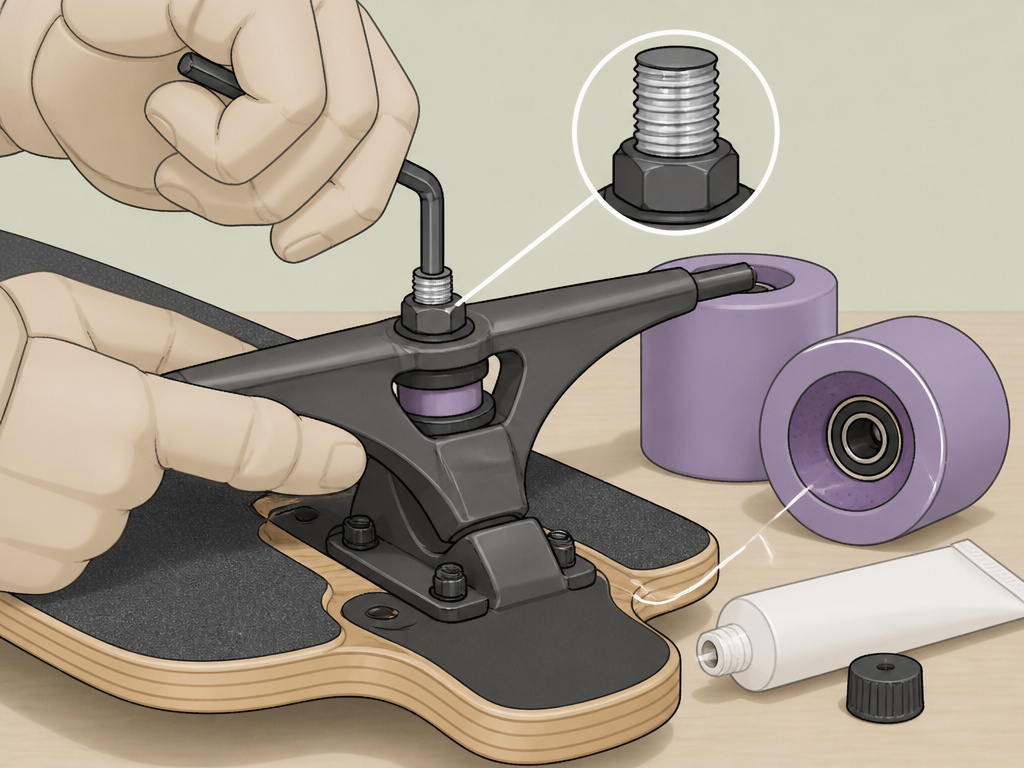
Your deck is just the starting point. The components bolted to it determine 80% of how the board feels. For a beginner drop-through, follow this checklist.
Trucks: As established, insist on Reverse Kingpin trucks. The hanger width should match your deck width; for a 9 to 10-inch deck, 180mm trucks are standard. When you first set up the board, don’t crank the kingpin nut down. Tighten it just until there is no lateral play in the hanger. Decathlon’s guide offers a gauge: leave one or two screw threads visible on the kingpin. Overtightening flattens the bushings and kills maneuverability; under-tightening leads to wheelbite.
Wheels: The sweet spot is 70–75mm in diameter with a durometer (hardness) of 78A to 83A. Larger diameters roll over cracks and pebbles more easily. Softer durometers provide more grip and a smoother, quieter ride. Avoid hard, small wheels designed for skatepark tricks, as they vibrate painfully on rough asphalt.
Bearings: The ABEC rating indicates precision tolerances, not necessarily speed. For beginners, ABEC-7 is a reliable minimum; ABEC-9 is better. The more important rule is maintenance. Longboards USA advises cleaning bearings twice a year or after any wet riding, and never using WD-40, which strips lubrication and attracts grit. A simple bearing lubricant is all you need.
Common Beginner Mistakes on a Drop-Through (And How to Avoid Them)
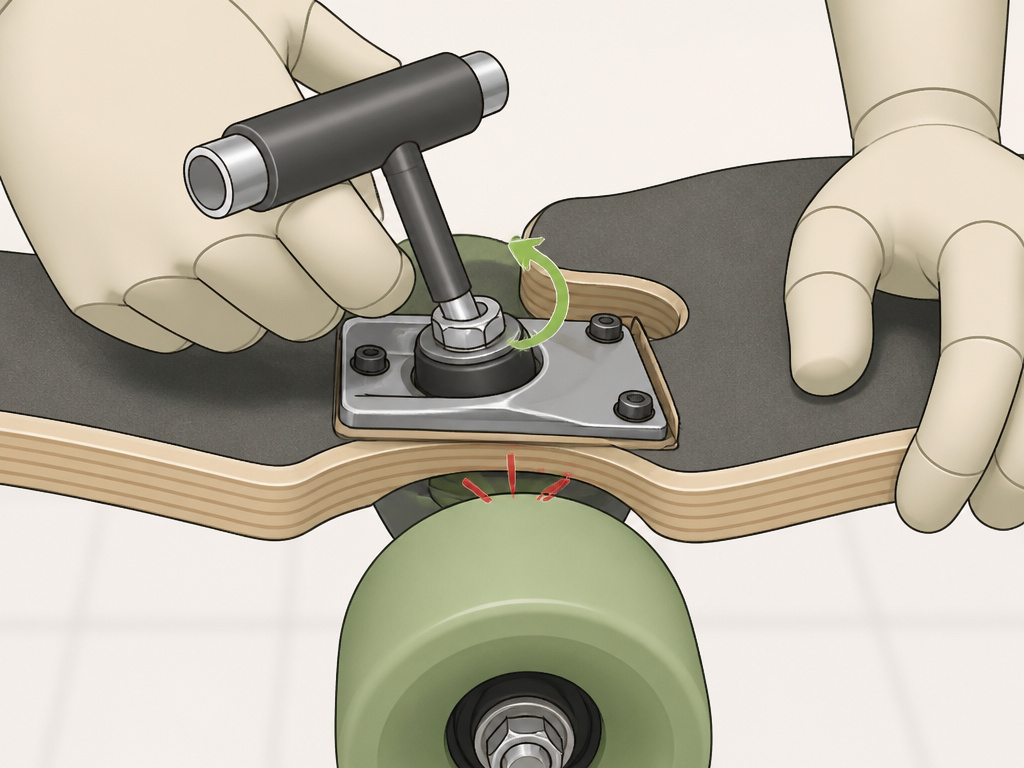
I’ve watched enough new riders to see patterns. Here are the top three missteps specific to drop-throughs.
- Ignoring Truck Tightness. Loosening your trucks feels cool, the board carves deeply with little effort. But on a drop-through, you have less clearance between the wheel and the deck. Crank them too loose, and you’ll experience wheelbite: the wheel grabs the deck during a turn, locking up and throwing you off. The fix is simple: make small adjustments. Tighten the kingpin a quarter-turn, test, and repeat until the wheel clears the deck in a full lean.
- Pushing with a Bent Front Knee. The lower platform can create a false sense of security, leading to a lazy, bent-knee pushing stance. This wastes energy and reduces control. Your front leg should be nearly straight, acting as a stable pillar. Practice pushing on grass first to focus on form without rolling away.
- Choosing the Wrong Terrain. Drop-throughs excel on smooth to moderately rough pavement. Their lower clearance makes them prone to hitting larger rocks or deep cracks that a top-mount might roll over. Scan your path ahead. If you’re riding in an area with lots of debris, a board with larger wheels or slightly more height might be a better tool for the job.
Is a Drop Through Longboard Good for Every Beginner?
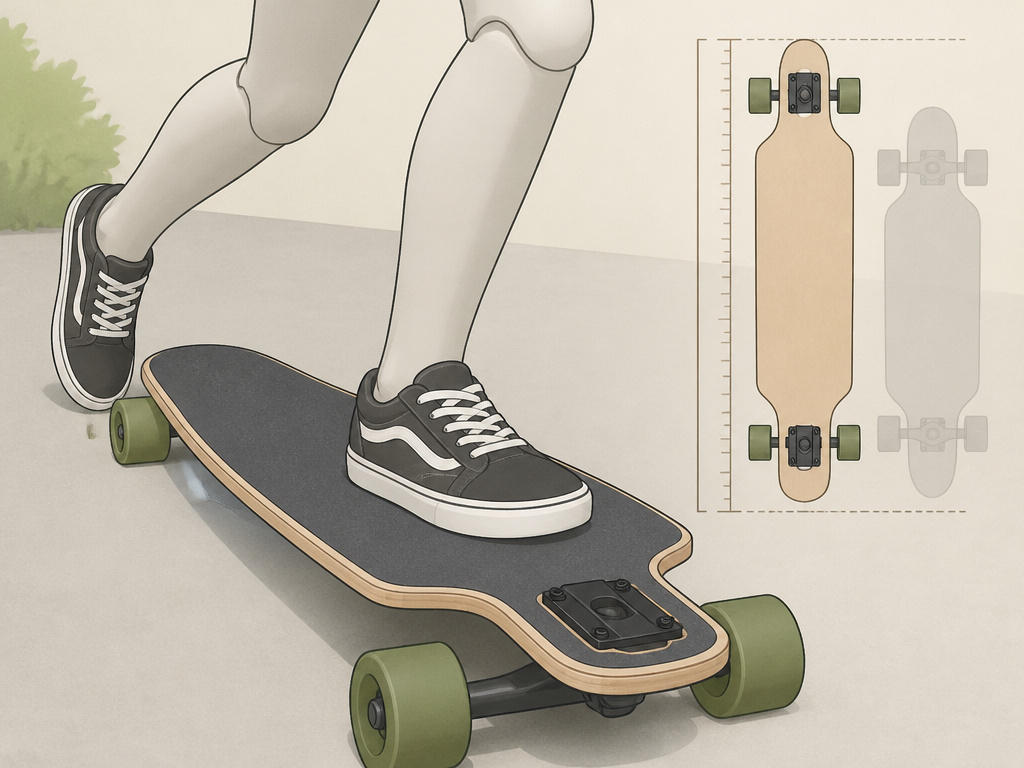
Most sources agree: yes, a drop-through is a great beginner choice. But the sources also show a clear split on the details, and that’s where your decision lives.
Sources disagree on deck length for beginners: the American Academy of Orthopaedic Surgeons (AAOS) recommends shorter decks for easier handling, while brands like Decathlon and Lush Longboards market their drop-through models as ideal for learning due to stability and ease. Brands like Decathlon and Lush Longboards, however, specifically market their drop-through models as ideal for learning due to stability and ease. The disagreement isn’t about the concept, it’s about application. A very short, top-mounted cruiser might be more maneuverable for a quick learner in a tight space, while a longer drop-through provides more stability for someone building confidence on open paths.
Your physical build matters, too. Use the sizing guidelines from Longboards USA: if you’re under 5’6″, look at decks from 32 to 38 inches; 5’6″ to 5’10”, 38 to 42 inches; over 5’10”, 40 to 46 inches. Match the deck width to your shoe size for a comfortable, secure stance.
The part nobody mentions: A beginner board is a learning tool, not a lifetime commitment. The perfect beginner drop-through (stable, stiff, easy-pushing) might feel boring once you master cruising and want to carve harder or learn slides. That’s normal. Plan to outgrow it as your skills progress. That progression is a sign of success.
Is a drop through longboard good for downhill and freeride?
A drop-through deck is often recommended as a starting point for beginners interested in downhill and freeride skating. The lower platform and lower center of gravity provided by the drop-through mounting increase stability at speed, which is a core requirement for these disciplines. This stability can make it easier for a new rider to learn essential speed control techniques like footbraking and initiating predrifts or slides. For these purposes, it’s crucial to pair the deck with the correct type of trucks. Reverse kingpin trucks are strongly recommended over standard street-style trucks, as they provide the necessary turning response and prevent the board from being too low to the ground.
Frequently Asked Questions
Are drop-down longboards better than drop-through for beginners?
They can be, depending on your goal. A drop-down (or double-drop) is the most stable and easiest to push, making it excellent for pure cruising and distance. However, the deep foot pockets can limit foot movement for carving. A standard drop-through offers a better blend of stability and room for progression into basic carving and sliding.
What size drop-through longboard should a beginner get?
For most adults, a drop-through between 38 and 42 inches long is the ideal starting point. This provides a stable platform without being too cumbersome to carry. For reference, the popular Yocaher Drop Through Complete is 41″, and the Flybar Twin Tip is 40.5″. Taller riders should lean toward the longer end of that range.
Can you do tricks on a drop-through longboard?
While not designed for kickflips or street skating tricks, drop-throughs are capable of many longboard-specific maneuvers. You can learn basic slides, carve hard, and even do some freestyle dancing or pumping on flexible models. Their lower height can make certain slides easier to initiate, but their weight and cutouts make them less ideal for technical flip tricks.
How do I know if my drop-through is too flexible for me as a beginner?
You’ll feel it when you push. If the deck noticeably bends under your front foot as you kick with your back foot, making balancing on that front leg a challenge, the flex is likely too high for your current skill level. A stiffer board will feel solid and predictable underfoot, which builds confidence faster.
Do I need special trucks for a drop-through longboard?
Yes. You must use Reverse Kingpin (RKP) longboard trucks. Standard street skateboard trucks (Traditional Kingpin) are not designed for the geometry of a drop-through deck. As Lush Longboards notes, street trucks “don’t turn enough for a drop-through, and often they make the board too low,” which can lead to wheelbite and a dead feel.
Before You Go
The consensus is clear: a well-chosen drop-through longboard is one of the best tools a beginner can start with. Its inherent stability and pushing efficiency remove common physical barriers to learning. But “well-chosen” is the key. Skip the exotic, flexy models and grab a complete with a stiff, 9-ply maple deck, proper RKP trucks, and soft, large wheels. Brands like Yocaher and Flybar offer exactly that in the affordable range.
A board that fits you will feel right from the first push. Then, before you ever step on it, buy a skate-specific helmet and wrist guards. The AAOS skateboarding safety guide emphasizes supervision for young riders and proper gear for all, your learning curve is much steeper with a sprained wrist.
Finally, trust the process more than the board. A drop-through is a fantastic facilitator, but the skill comes from consistent, focused practice in a safe, open area. Master pushing, turning, and foot braking on your stable drop-through longboard before you even think about hills or tricks. The board gets you rolling; the repetition builds the skill.
