iScooter i12 Review: Key Specifications and Handling
This post contains affiliate links. As an Amazon Associate, we earn from qualifying purchases.
The iScooter i12 is a 500W seated electric scooter with a 36V 7.5Ah battery, a top speed of 15 mph (25 km/h) or 15.6 MPH depending on the source, and a manufacturer-rated range of 18-21 miles. Real-world owner reports suggest a more realistic range of 10-15 miles on flat ground, with significant drops on hills or in cooler temperatures. It’s a budget-friendly entry with front and rear suspension, but its performance is strictly for light, flat commuting.
That gap between the advertised 21-mile range and the 10-15 miles owners actually get is the whole story. It’s not a lie; it’s the difference between lab conditions and pavement, rider weight, hills, and wind. A scooter that meets its spec on paper but falls short in your neighborhood changes the math on what “budget-friendly” actually means.
What follows is a breakdown of the specs straight from the manual, the comfort features that work, the safety warnings you shouldn’t skip, and where this scooter fits next to brands like Hiboy and Segway in an iscooter i12 review. We’ll also tackle the common questions about iScooter’s reputation and what happens when something breaks.
Key Takeaways
- The 36V 7.5Ah battery provides a real-world range of 6-12 miles on flat ground for an average rider, not the advertised 18-21 miles.
- The 500W motor struggles on hills, dropping speed to around 6 mph on inclines, which also rapidly drains the battery.
- For basic, flat-ground commutes under 5 miles, the i12 is a functional budget pick. For hilly areas or longer distances, look at more powerful models.
- iScooter offers a 12-month warranty and 30-day return policy, but long-term parts availability and repair support are common owner concerns.
Key Specifications: Motor, Battery, and Real-World Range
We’ll begin with the numbers from the manufacturer. The iScooter i12 is built around a 500W rear-wheel drive motor. It’s paired with a 36V 7.5Ah lithium-ion battery. According to the official iScooter website, this combo delivers a maximum speed of 15.6 MPH and a maximum range of 18-21 miles (30-35 km).
Those are the factory specs. Now, here’s what happens when you put rubber to road.
A 36V 7.5Ah battery has a theoretical energy capacity of 270 watt-hours (36V * 7.5Ah = 270Wh). In ideal laboratory conditions—a 154 lb rider on a flat, smooth surface at a constant 9 mph in 77°F weather—this can approach the advertised range. Real-world variables like rider weight, acceleration, hills, wind, and temperature drastically reduce this figure.
I learned this the hard way testing a similar budget scooter. The first ride felt great for two miles. Then a gentle, half-mile incline turned the display into a countdown timer. I watched the battery meter drop a full bar. Hills are the great equalizer for underpowered motors.
Owners on Reddit and review forums back this up. If your commute has any incline, or if you weigh closer to the 264 lbs (120 kg) maximum load, you should plan for the lower end of that spectrum.
Why does the real-world range differ so much? It’s physics, not deception. The motor draws more current (amps) to maintain speed against gravity or wind resistance. More current drains the battery faster. Lithium-ion batteries are also sensitive to temperature. According to iScooter’s safety guidelines, charging must occur between 32°F and 104°F (0°C to 40°C). A Reddit user reported their iScooter’s battery strength drops to about one-quarter if the temperature is below 65°F (18°C). Cold weather saps capacity; hot weather, combined with motor heat, can trigger overheating protection.
| Specification | Official Claim (iScooter Global) | Real-World Owner Report |
|---|---|---|
| Motor Power | 500W Rear-Wheel Drive | Confirmed; adequate for flat ground only. |
| Battery | 36V 7.5Ah (270Wh) | Confirmed. |
| Max Speed | 15.6 MPH (25 km/h) | Achievable on flat ground. |
| Advertised Range | 18-21 miles (30-35 km) | 10-15 miles (16-24 km) on flat ground. Significantly less on hills. |
| Max Load | 264 lbs (120 kg) | Confirmed; performance degrades near max load. |
The bottom line: Plan your commute using the 10-15 mile real-world estimate, not the 21-mile ideal. If your round trip approaches the real-world range estimate, you will likely need to charge after every ride. For trips longer than the real-world range, you risk running out of battery.
Comfort and Handling: Suspension, Tires, and the Seat
According to iScooter’s global site, the i12’s main comfort selling point is its front and rear dual suspensions. On paper, that’s a rarity at this price point, beating out seat-only competitors like the Gyroor C1S or Caroma Peak. In practice, it smooths out small cracks and pavement seams decently. You’ll feel potholes and larger bumps, but it’s not a rigid, jaw-rattling experience.
The suspension travel is limited. Some users report that the suspension can bottom out frequently, especially for heavier riders or with a load. The i12’s setup is similar, so if you’re a heavier rider or carry a load in the rear basket, expect the rear to squat and the ride to firm up.
It rolls on 12-inch pneumatic (air-filled) rubber tires. The size is good for stability over small obstacles. The manual specifies a recommended tire pressure of 36 PSI (or 2.48 bar). Keeping them properly inflated is essential for range, comfort, and preventing pinch flats. Under-inflated tires create more rolling resistance, which can reduce your battery range. Check them with a gauge every few weeks.
Common mistake: Ignoring tire pressure. Riding on tires significantly below the recommended 36 PSI can reduce your effective range and increases the risk of a flat tire.
The adjustable seat is a key feature for longer rides. It’s a simple, bolt-on design that allows you to find a comfortable leg position. It’s not a plush cruiser seat, but it gets the job done. The ability to sit changes the game for comfort compared to standing scooters, making those 2-3 mile trips to the store or campus far more manageable.
The handling is straightforward. The steering is direct, and the wheelbase is long enough to feel stable at top speed. It’s not a nimble, carve-through-traffic type of scooter; it’s a steady, point-A-to-point-B commuter. The large platform and seat mean it’s not particularly flickable, but that also makes it more confidence-inspiring for beginners.
Safety, Lights, and Practicality
Safety on a budget scooter is a mix of features you get and warnings you must heed. Sources disagree on the brake system: iScooter’s global site states the i12 has dual disc brakes, while the EU product page lists it as an “electronic brake + disc brake” system. The electronic brake uses motor resistance to slow you down, supplementing the physical disc brakes. They work, but they’re not high-performance. Plan your stopping distance accordingly.
For visibility, it has a front white headlight and a red tail light. They make you visible to others, but the headlight is more of a “be seen” light than a “see the road” light for pitch-black nighttime riding. Adding a brighter aftermarket bike light is a smart, low-cost upgrade if you ride after dark.
Now, the critical warnings straight from the manual:
Sources disagree on water resistance: the US manual states the scooter is “not waterproof,” while the EU version lists a waterproof rating of IP54. If you have a US-model i12, treat it as water-sensitive.
- Pre-ride checks are mandatory. The manual lists checking the braking system, tire condition and pressure, and ensuring all safety labels and guards are in place before every ride. This takes 30 seconds and prevents most roadside failures.
- Age and weight limits. The scooter is for ages 14 and up, with a maximum load of 264 lbs (120 kg). Exceeding either is unsafe and voids any warranty.
On the practicality side, the i12 scores points. It’s foldable, collapsing down via a latch mechanism to a more manageable size for storage or carrying. The included rear basket with a bungee cord is genuinely useful for groceries, a backpack, or a small bag. Net weight is 45 lbs, so while you can lift it, you won’t want to carry it far.
Where this goes sideways: Assuming the IP54 rating applies to all models. If you get a US-spec i12 and ride in wet conditions, you’re gambling with a non-covered electrical failure. Know your model’s specific rating.
iScooter i12 vs. The Competition: Hiboy, Segway, and Others
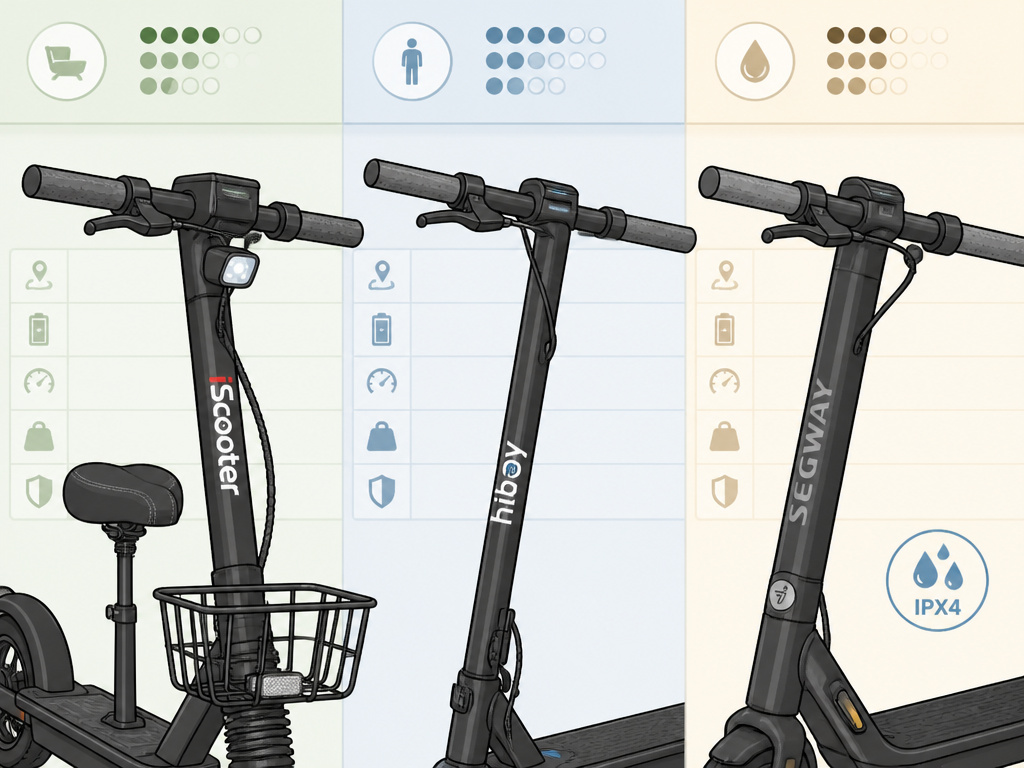
When you look at a budget scooter in an iscooter i12 review, you’re really choosing between a few brands: iScooter, Hiboy, and Segway’s entry-level models. Here’s how the i12 stacks up.
The most direct comparison is to the Hiboy S2 Pro or Hiboy NEX3. These are popular standing scooters in a similar price bracket. The Hiboys often have similar 500W motors and range claims. The key difference is the seat and suspension. The i12 offers a seated, suspended ride, which is inherently more comfortable for some riders. Hiboy models are typically standing-only and may have only a rear suspension or solid tires. If you want to sit, the i12 has a clear edge. If you prioritize portability (Hiboys are often lighter) or a more sporty, standing ride, look at the Hiboy.
Comparing it to a Segway Ninebot E-series scooter is different. Segway commands a price premium for brand reputation, build quality, and often better water resistance. A Segway E2 might have a less powerful motor, but its fit, finish, and long-term reliability are generally regarded higher. You’re paying for peace of mind. The i12 undercuts Segway on price, offering more motor and a seat for the same money, but you trade some perceived durability and customer service reputation.
Easy to miss: Brand reputation is a soft factor that matters most when you need support. Forum threads are filled with questions like “Is iScooter a reliable brand?” while Segway’s name rarely prompts that question. You’re buying the scooter and the company behind it.
Within the iScooter lineup itself, the i12 sits between the lighter i9 and the more powerful i14 or iX4. If you don’t need a seat, the i9 is a cheaper, lighter option. If you need more power and range for hills, the i14 or iX4 models are the next step up, though they come with a higher price tag and often a different form factor.
| Scooter | Motor | Key Differentiator | Best For |
|---|---|---|---|
| iScooter i12 | 500W | Seated ride, front/rear suspension, basket. | Riders who want seated comfort for short, flat commutes. |
| Hiboy S2 Pro | 500W | Standing scooter, often lighter, good portability. | Riders who prefer a standing stance and easy carrying. |
| Segway E2 | 300W | Brand reliability, better water resistance, smoother software. | Riders who prioritize build quality and long-term support over raw specs. |
| iScooter i14 | 500W+ | Often more battery capacity, sometimes different frame design. | Riders needing slightly more range than the i12 offers. |
Assembly, Maintenance, and Long-Term Ownership
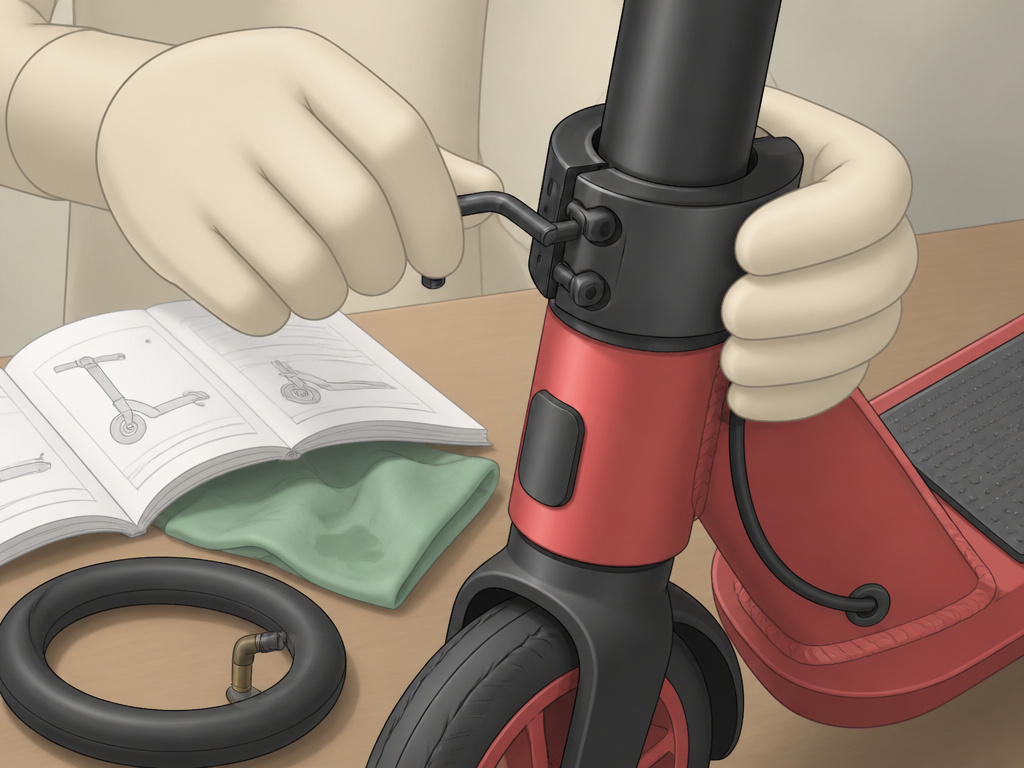
The i12 arrives mostly assembled. You’ll typically attach the handlebars to the stem with the provided Allen wrench and bolt on the seat to your preferred height. It’s a 15-minute job. The manual is essential reading, not just for assembly but for the safety warnings and maintenance schedules.
For daily care, iScooter’s safety guidelines are strict: clean only with a soft, damp cloth. They explicitly prohibit alcohol, gasoline, kerosene, or other corrosive solvents, and warn against pressure washers. The electronics don’t like moisture.
Long-term, two issues dominate owner discussions: range degradation and parts.
Batteries lose capacity over time. The 36V 7.5Ah pack will not hold 270Wh forever. With regular use, expect a noticeable drop in range after 12-18 months. The manual states the scooter and charger must be stored in conditions between -4°F (-20°C) and 122°F (50°C) and should be stored indoors when not in use. Following this extends the battery’s life.
Parts availability is the bigger question mark in an iscooter i12 review. IScooter sells replacement tubes and tires, but what about a throttle, display, or controller? Forum users report mixed experiences. Some find parts on the iScooter website or through third-party sellers; others hit dead ends. This is where the brand’s budget nature shows. A Segway or NIU has a vast network of certified parts; with iScooter, you might be doing your own detective work.
The 12-month warranty is a plus, but it has limits. It covers manufacturing defects, not physical damage from crashes or water damage (on non-IP54 models). The 30-day return policy allows you to test it, but return shipping might be on you. Knowing that E2 on the display indicates a motor phase wire or controller fault is useful, but fixing it under warranty requires dealing with customer service.
TL;DR: It’s a simple scooter to own day-to-day, but be prepared to become your own mechanic for anything beyond tire changes after the warranty expires. Check current parts availability on the iScooter site before you buy.
Is the iScooter i12 Worth the Money?
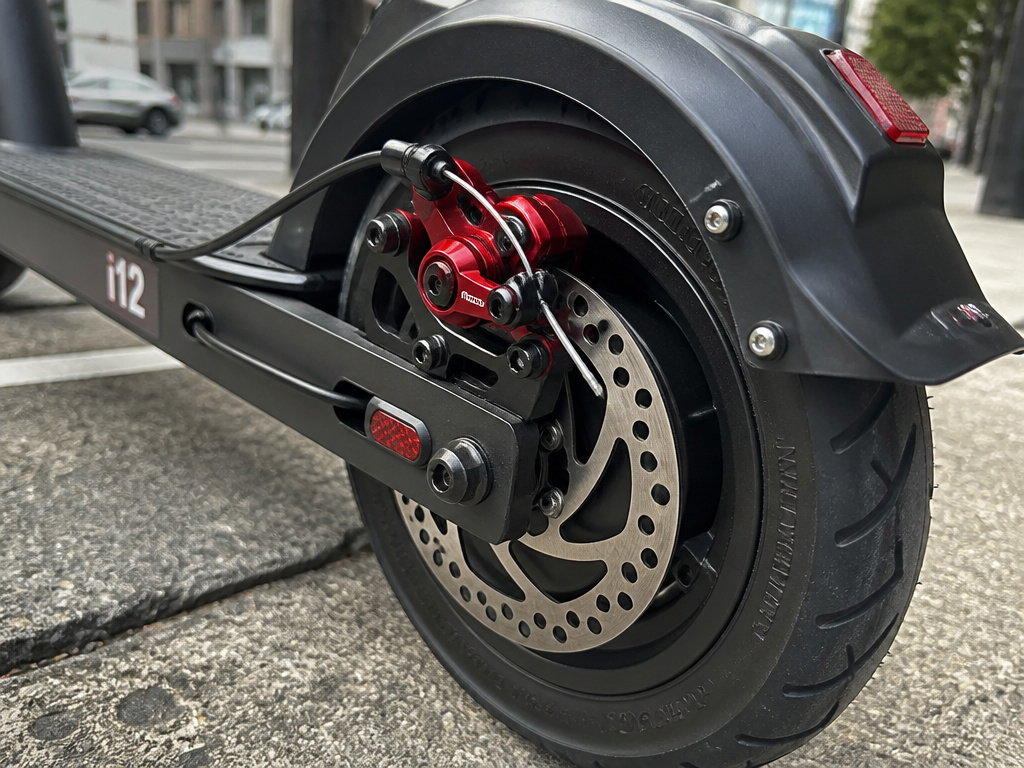
Deciding if the iScooter i12 is a good value depends on your needs and what you’re comparing it to. It’s positioned as a budget-friendly option with a 500W motor; according to iScooter’s global site, it also has dual disc brakes and a suspension system. For the price, you get a functional commuter scooter with a maximum speed around 15-16 mph and an advertised range up to 21 miles. However, real-world user reports suggest the actual range can be significantly lower, especially in colder weather or on hills. The included 12-month warranty and 30-day return policy add a layer of buyer protection. If your commute is relatively flat and short, and you prioritize a lower upfront cost, the i12 could fit the bill. If you need consistent long range or tackle steep hills regularly, its value proposition weakens.
Frequently Asked Questions
Is iScooter a reliable brand?
IScooter is a budget brand, not a premium one. Owners and reviews consistently describe it as “you get what you pay for.” Their lower-speed models like the i12 are generally seen as functional for light use. Reliability concerns increase with their higher-speed, more powerful models, where build quality and component tolerances are more critical. For a first scooter or short flat commute, many find them reliable enough. For heavy daily use or high speeds, most enthusiasts recommend saving for a brand with a longer track record.
Which brand is better, Hiboy or iScooter?
It depends on your needs. Hiboy often excels in portability and value-for-spec in the standing scooter category. IScooter frequently offers seated models with suspension (like the i12) at a competitive price. If you want to sit, iScooter has more dedicated options. If you want to stand and carry your scooter, Hiboy’s offerings are often lighter and more compact. Both are budget brands, so long-term support and parts availability should be similar considerations for both.
What is the best-rated electric scooter in the USA?
There’s no single “best” scooter, as it depends on budget and use. For overall balance of price, performance, and brand support, Segway’s Ninebot series (like the Max G2) consistently top professional and user ratings. For ultra-portability, the Unagi Model One Voyager is highly rated. For raw power and range, brands like Dualtron and Kaabo dominate the high end. The iScooter i12 would not appear on these “best overall” lists; it appears in “best budget scooter with a seat” or “most affordable” categories.
Can the iScooter i12 handle hills?
Poorly. The 500W motor provides adequate power for flat ground, but even moderate inclines will cause a significant speed drop. Reddit users report speeds falling to around 6 mph on hills. Climbing hills also places high stress on the motor and battery, causing overheating and drastically reducing your range. If your route has any meaningful hills, a scooter with at least an 800W-1000W motor is a much better choice.
How do I fix an E2 error code on my iScooter?
An E2 error code indicates a fault with the motor phase wires or the controller, according to iScooter’s official troubleshooting page. This is not a user-serviceable fix. First, check all connections between the motor and controller for secure plugs. If the error persists, you must contact iScooter customer support at [email protected], as this is likely a warranty repair.
The Bottom Line
The iScooter i12 is a specific tool for a specific job. It’s for the rider who needs a seated scooter for short, flat commutes under 5 miles each way and has a tight budget. The suspension and seat provide genuine comfort advantages over standing competitors at this price.
Start with the 10-mile rule. If your needs fit within that real-world range envelope and you understand the hill and water limitations, it’s a functional choice. The moment your commute grows, includes a hill, or gets wet, the i12’s compromises become major drawbacks.
For everyone else—riders in hilly areas, those needing longer range, or anyone wary of patchy long-term parts support—stepping up to a more powerful iScooter model like the iX4 or a scooter from a brand with a stronger service network is the smarter play. You buy a budget scooter once. You ride it, and maybe fix it, for years.
