Isinwheel Electric Scooter Review: X1 vs. GT2 Compared
This post contains affiliate links. As an Amazon Associate, we earn from qualifying purchases.
Isinwheel electric scooters offer a wide range of models with bold performance claims at competitive prices, but a closer look at official manuals, warranty terms, and a documented safety recall reveals significant gaps between marketing, manufacturer instructions, and real-world owner experience.
That gap between promise and practice is where most buying decisions get made. The advertised top speed and hill-climbing grades grab attention, but the small print on battery care, water resistance, and what the warranty actually covers decides whether a scooter is a reliable commuter or a frustrating project. This is precisely the kind of detail a thorough Isinwheel electric scooter review would examine.
What follows: a breakdown of Isinwheel’s real-world performance based on owner reports, a dissection of their conflicting warranty and care instructions, the details of a specific model’s safety recall, and a direct comparison of their popular models for different types of riders.
Key Takeaways
- Advertised range assumes ideal conditions (70kg rider, flat roads, Eco mode); real-world use often yields significantly less distance than advertised, especially with heavier riders or hills.
- Warranty terms conflict between documents: the X1 manual promises a 180-day battery warranty, while the official FAQ states 6-month coverage for batteries, motors, and control boards.
- A specific fire hazard recall exists for the E9T model due to sharp edges on folding handlebars shearing internal wiring, as documented in a UK Government Product Safety Report.
- Owner reports, such as for the S10 Max model, note speedometer errors of as much as 5 mph, making the onboard display unreliable for judging actual speed.
- For casual, flat-ground commuting, the X1 is a competent option; for off-road or hill-climbing claims, independent tests show models like the GT2 fall short of advertised grades.
Real-World Performance: What Owners Actually Get
You see a claim like “40 km max range” or “35% hill-climbing grade” on a product page. It sounds impressive. Then you ride it. The numbers on the box rarely survive contact with the pavement, and Isinwheel is no exception.
Take the advertised range. The company’s own support page states their maximum range figures are based on tests with a 70kg rider on flat city roads in Eco mode. That’s a best-case scenario, not an average day. A Reddit user with an Isinwheel U7 cargobike reported getting 40km per charge, not the advertised 75km. That’s nearly half the distance. Heavier riders, headwinds, colder temperatures, or simply using a higher power mode will cut that range further every time.
Hill-climbing claims show an even wider gap. The Isinwheel GT2 is advertised with a 35% hill-climbing grade. An independent Isinwheel electric scooter review blog that aggregated user feedback found riders reporting the scooter could “at most handle 15% slope”. That’s not a minor discrepancy; it’s the difference between tackling a steep driveway and stalling out on a moderate hill. If your commute has any incline, treat the advertised grade as a theoretical maximum, not a guarantee.
Then there’s the speedometer. Multiple owners of the S10 Max model report the display is off by as much as 5 mph, reading 28 mph when the actual speed is closer to 23 mph. This isn’t just a quirk—it throws off your trip planning and can be a safety issue if you’re relying on the scooter’s speed to keep pace with traffic. It may also inflate the odometer reading.
Common mistake: Trusting the onboard speedometer and range estimator. Use a GPS app on your phone for your first few rides to calibrate your expectations against the scooter’s optimistic display.
The Warranty Fine Print: 6 Months vs. 12 Months vs. 180 Days
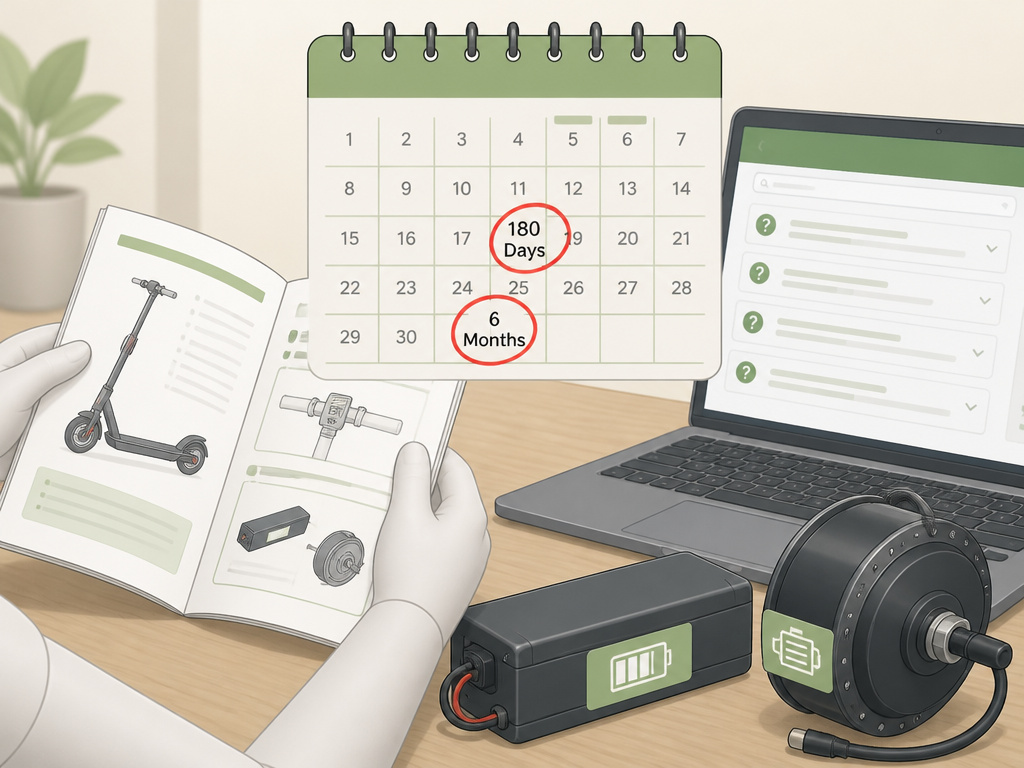
Warranties are supposed to be straightforward. With Isinwheel, you need to read two different documents to get the full picture, and they don’t always agree. This isn’t about hidden clauses—it’s about published information that contradicts itself.
The Isinwheel X1 manual states: “Within 180 days after purchasing the scooter, if the battery is defective, it can be replaced free of charge.” That’s clear. Six months.
Now look at the official Isinwheel Support FAQ. It states the “Limited Warranty” provides 6-month coverage for the battery, charger, wheels/hub motor, and control board assembly, and 12-month coverage for other listed components.
| Coverage Document | Battery Warranty | Other Key Components |
|---|---|---|
| X1 User Manual | 180 days | Not specified in detail |
| Official Support FAQ | 6 months | 6 months (motor, control board) 12 months (other listed parts) |
So which is it? 180 days is roughly six months, so they align on the battery. But the manual is silent on the hub motor or control board, while the FAQ explicitly covers them for six months. For a rider, this means your motor is likely covered for half a year, but you need to reference the FAQ, not just the manual that came in the box.
The return policy adds another layer. For a non-defective return within 14 days, an opened product with more than 10 miles on it incurs a 30% restocking fee plus return shipping. Trial use isn’t free. This makes it crucial to decide quickly if the scooter meets your needs.
The support structure is a bright spot. Isinwheel offers lifetime technical support to all customers, with service chat available Monday to Friday, 9:00 AM – 6:00 PM GMT+8. For a direct-to-consumer brand, that level of ongoing access is valuable, even after the standard 1-year scooter warranty expires.
Safety and Recalls: The E9T Fire Hazard
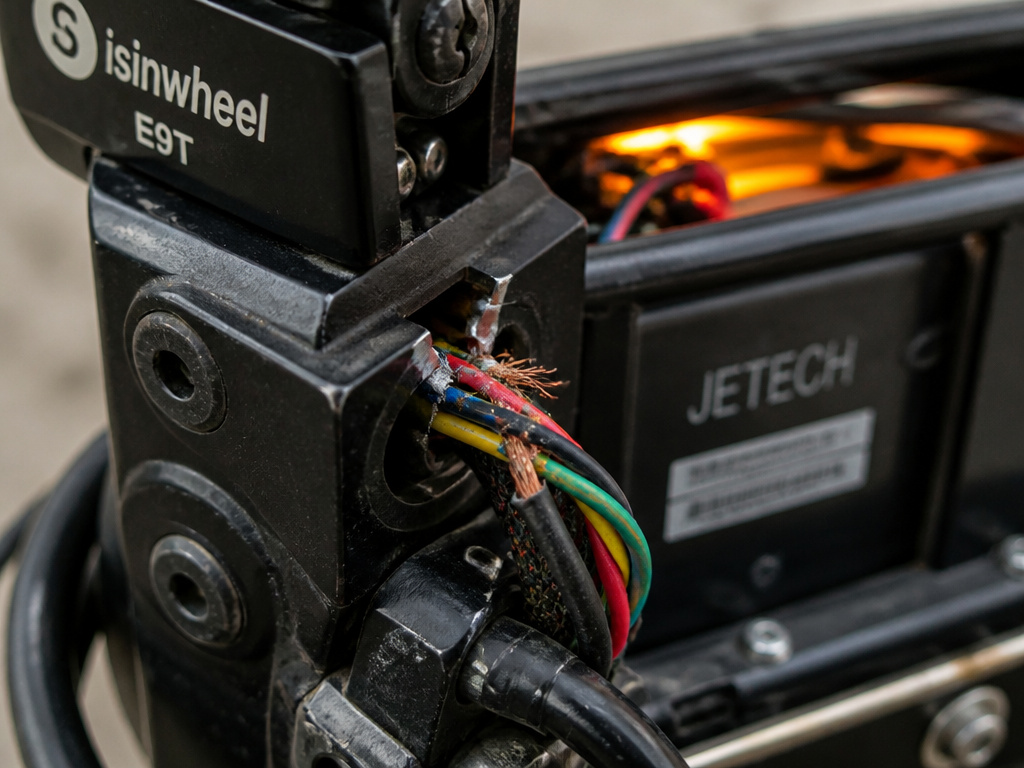
Safety isn’t just about wearing a helmet. It’s about whether the product itself has a known, documented failure mode. Isinwheel has one model with exactly that: the E9T.
A UK Government Product Safety Report, published on 25 March 2022, details a serious risk of fire. The report identifies the specific product code (B10320020012800433) and states the hazard clearly: “The folding handlebars with sharp edges can shear the wiring, causing the circuit to combust and catch fire.” The battery in this model is a JETECH branded lithium-ion unit.
This wasn’t a minor issue. The London Borough of Bromley had already issued a local authority product recall for the same model over a year earlier, in January 2021. The defect relates to the Carriage of Dangerous Goods regulations. While this recall is for a specific, older model (E9T), it’s a critical data point on Isinwheel’s manufacturing and quality control history.
Other models have different warnings. The X1 manual cautions that the scooter is not intended for use at elevations greater than 2000 meters above sea level. It also warns that storage in extremely humid environments may cause internal condensation and rapid battery damage—a more severe failure than typical battery aging.
Where this goes sideways: Assuming all models from a brand have the same build quality. A documented recall on one model is a flag to scrutinize the specific model you’re buying, not to dismiss the entire brand.
Isinwheel Model Comparison: X1 vs. GT2
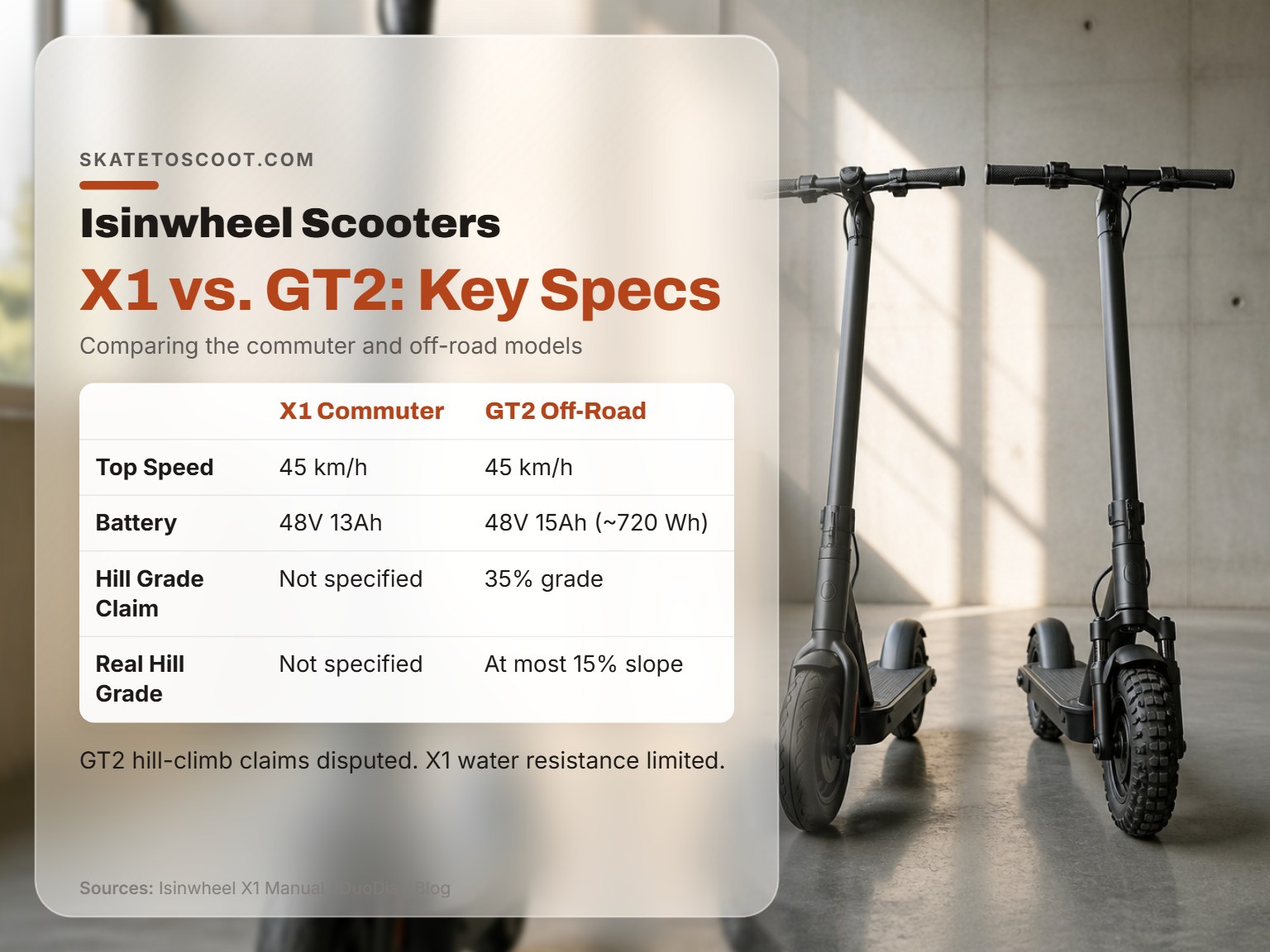
Isinwheel sells many models, but two represent the core choice for most buyers: the X1 as the general commuter, and the GT2 as the “off-road” option. Here’s how they stack up on paper and in practice.
The Isinwheel X1 is their workhorse commuter. The manual lists a 23 kg net weight, a 150 kg load capacity, and a 45 km/h top speed. Its 48V 13Ah battery is paired with a motor rated at 500W nominal, 800W max power. It’s IPX4 rated, meaning it’s protected against splashing water from any direction, but not against jets or immersion. This is fine for a damp road but not for riding in heavy rain. The operating temperature range is 0°C to 40°C.
The Isinwheel GT2 pitches itself as the rugged alternative. Independent reviews confirm it hits roughly 28 mph (45 km/h). It ships with a larger 48V 15Ah (~720 Wh) battery and sports 11-inch pneumatic tires for better stability on uneven surfaces. However, its advertised 35% hill-climbing grade is heavily disputed by user feedback suggesting 15% is more realistic.
| Model | Best For | Key Strength | Key Weakness |
|---|---|---|---|
| Isinwheel X1 | Urban commuters, flat-ground daily use | Clear specs, straightforward design, good load capacity | IPX4 rating limits wet-weather use, disputed real-world range |
| Isinwheel GT2 | Riders wanting stability on gravel/paths | Larger battery, bigger tires for stability | Falls short on hill-climb claims, stiff suspension |
Bottom line: If you need a scooter for paved city streets, the X1’s specs are transparent and its performance is predictable. If you’re looking at the GT2 for its off-road or hill-climbing promises, temper your expectations significantly. For true off-road performance, you’d need to look at other brands with proven credentials.
Battery Care: Conflicting Instructions and What to Do
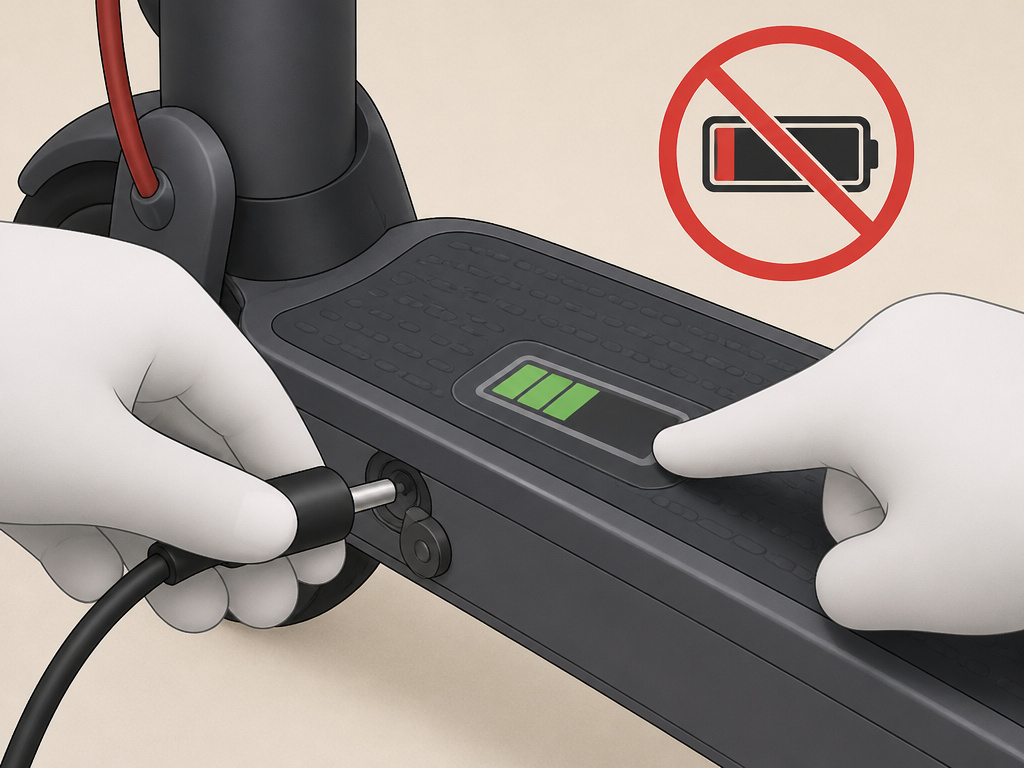
You get two pieces of paper with your scooter: the manual and the warranty pamphlet. For Isinwheel owners, these documents can give directly opposite advice on how to care for the most expensive and critical part—the battery.
The Isinwheel X1 manual advises recharging after completely exhausting the battery in daily use, while guidance for other models, like the S10 Pro, recommends charging as soon as possible if the battery is low and avoiding complete depletion.
Now look at the advice inferred for other models, like the S10 Pro. Its guidance is the industry standard for lithium-ion longevity: “Charge the battery as soon as possible if the battery is low. Avoid completely exhausting it.” For storage, common lithium-ion battery care recommends maintaining a partial charge, not a full charge.
So what should you do? Modern lithium-ion batteries suffer stress at both extremes—full depletion and being stored at 100% charge for months. The X1 manual’s advice to drain it daily is outdated and harmful to long-term health. The “charge every other month” for storage is better than nothing, but storing at a partial charge is superior.
Here’s a practical, blended approach that follows better practice:
- For daily use: Recharge when the battery drops to about 20-30%. Avoid riding it until it shuts off.
- For storage (weeks or months): Charge the battery to about 50-60%. Store the scooter in a cool, dry place. Check the voltage every two months and give it a small top-up charge if it has dropped significantly.
- Avoid extreme humidity. Both manuals warn that damp storage can cause internal condensation leading to rapid, catastrophic battery failure.
This middle path ignores the X1’s “exhaust it” advice but respects the need to maintain a charge during inactivity. Your battery will thank you with more charge cycles over its life.
Customer Support and Parts Reality
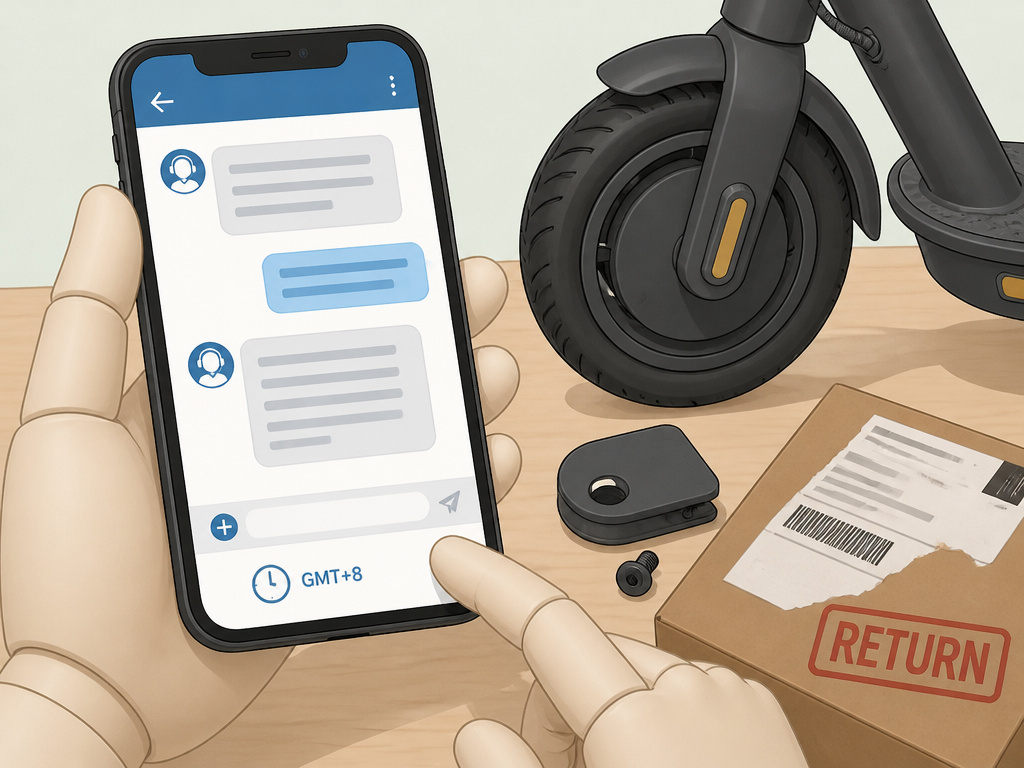
A warranty is only as good as the support behind it. Isinwheel promotes lifetime technical support, which is a strong commitment. Their customer service chat operates on Hong Kong time (GMT+8), a detail to remember if you’re in Europe or the Americas. Email and phone support are also listed.
The real test is in parts availability and problem resolution. Forum anecdotes paint a mixed picture. Some users report smooth interactions for simple issues. Others describe a frustrating process for returns, with requests for repeated videos and delays in issuing shipping labels.
For parts, the official UK support center says: “Just because a part isn’t listed on our website doesn’t mean we don’t have it.” This is encouraging, but it also means you must contact them directly.
When evaluating other electric scooters in an Isinwheel electric scooter review, this aspect of support is a key differentiator. A brand with a physical presence in your country or a network of authorized service centers can resolve issues faster than an international email chain. Isinwheel’s lifetime support promise is a starting point, but your experience will depend on the complexity of the problem and the availability of the specific part you need.
Common Isinwheel problems
One specific model, the E9T, has been the subject of a UK government safety report due to a serious fire hazard. The folding handlebars on this model have sharp edges that can shear the internal wiring, posing a risk. This recall highlights the importance of checking official safety alerts for your specific scooter’s product code. Beyond this known defect, general care is critical. The manufacturer warns that storing a scooter in an extremely humid environment can cause internal condensation and rapid battery damage. For charging and storage, the manuals themselves contain conflicting advice, so it’s wise to follow the most conservative guidance to protect your investment.
Frequently Asked Questions
Is Isinwheel a good electric scooter brand?
It depends on your expectations and which model you choose. They offer competitive specs for the price, particularly for models like the X1 for city commuting. However, you must go in aware of the gaps: real-world range and hill-climbing often fall short of advertisements, warranty terms require careful reading, and a specific past model (E9T) had a serious safety recall. For a rider who does their homework and sticks to a model with well-documented performance, they can be a value. For someone who takes marketing claims at face value, disappointment is likely.
What is the most reliable electric scooter brand?
Reliability is built on consistent quality control, clear and honest specs, accessible customer service, and a track record of durability. Brands like Ninebot (Segway), Niu, and Xiaomi have established stronger reputations in these areas over many years. Isinwheel is a challenger brand competing on price and bold specs; while some owners have reliable units, the brand as a whole doesn’t yet have the same proven longevity as the market leaders.
How fast does an Isinwheel e-scooter go?
The top speed varies by model. The X1 is listed at 45 km/h (about 28 mph). The GT2 is advertised at roughly 28 mph (45 km/h), and user reports confirm it can hit this on flat ground. The S10 Max is reported by owners to have a real-world max speed of 25 mph. A critical caveat: the speedometer on several models, including the S10 Max, is known to be overly optimistic by 3-5 mph, so always verify with a GPS app.
Can you ride an Isinwheel scooter in the rain?
This is a point of confusion. The Isinwheel X1 has an IPX4 rating, while the official Isinwheel FAQ states that an IP rating of 5 or higher indicates water resistance for riding in the rain. It’s best to avoid heavy rain or standing water. Other models may have different ratings, so always check the specific manual.
Before You Go
The Isinwheel decision comes down to a simple trade-off: attractive specs and price against the need for diligent research and managed expectations.
Ignore the headline speed and range numbers. Instead, look for owner-reported real-world tests on the specific model you want. Assume you’ll get 40-60% of the advertised range if you ride with any hills or use a higher power mode.
Read both the manual and the online warranty FAQ. Note where they disagree, especially on battery warranty duration (180 days vs. 6 months) and care instructions. When in doubt, follow the more conservative, modern lithium-ion practice: avoid full drains, avoid full storage charges, and keep it dry.
Finally, know the history. The documented Isinwheel e-scooter safety recall for the E9T model is a fact. It doesn’t condemn the entire brand, but it shows why you should buy a current model from a legitimate retailer and register your purchase for any future safety updates.
If you want a commuter scooter for flat ground and understand its limits, models like the Isinwheel X1 are a viable choice. If your needs involve hills, rough terrain, or absolute reliability, your money is likely better spent on a brand with a longer, more consistent track record. For more details on a specific model, check out our dedicated Isinwheel scooter review.
