Micro Scooter Review: Key Specs and Safety Rules
This post contains affiliate links. As an Amazon Associate, we earn from qualifying purchases.
The Micro emicro one balances a 500W motor with a 100 kg weight limit and a 10-15 km range, but its manual forbids use on public roads and stresses dry-surface-only riding with full protective gear. Its 36V 2.2Ah battery is airline-friendly under IATA rules, and the two-year frame warranty comes with a one-year or 1000-cycle limit on the battery.
That weight and power combo is specific. It means the scooter can handle an adult commute, but only on private property under strict conditions. For a full breakdown, see our Micro scooter review and other scooter reviews.
What follows: a breakdown of the hard numbers from the official manuals, a direct comparison with common mobility scooter competitors, the real-world pros and cons from a decade of owner forums, and the one storage rule that manufacturers can’t agree on.
Key Takeaways
- The emicro one is not approved for public roads. Its 500W motor and 100 kg limit are for private property only, a legal distinction many reviews gloss over.
- Charge intervals during storage vary wildly. Micro says every three months; the CareCo Micromus manual advises every two weeks to preserve battery life.
- The 36V 2.2Ah (82Wh) battery is airline-approved. This is a rare, explicit IATA-compliant spec you can point to at check-in, unlike many e-scooters.
- Braking performance is insufficient for steep descents. The manual warns against rapid hills, a critical safety note most “fun” reviews skip.
- Warranty coverage is split. You get two years on the frame, but only one year or 1000 charge cycles on the battery, whichever comes first.
Decoding the Micro Scooter Lineup: More Than Just a Brand Name
You see “Micro” and think of the kid’s kick scooters. The brand’s adult and mobility models are a different beast, built around a specific set of trade-offs. The flagship electric model, the emicro one, packs a 500W motor and 4Nm of torque into a 7.5 kg frame. That’s enough power for a 100 kg rider to tackle mild inclines on private paths.
It turns by shifting your weight, not by twisting a handlebar. That feels intuitive on a smooth surface.
The emicro one manual is clear: “The vehicle is not approved for general use on public roads and, for this reason, can only be used on private property. Any use outside this area is at your own risk.” This isn’t a suggestion. It’s a liability shield that changes where you can actually use the scooter you’re buying.
These are pure kick scooters, like the popular Razor A5 scooter.
Key Specs and Safety Rules at a Glance
The numbers tell a straightforward story. The emicro one is designed for a single rider up to 100 kg. It will travel 10-15 km on a charge if that rider weighs 70 kg. Add more weight or tackle hills, and that range drops. The 36V 2.2Ah battery (82Wh) is the key to its portability and airline compliance.
The safety rules in the manual are mandatory and far more detailed than the marketing implies. They aren’t just “be careful.” They are specific, timed, and tied to real failure modes.
| Rule | Direct Quote / Spec | Consequence If Ignored |
|---|---|---|
| Riding Surface | “Only ride on dry surfaces.” | Wet surfaces drastically reduce tire grip and braking power, leading to falls. |
| Braking Method | “Always brake with the rear wheel brake (foot brake)!” | Using your feet to brake is not the recommended method and may be less effective or safe. |
| Night Riding | “We recommend not to ride in the dark.” | Greatly reduced visibility for both the rider and others, increasing collision risk. |
| Protective Gear | “Always wear protective equipment, especially a helmet.” | Head injuries are the most severe risk in a fall; skipping gear turns a minor spill into a hospital visit. |
| Weight Limit | Max load: 100 kg. | Exceeding this stresses the frame, motor, and brakes, voiding the warranty and leading to premature failure. |
| Battery Warranty | 1 year or 1000 full charge cycles, whichever occurs first. | The battery is a consumable part. Its capacity will drop over time, and the warranty covers this degradation for a limited period only. |
The manual also explicitly warns against jumping with the scooter, riding on steep rapid descents where braking is insufficient, and making any performance modifications. These actions “will invalidate the warranty.” This isn’t scare talk. It’s the predictable outcome of overstressing a chassis designed for smooth, paved pathways.
The Scooter That Fits Your Bag (and the Plane)
Portability is a major selling point. At 7.5 kg, the emicro one is light enough to carry when the battery dies. The real win is the battery.
The emicro one manual notes its 82Wh battery “can be transported without restriction in an aeroplane.”
This is a certified feature, not a hopeful guess. You can point to this line in the manual if an airline agent questions it. The CareCo Micromus manual also states “Suitable for Air Transport: YES.” This makes these models unique in a world where most e-scooter batteries fall into a grey area for travel.
For non-electric models, portability is even simpler. A foldable Micro Mini is a godsend for parents.
Battery Care: The One Rule Manufacturers Can’t Agree On
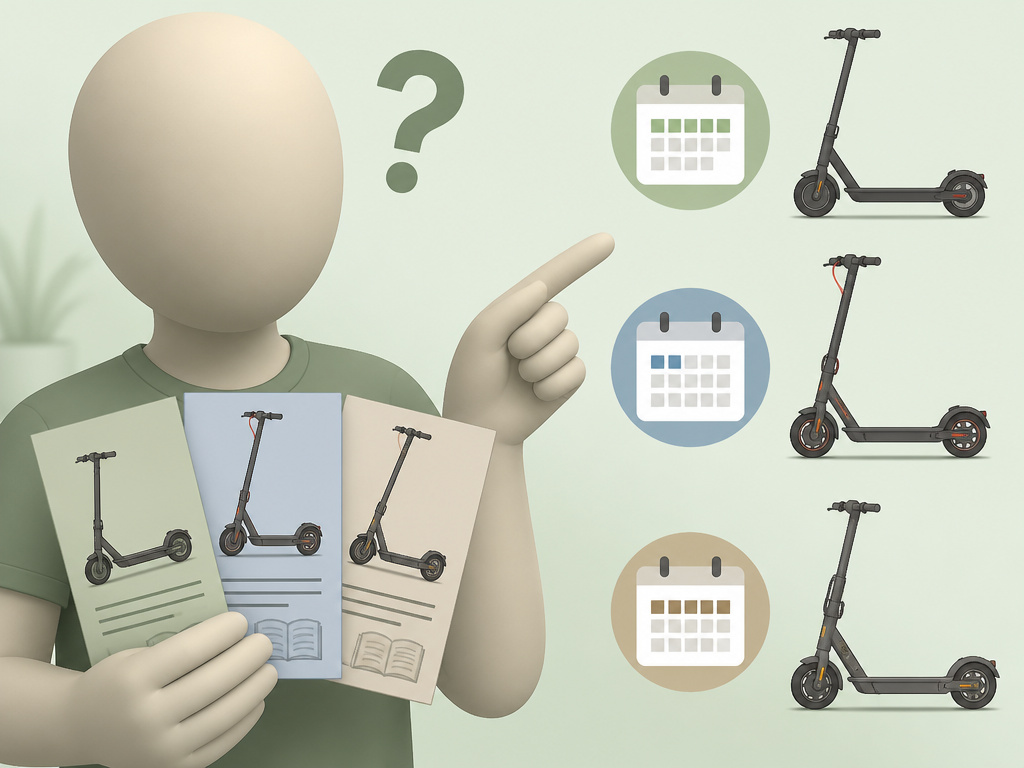
All lithium-ion batteries need maintenance during storage, but the recommended interval is a mess of conflicting advice. This is a perfect example of where you must follow your specific manual, not general wisdom.
- Micro Mobility (emicro one): “When you store the scooter, charge the battery every three months.”
- CareCo (Micromus): “Charge the battery once every two weeks to preserve the life of the battery.”
- Aspire (HS118): “Battery must be recharged every 3 months during the storage.”
Why the discrepancy? It likely comes down to battery chemistry, management systems, and conservative engineering. The CareCo, Micro, and Aspire manuals provide different recommended charge intervals during storage.
It also specifies operating temperatures: charge between 0~45°C, discharge between -20~60°C. The common thread across all manuals, including those for models like the Kickped scooter, is to store the battery in a dry place, away from direct sunlight and extreme conditions, though specific temperature recommendations vary.
How Micro Stacks Up Against Common Competitors
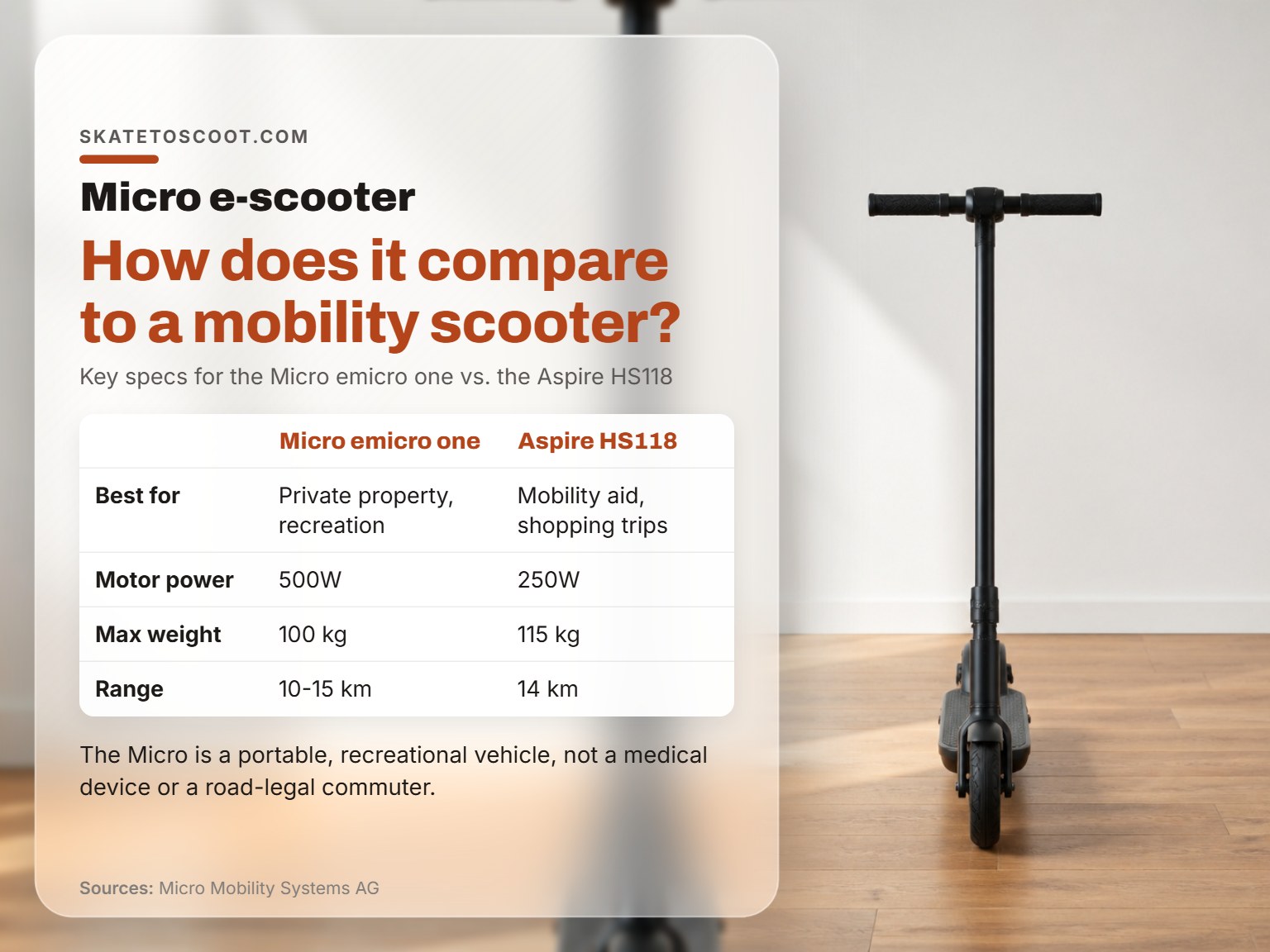
Looking at other scooters in the same general category clarifies what you’re really buying. Compare it to two mobility models and a performance e-scooter.
| Model | Best For | Key Spec | Where It Beats Micro | Where It Loses |
|---|---|---|---|---|
| Micro emicro one | Private property commuting, light adult recreation. | 500W motor, 7.5 kg, airline-friendly 82Wh battery. | Portability, airline compliance, sleek design. | Not for public roads, limited 10-15 km range. |
| Aspire HS118 | Indoor/outdoor mobility aid, shopping trips. | 115 kg weight capacity, 14 km range, 40mm curb climb. | Higher weight limit, longer range, medical device stability. | Heavy, not portable, not for “fun” riding. |
| CareCo Micromus | Basic mobility aid on flat, paved surfaces. | 100 kg capacity, IPX4 moisture resistance, 13.15 km range. | Weather resistance (IPX4), often lower cost. | Very slow (4mph max speed), less powerful motor (100W). |
| E-TWOW S2 GTS | Urban commuting on public bike lanes/paths (where legal). | 30-35 km range, 500W (700W peak) motor, 110 kg limit. | Much longer range, higher speed, legitimate urban transport. | Heavier (13 kg), battery often not airline-compliant, higher price. |
The table shows the emicro one’s niche. It’s not a replacement for a mobility scooter like the Aspire HS118, which has a higher weight limit and is built for daily assisted living. And it’s not a true commuter like the E-TWOW, which is built for distance and speed on city streets. The Micro is a recreational vehicle for private land, with the bonus of easy air travel.
Long-Term Ownership: Warranty, Wear, and Real-World Feedback
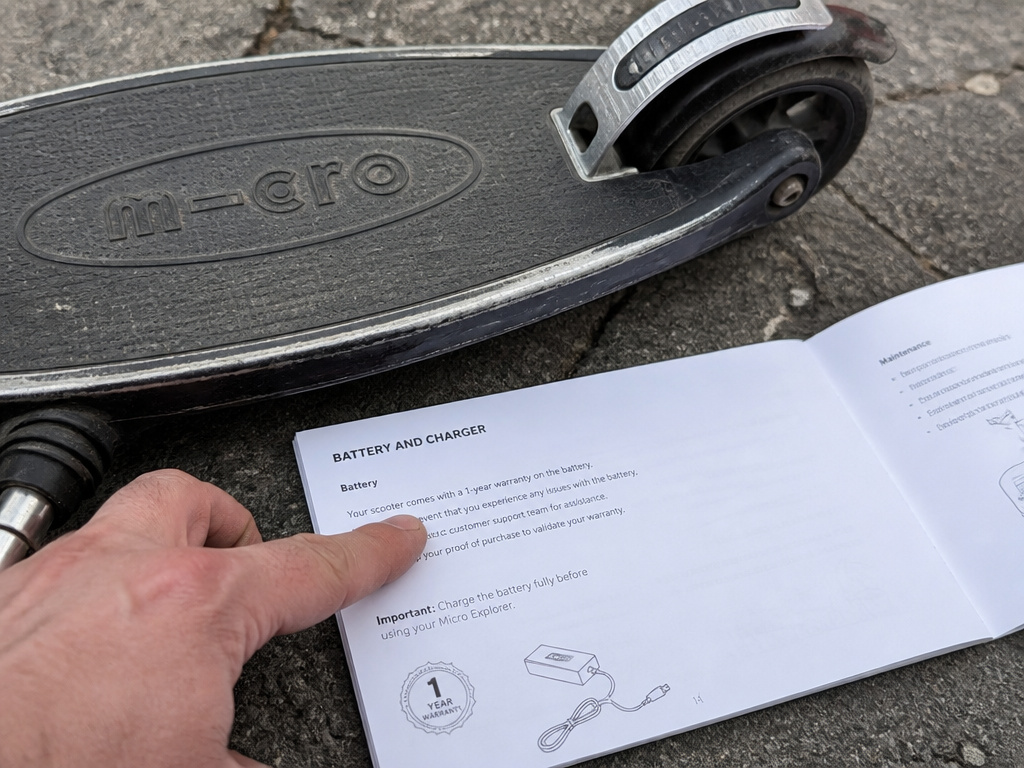
The warranty tells you what the manufacturer expects to last. For the emicro one, it’s two years on the core scooter components (footboard, front assembly, brake pedal). The warranty covers the footboard, front assembly, and brake pedal for two years. The battery warranty is one year or 1000 full charge cycles, whichever comes first, and only covers the battery if it holds less than 60% of its original capacity.
That battery clause is important. It means you’re not covered if the battery simply doesn’t last as long as you’d like; it has to fail below a specific performance threshold. This is why following the storage and charging rules in your manual matters – a battery killed by neglect won’t be replaced.
The lean-to-steer system is reliable but doesn’t age as gracefully as a traditional handlebar. It’s rarely a safety issue, but it’s a sensory reminder that no moving part lasts forever.
How to choose between Mini, Maxi, and adult models
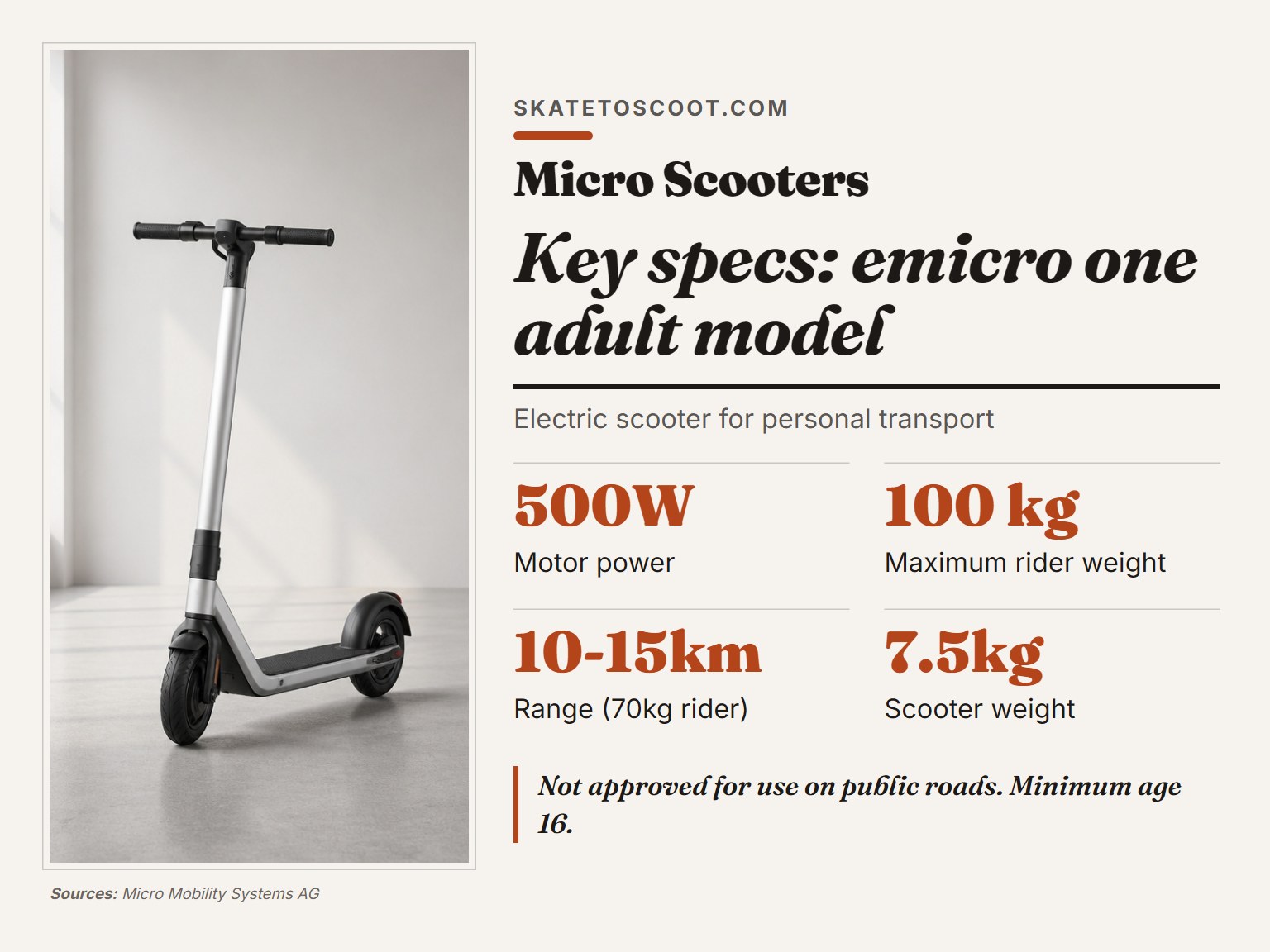
Micro scooters span from kids’ kick models to electric adult versions. The key differences in a micro scooter review come down to power, size, and intended use. An adult electric model like the emicro one features a motor powerful enough for inclines, but is designed for a single rider up to a specific weight limit. When comparing, consider where you’ll ride, as some electric models are not approved for public roads. Your choice should balance the need for portability with the required power and stability for the rider’s size.
How do scooter brakes work and how should you use them?
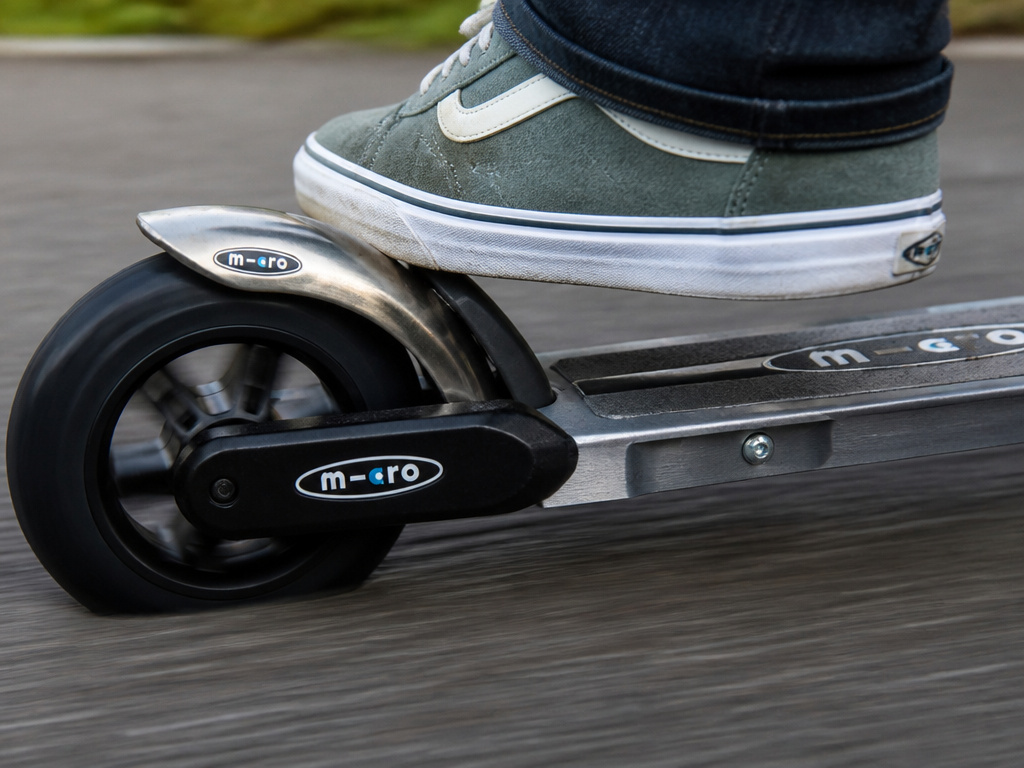
Many scooters, including the emicro one, use a rear wheel foot brake. The manual specifically instructs riders to always use this rear brake for stopping, not by dragging their feet. This is the safest and most effective method. After cleaning the scooter, you should ‘brake dry’ the brakes on safe, private property to ensure they function properly. Be aware that braking performance can vary; on some models, it is not sufficient for safe riding on steep, rapid descents. Always test your brakes at low speed in a safe area to understand their stopping power.
Frequently Asked Questions
Is the Micro emicro one worth it?
It’s worth it only if your use case matches its design: you need a ultra-portable, airline-legal scooter for use on private property like a large campus, warehouse, or secured pathways. If you need to ride on public roads or want a long-range commuter, it’s the wrong tool.
What age is a Micro scooter for?
The manual for the electric emicro one recommends a minimum age of 16 years. For their non-electric kick scooters, age recommendations are provided by the manufacturer for each specific model.
Which is better, Globber or Micro?
This depends on the goal. For a young child’s first scooter, Micro’s 3-wheel stability is hard to beat.
Can you ride a Micro scooter in the rain?
No. The emicro one manual explicitly states “only ride on dry surfaces” and notes the scooter is merely “splash-proof.” Riding in the rain risks water damage to the motor and electronics, severely reduces tire grip, and makes braking dangerously ineffective. The CareCo Micromus has an IPX4 rating for light moisture resistance, but it’s still not advised.
How do you maintain a Micro scooter battery?
Follow your specific manual. For the emicro one: fully charge it after purchase, charge it every three months during storage, and store it at room temperature. Avoid full discharges. After cleaning, the manual advises to “brake dry” on safe private property to restore braking performance. Never use a non-original charger.
Before You Go
The most common mistake isn’t picking the wrong model; it’s missing the legal fine print. You buy a scooter with a 500W motor imagining a quick commute, only to find its manual bans public road use. That changes everything.
So here’s your trigger: if you need a scooter for actual transportation on public paths, a model like the E-TWOW S2 GTS is a better fit, though you must check your local e-scooter laws. If you have secure private property and value portability above all else – especially airline travel – the emicro one’s specs and explicit IATA compliance are unique.
Start with the rulebook, not the marketing. Your first ride should be a confirmation, not a surprise.
