Nattork Skates Review: What Owners Actually Say
This post contains affiliate links. As an Amazon Associate, we earn from qualifying purchases.
Nattork skates are budget-friendly, adjustable inline skates designed for beginners and casual skaters, featuring 82A polyurethane wheels, ABEC-7 bearings, and a claimed 90-day warranty. Their main appeal is the ONE-PUSH-CHANGE sizing system that allows a skate to fit across multiple sizes, but user reviews consistently cite poor ankle support and durability concerns, particularly with the adult Model 781i.
That sizing trick is the whole pitch. It solves a real problem for parents and new skaters who don’t want to commit to a fixed-size boot. But a skate isn’t just a shell that fits; it’s a system of support, power transfer, and control that either builds confidence or breaks it. This is a key point in any Nattork skates review.
What follows is a breakdown of the three main Nattork models, the specs straight from their site, the warranty fine print most people miss, and the specific failure modes owners report. By the end, you’ll know which model (if any) fits a specific situation, and what to expect after the first month of use.
Key Takeaways
- The ONE-PUSH-CHANGE sizing is Nattork’s best feature, letting a single skate cover four sizes, but it adds complexity that can compromise stability if not locked correctly.
- Ankle support claims are heavily contested. Manufacturer marketing for the kids’ Model 139i promises “high-top support,” but numerous user reviews describe poor ankle support, instability, and inner boot slippage across models.
- The official 90-day warranty has strict conditions: defect reports must be made within seven days of receipt for a free replacement, and refunds after 90 days drop to less than 80% of the original price.
- For casual, beginner use on smooth surfaces, the kids’ Model 139i with light-up wheels is a functional, fun option. For teens or adults or any skating beyond gentle straight lines, the build quality, particularly the frame and plastic spacers, becomes a significant limitation.
- Replacement parts are available directly from Nattork’s support, but the process requires contacting them to create a custom purchase link, a step most competitors streamline on an open accessories page.
The Core Pitch: Adjustability Over Everything
Nattork’s entire brand is built on one idea: your feet change, so your skates should too. Their ONE-PUSH-CHANGE mechanism is a button that allows you to extend the boot shell. It’s clever. For a growing child or an adult trying skating without a firm commitment, it removes the fear of an immediate wrong purchase.
The specs they hang on this frame are standard beginner-grade stuff. Every model I looked at uses 82A polyurethane wheels. That’s a medium-hardness wheel decent for outdoor pavement and smooth indoor surfaces. They pair these with ABEC-7 bearings across the board, a fine, smooth-rolling bearing for casual skating, though the marketing around “high-speed” ABEC ratings is mostly noise for anyone not racing.
The technical snippet: Nattork’s adjustable inline skates utilize a push-button heel mechanism to extend the boot shell, covering up to four sequential shoe sizes within a single frame. Standard components include 82A durometer polyurethane wheels for mixed-surface use and ABEC-7 rated steel bearings for reduced rolling resistance. Frame materials vary by model, with kids’ versions using reinforced polymer and adult models incorporating aluminum alloy.
The value is upfront. You get a skate, usually with flashy light-up wheels for the kids’ models, that promises to last through growth spurts. The question isn’t whether the sizing works, it does. The question raised in a Nattork skates review is what you give up to get it.
The Ankle Support Debate: Marketing vs. Reality
Here’s where the first major crack appears. Nattork marketing, especially for the high-top kids’ Model 139i, talks about “excellent ankle support” and a “triple lock protection system” of a top buckle, a secondary Velcro strap, and laces. On paper, it sounds secure.
Owners tell a different story. I read through dozens of reviews. A common thread is the inner boot, the soft liner inside the hard shell, sliding around. Your ankle might be strapped to the shell, but if the liner inside isn’t holding your foot firmly, you’re swimming in the skate. That lack of precise fit kills control. Another frequent note, particularly from adults trying the Model 781i, is a feeling of lateral instability. The high-top collar is there, but it doesn’t provide the rigid, supportive cuff that prevents your ankle from rolling during turns or stops.
Where this goes sideways: Relying on the high-top design for real ankle support. The collar is often a flexible material that contours to your leg without providing the rigid reinforcement needed for technical skating. The result is a skater who feels wobbly and insecure, thinking it’s their skill level when part of it is the equipment.
This isn’t a minor nitpick. For a beginner, confidence is everything. A skate that feels unstable makes every push tentative. It turns a learning session into a fight for balance. I’ve seen it with students in poor-fitting gear, they fight the skate more than they practice the skill. If your primary goal is building a foundation, this is a problem.
Model Breakdown: Which Nattork Is For Whom?
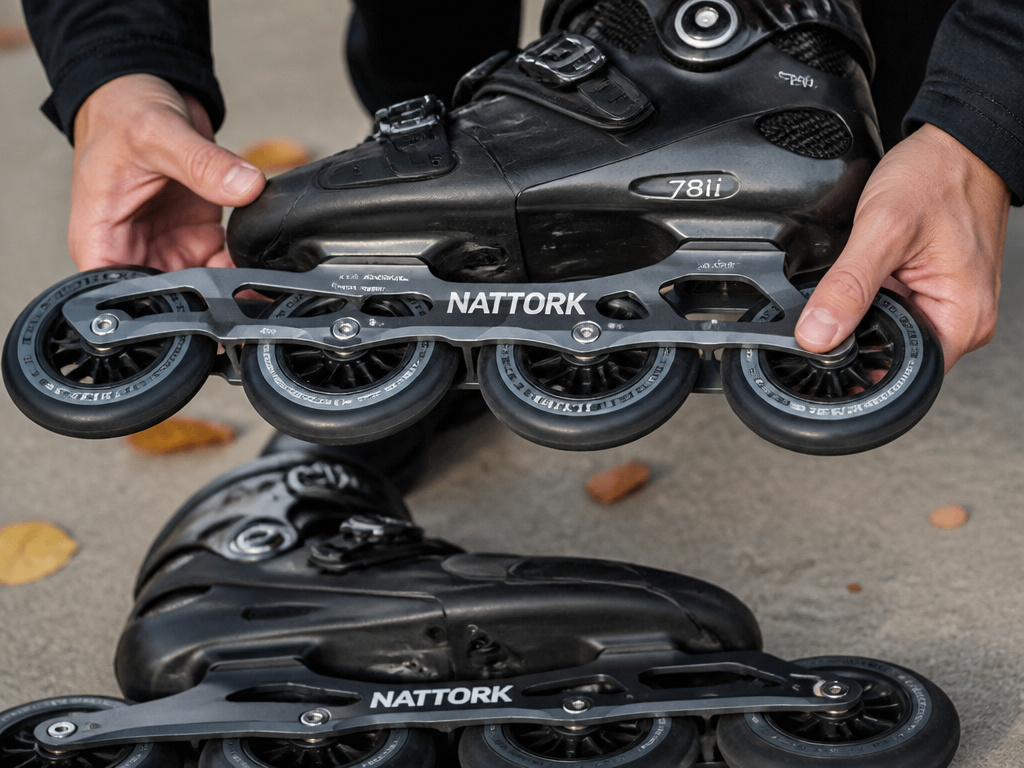
Nattork isn’t one skate. They have distinct models for different age groups, and the differences matter. You can’t just pick a color. Here’s a breakdown of the three main models you’ll encounter.
| Model | Target Age | Key Features | Best For | Reported Weaknesses |
|---|---|---|---|---|
| Model 139i | Kids (Sizes 10C-13C, 1-3, 4-7) | ONE-PUSH-CHANGE, 8 light-up wheels, breathable mesh, triple lock. | Young beginners, casual outdoor/indoor play, parents seeking extended size range. | Inner boot slippage, limited support for aggressive turning. |
| Model 781i | Adults/Teens | Reinforced aluminum frame, 84x24mm 82A wheels, plastic frame spacers. | Older beginners, light fitness skating, smooth pathways. | Frame bending (per user report), plastic spacers criticized, ankle instability. |
| Model 1CC139 | Kids (Big Kid 1-4) | 8 light-emitting wheels, 82A PU wheels, ABEC-7 bearings. | Similar to 139i, but often found under different Amazon listings. | Similar ankle support concerns as the 139i. |
Nattork Model 139i (Kids)
This is their flagship kids’ model. The breathable mesh upper is a legit good feature for keeping feet cool. The eight illuminating wheels are a pure kid-magnet, they light up with motion, which is a huge win for engagement. Sizing covers Small (10C-13C), Medium (1-3), and Large (4-7). It’s a skate built for fun, not for technical development. For a child rolling around a driveway or a smooth park path, it’s adequate. The moment they want to start learning sharp turns or stops, the boot’s limitations will show.
Nattork Model 781i (Adults/Teens)
This is where owner feedback gets stark. The specs sound better: a reinforced aluminum alloy frame and larger 84*24mm wheels. But a critical detail emerges from a user review: the frame uses plastic spacers between the wheels. The reviewer argued these “can never give the stability and performance of metal spacers.” More damning was another report of a bent frame causing ankle pain within just five minutes of use.
Common mistake: Choosing the adult model for anything beyond the gentlest skating. The component choices, like plastic spacers and a frame prone to bending under stress, make it unsuitable for learning techniques that put lateral force on the skate, like parallel turns or hockey stops.
If you’re an adult beginner who will only skate in a straight line on a perfectly smooth bike path once a month, it might hold up. For anyone heavier, more active, or actually trying to learn the sport, this model represents a risk. The money is better spent on a entry-level skate from a brand like Rollerblade or K2, where the best roller skates for beginners are built with more robust components.
Durability and the Warranty Fine Print
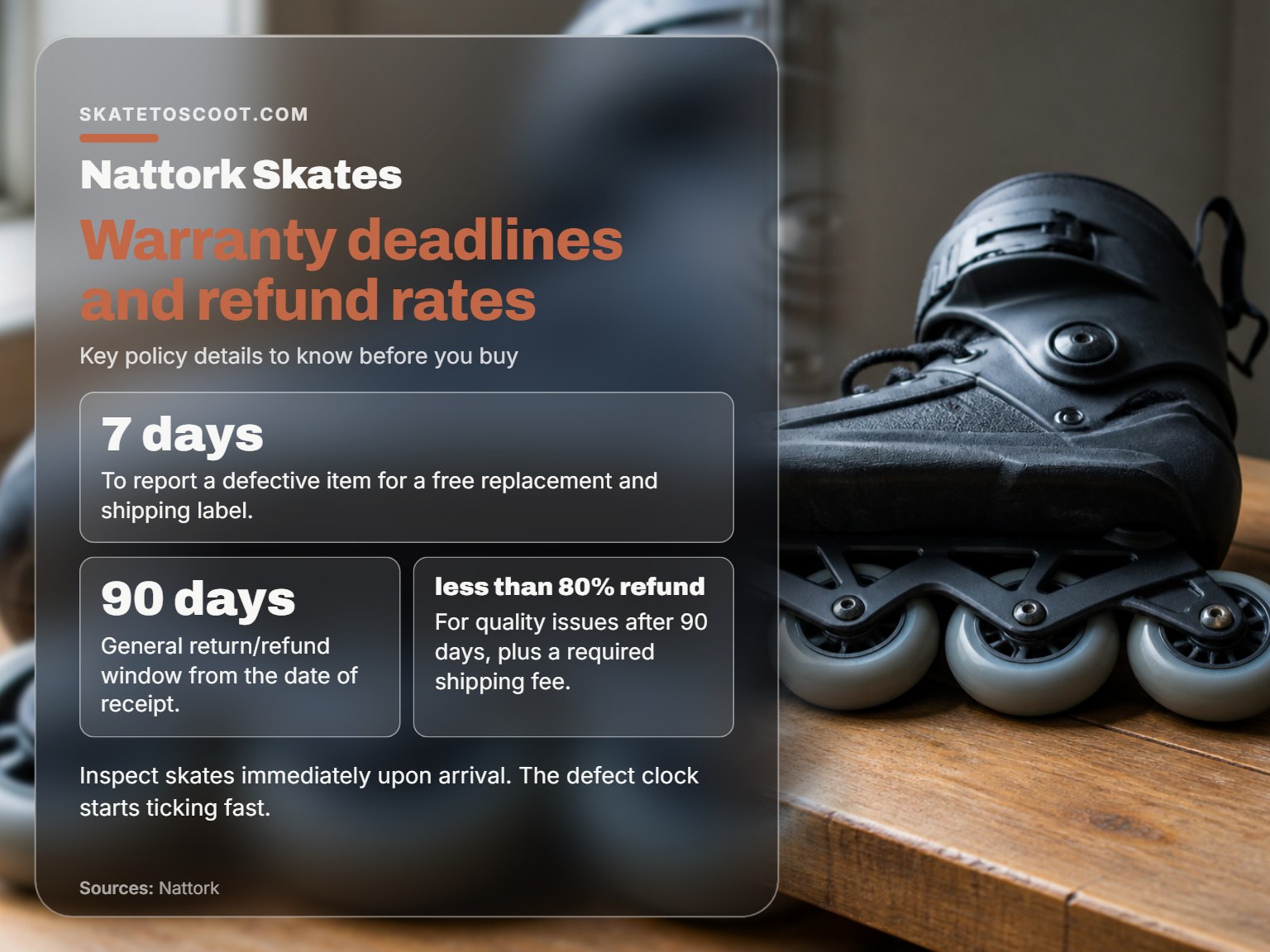
Nattork offers a 90-day return/refund window, which is fairly standard. The details, however, are where you need to pay attention. Two critical rules live in their policy:
- Defective Item Window: If you receive a damaged or defective item, you must contact their support within seven days of receipt to qualify for a free replacement and shipping label. This is a much tighter deadline than the general 90-day period.
- Post-90-Day Refunds: After the 90 days, if you have a quality issue, any refund will be less than 80% of the original price and you’ll be on the hook for the shipping fee.
Always default to the manufacturer’s official policy page.
The takeaway? Inspect the skates thoroughly as soon as you get them. Test the adjustment mechanism, spin the wheels, check the frame for straightness. If something is off, you have a one-week clock to start the claim process. This level of diligence is crucial when considering a Nattork skates review or any skate review that involves direct-to-consumer brands.
Nattork vs. Other Beginner Skate Brands
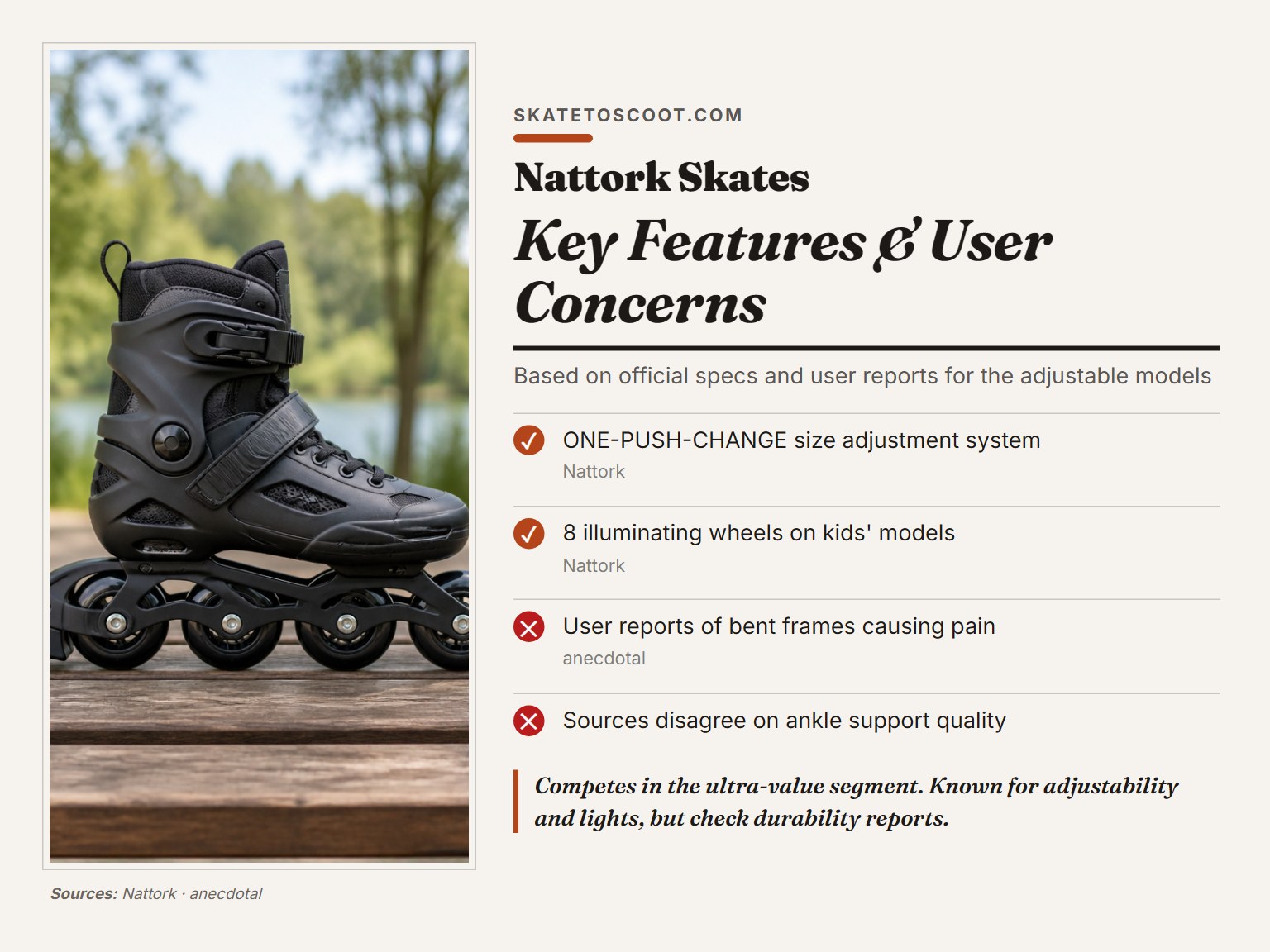
So where does Nattork sit in the landscape? They compete in the ultra-value segment. To be blunt: you are not buying premium components or proven durability. You are buying a clever sizing solution and acceptable performance for a very specific, low-demand use case.
- Vs. Brands like Rollerblade or K2: This isn’t a close comparison. Brands like Rollerblade have decades of boot-molding expertise. Their beginner skates, while fixed-size, offer vastly better foot-hugging fit, supportive cuffs, and frames built for real-world forces. You pay more, but you’re buying a tool designed for skill progression, not just size accommodation.
- Vs. Other Adjustable Brands (e.g., 2PM Sports): This is the real head-to-head. Brands like 2PM Sports offer similar adjustable skates, often with more consistent user reviews regarding stability. When looking for the best outdoor roller skates in this category, you’ll often find 2PM and Nattork side-by-side. The community feedback often leans toward 2PM for slightly better overall construction, though both share the inherent limitations of an adjustable frame.
- The Verdict: Nattork’s advantage is its aggressive marketing of the ONE-PUSH-CHANGE feature and the kid-appeal of light-up wheels. Its disadvantage is a pattern of concerning user reports about structural integrity (especially the adult model) that other brands in the same price bracket seem to generate less frequently.
Getting Support and Replacement Parts
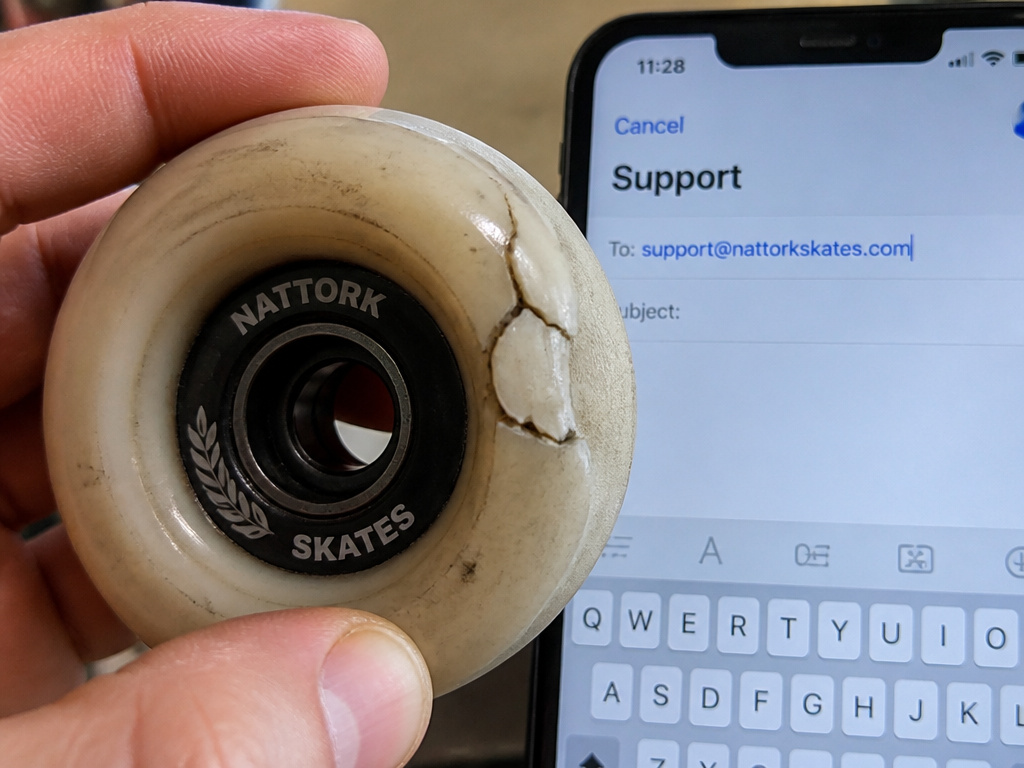
If you do own a pair and need a new wheel or a buckle, Nattork does provide a path. It’s just not a simple “add to cart” one. According to their FAQ, you need to contact their support team at [email protected] with your model and the part you need. They will then “confirm compatibility and create a custom purchase link.”
This is more cumbersome than a standard online shop. It means you can’t independently browse for upgrades or immediately order a replacement if a wheel cracks. For common wear items like wheels, having easy access is a plus for any skate owner. This process feels dated compared to how most established outdoor skate models from bigger brands handle parts sales.
Sizing Advice That Actually Works

The manufacturer’s sizing advice is solid and worth following: measure your foot length and use their specific size chart. Their tip to choose the larger size if between two is standard practice to prevent immediate discomfort. The real trick with adjustables is ensuring the skate is fully locked in the chosen position. After you press the button and slide the shell, make sure it clicks securely into place. A half-engaged mechanism is a recipe for a wobbly, unsafe skate.
Remember, a proper fit is the most important piece of gear you can get. It’s the foundation. An expensive skate that’s too big is worse than a basic skate that fits like a sock. This principle holds whether you’re looking at quad roller skates or inline models.
How to get the best price on Nattork skates
Nattork skates are sold at a fixed price directly from their website and through major online retailers. The brand does not run frequent public sales or discount codes. To find the best deal, your main strategy is to check multiple retailers, including the official site and large marketplaces, as prices can fluctuate. Pay close attention to the bundled package; some listings might include protective gear. Remember that the official return policy offers a 90-day window for a full refund, but after that, returns for quality issues result in a refund of less than 80% of the original price and require you to pay a shipping fee.
Frequently Asked Questions
Are Nattork skates good for beginners?
For absolute beginners, especially children, who will use them infrequently on smooth surfaces, the kids’ models can be “good enough.” The adjustable sizing reduces the risk of an immediate poor fit. However, for adults or anyone planning to skate regularly to learn the sport, the durability and support concerns, particularly with the Model 781i, make them a less reliable choice compared to entry-level fixed-size skates from established brands.
What is the warranty on Nattork skates?
The official warranty on Nattork’s website is 90 days from purchase. Some Amazon listings contradict this and state 1 year, always default to the official policy. Key conditions include a 7-day reporting window for defective items to receive a free replacement, and reduced refunds (less than 80%) after the 90-day period.
Can you replace the wheels on Nattork skates?
Yes, wheels are replaceable. However, you cannot simply buy them off a shelf on Nattork’s site. You must contact their customer support with your skate model, and they will generate a custom purchase link for compatible wheels. For general wheel upgrades, you might explore options reviewed in our best street skates guide for ideas on hardness and size.
How does the ONE-PUSH-CHANGE sizing work?
Button on the heel of the skate is pressed, allowing the hard outer shell of the boot to slide forward or backward along the frame. It locks into multiple positions, covering a range of shoe sizes. It is crucial to ensure the mechanism audibly clicks and is fully locked into position before skating.
Are Nattork skates better than Chicago skates?
This is a common comparison in the budget segment. Chicago skates are generally quad skates (four wheels in a rectangle) while Nattork makes inline skates (wheels in a line). The choice depends on your skating style preference. Regarding build quality and durability at a similar price point, both brands receive mixed reviews, but Chicago has a longer historical presence in rinks.
The Bottom Line
Nattork skates occupy a specific niche: they are a low-cost, size-adjustable solution for casual, low-intensity skating. The ONE-PUSH-CHANGE system is genuinely useful for growing kids or hesitant first-time buyers.
The compromise is in material quality and performance ceiling. User reviews, especially for the adult Model 781i, highlight legitimate concerns about frame durability, plastic components, and inadequate ankle support that contradict marketing claims.
Here’s the rule of thumb: If you need a pair of skates for a child to play in the driveway a few times a month, the kids’ Model 139i with lights is a functional, fun choice. If you are an older beginner or teen actually wanting to learn to skate with control and safety, the consensus points toward spending a bit more on a fixed-size, entry-level model from a brand with a proven reputation for supportive boots and reliable frames. The adjustable feature isn’t worth the trade-off in fundamental stability.
