What Are Skateboard Bearings Made of: Anatomy and Specs
This post contains affiliate links. As an Amazon Associate, we earn from qualifying purchases.
Skateboard bearings are precision ball bearings, universally sized as 608 series (8mm inner diameter, 22mm outer, 7mm wide), made from materials like 52100 chrome steel or silicon nitride ceramic. Their construction includes an inner and outer ring, 6-7 balls held by a retainer or cage, and protective shields. The material choice, steel for durability and cost, ceramic for speed and corrosion resistance, directly defines their performance, maintenance needs, and lifespan.
That 608 spec isn’t just a number. It’s the reason any bearing from any brand fits your wheels, creating a universal playing field where material science and manufacturing precision become the real differentiators. Your ride’s smoothness, speed, and how often you’re cleaning or replacing parts hinge on what’s inside that tiny metal ring, which naturally leads to the question: what are skateboard bearings made of?
What follows is a breakdown of the metals, ceramics, and engineering inside every bearing. This section explains the universal 608 standard, the pros and cons of steel versus ceramic, what ABEC ratings actually measure, and how your skating style should dictate your material choice. By the end, you’ll be able to read a bearing’s spec sheet and know exactly what you’re buying.
Key Takeaways
- The universal 608 bearing size (8mm/22mm/7mm) ensures compatibility, but performance hinges on the material of the rings and balls, typically 52100 chrome steel or silicon nitride ceramic.
- According to the Powerslide guide, ceramic bearings made from silicon nitride are about 30% harder than steel and don’t rust, making them ideal for wet conditions, but full ceramic options are rare and costly; most are hybrids with steel rings.
- Sources disagree on the best lubricant: SMB Bearings states grease is a better option than oil, while common skate maintenance practice involves using a liquid, skate-specific lubricant.
- Sources disagree on the optimal ABEC rating: Weartested.com states ABEC 3-5 is sufficient, while TGM Skateboards and Warehouse Skateboards suggest higher ratings (7, 9+) are better for high-speed cruising, commuting, and downhill skating.
- Clean bearings every 3-6 months or immediately after skating in wet or dirty conditions; water will rust steel bearings and dilute lubricant, causing premature failure.
The Universal 608 Bearing: Dimensions and Standards
Every skateboard wheel you’ve ever mounted relies on a single, standardized component. The 608 series deep groove ball bearing is the universal heartbeat of skateboarding hardware. Its dimensions, 8mm inner diameter, 22mm outer diameter, and 7mm width, are as fundamental as the shape of the deck itself. This standardization means a bearing from a budget starter pack will physically fit the same wheel core as a premium Swiss-made set, but the answer to what are skateboard bearings made of determines performance. The choice, therefore, isn’t about size. It’s about what fills that standardized space.
The 608 bearing’s inner diameter must measure between 7.995 and 8.0 mm for a proper fit on the truck axle. This sub-millimeter tolerance is where manufacturing quality first separates a bearing that feels sloppy from one that seats with a quiet, precise snap.
You need eight of them for a complete setup, two per wheel. This universal fit is a double-edged sword. It guarantees compatibility, letting you mix and match brands and materials. It also means the vast difference in price and performance between a $15 set and a $100 set lives entirely in the materials, the precision of the machining, and the quality of the components packed inside that 22mm metal disc.
Anatomy of a Skateboard Bearing
We’ll open one up. A skateboard bearing isn’t a monolithic piece of metal; it’s a miniature mechanical assembly. Knowing the parts demystifies why one bearing spins freely for years while another seizes up after a few wet sessions.
Inner and Outer Rings (Races): These are the concentric metal tracks. The inner ring fits snugly on your truck axle, while the outer ring presses into your wheel core. When you roll, the outer ring rotates around the stationary inner ring. The material and finish of these rings are critical. High-end steel bearings use 52100 chrome steel, prized for its hardness and polished “super finish,” which reduces rolling friction.
Balls: Six or seven small spheres roll between the rings. They are the literal ball bearings. Their job is to minimize friction by replacing sliding contact with rolling contact. Tactics suggests fewer balls mean less friction and more speed, which is why some performance bearings use six instead of the more common seven. These balls can be made of steel, ceramic, or titanium.
Retainer or Cage: This component spaces the balls evenly around the raceway, preventing them from clumping together and grinding against each other. It’s often made from nylon or steel.
Shields (Seals): These are the protective covers on either side of the bearing. They keep dirt out and lubricant in. Removable rubber shields (like those on Bones Reds) are considered best for maintenance, as they allow for easy cleaning and re-lubrication. Metal shields are common on budget bearings but are harder to remove without damaging the bearing. Some skaters even run “open” bearings (with one shield removed) for reduced friction, accepting the trade-off of more frequent cleaning.
Steel: The Workhorse Material
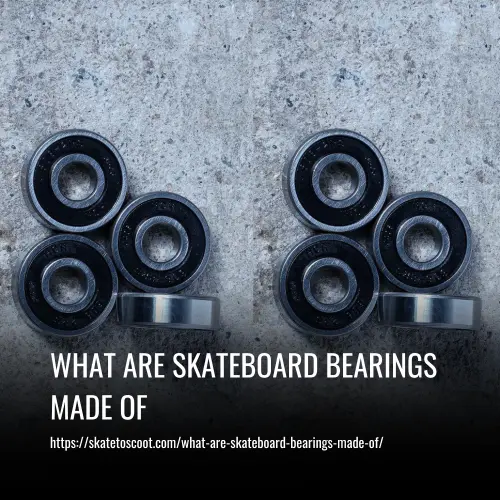
When you picture a skateboard bearing, you’re almost certainly thinking of steel. It’s the default, the baseline against which all other materials are compared. But not all steel is created equal.
The good stuff is 52100 chrome steel. This is a high-carbon, chromium-alloyed steel that can be heat-treated to a high degree of hardness. The Powerslide guide confirms it’s the most common material for the rings and balls in mid- to high-end precision skate bearings. When properly honed and polished, it provides a hard, smooth surface that resists wear and rolls fast. Bones Bearings refers to its version as “chromium bearing steel.”
The downside is rust. Chrome steel has no innate corrosion resistance. Skate Warehouse advises never riding in the rain, as water can rust steel bearings and dilute lubricant. Water penetrates the shields, dilutes the lubricant, and begins oxidizing the steel surfaces. Once rust forms on the balls or raceways, it acts like sandpaper, grinding away at the precision surfaces every time you roll. The resulting pitting increases friction, generates heat, and can eventually cause the bearing to seize, a great way to be introduced to the pavement unexpectedly.
Common mistake: Thinking all steel bearings are equal. Bearings made of simple carbon steel (not chrome steel) can’t carry high loads, operate poorly at speed, and have no corrosion resistance. They’re the definition of a false economy.
For a pragmatic upgrade within the steel family, look to stainless steel when considering what are skateboard bearings made of. As defined by the Powerslide guide, stainless must contain a minimum of 10.5% chromium and a maximum of 1.2% carbon. This composition allows a passive chromium-oxide layer to form on the surface, granting inherent corrosion resistance. It’s a smart choice if you skate in damp climates or just want the peace of mind that a puddle won’t ruin your day. Brands like SKF offer stainless options, though they command a premium over standard chrome steel.
Ceramic and Hybrid Bearings: The Performance Tier
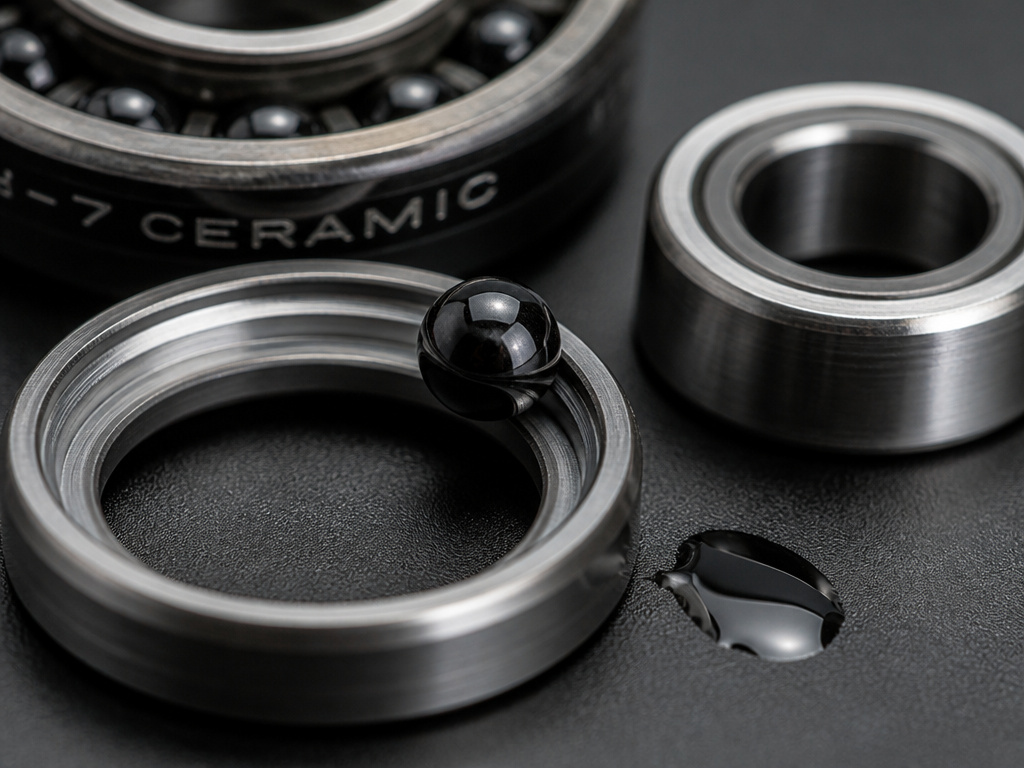
Ceramic bearings live at the opposite end of the spectrum from basic carbon steel. They’re the subject of hype, skepticism, and a price tag that demands justification. We should be clear about what they are and aren’t.
First, the science. High-performance ceramic balls are made from silicon nitride (Si2N4), which is black. According to the Powerslide guide, this material is about 30% harder than steel, is rounder with a smoother surface, and offers more uniform sizing. This translates to a significant reduction in friction. They also don’t rust, a massive advantage for all-weather skaters. A Reddit user in a winter climate put it bluntly: “Ceramic bearings are absolutely necessary if you want to skate in a wet environment… I’ve seen too many seized and corroded bearings.”
Where this goes sideways: Assuming “ceramic” means one thing. White-colored ceramic bearings use lower-quality raw materials and don’t perform as well as black silicon nitride. Also, full ceramic bearings (all-ceramic construction) are rare and extremely expensive. They don’t require lubrication. The vast majority of “ceramic” skateboard bearings are hybrids: they retain steel inner and outer rings for strength and cost reasons, using only ceramic balls. These hybrids absolutely do require lubrication.
The friction advantage is real, but the feel is different. Ceramic is harder but also more brittle than steel. The common fear is that ceramic balls will shatter on impact from a big drop. In practice, failures are rare, but the possibility informs the “performance vs. Durability” trade-off. For most skaters, the bigger consideration is cost. As Warehouse Skateboards notes, ceramic bearings usually range from $70-$100, while regular steel bearings start around $15.
So, who are they for? If you’re a downhill bomber, a marathon skater, or someone who rides in wet conditions and wants the ultimate in corrosion resistance, a hybrid ceramic bearing like the Bones Ceramic Super Reds or a Bronson Speed Co. Ceramic option is a justifiable investment. For street skaters who grind curbs and slam their boards onto ledges, the cost-benefit analysis often tilts back toward high-quality steel. Your best ceramic bearings are a tool for a specific job, not a magic bullet.
Titanium and Other Materials
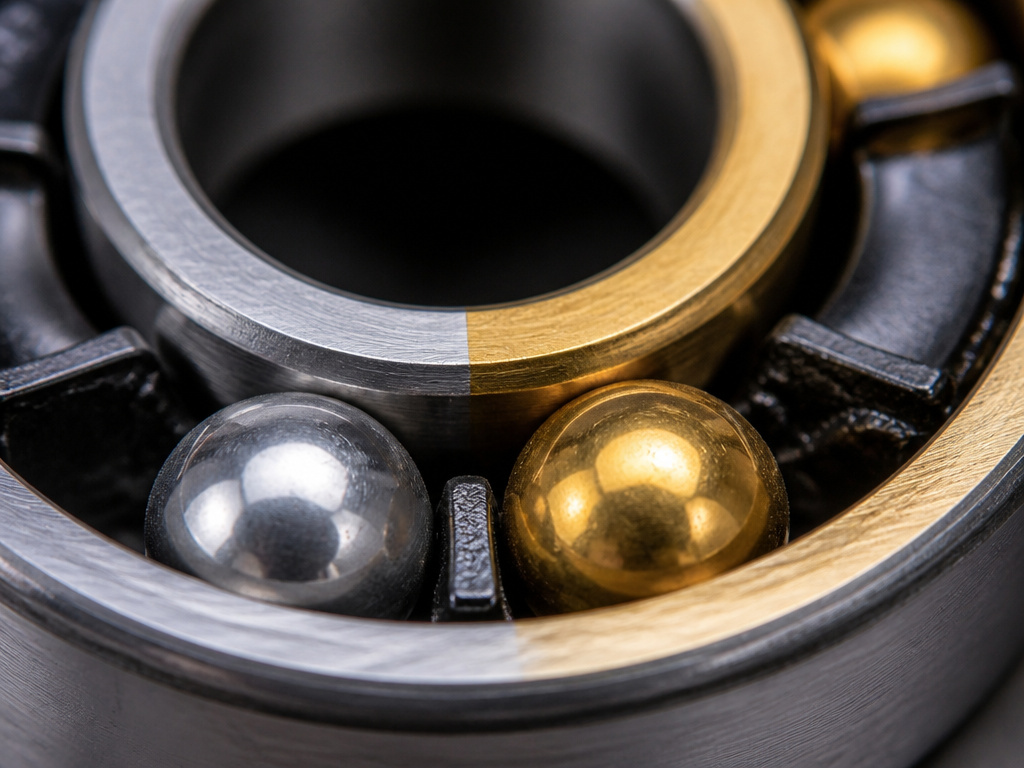
Titanium occasionally enters the bearing conversation, usually as a coating or for the balls themselves. It’s lightweight, incredibly strong, and boasts excellent corrosion resistance. In theory, titanium bearings should perform similarly to high-end steel but with even longer life due to their strength.
In practice, pure titanium bearings are exceptionally rare in skateboarding. More often, you’ll see titanium nitride (TiN) coatings applied to steel components. This gold-colored coating increases surface hardness and reduces friction slightly. The performance gain over premium steel is marginal for most skaters, and the cost jumps significantly. For the vast majority, a great steel or a thoughtful hybrid ceramic is where the real material choices lie. It’s a niche within a niche.
ABEC Ratings and “Skate Rated” Systems
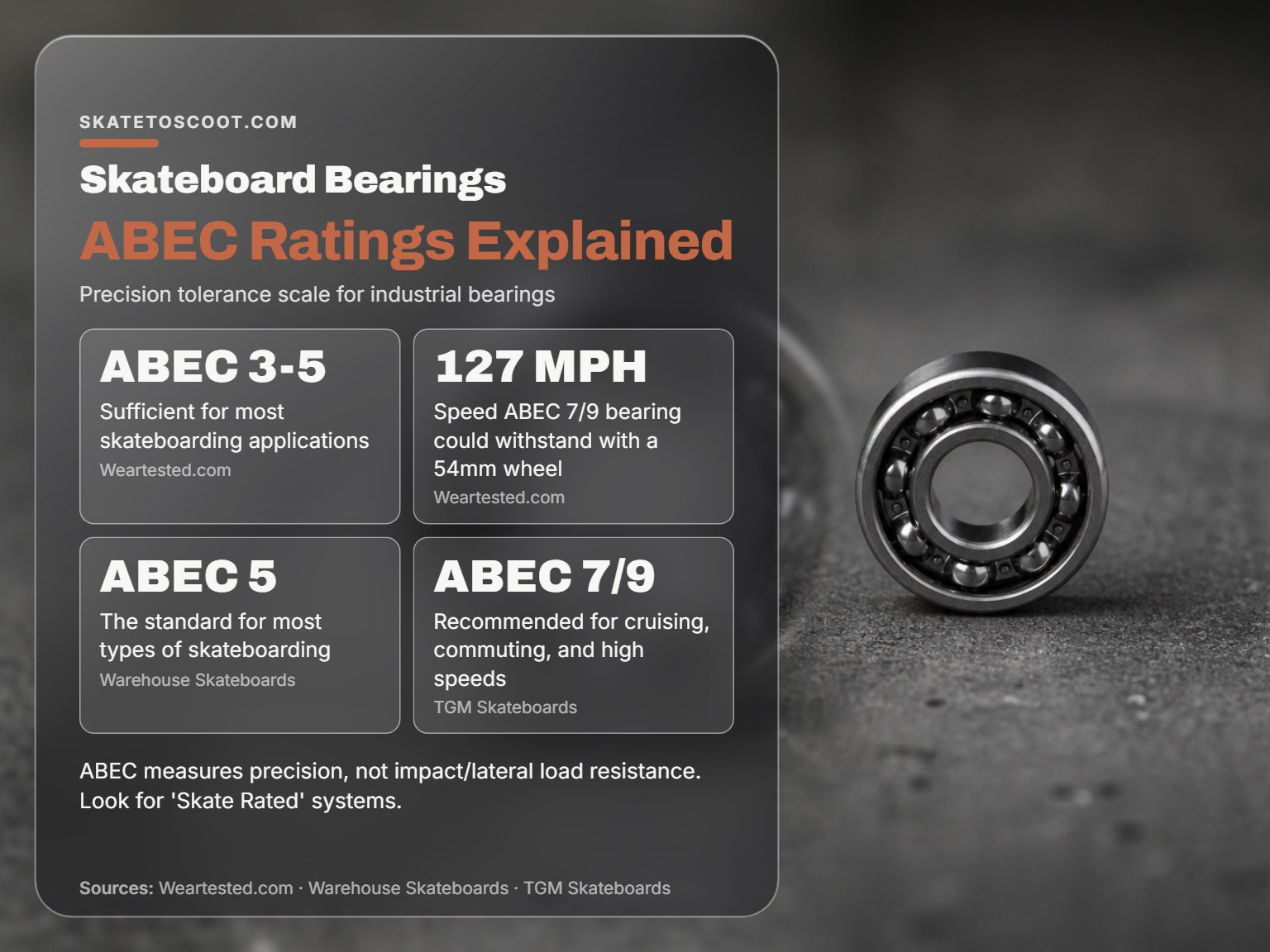
The ABEC (Annular Bearing Engineers Committee) rating is the most misunderstood spec on a bearing package. It’s a precision tolerance system designed for industrial machinery, think high-speed spindles and electric motors. The scale runs 1, 3, 5, 7, and 9, with higher numbers indicating tighter manufacturing tolerances.
Here’s the conflict: sources actively disagree on its relevance. Weartested.com states ABEC in a range of 3-5 is sufficient for skateboarding applications. Weartested.com’s testing showed an ABEC 7 or 9 bearing could withstand speeds up to 127 MPH with a 54mm wheel, far beyond typical skateboarding needs. Conversely, TGM Skateboards suggests that for “cruising, commuting and hitting high speeds, ABEC 7 and ABEC 9 is what you are going to want.”
| ABEC Rating | General Consensus for Skateboarding | Best For |
|---|---|---|
| ABEC 1, 3 | Inexpensive, crude, less accurate. Not smooth or quick. | Absolute beginners on a tight budget. |
| ABEC 5 | The standard for most skateboarding. A good balance of speed and cost. | Street skating, park tricks, general use. |
| ABEC 7, 9+ | Very fast, smooth, more expensive. Capable of extreme precision. | Downhill, speed skating, cruising where maximum roll is desired. |
ABEC measures only precision under ideal, high-speed rotation. It does not account for impact resistance, lateral load handling (like the forces in a sharp turn), lubricant quality, or corrosion resistance, all critical for skateboarding. This gap is why companies like Bones developed “Skate Rated” or “Skate Tested” designations. These systems theoretically evaluate bearings under real-world skate conditions: impacts from landing, lateral forces, and exposure to dirt and moisture. When you see “Skate Rated” on a package, the manufacturer is telling you to look past the ABEC number.
Bearing Maintenance: Material Matters
Your bearing’s material dictates its care. Skate Warehouse advises cleaning bearings every 3-6 months or after skating in wet or dirty conditions. But the “how” changes.
For steel and hybrid ceramic bearings, the process is similar:
- Remove the bearings from the wheels.
- Pop off removable rubber shields.
- Soak in a skate-safe cleaner (e.g., acetone or rubbing alcohol) for 5-10 minutes, agitating to dissolve old lubricant and dirt.
- Let them dry completely, any residual solvent will break down new lube.
- Re-lubricate. This is where a key choice comes in.
The SMB Bearings guide makes a strong case: “Grease is a better option for skate bearings.” Grease is oil with a thickener; it stays in place longer and forms a better seal against contaminants. Their recommendation is to fill 15-20% of the bearing’s internal space with a high-speed, low-torque grease. The trade-off? Applying grease evenly is more fiddly than adding a few drops of oil.
Most skate-specific lubricants like Bones Speed Cream, however, are lightweight oils. They’re easier to apply (Skate Warehouse recommends 1-2 drops per bearing) and are widely used. The trade-off is that they can spin out or evaporate faster, requiring more frequent re-application. If you skate street and deal with fine concrete dust, the sealing property of grease might save you from weekly cleanings. For a deep dive on this choice, see our guide on the best lubricants for skateboard bearings.
The part nobody mentions: Free-spin tests are meaningless. A bearing spinning freely in your hand has no load on it. What matters is how it rolls under your weight. A packed-with-grease bearing that barely free-spins will often roll smoother and longer under load than a dry, noisy bearing that spins for days in your fingers.
For full ceramic bearings, maintenance is simpler: they don’t require lubrication at all. You still need to clean them to remove grit that can abrade the ceramic surfaces, but you skip the re-lube step. Remember, these are rare and costly.
Spacers and Speed Rings: The Supporting Cast
Bearings rarely work alone. Spacers are small metal cylinders that sit between the two bearings inside the wheel core, on the truck axle. Their job is to take the axial load when you tighten the axle nut, preventing the bearings from being crushed inward. This reduces friction, can make slides smoother, and extends bearing life. They’re optional but recommended, especially for aggressive skaters or anyone using soft wheels.
Speed rings (or speed washers) are thin washers that go between the bearing and the truck hanger. They reduce friction as the wheel spins next to the truck. Most modern trucks have built-in recesses that make them unnecessary, but they’re often included in bearing packs.
Making Your Choice: Steel, Ceramic, or Something Else?
So, what should you buy? The answer isn’t in a brand name first; it’s in your skating reality.
For most skaters, beginners, street skaters, park riders, a steel bearing made from 52100 chrome steel is the unequivocal best choice. Look for brands that use 52100 chrome steel or similar and have removable rubber shields for easy maintenance. You get 90% of the performance of the most expensive bearings for a fraction of the cost, and when they eventually wear out or get ruined, you’re out $20, not $100. This aligns with a common Reddit sentiment: “Don’t spend more than $30 on bearings ever… Expensive bearings are a bad investment.”
Choose hybrid ceramic bearings if: You are a downhill skater, long-distance commuter, or frequently skate in damp conditions where rust is a constant threat. The reduced friction and zero corrosion of ceramic balls provide tangible benefits that justify the premium. Check current reviews on Amazon for the latest feedback on durability.
Consider stainless steel if: You want the durability and feel of steel but live in a humid or coastal environment. It’s a “set-it-and-forget-it” material upgrade from standard chrome steel.
Skip titanium and full ceramic unless you have a very specific, high-budget performance need. The law of diminishing returns hits hard here.
Whatever you choose, pair it with a consistent maintenance habit. The best bearing in the world will fail if it’s packed with mud and run dry. Learn how to lube skateboard bearings properly, and your chosen set will last for years of hard skating.
Frequently Asked Questions
Are expensive bearings worth it?
It depends entirely on your skating. For technical street skating where bearings take heavy impacts, a mid-priced steel bearing like Bones Reds often represents the best value. The performance gap between a $20 bearing and a $50 bearing is noticeable; the gap between a $50 bearing and a $100 bearing is much smaller and often only relevant for specific disciplines like downhill racing or wet-weather skating. Durability doesn’t always scale with price, a hard slam can wreck any bearing.
Is WD-40 bad for skateboard bearings?
Yes. WD-40 is a water-displacing solvent and light rust penetrant, not a lubricant. It will dissolve the factory grease or oil, leaving your bearings dry. While it might seem to help in the very short term by cleaning off gunk, it leads to rapid wear and failure. As one Reddit user warned, “WD-40 is corrosive n dries bearings, so they blow out way faster.” Use a skate-specific lubricant or a light grease.
How long do skateboard bearings last?
With proper maintenance, a set of steel bearings can last for several years. Ceramic hybrids can last even longer due to their hardness and corrosion resistance. The primary killers are dirt, water, and lack of lubrication. Warehouse Skateboards suggests cleaning your bearings twice as often if you skate street. A bearing that’s noisy, slow to spin, or feels gritty is telling you it’s time for a clean or a replacement.
Do I need different bearings for different wheel sizes?
No. The 608 standard is universal. The same bearing fits a tiny 48mm street wheel and a massive 70mm cruiser wheel. However, larger wheels exert different forces and reach higher speeds, which might make the performance benefits of higher-quality materials like ceramic more appreciable.
What’s the difference between “skate rated” and ABEC?
“Skate Rated” (or similar terms) is a manufacturer’s own designation that the bearing has been tested or designed for skateboarding’s unique demands: impact, lateral force, and dirt. ABEC is a standardized industrial tolerance rating for high-speed rotational precision. A “Skate Rated” ABEC 3 bearing from a company like Bones may outperform a generic ABEC 7 bearing in real-world skating because it’s built to handle shocks the ABEC system doesn’t measure.
The Bottom Line
Your bearings are a wear item, not a lifetime investment. The goal is to match the material to your conditions and maintain them well enough that they’re not the weak link in your setup. For the large majority, that means a trusted steel bearing, cleaned every few months, and treated with a lubricant like grease.
We’ll finish with one concession. All this talk of silicon nitride and precision tolerances can make it seem like the bearing is everything. It’s not. A perfect bearing on a dull, coned wheel or a loose truck won’t give you a great ride. The bearing is one component in a system. Focus on the whole setup, your skateboard wheels and their durometer, your truck tightness, your own balance, and use a bearing that supports that system reliably. Keep them clean, keep them rolling, and spend your mental energy on your technique, not your component specs.
