Can You Longboard on Gravel? Wheel Size and Safety Limits
This post contains affiliate links. As an Amazon Associate, we earn from qualifying purchases.
You can longboard on gravel, but most manufacturers and safety agencies strongly advise against it. The official stance is clear: longboards are designed for flat, paved surfaces. Riders who do attempt it rely on larger wheels (75mm+), a cautious, low stance, and accept a significantly higher risk of losing traction and falling.
That gap between the rule book and the parking lot is where the real conversation happens. Manufacturers write manuals to cover liability and define the product’s intended use, a smooth, predictable environment. Gravel is the opposite: unpredictable, loose, and hungry for your balance. A common question is, can you longboard on gravel?
What follows is a breakdown of the warnings, the workarounds riders use, and the physical trade-offs that decide whether your board makes it across a gravel patch or leaves you picking stones out of your palms.
Key Takeaways
- Manufacturers like InSportline and ONSRA explicitly warn against riding on gravel or loose debris. Their manuals state longboards are for flat, clean, dry surfaces only.
- Wheel size is the single biggest hardware factor. Larger wheels can roll over small gravel patches, while smaller wheels will catch and stop.
- Speed is a double-edged sword. A bit more momentum helps you roll through, but too much speed magnifies the risk of a high-impact fall if you hit a hidden rock or lose traction.
- Gravel type changes everything. Compact, fine gravel on a hard-packed base is rideable; loose, deep, or large-stone gravel is a hard no.
- Protective gear is essential. A helmet, knee pads, and wrist guards are the minimum for attempting unstable surfaces where falls are more likely.
The Manufacturer Stance vs. Owner Reality
The InSportline longboard manual states the board is suitable only for “rovný, čistý, suchý povrch” – flat, clean, dry surface. It adds, “K jazde na longboarde nie je vhodný mokrý a nerovný povrch” – for longboarding, wet and uneven surfaces are not suitable.
This isn’t a suggestion. It’s a boundary drawn by product liability and the European standard EN 13613, which these boards are certified to meet. The S+S Sportartikel GmbH manual echoes it: “Use the longboard only on safe, flat surfaces.” The U.S. Consumer Product Safety Commission (CPSC) advises riders to “inspect the area for holes, bumps, rocks, and debris.” Electric board maker ONSRA is blunt: “Avoid riding on sand, gravel, mud, rugged or open ground.”
The message from most sources is unified: gravel is out of bounds for longboards, though Boardy permits cautious use of its kick scooter on shallow gravel.
Yet on Reddit and in parking lots, you’ll find riders who do it anyway. The disconnect isn’t about recklessness; it’s about scope, and it’s at the heart of the can you longboard on gravel question. A manufacturer defines a product’s guaranteed performance envelope. Riders explore the possible envelope. When a manual says “flat, clean, dry,” it’s describing a laboratory condition, a perfect, predictable plane. Gravel introduces hundreds of tiny, moving, unpredictable failure points. A manufacturer can’t certify control there, so they prohibit it.
My rule of thumb when considering can you longboard on gravel is to always test a new surface with a simple stop before trying any distance. I developed this after slipping on unseen gravel more than once. The first time, I was pushing across a seemingly smooth asphalt lot that transitioned to a fine gravel patch. The board stopped dead, and I didn’t. It was a low-speed spill, but it drove the point home: surfaces change, and your wheels don’t always tell you in time.
| Source | Stance on Gravel/Rough Surfaces | Key Caveat or Instruction |
|---|---|---|
| InSportline Manual | Not suitable. For flat, clean, dry surfaces only. | Board complies with safety standard EN 13613. |
| ONSRA Electric Skateboard Manual | Avoid riding on gravel, sand, mud. | Boards designed for flat, paved surfaces. |
| CPSC Safety Sheet | Inspect area for rocks and debris. | General skateboarding safety guidance. |
| Boardy Kick Scooter Manual | May be used on shallow sand, gravel. | Must ride more slowly and pay greater attention. |
| Razor Manual (cited in research) | Don’t ride on loose debris (rocks, gravel, sand). | Primary source not fully accessible. |
The Boardy manual is the outlier here, granting cautious permission for its kick scooter. This highlights a key point: the vehicle matters. A kick scooter, with its handlebars for balance and often smaller, harder wheels, has a different risk profile and control scheme than a longboard.
Wheel Size and Type: Your First Line of Defense
If you’re going to attempt gravel, your wheels are doing all the work. The community consensus, visible in forums and longboard wheel size discussions, is that 75mm is a practical minimum diameter for rolling over small obstructions. Why? A larger wheel has a lower angle of attack. A pebble that would jam against the face of a 65mm wheel simply gets rolled over by a 75mm wheel because the contact point is higher off the ground.
Larger wheels also maintain momentum better over chatter. The downside is weight and a higher ride height, which can feel less stable during pushes and turns. For a dedicated rough-surface setup, riders often look at brands like MBS for their all-terrain wheels, or experiment with unconventional designs like Shark Wheels.
Common mistake: Assuming any large wheel will work. Durometer (hardness) matters just as much. A soft wheel (78A-80A) will conform to the ground slightly and absorb vibration, but it can also grip loose stones and slow you down. A very hard wheel (85A+) skates over the top but transmits every bump to your feet.
Shark Wheels, with their concave tread pattern, are a divisive example. Owners on Reddit report they “work surprisingly well over small gravel and amazing over sand on roads,” but also that they “feel a lot more vibration than similarly priced regular wheels.” They’re a specialist tool, better for certain loose surfaces, worse for smooth cruising.
So, should you swap your wheels? If you encounter gravel only as occasional 10-foot patches on an otherwise paved route, a standard 70mm+ cruiser wheel is probably fine if you slow down and brace. If gravel paths are your destination, you need a dedicated setup. Start by learning to measure longboard wheels accurately, as advertised sizes can be misleading.
Gravel Isn’t One Surface
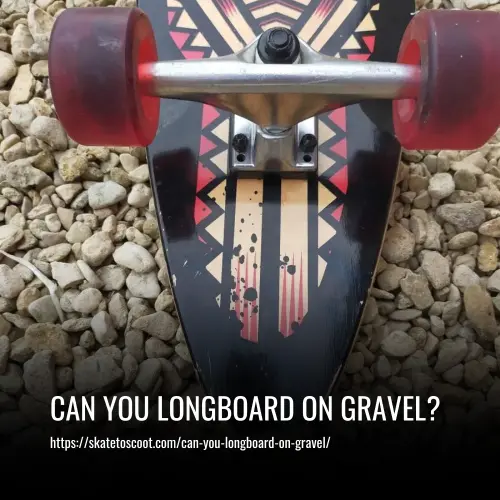
“Gravel” covers everything from fine, decomposed granite packed into a hard path to loose, fist-sized river rock. The former you might manage; the latter will stop you instantly. This is the “surface compactness” factor the SERP pages mention, and it’s the most practical part of the answer.
- Compact Fine Gravel: Looks almost like a solid, pale road. If you can push a stick into it and it barely leaves a mark, it’s compact. This is the only type of gravel that’s remotely rideable. You’ll feel a constant buzzing vibration, and speed control is crucial.
- Loose Fine Gravel: The kind that sprays underfoot. This is a traction nightmare. Your wheels will sink and slide. Avoid.
- Large Aggregate Gravel: Stones bigger than a marble. These are individual obstacles. Even large wheels will struggle, and hitting one at an angle is a guaranteed crash.
The CPSC’s advice to “inspect the area where you will be riding” is your best pre-ride ritual. Walk the path first. Kick at the edges. If the gravel layer is thin over solid asphalt or hardpack, it’s a maybe. If it’s deep and loose, it’s a no-go. This inspection also reveals hidden potholes or large rocks that could be hidden in a shadow.
Techniques and Stance: How to Not Eat It
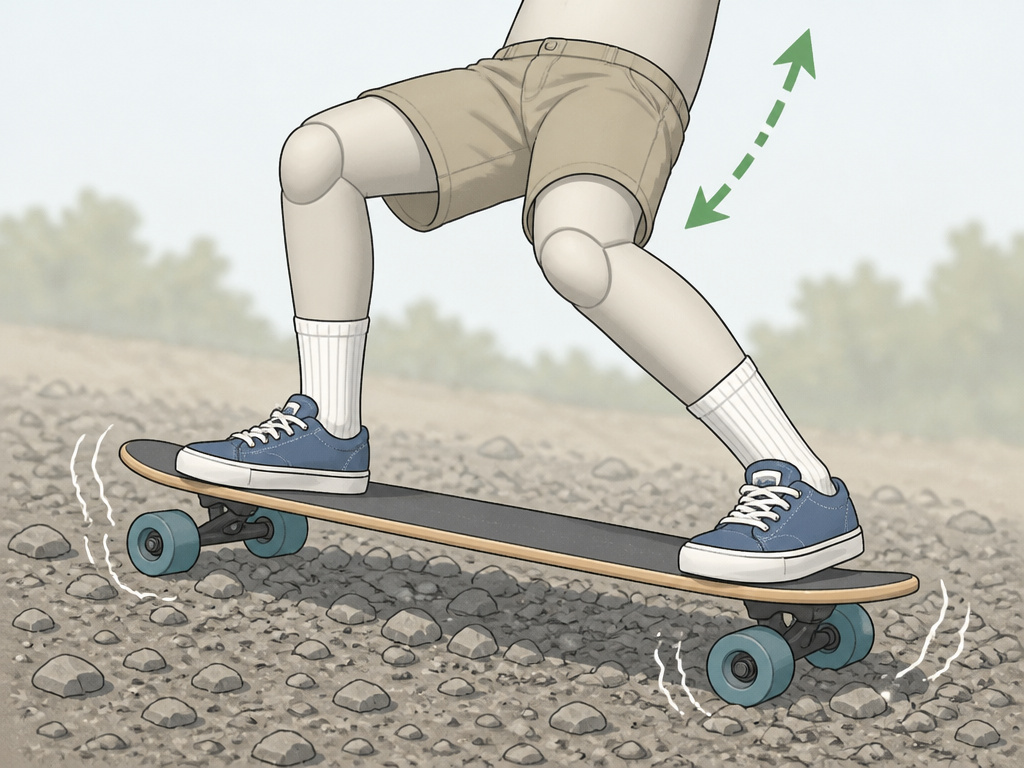
Technique on gravel is about minimizing variables. You can’t carve; you can only hope to go straight and stay upright.
Stance: Widen your feet for a lower, more stable center of gravity. Think athletic ready-position, knees bent. This lowers your fall height and gives your legs a range of motion to absorb shocks.
Speed: This is the delicate balance. You need enough momentum to roll through resistance, but not so much that a fall becomes severe. A slow, controlled pace allows you to step off if the board stops. A fast pace means you’re flying over the handlebars if it stops. Start slow.
Weight Distribution: Lean back slightly. This lightens the front trucks, helping them bounce over obstructions rather than dig in. Don’t lean so far back you lose steering control, but a rearward bias helps.
Bracing: Keep your muscles engaged, not locked. Your ankles, knees, and hips should be soft shock absorbers. Expect the board to chatter and skip. If you tense up, a sudden jolt will knock you off balance.
The Fall: If you feel the board stopping or sliding out, try to step or run it out. If you’re going down, aim to roll. Protect your head, wrists, and knees. This is why the CPSC skateboarding safety fact sheet emphasizes protective gear, on unstable surfaces, the odds of using it go up significantly.
Modifying a Board vs. Buying Off-Road
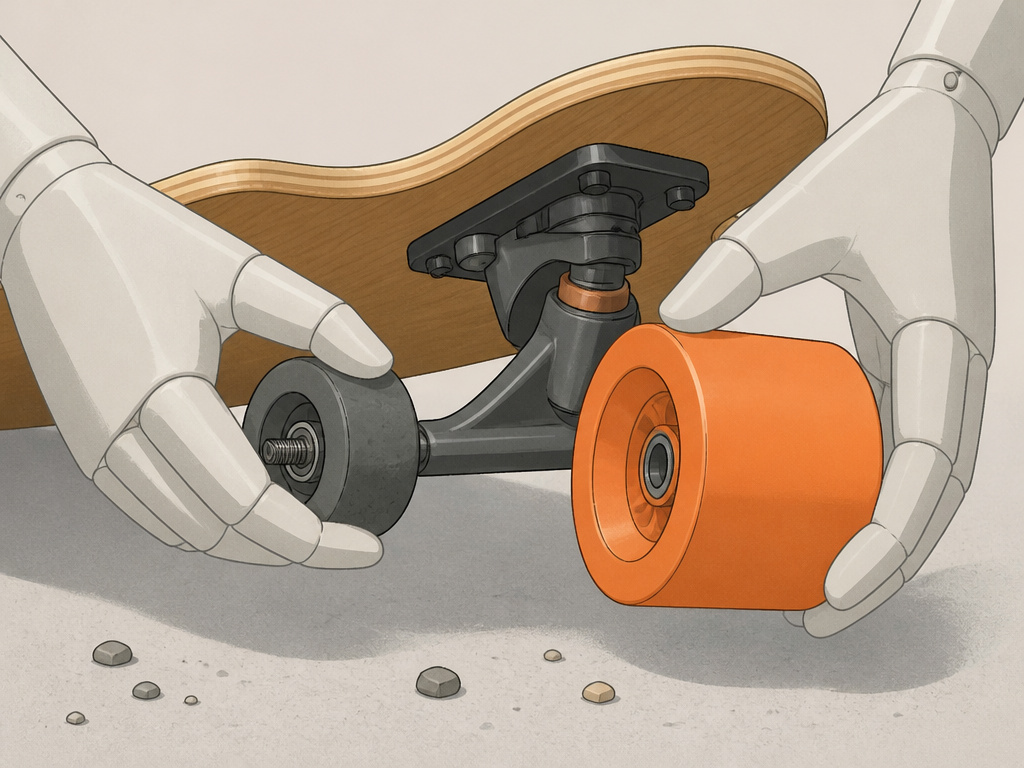
This is the budget crossroads.
The Modification Path: Start with a sturdy deck, preferably a drop-through longboard or drop deck longboards for a lower, more stable platform. Swap in the largest, softest wheels that fit without bite (75mm-85mm). Ensure your bearings are clean and roll smoothly, friction is your enemy. Finally, consider loosening your trucks a touch for better shock absorption, but understand how longboard truck tightness affects stability at speed. Modifications require purchasing new wheels and possibly bearings.
The Dedicated Off-Road Path: This means a mountainboard or an all-terrain electric skateboard like an Evolve. These have massive, treaded pneumatic tires (8-10 inches), suspension trucks, and a deck designed for rough ground. Dedicated off-road boards are more expensive, but the capability is in a different league. They can handle grass, dirt trails, and gravel that would be impossible for a standard longboard.
For most people asking this question, the modification path is the answer. It’s about extending the capability of the board they already own for occasional rough patches. If you’re genuinely seeking to ride gravel trails regularly, a standard longboard, even modified, is the wrong tool. You need a different vehicle.
Safety, Consequences, and the Limits of “Can”
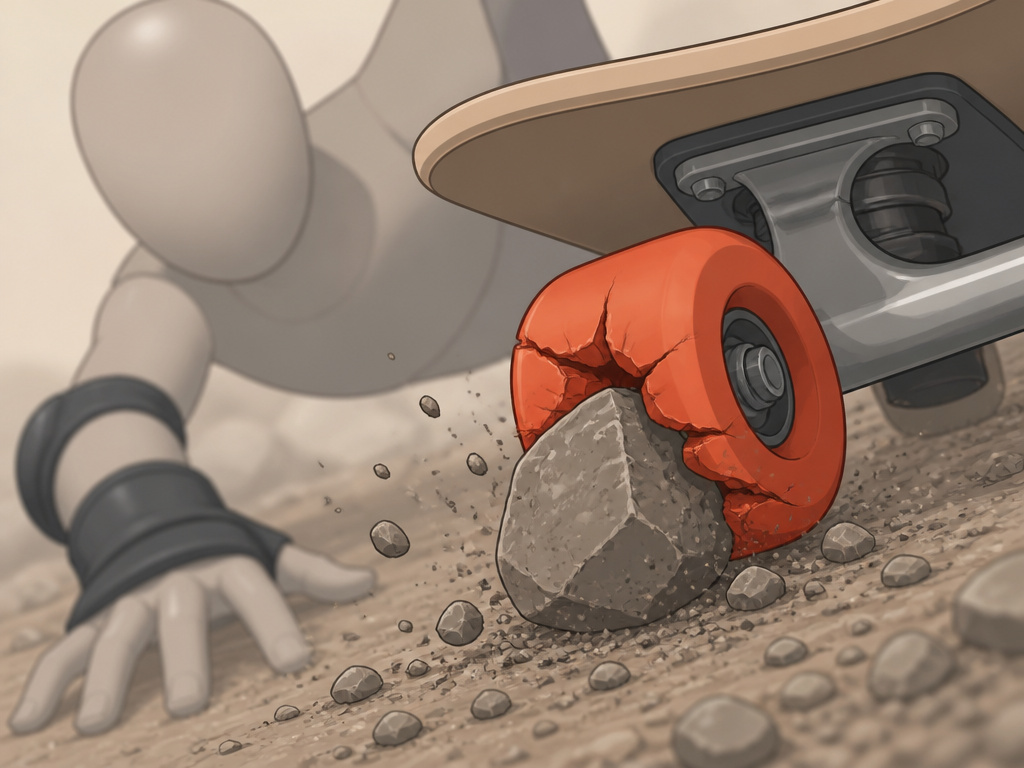
Where this goes sideways: Ignoring the vibration. A constant buzz through your deck is more than discomfort; it’s your board fighting the surface. That fight fatigues components and your concentration. A failure, a wheel catching, a truck snapping, is more likely here than on smooth pavement.
Be realistic. “Can you?” is a technical question. “Should you?” is a risk assessment. You can drive a car on a flat tire, but you shouldn’t. The consequences of longboarding on gravel are predictable: lost traction leading to slides and falls, wheel stoppage leading to pitch-forwards, and hidden obstacles leading to high-side throws.
The injuries match the surface: gravel rash (abrasions filled with dirt and stone), sprained wrists from catching falls, and impact injuries to knees and elbows. The gear mandated in every manual, helmet, wrist guards, knee and elbow pads, is your only buffer against these specific outcomes.
For children, the calculus changes entirely. The S+S Sportartikel manual specifies the board is for persons aged 6 and up, with under-6 requiring direct adult supervision. The CPSC recommends close supervision for children under 8. Gravel riding amplifies all risks, so if a young rider is involved, the adult’s job is to enforce the manufacturer’s rule: stick to the safe, flat surface.
Maintenance after riding on rough terrain
Riding on gravel or other rough surfaces accelerates wear on your board. After any ride on uneven ground, you should conduct a thorough inspection. Check the wheels for embedded debris or uneven wear patterns. Examine the trucks and bearings for any grit that may have worked its way in, as this can grind down components and affect smooth rolling. The deck itself should be checked for any damage. A clean, dry surface is the manufacturer-recommended condition for riding, so any deviation from that means your equipment needs closer attention to maintain safety and performance.
Frequently Asked Questions
Can you longboard on wet ground?
No. Every manual reviewed prohibits it. The InSportline manual specifies a “dry” surface. Wet pavement drastically reduces wheel traction, making slides and falls likely. Wet conditions also accelerate the rust and corrosion of bearings, trucks, and hardware.
Is a longboard harder than a skateboard on gravel?
Generally, a longboard is more stable due to its longer wheelbase and larger wheels, which can help roll over small obstacles. However, its size and weight make it harder to quickly step off or maneuver around larger rocks compared to a more nimble, smaller skateboard. Neither is designed for the task.
What wheels are best for rough surfaces like gravel?
For occasional gravel patches, large, soft wheels are a common compromise. All-terrain wheels from various brands are common choices. For dedicated rough terrain, pneumatic tires on a mountainboard are the only true “best” option.
Can electric longboards handle gravel?
Electric board manufacturers like ONSRA explicitly say to avoid gravel. While the power can help maintain momentum, the risks are identical to a regular longboard, with added danger from a motor that might keep driving the wheels during a loss of traction. Their IP65 rating is for splash protection, not for driving through loose debris.
Is it possible to skateboard on grass?
Similar to gravel, it’s technically possible but ill-advised. Grass is even more resistant and uneven. Short, dry grass on hard ground might be rollable with huge, hard wheels, but it’s extremely taxing and unstable. It’s a novelty, not a practical riding surface.
The Bottom Line
You can longboard over a patch of compact, fine gravel if you have large wheels, a cautious approach, and full protective gear. But every official source tells you not to. They’re not being overly cautious; they’re defining the conditions under which the board works predictably.
The real answer lives in your goal. If you need to cross a 15-foot gravel driveway to get to the smooth bike path, you can probably manage it by walking the board or taking it slow. If you’re looking for a board to ride gravel paths for fun, you’re shopping in the wrong category. Look at mountainboards or all-terrain electric boards instead.
For the vast majority of riders, the best path is to follow the manual, stick to the pavement, and choose a longboard that excels at the riding you’ll actually do 99% of the time. Save the gravel for a bike.
