What Is the Fastest Electric Scooter? Key Brands Compared
This post contains affiliate links. As an Amazon Associate, we earn from qualifying purchases.
Sources disagree on the fastest electric scooter: RiderGuide tested the Hooga Daytona at 65 mph, ERideHero tested the RoadRunner RX7 at 67.4 mph and calls it the fastest in retail circulation, and ERideHero also tested the Slack Core 920R at 90.1 mph as the fastest ever GPS tested.
That gap between the number on the box and the number on the GPS is where the real conversation about what is the fastest electric scooter starts. Every scooter maker publishes a top speed, but at the high end, those figures are more like theoretical ceilings than practical guarantees. A 2022 study by TRL Ltd. Found all privately-owned scooters they tested overstated maximum speed by 1.5–11 km/h, with speedometers over-reading by 2.5–5 km/h.
What follows is a breakdown of the fastest models based on independent GPS testing, the mechanical reasons why claims and reality diverge, and the steep safety and practical trade-offs that come with chasing 60 mph on two small wheels when answering what is the fastest electric scooter.
Key Takeaways
- Sources offer different candidates for the fastest scooter: the Hooga Daytona tested at 65 mph, the RoadRunner RX7 tested at 67.4 mph and called the fastest in retail circulation, and the Slack Core 920R tested at 90.1 mph.
- Manufacturer top speed claims are often 10+ mph optimistic on high-performance models, a discrepancy documented by both testers and transport research labs.
- Sources disagree on the quickest scooter to 30 mph: ERideHero found the Kaabo King GTR fastest at 3.23 seconds, while RiderGuide states the Inmotion RS is the quickest to 30 mph they have tested.
- Above 50 mph, risks escalate exponentially; braking distances lengthen, stability demands full gear, and these machines are for experienced riders on private roads only.
- Battery charge directly impacts performance; most fast scooters lose several mph once charge drops below 50-80%, making large-capacity batteries a practical necessity.
The Fastest Scooters in Retail Circulation
If you walk into a shop or order online today, the scooter with the highest independently verified speed is the Hooga Daytona. RiderGuide clocked it at a sustained 65 mph on GPS. Right behind it, the Inmotion RS hit 62.1 mph, and the Teverun Fighter Supreme 7260R managed 61.5 mph. These numbers were earned on test roads with a full battery and a standard rider weight.
The king of the hill for actually available models is the RoadRunner RX7. ERideHero’s testing put it at 67.4 mph, making it the fastest scooter in actual retail circulation. It’s a important distinction. While the Slack Core 920R has been GPS-tested at a staggering 90.1 mph, it’s built in tiny batches and is nearly impossible for the average buyer to purchase. For a practical guide to other high-speed options that are readily available, see our curated list of the best fast scooters.
The unsexy truth is: the scooter that wins the drag race on YouTube might spend more time in the shop than on the road. Owners of some ultra-fast brands report spotty reliability, where a minor electrical glitch can mean weeks waiting for a proprietary part.
These machines share a common DNA: dual motors, 72V battery systems, and price tags that rival used motorcycles. They are not commuter tools; they are enthusiast platforms built for adrenaline, with substantial weight and maintenance needs to match.
| Model | Tested GPS Top Speed | Claimed Top Speed | Key Spec |
|---|---|---|---|
| Hooga Daytona | 65 mph | 72 mph | Dual 5,000W motors, 72V 40Ah |
| RoadRunner RX7 | 67.4 mph | 70 mph | Dual motor, 72V system |
| Inmotion RS | 62.1 mph | 68.3 mph | Dual motor, focused on acceleration |
| Kaabo King GTR | 66 mph | 65 mph | Peak acceleration champion |
| NIU NQiX 500 MY26 | 100 km/h (62.1 mph) claimed | 100 km/h (62.1 mph) claimed | 9900W peak power, street-legal moped |
Why Claimed Speeds Are Almost Always Wrong
Look at the table above. Notice a pattern? The tested number is almost always lower. This isn’t a minor rounding error. RiderGuide notes that at the top of the market, “shortfalls of 10 mph or more are common on 70 mph claims.” The TRL Ltd. Study provides the mechanical explanation: speedometers on private scooters over-read by 2.5–5 km/h (1.5–3 mph), and the scooters themselves couldn’t reach their claimed maximums, falling short by 1.5–11 km/h.
We can examine this process in stages. First, the scooter’s display is fed data from the motor controller, not a GPS. It calculates speed based on wheel rotations. If the wheel diameter in the software is slightly off, or if tire pressure is low, the displayed speed drifts from reality. Second, manufacturers often test under ideal conditions: a lightweight rider, a full battery, perfect pavement, and sometimes even a tailwind. Your commute, with you on it, is not an ideal condition.
Common mistake: Buying a scooter based solely on its claimed top speed. The real-world number you’ll see, especially after the battery dips below 80%, can be 10-15% lower. That turns a “70 mph” dream into a 60 mph reality.
Third, and most critically for enthusiasts, is software limiting. Many high-performance scooters are deliberately capped from the factory. Their hardware, the motors and battery, could push harder, but the controller firmware holds them back for warranty, safety, or regulatory reasons. Riders often find methods to bypass these software limits, but doing so voids warranties and introduces new risks. For riders interested in safely exploring their scooter’s full potential, our guide on how to make an electric scooter faster covers the legitimate options.
Acceleration: The Metric That Actually Matters on the Street
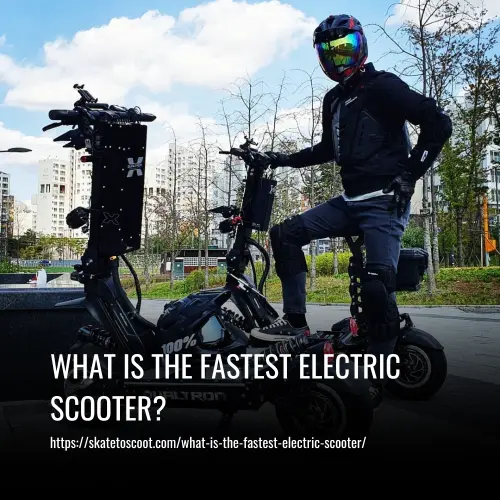
Top speed is a bragging right you’ll use once. Acceleration is the tool you use at every intersection and merge lane. It’s also where you feel the scooter’s character. The Kaabo King GTR isn’t just fast; it’s violently quick, hitting 30 mph in just 3.23 seconds according to ERideHero. That’s faster than many sports cars off the line.
For urban riding, a scooter that can get from 0 to 30 mph briskly is often more useful and safer than one that can theoretically hit 70 mph but takes ages to build speed. It allows you to match traffic flow and clear intersections decisively. Here’s how the top tier shakes out for 0-30 mph times:
| Model | 0-30 mph Time | Notes |
|---|---|---|
| Kaabo King GTR | 3.23 s | Quickest in class |
| Solar Hyperion RST | 3.42 s | Balanced performance |
| Inmotion RS | 3.44 s | Quickest to 30 mph per RiderGuide |
| Dualtron Sonic Model A | 3.55 s | High-speed stability |
| RoadRunner RX7 | 3.68 s | Excellent top-speed combo |
The sensation of that kind of acceleration on a standing scooter is unique. There’s no seat back to press into. Your entire body becomes a shock absorber, and your core muscles fire to keep you from being left behind. It’s exhilarating and, without proper stance, instantly dangerous.
For adults looking for this thrilling yet manageable performance, rather than outright hyper-scooter extremes, there’s a strong category of fast scooters for adults that prioritize robust build quality and usable power bands.
The Physical Reality of Riding at 60+ MPH
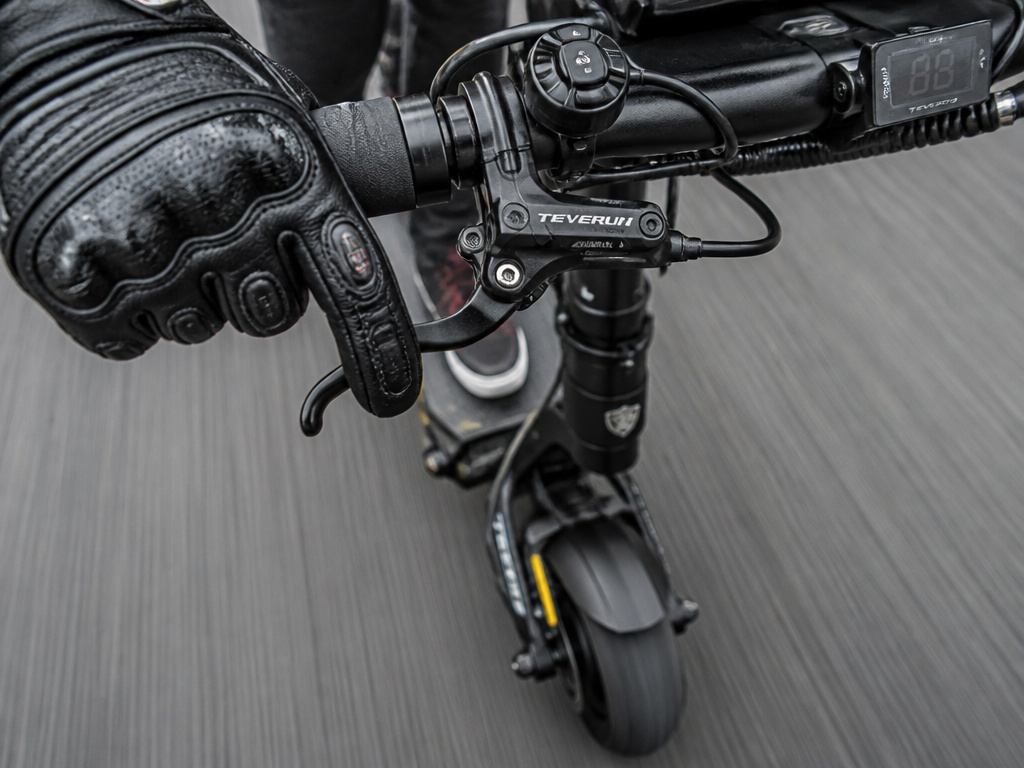
You’re not just going fast. You’re standing on a small platform, on 10-inch tires not designed for highway speeds, with your body acting as the largest unsecured air brake on the vehicle. The physics are unforgiving.
The TRL study documented a critical danger: “High levels of braking at the front wheel were noted to cause instability through lifting of the rear wheel.” On a scooter, if the rear wheel lifts, you and the scooter pitch forward. Rider separation, a polite term for being thrown over the handlebars, is almost guaranteed. This is why proper braking technique on fast scooters is a gradual, balanced affair, not a panic grab.
Your margin for error evaporates.
- A pothole you’d roll over at 30 mph can become a ramp at 60 mph.
- Braking distance doesn’t increase linearly; it squares with speed. Stopping from 60 mph takes a significantly greater distance than stopping from 30 mph.
- Wind resistance becomes a massive force, trying to peel your fingers from the grips.
- Tire condition is life-critical. A worn tire or one even slightly under-inflated can lead to a catastrophic blowout or loss of control.
ERideHero puts it bluntly: “Above 50 mph, the risks grow faster than the speed does.” This is why every responsible reviewer states these scooters are for experienced riders on private roads, decked in full motorcycle-grade gear, helmet, jacket, gloves, knee and elbow protection. They are not toys.
Speed vs. Practicality: Where Do You Actually Ride?
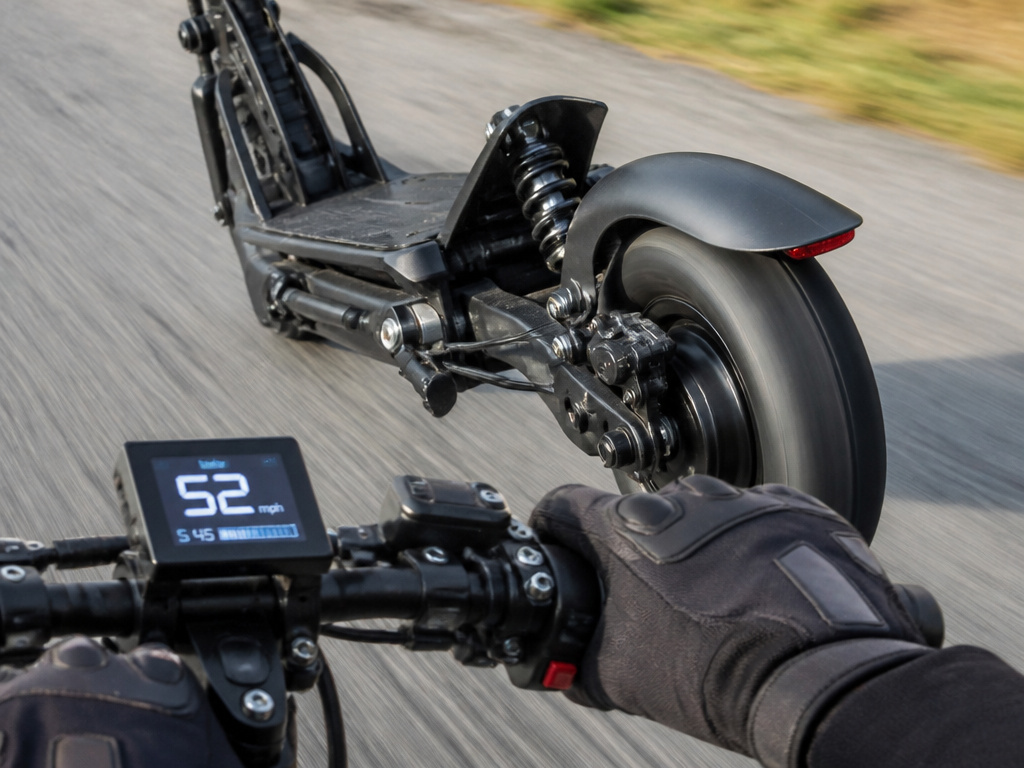
This is the question that should kill most dreams of a 65 mph scooter. Where, legally and safely, can you use that performance? In most US states and countries worldwide, electric scooters are banned from highways and have urban speed limits well below 30 mph. Even if the law doesn’t stop you, physics might.
For riders who need sustained highway-speed capability, these street-legal, highway-capable electric scooters are the only realistic option.
For the vast majority, the sweet spot lies lower. Scooters like the YUME Raptor 2, which delivers a tested 52 mph for under $2,000, offer more than enough thrill for backroad blasts. The performance jump from a 40 mph scooter to a 60+ mph hyper-scooter is substantial in cost, weight, and risk. Before chasing the biggest number, be brutally honest about your use case. If you’re mostly on bike paths or city streets, a list of the fastest scooters capped at 40-50 mph will be more fun, affordable, and practical.
The Battery Charge Factor Nobody Mentions
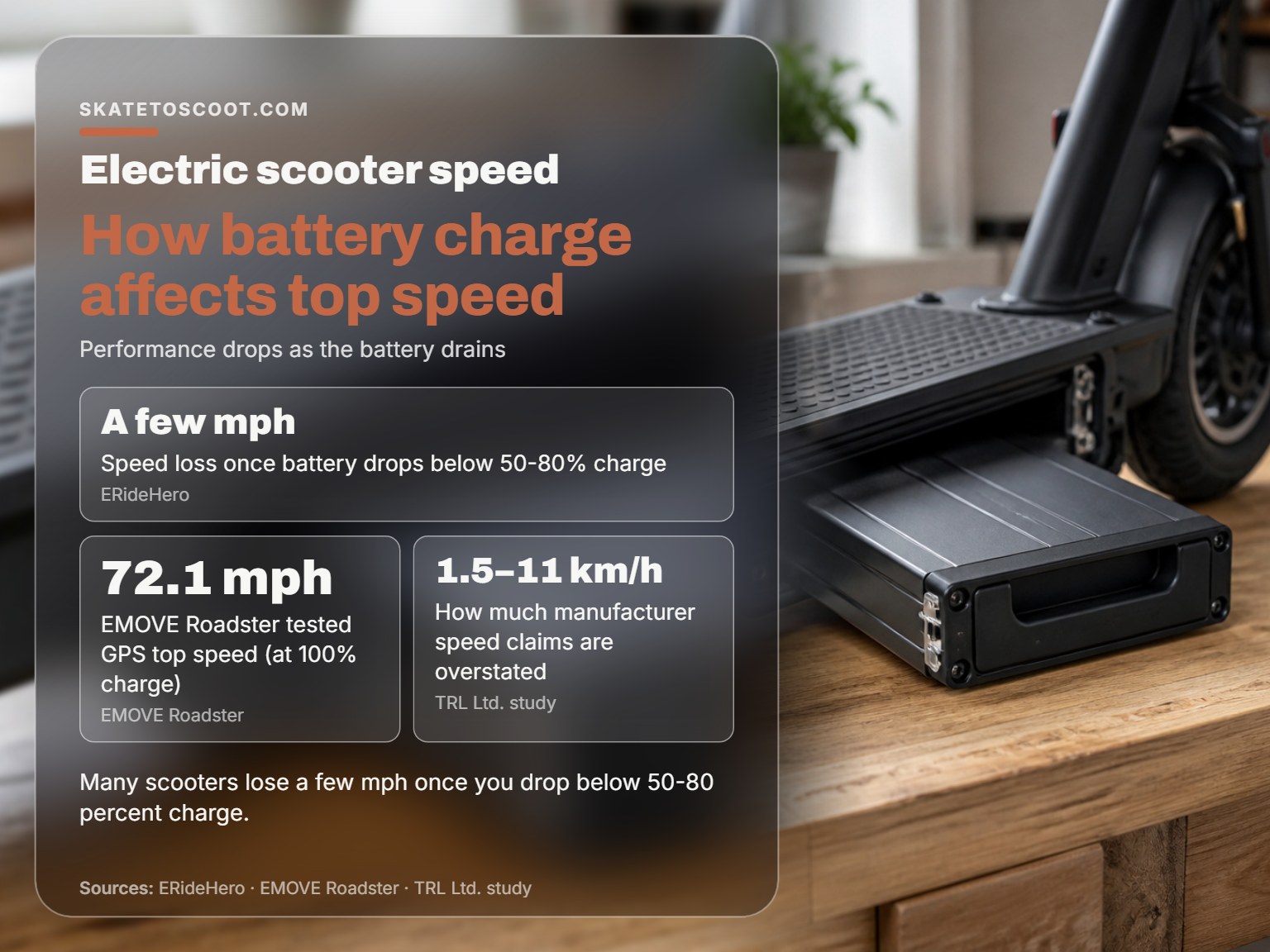
A hyper-scooter’s top speed is a snapshot of its performance at 100% battery. Voltage sags as the pack drains. ERideHero notes: “Many scooters lose a few mph once you drop below 50-80 percent charge.” This isn’t a flaw; it’s electrochemistry. A 72V battery isn’t 72V for long under load.
That means your 65 mph glory run will be lower once the battery charge drops. If you want to cruise at high speeds, not just peak once, you need to buy more battery capacity than you think. This is a key differentiator in the high-end scooters market, where models with large-capacity battery packs command a premium for both range and sustained performance.
The takeaway is simple. The scooter’s spec sheet shows you its potential. Your riding weight, the terrain, the wind, and the battery’s charge state decide what it actually delivers today. This variability is a core part of understanding electric scooter speed in the real world.
How are top speeds tested?
Manufacturer claims often differ from real-world performance. Independent reviewers rely on GPS testing to verify speeds, as built-in speedometers typically over-read by several miles per hour. A 2022 study by TRL Ltd. Found all privately-owned scooters they tested overstated maximum speed by 1.5–11 km/h, with speedometers over-reading by 2.5–5 km/h. Independent reviewers rely on GPS testing to verify speeds, as built-in speedometers typically over-read. Tests are conducted with a full battery and a standard rider weight, as performance can drop as the battery charge depletes. This methodology reveals the actual performance you can expect on the road.
Major brands vs. Niche performance brands
The landscape for high-speed scooters is dominated by specialized performance brands rather than mainstream consumer names. Verified top speeds come from companies focused on the high-power market. In contrast, major brands often prioritize reliability, safety features, and compliance with local regulations over outright speed. Performance brands often advertise high speeds, but these claims require verification through independent GPS testing, as shortfalls from advertised speeds are common. Your choice depends on whether you seek verified extreme performance or a more regulated, consumer-focused product.
Frequently Asked Questions
What scooter goes 100 mph?
No production electric scooter available to the general public has been reliably GPS-tested at 100 mph. The highest verified speed is 90.1 mph from the boutique Slack Core 920R. Claims of 100+ mph typically come from one-off custom builds or unverified manufacturer boasts.
Can an electric scooter go 200 mph?
Practically, no. The limits of small-wheel stability, current battery energy density, and motor technology make 200 mph on an electric scooter frame both physically improbable and insanely dangerous. This speed realm is for streamlined, seated electric motorcycles.
What is the fastest accelerating electric scooter?
For 0-30 mph, the Kaabo King GTR is quickest at 3.23 seconds. For the lower 0-15 mph bracket, aimed at lighter scooters, the MaxFun 10 Max has been clocked at 1.87 seconds, and the Teewing GT4 and Segway ZT3 Pro both hit 2.8 seconds.
Are these fast scooters street legal?
It’s complicated. Most hyper-scooters (60+ mph) far exceed the speed and power limits for legal sidewalk or bike lane use in nearly every jurisdiction. Some, like the NIU NQiX, are designed as street-legal mopeds and can be registered and insured for road use. Always check your local regulations; riding an unregistered 70 mph scooter on public roads is typically illegal.
What is the fastest electric scooter under $2000?
The YUME Raptor 2 holds this title, with a GPS-verified 52 mph top speed. It demonstrates you can get serious performance on a budget, though build quality and features will differ from a $5,000 hyper-scooter. For those seeking a slightly lower but still thrilling threshold, the best 40 mph scooters offer a better balance of cost and capability.
Before You Go
The chase for top speed is seductive, but the real leaderboard is written in GPS logs, not marketing copy. The Hooga Daytona’s 65 mph is the verified king for now. Remember, the difference between a claimed 70 mph and a tested 60 mph is the gap between expectation and reality, often filled with battery sag, software limits, and a 175-pound rider.
If you’re still set on hyper-scooter territory, buy for the ecosystem: reliable customer service, available parts, and a robust owner community matter more than an extra 2 mph on a spec sheet. And invest in gear before you invest in speed. The right helmet costs less than one visit to the ER.
For everyone else, look a tier down. A fast 40 mph scooter or a best 50 mph electric scooter will deliver 95% of the thrill at half the cost, weight, and legal hassle, leaving you with a machine you can actually ride more than you polish.