How Fast Does Electric Scooter Go: Key Takeaways
This post contains affiliate links. As an Amazon Associate, we earn from qualifying purchases.
Many adult electric scooters for commuting advertise a top speed around 25 km/h (approximately 15.5 mph), but real-world tests show they often fall short of that claim. Performance models can reach higher speeds, while rental scooters like Lime are typically capped by local firmware. Your actual speed is influenced by motor wattage and local law, as well as the advertised speed.
That gap between the advertised figure and what you’ll actually feel isn’t a mistake, it’s a predictable outcome of testing standards, physics, and firmware. A common question riders have is how fast does electric scooter go in real use, but that advertised number often bumps directly into hard legal limits that vary by city and state.
What follows is a breakdown of where those speed claims come from, the UK government’s findings on how much they overstate reality, and the legal frameworks in places like New York and Florida that ultimately decide how fast you can legally go.
Key Takeaways
- Manufacturer top speeds are best-case scenario figures, often tested with a light rider on flat, perfect pavement.
- A 2022 UK government study found scooter speedometers over-read by an average of 15%, with real speeds 1.5–11 km/h lower than claimed.
- Motor wattage is the strongest predictor of acceleration, not top speed; a 500W motor accelerates about 2 m/s² faster than a 250W one.
- Legal limits often override hardware capability. In New York City, you must ride at 15 mph or less, regardless of your scooter’s max speed.
- Rider weight has a variable, inconsistent effect on top speed, sometimes even increasing it slightly, contrary to common belief.
The Claimed vs. Real-World Speed Gap
The number on the spec sheet is a target, not a guarantee. It’s a target, not a guarantee, and it’s the primary answer to how fast does electric scooter go according to the manufacturer. A Segway-Ninebot F30 claims “Approx. 25 km/h.” A Xiaomi Mi Electric Scooter 3 claims “25 km/h (Sport mode).” Those are manufacturer figures, derived from controlled tests under specific conditions: a defined rider weight (often 165 lbs/75 kg), a full battery, smooth asphalt, and ideal temperatures.
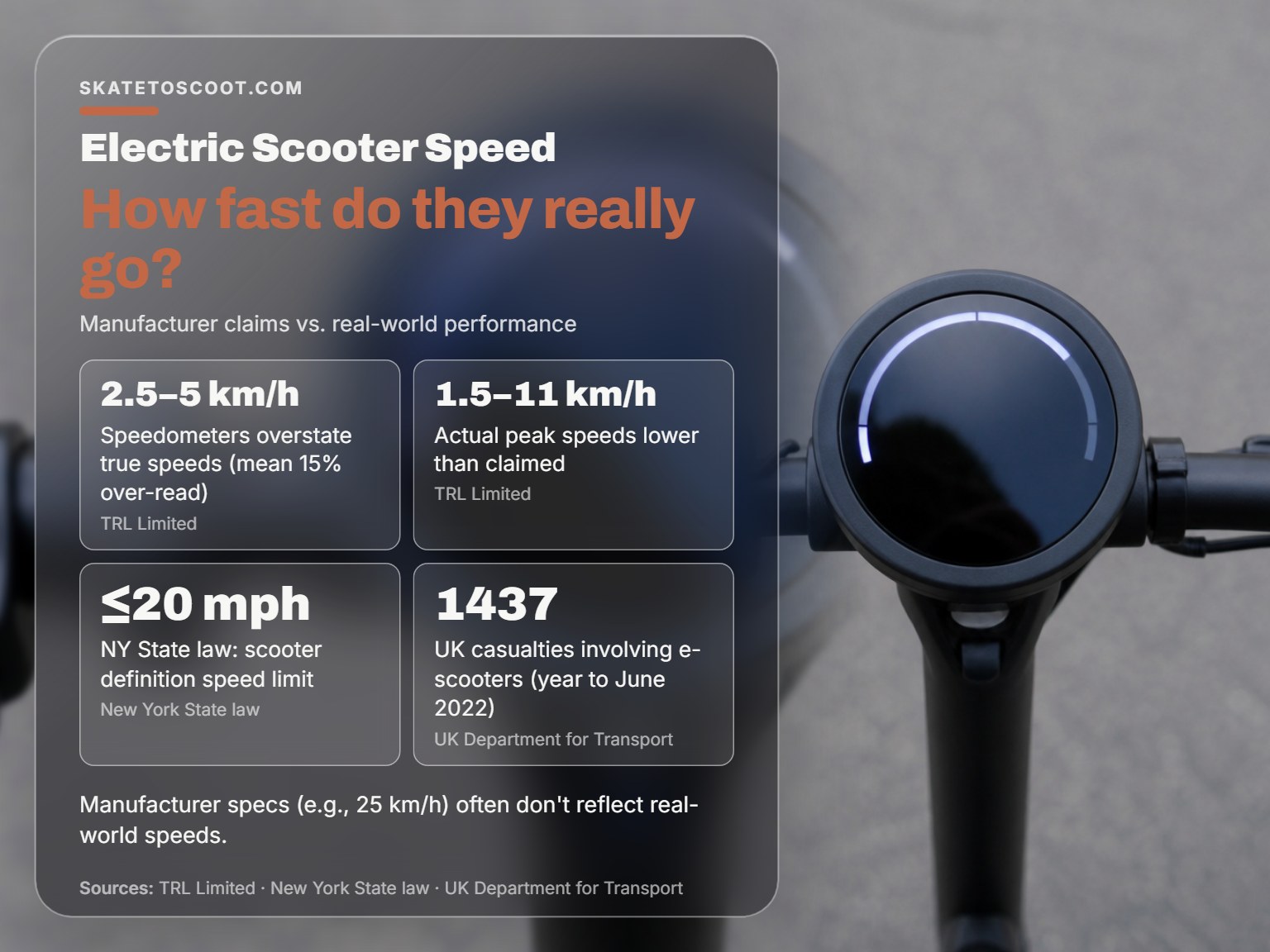
Manufacturer-published data and on-device speedometers over-stated true speeds by 2.5–5 km/h, with a mean over-read of 15%. Actual peak speeds were 1.5 to 11 km/h lower than claimed. . TRL Limited, “In-Depth Investigation of E-Scooter Performance” (2022)
This isn’t a minor discrepancy. It’s a systematic overstatement documented in a government-commissioned study. The on-device speedometer you’re watching as you ride is part of the problem, feeding you an inflated number. The real speed, measured by GPS, is lower.
Why does this happen? The conditions for the “typical range” or max speed test are strict. Segway notes its 20 km typical range is tested under specific conditions. Your ride involves stops, starts, wind, slight inclines, and a battery that isn’t always at 100%. Each factor shaves off a bit of that ideal speed.
| Factor | Effect on Top Speed | Why It Happens |
|---|---|---|
| Low Battery | Reduces max speed gradually. | Battery voltage sags under load, providing less power to the motor. |
| Incline | Significant reduction; a 15% grade can halve speed. | Motor must work against gravity, drawing more current for less forward motion. |
| Rider Weight | Variable effect (see section below). | More mass requires more energy to accelerate and maintain speed. |
| Headwind | Noticeable reduction. | Increased aerodynamic drag requires more motor power to overcome. |
| Tire Pressure | Minor but measurable reduction. | Under-inflated tires increase rolling resistance. |
The takeaway? Treat the advertised top speed as a ceiling you might occasionally brush against in perfect conditions, not a floor you’ll always ride on, which is crucial context for the how fast does electric scooter go question. For a reliable commute, plan for a cruising speed below the advertised claim.
What Actually Determines Scooter Speed?
If the advertised top speed is a flawed benchmark, what should you look at? Two things: motor power and voltage.
The UK TRL study identified motor size as the “strongest predictor of acceleration capability.” They found 500W devices had a mean acceleration around 2 m/s² greater than 250–350W devices. This makes sense intuitively, more watts mean more torque to get you moving quickly from a stop, which is what you feel when you twist the throttle.
Top speed, however, is a more complex equation. It’s a balance of motor power, battery voltage, the scooter’s electronic speed controller (ESC), and its physical design (weight, aerodynamics, tire size).
Here’s a comparison of how motor specs translate in popular models:
| Model | Rated Motor Power | Max Motor Power | Advertised Top Speed | Key Takeaway |
|---|---|---|---|---|
| Segway-Ninebot E2 | Not specified in fact sheet | Not specified in fact sheet | 20 km/h | Base model; speed-limited for specific markets. |
| Segway-Ninebot E2 Plus | Not specified in fact sheet | Not specified in fact sheet | 25 km/h | Similar form, higher limit shows firmware’s role. |
| Xiaomi Mi Scooter 3 | Not specified in fact sheet | Not specified in fact sheet | 25 km/h | Has a max load of 100 kg and a gradeability of 16%. |
| Xiaomi Scooter 4 Pro | 350W | 700W | 25 km/h | More power often goes to handling weight (120kg load) & steeper hills (~20°). |
Notice the Segway E2 and E2 Plus. They share a similar chassis, but the E2 is firmware-limited to 20 km/h while the E2 Plus hits 25 km/h. This is a clear example of where software, not just hardware, dictates your top speed. This is also how rental fleets like Lime and Bird govern their scooters’ speed to comply with local laws.
The Rider Weight Surprise
Common sense says a heavier rider will slow a scooter down. The physics of force and mass supports that. But real-world testing reveals a more nuanced picture.
The TRL study specifically tested the effect of increasing rider mass and found the results were “variable” and “inconsistent.” The change in peak speed ranged from a negligible decrease to an increase of more than 2 km/h. Why would adding weight sometimes increase speed?
One theory involves the scooter’s electronic speed controller and its programming. The ESC manages power delivery to the motor. With a heavier load, the motor may draw current differently, potentially operating in a more efficient part of its power band for maintaining speed. It’s not that the scooter has more power, it’s that the system’s response to load might, in some cases, translate to a slightly higher sustained top speed before hitting its electronic limit. It’s a quirk, not a rule, but it highlights that the relationship isn’t as simple as “more weight = slower.”
Legal Speed Limits Are Not Suggestions
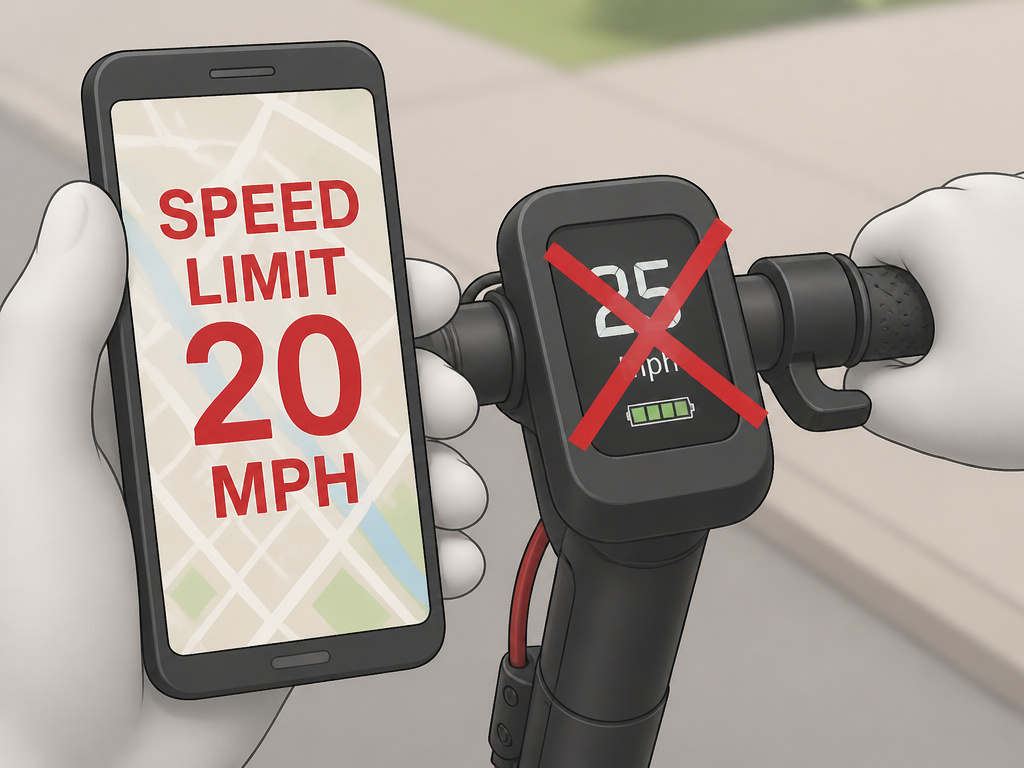
Your scooter’s hardware capability meets a hard stop: the law. In many regions, the legal definition of an electric scooter includes a maximum speed limit. Exceed that, and your device may be classified as a moped or motorcycle, requiring registration, insurance, and a license.
These limits vary wildly:
- New York State: A device is only considered an electric scooter if it’s designed for 20 mph or less and weighs under 100 lb. In New York City, you must ride at 15 mph or less.
- Florida: The electric scooter speed limit is 20 mph by definition.
- Texas: No stated top speed for scooters, but they are limited to streets with a posted speed limit of 35 mph or less.
- United Kingdom: Privately owned e-scooters are illegal to use on roads and public areas; their legal use is restricted to private land only.
This is why understanding your local scooter laws is critical. The consequences are more severe than being turned away at a gate. In the UK, for example, the Department for Transport reported 1,437 casualties in collisions involving e-scooters in a single year, with about 24% of those casualties not being the rider (mostly pedestrians and cyclists). This data directly informs stringent regulations.
If you’re looking for fast electric scooters that push legal boundaries, you must also research the licensing and insurance implications in your area. A 50 mph scooter is a different legal beast than a 20 mph commuter model.
Speed Categories: From Kid to Commuter to King
To make sense of the market, it helps to think in tiers. This isn’t just about speed; it’s about intended use, construction, and legal classification.
Scooters for younger riders often have lower speed limits for safety, but the fact sheet does not provide specific speed figures for such models.
Commuter Scooters (15-20 mph): This is a common speed range for urban travel. Models like the Segway F30 (20 km typical range) or Xiaomi Mi 3 offer a balance of speed and portability. They are the typical 20 mph electric scooters designed to comply with common city laws.
Performance & Flagship Scooters (30+ mph): This is where you find dedicated performance scooters with larger motors (1000W+), higher voltage batteries (48V-72V), and robust suspension. These 30 mph scooters and faster require full protective gear and are often intended for off-road or private property use to avoid legal issues.
Safety at Speed: It’s Non-Negotiable
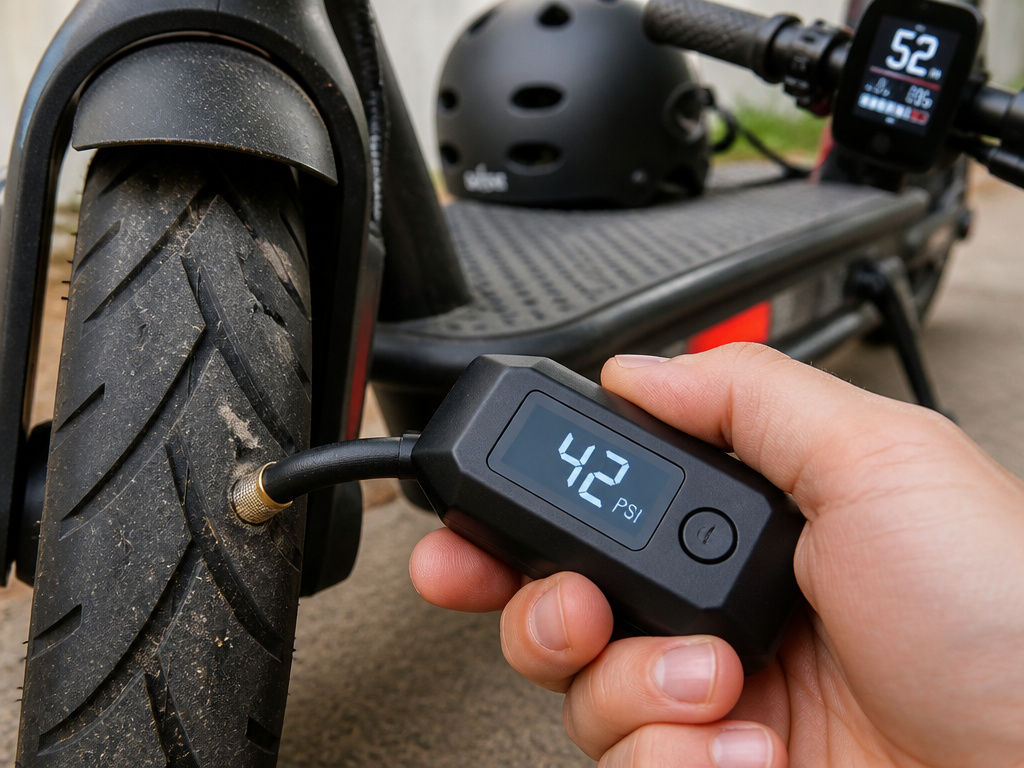
The Segway-Ninebot manual is unequivocal: “Always wear a helmet and protective equipment like knee pads and elbow pads.” This isn’t corporate boilerplate.
The manual also warns, “Do not ride the scooter when the ambient temperature exceeds the operating temperature of the product.” Why? Because extreme heat can cause battery and controller overheating, leading to reduced performance or failure. The specified operating range for most scooters is 14–104°F (-10–40°C).
Where this goes sideways: Riding a scooter near its top speed with under-inflated tires. The handling becomes vague, the risk of a pinch flat increases, and stopping distance lengthens. Check tire pressure (often 40-45 psi) before any high-speed ride.
Regular maintenance is part of safety. Segway recommends checking tire wear every 6 months or every 310 miles (500 km) and performing a full function inspection after 2 years or when mileage exceeds 3,107 miles (5,000 km). A wobbly wheel or a loose Razor scooter speed controller bolt isn’t just an annoyance at low speed; it’s a potential crash trigger at high speed.
Frequently Asked Questions
What is the top speed of a typical commuter electric scooter?
Many popular adult commuter electric scooters, like the Segway-Ninebot F30 or Xiaomi Mi Electric Scooter 3, have an advertised top speed of 25 km/h (approximately 15.5 mph). Real-world GPS speeds can be 1.5 to 11 km/h lower than claimed due to conditions like battery level, rider weight, and wind.
Can electric scooters go 50 mph?
Yes, but these are high-performance, often dual-motor models not intended for standard road use. Scooters capable of 50 mph require serious protective gear, are much heavier, and often fall into a different legal category that may require licensing. They are built for off-road or private track use.
How fast do rental scooters like Lime go?
Rental scooters are heavily governed by software to comply with local laws. Rental scooters are heavily governed by software to comply with local laws, and they often have geo-fenced “slow zones” where speeds are reduced.
Does a more powerful motor always mean a faster top speed?
Not directly. A more powerful motor (e.g., 500W vs. 350W) primarily provides better acceleration and hill-climbing ability. Top speed is capped by a combination of motor design, battery voltage, controller programming, and physical gearing. A scooter with a lower-power motor might be electronically limited to the same top speed as a higher-power model for legal compliance.
How can I check my scooter’s real speed?
Use a GPS-based speedometer app on your smartphone. The built-in speedometer on most scooters is prone to the 15% over-read error documented in the TRL study. For accurate measurement, a standalone GPS unit or a smartphone app like Google Maps’ speed display will give you a true ground speed.
Before You Go
The quest for the fastest electric scooter is fun, but for practical, legal riding, focus on the 15-20 mph bracket. That’s where the majority of reliable, commute-worthy models live, and it’s the speed range most aligned with urban infrastructure and regulations.
Remember, the number that matters most isn’t the one on the manufacturer’s website. It’s the one on your local government’s transportation website. A scooter that can do 30 mph is useless if the law says you can’t ride it above 15 on public roads. Start with the legal limit, then find a scooter whose real-world performance, factoring in the inevitable 2-5 km/h shortfall, safely and legally gets you where you need to go.
And always, always wear the helmet. No speed is worth the risk.
