What to Wear to Roller Skate: Gear and Fit Checklist
This post contains affiliate links. As an Amazon Associate, we earn from qualifying purchases.
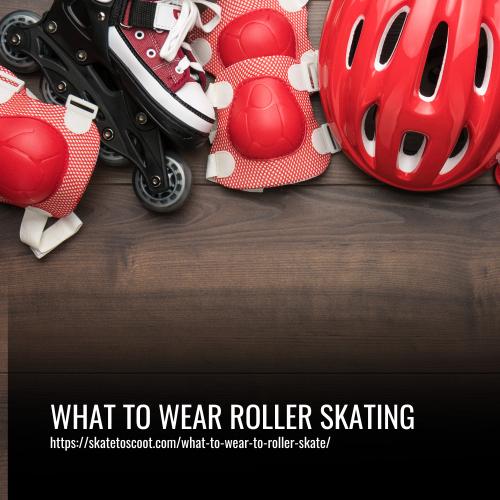
What to wear to roller skate is a helmet certified to ANSI, SNELL, CPSC, or ASTM; wrist guards; elbow pads; knee pads; and clothing that doesn’t restrict your knees or catch in the wheels. Wear lightweight socks, not thick ones, for proper boot support. Rink rules add specific bans on loose jewelry, long gowns, and anything carried in your hands.
That list synthesizes key points from owner’s manuals and safety bodies on what to wear to roller skate; Riedell’s list is the most thorough, while Roces and the CPSC have different emphases. The manuals treat it as mandatory, not optional. They also include specifics most guides miss: a toe stop showing more than 40% wear needs replacement, and brightly colored clothing is a visibility requirement, not just a style tip.
What follows is the breakdown of each piece of what to wear to roller skate, why the official specs matter more than common advice, and the real-world rink rules that turn an outfit that meets the specs into one that gets you turned away at the door.
Key Takeaways
- Your helmet must carry an ANSI, SNELL, CPSC, or ASTM certification; a bicycle helmet is acceptable per the CPSC for recreational skating, but a skate-specific helmet offers better side and rear head coverage.
- Wear lightweight socks, not thick ones; Learn to Skate USA and boot manufacturers explicitly recommend thin socks or tights to maintain proper boot support and fit.
- Wrist guards are the most critical pad after a helmet; the AAOS states they support the wrist and significantly reduce the chance of breaking a bone in a fall.
- Check your rink’s posted dress code; venues like the Overlook Activities Center ban specific items like loose chains, long gowns, and tube tops.
- Replace your toe stop when it shows more than 40% wear, as per Riedell’s manual; a worn stop fails when you need it most and can overheat.
The Helmet Debate: Which Certification Actually Covers You?
You see it on every safety list: “wear a helmet.” The real question is which one. The answer isn’t uniform, and the source you listen to changes the prescription.
The Riedell/Antik/Moxi owner’s manual mandates a helmet approved by ANSI, SNELL, CPSC, or ASTM. That’s a broad list covering multiple standards. The U.S. Consumer Product Safety Commission (CPSC) narrows it: for recreational roller and in-line skating, a CPSC-compliant bicycle helmet can be worn. For aggressive or trick skating, they call for a skateboard-type helmet certified to ASTM F1492 or Snell N-94.
A CPSC-certified bicycle helmet is the legal minimum for recreational skating. A skate-specific helmet, like those from Triple Eight, typically adds protection around the sides and back of the head, areas more vulnerable in a sideways or backward fall common in skating.
Where does that leave you? If you’re doing laps at a rink or on a smooth trail, a bike helmet you already own meets the CPSC’s bar. The moment you step into a skatepark, try jumps, or practice slides, the skateboard standard (ASTM F1492) is the smarter target. The difference is in the coverage area and impact distribution.
The fit is essential. Learn to Skate USA’s checklist applies regardless of type: snug and comfortable, worn low in front, level (not tilted back), chin strap buckled, and nothing worn underneath the helmet. A helmet that shifts when you shake your head is a decoration.
The Non-Negotiable Protective Gear Matrix
A helmet protects your head. Everything else protects your ability to keep skating next week. Most official lists from manufacturers and medical bodies include helmet, wrist guards, elbow pads, and knee pads as essential, though Riedell/Antik/Moxi also specifies long sleeves, gloves, and long pants. Where they differ is in the extras.
| Source | Essential Gear | Additional Clothing Mentioned |
|---|---|---|
| Riedell/Antik/Moxi Manual | Helmet, wrist guards, elbow pads, knee pads | Long sleeve shirt, gloves, long pants |
| Roces Manual | Helmet, elbow guards, knee guards, wrist guards | (None specified) |
| AAOS (American Academy of Orthopaedic Surgeons) | Properly fitted helmet, wrist guards, elbow and knee pads | (None specified) |
The Riedell manual is the most thorough, adding long sleeves, gloves, and long pants. This is about abrasion resistance, not warmth. A slide on asphalt in a t-shirt takes skin. A slide in a cotton long-sleeve takes the shirt. Gloves protect the palms when your wrist guards don’t cover them fully.
Common mistake: Prioritizing knee pads over wrist guards. Your instinct in a fall is to put your hands out. The AAOS notes wrist guards support the joint and drastically reduce the chance of a break. Sore knees heal faster than a casted wrist.
Knee and elbow pads are your insurance policy for controlled falls. They let you practice bailing out safely. A well-constructed knee pad should absorb impact effectively. If the plastic shell is cracked, the pad is compromised and should be replaced.
Inspect your skate laces regularly for wear, and replace them if they are frayed or damaged. Inspect your pads with the same rhythm. Look for compressed foam, cracked plastic, or fraying straps. Worn gear may not provide adequate protection and should be replaced.
Socks, Fit, and the Myth of Cushioning
Here’s where common beginner advice divorces from manufacturer instruction. Forum posts and quick guides often say “wear thick socks to prevent blisters.” Every official source says the opposite.
Learn to Skate USA recommends one pair of lightweight socks or thin tights. Riedell’s sizing guide operates on the same principle: the boot must fit your foot, not your foot plus a cushion. A thick sock creates dead space. Your heel lifts, your ankle swims, and you lose the precise control the boot is designed to give. Blisters come from friction, and friction comes from movement. A properly fitted skate with a thin, smooth sock minimizes both.
The process of breaking in new skates is about molding the boot to your foot’s exact shape, not stretching it to accommodate bulky socks. Adding padding after the fact undermines the entire point.
What about the Kmart junior skates manual that says to “slip them on over your shoes”? That’s a glaring outlier. Manuals from Riedell and rink guides assume skates are worn on the foot, while the Kmart manual is an outlier. Treat that instruction as a rare exception for a specific, likely very soft-shelled children’s product, not a standard.
For finding the right fit, start with the socks you’ll actually skate in. Skates should fit snugly without causing pain or excessive pressure points. A snug fit allows for precise control without discomfort.
What Not to Wear (The Rink-Specific Bans)
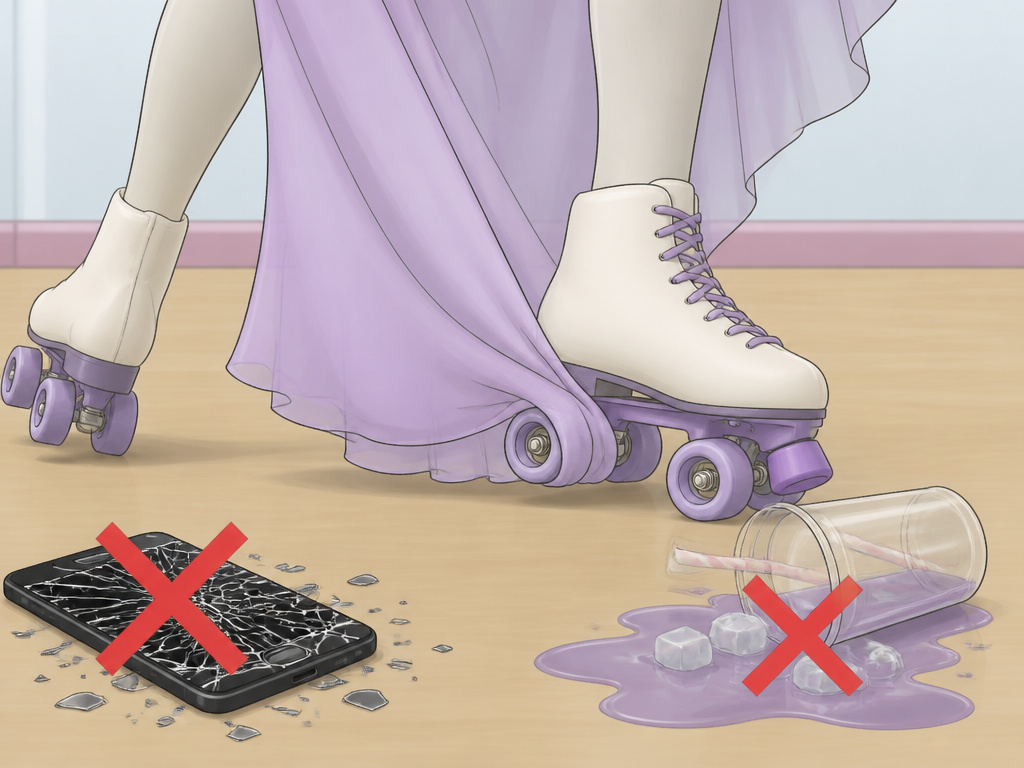
Generic advice says “avoid loose clothing.” Rink rules get specific. They name items.
The Overlook Activities Center roller rink bans “loose chains and necklaces, long gowns and dresses, tube tops and belly shirts.” A loose chain can catch on a hand or a skate part. A long gown or dress is a tripping hazard for you and anyone behind you. Tube tops and belly shirts are a liability issue, partial nudity and public venues don’t mix.
Other universal rink rules pulled from public postings:
- Phones and anything carried in your hands (Fairfax County Park Authority).
- Food and drinks on the skating surface (Fairfax County, Worcester, Overlook).
- Street shoes on the rink floor (Worcester, Fairfax County, Overlook).
The logic is singular: anything that can fall, trip, or distract becomes a projectile or an obstacle. A dropped phone becomes a wheel-locking hazard for a dozen skaters. This is why venues like Bryant Park offer bag check (for a fee per item) and free shoe check. They’re designed to keep the skating surface clear.
When choosing your best roller skates, consider where you’ll use them. An indoor rink with these rules is a different environment than your driveway.
Clothing That Works: Men’s and Women’s Practical Choices
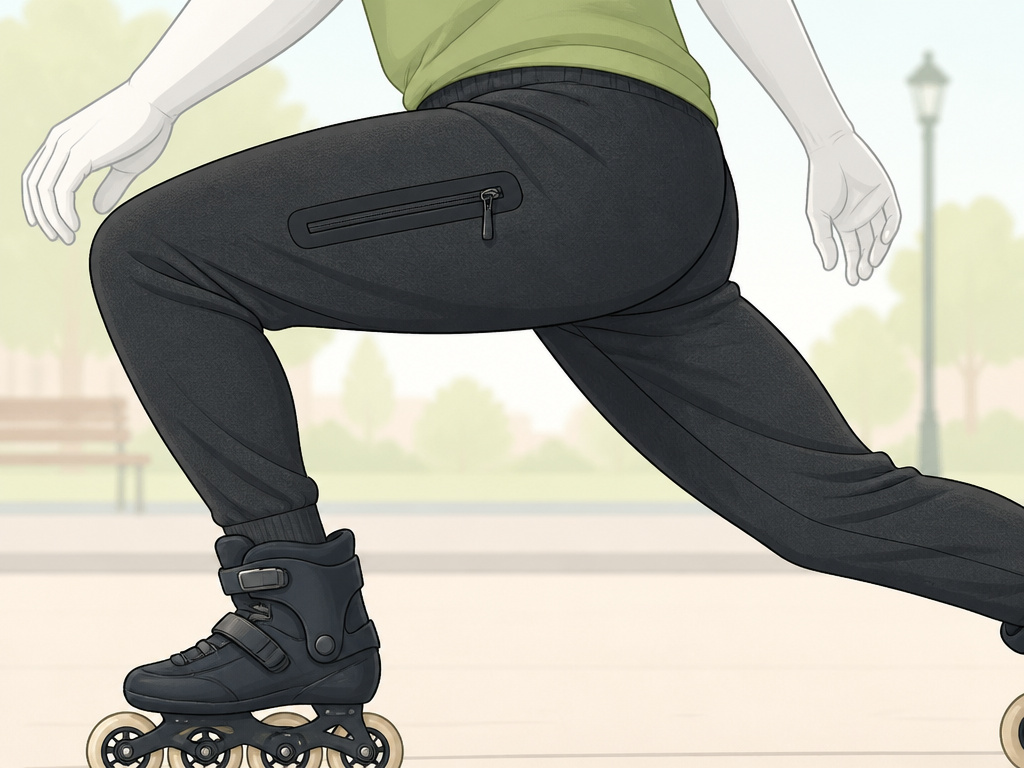
The “cute skate outfit” gallery is endless. Practical, movement-friendly clothing is simpler. The goal is a full range of motion at the knee and hip, moisture management, and abrasion resistance.
For everyone, the base layer is simple: breathable, stretchy, and secure. Leggings, athletic joggers, or biker shorts work. The test is a deep knee bend. If the fabric pulls or restricts, it’s wrong. For tops, moisture-wicking materials beat cotton. Cotton absorbs sweat and stays wet, chilling you when you stop.
Clothing that allows full movement and has secure pockets can be practical for skating. They offer movement, look less like gym wear than sweatpants, and secure your keys. A lightweight, synthetic athletic shirt handles sweat. Athletic clothing often provides better mobility for skating than restrictive materials like denim. Jeans are terrible athletic wear; they restrict movement, trap heat, and rip on asphalt.
Women can choose clothing that allows full movement and avoids loose fabric that could catch in wheels. The key is ensuring the hemline is well above the knee or secured to avoid wheel contact. Skirts can be functional for skating if they are secured and do not pose a tripping hazard.
Your choice between skate types, quad or inline, might influence this slightly. Avoid loose fabric that could contact the wheels.
Gear Up for Your Environment
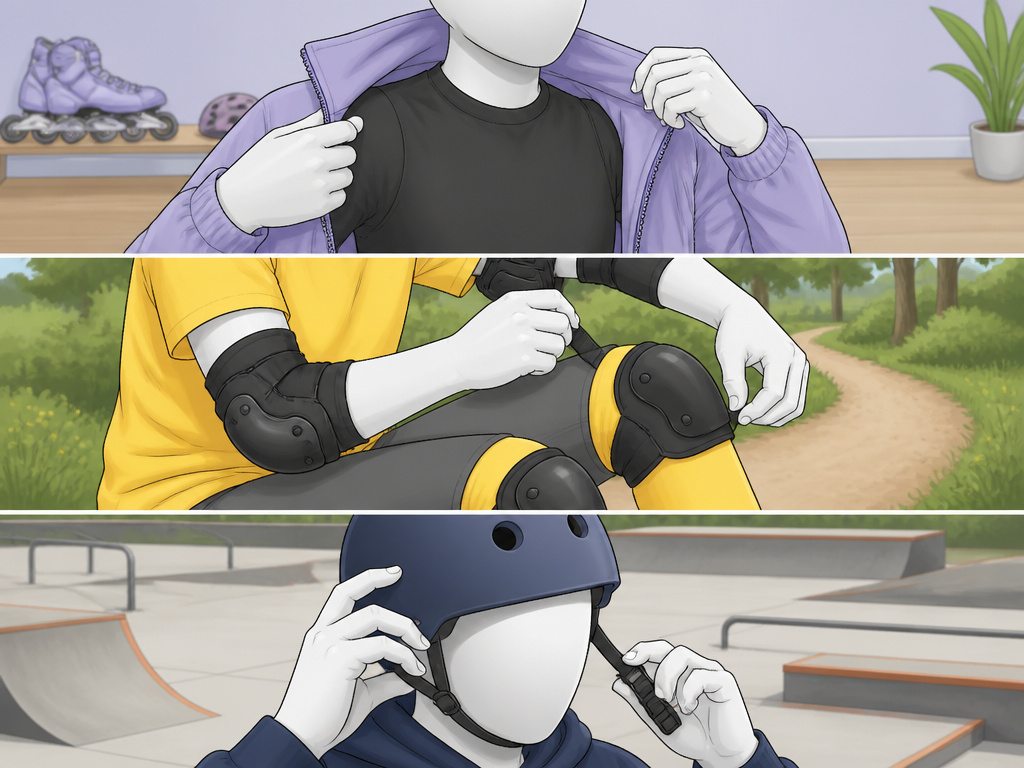
Indoor rinks, outdoor paths, and skate parks each twist the basic formula.
Some indoor skating venues, like ice rinks, can be cold; it’s wise to dress in layers. Dressing in removable layers allows you to adjust for comfort. Physical activity can generate body heat. Gloves can protect hands from abrasion during falls. Some rinks, like Bryant Park, offer free helmet rental, but don’t assume yours does.
Outdoor Trails demand visibility and surface awareness. The Riedell manual says to wear brightly colored clothing so people can see you. This is a safety spec, not a fashion tip. Drivers, cyclists, and pedestrians need to see you. Outdoor surfaces are less predictable, so knee and elbow pads become even more critical for those unexpected cracks and pebbles. If you’re using skates designed for outdoor use, you’ve already addressed wheel hardness; your clothing needs to address environmental exposure.
Skate Parks are the domain of the full certification suite. This is where the CPSC’s advice for ASTM F1492 or Snell N-94 helmets shines. You need the extra coverage. Durable, abrasion-resistant clothing is suitable for skate park use. Durable materials can withstand the abrasion encountered at skate parks.
No matter the environment, always review the official safety gear guidelines from the CPSC skate safety guide. It’s the federal baseline.
The Weight Limit and Gear Standards Nobody Talks About
Skates are designed to certain performance standards.
The Roces manual states its inline skates conform to DIN EN 13843. This European standard has two classes: Class A for users under 100kg (220 lbs) and Class B for users under 60kg (132 lbs). This is an engineering limit for the skate’s frame, wheels, and bearings, not a suggestion. Exceeding it voids any structural warranty and increases the risk of component failure under stress.
Other standards are woven into the gear. ASTM and Snell codes on helmets define impact testing protocols. ANSI/ISEA 105 on gloves defines cut resistance. Safety standards exist for skating equipment. A product advertising “tested to ASTM standards” is making a verifiable claim. One that says “protective” without a code is making a marketing claim.
This matters when you’re looking at the best socks for roller skating or any gear. Certified products have been subjected to a repeatable test. Uncertified products rely on the manufacturer’s word. Using uncertified gear may not provide reliable protection.
Carrying Items (Pockets, Fanny Packs)
When you’re skating, you need your hands free for balance and safety. Many rinks ban carrying anything in your hands, including phones. A fanny pack or a jacket with secure zippered pockets is a practical solution. This keeps your essentials like keys or a small wallet close to your body without swinging loose. Avoid loose chains or necklaces that could get caught. Storing items this way follows rink rules and helps prevent distractions or hazards that could lead to a fall.
Frequently Asked Questions
What is the dress code for roller skating?
The universal dress code requires clothing that allows full knee bend and won’t catch in wheels. Specific rinks add bans. For example, the Overlook Activities Center prohibits loose chains, long gowns, tube tops, and belly shirts. Always check your rink’s posted rules before you go.
Can I roller skate in jeans?
You can, but you shouldn’t if you’re learning or skating actively. Denim restricts knee movement and lacks stretch. It also provides poor abrasion resistance in a fall. Stretchy jeans are a marginal improvement, but athletic pants, leggings, or joggers are significantly better for mobility and safety.
What type of helmet do I need for a roller rink?
Most public rinks require a helmet but rarely specify beyond “certified.” Your safest bet is a helmet certified to ANSI, SNELL, CPSC, or ASTM. A CPSC-certified bicycle helmet meets the minimum legal requirement for recreational skating. For better protection, choose a skate-style helmet that also covers the sides and back of your head.
Are wrist guards really necessary?
Yes. The American Academy of Orthopaedic Surgeons (AAOS) specifically highlights wrist guards as essential because they support the wrist and reduce the chance of breaking a bone in a fall. Your natural instinct is to catch yourself with your hands, making wrists the most commonly injured area for beginners.
Before You Go
The rules from Riedell, Roces, and the CPSC are written from decades of injury reports and failure analysis, not to sell more gear.
So here’s the one-step filter for any gear decision: does it help you skate longer, safer, or with more control? If the answer is no, if it’s purely for style without a function, leave it in your bag. Your fundamentals are your foundation, and that includes what you wear. Safety and progression do go hand in hand, but only if your hands are in wrist guards.
