Xiaomi Electric Scooter 4 Review: How It Compares
This post contains affiliate links. As an Amazon Associate, we earn from qualifying purchases.
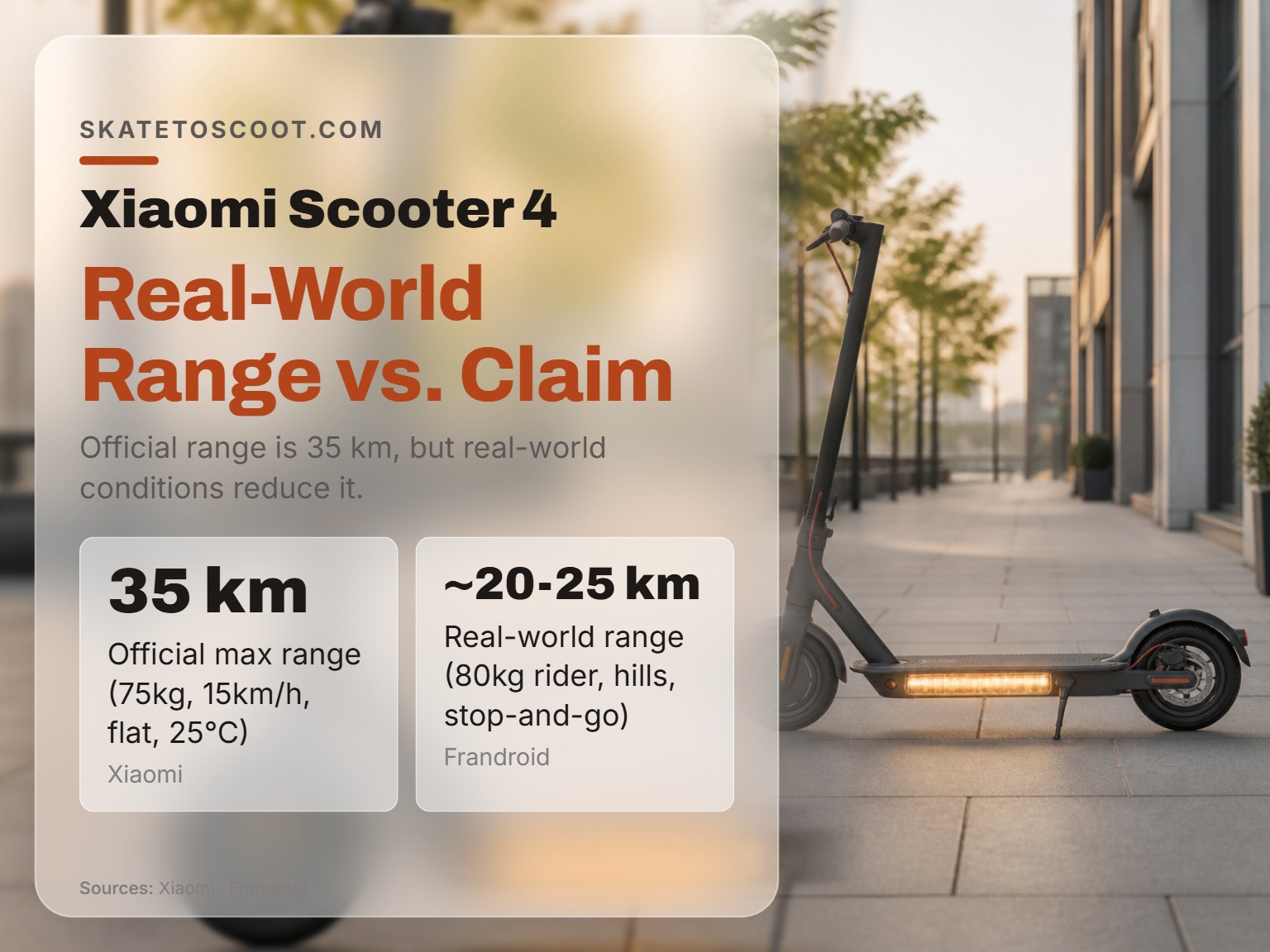
The Xiaomi Electric Scooter 4 is a 17.2 kg commuter scooter with a 600W motor, a 275.4Wh battery, and a manufacturer-claimed 35 km range achieved under strict lab conditions. In real-world use, expect 20-25 km with an 80kg rider on mixed terrain, or as low as 15 km in freezing temperatures.
That gap between the lab sheet and the pavement is where most scooter reviews, unlike a thorough Xiaomi Electric Scooter 4 review, stop. They list the specs, call it a day, and you’re left wondering why your ride dies halfway home when the box promised more. This one doesn’t get that luxury.
What follows is a breakdown of the specs that matter, the real-world tests that contradict them, and the long-term quirks owners actually report. By the end, you’ll know if the Scooter 4 is the reliable daily driver you need or a lesson in reading the fine print.
Key Takeaways
- The 35 km range claim requires a 75kg rider going a constant 15 km/h on a flat, windless road at 25°C. Real-world range is typically 20-25 km, and can halve in freezing weather.
- The 600W motor and 16% incline claim are verified in lab tests, but independent riders report speed dropping to ~15 km/h on slopes below that grade, indicating power consistency issues.
- Common long-term issues include the Mi Home app failing to connect, rear fender screws loosening from vibration, and an overly optimistic speedometer (displaying 25 km/h at a true ~22 km/h).
- With an IP54 rating, it handles light rain but isn’t submersible. The battery and BMS are housed in a steel case, though cable sealing has been noted as a potential weak point in testing.
- For a 65kg rider doing a flat 8 km commute, it’s a solid choice. For anyone over 90kg, with a hilly route, or needing more than 15 km in winter, look at models with larger batteries or more power.
Key Specs & What They Actually Mean
You can find the spec sheet anywhere. Here’s what those numbers do when you’re late for work and it’s drizzling.
The motor is rated for a 600W maximum power. Xiaomi’s own TIRT test report (OTA1-20230183) shows this figure comes from loading the motor to its max current at 42V. In practice, this translates to a top speed of 25 km/h in Sport Mode, with lower limits for Walking Mode (6 km/h) and Standard Mode (20 km/h). The scooter feels zippy off the line on flat ground. The problem isn’t the peak number; it’s how long the system can hold it under load, like on a hill.
That leads to the 16% max incline claim, also from a TIRT test (report 0TA1-20222319). The test protocol has the scooter climb a 10-meter slope at 15 km/h with “no speed loss or power interruption.” It’s a pass/fail lab check. Real-world experience, like the test from Computer Bild, shows a different story: speed can drop to around 15 km/h on slopes below that 16% grade. The motor doesn’t fail, but it bogs down. The lab proves it can do the climb once. The road asks if it can do it on your daily route, in the rain, with a backpack.
The official TIRT climbing test certifies the scooter can drive stably on a 16% slope for 10 meters at 15 km/h without speed loss. Independent tests note that on real-world inclines, speed often drops significantly before reaching that theoretical maximum.
Battery capacity is listed as 275.4Wh (Xiaomi) or 36V / 7.65Ah (ÖAMTC), which calculates to the same figure. This is your fuel tank. It’s not huge. For context, many competitors in a similar price bracket now start at 360Wh. The IP54 rating (from ÖAMTC testing) means it’s protected from limited dust ingress and water splashes from any direction. It’s fine for a sudden shower, but don’t ride through deep puddles or store it soaked. The Austrian testers confirmed the IP54 rating from their testing, meaning it’s protected from limited dust ingress and water splashes.
The deck is 160mm wide. Your feet have a bit more room, but it’s still a stance, not a platform. The scooter uses 10-inch tubeless tires. There’s no suspension, so these tires are your only cushion.
| Specification | Official Claim (Source) | Practical Implication |
|---|---|---|
| Max Range | 35 km (Xiaomi/TIRT OTA1-20230183) | Achieved only at 15 km/h, 75kg, 25°C, on flat ground. A best-case ceiling. |
| Motor Power | 600W Peak (Xiaomi/TIRT OTA1-20230183) | Provides good initial acceleration. Sustained power on hills is less consistent. |
| Max Incline | 16% (Xiaomi/TIRT 0TA1-20222319) | Lab-certified for a short, controlled climb. Expect speed to drop on longer, real-world slopes. |
| Battery | 275.4Wh / 36V 7.65Ah (Xiaomi/ÖAMTC) | Adequate for short commutes. Capacity is on the lower end for the class, limiting range. |
| Weight | 17.2 kg (ÖAMTC) | Light enough to carry short distances (up stairs, onto transit) but a hassle for extended periods. |
| IP Rating | IP54 (ÖAMTC) | Protection against splashes and limited dust. Not waterproof. Avoid heavy rain and puddles. |
What’s the Real-World Range vs. The Claim?
The 35 km figure is a laboratory benchmark achieved under strict conditions (75kg rider, 15 km/h, flat road, 25°C, low wind). Independent tests show real-world range varies: Frandroid measured ~20-25 km with an 80kg rider on a hilly route, Computer Bild reported ~30 km in Sport Mode, and Reddit users report 15-30 km depending on temperature and rider weight. This is the first thing to unlearn if you’re coming from a world where “car range” accounts for hills and AC use.
Independent testers immediately found the gap. Frandroid, with an 80kg rider on a route with hills and stop-and-go traffic, measured 20-25 km. That’s a 30-40% drop from the claim under normal urban conditions. Computer Bild found it could “scratch” the 35 km limit in the slower Standard Mode, but in Sport Mode, range fell to around 30 km. Then there’s temperature. A Reddit user weighing 65kg reported 30 km in summer but only 15 km at 0°C. Another Reddit user with a 90kg load reported a range of just 15-16 km. The battery chemistry simply doesn’t perform in the cold.
Where this goes sideways: Assuming the 35 km claim applies to your hilly, stop-start commute. You’ll exhaust the battery 10 km early and face a long walk home, especially in winter.
So, who actually gets 35 km? Almost nobody. The claim is a standardized benchmark, useful only for comparing against other scooters tested under the same strict protocol. For your buying decision, use the real-world numbers: 20-25 km for an average rider in fair weather. Plan your routes accordingly, and always charge after use if your round-trip is near that limit.
Ride Quality, Brakes & Daily Usability
Without suspension, the ride quality hinges entirely on those 10-inch tubeless tires and your knees. On smooth pavement, it’s fine. On cracked concrete or brick paths, you feel every imperfection—a high-frequency buzz travels up the stem into your hands. It’s not painful, but it’s fatiguing over longer distances. The larger wheel size does help roll over smaller cracks and pebbles that would jar a smaller scooter.
The braking system uses front E-ABS (electronic anti-lock) and a rear mechanical disc brake. The E-ABS prevents the front wheel from locking and skidding if you grab the brake lever hard, which is a valuable safety feature for wet leaves or manhole covers. The rear disc provides the main stopping power. The braking system uses front E-ABS and a rear disc brake. It stops you reliably, but it lacks the modulated feel of a fully hydraulic or even a better-calibrated mechanical system.
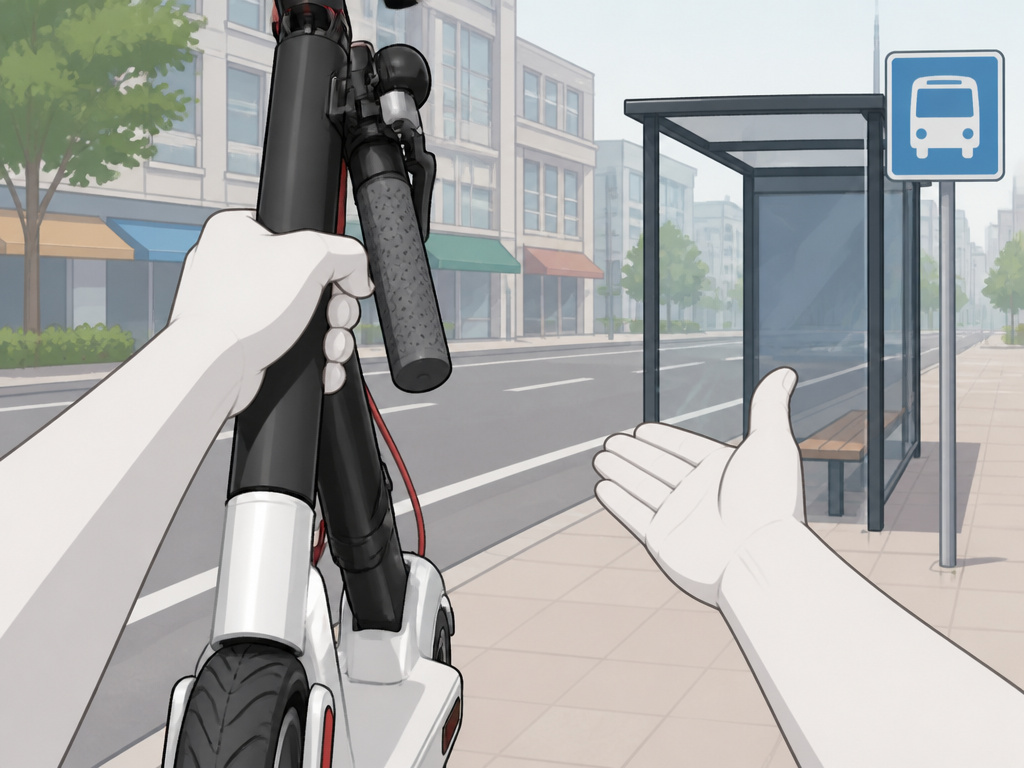
Folding and portability are where this scooter shines. The 17.2 kg weight is manageable for carrying up a flight of stairs or lifting onto a bus. Once folded, it’s relatively compact. You can stash it under a desk or in a car trunk without much fuss. For mixed-mode commuters (scooter + train), this is a major point in its favor.
The Mi Home App & Connectivity Quirks
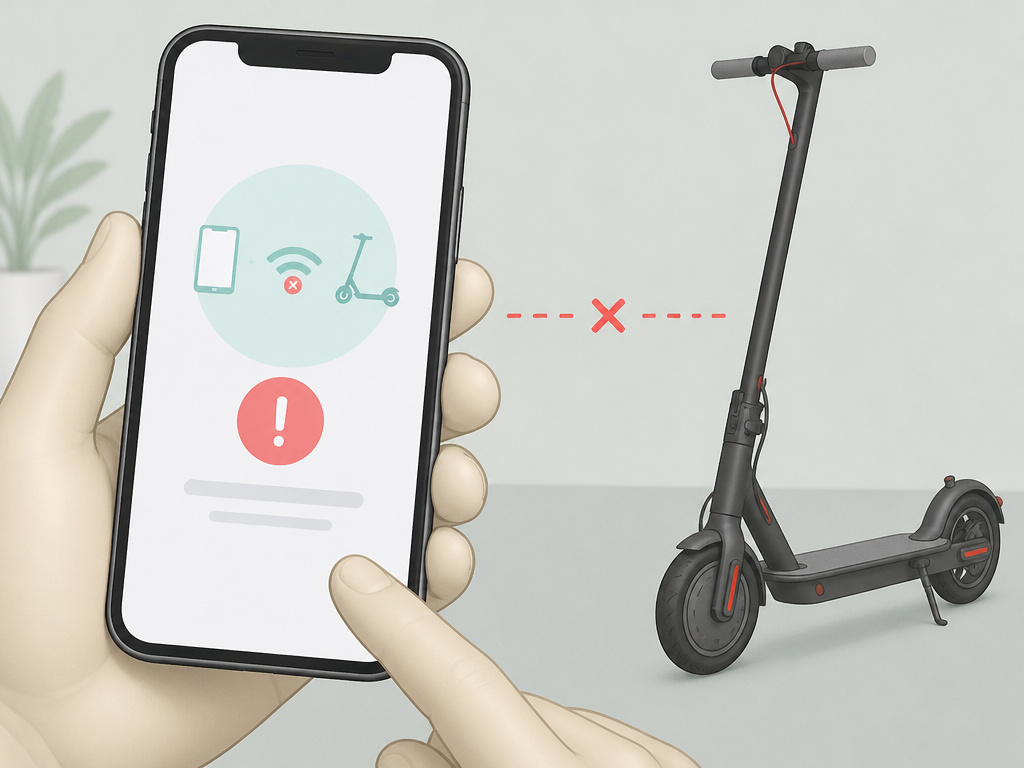
The app experience is a mixed bag. When it works, it’s useful: you can lock the scooter, check battery level and remaining range, view trip history, and update firmware. The lock function is particularly good for quick dashes into a store.
When it doesn’t work, it’s frustrating. A common complaint from long-term owners, noted in a Reddit review of the Pro 4 Gen 2, is that the app frequently fails to connect, requiring a full restart to rediscover the scooter. This isn’t a deal-breaker for riding—the scooter works fine manually—but it defeats the purpose of the smart features.
One verified quirk, per a Reddit report, is that the speedometer is optimistic. When it shows 25 km/h, GPS measurements indicate your true speed is closer to 22 km/h. It’s a minor psychological trick, but it’s worth knowing if you’re tracking your commute time.
Common Issues & Long-Term Reliability
Beyond the first week, a few patterns emerge from owner reports and official support channels. These aren’t universal failures, but they’re common enough that you should know them.
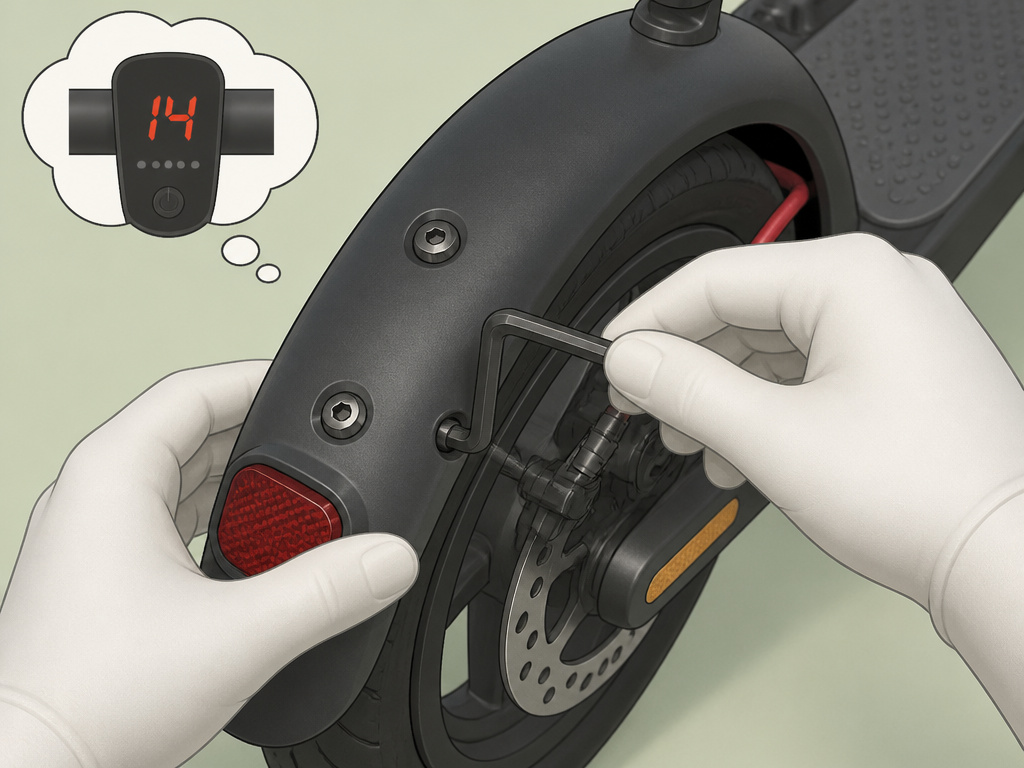
First, there’s a throttle failure mode. The official Xiaomi support FAQ states that dashboard fault code 14, or one long beep followed by four short beeps, indicates a throttle failure requiring service center replacement. The FAQ also notes the throttle only activates once the scooter exceeds 4 km/h (2.5 mph), which can confuse riders trying to start on a slope.
Second, an automatic power-off feature exists to protect the motor from overload. The same FAQ lists triggers: riding on a steep slope for a long time, exceeding the weight limit, or “over-speeding or abrupt acceleration” causing an electrical overload. This isn’t a bug; it’s a safety cut-out. It means if you’re a heavier rider tackling a long hill, the scooter might just shut down to cool the motor.
Third, mechanical rattles develop. A specific note from a Reddit owner points to the rear fender screws loosening over time due to vibration, creating an annoying buzz. A quick check and tighten with a hex key every few months solves it. It’s a minor maintenance item, but it speaks to the need for periodic checks on a machine that vibrates as much as a scooter.
On the positive side, many owners report solid longevity. One Reddit user reported over 2300 km without a single issue, and another mentioned their scooter survived three crashes and kept going. The build quality, for the price, is generally praised.
How It Compares: Xiaomi 4 vs. The Competition
This scooter doesn’t exist in a vacuum. Its value is determined by what else you can get for similar money. We can compare it to other models.
The base Scooter 4 sits in the middle as the value pick for those who don’t need those extras.
The Xiaomi’s 275.4Wh is a step down, which directly translates to less range.
| Aspect | Xiaomi Electric Scooter 4 | Typical Competition (e.g., Segway F2, NIU KQi2) | Verdict |
|---|---|---|---|
| Price | Often found at a competitive mid-range price. | Can be similarly priced or slightly higher. | Draw. Market fluctuations decide. |
Who Is the Xiaomi Electric Scooter 4 Best For?
This isn’t a scooter for everyone. It’s a tool for a specific job.
Buy it if: Your commute is under 10 km round-trip on relatively flat terrain, you weigh under 90 kg, and you need something light to carry on public transport or up stairs. It’s an excellent first scooter due to its simple controls, widespread availability, and generally forgiving nature. It’s also a good choice as a secondary/short-trip vehicle for errands around a dense urban neighborhood.
Avoid it if: Your daily distance is over 15 km, your route is hilly, you weigh over 100 kg, or you live in a climate with cold winters. The range and power limitations will frustrate you. Also, if you despise finicky smartphone apps, the Mi Home experience might annoy you more than it’s worth.
Practical Advice & Accessories
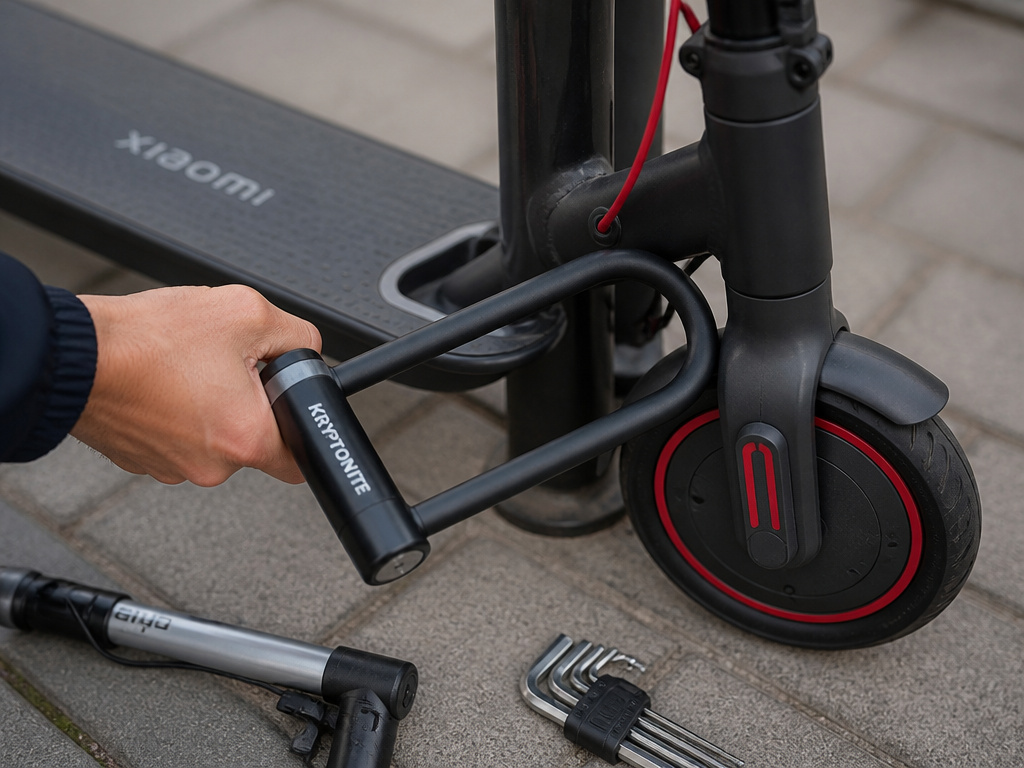
If you buy one, plan to buy a few extras. You must have a good U-lock or heavy-duty folding lock. A portable tire pump is wise for maintaining optimal tire pressure. A basic set of hex keys and a screwdriver will let you tighten the fender screws and handlebar clamp as needed.
On the 20 km/h speed limit in Standard Mode (25 km/h in Sport): it’s enough for most city commutes where traffic and lights are the real limiters. The scooter feels stable at these speeds. The limit is there for a reason—battery and thermal management.
Before you start: Check local regulations. Many regions limit e-scooters to 20-25 km/h on bike paths and roads. The Scooter 4’s top speed is designed to comply with these limits. Riding a derestricted scooter can land you with a fine and invalidate your insurance.
Frequently Asked Questions
Is the Xiaomi Scooter 4 good for hills?
It can handle mild hills, but performance dips quickly. The motor is certified for a 16% incline in lab conditions, but real-world reports show speed dropping significantly on sustained slopes.
Why does my Xiaomi Scooter 4 keep turning off?
This is likely the motor overload protection kicking in. The official Xiaomi FAQ cites three causes: prolonged slope riding, rider weight exceeding the payload limit, or over-speeding/abrupt acceleration causing an electrical overload. Let the scooter cool down for 15-20 minutes. If it persists, check your weight and avoid aggressive acceleration on hills.
How do I fix error code 14?
Error code 14 (or one long/four short beeps) indicates a throttle failure, per Xiaomi’s support page. The recommended fix is to send the scooter to an authorized service center for throttle replacement. Basic troubleshooting involves checking the throttle grip for obstruction and ensuring the scooter is moving above 4 km/h for the throttle to engage.
Is the Xiaomi Scooter 4 waterproof?
It has an IP54 rating, meaning it’s protected from dust and water splashes from any direction. It can handle light rain. It is not waterproof or submersible. Do not ride through deep puddles, and always dry it off if it gets wet.
What’s the difference between the Xiaomi 4, 4 Pro, and 4 Ultra?
The base Scooter 4 (this model) has a 600W peak motor, 275Wh battery, and no suspension. The price increases significantly with each step up.
The Bottom Line
The Xiaomi Electric Scooter 4 is the definition of a competent baseline, as a typical Xiaomi Electric Scooter 4 review will state. It does most things fine, nothing exceptionally, and has a few predictable quirks. Its greatest strength is also its constraint: the 275.4Wh battery defines its world. If your needs fit neatly within that 20 km radius on flat, temperate ground, it’s a reliable and portable choice. The moment your commute stretches longer, gets hillier, or turns colder, you’ll feel the limits.
That’s not a flaw in the scooter—it’s a flaw in matching it to the wrong task. For the right rider, it’s a workhorse. For everyone else, the search continues, likely toward models like the Segway scooters or NIU electric scooters, which often trade a bit of portability for more battery and power. Start with an honest assessment of your route, your weight, and your local climate. The specs will tell you what the scooter can do in a lab. Your life will tell you if that’s enough.
