Camp 7 Snowboard Review: Who Should Buy and Avoid
This post contains affiliate links. As an Amazon Associate, we earn from qualifying purchases.
Camp Seven snowboards are affordable, entry-level boards sold primarily as complete kits, designed for beginners and casual riders who prioritize low upfront cost over high-performance materials or the latest design. They are a house brand of wiredsport.com, likely manufactured in China, and offer functional specs like poplar cores, extruded bases, and a standard three-year warranty. For the price, they get you on the snow, but experienced riders and those progressing quickly will outgrow their limitations within a season or two.
That price tag is the main attraction, and it’s also the main compromise. You’re not buying a Burton or a Lib Tech. You’re buying a tool that works, built to a budget, and that distinction shapes everything from the feel underfoot to how long it lasts before you’re shopping again.
What follows is a breakdown of Camp Seven’s specific models, where they actually perform, the durability reports from people who’ve ridden them, and a clear-eyed look at who should, and who definitely shouldn’t, consider one, a central question for any camp 7 snowboard review.
Key Takeaways
- Camp Seven boards like the Valdez and Featherlite use functional, entry-level specs: poplar cores, extruded bases, and Rockwell 48 steel edges, they work, but they’re not premium.
- Owner reports consistently highlight durability concerns, especially with included bindings breaking within a season, which is a critical weak point in their package deals.
- These boards serve one rider well: the true beginner or very casual rider who values a low-cost, all-in-one kit to start with, understanding they’ll likely upgrade within 1-2 seasons.
- The three-year warranty is a standard offering, but real-world support and brand transparency are limited, as Camp Seven operates as a house brand without a standalone public presence.
- For anyone planning to ride more than a few days a season or who is already linking turns confidently, investing in a used board from a mainstream brand almost always offers better long-term value and performance.
Camp Seven Snowboard Models & Specs Breakdown
You’ll typically find a few Camp Seven models in rotation, often sold as previous-year stock. The specs tell a consistent story: practical, cost-effective construction without the bells and whistles of higher-tier brands.
Be realistic about what you’re looking at. This is a forgiving, catch-free shape ideal for someone still figuring out their edges. Its core is poplar, a common and reliable wood, in a Dual-Density (DD2) layup with Edgelock, which aims to add some torsional stiffness. The board rides as a Directional Twin, so it has a slightly set-back stance for better float in powder but can still be ridden switch without too much hassle.
The laminates are Biaxial and Triaxial Fiberglass, a standard combo. The edges are fully-wrapped steel rated Rockwell 48 for hardness, enough for groomers but not meant for aggressive, icy carving. It has an extruded base, which is slower and requires more frequent waxing than a sintered base but is easier for a beginner to maintain and repair. The package includes 12-pack 2×4 inserts for stance flexibility and comes with a three-year warranty.
The Camp Seven Valdez 2022 snowboard features a CRCX (full rocker center, camber tip/tail) profile, a DD2 dual-density poplar core, and fully-wrapped Rockwell 48 steel edges. It uses biaxial and triaxial fiberglass laminates, an extruded base, and includes a three-year warranty.
Other models like the Women’s Featherlite 2013 or the Roots snowboard share this DNA. The Featherlite used a Camber-Rocker-Camber “mustache” profile and a full dual-density poplar core. It included a rubber damping foil at the edges to soften vibrations, a thoughtful touch for a beginner board. The Roots, another model, was built with a Rocker Camber Rocker design and a biradial sidecut. The construction across these boards is fundamentally similar: poplar core, fiberglass laminates (often Biax over Triax), extruded bases, and those Rockwell 48 edges.
| Model | Profile | Core | Key Features | Best For |
|---|---|---|---|---|
| Valdez (2022) | CRCX (Rocker/Camber) | Poplar (DD2) | Directional Twin, Edgelock, Extruded Base | Beginner looking for a forgiving, all-mountain starter board |
| Women’s Featherlite (2013) | Camber-Rocker-Camber | Dual-Density Poplar | Rubber damping foil, Mustache Rocker | Beginner/Intermediate rider prioritizing comfort and reduced chatter |
| Roots | Rocker Camber Rocker | Poplar | Biradial Sidecut, Rubber foil damping | Rider wanting a more playful, surfy feel with edge hold |
The takeaway from any camp 7 snowboard review? The specs are competently chosen for their purpose. They’re not innovative, but they’re not inherently flawed for a first board. The real questions start when you strap in and ride, and when you come back for season two.
The Performance Reality: Where Camp Seven Boards Shine (and Don’t)
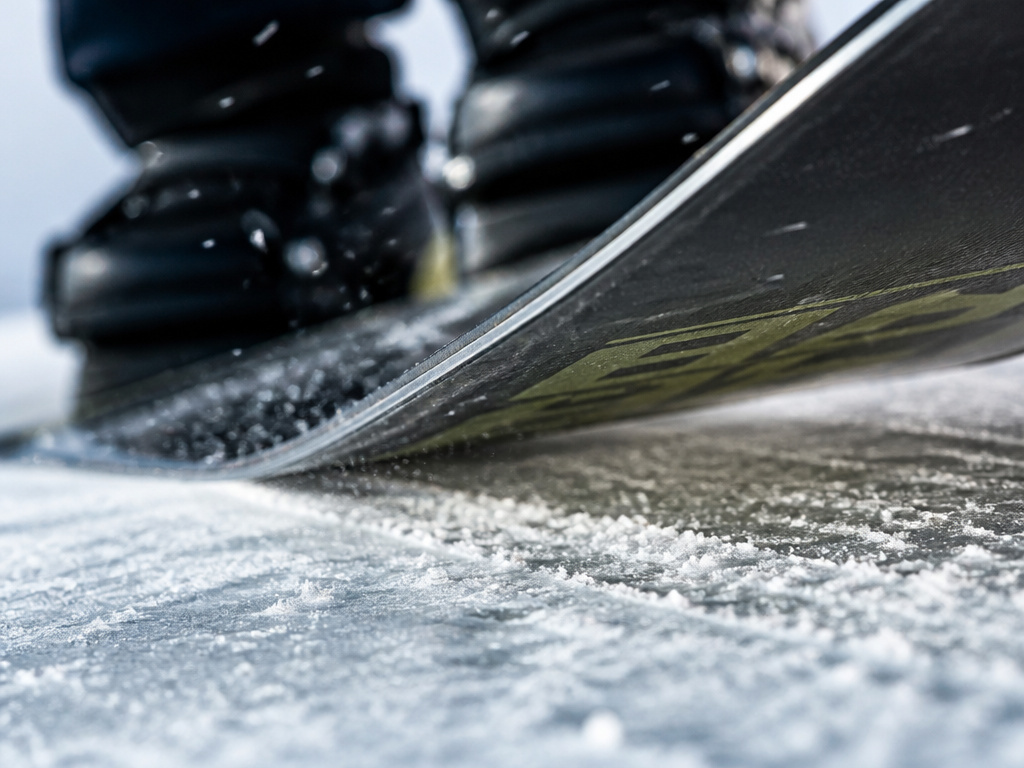
On paper, these are all-mountain boards. In practice, their performance envelope is narrower, defined by their construction priorities. They handle the basics but protest when pushed.
For groomed runs, a Camp Seven board will get you down the hill. The edge hold from the Rockwell 48 steel is sufficient for learning your carve. The flex pattern is forgiving, which makes initiating turns less intimidating. Where most people get wrong is expecting this forgiving nature to translate to stability at speed. As you pick up pace, the board begins to feel nervous and chattery. The extruded base is slower than a sintered base, so you’ll find yourself working harder to maintain speed on flats.
In powder, the directional shape of a model like the Valdez helps, but its design prioritizes manageability over deep powder enjoyment. In the park, the softer flex can be fun for butters and learning very basic presses on small boxes. However, the construction isn’t built for the high-impact landings of jumps. You’ll feel hard landings transmit through the board, as the construction is not designed for high-impact park riding.
Where this goes sideways: Taking a Camp Seven board into advanced terrain like steep chutes or icy moguls. The edge hold and torsional stiffness have a ceiling, and hitting that ceiling feels like the board is suddenly refusing to cooperate, which can quickly escalate a challenging situation.
The sensory experience is telling. A proper carve on hardpack has a hollow, scraping sound as the edge engages. On a Camp Seven board, that sound is often accompanied by a higher-pitched vibration you can feel in your boots. It’s not breaking, it’s just working at its limit.
Compared to even a mid-tier board from a mainstream brand, the difference is in refinement. A Burton Process or a board from our best all-mountain snowboards list will feel damped, precise, and communicative. A Camp Seven board feels functional, vague, and busy. For a first-timer, “functional” is all they need, a point emphasized in every camp 7 snowboard review. For someone who has felt what a tuned-up board can do, “vague” is a deal-breaker.
Durability, Bindings, and the Long-Term Owner Experience
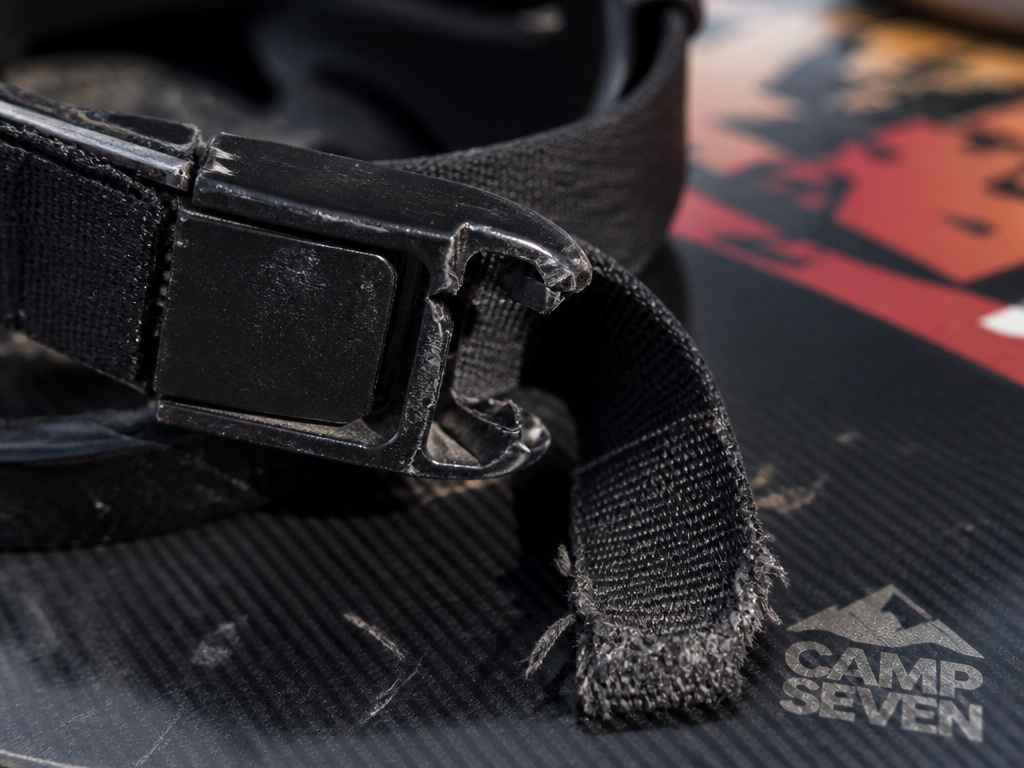
This is where the consensus from actual owners becomes critical. The boards themselves often hold up okay for light use, but the bundled accessories, especially bindings, are the most frequent point of failure.
Forum and Reddit reports paint a clear pattern. One owner noted their Camp Seven Summit bindings broke after one season. Another recounted an instructor’s story where Head kit binding straps snapped off halfway down the second run. Plastic quality and strap durability on these entry-level packages are their Achilles’ heel. When you buy a $300 complete kit, the cost is distributed across board, bindings, and boots. Something has to give, and it’s often the precision and resilience of the binding components.
The boards can survive a few seasons of casual use. One forum user bought a 2013 Women’s Featherlite and used it for a season. However, the resale market reflects their perceived value. One Reddit user started on a Camp Seven 154cm, used it one day, then immediately bought a used 2022 Yes. Mountain Twin for $250. A Reddit user sold a Camp Seven board with boots and bindings for $250. That’s the lifecycle: a brief starter period, then a quick trade-up to a more capable used board.
Common mistake: Assuming the three-year warranty means you’re covered for heavy use. Warranties typically cover manufacturing defects, not wear and tear or damage from riding. For a brand with limited direct customer service channels like Camp Seven, making a claim could be more challenging than with a major brand with a dedicated support team.
It’s worth comparing this to a known entity like the Camp Seven Redwood, another model in their lineup, which shares similar construction and thus similar durability expectations. The longevity equation is simple: lower-cost materials and construction lead to a shorter performance lifespan, especially as your riding intensity increases.
Who Is a Camp Seven Snowboard Actually For? (And Who Should Avoid It)
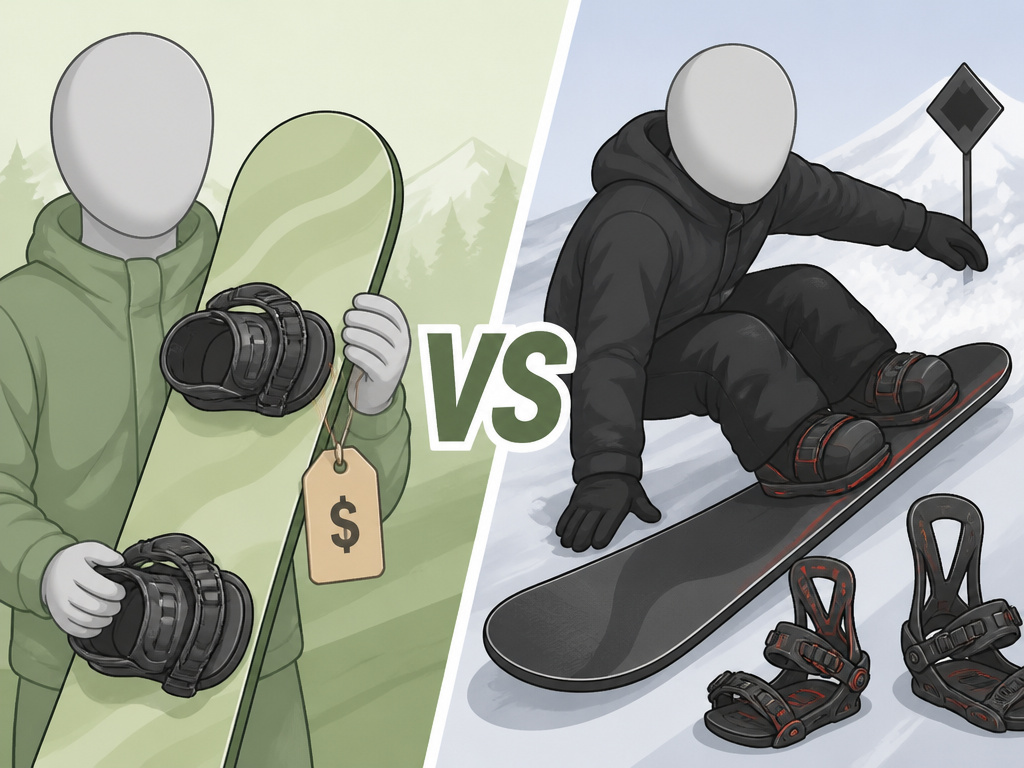
The core consideration is fit, not a simple good or bad judgment. A Camp Seven board solves a specific problem for a specific person.
A Camp Seven is for you if: You have never snowboarded before. You want the absolute lowest barrier to entry with a single purchase. You plan to go 1-5 days per season, sticking primarily to green and blue runs. You view this board as a “learner tool” you fully expect to outgrow and replace within two seasons. Your budget is rigid, and buying a used setup feels overwhelming or risky.
Avoid a Camp Seven if: You are an intermediate or advanced rider (you confidently link turns on blues and tackle blacks). You plan to ride more than 10 days a season. You have any interest in park riding beyond the smallest features. You are a larger or heavier rider who will put more stress on the equipment. You want a board that will progress with you. You can stretch your budget to the $400-$600 range for a used setup from a major brand.
For that second group, the math changes dramatically. The cost of a new Camp Seven kit is similar to that of a used board from a mainstream brand. That used board will have better technology, more durable construction, and a performance ceiling that won’t hold you back. You’ll need to source bindings and boots separately, which may offer better durability than the bundled bindings in a Camp Seven kit.
Think of it like buying tools. A Camp Seven is the basic wrench set you buy for occasional household repairs. It works. But if you’re planning to rebuild an engine, you invest in professional-grade tools. For snowboarding, once it’s more than a casual curiosity, you graduate to professional-grade gear. Our snowboard bindings review can help you navigate that next step.
The Verdict: Value vs. Investment
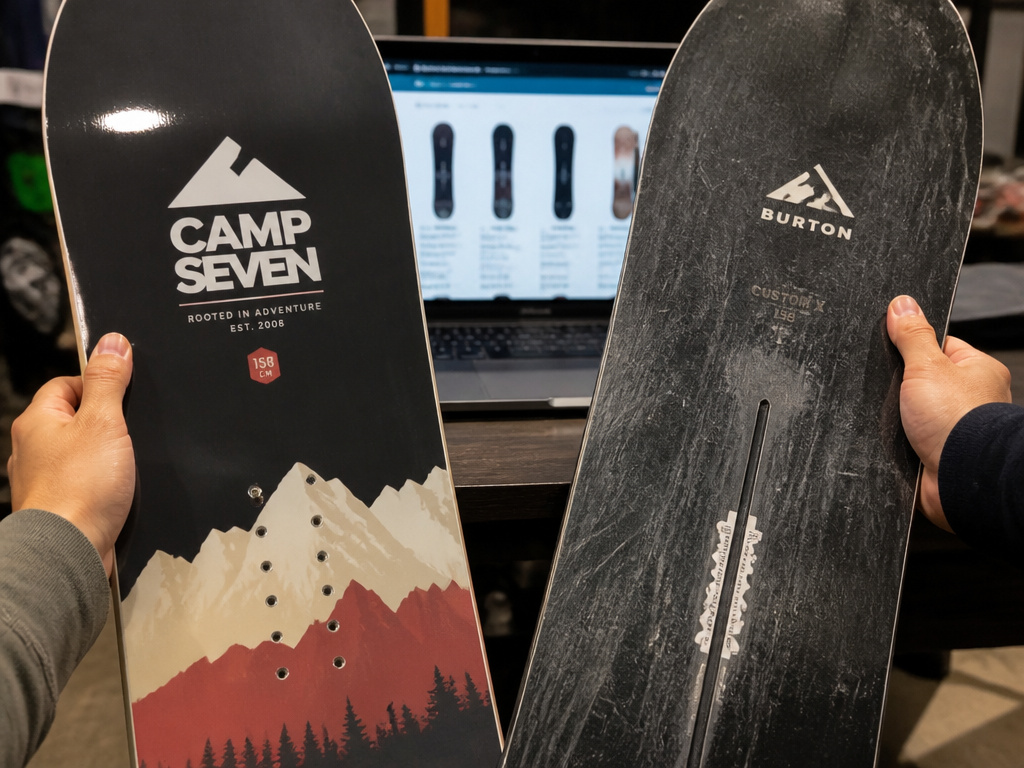
Camp Seven snowboards are a testament to the fact that you can indeed manufacture a rideable snowboard for very little money. They prove that the sport’s entry point is financially accessible.
However, value is a function of time and use. For the true, absolute beginner with minimal commitment, the value is high: you get a complete system that works long enough to decide if you like the sport. For anyone else, especially the aspiring intermediate, the value plummets. The investment in a slightly better used setup pays dividends in performance, safety, and enjoyment, and it saves you from buying twice.
Your first board shapes your early experience. A board with entry-level construction may not provide the same feedback as higher-performance gear. A board that feels secure and responsive builds confidence. While a Camp Seven can provide a foundation, many riders find their progression accelerates faster on equipment that provides clearer feedback and more support.
Before you pull the trigger on a Camp Seven because the price is right, browse the used listings in your area. Compare it to our curated best snowboards list for context. Often, the better long-term investment is a slightly older board with a much better pedigree.
Camp Seven snowboard package deals
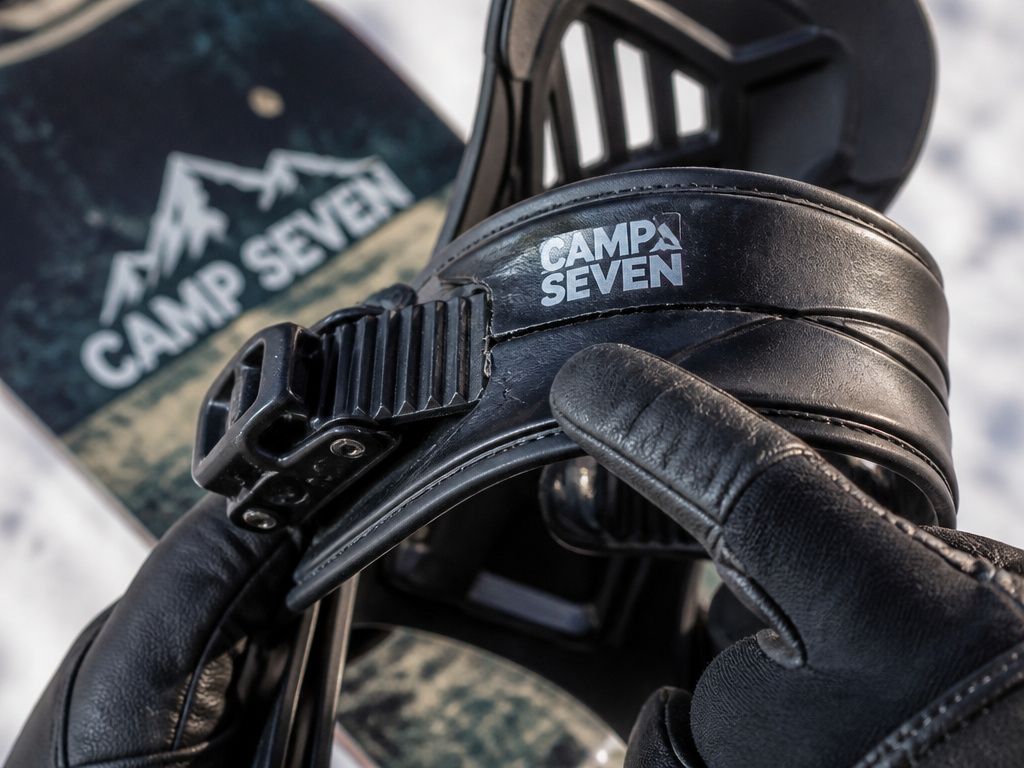
Camp Seven boards are sometimes sold as complete packages with their Summit bindings. The Summit bindings are described as very light and feature contoured straps, a precise footbed, adjustable toe ramps, and EVA base pads. However, there are user reports of these bindings breaking after just one season, with other anecdotes mentioning binding straps snapping very quickly. These packages represent a budget-friendly way to get a full setup, but the durability of the included bindings is a recurring concern. The boards themselves, like the Valdez, come with a three-year warranty, but this warranty may not cover the bindings if they are sold separately or from other brands.
Frequently Asked Questions
Are Camp Seven snowboards good for beginners?
Yes, but with major caveats. They are designed to be forgiving and affordable, which suits a first-timer. However, their lower-quality bindings are a known weak point, and a beginner might struggle more with equipment that fails or doesn’t provide clear feedback. A used beginner board from a major brand is often a better, safer choice for a similar price.
How does Camp Seven compare to brands like Burton or K2?
Camp Seven is a budget house brand, while Burton and K2 are established innovators with extensive R&D. The difference is in material quality, performance refinement, durability, and after-sales support. A Camp Seven board uses entry-level specs to hit a low price; a Burton or K2 board uses advanced engineering to enhance the riding experience. There is no comparison in performance, only in initial cost.
What is the warranty on Camp Seven snowboards?
Camp Seven offers a standard three-year warranty on their snowboards. It’s important to understand that warranties typically cover defects in materials or workmanship, not damage from normal use, impacts, or improper storage. As a house brand sold through third-party retailers, the warranty process may be less straightforward than with a direct-to-consumer brand.
Where are Camp Seven snowboards made?
Based on industry analysis and owner discussions, Camp Seven snowboards are likely manufactured in China. They are a house brand for the retailer wiredsport.com, and like many affordable snowboard brands, production is sourced from factories that produce equipment for various labels. There is no public-facing Camp Seven manufacturing facility or detailed origin story.
Should I buy a Camp Seven complete package?
Only if you are an absolute beginner on an extremely tight budget and understand the trade-offs. The package gets you on the hill for one price, but the bindings and boots are the lowest-quality components. If you can, it’s almost always better to buy a used board and pair it with new, entry-level bindings and properly fitted boots, even if the total cost is slightly higher.
The Bottom Line
Camp Seven snowboards exist to fill a specific, price-sensitive niche. They are rideable, affordable, and get the job done for a season or two of casual use. Their specs are a checklist of entry-level components, and their performance is firmly in the “beginner” category.
The primary risk is outgrowing the board’s capabilities faster than it physically wears out, not immediate failure. For a few hundred dollars, you can own a new board. For the same amount, you can often own a better used board that will last longer and support your progression further. If your goal is to start snowboarding as cheaply as humanly possible, a Camp Seven is a logical path. If your goal is to learn and enjoy snowboarding with gear that helps rather than hinders, your money is better spent elsewhere.
