Can Skateboarding Help You Lose Weight?
This post contains affiliate links. As an Amazon Associate, we earn from qualifying purchases.
Yes, skateboarding can help you lose weight. Peer-reviewed studies show adult skateboarders at community parks sustain a mean heart rate of 138.2 beats per minute during sessions averaging 65.5 minutes, spending 70% of their session at moderate-to-vigorous intensity, this meets the CDC’s exercise recommendations for cardiovascular fitness and weight management. The metabolic cost ranges from ~8.5 METs for longboarding to 10.5 METs for certain powered boards, placing it in the same vigorous exercise category as jump roping.
The “70% of session at moderate-intensity or above” clause in the answer is where the real work happens. That’s not casual cruising; it’s the sustained push-and-pump rhythm that raises your heart rate into the fat-burning zone for the better part of an hour. Most articles talk about “burning calories,” but they skip the specific thresholds that turn a fun session into a legitimate workout. This is precisely how you can answer the question, can skateboarding help you lose weight.
What follows: a breakdown of the exact numbers from NIH-funded studies, a clear comparison of how skateboarding stacks up against running and cycling for calorie burn, and a practical plan for building a skate routine that supports weight loss while managing the very real risks for heavier beginners.
Key Takeaways
- Skateboarding at a community park meets CDC exercise guidelines for adults, with sessions averaging 65 minutes at a heart rate that keeps you in a moderate-to-vigorous intensity zone for most of the time.
- The metabolic cost is real: longboarding at a typical speed hits ~8.5 METs, while riding a specific powered board designed for snowboard-like motion can reach 10.5 METs, both qualify as vigorous exercise.
- Weight loss is 80% kitchen, 20% gym applies here too. Skating makes you hungry; without dietary control, you can easily eat back the 300-400 calories burned in a session.
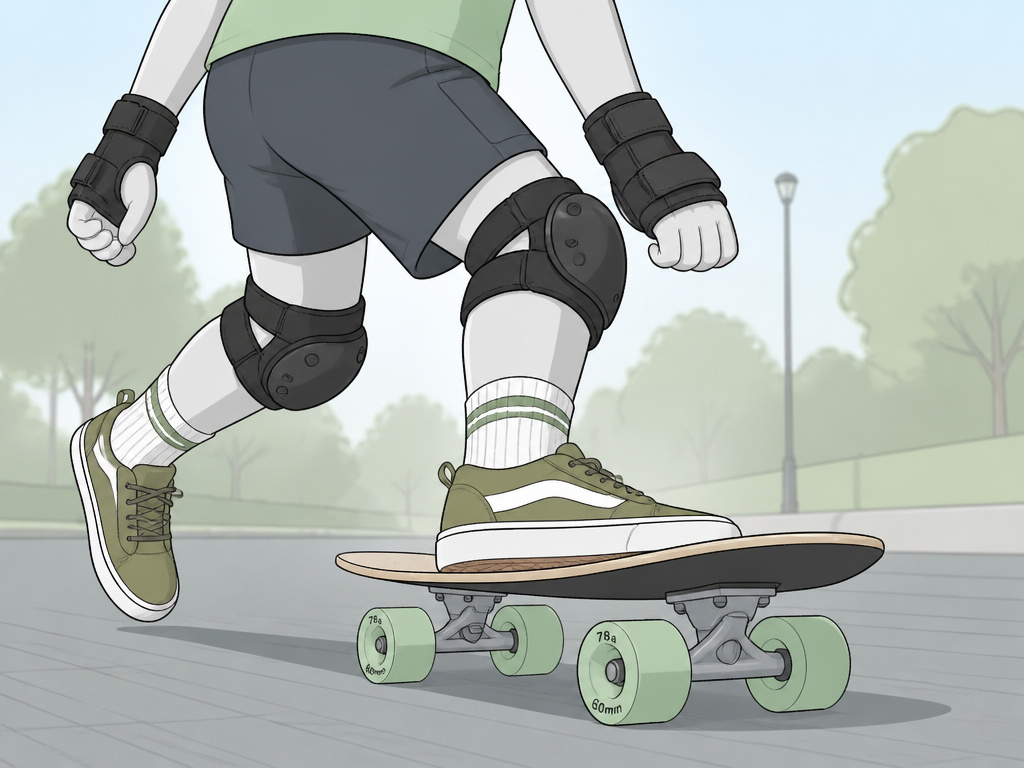
- For beginners, especially those carrying extra weight, protective gear and board choice are essential. A longer deck or cruiser with soft, large wheels (78a, 60mm+) reduces impact and improves stability.
- Consistency beats intensity for long-term loss. Skating 3 days a week for an hour is a sustainable, enjoyable habit that research shows adults already maintain, making it more effective than sporadic, punishing workouts.
How Skateboarding Stacks Up: METs and Calorie Burn
Here’s a key point. When someone asks the can skateboarding help you lose weight question, they’re really asking about its metabolic equivalent, how much energy it burns compared to sitting still. That’s measured in METs. One MET is your resting metabolic rate. Walking at a moderate pace is about 3 METs. Running might hit 8 or 9.
A 2011 study in the Research Quarterly for Exercise and Sport concluded skateboarding is a viable option for developing or maintaining aerobic fitness and may be effective as part of an exercise prescription for healthy young adults.
So where does skateboarding land? The data isn’t uniform, because “skateboarding” isn’t one thing. A PubMed longboard skateboarding metabolic cost study put longboarding at a self-selected “typical” speed (about 10 mph) at ~8.5 METs. That’s solidly in the vigorous exercise category. The researchers noted its metabolic cost was greater than cycling and about 50% smaller than walking, a surprisingly efficient way to cover ground.
Then there’s the outlier. A PMC study on adult skateboarding heart rates cited a published MET for traditional skateboarding of 6.0. But a different NIH study on adult skateboarding heart rates on a novel electrically powered skateboard (the Summerboard) found a mean MET of 10.5, higher than snowboarding (8.0) and jump roping (10.0). The board requires constant lower-body engagement for balance and turning, turning a motorized ride into a serious core and leg workout.
| Activity | MET Range | Intensity Classification | 30-min Calorie Burn (for 185lb person) |
|---|---|---|---|
| Longboarding (typical pace) | ~8.5 METs | Vigorous | ~315 calories |
| Traditional Skateboarding (park) | ~6.0 METs | Moderate | ~225 calories |
| Running (6 mph / 10 min mile) | ~9.8 METs | Vigorous | ~365 calories |
| Cycling (12-13.9 mph) | ~8.0 METs | Vigorous | ~300 calories |
| Walking (3.5 mph) | ~3.8 METs | Moderate | ~140 calories |
The takeaway? If you’re pumping through a park session or maintaining speed on a longboard, you’re working at a vigorous level, though some skaters argue running or cycling is more efficient for pure cardio, while others claim skating hard burns more calories. The calorie burn is real. METs measure rate of expenditure. The total burn depends entirely on duration. That’s where the next set of numbers matters more.
The Heart Rate Data: Meeting and Exceeding CDC Guidelines
You can burn calories without improving your cardiovascular fitness. For weight loss and heart health, you need sustained effort. The CDC recommends adults get at least 150 minutes of moderate-intensity aerobic activity or 75 minutes of vigorous-intensity activity per week.
The most compelling evidence comes from real-world monitoring. In that same PMC heart rate response characterization study, researchers hooked up 55 adults at community skateparks. The results weren’t self-reported guesses; they were measured.
- Mean heart rate: 138.2 ± 21.9 beats per minute (about 72% of their age-predicted max).
- Mean session duration: 65.5 ± 36.2 minutes.
- 70% of their total session time was spent at moderate-intensity or above.
Translated: the average skater wasn’t just hanging out. They were working hard enough, for long enough, to contribute significantly to meeting the CDC’s weekly recommendations. A follow-up PMC study on female skateboarder heart rates reinforced this for diverse groups. Female, BIPOC skateboarders, and non-skateboard users (like BMX riders) at parks also had session durations averaging 54.2 minutes and all met or exceeded the guidelines.
Where this goes sideways: Assuming a 15-minute skate counts as a “workout.” The research shows the real metabolic and cardiovascular benefits are associated with sessions of substantial duration, like the mean of 65.5 minutes observed in studies. Short, low-intensity pushes won’t move the needle.
. It’s not that skateboarding “can be” exercise. The data from instrumented, real-world sessions proves it is exercise, at the prescribed intensity and duration that governing health bodies recommend. Your body doesn’t care if you’re on a treadmill or a skateboard; it responds to heart rate and time under tension.
Building a Weight Loss Skate Routine (For Beginners)
Knowing skating can work is one thing. Making it work for you, especially if you’re starting out or returning with extra weight, is another. The forums are full of this tension. One user on r/NewSkaters put it bluntly: “Running or cycling would both be much better cardio… It’s pretty inefficient purely as a cardio workout for the most part.” Another on r/skateboarding countered: “It actually burns more calories than running if you skating hard like doing tricks consistently.”
This highlights a point of disagreement among skaters: some argue running or cycling is better cardio, while others claim skating hard burns more calories, with the outcome depending on the individual’s routine.
For weight loss, when you compare a can skateboarding help you lose weight plan, you need one that prioritizes continuous movement over technical trick progression. This is where the difference between skateboard and longboard matters critically. A standard skateboard is designed for explosive, stop-start trick execution. A longboard or cruiser is built for sustained, fluid motion. If your primary goal is calorie burn and cardio, the latter is the more efficient tool.
Here is a sample 8-week progression framework, inspired by the structured surf-skate training studies but adapted for pure fitness:
Weeks 1-2: Foundation & Safety
- Focus: Pushing, balancing, and safe falling on smooth, flat pavement.
- Gear: Helmet, wrist guards, knee pads mandatory. Use a longboard for heavy riders or a cruiser with soft, large wheels (78a durometer, 60mm+ diameter) for stability and vibration dampening.
- Session: 3x per week, 30 minutes. Aim for a steady, slow push. The goal is continuous movement for the entire half-hour, not distance or speed.
- Why-Layer: Soft, large wheels roll over cracks and pebbles with less shock to your joints. A longer wheelbase increases stability, which is crucial when your center of gravity is higher or you’re-learning balance.
Weeks 3-6: Building Duration & Intensity
- Focus: Introducing gentle pumps on mild slopes or bike paths to elevate heart rate without impact.
- Session: 3x per week, 45 minutes. Spend 30 minutes in continuous motion, aiming to keep your heart rate elevated (you should be able to talk, but with slight difficulty).
- Add: One 60-minute “distance skate” on the weekend on a paved trail. Don’t worry about tricks; just cover ground.
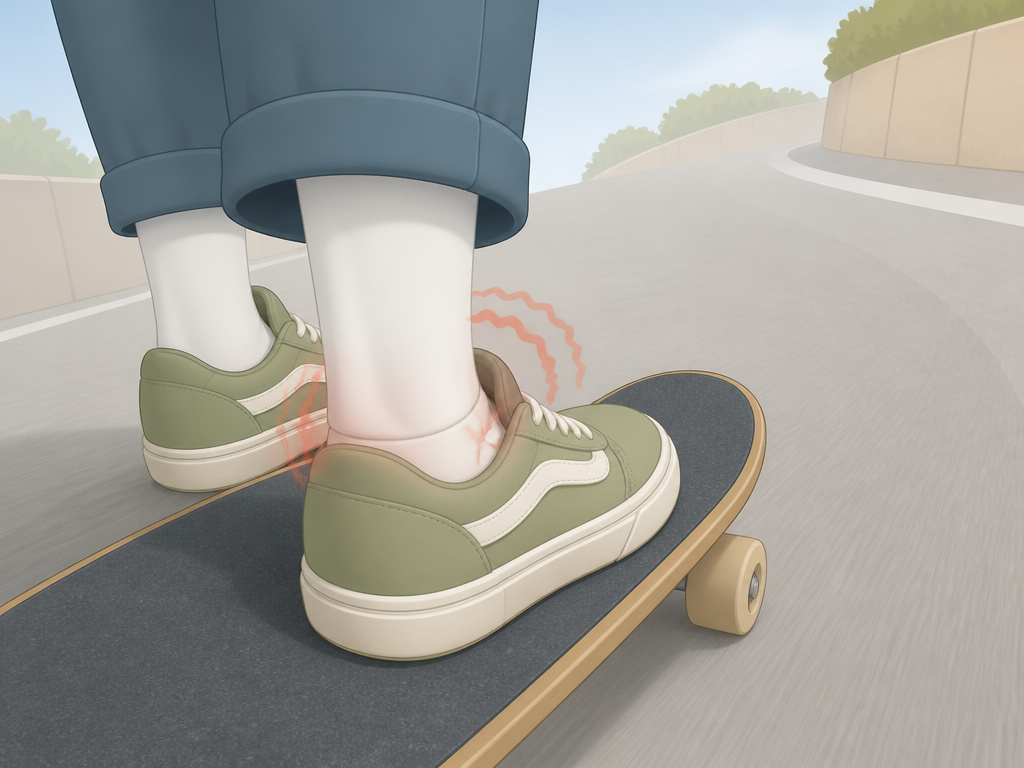
- The part nobody mentions: Your feet and ankles will ache after the first few long sessions, not from impact but from the sustained micro-adjustments for balance. That’s your stabilizing muscles working, which is expected.
Weeks 7-8: Integration & Consistency
- Focus: Locking in the habit. By now, a 45-60 minute skate should feel sustainable, not exhausting.
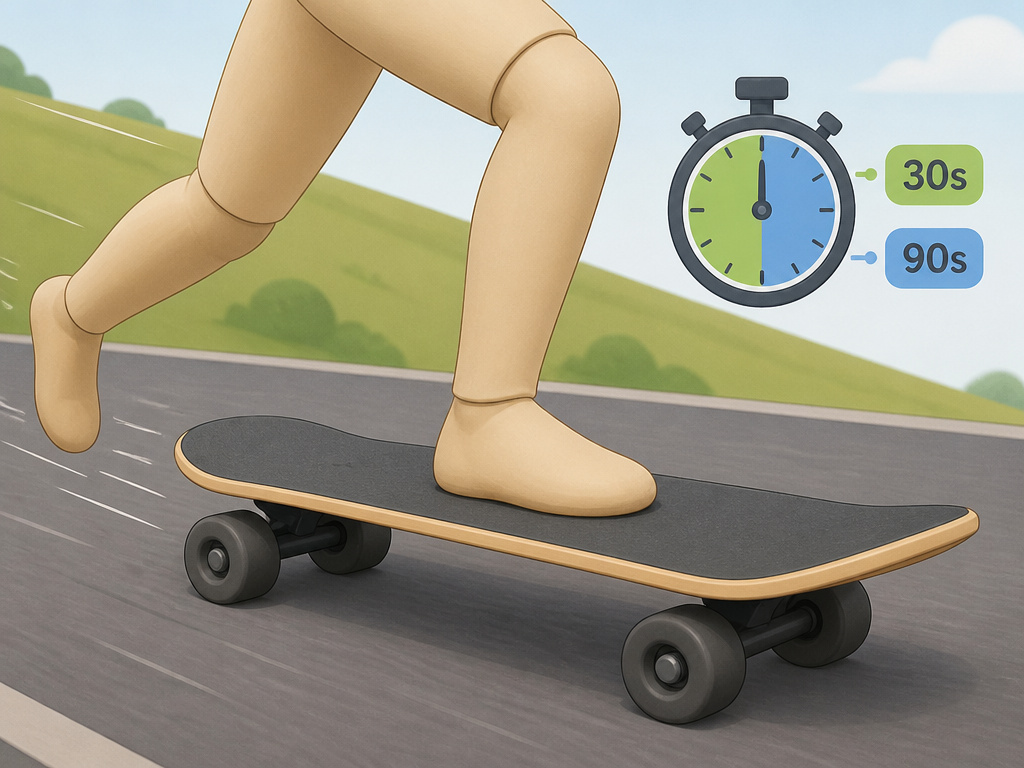
- Session: 3x per week, 45-60 minutes. You can now experiment: add intervals (30 seconds of hard pushing, 90 seconds of recovery cruising) or seek out gentle hills for longer carves.
- Track Progress: Don’t just watch the scale. Note how much farther you can go without stopping, or how a previously daunting hill is now manageable. These non-scale victories are powerful motivators.
Common mistake: Jumping straight to a technical street deck because it’s “what skaters use.” For skateboarding for overweight people, a board rated for your weight with a forgiving setup is a safety tool, not a compromise. A board rated for the user’s weight with a forgiving setup is a safety tool, not a compromise.
The Critical Role of Diet and Injury Prevention
I’ve seen this common mistake a hundred times. A skater gets motivated, skates hard for a week, feels ravenously hungry, and eats back every calorie burned, plus some. A Reddit user in r/NewSkaters nailed it: “My understanding is that most basic forms of exercise will only help you directly lose weight long-term if you are also disciplined about controlling your eating.”
The numbers are straightforward. Even a vigorous skate session burns calories, but the total depends on intensity and duration. The health benefits of skateboarding for mental health and consistency are massive, but they don’t override the laws of thermodynamics.
The 80/20 Rule for Skating Weight Loss:
- 80% Diet: Focus on whole foods, protein, and fiber to manage hunger. Hydrate with water, not sports drinks.
- 20% Skateboarding: Use skating as the engine for your calorie deficit and the guardian of your cardiovascular health. It’s the activity you’ll want to do consistently, which is priceless.
Injury prevention is the other half of the equation. The Pediatric Orthopaedic Society of North America (POSNA) position statement is unequivocal: protective equipment is essential, and learning to fall safely is a fundamental skill. For a heavier beginner, this is even more critical.
- Wrist Guards: Your first point of impact. They prevent the Colles’ fracture that sidelines you for weeks.
- Knee Pads: Not just for trick skaters. A simple stumble on a path can drive a knee into concrete with enough force to crack a patella.
- Helmet: Essential. A head injury can have serious, long-term consequences. A head injury can have serious, long-term consequences.
- Footwear: Closed, supportive, flat-soled shoes.
Your first few sessions should literally include practicing falls on grass, learning to roll and absorb impact with your fleshy parts, not your joints. It feels silly until the day it saves you from a broken wrist.
What Do Skateboarders Actually Say About Weight Loss?
Online forums are full of personal stories. Some skaters report significant weight loss, crediting long sessions at the park where the constant movement and effort add up. Others point out that while skating is great fun and good exercise, managing your diet is the real key to seeing the scale move. Many agree that the best approach is to combine regular skateboarding with mindful eating. The activity keeps you engaged and active, which supports your overall goals, but success comes from pairing that board time with healthier food choices.
Frequently Asked Questions
Can you lose belly fat by skateboarding?
Skateboarding can contribute to overall fat loss, including belly fat, as part of a calorie deficit. However, spot reduction is a myth. The core engagement from balancing and turning will strengthen your abdominal muscles, which can improve posture and muscle tone underneath any body fat. The fat loss itself comes from the whole-body energy expenditure of the activity.
Is skateboarding better for weight loss than running?
It depends on the metrics. The calorie burn per minute depends on the specific intensity of each activity. However, for adherence and enjoyment, which are the most important factors for long-term weight loss, skateboarding can be “better” if you hate running but love skating. You’re more likely to consistently complete a 60-minute skate session than a 30-minute run you dread. Consistency always beats maximum intensity in the long run.
How often should I skateboard to lose weight?
The research shows adult skateboarders average about 3.1 sessions per week. That’s a solid target. Aim for at least three sessions weekly, each lasting 45-60 minutes at a moderate intensity (where you can talk but not sing). This gets you over the CDC’s recommended 150 minutes of moderate activity. More frequent, shorter sessions are also effective if that fits your schedule better.
What are the downsides of using skateboarding for weight loss?
The primary downsides are injury risk and skill barrier. Skateboarding has a higher risk of acute injury (sprains, fractures) compared to walking or cycling, especially for beginners. It also requires a learning curve to reach the intensity needed for significant calorie burn, you can’t just hop on and go like a treadmill. Finally, weather and terrain dependence can disrupt consistency.
Will skateboarding build muscle while I lose weight?
Yes, particularly in the lower body and core. Skateboarding is a unilateral, balance-intensive activity that engages your quads, glutes, calves, and deep core stabilizers isometrically. This can help preserve lean muscle mass while you’re in a calorie deficit, which is crucial for maintaining a higher metabolism. The physical benefits of skateboarding include this strength component that pure cardio often misses.
The Bottom Line
Skateboarding isn’t a magic weight loss bullet, but it is a legitimate, research-backed tool for creating the calorie deficit and cardiovascular health needed to lose weight. The data from NIH-funded studies is clear: a typical park session delivers the duration and heart rate intensity that meet national health guidelines.
The real advantage isn’t in the numbers on a METs chart; it’s in the psychology. Skateboarding is fun. That fun translates into consistency, and consistency is the single greatest predictor of long-term weight management. You won’t skip a workout you look forward to.
If you’re starting this journey, your first investment isn’t a board, it’s a helmet and pads. Your first skill isn’t the ollie; it’s learning to fall. Ground your routine in duration and smooth, continuous movement over technical tricks. Pair it with mindful eating. The weight will follow, but more importantly, you’ll gain a skill, a community, and a sustainable path to better health.
For most people asking this question, the best move is to start with a cruiser or longboard on a smooth path, protect your body, and focus on keeping the wheels rolling for longer each time. Trust the process, not just the scale.
