Health Benefits of Longboarding: What the Research Shows
This post contains affiliate links. As an Amazon Associate, we earn from qualifying purchases.
Longboarding delivers measurable, vigorous cardiovascular exercise, strengthens core and leg muscles, and provides significant mental health benefits like stress reduction. The key variable is terrain: uphill pushes reach vigorous intensity (over 81% of heart rate reserve), while cruising offers moderate, sustained cardio. It’s a full-body, low-impact workout that beats walking for metabolic efficiency.
The data from Montana Tech and Brigham Young University consists of measured heart rates and oxygen consumption from people actually riding. This turns a recreational activity into a quantifiable fitness tool.
What follows breaks down each benefit with the numbers behind it, compares it directly to other exercises, and lays out the essential safety steps that let you reap the health benefits of longboarding without a trip to the ER. By the end, you’ll know exactly how to structure a longboarding session for your fitness goals.
Key Takeaways
- At a typical cruising speed, longboarding hits ~8.5 METs, placing it in the vigorous exercise category according to the American College of Sports Medicine.
- Uphill longboarding drives heart rates to 81% of heart rate reserve, a vigorous intensity zone ideal for improving cardiovascular health and endurance.
- The mental health benefit is real and documented by riders: longboarding provides a flow state and stress relief that combats anxiety and depression by demanding full focus.
- Helmet use is mandatory. Peer-reviewed trauma center data shows helmet use among injured longboarders was between 4% and 13.9%, while head injuries were severe and common.
- For sustainable fitness, mix downhill cruising (moderate intensity) with uphill pushing (vigorous intensity) to create a full-interval training session without the joint impact of running.
What Is the Calorie Burn and Metabolic Cost?
Here’s an important point. You don’t just “burn some calories” longboarding. You engage in a metabolically efficient activity that science has measured.
A 2014 study published in the European Journal of Applied Physiology put riders on a track and measured everything. At a typical cruising speed of 4.5 m/s, the average intensity was ~8.5 METs. For perspective, that’s vigorous exercise. It’s more intense than brisk walking (3-4 METs) and comparable to cycling at a moderate pace.
The 2014 Board & Browning study concluded longboarding “elicits vigorous intensity, yet is economical compared to walking.” The gross metabolic cost was ~2.2 J/kg/m at typical speed, roughly 50% more efficient than walking.
The numbers tell a clear story. At that typical pace, riders consumed oxygen at a rate of 29.1 ml/kg/min and expended energy at 41.8 kJ/min. When they pushed to a fast pace (5.1 m/s), those numbers jumped to 37.2 ml/kg/min and 52.7 kJ/min.
How does this translate for you? The exact number of calories burned depends on your weight, speed, and how much you’re pushing versus coasting. It’s a form of good exercise that disguises hard work as fun.
Where this goes sideways: Assuming longboarding is just coasting. The metabolic data shows it’s work. If you’re not breathing harder and feeling your legs engage, you’re probably not hitting the intensity zones that yield the best calorie burn and cardio benefits. Push yourself.
| Activity | Average METs | Intensity Level | Calorie Burn (30 min for 155lb person) |
|---|---|---|---|
| Longboarding (Typical Pace) | ~8.5 METs | Vigorous | ~200-250 |
| Brisk Walking | 3.5-4 METs | Moderate | ~140-170 |
| Leisure Cycling | 6-8 METs | Moderate-Vigorous | ~210-240 |
| Running (5 mph / 8 kmh) | 8-9 METs | Vigorous | ~240-280 |
How Does Longboarding Build Cardiovascular Fitness?
Your heart doesn’t know you’re having fun. It just knows it’s working. Research from Montana Tech proves longboarding gives it a serious workout.
In their study, fourteen subjects rode both downhill and uphill sections. The results were stark. The average downhill heart rate was 131.4 beats per minute, with an average heart rate reserve utilization of 54%. Good for a warm-up or active recovery.
The uphill section told a different story. Average heart rate soared to 167.8 bpm, reaching 81% of heart rate reserve. That’s the vigorous intensity zone, the exact range the American College of Sports Medicine says is optimal for improving cardiorespiratory fitness.
These results indicate that longboarding can increase heart rate to suggested levels suggested by the American College of Sports Medicine for improving cardiovascular health and fitness.
This is the core of the cardiovascular benefit. By alternating between downhill cruising and uphill pushing, you create your own interval training session. You spike your heart rate on the climb, then let it recover slightly on the descent, mimicking the structure of a HIIT workout. This variability is more effective for building endurance than steady-state cardio alone. It’s also why longboarding can aid weight loss; vigorous intervals are notoriously efficient for fat burning.
Common mistake: Only seeking out flat, smooth paths. You’re missing half the workout. Find a route with a gentle incline. The burn in your thighs and the pound in your chest on the way up is where the real cardio gains are made.
What Muscles Does Longboarding Work? (It’s Not Just Legs)
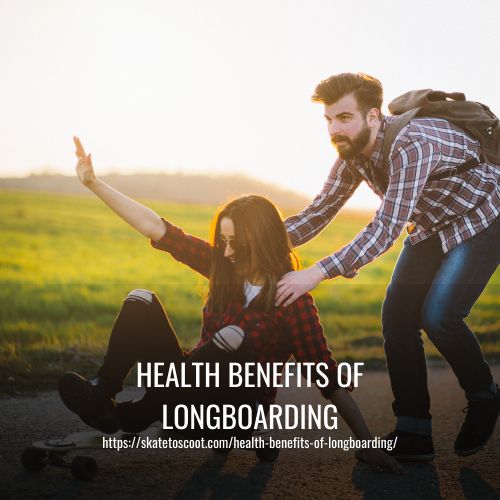
You think it’s a leg workout. And it is, your quads, hamstrings, and glutes fire constantly for propulsion and stability. But watch a skilled rider pump for speed without pushing. Their entire torso is engaged in a rhythmic, twisting motion.
This full-body engagement is the hidden strength builder. Your core, abs, obliques, lower back, acts as a stabilizer and power transfer unit. Every carve and balance correction works your midsection isometrically. Your shoulders, arms, and lats engage for balance and posture, especially when you’re learning or navigating rough terrain.
It’s a dynamic stability challenge. Unlike the predictable plane of a gym leg press, the board is always making micro-adjustments. Your ankles, knees, and hip stabilizers are constantly firing to keep you upright. This builds functional, real-world strength and proprioception, your body’s sense of its position in space.
That improved balance transfers everywhere. Walking on uneven ground, catching yourself from a stumble, even standing on a crowded bus becomes easier. The strength you build isn’t just for looking good; it’s for moving well.
The Mental Health Lift You Can’t Measure
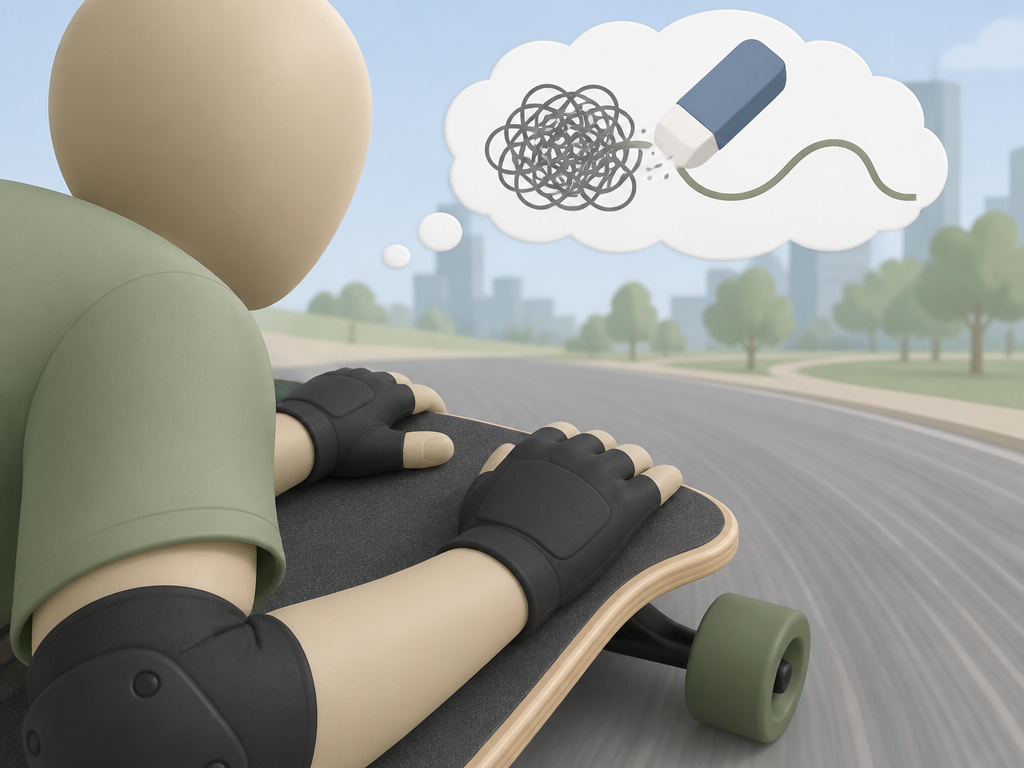
You can graph heart rate. You can’t graph peace of mind. But the riders in the Reddit threads and forums describe it with unmistakable clarity.
For many, longboarding induces a flow state. It demands enough focus on speed, balance, and pathfinding that it crowds out anxious or depressive thoughts. “All I think about is moving. The rest is blank,” one rider said. This isn’t just poetic; it’s a therapeutic cognitive shift. The combination of rhythmic physical exertion, outdoor immersion, and required attention acts like a moving meditation.
The community aspect adds another layer. Finding a local crew or even sharing experiences online provides social connection and support, which are critical for mental well-being. The shared challenge of learning and exploring creates bonds. These social and mental benefits are powerful motivators that keep people returning to the board, creating a self-sustaining cycle of exercise and social wellness.
Easy to miss: The mental benefit often comes after the session. The clarity and calm that follow an hour of focused riding can reset a stressful day more effectively than zoning out in front of a screen.
For those dealing with anxiety or depression, this isn’t trivial. One rider described longboarding as the thing that “keeps me sane.” Another wrote passionately about how it helped them process trauma and avoid suicidal ideation. The physical exertion releases endorphins, the mastery of a skill builds confidence, and the simple act of doing something you enjoy provides a vital counterweight to life’s pressures.
The Critical Safety Conversation: Gear and Risk
We have to talk about the numbers that matter just as much as the calorie counts. The health benefits are real, but they vanish if you’re recovering from a broken wrist or a concussion.
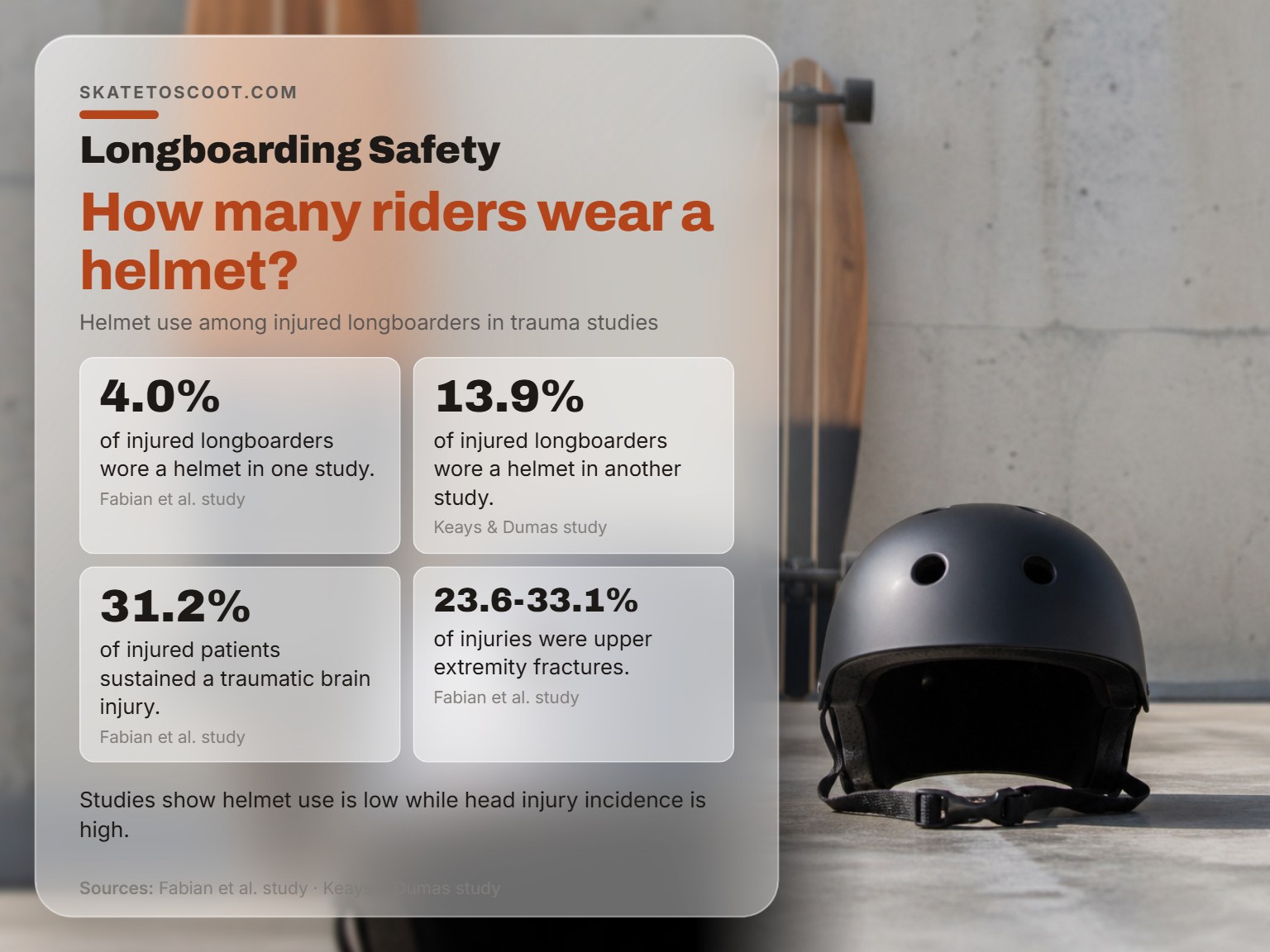
A sobering 2014 analysis of trauma center data published in Emergency Medicine International focused on longboarding injuries. The findings are stark:
- Upper extremity fractures: 23.6% to 33.1% of injuries.
- Traumatic brain injury (TBI): 31.2% of patients.
- Intracranial injuries (like hemorrhage): 13.7% to 16.4%.
- Helmet use among injured longboarders: 4.0% (Fabian et al.) to 13.9% (Keays & Dumas).
Let that last stat sink in. In one study, 96% of the injured riders weren’t wearing a helmet. The Active Safe evidence summary bluntly states that while helmet use is low, the “incidence of head and traumatic brain injury is high.”
Before you start: A certified skateboarding helmet is mandatory, not optional. Wrist guards can prevent the most common fractures. Start on flat, smooth, low-traffic areas to build fundamental skills before attempting hills or traffic.
The study also noted that longboard injuries tended to be more severe than standard skateboard injuries. All patients with a high Injury Severity Score (above 15) were longboarders, and the three recorded fatalities were all longboarders who sustained head injuries.
This statement is based on the data. The speed and stability of a longboard can inspire overconfidence. The risks of injury from longboarding are manageable, but only with the right respect and equipment. Making safety on a longboard your first priority is what allows you to enjoy the fitness benefits for the long term. You can’t improve your skills from a hospital bed.
Longboarding vs. Other Exercises: A Practical Comparison
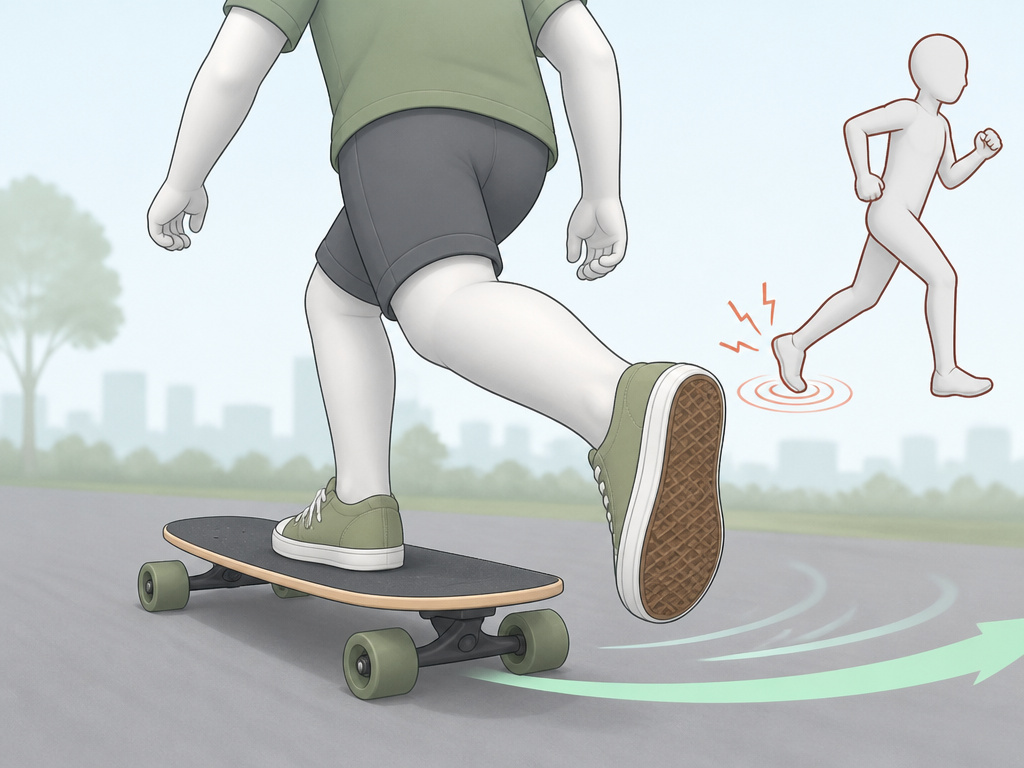
Is it “better” than running? That’s the wrong question. It’s different, and the difference is its greatest strength.
Running is a high-impact, repetitive motion that’s brutally efficient for cardio and calorie burn. It also pounds your joints. Longboarding, especially on smooth pavement, is low-impact. Your feet stay planted; there’s no heel-strike. This makes it a fantastic option for people with knee, hip, or ankle issues, or anyone looking for a joint-friendly cardio alternative.
Compared to cycling, longboarding engages more stabilizing muscles. On a bike, you’re seated and supported. On a board, you’re standing and actively balancing, which integrates core work into the cardio session. As the PubMed metabolic cost study showed, it’s also more metabolically efficient than walking, meaning you get more workout for the same energy cost over distance.
For mental health, the edge is clear. Running can be a grind. Longboarding, by its nature, is playful and exploratory. The fun factor is a huge part of its sustainability and the health benefits of longboarding. You’re more likely to stick with an exercise you look forward to, and the mental benefits compound from there.
TL;DR: Use longboarding as a versatile tool. For low-impact, steady-state cardio, cruise on flats. For high-intensity intervals, find a hill. For full-body coordination and balance, it’s in a class of its own.
How to Start Using Longboarding for Fitness
You don’t need to be a daredevil. You need a plan. Here’s how to transition from casual rider to fitness rider.
- Gear Up Correctly. This step is critical. Buy a certified skate helmet that fits snugly. Get wrist guards. For fitness cruising, a drop-through or drop deck longboard offers stability and a lower center of gravity, which is easier on your legs over distance.
- Master the Fundamentals First. Before you chase workouts, chase competence. Be utterly confident in pushing, foot braking, and carving on flat ground. Your local parking lot or empty tennis court is your gym. This foundational skill is how you safely improve at longboarding.
- Structure Your Sessions. Don’t just wander.
- Beginner (Weeks 1-4): 3x per week, 20-30 minutes on flat, smooth pavement. Focus on consistent pushing and building endurance.
- Intermediate (Weeks 5+): Incorporate intervals. Find a slight incline. Push hard uphill for 60-90 seconds, then coast/cruise back down for recovery. Repeat 5-8 times.
- Distance Goal: Once comfortable, set a distance target. A 5km/3mi cruise is an excellent, achievable goal that provides a solid 30-45 minute workout.
- Listen to Your Body. Muscle soreness, especially in the inner thighs and calves, is normal. Sharp joint pain is not. Hydrate well, and don’t ignore fatigue, tired muscles lead to sloppy form and falls.
- Track Your Progress. Use a basic fitness app that tracks distance and time. Seeing your average speed increase or your chosen hill become easier is powerful motivation. It turns a fun activity into a measurable and effective form of exercise.
Does longboarding improve flexibility?
While the research studies focus on the cardiovascular and metabolic intensity of the activity, they do not provide specific data on flexibility gains from longboarding. However, the physical nature of the sport offers practical ways to enhance your range of motion. The act of carving, shifting your weight, and maintaining a balanced, dynamic stance on the board engages your core, hips, and leg muscles through a full range of motion. To maximize any flexibility benefits, incorporate a thorough warm-up before you ride and a dedicated stretching routine afterwards, focusing on the legs, back, and shoulders. This practical approach helps maintain joint health and can complement the vigorous workout your heart is getting.
Frequently Asked Questions
What burns more calories, walking or longboarding?
Longboarding burns significantly more calories per minute. The research shows typical longboarding (~8.5 METs) is more than twice as intense as brisk walking (3.5-4 METs). For the same time investment, you’ll get a more vigorous workout and higher calorie burn on a board.
Can you lose weight riding a longboard?
Absolutely. Because it’s a vigorous exercise, longboarding creates a substantial calorie deficit, which is the engine of weight loss. Its low-impact nature also means you can do it more frequently without joint stress, aiding consistency. Pair regular sessions with sensible nutrition for effective results.
Is longboarding good for your heart?
Yes, specifically when you incorporate uphill pushes or sustained pumping. The Montana Tech study proved it elevates heart rate into the vigorous intensity zones (over 81% of heart rate reserve uphill) recommended by the American College of Sports Medicine for improving cardiovascular health. It’s a legitimate cardio workout.
What are the biggest risks of longboarding?
The data points to head injuries (traumatic brain injury, concussion) and upper limb fractures (wrists, forearms) as the most common severe injuries. The primary risk factor is the extremely low rate of protective gear use, especially helmets, among riders. Managing speed, avoiding traffic, and wearing full safety gear mitigates these risks dramatically.
The Bottom Line
The health benefits of longboarding are backed by hard science, from its vigorous metabolic cost to its heart-strengthening intensity. But the full value is the package: it’s joint-friendly cardio, a full-body stabilizer workout, and a potent mental health tool wrapped in an activity that feels more like play than exercise.
Your first step should be buying a helmet and wrist guards. The research is unambiguous on this. Safety enables sustainability. Once you’re geared up, start small on flat ground. Let your skill, confidence, and fitness build together.
Trust the process, not just the push. The numbers prove it works, but the feeling you get carving down a smooth path is the reason you’ll keep coming back. That combination is what makes it a lifelong health habit.
