How Long Is a Hoverboard: Size, Specs & Storage
This post contains affiliate links. As an Amazon Associate, we earn from qualifying purchases.
That’s roughly the size of a standard skateboard deck, but thicker. The exact length depends mostly on the wheel size: 6.5-inch wheels fit a 23-inch board, 8-inch wheels need about 25 inches, and 10-inch off-road models stretch to 28 inches or more.
That length range answers the literal how long is a hoverboard question, but it’s only useful if you know what it means for the rider and for your hallway. A board’s physical length tells you less about fit than the distance between its footpads and the width of those pads. A child’s size 2 shoe needs a different platform than an adult’s size 12, and that’s where most generic size guides fall short.
What follows is a breakdown of measured dimensions for real models, how wheel size dictates length, and a method for matching board size to rider height, not just age. We’ll also untangle the other “how long” question about battery life beyond how long is a hoverboard, because confusing minutes for inches is a quick way to buy the wrong thing.
Key Takeaways
- Standard hoverboard length is 23–28 inches, directly tied to wheel size. A 10-inch wheel model is always longer than a 6.5-inch one.
- The critical fit measurement is footpad width and spacing, not total board length. Look for footpads at least 8 inches wide and spaced for a natural stance.
- For rider height, the board length should roughly match the rider’s inseam. A 26-inch board fits someone with a 26-inch inseam.
- Battery life and physical size are separate specs. “How long” for runtime is answered in watt-hours (Wh) or miles, like the Sharper Image Hover Board‘s 12-mile range.
- Always verify UL 2272 certification for safety. The CPSC hoverboard safety alert links fire incidents directly to non-compliant batteries and chargers.
Standard Hoverboard Dimensions
Forget generic averages. Manufacturer spec sheets give you the real numbers, and they cluster in a predictable range. You’re dealing with a self-contained vehicle, not a simple plank, so its shape is governed by the motor, battery, and wheel housings.
This is on the more compact end, typical for a model with smaller wheels. The Sharper Image Hover Board doesn’t list its length in the extracted manual, but visual scaling against its 6.5-inch wheels puts it in the same 23-inch neighborhood.
The variation isn’t random.
The published length of a hoverboard is the outer tip-to-tip measurement of the plastic shell. The usable standing surface, the footpad, is typically 1 to 3 inches shorter on each end, as the shell curves upward. A 25-inch board might offer only 22 inches of flat standing space.
This is the first thing people miss when measuring a space in their closet or car trunk. You need clearance for the full shell, not just the flat part.
Where this goes sideways: Buying based on total length alone. A board can be 26 inches long but have footpads placed so close together that a taller rider feels cramped. The footpad width and center-to-center distance matter more for comfort and control. Look for pads at least 8 inches wide, placed far enough apart for your natural shoulder-width stance.
How Wheel Size Changes the Board
Wheel diameter is the engine of board length. A bigger wheel needs a bigger housing, which stretches the chassis. It’s a direct, mechanical relationship.
| Wheel Size | Typical Board Length | Best For | Compromise |
|---|---|---|---|
| 6.5-inch | 23 – 24 inches | Smooth pavement, indoor use, younger riders | Struggles on cracks, rough terrain |
| 8-inch | 25 – 26 inches | All-around neighborhood use, most common size | Slightly less portable than 6.5″ |
| 10-inch | 27 – 28+ inches | Off-road capability, grass, gravel, older teens/adults | Heavier, less agile, higher cost |
The 6.5-inch wheel is the classic size. It keeps the board compact and light, often under 20 lbs. That makes it the default for many hoverboard for kids choices. But those small wheels transmit every pebble and crack straight to your ankles. The ride is firm.
Jump to 10-inch wheels, and the board gains not just length but also ground clearance. The motors and battery pack often get an upgrade too, contributing to the longer frame and a higher weight limit. The Sharper Image Hover Board supports up to 250 lbs, and the Jetson Stereofly is rated for 220 lbs. These boards are built bigger because they’re meant for bigger riders on rougher terrain.
The 8-inch wheel is the compromise that works for most. It adds an inch or two of length over the 6.5-inch version but delivers a noticeably smoother ride over sidewalk seams. For a teenager or adult using it on typical suburban pavement, this is the sweet spot.
Matching Hoverboard Size to the Rider (Not Just Age)
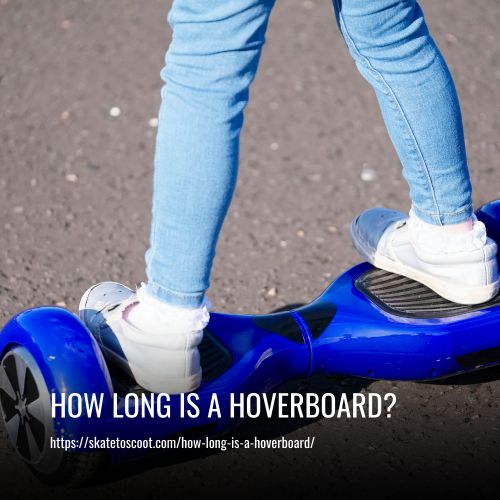
Age recommendations are a starting point, but they’re blunt. A tall 10-year-old can outgrow a “kid’s” board faster than the battery degrades. Your body’s geometry, specifically your inseam and shoe size, gives you a better fit.
Here’s a method that actually works:
- Know your inseam. Stand against a wall, place a book between your legs as if it’s a saddle, and measure from the top of the book to the floor. That’s your inseam.
- Match inseam to board length. A rider with a 24-inch inseam will generally be comfortable on a 24-inch board. A 28-inch inseam needs the longer deck of a 10-inch wheel model.
- Check footpad width. Your shoes should fit completely on the pads without toes or heels hanging off the sides. Most pads are 8-9 inches wide; size 12 shoes are about 11 inches long. If your shoe is longer than the pad is wide, you’ll be balancing on a too-small platform.
I learned this the hard way recommending boards by age alone. A student of mine, a lanky 13-year-old, was struggling with a 6.5-inch wheel board he’d outgrown. He was within the age and weight limits, but his stance was cramped, his heels hung off, and he couldn’t find a stable center. We moved him to an 8-inch model with a longer deck, and his control improved immediately. The board wasn’t wrong; it was just too short for his proportions.
The key is to plan for the next size up as they grow.
Weight, Capacity, and What “How Long” Really Means
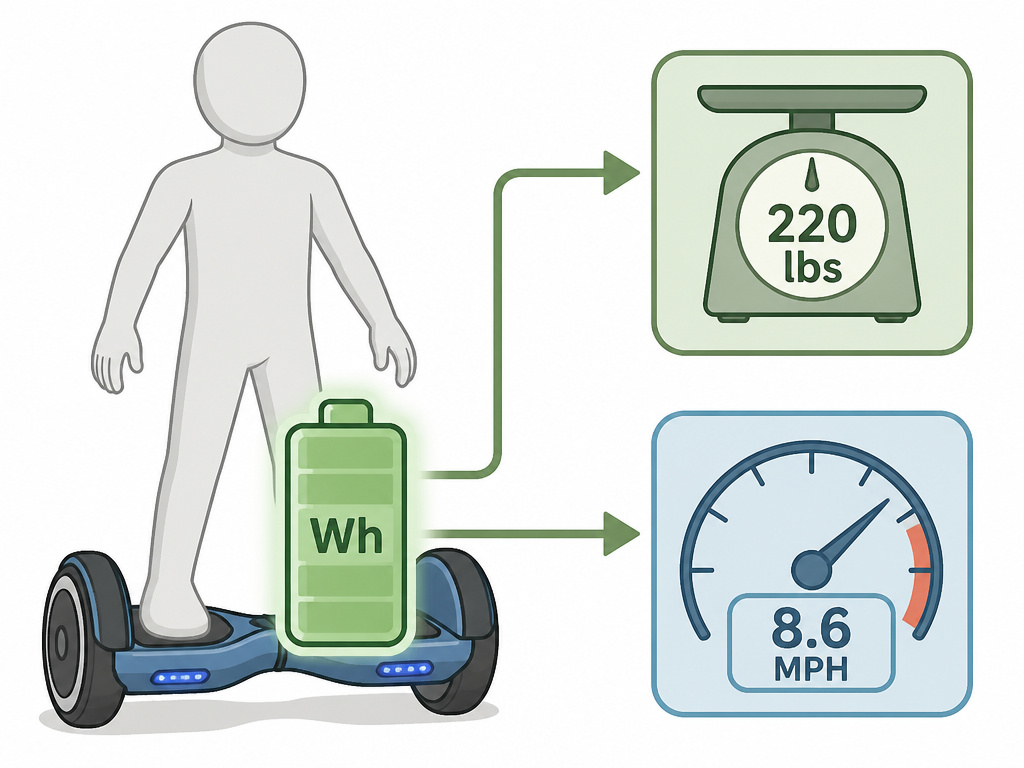
The phrase “how long is a hoverboard” splits into two distinct questions: physical dimensions and battery duration. Conflating them is a common mix-up in online forums.
Physical Length & Weight: We’ve covered length. Weight is the other half. This is on the very light end. This matters for portability, can the rider carry it up stairs? Does it fit in a locker?
Battery Life & Range: This is the functional “how long.” It’s measured in miles or minutes of ride time, which stems from the battery’s watt-hour (Wh) rating. You calculate Wh by multiplying voltage (V) by amp-hours (Ah).
- Sharper Image Hover Board: 36V * 4.4Ah = 158 Wh
- Jetson Stereofly: 25.2V * 4.0Ah = 100.8 Wh
- Bluewheel HX310s: 25.2V * 4.0Ah = 100.8 Wh
A higher Wh generally means a longer range. The Sharper Image manual claims a 12-mile maximum range. The Jetson Stereofly manual cites a 60-minute maximum run time under specific test conditions (220 lb rider, 77°F, 8.6 MPH). Real-world results will be lower due to hills, rider weight, and temperature.
Before you start: Never use a charger simply because the plug fits. The CPSC micromobility injury report links fires to incompatible chargers. Only use the supplied charger, and never charge unattended or overnight.
The weight limit is the bridge between the board’s size and its battery life. Heavier riders demand more from the motor, draining the battery faster. Exceeding the limit stresses the frame and electronics. Sources specify different maximum weight limits: the Jetson Stereofly manual states 220 lbs, the Sharper Image Hover Board manual states 250 lbs, and the Bluewheel HX310s manual states a range of 20-100 kg (approx. 44-220 lbs). Always respect the lower limit, too; very light riders might not trigger the foot sensors consistently.
Safety, Certifications, and Long-Term Size
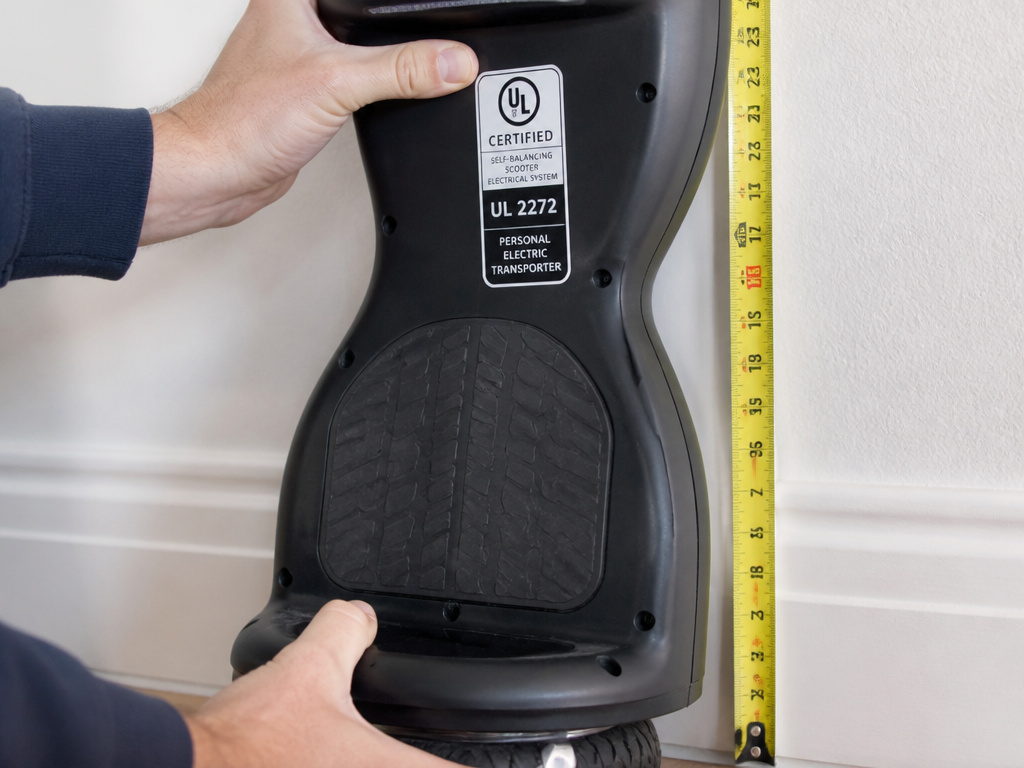
Physical size is a one-time check. Safety certification affects the board’s entire hoverboard lifespan. This is essential.
UL 2272 is the safety standard that covers the entire electrical system. As the government hoverboard hazard notice states, even UL 2272 compliance doesn’t guarantee no fires, but it’s the baseline. The Jetson Stereofly manual explicitly lists “Product UL Certification: 2272.” Any board without this certification, especially those bought before 2016 or from dubious online sellers, poses a documented fire risk.
Storage dimensions bring us back to physical size. You need to know not just the board’s specs but also the space it will occupy when not in use. Will it stand vertically in a closet? Does it have a handle for carrying? Some models have telescoping handles that add height but make transport easier, a crucial feature if
Consider the board’s lifecycle. Factor that into your size decision: buying a board they’ll grow into is smarter than buying one they’ll grow out of in six months.
What terrain can a hoverboard handle based on wheel size?
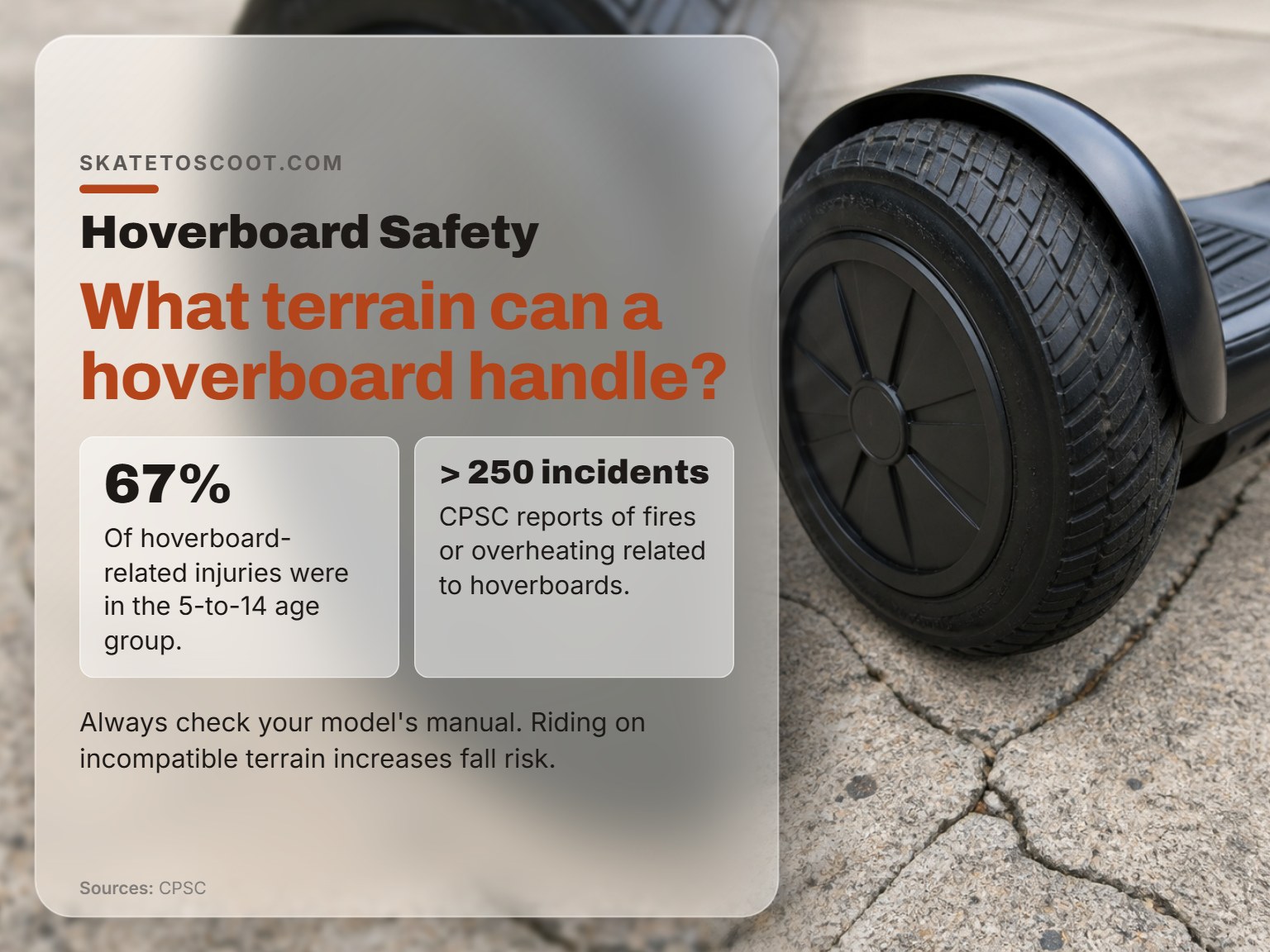
Your hoverboard’s wheel size is the primary factor in where you can ride. Larger wheels, typically over 8 inches, can better handle cracks, small pebbles, and slightly uneven surfaces like smooth pavement transitions. They lack the necessary ground clearance and shock absorption for outdoor use. Always check your specific model’s manual for its intended environment. Riding on incompatible terrain, especially with smaller wheels, can lead to a loss of balance, damage to the board, and increased risk of a fall.
Frequently Asked Questions
What size hoverboard for a 7 year old?
Look for a 6.5-inch wheel model. These boards are typically 23-24 inches long and lighter (often under 20 lbs), making them manageable. Ensure the rider meets the minimum weight requirement (often around 44 lbs) so the foot sensors engage properly. A lighter board is safer and more empowering for a young rider.
What is the best hoverboard for a 7-year-old?
The “best” model balances safety, size, and simplicity. Prioritize UL 2272 certification above all. Then, choose a 6.5-inch wheel board from a brand like Hover-1 or Jetson. Avoid complex apps or high-speed modes; a beginner speed setting (like the Jetson Stereofly’s default “Beginner” mode) is essential. The best board is the one that fits them now and has a safety certificate.
What size hoverboard for a 12 year old?
12-year-old is often ready for an 8-inch wheel model. This provides a smoother ride and more stability as they grow. Match the board length to their inseam. If they are tall or heavy for their age, or if they’ll ride on rougher surfaces, consider a 10-inch model. Always verify the specific model’s maximum weight capacity against their weight.
How do I measure my hoverboard?
Place it on a flat surface. Use a tape measure for the total length from the very front to the very back of the shell. Then measure the width at the widest point (usually across the wheel housings). Finally, measure the width and length of the actual footpad, the flat, textured area where you stand. These three numbers (total length, total width, footpad width) give you the complete picture for storage and fit.
Can a hoverboard be too big?
Yes. If the board is too long for the rider’s inseam, their stance will be too narrow or too wide, compromising balance and control. If it’s too heavy, they won’t be able to safely carry it when needed. A board that exceeds their skill level (like a powerful 10-inch off-road model for a beginner) is also “too big” for their ability. Match the tool to the task.
The Bottom Line
Stop looking at age charts. Start with the rider’s inseam and shoe size, then find a board whose footpad accommodates both. The total shell length (23-28 inches) matters most for your storage space and the board’s wheel size.
For most kids under 10, a 6.5-inch wheel board is the right physical size. For teens and adults, an 8-inch wheel strikes the best balance. Only go for a 10-inch model if you need its off-road capability and you have the storage space for its larger frame.
One final, essential filter: UL 2272 certification. No size, price, or cool feature outweighs a verified safe electrical system. The Wikipedia hoverboard entry covers the cultural fascination, but the CPSC reports document the real-world stakes. Buy the size that fits the rider, from a brand that built in the safety.
