How Long Do Longboard Wheels Last? The 5 Signs to Replace
This post contains affiliate links. As an Amazon Associate, we earn from qualifying purchases.
Longboard wheels last from a few weeks to several years. The exact lifespan depends on three primary factors: rider weight and style, pavement quality and temperature, and wheel hardness and quality. For a casual rider, sources offer different estimates: Skate Guiders suggests wheels last an average of six months or more for non-professional skaters, while Beagle Bearings suggests regular street skaters may replace wheels every 8–18 months.
That range isn’t a guess. It’s the direct outcome of how polyurethane reacts to pressure, heat, and friction. The chemical formula of the wheel, the weight of the person riding it, and the texture of the road beneath it are in a constant negotiation. Get one variable wrong, like choosing a 78a wheel for aggressive downhill slides, and you’re buying replacements monthly. Match them right, and a set of wheels becomes a season-long companion. A key question riders often ask is: how long do longboard wheels last?
What follows: a breakdown of the physics behind wheel wear, the hard numbers from manufacturer recalls and pro reports, and a maintenance schedule that turns “months” into “over a year.” You’ll also learn why a 2009 government recall still matters for buying wheels today.
Key Takeaways
- Wheel life spans from less than a week for soft, high-wear models like the 78a Hawgs Tracers under constant sliding to several months or more for harder, quality urethane like the 83a Orangatang Kilmer.
- The U.S. Consumer Product Safety Commission (CPSC) recalled specific Orangatang ‘In-Heat’ wheels in 2009 due to core shear and blow-out hazards, a reminder that manufacturing defects are separate from normal wear.
- Heat is a primary destroyer; riding on 100°F pavement accelerates wear dramatically, and electric skateboard motors can generate enough heat to void some warranties.
- Rotate your wheels every few weeks to combat directional coning, especially if you favor one type of slide, and clean them with warm soapy water, never harsh chemicals like acetone or gasoline.
- Replace wheels when you see flat spots that cause vibration, significant coning that reduces stability, or chunking that exposes the core, not just when they look small.
The 3 Biggest Factors That Decide Wheel Life
Forget the average; your wheel’s lifespan is a personal equation when you compare a how long do longboard wheels last. Three variables dominate it: what you’re made of, what the road is made of, and what the wheel itself is made of.
The chemical manufacturer BASF explains that wheel hardness (durometer) is directly linked to the ratio of polyurethane hard segments to PolyTHF soft segments in the urethane formula.
Your weight and riding style are the first multiplier. Heavier riders burn through wheels quicker, it’s simple physics. More mass equals more force grinding the urethane into the pavement. Your style matters more. A commuter who mostly pushes and carves will get extended use from a wheel. A downhill racer using slides for speed control will experience faster wear. A freerider dedicating sessions to big, thane-leaving stand-up slides? That’s where you see the one-week lifespan reports. The Freebord blog identifies a “wheel casher” scenario: a heavy rider on a steep grade, in high heat, sliding aggressively on poor pavement. That combo can obliterate a set in a single demanding run.
Pavement quality and temperature are the second. Smooth, fresh asphalt is kind to urethane. Old, chip-sealed roads that resemble a cheese grater will file your wheels down with every pass. Temperature is even more critical. The Freebord source states plainly: “Heat is a wheel destroyer.” On 100°F pavement, the road’s ambient heat combines with friction heat from sliding, softening the urethane and allowing it to wear away faster. Conversely, cold pavement is forgiving. Moisture also reduces traction and wear, which is why you see riders practicing slides on damp roads.
Wheel hardness and urethane quality are the final lever. This is where brand and model specifics enter. A 78a durometer wheel is soft, grippy, and comfortable but wears quickly, especially if it’s a formula designed to “thaned” heavily. The 78a 67mm Hawgs Tracers last “less than a week of consistent sliding.” On the other end, an 83a 69mm Orangatang Kilmer uses a different urethane blend; the Motion Boardshop notes it can last “months upon months of consistent sliding.” High-quality polyurethane wheels are cast at low processing temperatures of about 50 degrees Celsius.
| Factor | Increases Lifespan | Decreases Lifespan | Mechanism |
|---|---|---|---|
| Rider Style | Carving, commuting, straight-line bombing | Aggressive freeriding, frequent power slides | Slides grind urethane directly off the wheel’s contact patch. |
| Pavement & Temp | Smooth, cold, or damp surfaces | Rough, hot (e.g., 100°F+), dry surfaces | Heat softens urethane; abrasive surfaces act like sandpaper. |
| Wheel Specs | Higher durometer (e.g., 83a+), quality urethane formulas | Lower durometer (e.g., 78a), “high-wear” thaneing formulas | Harder urethane resists abrasion; specific formulas sacrifice durability for slide feel. |
When to Replace Your Wheels: The 5 Signs
Wheels rarely explode. They retire through a series of degradations. Knowing the difference between cosmetic scuffing and structural failure saves money and prevents accidents.
Flat spots are the most common audible sign. They happen when a wheel locks up in a slide and drags on one section of its circumference. A minor flat spot might cause a rhythmic thump-thump-thump as you roll. A major one vibrates the entire board, making it feel like you’re riding over a washboard. That vibration travels up your trucks and into your feet, a clear sensory cue it’s time to rotate or replace.
Coning is uneven wear where one side of the wheel becomes noticeably thinner than the other. On a directional board setup, the back toeside wheel often cones first. You’ll feel it as a subtle but persistent pull to one side, as if your trucks are misaligned. Visually, the wheel profile looks like a trapezoid instead of a rectangle.
Chunking is when pieces of urethane break away from the wheel’s edge or contact patch, leaving gashes or holes. This often happens from impacting curbs or rocks at speed. Chunking is a structural issue. If it exposes the plastic core beneath the urethane, the wheel has lost its integrity and can fail unpredictably.
Significant diameter loss is a simple measurement. When your 70mm wheels wear down to 65mm or less, they’ve lost a chunk of their roll speed and momentum. They’ll also sit lower to the ground, increasing the chance of bite if you have loose trucks. A cheap caliper or even a marked piece of paper can help you track wear by measuring your longboard wheels over time.
Loss of rebound and speed is the silent killer. You might not see dramatic flat spots, but the wheel’s internal structure, the “spring” in the urethane, wears out. The board feels dead, sluggish, and slow to accelerate. This is often the first sign for commuters that a wheel is past its prime, even if it still looks okay.
Common mistake: Riding wheels with deep flat spots because “they still roll.” A severely flat-spotted wheel has a smaller, uneven contact patch that reduces control, especially during slides or high-speed carves, and the vibration can loosen other hardware over time.
The 2009 Orangatang Recall & What It Teaches Us
Normal wear is one thing. A manufacturing defect is another. In June 2009, the U.S. Consumer Product Safety Commission (CPSC) announced a recall that is still a critical case study for wheel safety.
Loaded Boards, the distributor, recalled specific Orangatang “In-Heat” wheels. The models were the 75mm/purple/83a durometer and the 75mm/orange/80a durometer, sold in sets of four for about $55 between March and April of that year. The CPSC’s recall notice cited a core shear or blow-out hazard. The company had received 10 reports of wheels separating. No injuries were reported, but the risk was clear: a wheel disintegrating at speed could cause a serious crash.
This recall underscores the difference between a warranty issue and a safety defect. Wear like coning, flat spots, thane lines, and shrinkage is explicitly not covered under Orangatang’s Limited Lifetime Warranty, which began in 2014. The warranty does cover defects like core separation, voids, and cracked cores, the very issues behind the 2009 recall. It also specifically excludes damage from “excessive heat from electric skateboard motors, brakes, or hubs,” highlighting a modern failure mode most riders don’t consider.
The lesson is twofold. First, even reputable brands can have production flaws, so it pays to inspect new gear. Second, understand what your warranty actually protects. It’s for catastrophic failure, not the gradual erosion of performance.
How to Make Your Wheels Last Months Longer
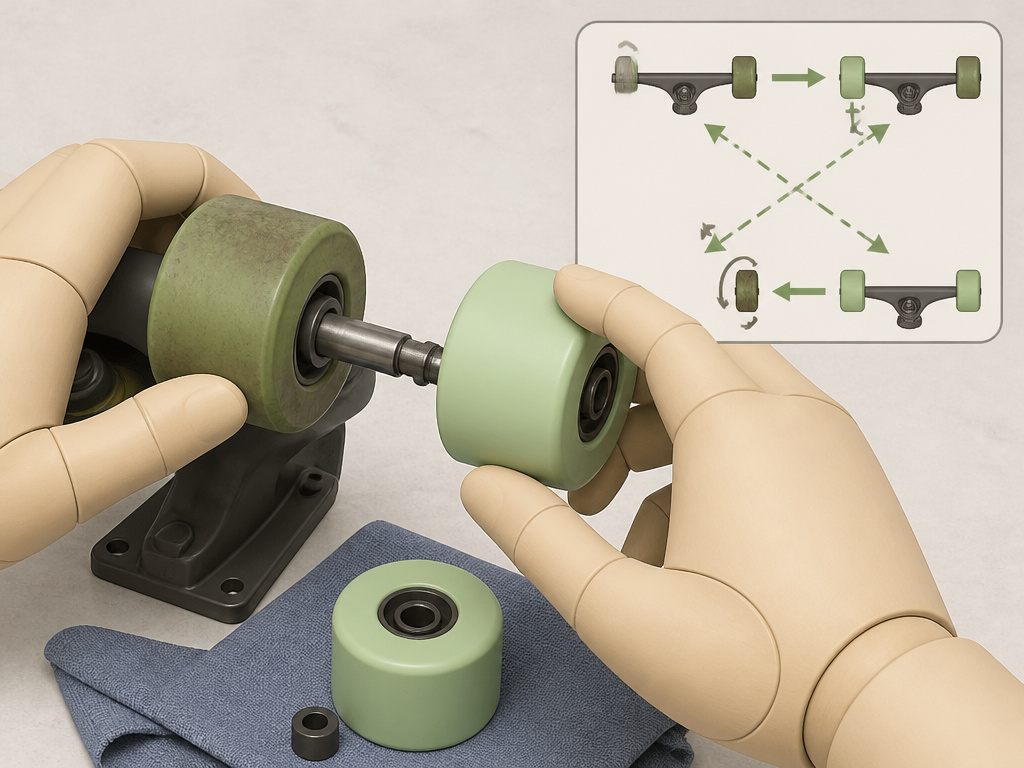
Maintenance is the difference between replacing wheels quarterly and annually. It’s not about special products; it’s about consistent, simple habits.
Rotate your wheels. This is the single most effective tactic. If you predominantly do heelside slides, your back right wheel (for regular stance) will wear faster. Every few weeks, or whenever you notice a size difference, swap the front and rear wheels, and flip them on the axle so the more worn edge moves to the inside. This promotes even wear and prevents premature coning. A guide to wheel rotation details a simple pattern.
Clean them properly. Dirt and grit act as abrasives. After riding on wet or dirty roads, take five minutes. Remove the wheels and bearings. Wash the bare urethane in warm, soapy water with a soft brush. Rinse and let them dry completely before reassembly. The Longboard Bible guide is adamant: avoid bleach, acetone, gasoline, and wire brushes. These chemicals can break down the urethane or scratch it, creating weak points.
Store your board wisely. Never leave it in a hot car, in direct sunlight, or leaned against a heater. Heat accelerates the natural breakdown of urethane over time. Store it indoors in a dry, temperate place. After a wet ride, wipe the board down and remove the wheels to let the bearings and spacers dry out, preventing rust that can seize components and complicate future wheel replacements.
Tighten axle nuts correctly. Over-tightening pinches the bearings and causes them to drag, creating friction and heat. Under-tightening allows side-to-side play (wheel wobble), which can stress the urethane unevenly. Tighten until there is almost no side play, but the wheel still spins freely for several seconds when flicked. This is a key part of maintaining your longboard.
| Maintenance Task | Frequency | Action | Why It Works |
|---|---|---|---|
| Visual Inspection | Weekly (commuters) / Monthly (casual) | Check for flat spots, coning, chunking, loose nuts. | Catches small problems before they affect ride or safety. |
| Wheel Rotation | Every 2-4 weeks (or when wear is visible) | Swap front/rear and flip wheels on the axle. | Fights directional coning and promotes even wear. |
| Deep Clean | After wet/salty rides or when visibly dirty | Remove bearings, wash urethane in soapy water, dry fully. | Removes grinding paste of dirt and grit that accelerates wear. |
| Bearing Care | Every 3-6 months, or when sounding gritty | Clean, dry, lubricate with light skate-specific oil. | Smooth rolling reduces drag heat and strain on wheel edges. |
Hard vs. Soft Wheels: The Lifespan Trade-Off
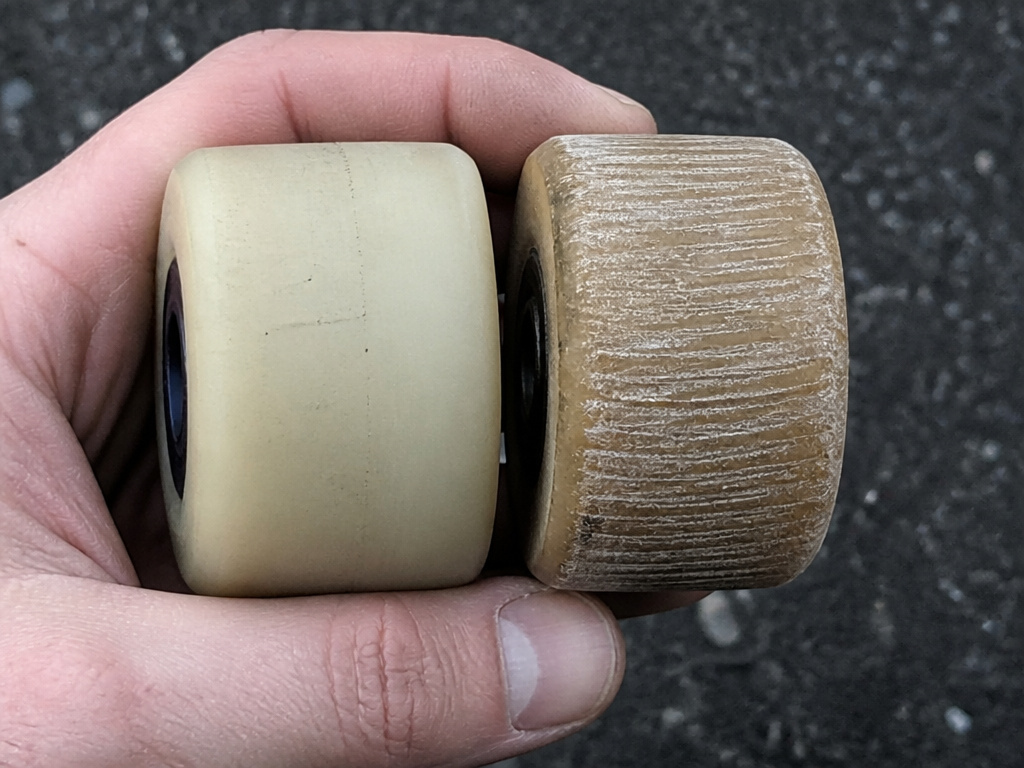
The durometer number on your wheel isn’t just about feel; it’s a wear-rate prediction central to how long do longboard wheels last. This is where the community’s opinion sometimes diverges from the manufacturer’s stance.
Harder wheels (83a and above) generally last longer. The urethane is more resistant to abrasion. They’re also less likely to deform under pressure, reducing coning. The trade-off is often a less forgiving ride and a slicker, more challenging slide initiation. Many downhill and high-speed cruisers prefer this trade for the added durability.
Softer wheels (80a and below) offer more grip, a smoother ride over cracks, and a buttery, predictable slide. However, they wear faster. The community has embraced this for freeriding, where leaving visible “thane lines” is part of the culture. Sources reflect different perspectives on rapid wear: the Motion Boardshop notes wheels that leave a lot of thane are “a ton of fun,” while Orangatang’s warranty states thane lines are “not a defect; that’s a wheel doing its job.”
Your discipline decides. For dancing or freestyle, where you need grip for pivots and landings, a medium-soft wheel might be ideal, and you’ll accept faster wear. For pure commuting, a harder, smaller wheel will last longer and maintain speed. To match durometer to your primary style, consult a detailed guide to longboard wheels.
How wheel size/diameter affects wear and ride
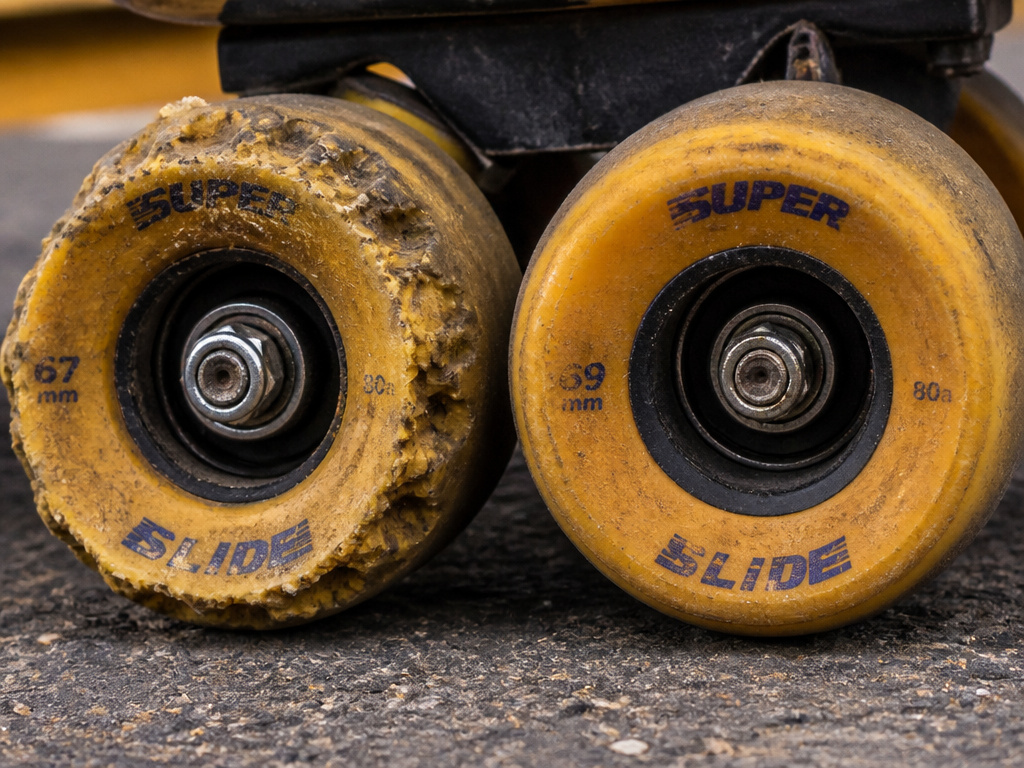
Larger diameter wheels have a higher surface area in contact with the ground, which can distribute wear over a broader patch. However, the specific riding style has a greater impact on lifespan than size alone. For example, the 78a 67mm Hawgs Tracers wheels last less than a week of consistent sliding, while the 83a 69mm Orangatang Kilmer wheels last months upon months of consistent sliding. The construction quality of the polyurethane and the rider’s technique are more critical factors than a few millimeters of diameter when predicting how long a wheel will last.
Difference between skateboard and longboard wheel longevity
Skateboard wheels are typically smaller and harder, designed for tricks and park riding on smooth surfaces, which generally leads to slower wear from abrasion. Longboard wheels are larger and softer, built for cruising and sliding on pavement. This sliding action is the primary wear factor. A longboard wheel used aggressively for sliding can be destroyed in days, while a standard skateboard wheel used for street skating typically lasts longer. The difference ultimately comes down to the intended use: sliding versus non-sliding disciplines.
Step-by-step guide to replacing wheels
Start by removing the axle nut with a skate tool or wrench. Pull the old wheel off the axle. Before mounting the new wheel, you can take the opportunity to clean the bearing or install a fresh one. Slide the wheel onto the axle, ensuring the bearing is seated properly against the truck hanger. Tighten the axle nut until there is almost no side-to-side play, but the wheel must still spin freely. Over-tightening will compress the bearing and cause it to fail. Once all four wheels are installed, give the board a test roll to check for smooth rotation.
Frequently Asked Questions
Do longboard wheels go bad if you don’t use them?
Yes, but slowly. Urethane can dry out and become brittle over many years, especially if stored in hot, dry, or sunny conditions. This process, called oxidation, reduces the wheel’s rebound and makes it more prone to chunking. Wheels stored properly indoors can remain usable for a decade, though they may not perform like new.
Is 78a too soft for street skating?
For street skating on a traditional skateboard, 78a is very soft and would be slow and grippy on smooth concrete. For longboarding on actual streets, 78a is a popular choice for cruising and carving because it absorbs vibrations. However, for street-like trick skating on a longboard, a harder wheel (86a-95a) would be more typical.
Can you fix flat-spotted longboard wheels?
You cannot truly fix a flat spot. You can sometimes minimize a minor one by sanding the high points down with fine-grit sandpaper, but this is tedious and removes healthy urethane. The better solution is to rotate the wheel so the flat spot is on the inside edge, where it contacts the ground less, or to relegate the wheel to a less critical position on your board.
How often should I replace my longboard bearings compared to my wheels?
Bearings need service or replacement more often than wheels. Clean and lubricate bearings every 3-6 months of regular use. Wheels, depending on the factors above, can last 6-18 months or longer. You’ll likely go through several bearing maintenance cycles before a wheel replacement is needed.
What should I do with old, worn-out longboard wheels?
Recycling options for urethane wheels are limited. Some riders drill holes in them to make DIY fingerboard wheels or garden markers. The most responsible disposal is through municipal hazardous waste facilities, as urethane is a synthetic rubber. Never burn them, as they can release toxic fumes.
Before You Go
If you take one thing from this, let it be this: wheel life is a choice you make every time you step on your board. Choosing a soft, thane-happy wheel for a weekend of sliding means accepting a short, glorious lifespan. Mounting a hard, durable cruiser wheel for a year of commutes is a different kind of satisfaction.
The numbers from the sources tell a clear story. At the extremes, you have the 78a Hawgs Tracers lasting less than a week under fire, and the 83a Orangatang Kilmers lasting months. Sources offer different reports: Freebord states most of its riders report wheels last for months, while Skate Guiders states high-quality wheels last approximately two months if used constantly. Your job is to figure out where you land on that spectrum and buy, and maintain, accordingly.
Start by checking your current wheels tonight. Look for coning, feel for flat-spot vibration, and measure their diameter. That gives you a baseline. Then, decide what you want from your next set. Is it mileage or feel? For most riders looking for a balanced, durable all-rounder, a wheel in the 80a-83a range from a brand offering a clear warranty like Orangatang’s Limited Lifetime Warranty is the smartest starting point. From there, you can dial in toward more grip or more slide as your style evolves.
