Do You Need Skate Shoes to Longboard? The Safety Baseline
This post contains affiliate links. As an Amazon Associate, we earn from qualifying purchases.
You do not need specialized skate shoes to start longboarding, but the right flat-soled athletic shoes are an essential safety requirement according to the U.S. Consumer Product Safety Commission. For casual cruising, some sources like Boardcoast.com say running shoes or sturdy sneakers work for beginners, while others in the community warn against them for performance reasons. If you progress to faster speeds, frequent footbraking, or technical disciplines like downhill, dedicated skate shoes become essential for control, durability, and injury prevention.
That flat-sole directive from the CPSC is the line between a safe ride and a preventable accident. It’s not about brand loyalty; it’s about physics. Your foot needs a stable, predictable platform to manage the board. Do you need skate shoes to longboard? The answer is unequivocally yes.
What follows is a breakdown of that safety rule, where skate shoes outperform regular sneakers, and how to pick footwear based on whether you’re commuting or carving hills.
Key Takeaways
- The U.S. Consumer Product Safety Commission mandates flat-soled shoes for skateboarding safety, this is the absolute baseline.
- For casual cruising and beginners, sturdy running shoes or sneakers are acceptable, but be prepared for rapid wear if you footbrake.
- Skate shoes provide superior board feel, grip, and durability, making them necessary for speed, frequent braking, or technical riding.
- Footbraking destroys soft soles; shoes with thin, hard rubber outsoles last months longer than cushioned running shoes.
- Suede uppers withstand grip tape abrasion far better than canvas, a key factor in a shoe’s lifespan.
The Safety Baseline vs. Performance Debate
The official answer from safety organizations to the do you need skate shoes to longboard question is clear and simple. The U.S. Consumer Product Safety Commission (CPSC) states riders should “wear flat-soled shoes.” This is echoed by medical bodies like the American Academy of Orthopaedic Surgeons, which advises “closed, non-skid, supportive shoes.” These aren’t performance suggestions; they are hazard mitigation. A flat sole maximizes contact with the board, reducing the chance of your foot rolling or slipping off during a push or a carve.
Where this goes sideways: Using thick-soled running shoes for frequent footbraking. The soft foam wears through rapidly, leaving you with no braking power and a hole in your shoe.
Manufacturers of powered boards, like Evolve Skateboards, also specify “athletic shoes (lace-up shoes with rubber soles)” in their Hadean model manual. They prohibit sandals and barefoot riding. This agreement establishes a safety floor: your shoe must have a flat sole. Evolve Skateboards additionally specifies ‘lace-up shoes with rubber soles’.
The debate begins when you move from “safe enough” to “optimal,” a shift central to the do you need skate shoes to longboard discussion. A blog like Boardcoast.com argues skate shoes are “essential” for getting the most out of a session, citing better grip, board feel, and durability. This is a performance claim, not a safety one. The safety sources don’t mention skate shoe brands; they describe a functional requirement. The performance sources say meeting that requirement with a specialized tool yields better results.
What Makes a Shoe ‘Good’ for Longboarding?
Forget marketing. Look at the shoe’s construction and how it interacts with three longboarding actions: pushing, gripping the deck, and footbraking.
The sole is everything. It needs to be flat for stability and made of a hard, grippy rubber. Skate shoe soles are made of a hard, grippy rubber. Its job is to stick to the grip tape without being so soft it melts away when you drag your foot. A running shoe’s deep, soft wedge heel throws your weight back, messing with your center of balance and making precise board control harder.
Upper material dictates lifespan. Grip tape is essentially sandpaper on your deck. Every time you adjust your footing, you’re sanding your shoe. Suede handles this abrasion gracefully, fraying slowly. Canvas disintegrates. I’ve watched students burn through the canvas toe of a classic sneaker very quickly when practicing kick-turns.
Cushioning location matters. Impact protection under the heel is valuable for absorbing push strokes and any unexpected steps off the board. However, thick cushioning across the entire foot, like in most running shoes, dulls board feel, that critical sensory feedback telling you exactly where your weight is distributed. For downhill riders, that feel is absolutely essential.
| Feature | Ideal for Longboarding | Why It Matters | Common in Running Shoes? |
|---|---|---|---|
| Sole | Thin, flat, hard rubber | Provides grip, board feel, durability for braking | No (thick, cushioned, heel wedge) |
| Upper | Suede or reinforced synthetic | Resists abrasion from grip tape | No (often mesh or lightweight canvas) |
| Toe Area | Reinforced or extra stitching | Withstands repeated foot repositioning | Rarely |
| Heel Cushion | Targeted, firm padding | Absorbs impact from pushing without killing board feel | Yes, but often overly soft |
| Fit | Snug, supportive | Prevents foot movement inside shoe during slides/brakes | Varies |
When Regular Shoes Are Acceptable (And When They’re Not)
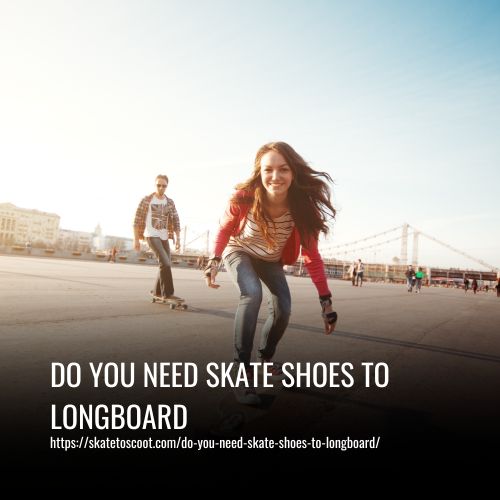
Consider the beginner phase. If you’re just starting, rolling around a parking lot or doing short commutes on smooth pavement, your existing sneakers are fine. The American Academy of Pediatrics safety article implicitly supports this by focusing on the flat sole rule, not a brand mandate. The goal is to get you riding safely, not gatekeep with gear.
The line gets crossed when you add speed, hills, or frequent braking. A Reddit user in the longboarding community put it bluntly: “I tried out some shoes that looked like skate shoes but were not made by a skate company. I had a hole all the way through the sole in about a week.” That’s the footbrake tax. Dragging your foot on asphalt is the single most destructive thing you can do to a shoe. Running shoe foam vanishes against pavement.
Common mistake: Choosing shoes for comfort over sole durability once you start footbraking. You’ll replace comfortable shoes every month, while a less-cushioned but durable pair lasts a season.
Another subtle pitfall is the high heel on running shoes. It changes your ankle angle slightly, which can strain your Achilles tendon during long pushing sessions common in long-distance pumping (LDP). For pure LDP, some riders even prefer minimalist “barefoot” style shoes for maximum sensitivity, though that’s an advanced choice.
The Skate Shoe Advantage: Grip, Feel, and Longevity
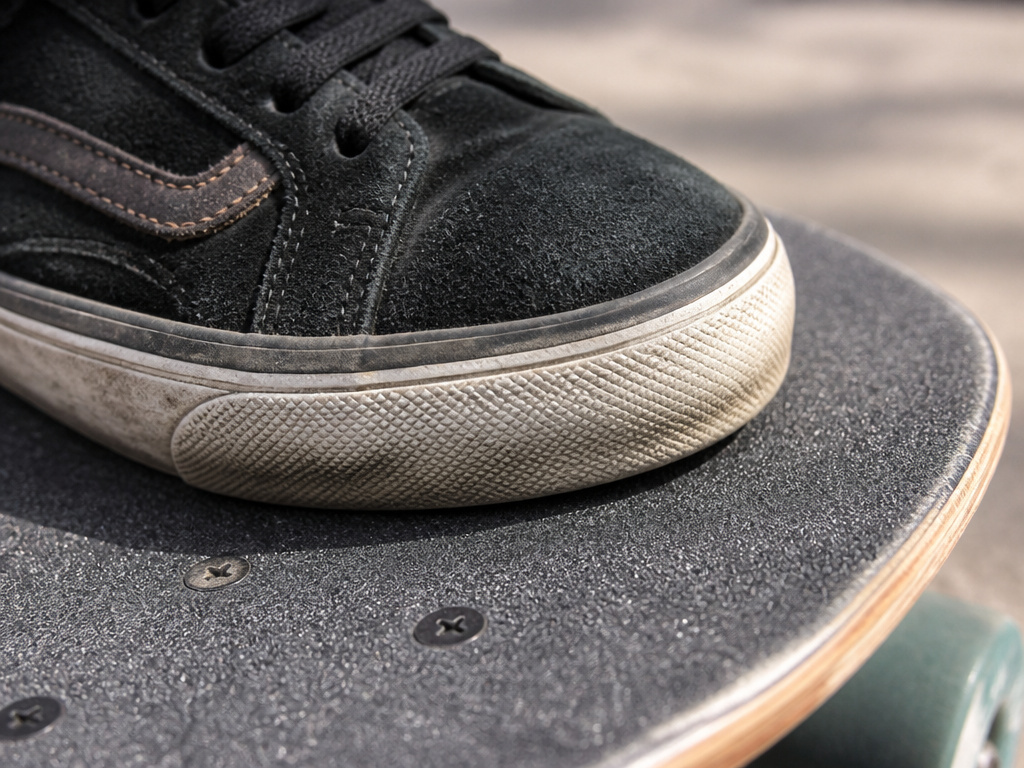
Once you’re past the basics, the benefits of a purpose-built shoe become tangible. It’s not hype.
Grip isn’t just about sticking to the board; it’s about predictable traction. Skate shoe rubber is formulated to grip the sandpaper-like grip tape securely. When you’re leaning into a hard carve at speed, you need to trust your feet won’t slip. That trust allows you to commit to the turn.
Board feel is the biggest surprise for most new riders. You’d think a thinner sole would be harsher, but it actually gives you more information. You feel the concave of the deck, the vibration of the wheels on the pavement, the exact point where your weight is centered. This feedback loop is how you learn to control the board instinctively, not intellectually. It’s the difference between driving a sports car and a luxury SUV, one tells you everything about the road, the other insulates you from it.
Durability is where the investment pays off. Brands like Vans, Nike SB, and Etnies build shoes to be abused. Double or triple stitching in the ollie area, rubber toe caps, and that tough suede upper are all reinforcements against specific skateboarding stresses. While longboarding doesn’t involve ollies, the same reinforcements protect against grip tape sanding and footbraking wear. A pair of skate shoes might outlast multiple pairs of running shoes used for the same riding.
I learned this the hard way early in my coaching. I used to think any flat sneaker was fine. Then I spent a season watching students on a tight budget burn through the sides of their canvas shoes, their feet getting blisters from the frayed material, while the one kid in proper suede skateboarding shoes just kept rolling, his shoes scuffed but intact. The cost per mile was undeniably lower for the skate shoes.
Recommendations by Riding Discipline
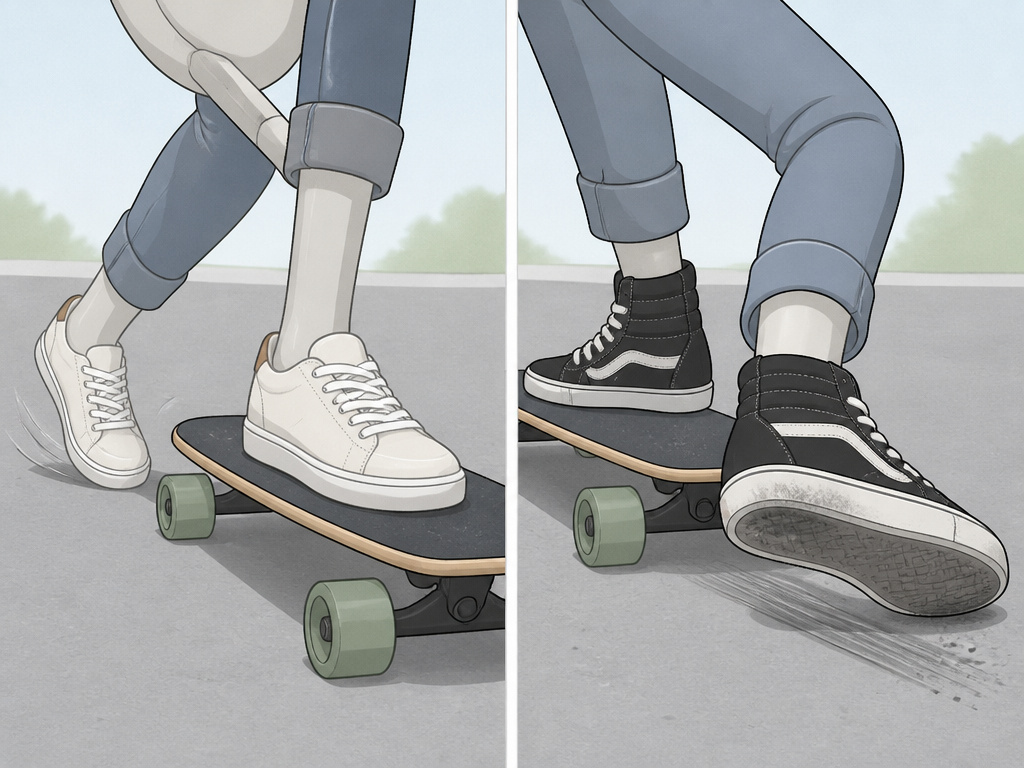
Your longboarding style should dictate your shoe choice more than any brand name. The needs of a downhill racer and a weekend cruiser are worlds apart.
Cruising & Commuting: You’re covering distance at moderate speeds. Comfort for pushing is key, but you still need a durable sole for occasional braking. Here, a versatile skate shoe works well. They offer cushioning, a flat sole, and suede durability. If you’re truly just rolling smooth bike paths and never braking, a sturdy, flat-soled sneaker can suffice, but know the canvas will wear quickly if you start practicing slides or stops. We have a deeper dive on are Converse good for this specific use case.
Long-Distance Pumping (LDP): This is about efficiency and connection. Weight and sensitivity matter. Many LDP riders favor lightweight skate shoes or even minimalist trainers. Some riders favor lightweight skate shoes or minimalist trainers for their balance of cushion and board feel. Some hardcore pumpers use Vibram five-finger shoes for an almost barefoot connection.
Downhill & Freeride: This is where dedicated skate shoes are non-optional. You need maximum grip during pre-drift slides, toe-side heelside carves, and when running out a bail. The soles need to be extremely grippy yet slide predictably when you need them to. Durability is critical for frequent footbraking to scrub speed. Dedicated skate shoes with stiff cupsole construction are benchmarks here. The stiff cupsole construction provides the support and ankle protection you want when riding at high speeds.
The part nobody mentions: Your ideal longboarding shoe might change as your skills do. A beginner cruiser needs comfort and a basic flat sole. An advancing rider needs durability for braking. A downhill rider needs high-performance grip and slide control. It’s okay to buy a tiered shoe.
How to Extend the Life of Any Shoe Used for Longboarding
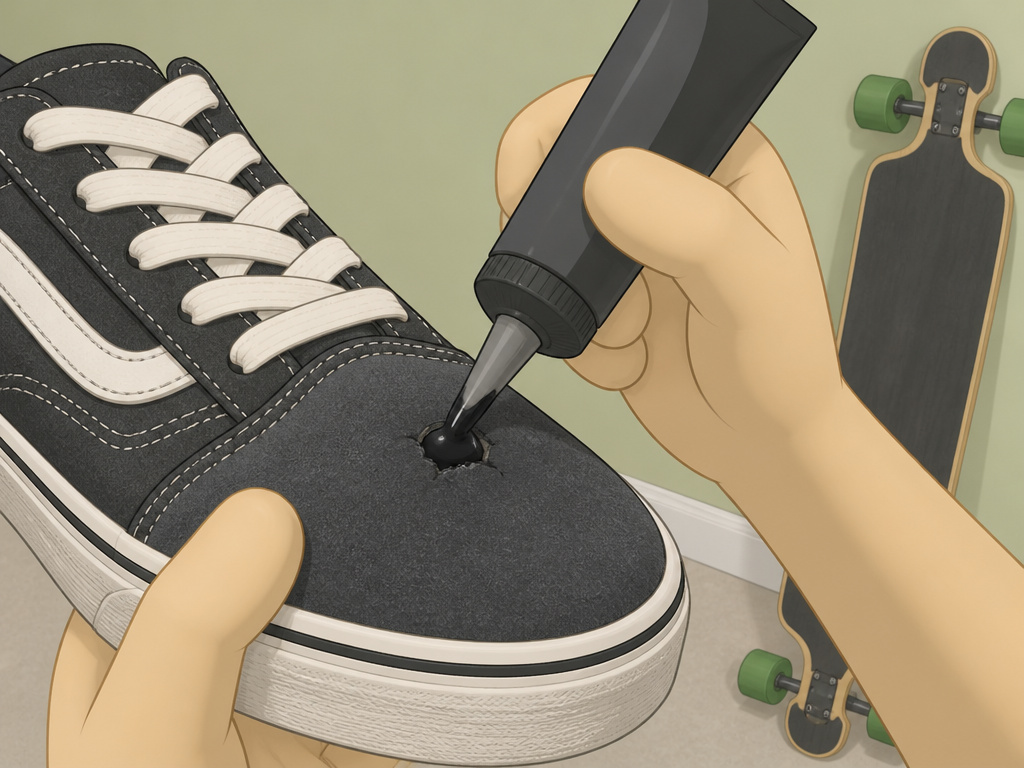
Even the best shoes take a beating. A few habits can stretch their lifespan dramatically.
First, rotate your shoes. Don’t ride in the same pair every day. Let them dry out and decompress. The foam and adhesives last longer. Second, clean off grip tape dust. A quick brush to wipe away the abrasive grit that collects on your soles after each session reduces ongoing sanding. Third, learn to footbrake efficiently. A heavy, flat-footed drag wears the sole fastest. A lighter, more glancing brake uses less material. It’s a skill that saves your shoes and your speed.
When a hole does appear, don’t toss the shoe immediately. Shoe Goo is a skater’s secret weapon. This thick adhesive can patch small holes in suede or reinforce a thinning sole. It’s ugly but effective, adding weeks or months to a shoe’s life. It’s a far more economical fix than frequently buying new shoes.
Finally, understand that riding a longboard without shoes is never an option, no matter how hot it gets. The risks from loss of control, lack of protection, and direct exposure to the grip tape make it an instant violation of every safety guideline. Proper footwear is part of the sport’s basic equipment, just like a helmet.
What are cupsole and vulcanized skate shoes?
Skate shoes are built differently from regular shoes to handle the unique demands of board sports. According to Boardcoast.com, skate shoe soles are thinner to provide maximum board feel, allowing you to sense the deck beneath your feet. Boardcoast.com notes that skate shoes have a flat sole that makes contact with the entire surface, offering more grip and a larger surface area for control. While specific construction types like cupsole or vulcanized aren’t detailed in the sources, the main point is that skate shoes are designed to be more durable and provide better performance for skateboarding compared to everyday footwear.
Are high-top or low-top skate shoes better?
The choice between high-top, low-top, or mid-top skate shoes comes down to personal preference and desired support. High-top skate shoes will add ankle protection, which can be a valuable consideration for riders concerned about stability or potential impacts. Regardless of the height, the essential features for longboarding remain the same: a flat, rubber sole for grip and board feel, and a durable construction, with suede material being recommended as better able to deal with friction from grip tape. Your primary focus should be on a secure, closed-toe shoe with a flat sole, as mandated by safety guidelines.
Frequently Asked Questions
Can I skate in regular shoes?
Yes, for casual longboarding on flat ground, regular flat-soled sneakers like Converse or basic athletic shoes are acceptable from a safety standpoint. However, they will wear out much faster than skate-specific shoes if you do any footbraking or frequent riding. The thick, cushioned soles of most running shoes are not recommended by some in the community as they can impair board feel and balance, though Boardcoast.com states they are fine for beginners.
What’s the difference between skateboards vs longboards in terms of shoe needs?
The core requirement, flat, grippy soles, is the same. However, skateboarding often involves flicking the board for tricks, which destroys the shoe’s upper, especially the ollie area. Longboarding prioritizes sole durability for footbraking. So while a good skateboard vs longboard comparison covers many differences, shoe choice leans towards upper durability for street skating and sole durability for longboarding.
Is 27 too old to start longboarding?
Not at all. Age is less important than fitness, mindset, and protective gear. Starting with the right safety fundamentals, which absolutely includes proper footwear, is key. Many riders take up the sport in their 20s, 30s, and beyond. The priority is learning to fall and stop safely before tackling hills.
Can a beginner use a longboard without special shoes?
Beginner can and should use a longboard with the proper flat-soled athletic shoes they already own. Specialized skate shoes are an upgrade for performance and longevity, not a prerequisite for the first ride. Focus on learning basic balance, pushing, and braking in a safe, flat area with whatever closed-toe, flat-soled shoes you have.
Are high-top shoes better for ankle protection?
High-top skate shoes can provide some additional ankle support and protection from “razor tail” (a sharpened board edge) or bumps. For most cruising and long-distance riders, low-tops offer better mobility and are preferred. For downhill riders who may experience higher-impact bails, the added structure of a high-top can be a worthwhile trade-off for slightly less flexibility.
The Bottom Line
You don’t need a box-fresh pair of skate shoes to take your first longboard ride. You absolutely need closed-toe, flat-soled athletic shoes, that’s the safety line drawn by the CPSC and medical experts.
Where the calculus changes is at the intersection of frequency, speed, and braking. If you ride often, footbrake regularly, or push into higher speeds, the economic and performance argument for dedicated best longboarding shoes becomes undeniable. The cost per mile plummets, and your control increases.
Start with what you have that’s safe. Let your progression and riding style tell you when to upgrade. Your feet, your board feel, and your wallet will all send clear signals long before your shoes literally fall apart.
