What Size Longboard Should I Get for My Height?
This post contains affiliate links. As an Amazon Associate, we earn from qualifying purchases.
To pick a longboard size for your height, match your height to a length range, then adjust for your shoe size and riding style. For a rider 5’6″ to 5’10”, a board between 38 and 42 inches is the versatile starting point. Your purpose, cruising, dancing, or downhill, ultimately decides the final size.
That 38-42 inch range is the sweet spot for most adults because it balances stability for learning with enough liveliness for basic turns. But it’s just the opening bid. A common starting point is to ask what size longboard should I get for my height. The real question is what you plan to do on it. A board built for weaving through a campus feels completely different from one built for holding a line down a steep hill, even if they’re the same length.
What follows is the three-step filter every shop uses to answer what size longboard should i get for my height: your height gives you a length bracket, your shoe size refines the deck width, and your intended riding style locks in the final specs. We’ll walk through the charts, highlight where the experts disagree, and point out the one measurement beginners always overlook.
Key Takeaways
- Sources disagree on the primary factor: Vandem Longboard Shop lists purpose first, Outside Skateshop says length and wheelbase are the main criteria, and Freebord states rider height is the best indicator for deck size.
- Match your UK shoe size to deck width: under size 6.5 fits under 8.5″, 7-8.5 fits 8.5-9″, size 9+ needs 9″ or wider.
- For learning, a drop-through deck between 38 and 42 inches with 70mm, 78A wheels offers the most forgiving ride.
- The wheelbase (distance between trucks) is your hidden stability lever, 20-26 inches is ideal for beginners.
- Safety gear is essential; the AAP notes downhill speeds exceed 30 mph, making a skate-specific helmet and wrist guards essential.
Height Gives You a Length Bracket, Not a Single Number
Forget finding one perfect number. Your height points you to a zone. The most commonly cited chart comes from retailers like Vandem Longboard Shop and Longboards USA, and it’s a solid first filter.
| Rider Height | Suggested Board Length | Best For |
|---|---|---|
| Under 5’6″ | 32 – 38 inches | Greater maneuverability, easier carrying. |
| 5’6″ – 5’10” | 38 – 42 inches | The versatile sweet spot for most adults. |
| Over 5’10” | 40 – 46 inches | Extra stability and platform space. |
Where this goes sideways: Picking a board at the absolute top of your range just because you’re tall. A 46-inch board is a beast to maneuver in tight spaces. If you’re over 6′ and just cruising, start at the lower end (40-42″) and see if you really need the extra length.
The logic behind the what size longboard should i get for my height question is straightforward: a longer deck gives a taller rider more room to place their feet comfortably, which improves balance. A shorter rider on an overly long board has to stretch their stance awkwardly, compromising control. But here’s the first point of contention among sources. Outside Skateshop suggests a “versatile size from 36″ to 41″” for adults around 5’10”, which is a tighter band than the chart above. AAP News states longboard length ranges from 42 to 80 inches, a massive spectrum that includes specialized racing boards far beyond a beginner’s needs.
So treat the height chart as a search parameter, not a prescription. If you’re 5’2″, you could comfortably ride a 32-inch mini-cruiser. If you’re 6’4″, you’ll likely want at least 42 inches underfoot, but jumping straight to 46 inches might make your first pushes feel like steering a canoe.
The Shoe Size and Width Connection
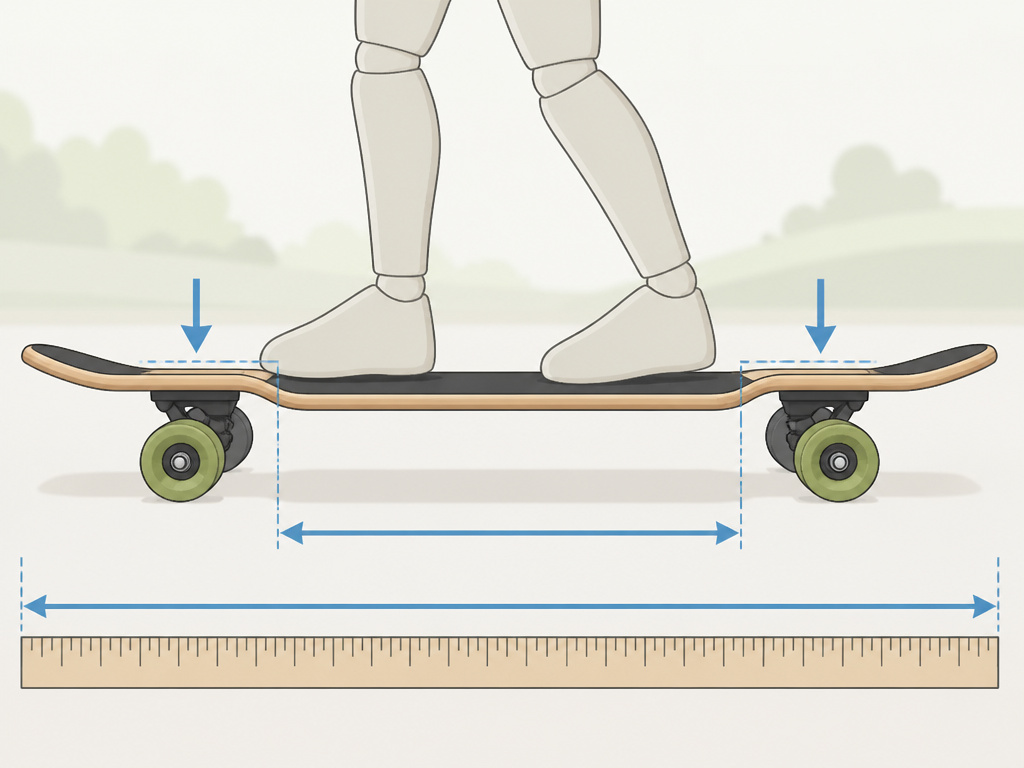
Length gets the attention, but width is where your feet connect with the board. If your toes and heels can’t reach the edge of the deck easily, you lose power for turning. The rule of thumb here is simpler than height and often more decisive.
Your shoe size determines your ideal deck width. A deck that’s too narrow feels tippy; one that’s too wide feels sluggish and forces your ankles into an unnatural angle.
Both Vandem and Longboards USA provide the same clear mapping. It’s based on UK shoe sizes, so you’ll need to convert your shoe size accordingly.
| UK Shoe Size | Suggested Deck Width | Why It Works |
|---|---|---|
| 5 – 6.5 | Under 8.5 inches | Allows full foot placement without overhang. |
| 7 – 8.5 | 8.5 – 9.0 inches | Provides optimal heel/toe leverage for turning. |
| 9+ | 9.0 inches or wider | Prevents foot overhang and ensures stable platform. |
This is one area where the conversation about longboard size gets practical. You can feel a width mismatch immediately. On a board that’s too narrow, you’ll instinctively curl your toes to grip the edge, cramping your foot within minutes. On a board that’s too wide, you’ll have to shift your whole weight from your hip to initiate a turn, which is exhausting. For your first board, err on the side of slightly wider, it’s more forgiving while you’re learning balance.
Purpose Is the Final Decider: Cruising vs. Dancing vs. Downhill
Your height and shoe size narrow the field. Your riding purpose picks the winner. This is where the generic height chart completely falls apart, and you must listen to discipline-specific advice.
For Cruising & Commuting (The Beginner’s Default)
You want a stable, comfortable board for getting around. Look for a drop-through or drop-down deck in the 38-42 inch range. This design lowers the board 4-6 inches off the ground, making pushing easier and increasing stability. A wheelbase of 20-26 inches is ideal for beginners learning to cruise. Many brands make excellent completes in this category. This is the setup most boards marketed as starter longboards are built around.
For Dancing & Freestyle
This changes everything. Dancing boards are long platforms for walking and spinning. Outside Skateshop notes they are “often 40 to 47″ long.” You need that real estate. For a 5’10” rider, this means choosing a board at the very top, or above, your height-based range. A 46-inch dancer gives you the space to cross-step, but it will feel like a barge compared to a cruiser. Don’t even consider a board under 40 inches for this style.
For Downhill & Speed
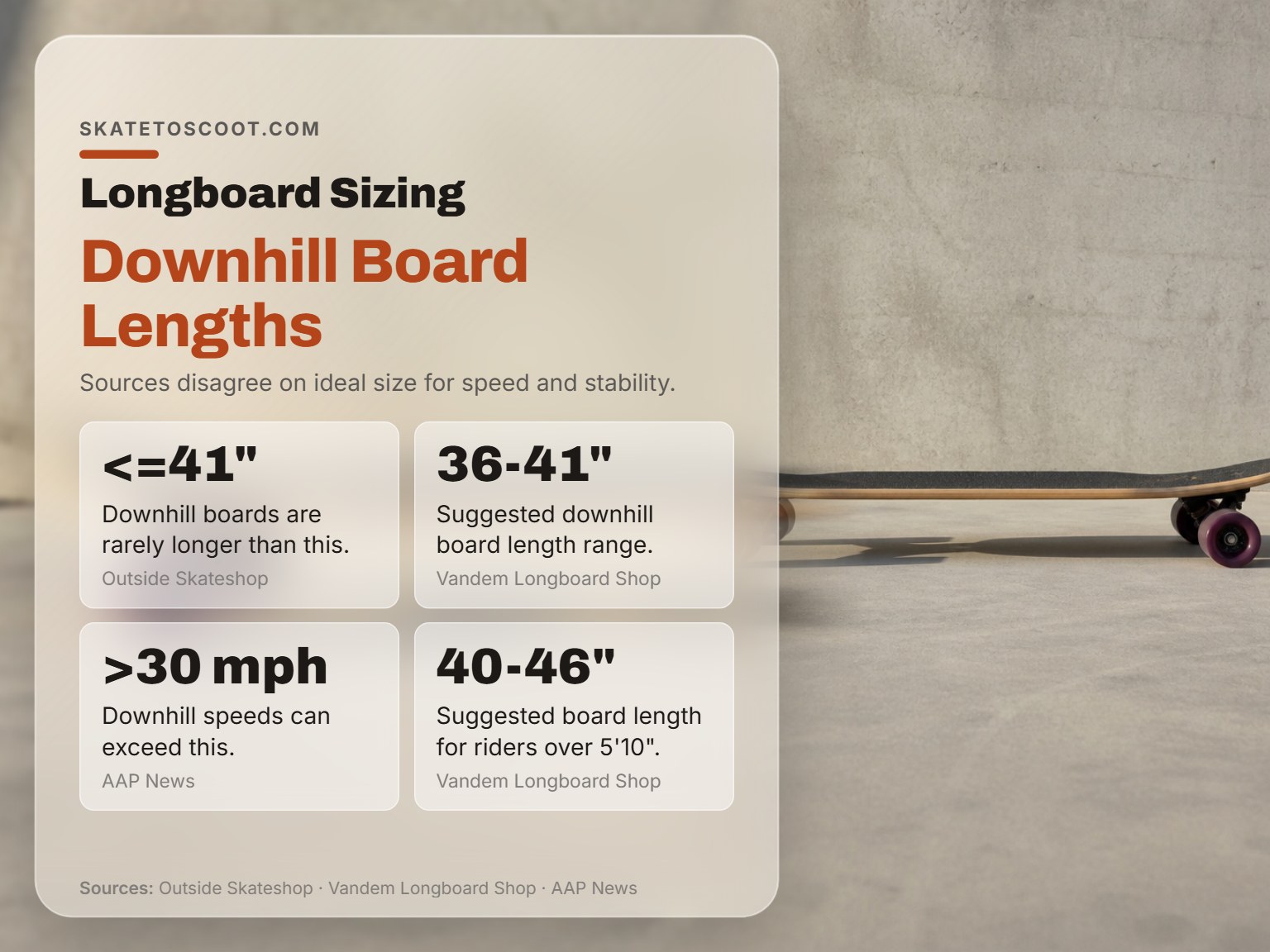
Here, stability and control trump everything. The advice gets contradictory: Sources disagree on downhill board length: Outside Skateshop states they are rarely longer than 41″, while other guides suggest 42″ plus for taller riders. The real variables are wheelbase (shorter for quicker turns) and a stiff deck. If you’re over 5’10” and looking at downhill, you’re likely choosing between a 40-inch tight setup or a 42-inch more stable one. Your skill level decides.
The part nobody mentions: The “purpose” isn’t just what you dream of doing; it’s what you’ll actually do 80% of the time. Buying a 44-inch dancer because it looks cool, when you only have a smooth half-mile commute, is a fast track to frustration.
The Components That Change the Feel (Even at the Same Length)
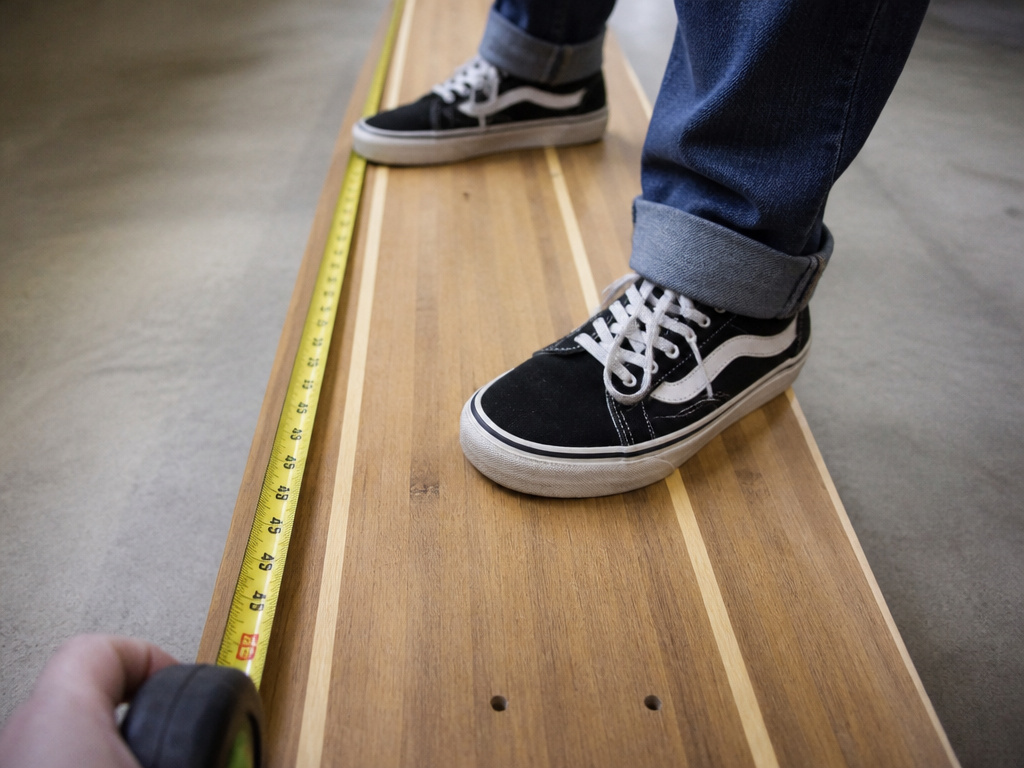
Two boards with identical lengths can ride utterly differently based on their components. When you’re in the process of choosing a longboard, these specs matter as much as the deck.
Trucks: The Steering System
For beginners, reverse kingpin trucks are mandatory. They turn more intuitively at lower speeds. Look for a baseplate angle between 44 and 50 degrees. For a 9 to 10-inch deck, 180mm trucks are standard.
Wheels: Your Connection to the Ground
Wheel diameter and hardness are critical. For learning, 70mm diameter wheels are the sweet spot, they roll over sidewalk cracks easily. The hardness (durometer) should be 78A to 83A. Softer wheels grip better and smooth out rough pavement. Harder wheels provide less vibration damping on rough surfaces.
Wheelbase: The Hidden Stability Lever
This is the distance between the inner mounting holes for your trucks. A longer wheelbase (e.g., 26 inches) provides more stability in a straight line but is less maneuverable. A shorter wheelbase (e.g., 20 inches) is more responsive and quicker to turn. For cruising, the 20-26 inch range is ideal. You can find your board’s wheelbase on the manufacturer’s spec sheet, and it’s more important than the board’s overall length for determining how it handles.
When Height Rules Don’t Apply (And What to Do Instead)
The charts are for beginners. As you progress, other factors override height.
Weight and Board Capacity
Height doesn’t correlate perfectly with weight. A heavier rider will compress the board’s flex more, affecting ride feel and stability. Always check the manufacturer’s weight limit. This is a key consideration for longboarding weight and understanding a board’s weight capacity. If you’re at the upper end of the weight limit, a stiffer, longer board will generally feel more secure.
Skill Level and Preference
An experienced skater might choose a shorter board for quicker maneuvers, even if they’re tall. The height chart is a starting line, not a finish line. After a few months, you’ll know if you want something more nimble or more stable.
The Surf Longboard Confusion
This entire article has been about skate longboards. If you’re searching for a surf longboard, the rules are different. Length is measured in feet, not inches (think 9’0″ not 36″), and your weight and local wave conditions are more important than height. Mixing these two up is the most common sizing mistake online.
Safety: The Non-Negotiable First Step
Before you even think about size, gear up. This isn’t scare talk; it’s the predictable outcome of physics. The AAP longboard safety guide notes that downhill speeds can exceed 30 mph. At that speed, a fall is a high-impact event.
A skate-specific helmet is mandatory, it’s designed for the back-of-head impacts common in skating. Wrist guards are arguably more important than knee pads for beginners, as the instinct to catch your fall can lead to fractures. Trust the process, not just the trick. Learning to fall safely is your first fundamental.
Frequently Asked Questions
I’m 5’2″. Is a 38-inch board too big for me?
Not at all. According to the height chart, 32-38 inches is your range. A 38-inch board would be at the top end, offering maximum stability. If you prioritize maneuverability and easier carrying, look at the lower end, around 32-34 inches. Many mini-cruisers fit perfectly here.
I’m 6’4″. Should I get the longest board I can find (46″)?
Not necessarily. While 40-46 inches is your range, a 46-inch board is a lot of board to maneuver. If you’re a beginner, starting at 42 inches gives you stability without the cumbersome feel. You can always go longer later if you find you need more foot space.
Does my weight matter more than my height?
For your first board, height is a better initial proxy for balance and stance width. However, weight becomes crucial for board flex and durability. Always check the manufacturer’s weight limit. A heavier rider on a flexible, shorter board will have a very different (and often less stable) experience than a lighter rider on the same board.
Can I use a skateboard size chart for a longboard?
No. Skateboards (typically 28-33 inches) and longboards are sized differently for different purposes. Skateboard charts focus on trick performance; longboard charts focus on stability and cruising comfort. Using a skateboard chart will likely recommend a board far too short for comfortable longboarding.
What if my height and shoe size recommendations conflict?
They rarely do. The charts are designed to work together. For example, a 5’8″ rider (38-42″ length) with a UK size 9 shoe (9″+ width) would look for boards around 40-42 inches long and at least 9 inches wide. Many cruiser boards hit these exact specs. If you feel stuck, prioritize shoe size for width, a poor foot connection is harder to adapt to than a slightly longer deck.
The Bottom Line
Here’s the actionable filter: find your height range, check it against your shoe size, then pick the purpose-built board within that zone. For the large majority of new riders, that means a 38-42 inch drop-through cruiser with 70mm wheels.
If you remember one thing, let it be this: your first board is a learning tool, not a lifetime commitment. A well-chosen beginner board gets you rolling comfortably so you can build the skills and preferences that will guide your next, more specialized purchase. Don’t overthink it into paralysis. Get a helmet and pads, find a quiet parking lot, and start pushing. The nuances of size become crystal clear after your first few miles.
