How Long Do Longboards Last: When to Replace vs. Repair
This post contains affiliate links. As an Amazon Associate, we earn from qualifying purchases.
A longboard’s lifespan isn’t a single number, it’s a range defined by its parts. A deck used for aggressive downhill runs might show stress in months, while a cruiser kept dry and used for transport can last decades. The real answer lies in matching maintenance to your riding style and knowing when each component, wheels, bearings, trucks, bushings, has reached its end.
That gap between a few months and several decades is where your choices live. It’s not about buying the indestructible board; that doesn’t exist. It’s about understanding the mechanical failure points and the simple, ten-minute checks that prevent them. A common question is how long do longboards last, and the answer depends heavily on care. A board that gets ridden hard needs a different care routine than one that sits in a trunk, and confusing the two is how you turn a ten-year investment into a one-season disposable.
What follows breaks down the verified lifespan for each part, drawn from manufacturer data and long-term user reports, to answer how long do longboards last. We will examine the specific signs of wear that mean “replace me,” the maintenance disagreements between pros (like how loose your trucks should be), and the one storage mistake that ruins more boards than anything else.
Key Takeaways
- A longboard deck lasts 3–6 months for a skater dedicated to learning new skills, but can last decades for casual cruising if kept dry and stored indoors.
- Water is the primary enemy; a single rainstorm can cause a wood deck to split at the layers, while trapped moisture rusts bearings even after the wheel looks dry.
- Rotate your urethane wheels periodically and replace them if they vibrate, expose the core, or develop deep cracks; they last 6 months to multiple years.
- Truck lifespan splits by use: replace every 2–3 years if you grind, but casual skating can stretch them to 5 years or more with periodic bolt checks.
- Bearing maintenance is essential; clean them when they sound gritty, stop quickly, or get wet, using a light skate-specific lubricant, not household oil.
The Core Lifespan Factors (Deck, Wheels, Trucks, Bearings)
We will break this down step by step to answer how long do longboards last. A longboard isn’t a monolithic object that wears out all at once. It’s a collection of components, each with its own failure mode and timeline. Treating them as a single unit is how you end up replacing a perfectly good deck because the bearings seized, or riding a cracked truck because the wheels still spin.
Deck: From Months to a Lifetime
The deck’s lifespan is the most variable. According to aggregated data, a deck will usually last from three to six months for a skater dedicated to learning new skills. That’s the reality of ollies, flip tricks, and the hard impacts that come with progression. The wood, typically hard rock maple, absorbs that energy until it doesn’t, showing stress fractures or a snapped tail.
But flip that script. If you’re just cruising around or using the skateboard as transport, it can last decades if it’s treated properly. The difference isn’t skill level; it’s impact frequency.
Common mistake: Storing a board in a damp garage or car trunk. Wood and bamboo decks are susceptible to moisture, and a single rainstorm can cause a deck to split at the layers. Once that happens, the deck becomes spongy and loses stability. Aluminum decks, like those from Yocaher, require the least maintenance and are nearly indestructible to boot, but they are the exception.
The sensory cue here is sound. A healthy deck has a solid thunk when tapped. A water-damaged or delaminating deck has a dull, hollow thud and may flex more than it should under your weight. Keep your board indoors, away from the elements.
Wheels: The Wearing Surface
Skateboard wheels should last six months to multiple years. This massive range comes down to urethane durometer (hardness), riding style, and surface. Softer wheels (like Yocaher’s 78A) grip better, but wear depends on riding style and surface.
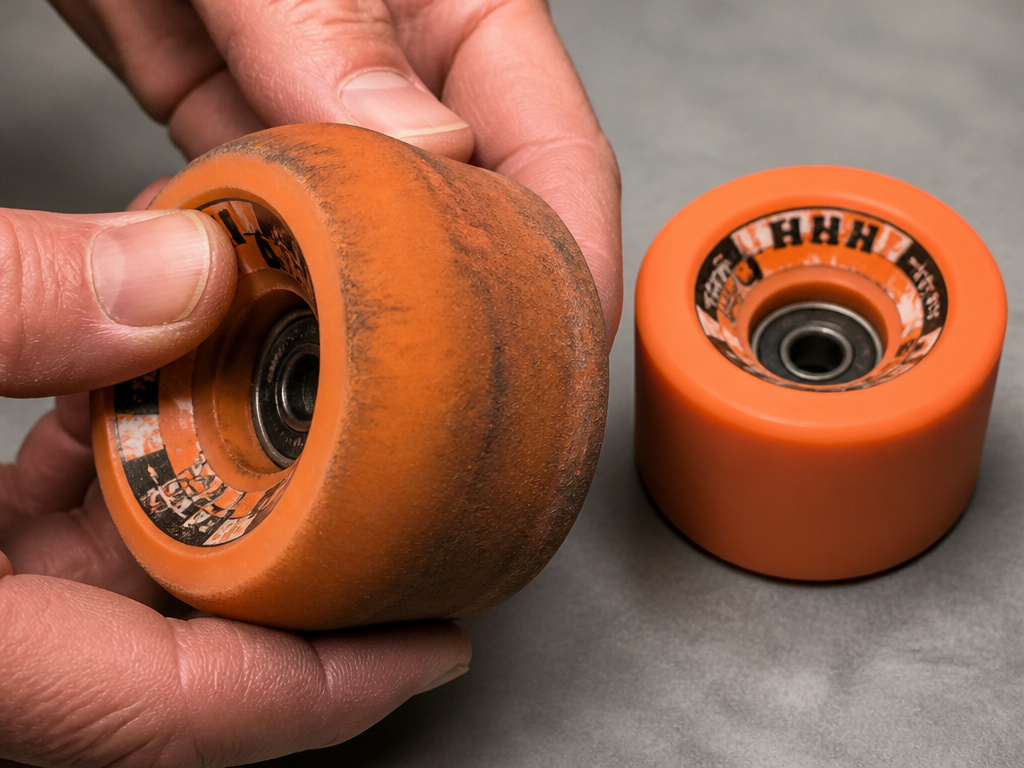
You don’t need a caliper to know a wheel is done. Run your hand over the riding surface. A wheel that vibrates under load, exposes the plastic core, or has deep structural cracks needs replacing. The occasional rotation is the only maintenance wheels require. Switch their positions front-to-back and flip them (outside to inside) to encourage even wear and prevent coning.
| Wheel Condition | Visual/Tactile Sign | Action Required |
|---|---|---|
| Normal Wear | Smooth, even reduction in diameter | Rotate positions; continue riding. |
| Coning | Wheel is wider at one edge than the other | Rotate and flip; check truck tightness. |
| Flat Spot | A flat, polished section on the circumference | Replace if vibration is severe; rotate if minor. |
| Core Exposure | The plastic hub is visible through the urethane | Replace immediately. |
| Deep Cracks | Structural cracks radiating from the hub or edge | Replace immediately. |
Trucks and Bushings: The Pivot Point
If you’re a street skater and do a lot of grinding, you should replace your trucks every 2 to 3 years. The axles and hangers wear down from abrasion. For casual skating, your trucks could last 5 years or more.
The real wear items here are the urethane bushings. They compress over time, changing how the board turns. In practice, if your bushings are cracked or permanently deformed, replace them.
Tighten the kingpin until the washers are secure without crushing the bushings. Too loose, and you might experience wheel bite (the wheel touches the deck during a turn, causing a sudden stop).
Bearings: Precision Under Pressure
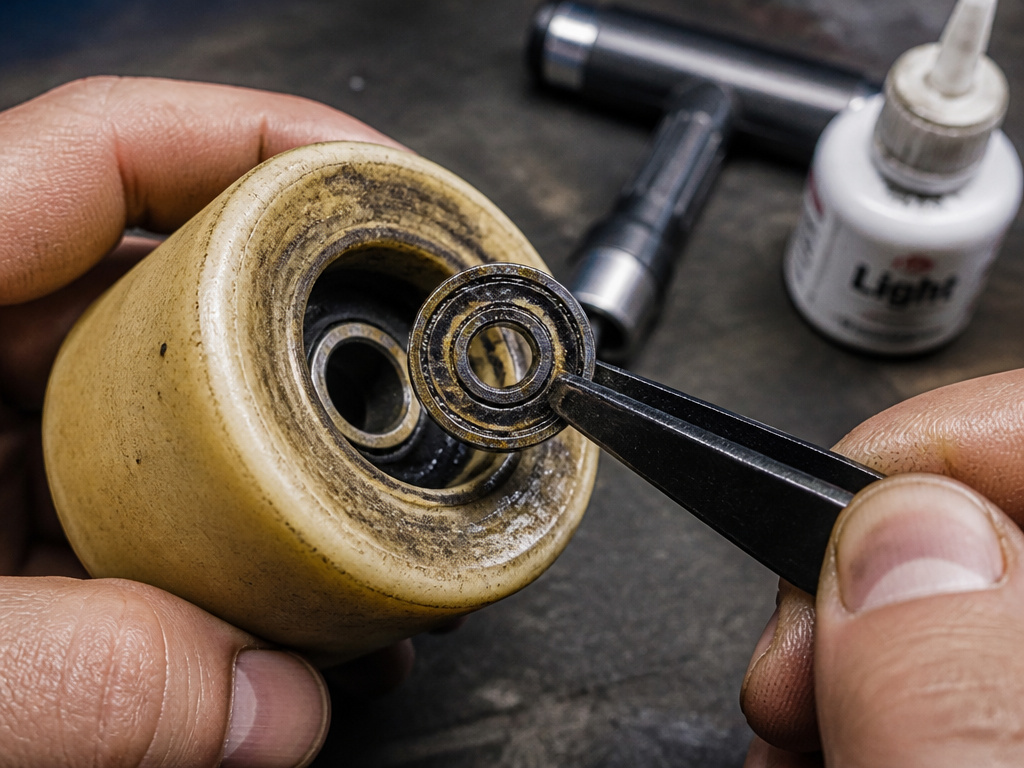
How long skateboard bearings last depends on the quality, how often you clean them, and whether they get wet. They need service when they sound gritty, stop quickly after a spin, or have been exposed to water.
Here’s the critical, often-missed step from the Longboard Bible: bearings must come out before washing. Water trapped inside causes rust even when the wheel looks dry. You can’t see this failure until it’s too late and the bearing seizes.
For lubrication, use a light lubricant made for skate bearings. Thick household oils attract dirt and can slow the bearing. The Annular Bearing Engineering Committee (ABEC) determines the tolerances for bearings, with ratings from ABEC 1 up to ABEC 9. Higher ABEC numbers mean tighter tolerances. Higher ABEC numbers mean tighter tolerances, not necessarily longer lifespan or speed.
Maintenance That Actually Adds Years
The Post-Ride Ritual (Especially After Wet Rides)
After a wet ride, remove surface water immediately and take off the wheels so moisture cannot remain around bearings and washers. This is essential. Wipe the entire board down with a dry cloth. Clean metal parts with mild soapy water on a cloth, never by soaking, and dry immediately.
Where this goes sideways: Using WD-40 as a general cleaner or a pressure washer. WD-40 displaces water but leaves a residue that attracts dirt. Pressure washers force water into the bearing seats and deck laminations, guaranteeing future rust and delamination. Stick to mild soap, water, and a soft brush.
For a deep clean every couple of months, disassemble the board. The OUTSIDE Skateshop recommends disassembling and cleaning a new custom board after the first use.
Hardware Check: The 60-Second Safety Scan
Check regularly, not to say at each session, the tightening of the screws. Truck-mounting bolts have an annoying tendency to unscrew with vibration.
Use your skate tool. Check:
- Axle nuts: Tighten until there is almost no side play but each wheel still spins freely.
- Kingpin nut: Ensure it’s secure but not crushing the bushings.
- Truck bolts (connecting truck to deck): Snug them down firmly.
Storage: Not an Afterthought
Store the board indoors in a dry place away from heaters and direct sun. A wall mount or a stand is ideal. Never leave a damp longboard in a closed car or bag.
If you’re planning a long break from skating, disassemble your board. Store the deck, trucks, and wheels separately in a cool, dry place.
When to Replace vs. When to Repair
This is the financial reality of longboard ownership. At a certain point, repairing an old board costs more than a new, better one. You need a decision framework.
The Signs a Deck is Finished
- Snapped or Severely Cracked: If it’s broken across the width, it’s done. Temporary fixes are dangerous.
- Razor Tail & Severe Stress Fractures: When the tail is worn to a sharp edge and you see deep cracks around the truck mounts, the structural integrity is compromised. Ride it only until you can replace it.
- Water-Induced Sponginess: If the deck feels soft, flexes abnormally, or sounds hollow, the layers have separated. It can fail unexpectedly.
The Bearing Point of No Return
Clean and lubricate bearings when they’re gritty or slow. Replace them when:
- Cleaning no longer restores a smooth, quiet spin.
- The bearing shields are damaged or lost.
- You feel lateral play (wiggle) in the bearing itself.
Cost of Ownership Over Time
We will be real about long-term costs. A quality complete board might be your initial outlay, but budget for consumables:
- Wheels: Every 1-3 years for casual riders, more often for sliders.
- Bearings: Every 1-2 years, though proper cleaning can extend this.
- Grip Tape: Every 1-2 years if it loses grip or gets too dirty.
- Hardware (nuts & bolts): As needed, but a bag of replacement hardware is cheap insurance. Investing in a skate tool, bearing cleaner, and lubricant pays for itself by letting you perform this routine longboard care yourself.
The Kingpin Tightness Debate: Stability vs. Agility
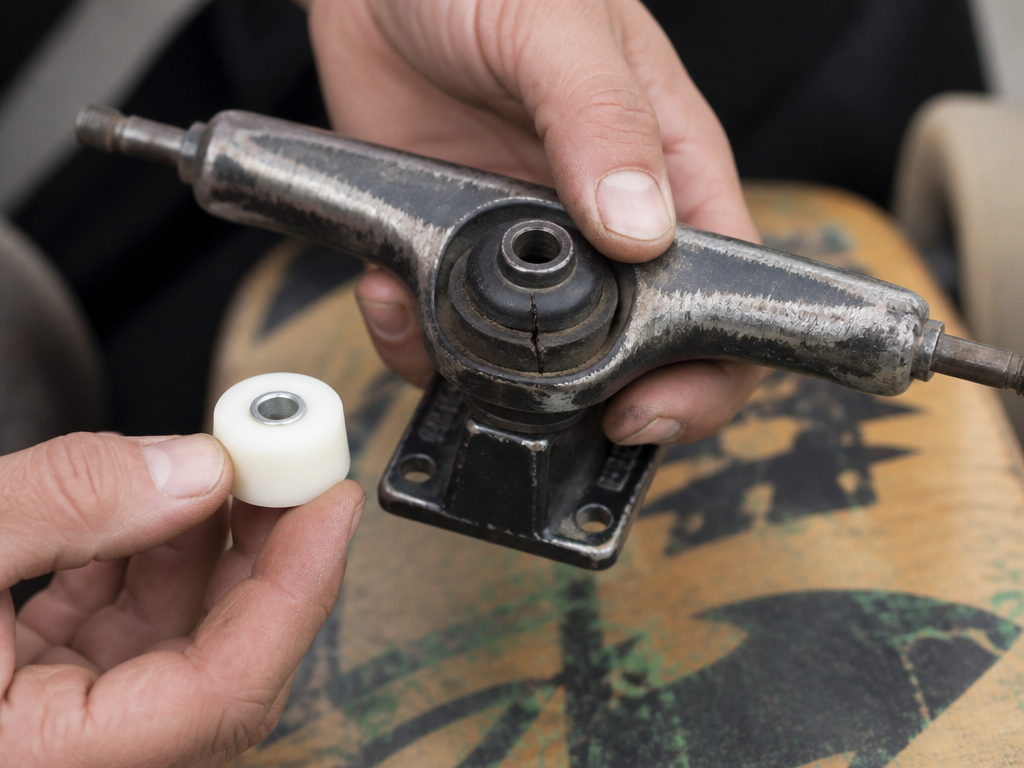
Here’s a clear source disagreement that changes how your board feels. Decathlon’s guide states: “Tightening the kingpin with a T-tool will make your skateboard more rigid. Loosening it will make it more manoeuvrable.” This is the standard advice, especially for beginners seeking stability.
The OUTSIDE Skateshop directly contradicts this: “Our advice: do exactly the opposite and loosen the kingpins as much as possible (as far as acceptable!).” Their reasoning is that overtightening crushes and deforms bushings permanently, leading to an unpredictable, twitchy ride later. They argue it’s better to learn on a lively board.
| Approach | Pro Argument | Con Argument | Best For |
|---|---|---|---|
| Tighter Kingpin | More stable, predictable for beginners. Prevents wheel bite. | Can over-compress bushings, shortening their life. Limits carving ability. | New riders focused on straight-line confidence and cruising. |
| Looser Kingpin | Preserves bushing shape, allows deeper, more fluid carves. Teaches better board control. | Increases risk of wheel bite. Can feel “twitchy” and less stable at speed. | Experienced riders, carvers, and those learning precise turning control. |
The truth lies in the middle. Start with a moderate tightness that prevents wheel bite. As your confidence grows, loosen it incrementally. The goal is to find the point where the board responds to your lean without feeling unstable. Crushing your bushings by cranking the kingpin down defeats their entire purpose.
Frequently Asked Questions
How long should a good longboard cost?
Price isn’t a direct indicator of lifespan. A well-constructed board from reputable brands using quality maple, decent trucks, and good bearings will outlast a cheap, poorly made one. The investment is in the components’ consistency, not necessarily in exotic materials. Focus on solid construction and positive user reviews over flashy graphics.
Is a longer longboard easier to ride?
Generally, yes, for beginners. A longer deck provides a wider, more stable platform, which makes balancing easier. It also usually has a longer wheelbase (distance between trucks), which makes the board less “twitchy” and more predictable when turning. Once you have the fundamentals, you can choose a longboard of any length based on your preferred style.
How do you know if a longboard is good?
Check the basics before you buy. The deck should be straight with no visible warps. The trucks should be cast cleanly with no rough metal seams. Wheels should be securely mounted without wobble, and the bearings should spin freely for a few seconds when spun. Good components from known brands are a safer bet than no-name parts.
What is the lifespan of a skateboard vs. A longboard?
Skateboards (trick decks) are built for impact and often have a shorter, more intense life, 3-6 months for a progressing skater is common. Longboards, built for rolling and carving, often see less impact and can last significantly longer with care. The principles of longboard durability still apply: avoid water, impact, and neglect.
Before You Go
One rule cuts through all the complexity: if your board gets wet, dry it completely before you put it away. That single habit prevents the two most common terminal failures: deck delamination and bearing rust. Everything else, rotating wheels, checking hardware, cleaning bearings, extends the life from there.
Your riding style dictates your maintenance calendar. If you’re learning slides and hard carves, check your wheels and bushings monthly. If you’re a weekend cruiser, a seasonal deep clean and hardware check is enough. The board will tell you what it needs; a gritty bearing sound, a wobbly wheel, or a loose truck bolt are all clear signals.
Finally, understand that “lifespan” is a rolling target. You replace parts as they wear, and the board lives on. A deck might last a decade, but you’ll go through several sets of longboard wheels and bearings in that time. That’s normal. It’s not that the board died; you just replaced its shoes. Keep the deck dry, the bearings clean, and the bolts tight, and the ride doesn’t have to end.
