Can You Dance on a Drop Through Longboard? How to Start
This post contains affiliate links. As an Amazon Associate, we earn from qualifying purchases.
Sources disagree on whether a drop-through longboard is suitable for dancing: Outuro states they are only generally suitable for low-speed carving, while LongboardsUSA and CALI Strong provide specifications for dancing boards that include drop-through dimensions. The lowered platform shortens your effective standing area, and the mounting style limits your truck tuning. A dedicated dancer deck is always better, but if you already own a drop-through like the 42.75-inch CALI Strong Trojan, you can practice basic cross-steps and footwork, just don’t expect to land advanced spins.
That “just don’t expect” clause is where most guides stop. They tell you a drop-through is bad for dancing and move on. If you’re holding one right now, that’s not helpful. The real question you might have is, can you dance on a drop through longboard?
What follows is a practical breakdown for the board you already have: which specific drop-through dimensions can work, the two modifications that buy you breathing room, and the exact moment you’ll know it’s time to upgrade if you’re serious about dancing.
Key Takeaways
- A drop-through deck lowers the platform by mounting the trucks through cutouts, which can reduce the effective standing area.
- You need a long wheelbase and wide deck to compensate; the CALI Strong Trojan (42.75″ long, 9.5″ wide) is one example that falls within the typical dancing board range.
- Truck tuning is critical; loosen the kingpin for maneuverability, but stop before you get wheelbite.
- Start with the basics like cross-steps and pivots; advanced dancing moves generally demand a dedicated dancer deck.
- Modify your setup first before buying a new board; adjusting your bushings and wheelbase may improve performance.
The Drop-Through Dancing Dilemma
The conflict isn’t theoretical. Manufacturers themselves disagree. Lush Longboards, which pioneered the commercially available drop-through speedboard in 2000, recommends starting with a drop-through for your first speedboard. Meanwhile, the LongboardsUSA dancing guide implies that while you can practice basics on most boards, a non-dedicated shape “will significantly limit your dancing progression.”
The physics are simple. A drop-through longboard lowers the deck by mounting the truck baseplate through a cutout. This gives you that stable, low-to-the-ground feel perfect for cruising and speed. For dancing, the drop-through cutouts can reduce the effective standing area. On a short deck, this area can be very limited.
A drop-through longboard lowers your center of gravity by mounting the trucks through the deck. This design shortens the effective standing platform between the truck cutouts, which is the primary constraint for performing dance steps that require foot movement along the deck’s length.
Can You Dance on Any Drop Through?
No. The deck’s length and wheelbase decide this.
For reference, dedicated dancing longboards typically run 40 to 48 inches long, with the most popular models sitting between 45 and 47 inches. Deck width is usually between 9 and 10 inches. This gives you the runway you need.
Now, look at a popular drop-through complete: the CALI Strong Trojan. Its deck is 42.75 inches long and 9.5 inches wide, with a 31.375-inch wheelbase. It’s built with 8-ply Canadian Maple. Those numbers land it at the very bottom end of the dancing range. It has enough platform for basic steps, but you’ll feel the limits quickly. A shorter drop-through may not provide enough platform for dancing steps.
| Deck Spec | Dedicated Dancer Ideal | CALI Strong Trojan Drop-Through | Verdict for Dancing |
|---|---|---|---|
| Length | 45–47 inches | 42.75 inches | Minimum viable |
| Width | 9–10 inches | 9.5 inches | Adequate |
| Wheelbase | Varies | 31.375 inches | As specified for the CALI Strong Trojan |
| Construction | Often flexy | 8-ply Canadian Maple (stiff) | Different from typical dancer flex |
If your drop-through is shorter or narrower than the Trojan, the can you dance on a drop through longboard answer is no. You’re balancing. That’s the first filter.
The Two Modifications That Actually Help

You own the board. Selling it isn’t always an option. These two tweaks won’t turn a drop-through into a dancer, but they’ll reduce the fight.
First, tune your trucks for maneuverability. The Decathlon support manual for its Drop 100 model spells out the trade-off: tightening the kingpin makes the board more rigid, loosening it makes it more manoeuvrable. You want maneuverable.
Common mistake: Cranking the kingpin tight for stability. On a drop-through, that locks out the turn you need for fluid weight shifts during cross-steps. Your dance will feel choppy and forced.
Loosen it to increase maneuverability, but avoid wheelbite. But watch for wheelbite, when the wheel touches the deck during a turn. The Decathlon manual warns that loosening the kingpin too much may cause wheelbite, which stops the board dead. Find the sweet spot: loose enough to flow, tight enough to avoid that sudden, throw-you-off lock-up.
Second, explore wheelbase adjustment if you can. Some drop-through decks, like Lush’s adjustable mount, offer a wheelbase tweak. Their system gives 20mm of adjustment at each deck, totaling 40mm of variation. A longer wheelbase adds stability and stretches your platform slightly. It’s an adjustment that can alter the board’s handling.
Drop-Through vs. Dedicated Dancer: A Beginner’s Choice
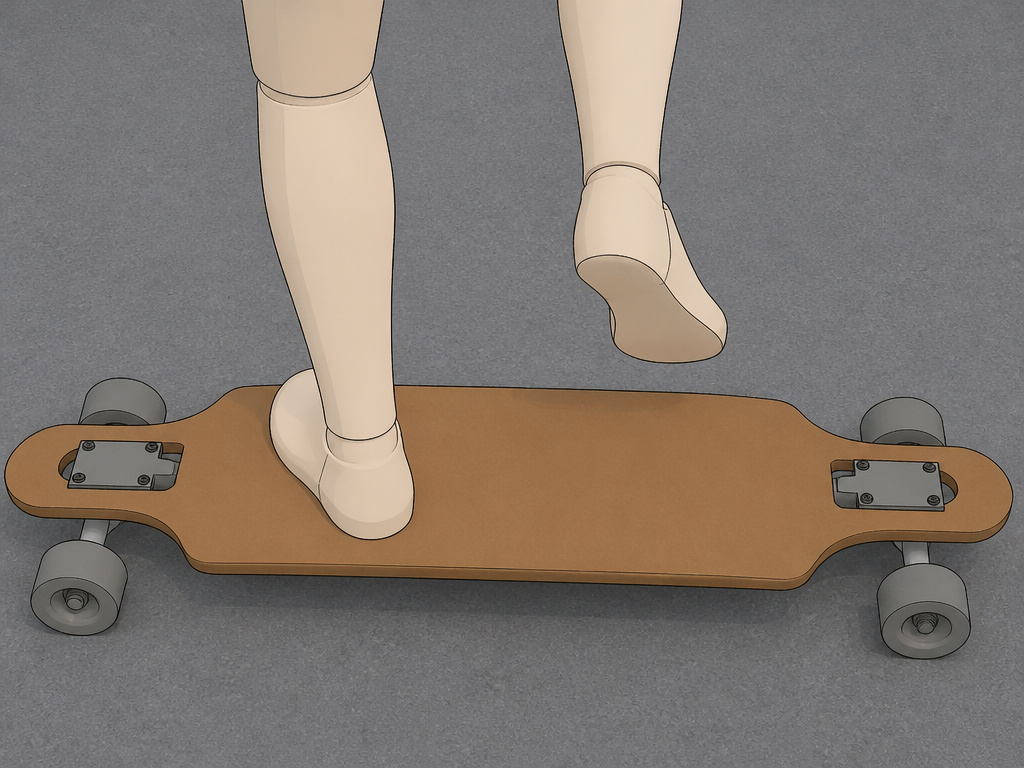
You’re picking your first board with dancing in mind. The choice isn’t subtle.
A drop-through is the easier board to learn to ride on. It’s stable, lower for pushing, and forgiving. Lush Longboards recommends starting with a drop-through for your first speedboard for exactly these reasons.
A dedicated dancer is the easier board to learn to dance on. The longer top-mounted platform is a blank canvas. You have a longer top-mounted platform, and LongboardsUSA recommends a mild to medium flex rating for dancing longboards.
If dancing is the goal, go straight for a board designed for it. Check our guide on the best dancing longboards for a solid starting list. If you already have a drop-through and want to try, that’s fine, just know the can you dance on a drop through longboard limits are real, not a reflection of your skill.
The Truck Compatibility Trap
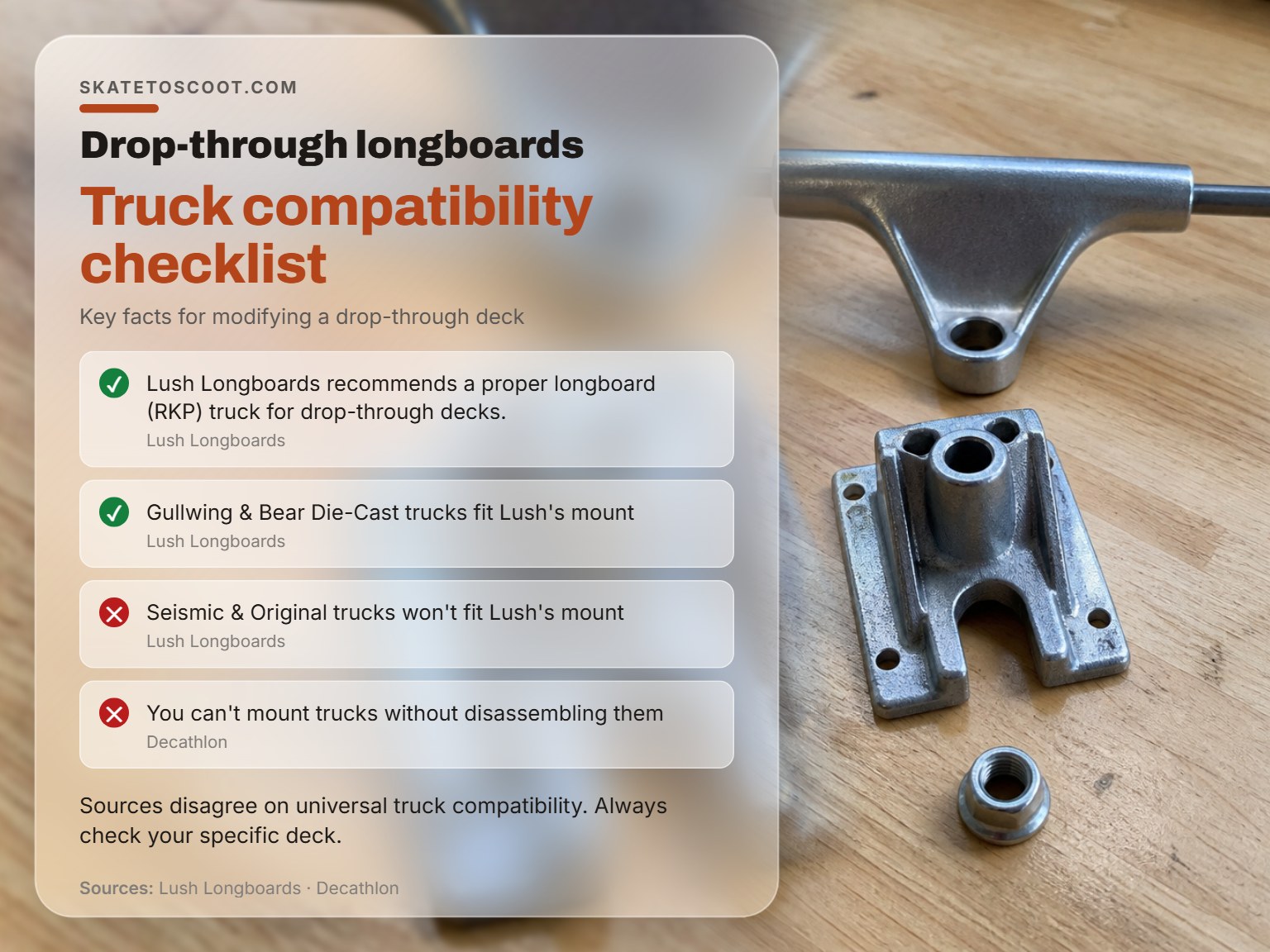
Not all trucks play nice with drop-through decks. This matters if you’re modifying.
Sources disagree on truck compatibility: Lush Longboards states in theory drop-through decks work with any skateboard trucks, but also provides a detailed list of specific truck brands/models that fit or don’t fit their adjustable mount. Lush Longboards notes that Gullwing and Bear Die-Cast trucks fit their adjustable drop-through mount without any adjustability, while Seismic and Original trucks definitely won’t fit.
More importantly, they strongly recommend a proper longboard (RKP truck) over a regular street-style truck. Lush Longboards recommends a reverse kingpin (RKP) longboard truck rather than a regular Street Style truck for drop-through decks. If you’re swapping parts, stick with reverse kingpin (RKP) longboard trucks. They are the type of truck recommended by Lush Longboards for drop-through decks.
Mounting them is its own process. You can’t just screw them on. As the Decathlon manual states, you cannot mount the trucks without disassembling them. The baseplate drops through the deck from the top, which means taking the hanger off every time you install or remove them.
How to Start Dancing on Your Drop-Through
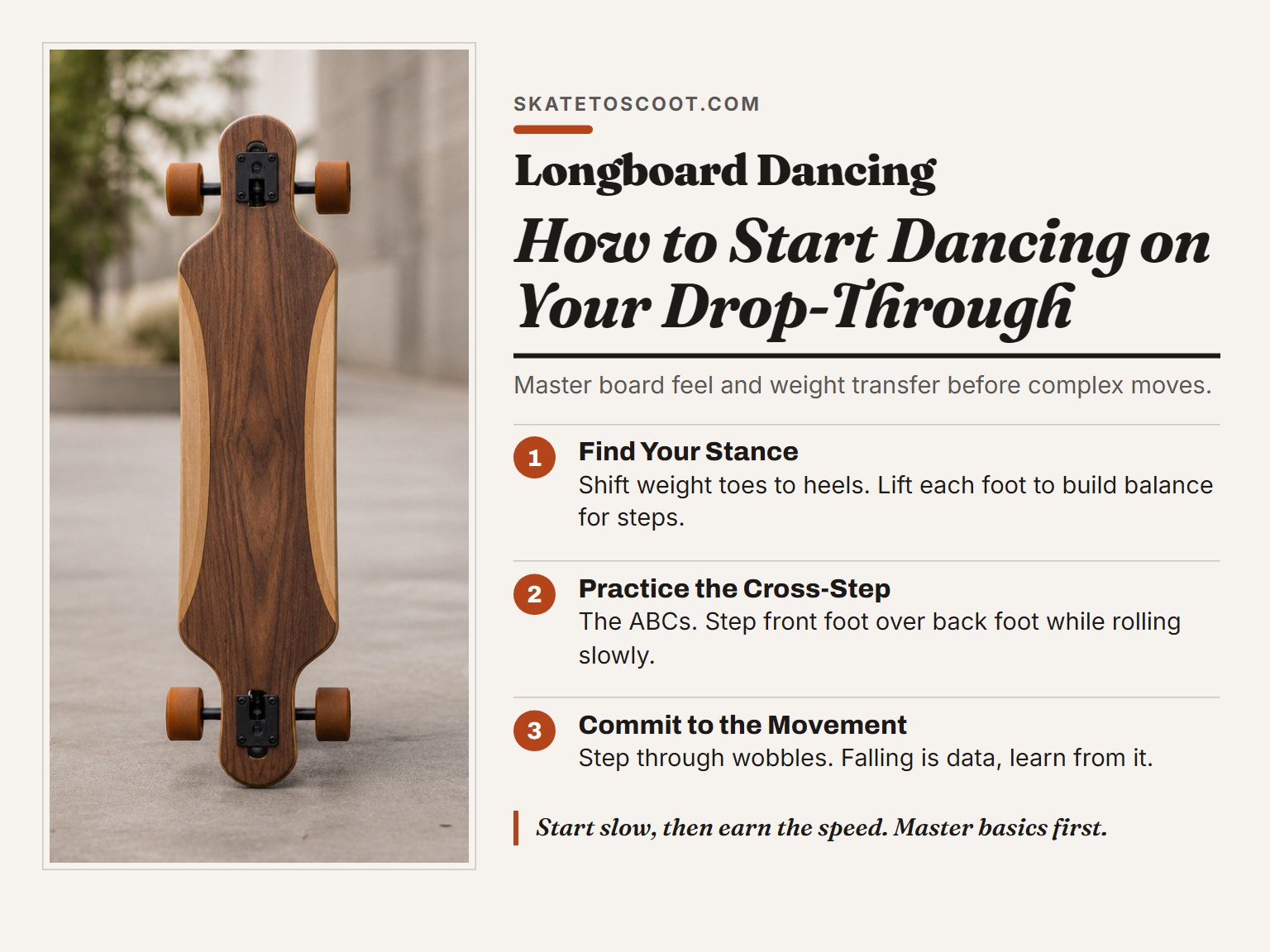
Forget the complex lines and spins for now. Your goal is board feel and weight transfer.
- Find Your Stance. Stand on your board stationary. Shift your weight from your toes to your heels. Feel the trucks respond. Get low and practice lifting one foot completely, then the other. This builds the balance you’ll need when a foot is in the air during a step.
- Practice the Cross-Step. This is the ABCs. While rolling slowly, step your front foot over your back foot, then bring the back foot forward to regain your stance.
- Work on Pivots. Use your heels and toes to twist the board 90 or 180 degrees. Without kick tails, pivots are more challenging on a drop-through.
- Commit to the Movement. The board will wobble. Your instinct will be to freeze. Don’t. A wobble is just information. Step through it. Falling is data, so learn from it.
Start slow, then earn the speed. Rushing into advanced moves on an ill-suited board is a fast track to frustration. Master the basics of weight shift and foot placement first. Ten minutes of focused practice here beats an hour of frustrated attempts at a trick you saw online.
When to Upgrade to a Dedicated Dancer
You’ll know. It feels like you’ve memorized a dance routine in a closet, then someone opens the door to a ballroom.
The signs are physical. You’re constantly adjusting your foot placement mid-step to avoid the wheel wells. You think about the board’s limits more than your own movement. You catch yourself wishing for just six more inches of deck. When practicing basic longboard dancing becomes more about managing the board than expressing the move, the board is holding you back.
That’s your cue. The upgrade isn’t about gear snobbery. It’s about removing a barrier so your skill can actually grow. It stops getting in your way so you can become one.
What wheels are best for dancing on a drop-through?
The fact sheet doesn’t specify wheels for dancing. For practical guidance, you want wheels that support smooth, flowing movements. A larger diameter helps maintain momentum for cross-steps and spins, while a medium durometer provides a balance of grip and slide control. The key is to avoid wheels that are too small or too hard, as they can make the board feel twitchy and unstable during complex footwork.
What are some dancing longboard models?
One example from the facts is the CALI Strong Trojan Drop Through Complete. It measures 42.75 inches long and 9.5 inches wide, which falls within the typical range for dancing boards. General guidance suggests popular dancing models are often around 45 to 47 inches long with deck widths between 9 and 10 inches. These dimensions provide the necessary platform for footwork, though some sources argue a drop-through’s cutouts limit the effective standing area compared to a dedicated dancer shape.
What trucks should I use for dancing on a drop-through?
Use proper longboard reverse kingpin trucks, not standard street style trucks. The kingpin tension is critical for tuning; tightening it makes the board more rigid for stability, while loosening it increases maneuverability for turns and pivots. Be careful not to loosen it too much, as this can lead to wheel bite. Also, avoid overtightening the hanger, as this can damage the truck’s components. Compatibility varies by deck, so check if your specific truck model fits the mounting pattern.
Frequently Asked Questions
Are drop-through longboards good for beginners?
For learning to ride, push, and cruise, yes. Their low platform is stable and confidence-building. For learning to dance specifically, they add an unnecessary challenge. A beginner interested in dancing would progress faster on a board designed for it.
What is a dancer longboard?
Dancer longboard is a top-mounted deck, typically 45-47 inches long and 9-10 inches wide, with a symmetrical shape and often a mild flex. It’s designed to provide a long, clear platform for footwork and tricks, with kick tails at both ends for pivots and lifts.
What is a drop through longboard good for?
drop-through longboard is excellent for stability at speed, easier pushing and foot-braking, cruising, commuting, and freeriding. Its design lowers the center of gravity, making it feel planted and secure, which is why brands like Lush recommend it for your first speedboard.
Can you do tricks on a drop through?
You can do basic slides, pivots, and some freestyle tricks. However, the lack of a full kick tail and the shortened platform limit the range of tricks on a drop-through you can cleanly perform compared to a top-mounted freestyle or dancer deck.
Is a pintail better for dancing than a drop-through?
Traditional pintail presents different challenges, often a tapered shape and no kick tails, but generally offers a longer continuous platform than a drop-through. For basic footwork, a long pintail might offer more room, but for serious dancing, a dedicated symmetrical dancer still wins. Our analysis of dancing on a pintail covers this in detail.
The Bottom Line
Here’s the coach’s take: if you have a drop-through and want to mess around with dance steps, go for it. Tune the trucks, be mindful of wheelbite, and stick to the fundamentals. The CALI Strong Trojan shows it’s physically possible.
But if you’re browsing for your first board and dancing is the dream, skip the compromise. Buy a dancer. You’ll thank yourself by month two, when you’re not fighting your deck for every inch of platform. The right tool makes the job easier and shows you what the work really involves.
