Do You Need a License to Drive an Electric Scooter?
This post contains affiliate links. As an Amazon Associate, we earn from qualifying purchases.
You do not need a driver’s license to ride an electric scooter in states like Utah and Florida, or in countries like Ireland, if the scooter meets specific power, speed, and weight limits. However, in California, any class of driver’s license is required. The answer depends entirely on your location and your scooter’s specifications, with age and helmet laws adding another layer of variation.
That’s the direct answer, and it’s the one Google will pull for a snippet. But here’s the part that trips people up: the definition of “electric scooter” changes at the state line. What California calls a “motorized scooter” and requires a license for, Utah calls a “motor-assisted scooter” and does not. A scooter that’s perfectly legal without a license in one city might need one in the next county over, or it might be banned from the road entirely based on a single spec, like having a seat. Therefore, the question “do you need a license to drive an electric scooter” has no single answer.
What follows: a breakdown of the exact speed, power, and age limits from four different governments, a method to check your local rules in under ten minutes, and what happens if you ride a high-power “hyper scooter” that blurs the legal lines.
Key Takeaways
- The license requirement hinges on your scooter’s specs. In Ireland, a scooter must have a maximum speed of 20 km/h or less and a motor of 400W or less to be classified as an e-scooter; no license is required for such scooters. In California, any motorized scooter requires one.
- Age limits vary wildly: the Irish government sets a minimum age of 18, California requires riders to be at least 16, and Utah sets a minimum age of 8, while Florida lets local governments set their own minimum.
- Local laws can override state rules. Florida state law doesn’t require a license, but your city can demand a government-issued photo ID to ride.
- Riding without a license where required turns a simple traffic stop into a fine and potential impoundment, especially if an accident occurs.
- Always check your city’s transportation website before you buy or ride; a 10-minute search can save you a €100 fine or a court date.
The State-by-State License Rules (and the Surprising Differences)
Here is a step-by-step explanation. When you ask “do you need a license to drive an electric scooter”, you’re really asking “how does my state define this thing I’m riding?” The legal classification is everything.
A motorized scooter has 2 wheels, a motor, handlebars, and a floorboard that you can stand on while riding it. You can drive a motorized scooter with any class driver’s license. Riders must be at least 16 years old and possess a valid driver’s license or permit to operate a motorized scooter. Helmets are required for operation. . California DMV, official vehicle classification
That’s California’s take. Now compare it to Utah’s, pulled straight from their driver license division.
In Utah, you can drive a motor-assisted scooter without a driver license. A person under eight years of age may not operate a motor-assisted scooter with the motor running on any public property, highway, path, or sidewalk. . Utah Driver License Division, motor-assisted scooter regulations
One requires a license at 16, the other doesn’t require one at all for riders 8 and up. The scooter’s physical specs are what draw this line.
| Jurisdiction | License Required? | Minimum Age | Key Scooter Specs for License-Free Use | Helmet Required? |
|---|---|---|---|---|
| Ireland | No | 18 (Irish government) | Max 20 km/h (Irish government), ≤400W motor, ≤25kg, no seat | Yes (Irish government) |
| Utah | No | 8 | Max 20 MPH (Utah Driver License Division), ≤2000W motor | Not specified by state |
| California | Yes (any class) | 16 (California DMV) | Max 15 mph (California DMV) | Yes (California DMV) |
| Florida | No (state level) | Varies by locality | No state specs; local governments can set age & ID rules | Not specified by state |
The table shows the core conflict. Your first step is looking up your state’s DMV or transportation department page for the phrase ‘motor-assisted scooter’ or ‘motorized scooter’ to answer do you need a license to drive an electric scooter. The exact wording matters. A device called a “motor-driven cycle” or “moped” almost always needs a license, while a “micromobility device” often doesn’t.
Why “Motor Vehicle” Status Changes Everything
This is the mechanical why-layer. The license requirement kicks in when the law classifies your scooter as a motor vehicle. That classification is a gate. Once a vehicle is inside that gate, registration, insurance, and operator licensing follow.
In California, a “motorized scooter” is defined in the vehicle code and requires a license. In Utah, a “motor-assisted scooter” is specifically defined as not a motor vehicle, which is why no license is needed. Ireland defines an e-scooter as a powered personal transporter with specific technical requirements (max 20 km/h, 400W, 25kg, no seat) and does not require a license for such devices. This is why a hyper-scooter that goes 30 mph is in a different legal category, often one that demands a license.
How to Check Your Local Laws in 10 Minutes
Most guides tell you laws vary. I’ll tell you how to nail yours down.
- Find your state’s DMV scooter page. Search “[Your State] DMV electric scooter laws.” California’s is clear; Florida’s statute is more general but points you to local control.
- Open your city’s transportation department website.
- Call the non-emergency police line and ask. Say, “I’m thinking of buying an electric scooter. Can you tell me if there’s a local ordinance about licenses or age requirements?” They know what’s actually enforced.
Where this goes sideways: Assuming state law is the final word. In Florida, the state scooter licensing report might show no license requirement, but a city like Tampa could use its authority to require a photo ID for all riders. You comply with both.
The entire process takes less time than assembling a new scooter out of the box. Skipping it means you’re riding on hope, not knowledge.
What If You Don’t Have a Driver’s License?
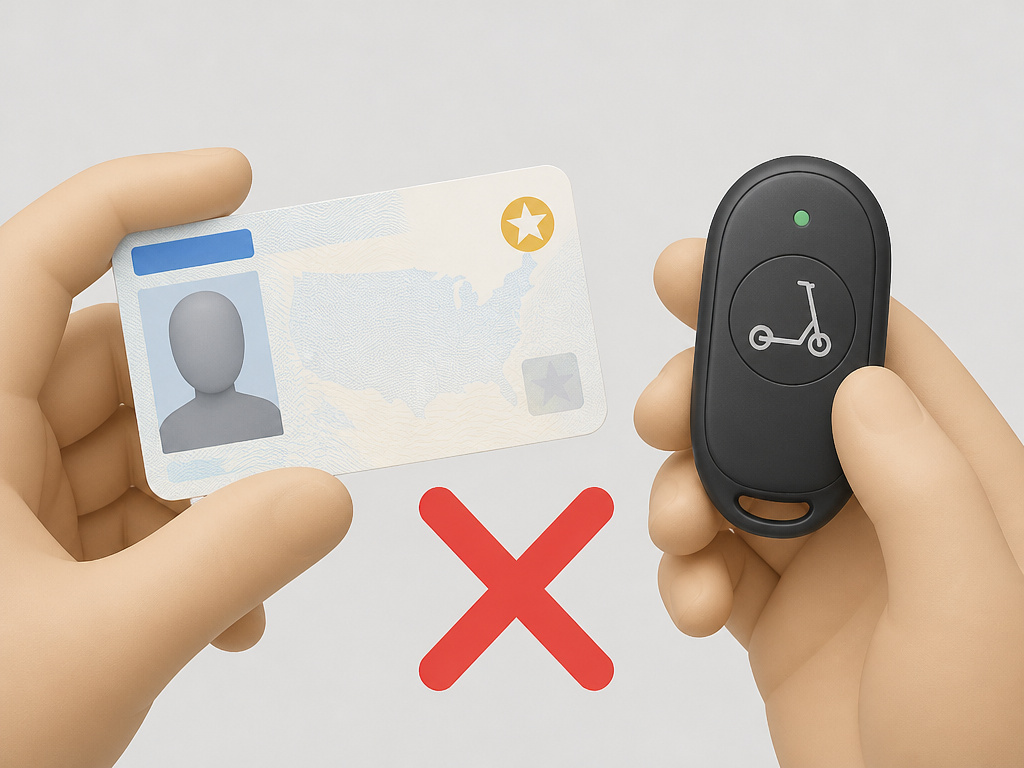
I’ve seen this common mistake a hundred times. Someone buys a scooter for local trips specifically because they don’t drive, only to discover their state requires a license to operate it. Now what?
Your options depend on why you lack a license.
- If you’re underage: In Utah, you can ride at 8. In California, you must be 16 and have a permit/license. If you’re 15 in California, you cannot legally operate a motorized scooter on public property. Your only legal move is to wait, or stick to private property with permission.
- If you’re an adult without a license: In license-optional states (Utah, Florida at state level, Ireland), you’re fine if you meet age requirements. In California, you must get at least a driver’s permit, which means passing a written test. There’s no way around it.
- If your license is suspended: This is a hard stop. Riding a scooter that requires a license while yours is suspended is a major violation, often extending the suspension.
The risk isn’t just a ticket. If you cause an accident while riding a scooter that requires a license you don’t have, you’re facing charges for unlicensed operation on top of any traffic or injury liabilities. The financial and legal hole is deep.
Electric Scooter vs. Moped vs. Motorcycle: The License Threshold
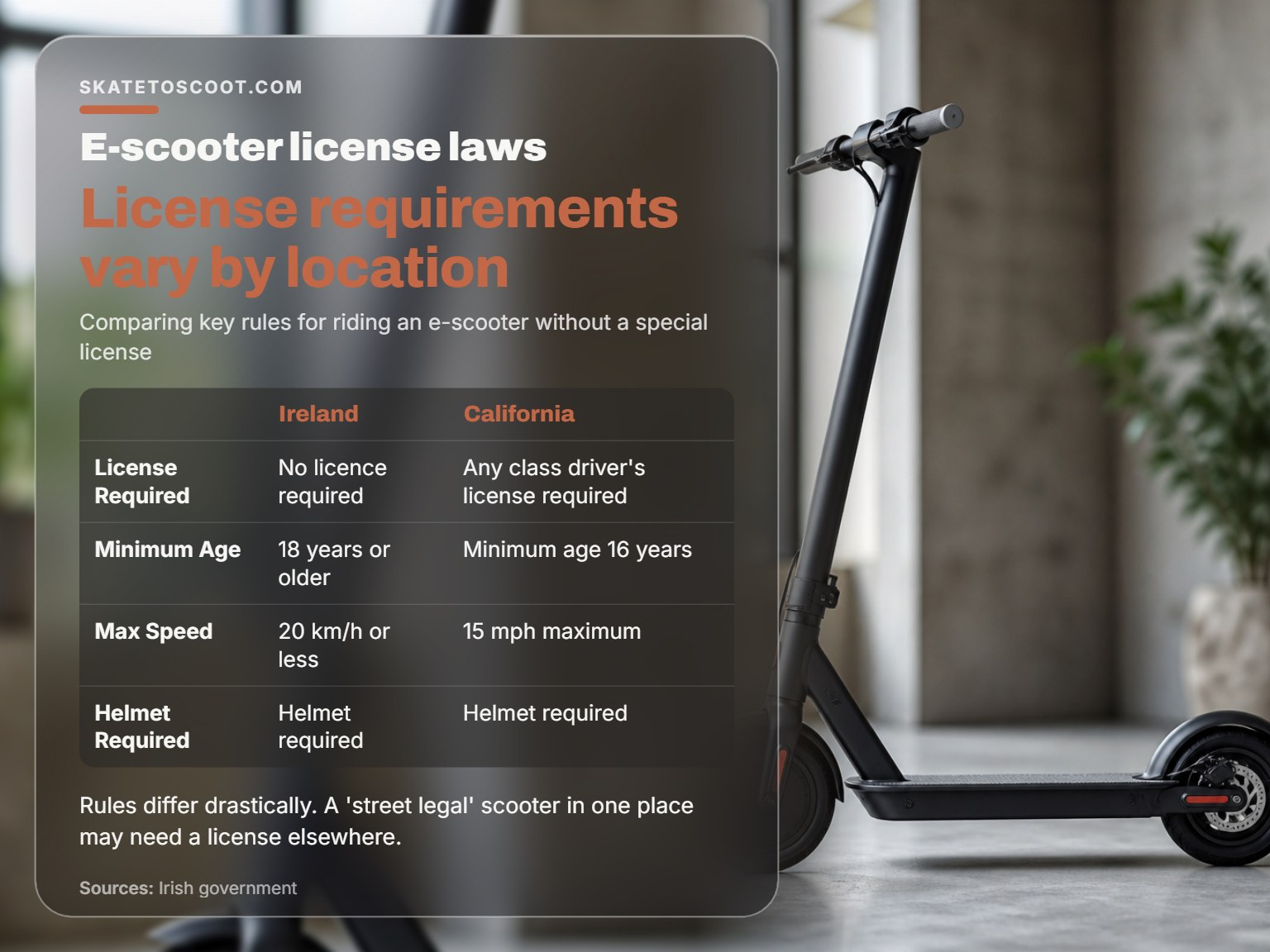
This is where the law gets physical. The government uses specs to draw bright lines between vehicle classes. Cross the line, and you need a different license.
Let’s use California’s definitions as a clear example:
- Motorized Scooter: Max 15 mph. Requires a standard driver’s license (any class).
- Moped: Has pedals, automatic transmission, under 4 gross brake horsepower. Requires a motorcycle license (M1 or M2).
- Motor-Driven Cycle: Engine under 149 cc. Requires a motorcycle license (M1).
- Motorcycle: You get the idea.
The takeaway? Adding a seat can change everything. In Ireland, a seat disqualifies a scooter from the “powered personal transporter” class. This is the difference between hopping on and heading to the DMV.
Common mistake: Buying a scooter online that’s advertised as “street legal” without verifying what that means where you live. A model meeting Utah’s specifications (2000W, 20 MPH) exceeds California’s definition of a motorized scooter (15 mph maximum) and would likely fall into a different vehicle class with different license requirements.
Penalties for Riding Without a Required License
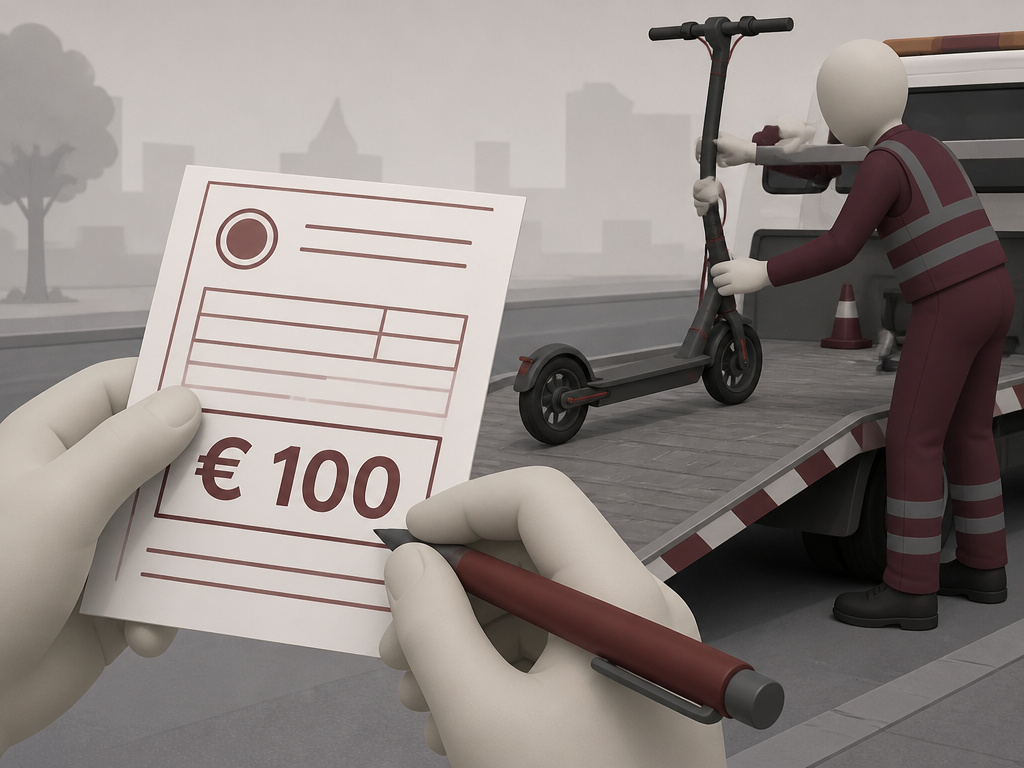
So what actually happens if you get caught? It’s not a slap on the wrist.
Fines are the start. Ireland is raising fixed-charge fines for e-scooter offences from €50 to €100 in November 2026. California can cite you for operating without a valid license. But the real cost comes from escalation.
If you’re in an accident, the fact that you were operating without a legally required license becomes a central issue. It can affect liability determinations and your insurance coverage (if you have any). In severe cases, like riding under the influence, fines can reach up to €2,000 in Ireland. The scooter itself can be impounded, leading to daily storage fees on top of the fine to get it back.
The enforcement reality? Enforcement of license requirements can vary. But “rarely” isn’t “never.” All it takes is one traffic violation, one complaint from a pedestrian, or one accident to turn a blind eye into a costly legal process.
Do you need insurance to ride an electric scooter?
Insurance rules for electric scooters vary significantly by location. In some places, like Florida, state law explicitly states that a motorized scooter or micromobility device is not required to satisfy insurance requirements. In other jurisdictions, the law may be silent on the matter, leaving it as a personal choice. While a license might not be needed, operating any vehicle carries risk. Checking your local transportation department’s website for the specific term used to classify e-scooters is the best way to determine if insurance is mandated. Even if it’s not legally required, considering personal liability coverage is a practical step for any rider.
Frequently Asked Questions
What electric scooter doesn’t require a license?
Any scooter that falls under your state’s definition of a license-exempt vehicle. Commonly, this means lower-speed models. In Utah, any “motor-assisted scooter” under 20 MPH doesn’t require a license. In Ireland, it’s any “powered personal transporter” under 20 km/h, 400W, and 25kg. You must match the scooter’s specs to your jurisdiction’s legal categories.
Can a 14-year-old ride an electric scooter?
It depends entirely on location. In Utah, yes, as the minimum age is 8. In California, no, because the minimum age is 16 and a driver’s license or permit is required. In Florida, maybe, the state doesn’t set an age, but the child’s city might have an ordinance setting a minimum age of 16 or 18. There is no universal answer.
Do you need a license in Florida for a scooter?
No, not at the state level. Florida statute 316.2128 clearly states a driver’s license is not required to operate a motorized scooter or micromobility device. However, local governments can require a government-issued photo ID and set minimum age requirements. Always check your city or county rules.
Are e-scooters legal in Texas?
Texas state law does not require a license for low-speed electric scooters, but they are subject to certain equipment and road rules. As with many states, cities like Austin and Houston have additional ordinances governing where you can ride (e.g., prohibiting riding on certain sidewalks) and may have helmet requirements. You must check local codes.
Can you get a DUI on an electric scooter?
Absolutely. DUI laws apply to vehicles, and if you are riding a scooter on public roads, you are operating a vehicle. In Ireland, riding under the influence can lead to a fine of up to €2,000. In the US, you can be charged with a DUI for operating any vehicle, including bicycles in some states, while impaired. A DUI on a scooter carries the same serious legal consequences as a DUI in a car.
Before You Go
Here’s the bottom line that most summaries miss: you have two checks to make, not one.
First, check your state’s vehicle code for the definition that matches your scooter. That tells you the license and age rules. Second, and just as critical, open your city’s website. Look for transportation or ordinances. That tells you if local rules add a photo ID mandate, a different age limit, or restrict riding on the sidewalk.
If your scooter exceeds the speed limits set by your jurisdiction (for example, 20 km/h in Ireland, 20 MPH in Utah, or 15 mph in California), assume the rules change. You’re likely looking at a vehicle class that requires a license, if not a motorcycle endorsement. When in doubt, the official California DMV scooter rules page is a good template for how specific laws can get, use it as a guide for the kind of details you need to find for your area.
Your first ride should start at your keyboard, not on the pavement.
