Hiboy Scooter Review: Model Comparison and Owner Verdict
This post contains affiliate links. As an Amazon Associate, we earn from qualifying purchases.
It uses 10-inch solid honeycomb tires and dual rear suspension, carries an IPX4 water resistance rating, and has a claimed max range of 25 miles, though real-world tests and owner reports consistently land between 17 and 20 miles.
That gap between the claimed range and the real one is the whole story of a Hiboy scooter review. It’s not a lie, but it is a specific set of conditions: flat ground, a light rider, moderate speed, and ideal temperatures. Most people don’t ride under laboratory conditions.
What follows is a breakdown of the specs that matter, the performance you can actually expect, and the common points of failure owners report. This isn’t about whether Hiboy is “good” or “bad.” It’s about whether a specific model fits the way you’ll actually use it, with the maintenance you’re willing to do.
Key Takeaways
- Real-world range is 17–20 miles for most riders on the S2 Pro, not the advertised 25-mile maximum. Cold weather below 32°F (0°C) leads to poor performance, and when it is below -4°F (-20°C), the riding range can be half or less.
- The 500W motor (750W peak) in the S2 Pro provides adequate power for city hills, but the 350W S2 model struggles on steeper inclines.
- Error codes E3, E4, E5, and E8 are documented failure points; E3 requires a cable and display PCB replacement, while E4/E8 point to controller issues.
- Long-term storage per the manual conflicts with general lithium-ion wisdom: Hiboy says store at 100% charge and top up every 60 days; battery experts often recommend 40-60% charge for longevity.
- For a budget, low-maintenance commuter on smooth pavement, the S2 Pro is a viable option. For rougher roads or heavier riders, the pneumatic tires on the MAX3 or the power of the U2 Pro are better starting points.
The Hiboy Range Reality Check: 25 Miles Claim vs. 17-Mile Reality
The S2/S2 Pro manual claims a maximum range of 25 miles. A YouTube reviewer who owned an S2 Pro for a year reported getting 17 to 20 miles depending on mode. TechGearLab’s 2020 test of the older Hiboy MAX model recorded 12.2 miles on a single charge on flat ground before the battery depleted. The variance isn’t a defect; it’s physics.
Your range is a calculation of battery capacity, motor power, rider weight, terrain, speed, and temperature. The 36V 11.6Ah battery in the S2 Pro has a specific energy storage. Pushing a 220 lb rider up a hill at 19 mph in Sport mode consumes that energy faster than a 150 lb rider cruising at 13 mph on flat ground.
The S2/S2 Pro manual states battery performance is “poor” below 32°F (0°C) and warns that “when it is below -4°F (-20°C), the riding range is only half or less at normal state.”
That’s a sensory reality: on a cold morning, you’ll feel the scooter lag, and the battery indicator will drop visibly faster. The takeaway is simple. Treat the 25-mile figure as a ceiling under perfect, unachievable conditions. Plan your commutes around the 17-20 mile floor, and always factor in a safety buffer.
Performance and Ride Quality: Where Specs Meet the Street
Hiboy models cluster around specific power tiers. The S2 has a 350W rated (500W peak) motor. The S2 Pro bumps that to 500W rated (750W peak). The U2 Pro leaps to a 750W (810W peak) rear-wheel motor. This translates directly to hill-climbing ability and acceleration feel.
The S2 Pro’s 500W motor provides more power than the base S2 model. The real divider is the tires and suspension.
Solid Honeycomb Tires vs. Pneumatic: The Comfort Trade-Off
The S2 and S2 Pro use 10-inch solid honeycomb tires. They never go flat and require zero maintenance. The trade-off is ride harshness and a documented wear pattern.
| Tire Type | Best For | Risk / Known Issue |
|---|---|---|
| Solid Honeycomb (S2/S2 Pro) | Smooth pavement, urban commuters who hate flats | Harsher ride; can develop flat spots under hard braking (noted in TechGearLab 2020 MAX test). |
| Pneumatic Front (MAX3) | Rough roads, light off-road, better shock absorption | Can puncture; requires maintenance and air checks. |
| 16″ Pneumatic Fat Tires (U2 Pro) | Rough terrain, gravel, stability at higher speeds | Heavier, more rotational mass; still puncture-prone. |
The S2 Pro features dual rear suspension. Solid tires transmit more vibration. The MAX3, updated in June 2022, features a 10-inch pneumatic front tire.
Build Quality, Durability, and Common Failure Points
The manuals are clear about limits: a max load of 220 lbs (100 kg) for the S2 Pro and MAX3, an IPX4 water resistance rating (splash-proof from any direction, not submersible), and
Where this goes sideways: Some user reports outside of official documentation mention stem issues on various Hiboy models.
The other critical area is the electrical system, flagged by Hiboy’s own error codes.
Decoding Hiboy’s Error Messages
When the scooter beeps and displays an error, here’s what the manual says it means and how to fix it.
| Error Code | Meaning (Per Hiboy) | Official Fix |
|---|---|---|
| E3 | Communication problem between display and controller. | Replace display-controller cable + display PCB. |
| E4 / E8 | Over-current protection. Brake and throttle stop. | Let scooter cool down. If frequent, replace controller. |
| E5 | Low-voltage protection. | Charge scooter. If persists, replace battery. |
These aren’t obscure faults. E5 indicates low-voltage protection. E4 and E8 indicate over-current protection. E3 is a wiring or board failure.
Model Comparison: S2, S2 Pro, MAX3, and U2 Pro
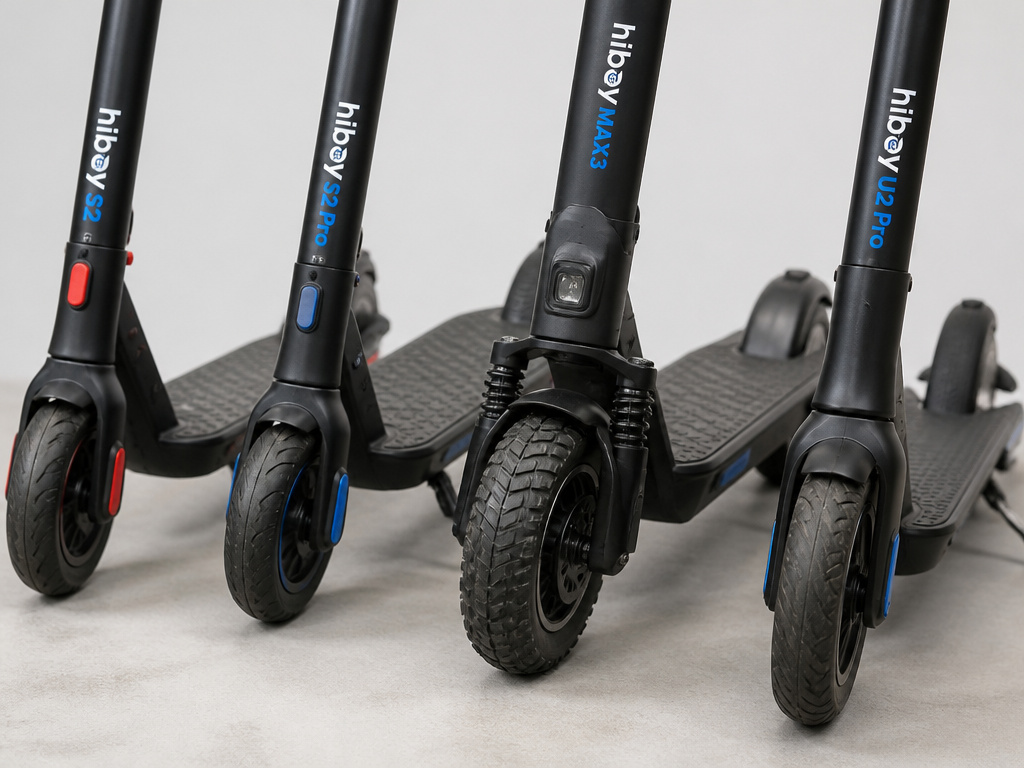
You don’t just buy a Hiboy; you buy a specific model. The differences are substantial and dictate what you can do with it.
Hiboy S2: The entry point. 350W motor, 31.7 lbs weight, 36V 7.5Ah battery. It’s lighter and cheaper. It is lighter and has less power than the S2 Pro.
Hiboy S2 Pro: The default urban pick. 500W motor, 37.4 lbs, 36V 11.6Ah battery. This is the model most comprehensive Hiboy scooter reviews focus on.
Hiboy MAX3: The comfort-updated hybrid. 350W motor (similar to S2), but with a 10-inch pneumatic front tire, wider deck, and a claimed 12-17 mile range. It weighs 40 lbs.
Hiboy U2 Pro: The outlier. 750W motor, 16-inch fat tires, a seat, and an estimated 34-mile range. It blurs the line between scooter and e-bike.
For a detailed breakdown, our guide on comparing Hiboy scooters dives deeper than a typical Hiboy scooter review.
Practical Ownership: Maintenance, Warranty, and Storage
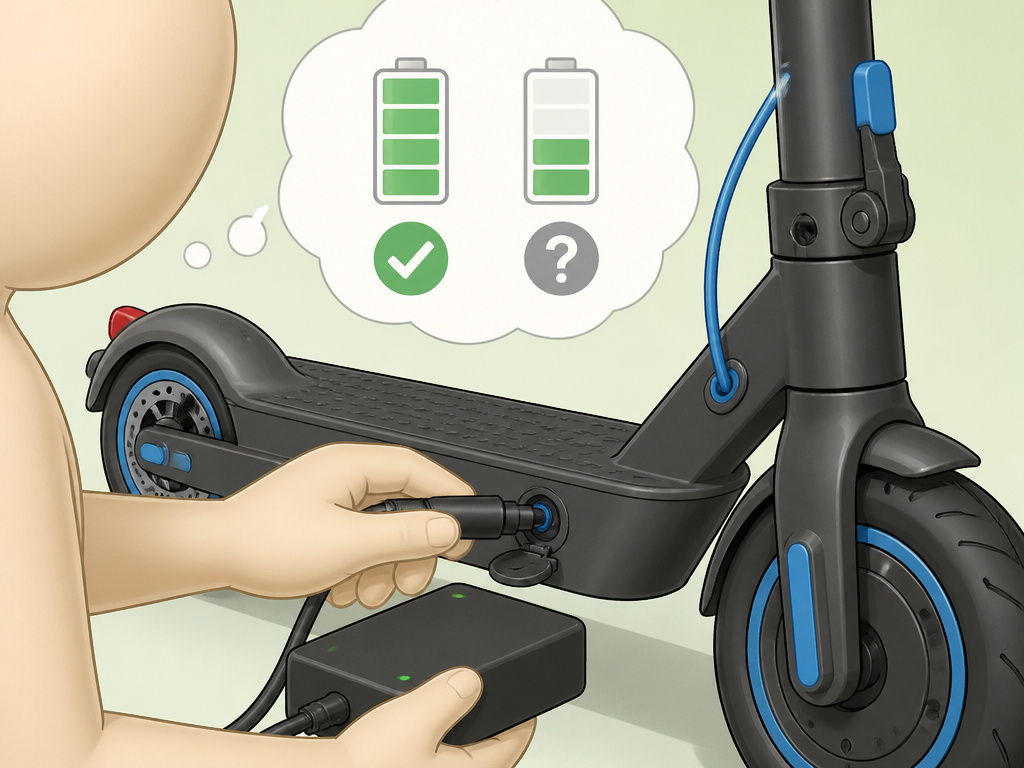
The daily routine is simple: charge, ride, maybe wipe it down. The long-term ownership hinges on following, or intelligently bending, the manual’s rules.
Battery Care and Contradictory Advice
The S2/S2 Pro manual states: “After every use, fully charge the battery to prolong its lifespan.” It also says for long-term storage (>30 days): “fully charge the battery… Keep in mind to recharge it every 60 days.”
Common mistake: Following the “always fully charge” advice to the letter. General lithium-ion battery best practice, from battery universities and other OEMs, suggests avoiding keeping cells at 100% state of charge for extended periods to reduce stress. A storage charge of 40-60% is often recommended for longevity.
Hiboy’s advice is conservative and ensures a ready-to-ride scooter. It may shorten the battery’s overall cycle life slightly. Your call. The MAX3 manual simplifies it: “Please charge the scooter every other month to preserve the battery.”
The Warranty Fine Print
Hiboy offers a standard limited warranty. The return policy allows returns within 30 days from receipt, but return shipping is on the customer if there’s no quality issue. The warranty specifically excludes “damage arising from failure to follow instructions.”
A Reddit thread highlighted a key detail: the battery warranty is 6 months, not a year. An extended warranty may have a gap before it activates. This isn’t hidden, it’s in the warranty statement, but it’s often missed during purchase. Always check the current warranty terms on Hiboy’s site before buying.
Where Owners and Manuals Disagree: The Real-World Manual
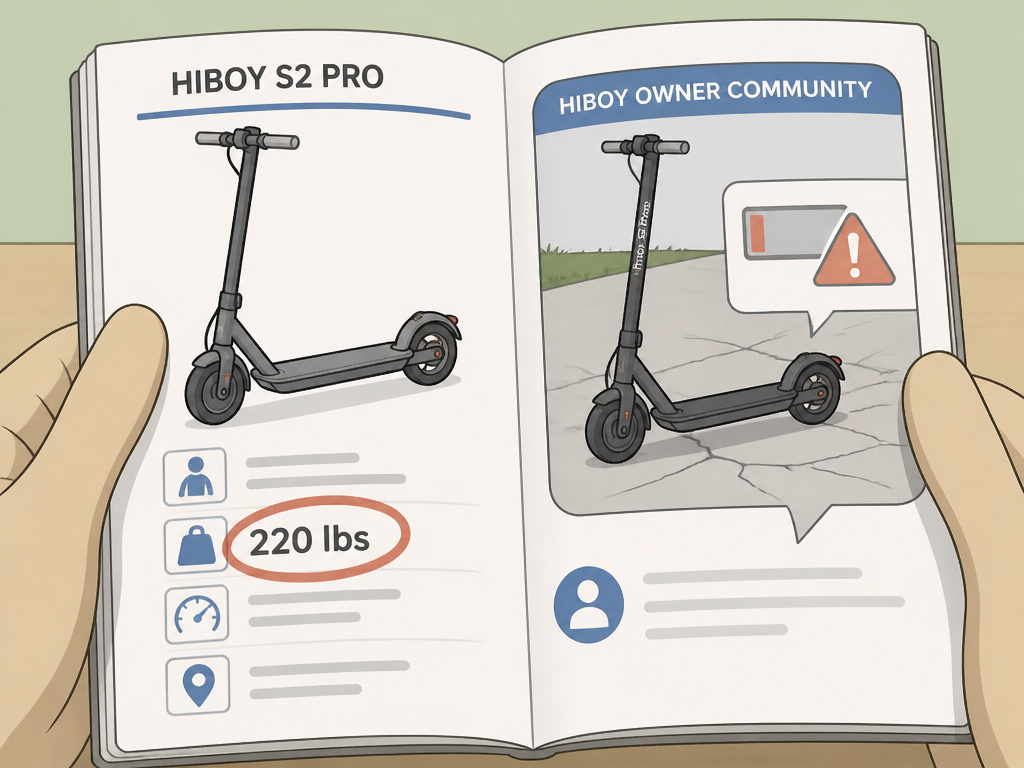
The official manual is a legal document. The owner community writes the practical one. Here’s where they often diverge.
Weight Limits: Anecdotal reports indicate a disagreement: a Reddit user noted the Amazon posting for an S2 said 260 lbs, while the user claimed the manual said 240 lbs. The current S2 Pro and MAX3 manuals clearly state 220 lbs. Treat the manual’s number as the enforceable limit.
Terrain Limits: The manuals don’t emphasize how harsh solid tires are on rough ground. Owners learn this the first time they hit a patch of bad concrete. The manual for the MAX3 also includes a specific, odd warning: “Devices are not intended for use at elevations greater than 2000 m above sea level.” It also warns that extreme humidity can cause internal condensation and battery damage. These are niche but serious edge cases you won’t find in marketing copy.
Reliability: The manuals promise normal use. Forums show clusters of specific failures: stems, controllers, and batteries dying just outside the 6-month window. This doesn’t mean every scooter fails. It means a segment does, and you should factor in the potential for repair. Investing in good scooter locks protects your investment from theft, but it can’t guard against internal failure.
Hiboy S2 vs S2 Pro Review
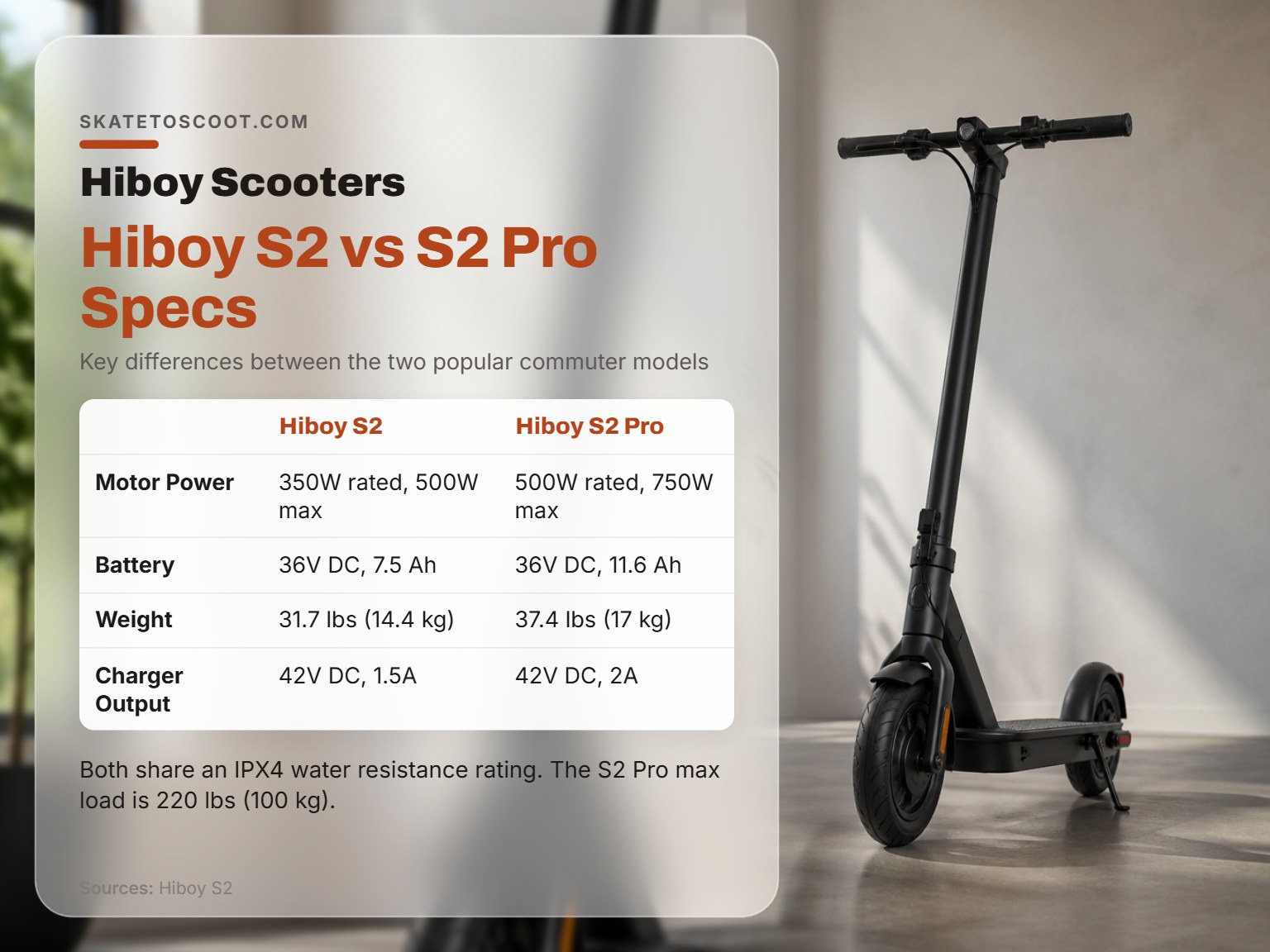
The S2 and S2 Pro are popular commuter models. The standard S2 has a 350W motor and a smaller battery, making it lighter and suitable for shorter trips. The S2 Pro steps up with a 500W motor and a larger battery, offering more power and a longer potential range. Both share an IPX4 water resistance rating, meaning they can handle light splashes but aren’t for heavy rain. Their solid tires require less maintenance than air-filled ones, but some users note a firmer ride. For storage, the manual advises fully charging after each use and recharging every 60 days if the scooter sits idle.
Frequently Asked Questions
Are Hiboy scooters any good?
For their price, yes, if your expectations are set correctly. They are budget commuter scooters, not high-performance machines. The S2 Pro offers decent power and range for city use. Build quality is acceptable but not premium; some units have issues, and the warranty has limitations. It’s a “get what you pay for” proposition that satisfies many casual riders.
Is Hiboy or Segway better?
Segway (specifically Ninebot) is generally considered more reliable with better build quality and water resistance, but you pay significantly more. Hiboy offers better specs per dollar. If your budget is tight and you’re willing to perform basic maintenance, Hiboy can be a better value. If you want set-it-and-forget-it reliability and can spend more, Segway is the safer bet.
How long do Hiboy scooters last?
There’s no single answer. With proper care, avoiding curbs, keeping tires inflated on pneumatic models, not overloading it, and storing the battery properly, many owners report 1-3 years of daily use before major component replacement. The battery is often the first point of failure, with some showing significant degradation after 12-18 months of heavy use.
What is the most common problem with Hiboy scooters?
Based on forum reports and official error codes, the most common issues are battery-related (error E5, rapid capacity loss) and controller/electrical issues (errors E4, E8). Physical failures like stem cracks are less frequent but are a known pattern across several model years.
Before You Go
The Hiboy S2 Pro is a competent tool for a specific job: moving one person across relatively smooth city streets for a distance under 20 miles, with a total weight under 220 lbs. It is not a rugged off-road vehicle, a high-speed thrill machine, or a zero-maintenance appliance.
Your decision comes down to a simple threshold. If your daily commute is under 10 miles round trip on decent pavement, and you weigh under 200 lbs, the S2 Pro will likely serve you well for a couple of years. If your route is hilly, your roads are rough, or you need to travel farther, the math changes. In that case, look at the more powerful U2 Pro or shift your search to brands like NIU or Segway that invest more in ride quality and durability.
Fair warning. Read the manual, especially the parts about error codes and storage. And for your first week, mentally subtract five miles from whatever range the battery indicator shows. That margin is where the anxiety disappears.
