How to Connect Bluetooth to Hoverboard: iPhone vs. Android
This post contains affiliate links. As an Amazon Associate, we earn from qualifying purchases.
To connect Bluetooth to a hoverboard, turn on the board, enable Bluetooth on your phone, and select the board’s name (like “GLIDE PRO” or “Free-Style”) from your phone’s device list. The process is universal, but success hinges on three specifics: your board’s exact Bluetooth version, whether it has separate modules for music and an app, and a tight 3-second timing rule if it doesn’t power on correctly.
That 3-second rule is straight from a VIRO manual. It’s the kind of spec most generic guides miss because they treat all hoverboards as the same plastic shell with a speaker. They’re not. A VIRO Rides Free-Style only works with Bluetooth 2.0 devices. A Jetson V8 Sport has two separate Bluetooth modules inside, one for music, another for its app. Get those details wrong, and you’re left with a silent board and a frustrated kid. This is why you need to find the specific guide on how to connect bluetooth to hoverboard.
What follows: the universal steps every guide has, the brand-specific quirks they skip, and the diagnostic fixes for when “just pair it” doesn’t work. By the end, you’ll know why your board isn’t showing up and exactly how to force it to connect.
Key Takeaways
- The universal steps are turn on, enable Bluetooth, select the device, but always check your manual for the exact network name.
- Brand dictates the details. A Jetson V8 Sport needs two separate connections (speaker and app), while a VIRO Rides model only pairs with Bluetooth 2.0 phones.
- If the board won’t start, wait 3 seconds after powering off before trying again, a VIRO manual specific that prevents a lock-up.
- No pairing sound? The speaker isn’t activated until a device connects. If you hear nothing after pairing, check your phone’s audio output.
- Storage kills connections. If a board stored in a cold garage won’t charge, its Bluetooth won’t work either; bring it inside to a warmer environment first.
The Universal Pairing Steps (and Why They Sometimes Fail)
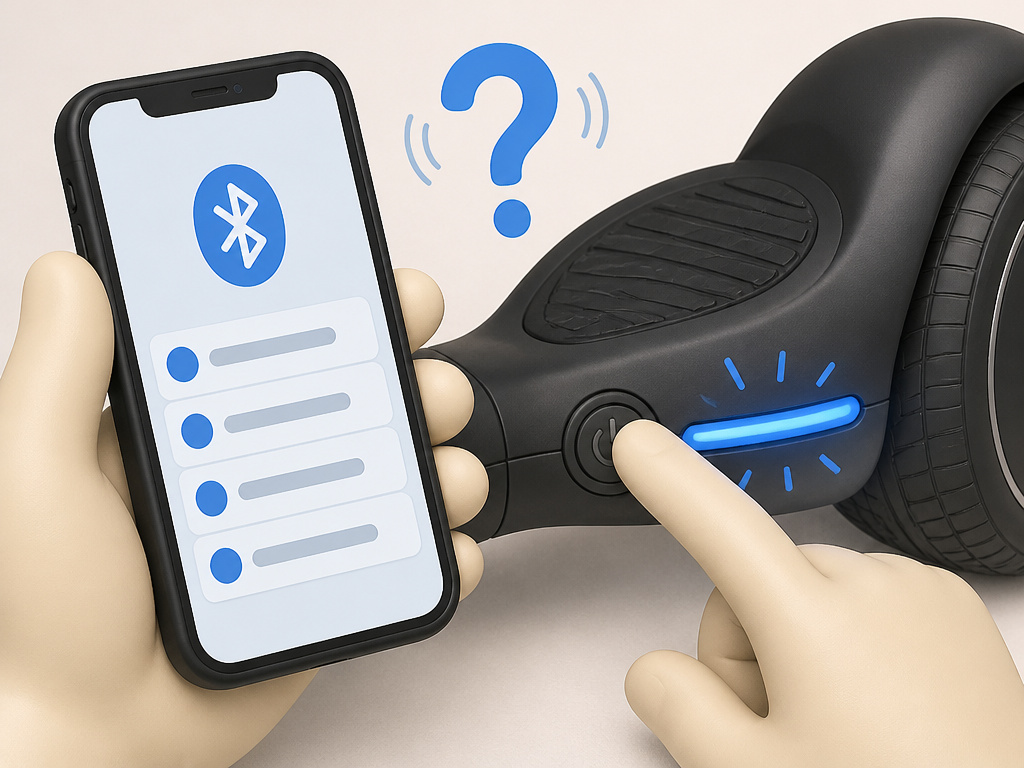
Turn on the hoverboard, enable Bluetooth on your phone, and tap the board’s name in your device list. That’s the three-step mantra for how to connect bluetooth to hoverboard. It works, until it doesn’t.
The sequence requires your board to be in perfect health, its battery to be above a certain charge, and your phone’s Bluetooth stack to be clear of old pairings. A hoverboard with a low battery might power its lights but not its Bluetooth radio. Your phone might automatically try to reconnect to your car’s hands-free system instead. The process of how to connect bluetooth to hoverboard is simple, but it’s brittle.
To connect to your Bluetooth speaker: 1. Turn on the hoverboard; it will become discoverable. 2. Activate Bluetooth in your phone’s settings. 3. Find the hoverboard in your device list and select it to connect and play music. This procedure is documented in the Jetson V8 Sport manual and is the standard for most models.
Where this goes sideways: You do everything right, but “GLIDE PRO” or “Free-Style” never appears on your phone. Before you assume the board is broken, run through this quick diagnostic. It takes two minutes and rules out 90% of ghosting problems.
- Power Cycle Both Devices. Turn the hoverboard off. On your phone, go to Settings > Bluetooth and tap the “i” or settings icon next to any old hoverboard pairing, then choose “Forget This Device” or “Unpair.” Now, turn the hoverboard back on and search again.
- Check the Obvious Range. Your phone needs to be within close range of the board. Bluetooth range is short, and interference from Wi-Fi routers or microwaves can cut it in half.
- Listen for the Speaker. Most boards won’t make a sound until after a successful connection. Don’t expect a beep or chime just from powering on.
If the board still won’t show up, the problem isn’t the universal steps. It’s likely something model-specific.
Brand-Specific Nuances: Jetson, GOTRAX, and VIRO
All hoverboards are not created equal. Treating a Jetson like a GOTRAX is like assuming all skates have the same wheel hardness, you’ll slip when you need to grip. The manuals spell out real differences.
We will examine each brand separately.
| Brand & Model | Bluetooth Network Name | Key Specifics | Common Pitfall |
|---|---|---|---|
| Jetson V8 Sport | Varies (e.g., “Jetson V8”) | Uses Bluetooth 4.1. Has two separate modules: one for speaker, one for Ride Jetson app. App password: “000000”. | Pairing only the speaker and wondering why the app won’t connect. |
| GOTRAX PB652-2 Glide Pro | “GLIDE PRO” | Speaker activates automatically on power-up. Max speed 6.2 mph. | Not hearing audio because phone output is still set to internal speaker. |
| VIRO Rides Free-Style | “Free-Style” | Compatible only with Bluetooth 2.0 devices. If stuck, wait 3 seconds after OFF before turning ON again. | Modern phone with Bluetooth 5.0 failing to connect due to version mismatch. |
The Jetson V8 Sport is the most complex because of its dual-module design. You must connect to two different Bluetooth services. The speaker connection is for music. The app connection, which uses the password “000000”, is for stats, LED controls, and speed modes. Missing that second step is why so many owners think the Ride Jetson app is broken.
The VIRO Rides Free-Style presents the opposite problem: extreme simplicity that’s actually a limitation. Its Bluetooth 2.0 requirement isn’t a suggestion. If your phone is too new, it might not maintain a stable connection, or it might not see the device at all. This is a documented hardware limit, not a software bug.
For the GOTRAX Glide Pro, the process is straightforward. Power on the board by holding the silver button for 1 second, and it broadcasts “GLIDE PRO”. The manual confirms the speaker is automatically enabled. The issue here is usually on the phone side, after pairing, you must manually select “GLIDE PRO” as the audio output device in your music app or system settings.
How to Connect for Music vs. App Control
This is the confusion that floods forums. Is Bluetooth for playing music, or for accessing speed modes and light shows? The answer is both, but they are different connections on some boards.
For music-only playback on most hoverboards, you’re connecting to the built-in speaker module. This is a standard Bluetooth audio profile, like pairing with a wireless headset. Once connected, any audio from your phone, music, podcasts, game sounds, plays through the board’s speakers. The connection is purely for sound.
For app control and telemetry, you’re connecting to a separate data channel. The Jetson V8 Sport is the clearest example. The Ride Jetson App doesn’t stream music; it sends data packets for speed, battery level, and LED color. This requires a second Bluetooth connection, often secured with a password (again, “000000” for Jetson). This is why you can have the app connected and working while playing music from a different phone entirely.
Common mistake: Thinking a connected app means your music will play through it. The app and the speaker are separate circuits. You need both connections active for full functionality on dual-module boards.
If your goal is just to play music, ignore the app. If you want to track ride stats or change settings, download the manufacturer’s app and follow its specific pairing instructions, which usually involve tapping a Bluetooth icon inside the app itself.
Troubleshooting Common Connection Issues
Your board is on, your Bluetooth is searching, and nothing happens. We can solve this. These solutions are ranked from most to least likely.
The board isn’t discoverable.
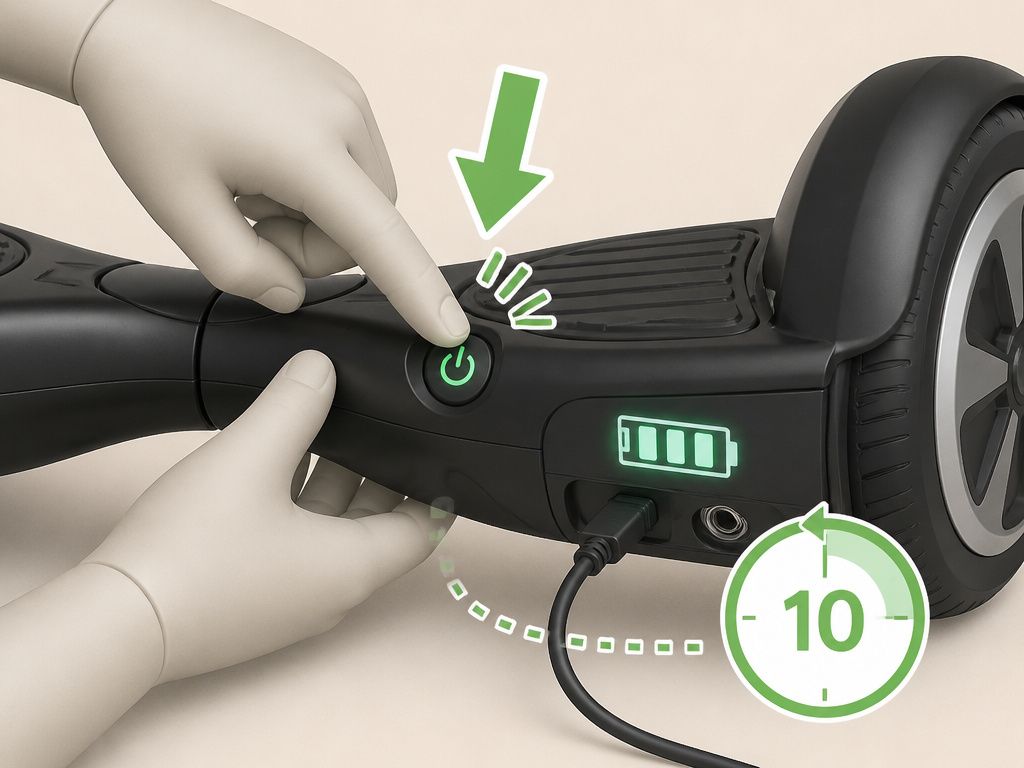
This is the big one. First, rule out a power issue. A hoverboard with a critically low battery might show lights but not have enough juice to run its Bluetooth radio. Plug it in for 30 minutes and try again. Second, perform a hard reset. For many models, this means holding the power button for 10 seconds until all lights flash, then releasing. This reboots the Bluetooth module. For the VIRO Rides Free-Style, the manual has a specific fix: if it won’t start after pushing the power button, wait 3 seconds after the unit is OFF before turning ON again.
The connection pairs but drops immediately.
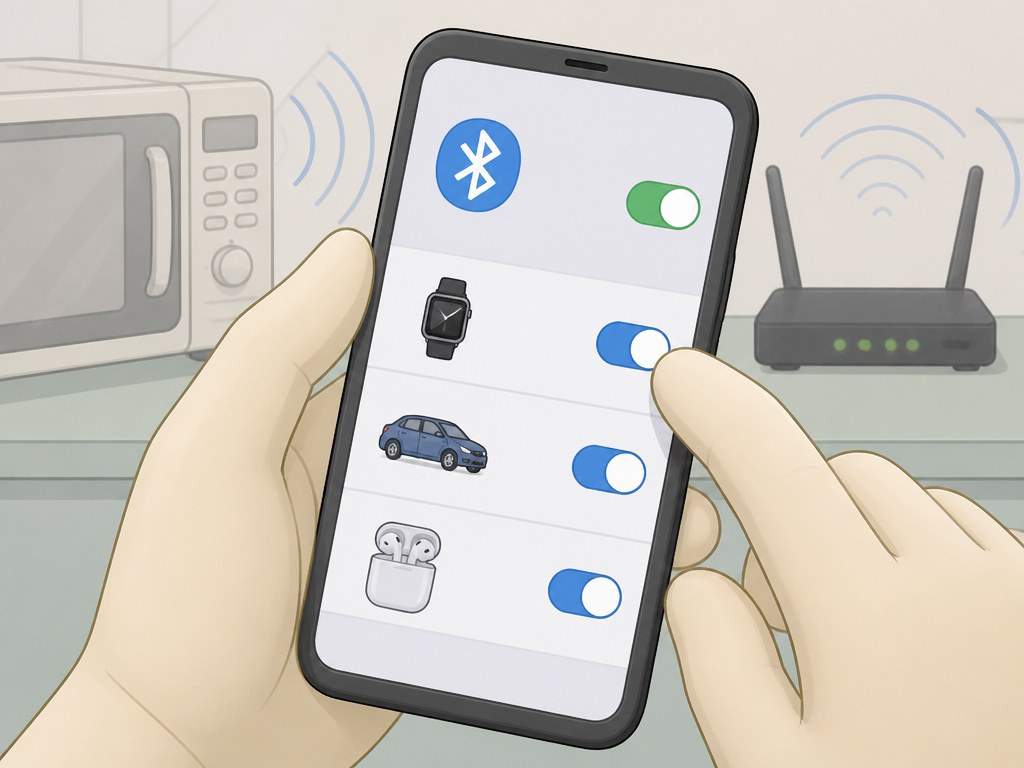
Bluetooth is a one-to-one protocol. If your phone is already connected to your watch, your car, and your earbuds, it can get overwhelmed. Go to your phone’s Bluetooth settings and manually disconnect from other devices, or turn their Bluetooth off temporarily. Also, check for physical interference. Don’t pair near a running microwave or a dense cluster of Wi-Fi routers.
No sound after successful pairing.
The pairing handshake is complete, but the music is still coming from your phone’s tinny speaker. On your phone, go to the audio output settings. In your music app (like Spotify or Apple Music), there’s usually a speaker icon. Tap it and select your hoverboard’s name (e.g., “GLIDE PRO”). On Android, you might need to go to Settings > Connected Devices > Media and toggle the hoverboard as the output.
The app can’t find the board.
Remember the dual-module issue. The Jetson Ride app connects to a different Bluetooth service than the speaker. Ensure you’ve granted the app location permissions (Bluetooth scanning often requires this). Make sure you’re using the correct password (“000000”). If it still fails, consult the manual for specific recalibration or troubleshooting steps.
Hoverboard Care That Affects Bluetooth
Bluetooth modules are electronics. They follow the same rules as the rest of the board’s brain. How you store and clean the hoverboard directly impacts whether that little radio wakes up when you press “on.”
The manuals are unanimous on a few critical points. The GOTRAX PB652-2 Glide Pro manual states you should store it in a dry and cool location and avoid storing outdoors. Sun and rain degrade seals and can corrode internal connections, including the Bluetooth antenna. You must bring it into a warmer environment (above 50°F) first. A frozen battery can’t deliver clean power to sensitive chips.
Cleaning matters, too. The GOTRAX manual is explicit: clean with a soft damp cloth and do not use alcohol, gasoline, kerosene, or other corrosive chemical solvents. Harsh chemicals can seep into seams and damage the speaker grille or microphone, breaking the audio path. It also says do not use a pressure washer. The force of water can penetrate and short the Bluetooth module directly.
Think of it like maintaining skate bearings. You wouldn’t hose them down with a pressure washer; you’d wipe them clean. The same gentle principle applies here. A clean, well-stored board is a reliable board.
Steps differ slightly for iPhone vs. Android
The core process is the same: turn on your hoverboard’s Bluetooth, find its network name in your phone’s Bluetooth list, and tap to pair. However, the menus look different. On an iPhone, you’ll go directly to the Bluetooth settings in the Settings app. On an Android device, you might find Bluetooth under ‘Connections’ or in a quick settings panel. Some hoverboards, like certain models, have separate Bluetooth modules for an app and a speaker, so you may see two different device names. If a password is requested, try the common default one. The key is to ensure your board is discoverable and your phone’s Bluetooth is actively scanning.
Bluetooth auto-turns off after inactivity
Many hoverboards are designed to conserve battery by automatically shutting down their Bluetooth radio after a period of inactivity. This means your speaker or app connection will drop if you leave the board powered on but stationary. To reconnect, you’ll need to manually wake the Bluetooth function again. The method varies by model. Sometimes, simply powering the board off and then back on will restart the Bluetooth discovery mode. For others, you might need to press a specific button combination. Always check that the board is fully charged, as a low battery can also cause the Bluetooth to become unavailable or turn off unexpectedly.
Frequently Asked Questions
Do all hoverboards have Bluetooth?
No. While many modern models include a Bluetooth speaker, it’s not a universal feature. Some older or more basic models are silent. Always check the product specifications before buying if music is a must-have.
How do I connect my Razor Hovertrax 2.0 to Bluetooth?
The process is the same as the universal steps: power on the board, enable phone Bluetooth, and select “Hovertrax” or a similar name from the list. For model-specific quirks, our dedicated guide on the Razor Hovertrax 2.0 covers what makes that model unique.
Why won’t my phone find my hoverboard?
The three most common reasons are: a low battery on the hoverboard, an old cached pairing on your phone that needs to be “forgotten,” or a Bluetooth version incompatibility (like with the VIRO Rides Free-Style and its Bluetooth 2.0 limit). Start with a full power cycle of both devices.
What is the default Bluetooth PIN for a hoverboard?
For models that use a PIN for app pairing, such as the Jetson V8 Sport, the default is often “000000”. The Jetson V8 Sport manual specifies the default password as “000000”.
Can I connect multiple phones to one hoverboard?
Generally, no. Bluetooth is designed for a one-to-one connection. A second phone would need to first disconnect the first one. However, some boards might allow quick switching if the first device disconnects.
My Bluetooth connects but the sound is terrible. Why?
This is usually a range or interference issue. Ensure you’re within a reasonable range without major obstacles. Also, check that your hoverboard’s speaker grille isn’t clogged with dirt or debris, which can muffle sound.
Before You Go
Here’s the one step most guides put in the middle that belongs at the very start: find your manual. The PDF for your specific model. Jetson, GOTRAX, VIRO, holds the exact network name, the password, and the weird 3-second power rule that solves half of all “it’s broken” posts online. That manual is your first tool, not a last resort.
If you’ve paired successfully but later run into other issues, like the board not balancing or an error light, the problem has likely moved beyond the Bluetooth module. In those cases, knowing how to calibrate a hoverboard or understanding general hoverboard repair steps becomes essential. Bluetooth is just one system on a complex piece of electronics.
Finally, trust the process, not just the trick. Pairing is simple, but only if the board’s core systems are healthy. If a Swagtron T580 won’t connect no matter what, the solution might be in a dedicated Swagtron T580 troubleshooting guide that addresses its unique firmware. The real skill isn’t memorizing three steps; it’s knowing which of the fifty possible fixes applies to your specific plastic-and-wheel puzzle. Start with the manual, then work out from there.
