What Are Skateboard Deck Rails Made Of?
This post contains affiliate links. As an Amazon Associate, we earn from qualifying purchases.
Skateboard deck rails are primarily made of tough plastics like ABS, HDPE, and UHMW Polyethylene, chosen for their low friction and durability against grinds. Brands like Century Skate Shop use ABS, Engineered/Brand-X and Riff Raff use HDPE, while Psycho Vision uses UHMW. Premium options like Lil Jawns are CNC-machined from “high molecular plastic,” and custom systems like SI-Boards use bent steel tubing. The typical length ranges from 13 to 14.5 inches, and they are installed with wood screws, often with rattle-prevention tricks like double-sided tape.
That range from common ABS to custom steel directly maps to how a rail will perform. The material decides your slide speed, the deck’s lifespan, and even the sound a grind makes. A common question is: what are skateboard deck rails made of?
What follows: a breakdown of the four main plastic families, the one metal outlier, and the installation tricks that stop screws from backing out after two sessions. By the end, you’ll be able to match a rail’s material to your skating style, whether you’re protecting graphics on crusty curbs or chasing the fastest slide in the park.
Key Takeaways
- The most common skateboard rail materials are ABS, HDPE, and UHMW plastics, each offering a balance of slide speed, durability, and cost.
- For consistent slide performance and graphic protection, a thicker HDPE rail is a common choice.
- Lil Jawns claims CNC-machining provides superior material integrity over standard injection-molded plastics, while other brands do not specify their manufacturing process, implying injection molding is standard and acceptable.
- To prevent rattling, some skaters recommend using a strip of double-sided tape under the rail before screwing it down, while others suggest adding glue or putty to the holes.
- Installing rails adds weight; some skaters feel this decreases pop, while others argue this is a placebo effect.
The Core Materials Breakdown
Look at any skate shop shelf and you’ll see rails labeled with a confusing alphabet soup: ABS, HDPE, UHMW. These marketing terms are the answer to what skateboard deck rails are made of. They are specific plastics with different chemical structures, which translate directly to how they feel on a curb. A rail’s job is to sacrifice itself instead of your deck’s graphic, and to do that with as little friction as possible. The right material gets you both.
Century Skate Shop rails are made of ABS plastic, measuring 13.125 inches long, 0.75 inches wide, and 0.375 inches high, with holes spaced 100mm apart. They include 8 wood screws for installation.
We begin with the most common material: HDPE (High-Density Polyethylene). This is what you’ll find on the Engineered/Brand-X Generic Rails. The product page states they are made of HDPE, with a regular length of 13 to 14.5 inches, a width around 3/4 inch, and a height of about 1/2 inch. The “longboard” variant stretches to 17 inches. HDPE is popular because it’s tough, relatively lightweight, and has a consistent, smooth slide. It’s the default choice for a reason, it does the job well without fuss. The Riff Raff Zig Zag rails also use HDPE, coming in at approximately 13.5 inches long and approximately 0.5 inches thick.
Then there’s ABS (Acrylonitrile Butadiene Styrene), another key answer to what are skateboard deck rails made of. Century Skate Shop uses this for their classic old-school rails. ABS is a bit harder and more rigid than HDPE. That rigidity can make for a slightly more “locked-in” feel on certain surfaces, but it might also be a touch less forgiving on imperfect ledges. The specs are precise: 13.125″ L x 0.75″ W x 0.375″ H.
For a premium slide, brands turn to UHMW (Ultra-High-Molecular-Weight Polyethylene). Psycho Vision rails are made from UHMW and run 14.5 inches long. This plastic is renowned for its extremely low coefficient of friction, it’s what industrial machine bearings are made from. On a skateboard, that means potentially the fastest, smoothest slides available in a plastic rail. You pay for that performance, both in cost and sometimes in a slightly different feel underfoot.
| Material | Brand Example | Key Properties | Best For |
|---|---|---|---|
| HDPE | Engineered/Brand-X, Riff Raff | Tough, good slide, cost-effective | All-around use, graphic protection |
| ABS | Century Skate Shop | Hard, rigid, classic feel | Skaters wanting a more traditional, locked-in slide |
| UHMW | Psycho Vision | Extremely low friction, fast slide | Park skaters prioritizing maximum slide speed |
| CNC-Machined Plastic | Lil Jawns | High density, precise manufacturing | Those seeking claimed superior durability and consistency |
Finally, there is specialized manufacturing. Lil Jawns Standard Rails are made from what they call an “extremely durable high molecular plastic” and are CNC-machined. Their product page explicitly contrasts this with injection molding, claiming most other rails are injection-molded, which “weakens the quality of the material.” CNC machining carves the rail from a solid block, which can produce a more consistent product without the potential weak points of molded plastic. They measure 14″ L x 0.625″ W x 0.375″ H and notably include double-sided tape with the screws.
Plastic vs. Metal: The Custom Edge Case
While plastic dominates, the question of metal rails is a solved engineering problem for specific applications. The custom project by SI-Boards shows what happens when plastic won’t cut it. They were building a longboard-scooter hybrid and needed a rail system that could handle unique stresses. Their solution wasn’t a strip of plastic; it was a custom rail system using bent steel tubing secured with urethane blocks.
This is the extreme end of the spectrum. Steel offers maximum durability and a completely different slide characteristic, harder, louder, and faster on certain surfaces like coping. However, it adds significant weight, can be harder on the deck itself, and isn’t a standard consumer product. It exists to show that when the forces exceed what plastic can handle, the answer is a well-engineered metal system. For 99% of street and park skaters, the plastic matrix covers the need.
Where this goes sideways: Assuming all plastics are the same. Slapping a cheap, brittle plastic strip on your deck might protect the graphic for one session, but it can chunk apart on a rough parking block, leaving you with a jagged edge that catches and sends you flying.
How Material Choice Affects Your Ride
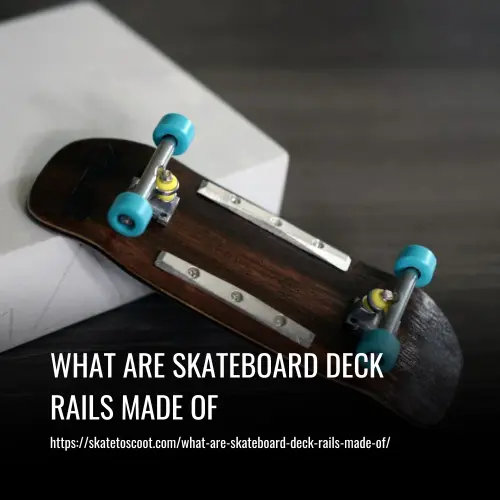
So you have a rail made of HDPE or UHMW. What does that actually change when you’re skating? The material is the middleman between your deck and the obstacle, and its properties dictate three things: slide speed, durability, and “feel.”
First, the slide. A study on skateboard deck materials selection emphasizes properties like fracture toughness. A rail material needs to survive impacts without shattering. UHMW excels here with its low friction, making boardslides on new, sticky park coping feel closer to a waxed ledge. HDPE is a close second, reliable and predictable. ABS can feel a bit grabblier on some surfaces, which some skaters prefer for control. The difference isn’t huge, but it’s perceptible when you’re locked into a long grind.
Second, durability against the deck itself. A harder plastic might protect the graphic better from a single impact, but could it transfer more shock to the deck’s edges? A softer plastic might absorb some of that energy. This is where long-term deck wear comes in, a topic most product pages don’t touch. The community advice to use a buffer like double-sided tape isn’t just for noise, it also creates a micro-layer that can dampen vibration and pressure points between the rail and the deck’s ply.
Finally, the subjective feel. This includes sound and board control. A metal rail clangs. A thick HDPE rail makes a lower thunk. A thin, hard ABS rail might produce a higher-pitched scrape. This acoustic feedback changes how you perceive the trick. Reddit users also note that rails can make grab tricks “a good bit easier because you have something to hold onto.” The material’s thickness and texture influence that grip. A CNC-machined rail with sharp edges offers a different purchase than a rounded, injection-molded one.
Installation and Common Problems
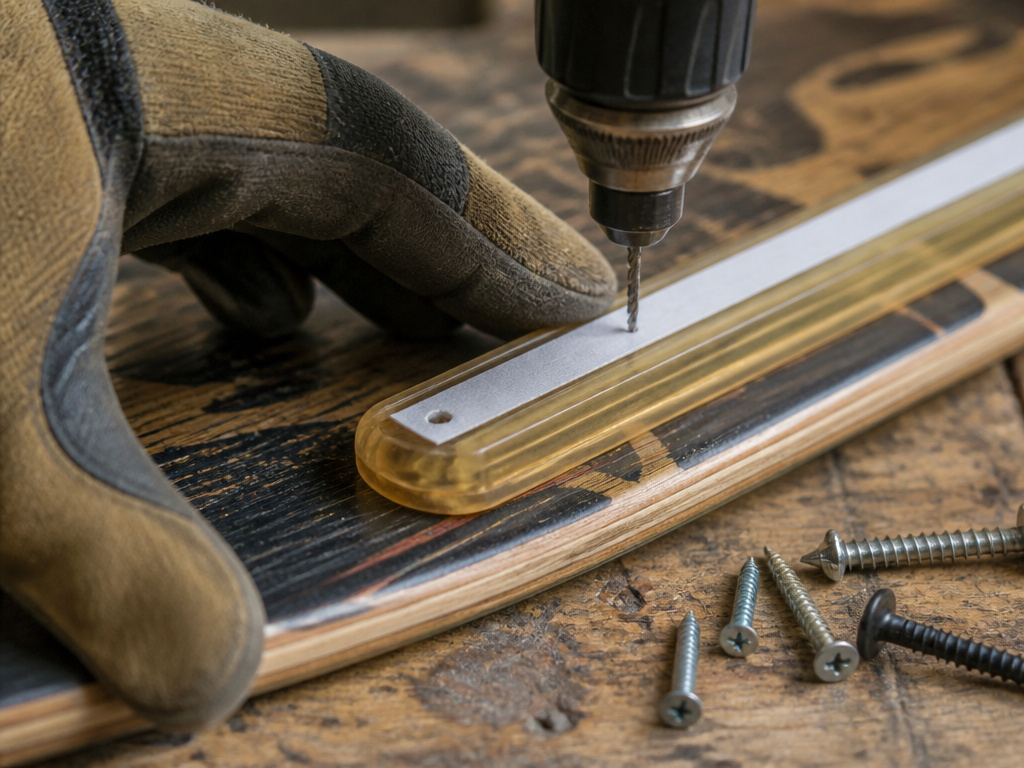
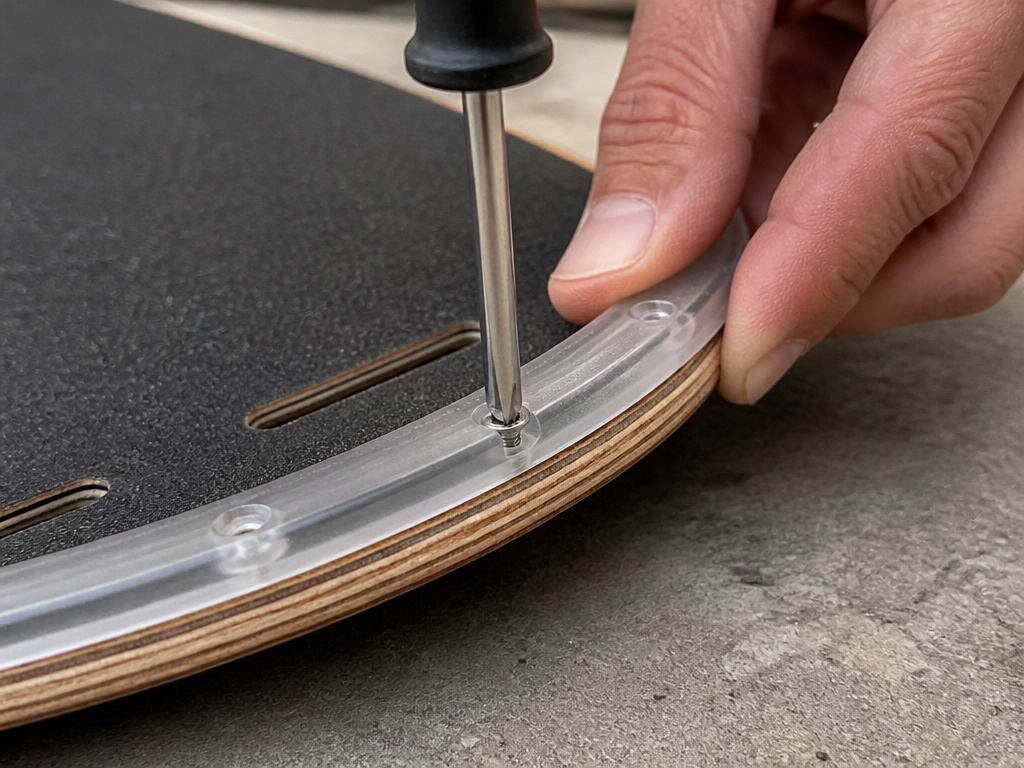
Installing rails is simple in theory: line them up, drill pilot holes, screw them in. In practice, it’s where most of the headaches start, and the community has developed fixes that go beyond the manufacturer’s instructions. Most rails, like those from Century or Engineered, come with a set of wood screws; for example, Engineered/Brand-X includes 8 for regular decks and 10 for its 17-inch longboard variant. The official method is to use those screws. The real-world method often involves a few upgrades.
The most universal complaint is rattling. After a few weeks of impacts, screws can loosen slightly, and the rail starts to make an annoying buzzing clatter with every push. The fix is straightforward and counts as one of those essential, non-commodity insights.
Common mistake: Installing rails with only the included screws. Without a secondary binding agent, vibration from skating will loosen them within a month, causing a rattling sound that’s impossible to ignore.
Here’s the proven two-step process:
- Clean the deck’s bottom where the rail will sit. Any dust or grip tape grit will create a gap.
- Apply a strip of double-sided tape along the length of the rail’s top surface. This isn’t just for adhesion; it fills microscopic voids.
- Press the rail firmly into position and screw it down through the tape. The tape acts as a lock-washer, dampening vibration and preventing movement.
Reddit’s r/OldSkaters offers advice to swap the included hardware for sheet rock screws snapped or cut off on the top side to prevent stripping, while manufacturer product pages include specific wood screws for installation. The reasoning is that the coarse threads of sheet rock screws bite into the wood more aggressively and are less likely to strip out or back out from vibration. Whether you use the included screws or upgrade, the pilot hole is essential. Drilling a hole slightly smaller than the screw’s core diameter prevents the wood from splitting and ensures a tight hold.
What about the effect on your board’s performance? This is the classic trade-off. Threads on r/NewSkaters debate it constantly. Rails add a perceptible amount of weight; some skaters feel this decreases pop, while others argue this is a placebo effect. The truth probably lies in the middle and depends on the skater’s sensitivity and style. The benefit of graphic protection and potentially easier slides often outweighs the potential slight performance dip for those who frequently boardslide or lipslide.
Are Skateboard Deck Rails Worth It?
Consider the value proposition honestly. Deck rails are a tool for a specific job. If you never boardslide, never do lip tricks, and don’t care about deck graphics, you can skip them entirely. Their utility is not universal. But if you do slide your board on obstacles, the calculation changes.
For a street skater hitting waxed ledges and painted curbs, rails can extend the life of a deck’s graphic and make slides more consistent, especially as the obstacle gets rougher. For a park skater, rails can protect the deck during coping slides. The materials used in skateboards are chosen for performance, and rails are no different, they are a performance add-on.
The historical context is also relevant. Rails have cycled in and out of fashion for decades. Their current resurgence, particularly among “old skaters,” is partly about preserving decks that cost more than they used to, and partly about recapturing a certain feel from earlier eras. They bridge the gap between the classic, functional skateboarding of the past and the modern, high-performance sport. Whether you’re into the technical specs of deck construction or just want to preserve your board’s art, rails offer a tangible, if specialized, benefit.
When Did Skateboard Rails Become Popular Again?
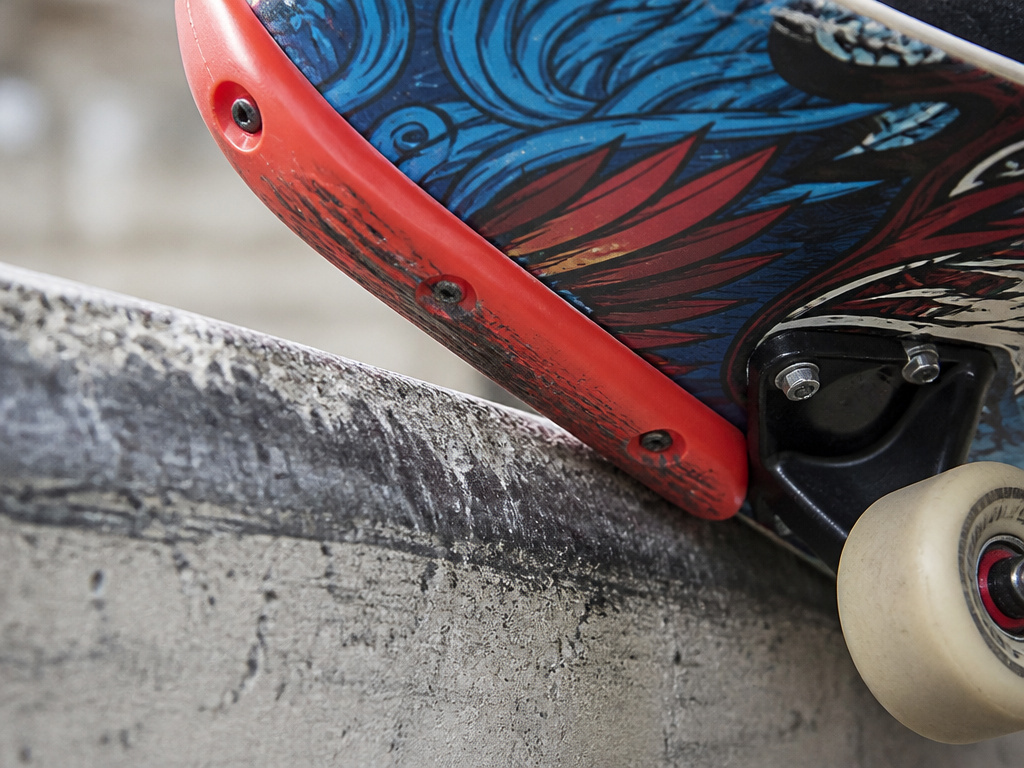
Skateboard rails are experiencing a major comeback, moving from a niche old-school accessory to a common sight in modern street and park skating. Their resurgence is tied to a broader appreciation for tricks that prioritize style and board preservation over technical flip variations. Today’s skaters use them for slides, to make grab tricks more secure, and to protect expensive deck graphics from getting shredded on rough concrete and metal edges. This renewed popularity has also sparked innovation, with brands now offering rails in a wider array of durable plastics and even custom metal systems, moving beyond the simple injection-molded pieces of the past.
Frequently Asked Questions
What is the best material for a deck railing?
There’s no single “best” material, it depends on your priorities. For most skaters, HDPE offers the best balance of slide speed, durability, and cost, making it the default choice. If you want the fastest possible slide and are willing to pay more, look for UHMW Polyethylene. For a classic, rigid feel, ABS is a solid option.
How do you make a homemade skateboard rail?
It’s possible, but getting the material right is critical. You’d need a strip of tough, low-friction plastic like HDPE or UHMW, cut to roughly 13-14 inches in length. However, sourcing the right grade of plastic and machining it smoothly is difficult for a DIY project. For a practice rail, building a standalone skate rail from metal pipe is a more common and safer approach than trying to fabricate deck-mounted rails.
Are skateboard deck rails worth it?
They are worth it if you frequently perform boardslides, lipslides, or other grinds where the deck contacts an obstacle. They protect your deck’s graphic and can make slides faster and more consistent. If you primarily skate transition or don’t do these tricks, the added weight might not be justified.
Why is skateboarding no longer popular?
This premise is flawed. Skateboarding remains hugely popular globally, with millions of participants and a spot in the Olympics. While its mainstream media presence fluctuates, participation and industry health are strong. The resurgence of components like deck rails is evidence of an engaged, evolving culture, not a declining one.
Before You Go
The material question boils down to matching a plastic’s properties to your terrain. On rough, crusty street spots, a thicker HDPE rail is your best defender. In a slick park, UHMW can feel like a cheat code. And if you’re chasing every ounce of performance, a CNC-machined option claims the high ground.
One rule most guides skip: if you install rails and they start rattling within the first month, you didn’t use tape. That buzzing is the sound of a preventable problem. A two-dollar roll of double-sided tape is the difference between a clean, silent setup and an annoying distraction.
Everything above assumes you’re sliding on standard surfaces. If you’re building something truly custom, like the SI-Boards hybrid, the material calculus changes entirely, steel and urethane become the answer. For the rest of us, the plastic matrix has it covered. Pick the one that matches your most frequent curb, and remember the tape.
