Icebear 150cc Scooter Review: The Value Proposition
This post contains affiliate links. As an Amazon Associate, we earn from qualifying purchases.
An Icebear 150cc scooter is a budget-friendly, street-legal machine built around the ubiquitous GY6 engine, offering enough power for highway speeds and passenger capacity. Its value proposition hinges on your willingness to perform basic maintenance.
That post-ride fastener check is the hinge the whole ownership experience detailed in an icebear 150cc scooter review swings on. You can bolt it together, fill it with fluids, and go. For a while. Or you can follow the dealer’s specific timeline, one hour of riding, then a full re-torque of every bolt you just tightened, and catch the vibrations before they turn a cheap scooter into a rattling, failing mess. The difference isn’t academic; it’s the line between a fun, cheap runabout and a frustrating money pit.
What follows: a breakdown of the Maddog Gen V 150cc‘s real-world speed, the absolute licensing rule, the assembly process no manual fully explains, and the honest math on what “affordable” actually costs over a season of riding.
Key Takeaways
- The Maddog Gen V 150cc (PMZ150-22) requires a motorcycle license and endorsement in all 50 states, it’s not a moped.
- Expect a top speed around 56–57 mph, which is enough for roads posted at 45 mph but pushes the engine hard on sustained 55 mph highways.
- Assembly from the crate takes 2–3 hours, but you must perform a critical fastener re-torque after the first hour of riding to prevent failures.
- Long-term costs add up: budget for maintenance items and potential part replacements.
- Parts are plentiful and cheap due to the common GY6 engine, but be prepared for inconsistent component quality between production batches.
Ice Bear 150cc Scooter Review: The Value Proposition
Be real about the Ice Bear brand. You’re not buying Japanese refinement. You’re buying a tool. A simple, air-cooled, carbureted tool built around an engine design so widespread that its parts are cheaper and more available than a fast-food burger. The value lies in accessibility, not flawless paint or buttery suspension. For the price of a set of aggressive skates and protective gear, you get a motorized vehicle that can, legally, carry you and a passenger on public roads. That’s a powerful equation, especially if your other transportation is a bus pass or a bicycle. But like any tool, its usefulness depends entirely on how you set it up and maintain it. A dull chisel ruins good wood; a poorly assembled scooter ruins your summer.
The Maddog Gen V 150cc: Highway Capability and Licensing
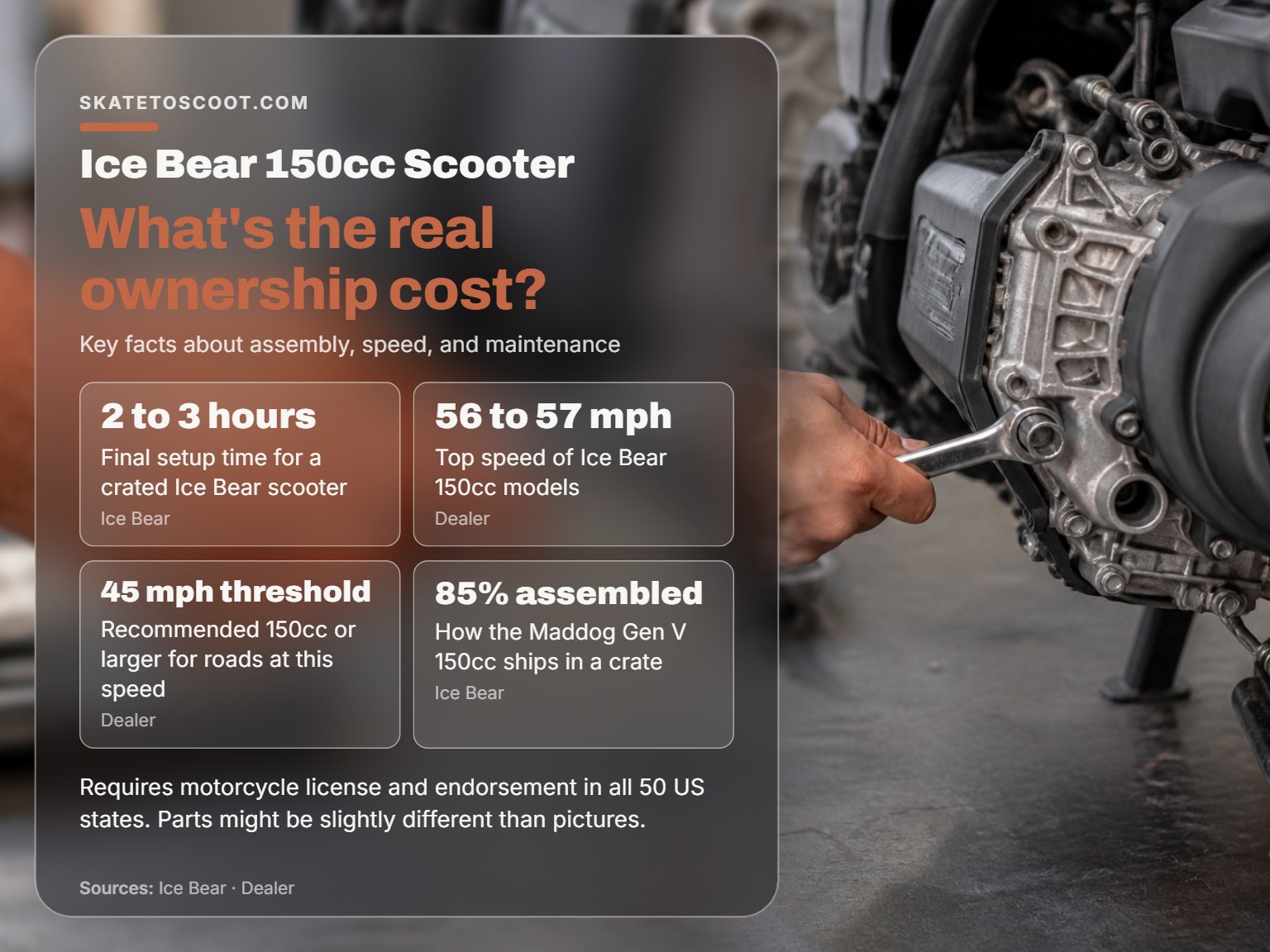
The Maddog Gen V 150cc (PMZ150-22) features a 149.5cc air-cooled engine and an automatic CVT transmission. It is street legal in all US states but requires a motorcycle license and endorsement for operation, and its design includes passenger footpegs and a grab bar for two-up riding.
The 149.5cc air-cooled heart of the Maddog Gen V is the same basic GY6 unit that powers a million other budget scooters worldwide, as noted in every icebear 150cc scooter review. That’s its greatest strength and its most obvious limitation. The power is adequate, not exhilarating. A dealer source notes the 150cc models have a top speed around 56 to 57 mph. That number is important. It means this scooter is designed for roads where the speed limit is 45 mph or less. On a 55 mph highway, you’ll be holding the throttle wide open, the engine singing near its redline, with zero passing power in reserve. It’s a commuter, not a tourer.
The licensing rule is absolute and trips up more buyers than any mechanical quirk, a fact stressed in every icebear 150cc scooter review. All 50 states require a motorcycle license and endorsement for a 150cc scooter. This isn’t a “maybe” or a “check your local laws” situation. You need to take a motorcycle safety course, pass a written test, and pass a skills test on two wheels. If you were hoping to ride this with just a car license, stop. That path leads to fines, impounded vehicles, and voided insurance claims. This requirement alone filters the audience: you must be committed enough to get licensed.
Assembly and the Critical First Hour
Final setup takes 2 to 3 hours. You’ll be bolting on mirrors, maybe a windshield, filling the engine with oil, and connecting the battery. The process is straightforward if you’re handy with basic tools. But here is where the commodity advice ends and the real ownership advice begins.
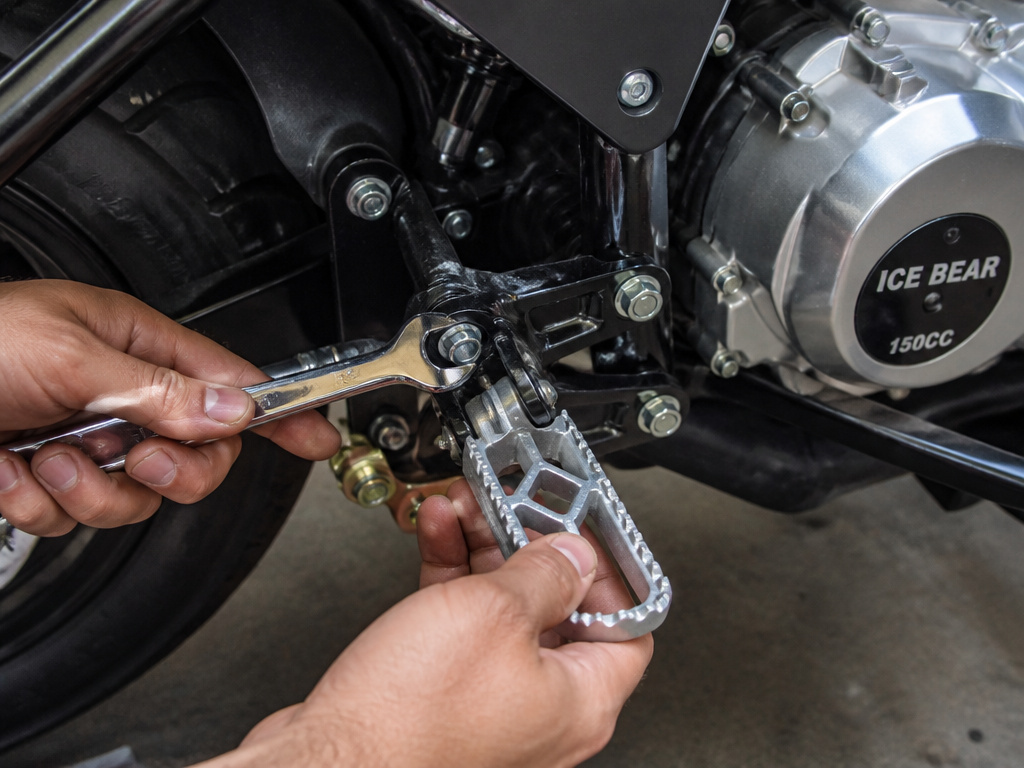
A dealer who sells these machines emphasizes a step you won’t find highlighted in the generic manual: after that first hour of riding, you need to go over every fastener you tightened during assembly and re-torque it. Vibration from a new engine shakes everything loose. The exhaust mounts, the engine mounts, the axle nuts, the handlebar clamps, all of it. Skip this, and you’ll be chasing rattles within a week. Within a month, a loose bolt could fall out, leading to a more serious failure. That one-hour check is the difference between a machine that holds together and one that feels like it’s disintegrating beneath you.
| Assembly Stage | Key Task | Risk If Skipped |
|---|---|---|
| Uncrating | Inspect for shipping damage, inventory all parts. | Missing or damaged components not caught for warranty. |
| Final Assembly | Install mirrors, connect battery, fill fluids (0.8L 10w40 engine oil). | Improper fluid levels cause immediate engine damage on first start. |
| Post-First-Ride (1 hour) | Re-torque all fasteners (exhaust, axles, engine mounts, handlebars). | Vibration-induced loosening leads to rattles, part failure, or safety issues within weeks. |
| Registration Prep | Obtain proof of ownership, insurance, and visit the DMV with your motorcycle license. | Unable to legally ride on public roads, risking fines and impoundment. |
Performance, Mods, and the GY6 Community
So how fast does it really go? The dealer-cited 56–57 mph is a realistic ceiling for a stock machine. You’ll hit an indicated 50 mph easily; the last 5-7 mph comes slowly, with the engine audibly straining. This makes it perfect for city streets and suburban backroads. If your commute involves a stretch of 45 mph road, you’ll be fine. If you need to merge onto a 65 mph interstate, look at a larger displacement model like the 276cc Defender.
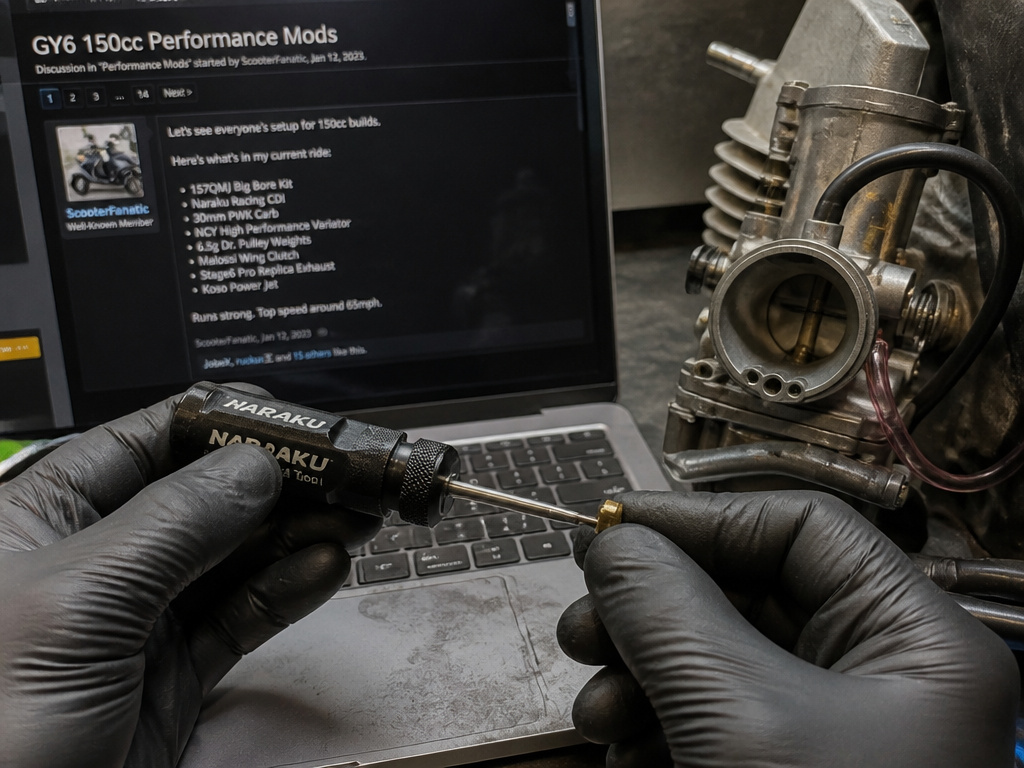
The saving grace for enthusiasts is the massive aftermarket for the GY6 engine. Bored with 57 mph? A simple carburetor re-jet, a free-flowing exhaust, and different CVT weights can nudge that top speed into the low 60s. The online community around these bikes is vast and incredibly helpful. Forums and YouTube channels are filled with tutorials on everything from fixing a no-start issue to full engine swaps. Owning an Ice Bear is as much about joining that community as it is about riding. When you need a part, you’re not searching for an obscure OEM code; you’re searching for “GY6 stator” or “GY6 carburetor,” and you’ll find a dozen options under $50.
Common mistake: Assuming all 150cc Ice Bear models use the same fluids. The PMZ150-3 (F3) requires 140mL of SGL-4 85W-90 gear oil, while the Maddog and Cyclone models need 0.25L of GL-3. Using the wrong type or amount can damage the final drive.
Ownership: The Real Cost Beyond the Sticker
The purchase price is the admission fee. The real cost of ownership is in the details that keep it running reliably. Here is a breakdown of what most reviews gloss over.
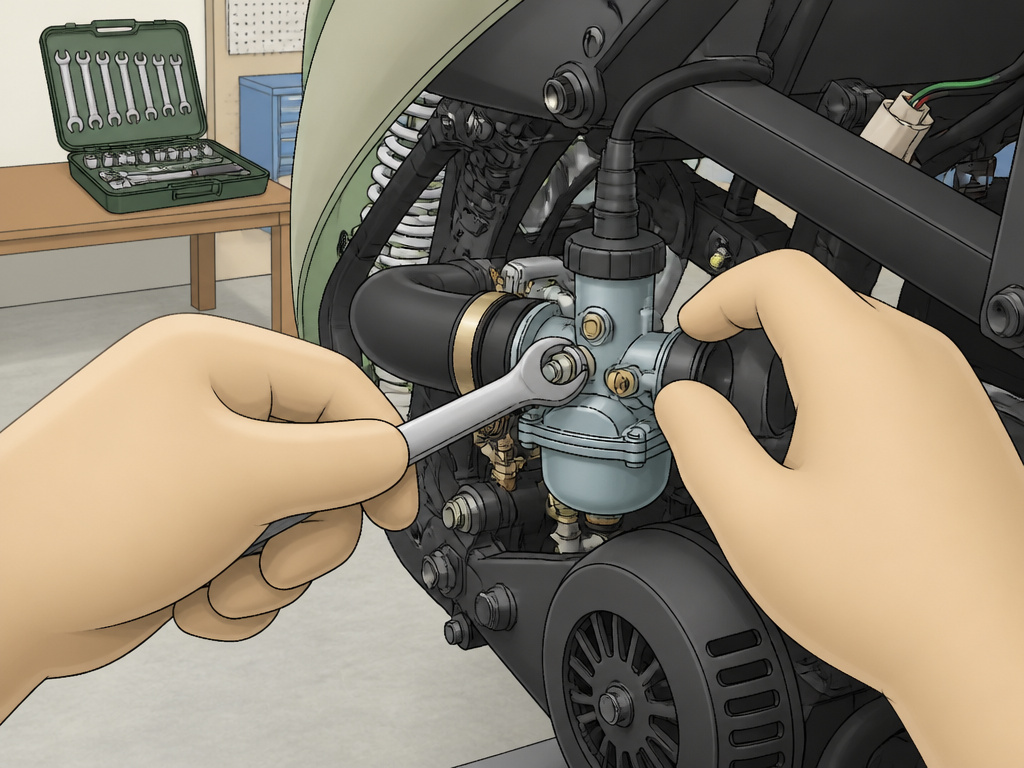
First, fuel. These are carbureted engines. If you let them sit for a month with standard pump gas, the carburetor jets will clog with stale fuel varnish. You will then spend an afternoon taking the carb apart to clean it. The fix is simple: use a fuel stabilizer every time you fill up, or drain the carb if you know the scooter will sit. It’s a five-minute habit that saves a three-hour headache.
Second, maintenance intervals are short. The service manual calls for frequent maintenance intervals. If you ride daily, you’ll be changing oil monthly. The parts are cheap, but the time commitment is real.
Third, plan for small, annoying failures. The electrical components, the voltage regulator, the CDI unit, the starter solenoid, are the typical weak points. Owners report replacing these within the first year. The good news is these generic parts are inexpensive and take minutes to swap with basic tools. The bad news is it will leave you stranded once. Carry a toolkit.
Here’s a comparison of how the Ice Bear stacks up against a more established budget option, like the Italica scooter, which also uses a GY6 platform but often comes with slightly better dealer support.
| Factor | Ice Bear Maddog Gen V 150cc | Typical GY6 Competitor (e.g., Italica 150cc) |
|---|---|---|
| Initial Price | Very low | Low to moderate |
| Dealer Network | Sparse; mostly online direct or small powersports shops | Broader, but still limited |
| Parts Availability | Excellent (generic GY6 parts) | Excellent (generic GY6 parts) |
| Assembly Required | Significant (crated, 2-3 hrs + post-ride check) | Often dealer-assembled |
| Typical First-Year Issues | Loose fasteners, electrical gremlins, carb clogging | Similar, but potentially less severe with dealer PDI |
| Community & Mod Support | Very large, active online forums and YouTube channels | Large, but model-specific info may be harder to find |
Is an Ice Bear 150cc Scooter Right For You?
This scooter is designed for a specific someone, not for everyone.
Buy it if: You have a motorcycle license, your commute is under 10 miles on sub-45 mph roads, you have a basic toolkit and a willingness to tinker, and you view potential breakdowns as a puzzle to solve rather than a catastrophe. You’re buying a project vehicle that can also get you to work.
Avoid it if: You need turn-key, set-and-forget reliability, your daily route includes high-speed highways, you lack a secure indoor space for assembly and maintenance, or the idea of adjusting a carburetor sounds like a nightmare. In that case, the used market for Japanese scooters like the Honda Ruckus or Yamaha Zuma is where your money should go. For a broader look at alternatives, our hub of scooter reviews covers a wide range of models and brands.
Your first focus should be on proper tools and maintenance. The scooter will teach you the rest.
What are the main Ice Bear 150cc scooter models?
The Maddog Gen V is a clear example of what to expect from this class, though specific details for every model aren’t always listed. It uses a simple, air-cooled 150cc engine. This model is street legal across the country and designed for carrying a passenger, with footpegs and a grab bar as standard equipment. Remember, any 150cc scooter like this requires a full motorcycle license in all states. These bikes are practical tools for city and suburban routes, especially where speeds stay around 45 mph or a bit higher. They typically ship mostly assembled in a crate, requiring a few hours of final setup and a crucial fastener check after your initial ride.
Frequently Asked Questions
Are Icebear scooters any good?
They are good at being inexpensive, simple, and repairable. They are not good at being polished, hassle-free, or durable without owner intervention. If “good” means reliable transportation with minimal effort, look elsewhere. If “good” means an affordable mechanical platform you can learn on and modify, they excel.
How fast does a 150cc Ice Bear go?
Stock 150cc model like the Maddog Gen V has a verified top speed of 56 to 57 mph according to dealer data. This is sufficient for city and secondary roads but leaves no margin for error on highways with 55+ mph speed limits.
What is the best 150cc scooter to buy?
The “best” depends entirely on your priorities. For ultimate reliability and resale value, a used Honda or Yamaha is best. For the lowest upfront cost and easiest home repair, an Ice Bear or a similar model like the X Pro scooter is a strong contender. For a balance of price and dealer support, Taiwanese brands like Kymco or SYM are worth the extra investment.
Is Ice Bear a good brand?
Ice Bear is a competent assembler of commodity parts, not an engineering brand. Their good points are a straightforward online sales model and adherence to the standard GY6 blueprint. Their weak points are inconsistent component quality between batches and minimal dealer support.
The Bottom Line
An Ice Bear 150cc scooter is a financial and mechanical gateway. The low sticker price opens the door to motorized riding, and the simple GY6 engine teaches you how vehicles work. But that gate swings both ways. Walk through it with your eyes open, a torque wrench in hand, and the expectation that you will become your own mechanic. See it as a hands-on hobby that happens to provide transportation, not as cheap transportation alone. For the right person, the tinkerer, the learner, the budget-conscious commuter with short, slow routes, it’s a fantastic deal. For anyone expecting appliance-like reliability, it’s a fast track to frustration. Your first ride shouldn’t be on the highway; it should be to the hardware store for threadlocker. After that, the road is yours.
