Italica Scooter 150cc Review: Key Differences Explained
This post contains affiliate links. As an Amazon Associate, we earn from qualifying purchases.
An Italica or Italika 150cc scooter is a budget-friendly, entry-level machine built around a ubiquitous 149cc air-cooled engine, but its real-world value depends entirely on which specific model you choose and your willingness to perform basic maintenance. The Italika DM150 is a heavier, more powerful scooter, while the Italika FT150 is a lighter, manual-transmission model; US-market Italica Motors versions like the Moto, Diablo, and Trooper offer varied styles with automatic CVTs but lower horsepower ratings.
The horsepower gap between a top-spec Italika and a base Italica model is the first clue you’re not comparing apples to apples in any Italica scooter 150cc review. A significant horsepower difference changes hill performance and highway viability. The rest of this review walks through the specs that matter, the failure points owners actually report, and where these scooters fit in a market crowded with Chinese-built options.
What follows: a breakdown of the confusing model lineup, a hard look at the GY6 engine‘s reputation, a comparison of what you get versus established brands, and a practical checklist for evaluating a used model.
Key Takeaways
- Model identification is critical. An Italika DM150 (13.2 hp) and an Italica Motors “Diablo 150cc” (8.0 hp) share a displacement but are different scooters with different performance ceilings.
- Expect to become your own mechanic. Forum reports and OEM manuals point to fuel system (carburetor, filter) and electrical (battery, starter) issues as common failure points.
- Parts are available but require searching. Distributors like Scooter Dynasty stock a wide range of OEM parts for Italica models, confirming the aftermarket support exists but isn’t as seamless as for Honda or Yamaha.
- For pure city commuting under 50 mph, they can work. The lighter Italika FT150 (99 kg) with its 5-speed manual is arguably more engaging and serviceable for this role than the heavier automatic models.
- A pre-purchase inspection is essential. Given the variance in build quality and owner maintenance, a used model demands a rigorous check of compression, carburetor cleanliness, and CVT belt condition before money changes hands.
The Italica/Italika 150cc Model Lineup: Decoding the Names
You’re not looking at one scooter. You’re looking at a family of models sold under similar names in different markets, with significant spec differences. The “Italika” brand is primarily for Mexico, while “Italica Motors” appears to be a US distributor. Their manuals and product pages are your only reliable source for specs.
This isn’t a typo; it’s a reflection of different state-of-tune, component quality, or even measurement standards.
The core specs from official sources paint a picture of two distinct product tiers.
| Model | Power (hp) | Torque (Nm) | Weight | Transmission | Key Differentiator |
|---|---|---|---|---|---|
| Italika DM150 | 13.2 @ 7,500 rpm | 13.5 @ 5,500 rpm | 121 kg | Automatic (CVT assumed) | Highest power, full-size scooter |
| Italika FT150 | 11.5 @ 8,500 rpm | 11 Nm @ 7,500 rpm | 99 kg | 5-Speed Manual | Lighter, sportier, manual control |
| Italica Moto 150cc | ~9.1 @ 7,500 rpm | 8.9 @ 6,000 rpm | 80 kg | CVT Automatic | US-market, smaller tire size (10″) |
| Italica Diablo 150cc | ~8.0 @ 7,500 rpm | 8.0 @ 6,000 rpm | 95 kg | CVT Automatic | US-market, aggressive styling |
According to any thorough Italica scooter 150cc review, the DM150 and FT150 are in a different class than the US-market Italica models. The DM150’s 13.2 hp figure is respectable for a 150cc; the FT150’s 5-speed manual is a rarity that appeals to riders who want more control. The US-market models, like the Italica Motors “Trooper 150cc“, trade peak power for convenience and style, with horsepower hovering around 9 hp.
This variance directly answers a common forum question: “Can it handle the highway?” A 13-hp scooter might sustain 55-60 mph with a light rider. An 8-hp model will struggle and feel unsafe. Always match the spec sheet to your actual riding needs.
What Goes Wrong? Common Issues and Fixes
The community consensus is clear: these vehicles are projects that reward diligent, simple maintenance and punish neglect. The most frequently cited problems are not catastrophic engine failures but frustrating gremlins in the fuel and electrical systems.
A user on a motorcycle forum detailed a classic scenario with an Italika D150. After a sputtering issue, they drained the tank, replaced the fuel lines and filter, cleaned the carburetor, and got it running perfectly, for a few months. Then the same sputtering and dying returned, this time with clean fuel. This cycle points to a vulnerable system, not a one-time fix.
Here’s what typically fails, in rough order of frequency:
- Carburetor Issues: The single biggest culprit. Ethanol fuel gums up jets, diaphragms stiffen, and tiny debris causes inconsistent fueling. The fix is a carb clean or rebuild kit, a job requiring basic tools.
- Fuel System: Petcocks leak, lines crack, and in-tank filters clog. A scooter’s battery (e.g., the DM150’s 12V 7Ah or the FT150’s 12V 6.5Ah) can sulfate if the bike sits, complicating starting.
- Electrical Gremlins: Kill switches, ignition keys, and starter relays develop poor connections. The OEM troubleshooting guide always starts here: “Check fuel level…kill switch ON…ignition key ON.”
- CVT Wear: On automatic models, the drive belt and variator rollers wear. A worn belt slips, killing acceleration; worn rollers keep RPMs high without speed.
Common mistake: Trying to fix a sputtering issue by only cleaning the carburetor. If the fuel tank has rust or the petcock filter is clogged, you’ll be cleaning it again in a month. Address the entire fuel delivery path.
The manuals themselves anticipate this. The “SI TU NO ARRANCA” (If it doesn’t start) checklist in both the DM150 and FT150 manuals is an eight-step process that essentially says, “Check every simple thing before you panic.” It’s a tacit admission that the scooters are fussy. Your best defense is a shelf with spare parts: a carb rebuild kit, a fuel filter, spark plug, and a fresh drive belt for automatics.
The GY6 Engine: Heart of the Matter
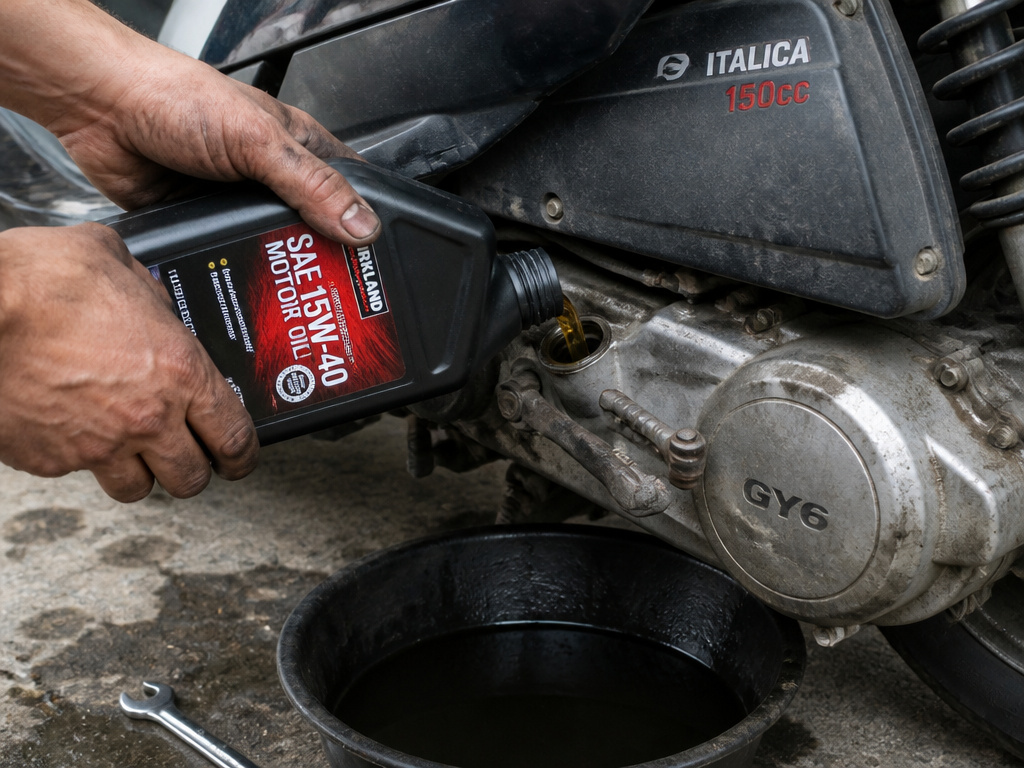
Every scooter discussed here uses a derivative of the GY6 engine platform, a Chinese-manufactured, single-cylinder, four-stroke, air-cooled workhorse. Understanding this is key to understanding the scooter’s value and limits.
Its reputation for unreliability stems from how it’s built and maintained. Low-cost manufacturing can mean looser tolerances, cheaper bearings, and marginal carburetors straight from the factory. Then, a first-time owner runs old gas through it and wonders why it dies.
The maintenance schedule is the religion. Forum users who report long-term success swear by strict intervals:
- Oil Change: Every 600-700 miles with SAE 10W-30 or 15W-40 (per Italica Motors specs). There’s no filter, just a drain and refill, Italika manuals specify different oil capacities; for example, the FT150 manual calls for 1 liter, while a DS150 manual lists 800 ml.
- Valve Clearance Check: Every 2,000-3,000 miles. Tight valves kill power and make starting hard.
- CVT Service: Every 3,000-4,000 miles for automatics (clean dust, check belt/rollers).
Do this, and a GY6 can rack up thousands of miles. Neglect it, and you’ll join the chorus of owners whose scooters are “always broken.” The engine isn’t the weak link; the ecosystem around it is.
Italica 150cc vs. The Competition: Where Does It Fit?
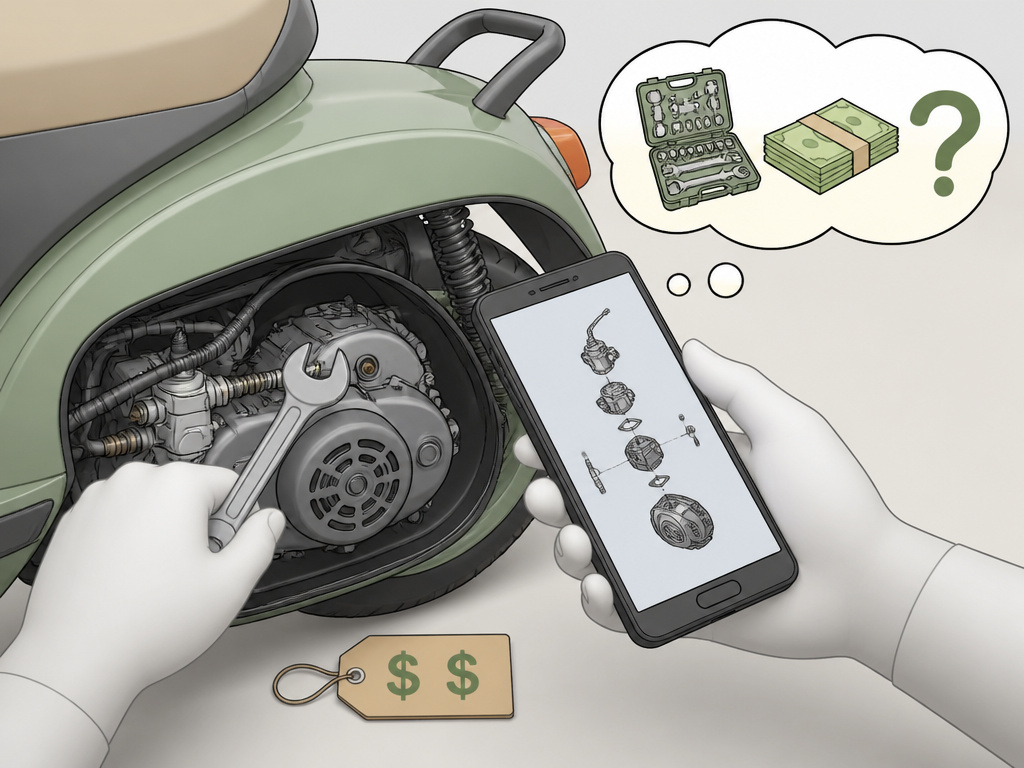
Be clear about one thing: no one cross-shops an Italica 150cc with a new Honda ADV150 or Yamaha Zuma 125. The price gap is too large. The real comparison is against other Chinese-built scooters like the X Pro 150cc or IceBear 150cc, and the question is about value, not outright quality.
| Aspect | Italica/Italika 150cc | Established Brand (e.g., Honda, Yamaha 125cc) | Verdict |
|---|---|---|---|
| Upfront Cost | Significant advantage | Can be 2-3x the price | Win: Italica |
| Long-Term Reliability | Requires meticulous maintenance; more frequent minor repairs | Runs for years with basic oil changes | Win: Established Brand |
| Parts Cost & Availability | Individual parts are cheap and available online (Scooter Dynasty, etc.) | Parts are more expensive but available at any dealer | Draw (Cheap vs. Easy) |
| Dealer/Service Network | Very limited; you are the service network | Extensive, professional support | Win: Established Brand |
| Resale Value | Depreciates rapidly | Holds value remarkably well | Win: Established Brand |
The Italica’s value proposition, as noted in every Italica scooter 150cc review, is entirely upfront. You pay less cash today for more scooter on paper (150cc vs. 125cc). In return, you accept the role of mechanic, parts researcher, and diagnostician. For a tinkerer on a tight budget, that’s a fair trade. For someone who needs dependable transportation and views tools with suspicion, it’s a terrible deal.
Brands like Bintelli scooters operate in a similar space, often with slightly better US distributor support. Your choice often comes down to local dealer presence and which specific model fits your body and style preference.
Should You Buy One? A Decision Framework
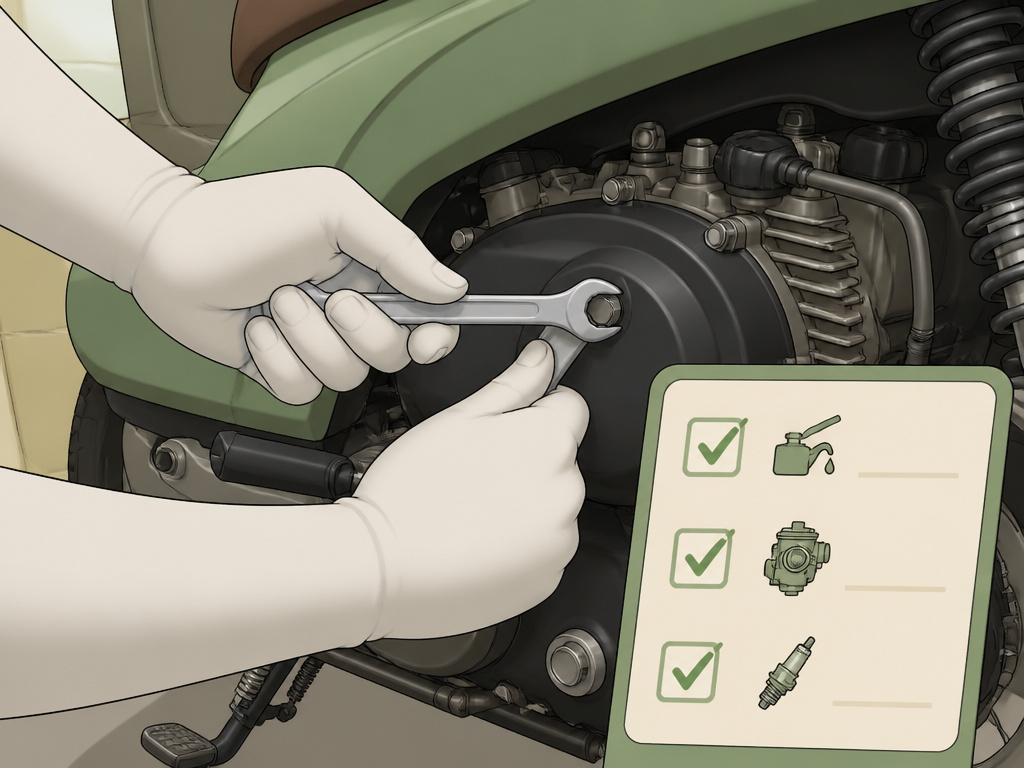
So, is an Italika DM150 or FT150 a good buy? It depends on your answers to these questions.
- Can you perform basic mechanical tasks? If changing oil, cleaning a carburetor, and swapping a spark plug sounds like fun, not a nightmare, you’re a candidate.
- What is your actual speed requirement? Match the specific model’s horsepower (from its manual) to your roads. An 8-hp Diablo is for 35-45 mph zones, not 55 mph highways.
- New or used? New offers a warranty (often 1 year) but still requires the same maintenance. Used is a gamble that demands a rigorous inspection.
- What’s your exit strategy? Plan to run it into the ground. Resale value is low, so buying one with the intention of flipping it in a year is a losing plan.
If you answered favorably to the first three points, an Italica can be a rewarding, cheap-to-run commuter. You’ll learn a lot. If any answer gave you pause, your money is better spent on a used Japanese scooter, it’ll cost more initially but less in time and frustration.
Pre-Purchase Inspection Checklist for a Used Model
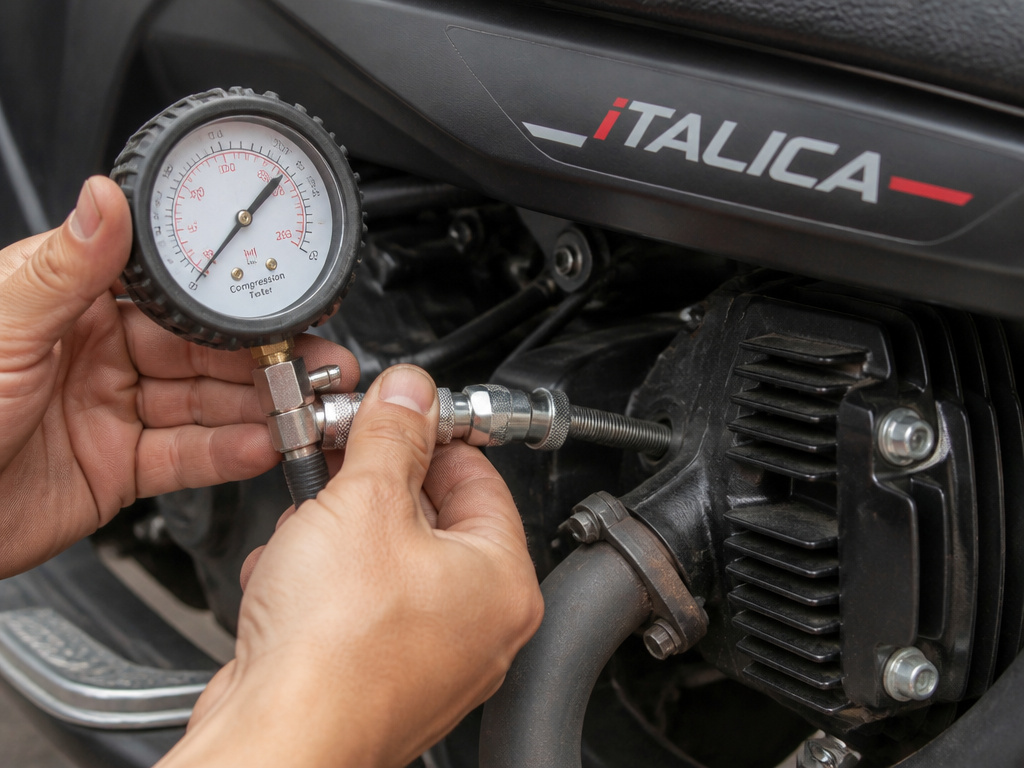
Never buy a used Italica without putting it through this list. It takes 30 minutes and can save you hundreds in immediate repairs.
Before you start: Have the seller start the scooter cold. Listen for excessive cranking. Feel the exhaust header after a minute, it should get hot, indicating the engine is firing on all strokes. A cool header means a dead cylinder or ignition problem.
- Cold Start: Does it start within 5-10 seconds of cranking? A hard cold start points to carb, valve, or compression issues.
- Test Ride: Does it accelerate smoothly without flat spots or hesitation? A bog or stumble under throttle is classic carburetor trouble.
- Check Compression: Use a gauge if possible. Low compression means worn rings or valves, a major repair.
- Inspect the Carburetor: Ask when it was last cleaned. Look for fresh fuel lines and a clean filter. Evidence of neglect here predicts other deferred maintenance.
- CVT/Belt (Automatics): Remove the CVT cover (ask permission). Check the drive belt for cracks and glazing. A worn belt needs immediate replacement.
- General Condition: Do the lights, horn, and signals work? Are the tires cracked? Is there fresh oil on the dipstick? These signal an owner who cares, or doesn’t.
This checklist isn’t just for Italicas; it’s good practice for any used scooter. But for these machines, it’s essential. Finding a well-maintained used model is possible, but you have to dig for it.
How much does an Italika 150cc scooter cost?
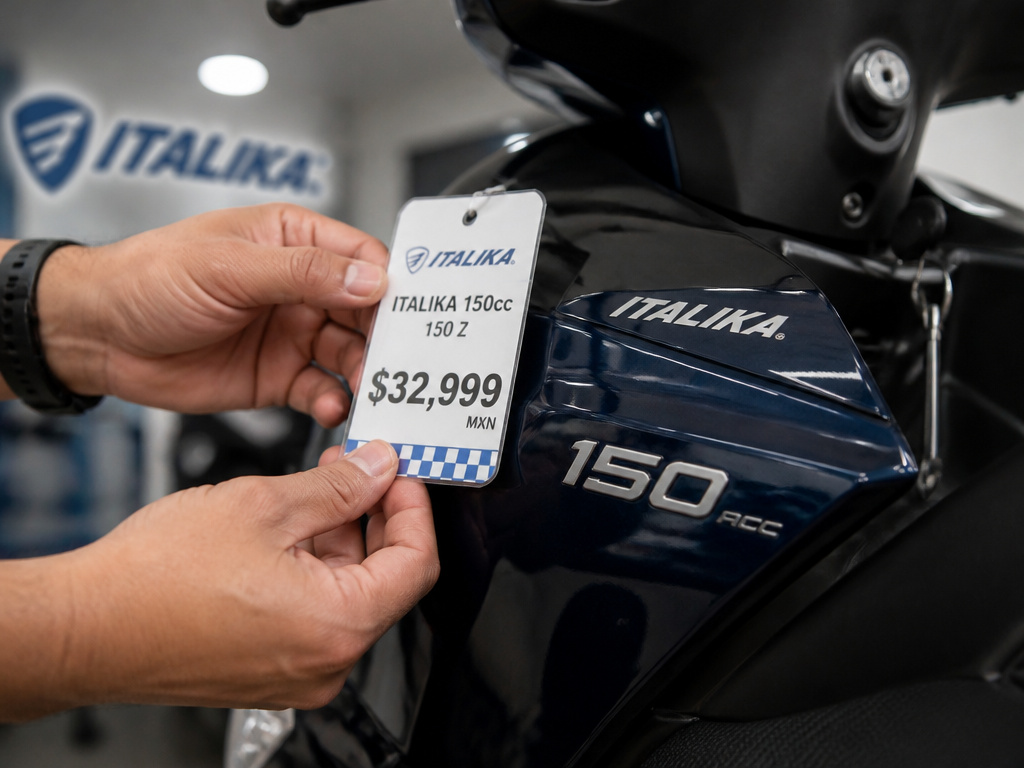
Pricing for Italika 150cc scooters isn’t listed in the official specifications. You’ll need to check with local dealers or the distributor’s website for current figures. The value proposition typically centers on getting a functional 150cc machine, which can handle a maximum load of 150 kg, for a lower upfront cost than many established brands. When evaluating the price, consider the included features against your basic commuting needs. The trade-off often involves simpler components and a need for more attentive maintenance compared to premium options.
What is the warranty and dealer support like?
The fact sheet does not provide specific warranty terms or dealer network details for Italika scooters. This is a critical point to investigate before buying. You must contact the seller or distributor directly to get the written warranty coverage for your specific model and region. Ask about the duration, what parts and labor are covered, and which authorized service centers are near you. Strong local dealer support is vital for parts availability and professional servicing, which can significantly impact long-term ownership costs and reliability.
Frequently Asked Questions
Are Italica scooters reliable?
They can be, but not in the way a Honda is reliable. An Italica’s reliability is a direct function of the owner’s maintenance diligence. Follow strict oil-change and valve-adjustment schedules, use fuel stabilizer, and address small issues immediately, and it may run for thousands of miles. Neglect it, and it will become a permanent fixture in your garage.
Who makes Italica scooters?
Italika scooters are assembled in Mexico by Italika, a brand of Grupo Salinas. They use engines and components sourced primarily from Chinese manufacturers. Italica Motors appears to be a separate US-based distributor or brand that imports similar Chinese-built scooters and markets them under its own model names (Moto, Diablo, Trooper). Both use variations of the common GY6 engine platform.
What is the best 150cc scooter to buy?
The “best” depends on priority. For proven reliability and resale value: Honda, Yamaha, or Taiwanese brands like Kymco and SYM. For absolute lowest upfront cost and DIY-friendly simplicity: Chinese-built scooters like Italica, IceBear, or TaoTao. Your best move is to read multiple scooter reviews to compare real-world owner experiences across brands.
How good are Italika motorcycles?
This review focuses on scooters, but Italika also makes motorcycles. The same principles apply: they are budget-oriented machines built with globally sourced parts (often Chinese), offering high value on paper but requiring an owner committed to proactive maintenance. Their motorcycle line is generally less common in the US than their scooters.
The Bottom Line
The Italica 150cc scooter is a proposition. You trade cash for responsibility, and the deal only works if you hold up your end. For a certain rider, the urban commuter with a short, sub-highway-speed route, a set of tools, and a willingness to learn, it can be a fantastically cheap way to get around. The Italika FT150 manual model, with its lighter weight and serviceable design, is arguably the pick of the litter for this person.
For everyone else, especially those viewing a scooter as appliance transportation, the hidden costs in time, frustration, and downtime will quickly outweigh the initial savings. In those cases, the better buy is always a used scooter from a major Japanese or Taiwanese brand. It might have fewer cubic centimeters, but it will have infinitely more peace of mind per mile.
