Is a Longboard Worth It? The 3 Numbers That Decide
This post contains affiliate links. As an Amazon Associate, we earn from qualifying purchases.
Is a longboard worth it? The answer is yes if your primary use is relaxed cruising or commuting on smooth, flat terrain, you prioritize stability over portability, and you pair it with a certified helmet. For trick-focused riding, rough city streets, or very short bus-hopping trips, a standard skateboard or cruiser is often a better investment.
That gap between “relaxed cruising” and “trick-focused” is where most buyers get stuck on the is a longboard worth it question. The question isn’t about quality—a good board is a good board—but about fit. A tool that doesn’t match the job feels like a waste of money, no matter how well it’s made.
What follows: the three specific numbers that frame your decision, the injury data most guides skip, and a clear map from your local roads to the deck shape you should actually buy.
Key Takeaways
- A peer-reviewed trauma study found longboarders suffered significantly more severe head injuries than skateboarders; your helmet must meet the ASTM F1492 or Snell N-94 standard for this activity.
- For efficient commuting, aim for a board with a low deck and a wheelbase under 30 inches; boards like the Pantheon Pranayama (26″ wheelbase) are built for this, while pintails over 40 inches are for relaxed carving, not distance.
- Electric longboards claim ranges of 15-20 miles but require a battery with at least 220 watt-hours to achieve it; real-world range drops sharply on routes with slopes over 10%.
- The most common regret is buying a board too long for your storage or commute; a 41-inch pintail is less portable, while a 31-inch commuter board has a shorter wheelbase.
- Onewheel electric skateboards are the subject of a CPSC warning urging consumers to stop use due to ejection hazards linked to at least four deaths; the manufacturer disputes this, creating a clear safety decision point.
The 3 Numbers That Decide Your Answer
Forget vague pros and cons. Your answer lives in three measurable things: the pavement you’ll ride, the distance you’ll cover, and the safety gear you’ll commit to wearing every single time.
If your local roads are cracked and uneven, a longboard’s larger, softer wheels (70mm+, 78A durometer) absorb vibration better than a skateboard’s hard, small wheels. This isn’t a minor comfort thing—it’s the difference between a pleasant commute and a jarring, foot-numbing ordeal that makes you abandon the board in a week. Conversely, if you need to navigate tight pedestrian traffic, hop curbs, or carry the board onto a crowded bus, a shorter cruiser or skateboard wins on maneuverability and portability every time.
The part nobody mentions: The 2014 Hindawi trauma center study found all patients with an Injury Severity Score (ISS) above 15 were longboarders. Hospital and ICU stays were significantly longer for them compared to skateboarders. This doesn’t mean longboarding is inherently deadly; it means the higher speeds attainable on longer boards demand a proportional step-up in safety protocol.
Distance is the second number. A 2020 MDPI study on electric longboard conversion found a converted board could achieve a range of almost 50 km (about 31 miles) on a flat route. For a non-electric board, your range is your leg power. A low, efficient pusher like the Pantheon Pranayama, with its 26-inch wheelbase, is engineered for mileage. A top-mounted, flexy carving board like the Loaded Icarus is designed for the sensation of the ride, not for covering ground efficiently. Want to travel 3 miles to work? The right board makes it a breeze. The wrong one makes it a chore.
| Your Primary Goal | Ideal Board Type | Key Spec to Look For | A Board That Fits |
|---|---|---|---|
| Efficient Commuting (1-5 miles) | Drop-through or Drop Deck | Wheelbase: 26″-30″ | Pantheon Pranayama Complete |
| Relaxed Carving & Recreation | Top-mounted Flex Deck | Flex matched to rider weight | Loaded Icarus (Flex1 or Flex2) |
| Learning & General Cruising | Drop-through or Pintail | Length: 38″-41″ | Landyachtz Drop Cat 38 or Arbor Axis 40 |
| Portability & Multi-Modal Travel | Cruiser or Short Skateboard | Length: < 32″ | (Not a traditional longboard) |
Safety commitment is the essential third number. It’s not just “wear a helmet.” For skateboarding and longboarding, the American Academy of Pediatrics specifies helmets must meet ASTM F1492 or Snell N-94 standards, while the American Academy of Orthopaedic Surgeons recommends helmets certified by the CPSC or Snell Memorial Foundation. This is a different, often more rigorous, standard than a standard bicycle helmet. Investing in a board but skimping on the proper helmet is the fastest way to make the whole purchase “not worth it.”
What the Injury Studies Actually Say
When you ask if something is “worth it,” you’re weighing fun against risk. The risk must be clear, because the data is stark and most beginner guides soften it.
A landmark study published in Hindawi Publishing Corp.’s journal reviewed trauma center data. It found skull fractures, traumatic brain injuries (TBI), and intracranial hemorrhage (ICH) were significantly more common among longboard patients than skateboarders. All three recorded deaths in the study were longboarders who experienced head injuries. Another study in PubMed noted longboarders suffered twice as many injuries to their heads and necks (23.3% vs. 13.1%) and twice as many severe neurological traumas compared to skateboarders.
Why? The studies point to environment and speed. The PubMed study notes 75.3% of longboard injuries occurred on streets and roads, compared to 34.3% for skateboarders. Longboards, with lengths of 42 to even 80 inches, are built for momentum and can reach high speeds; the Hindawi study notes lay longboarders may reach speeds over 30 mph.
This is a statement of cause and effect. The board’s design encourages use on roads, where the potential for high-speed collisions exists. This directly impacts your is a longboard worth it calculation. If your planned use involves busy streets or any hills, your safety gear and skill level must be dialed. A longboard vs skateboard comparison often centers on stability, but the trade-off is the kind of terrain that stability encourages you to tackle.
Common Buyer Regrets (And How to Avoid Them)

I’ve watched this happen for years. Someone gets inspired, buys a board based on a cool graphic or a vague recommendation, and it gathers dust in a closet. The regret isn’t about the money; it’s about the mismatch.
The Pintail Problem. A classic 41-inch pintail, like the Retrospec Zed, looks timeless and is often priced for entry. It’s a fine board for pushing around a smooth parking lot. But its high ride height and lack of concave make it tiring for distance and nerve-wracking for any speed. It’s also cumbersome to carry. If you think you might use a longboard for transportation beyond a few blocks, a drop-through deck will be a dramatically better experience.
The “Too Advanced” Board. Enthusiast forums glow about the carving sensation of a flexy deck like the Loaded Icarus. It’s a masterpiece. But for a true beginner, that flex can feel disconcertingly wobbly until you learn to trust it. The board isn’t wrong; the timing is. Starting on a stable, predictable platform like the Landyachtz Drop Cat 38 builds the confidence that lets you later appreciate a more advanced deck.
The Portability Blind Spot. A Reddit user perfectly captured this: they lived in the countryside and needed to travel 3km to a bus stop. They asked if a longboard was right. Many answers missed the core need: a bus commute. A full-sized longboard is a hassle on a bus. A cruiser or a very compact commuter longboard (like the Pantheon Trip) would have been a smarter fit. Measure your doorways, your car trunk, and your tolerance for carrying a bulky item.
Where this goes sideways: Buying a board before knowing how you’ll stop. Learning to footbrake reliably takes practice. If your first ride is down a gentle hill with no stopping plan, you’ll likely run off awkwardly or fall. That first scare can end the hobby before it starts.
The fix is a guide to choosing a longboard that starts with your use case, not a list of brands. Your first board shouldn’t be your dream board; it should be the right tutor.
Electric Longboards & The Onewheel Exception
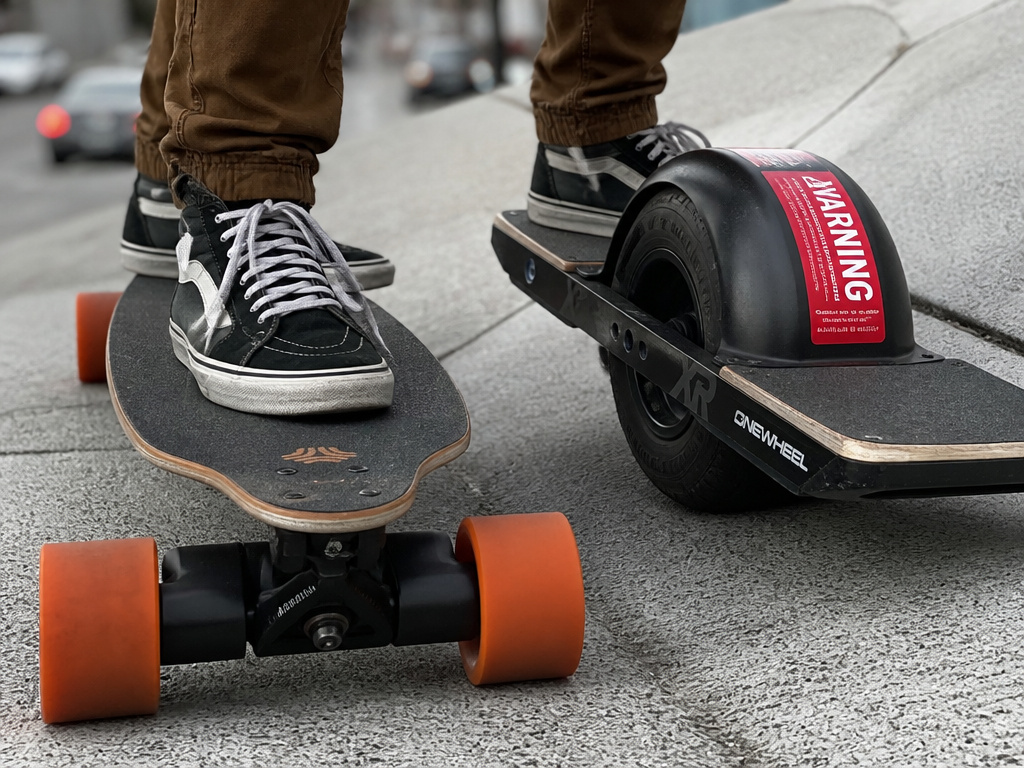
The “worth it” equation changes when you add a motor. Electric longboards promise extended range and hill-climbing power. The engineering reality is precise.
A University of Illinois Chicago engineering project found electric skateboards claiming 15-20 mile ranges needed battery packs with at least 220 watt-hours. Real-world performance, as shown in a 2020 MDPI sustainability study, is highly sensitive to weight and terrain. Their converted electric longboard struggled on slopes exceeding a 10% grade over 100 meters in length. Your actual commute range could be half the advertised spec if it has hills.
Then there’s the Onewheel. This is a distinct category with a serious decision point. The U.S. Consumer Product Safety Commission (CPSC) has issued a warning urging consumers to stop using all Onewheel models (Onewheel, Onewheel+, Onewheel+ XR, Onewheel Pint, Onewheel Pint X, and Onewheel GT) due to an ejection hazard linked to at least four reported deaths between 2019 and 2021. The manufacturer, Future Motion, objects to this warning, stating the boards are safe when used properly.
You cannot have a neutral stance on this. You are either accepting the CPSC’s assessment of the risk or the manufacturer’s. This isn’t a typical longboard safety debate; it’s a regulatory warning versus a company’s defense. For many, this known, contested hazard tips the “worth it” scale to “no,” regardless of the board’s innovative design.
The First 30 Days: Making the Investment Stick
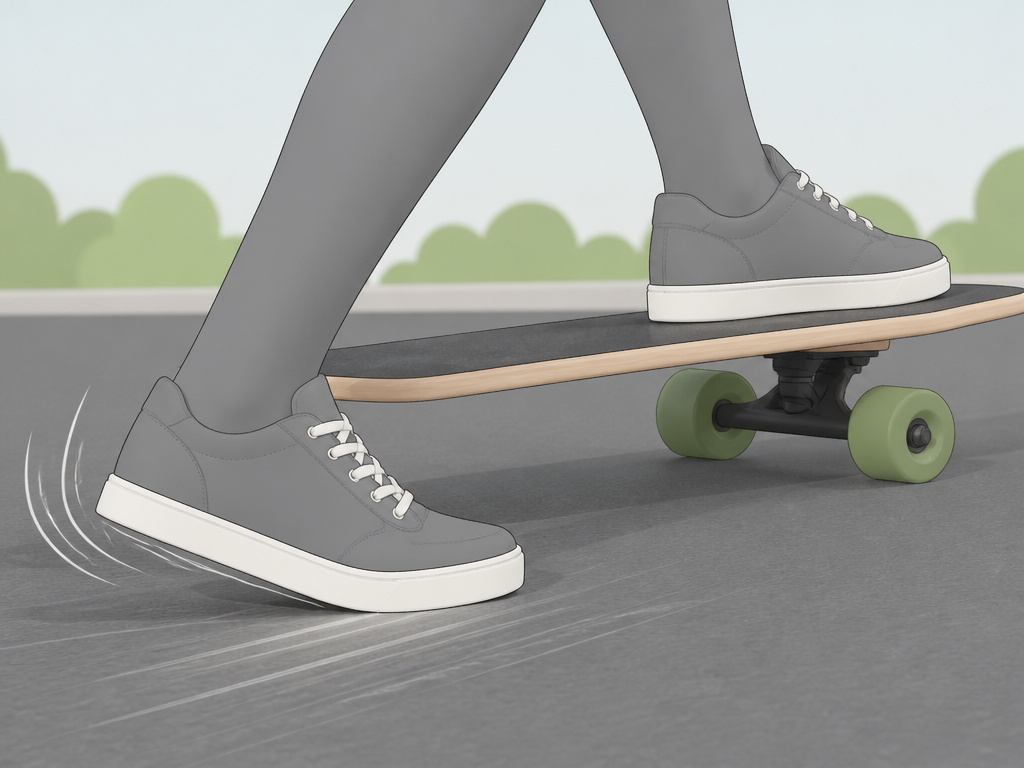
You’ve bought the right board. Now, how do you ensure it doesn’t become a $200 closet decoration? The first month is about building positive associations, not punishing yourself.
Week 1: Find Your Parking Lot. Your goal is ten minutes of comfortable pushing, gliding, and gentle turning on a smooth, empty, flat surface. A school parking lot on a weekend is perfect. Practice stepping on and off while the board is stationary. Get used to the pressure of your front foot guiding the turn. The sound of quality urethane wheels on smooth asphalt is a quiet, satisfying hum—that’s the sound of a good start.
Week 2-3: Learn the Footbrake. This is the single most important skill for control and safety. At a walking pace, roll forward, keep your front foot pointed straight, and gently lower your back foot so the sole drags on the ground. It’s a gradual scrub, not a stomp. You’ll feel the deceleration through your foot. This skill removes the fear of gentle slopes and gives you an “off switch.”
Week 4: Introduce a Mild Hill. Find a slope so gentle you could walk up it without effort. Coast down, focusing on a low, stable stance (knees bent, weight centered). Use your footbrake to control speed. Success here isn’t speed; it’s managing acceleration calmly. This builds the confidence for real-world use where not every path is perfectly flat.
If you can comfortably push, turn, and stop after a month, the board has become a tool, not a mystery. This foundation is what makes the purchase feel worthwhile. From here, you can explore longer commutes, learn to slide, or just enjoy the fitness benefits of longboarding on your local trails.
What are the benefits of longboarding?

Longboarding offers a unique blend of utility and recreation. For commuting, its longer deck and larger wheels provide a smoother, more stable ride over imperfect pavement compared to a standard skateboard, making longer distances more comfortable. As a form of exercise, it builds core strength and leg muscles through the constant balancing and pushing. For many, it evolves into a rewarding hobby centered on skill development, from casual cruising to mastering controlled slides. The option to convert a board to electric can also extend its range for practical travel, though this introduces different handling characteristics and risks.
Frequently Asked Questions
How much should I spend on a longboard?
A starter complete setup from a reputable brand like Landyachtz or Arbor is an investment in quality components. This gets you quality components that will last. Under $100 often means compromises in wheel urethane, truck precision, and bearing durability that can make learning harder and shorten the lifespan of a longboard. Always factor in the cost of a certified helmet (ASTM F1492/Snell N-94), which is mandatory.
Is it better to learn on a longboard or skateboard?
For pure cruising and commuting stability, a longboard is easier to learn. Its longer wheelbase and softer, larger wheels forgive small imbalances. For trick-based skating, a skateboard is the only option. If you’re unsure, a cruiser (a shorter board with longboard-style wheels) offers a middle ground, but understand its limitations for distance or speed.
What brand makes the best longboards for beginners?
“Best” depends on your goal. For an all-round first board, the Landyachtz Drop Cat 38 is a standout choice for its stability and manageable size. For a dedicated, efficient commuter, the Pantheon Pranayama is purpose-built. For a carving experience, the Loaded Icarus is a specific model with dimensions of 38.4 × 8.6 in and a 28.25 in wheelbase. A resource on best longboards for beginners can help you compare these specific models.
Can you lose weight riding a longboard?
Yes, but not like high-intensity cardio. Longboarding is a consistent, low-impact leg workout. A 30-minute session of steady pushing can provide a low-impact workout. Its real fitness benefit is sustainability—it’s exercise that doesn’t feel like a chore, encouraging you to do it more often.
Are electric longboards worth the extra cost?
They are if your primary need is extended range or hill assistance without sweating. Compare the cost of a longboard conversion or a pre-built electric model (often $600+) against an e-bike or scooter for similar range. For flat, short commutes under 5 miles, a traditional longboard is far more cost-effective and reliable.
The Bottom Line
A longboard is worth it under three conditions: your terrain is smooth enough to let its wheels work, your intended use aligns with its design (distance/cruising over tricks), and you commit to the specific safety gear its higher-speed potential demands.
The data doesn’t lie—the fun of a longboard comes with a measurable increase in severe injury risk compared to standard skateboarding. That risk is managed, not ignored, by a certified helmet and progressive skill building. Your first board shouldn’t be a statement piece; it should be the right tutor. For most new riders asking this question, a stable drop-through deck around 38 inches long is that tutor.
If your gut reaction to the injury stats is hesitation, listen to it. A cruiser or skateboard might be a better, safer entry point. But if you have a smooth bike path, a need for a quiet, car-free commute, and a helmet already in your cart, then yes, a longboard is a gateway to a different way of moving through your world.
