iScooter i10max Review: Key Specifications Unpacked
This post contains affiliate links. As an Amazon Associate, we earn from qualifying purchases.
The iScooter i10max is a 48V electric scooter with a 750W motor, a claimed 50-60 mile range, and a 28 mph top speed, built around a foldable 21.2 kg aluminum frame with dual suspension and an IP54 water resistance rating. In real-world use, its range drops to 30-40 miles for most riders, and its performance hinges on proper tire pressure, maintenance, and understanding its error codes.
That’s the spec sheet answer. The real question in any iscooter i10max review is whether those numbers translate to a reliable daily rider or just another cheap scooter with a fancy sticker. The gap between the marketing claim and the parking-lot reality is where you get hurt, lose money, or end up stranded.
What follows: a breakdown of every major claim using the official manuals, a side-by-side look at what owners actually report after months of use, and a clear verdict on who this scooter is actually for — and who should walk away.
Key Takeaways
- The 48V 15.6Ah battery is the heart of the system; iScooter’s official range test uses a 150 lb rider at 9.3 mph, which is why most 180+ lb riders see 30-40 miles on a single charge, not 50-60.
- The 750W motor (800W peak for EU i10 Pro) provides strong acceleration, but Reddit owners report the motor casing can get too hot to touch after extended full-throttle rides, a potential longevity concern.
- Dual suspension with 10-inch pneumatic tires smooths out pavement cracks, but the front shocks bottom out frequently for riders over 170 lbs, according to multiple forum reports.
- Charge the battery every other month during storage, as per the manual, and avoid depleting it completely — these lithium-ion packs degrade faster with neglect than with use.
- For a commuter under 200 lbs on relatively flat terrain, the i10max is a competent option; for heavier riders or those needing hill-climb power, look at models with dual motors or higher wattage.
Key Specifications Unpacked
You can’t judge a scooter by its marketing photos. The real story in an iscooter i10max review is in the numbers printed in the manual and on the label stuck to the deck.
The iScooter i10max weighs 21.2 kg (46.7 lbs) and supports a 120 kg (264 lbs) maximum load. Unfolded, it measures 117 cm long by 53 cm wide by 124 cm tall. Folded, it shrinks to 117x53x55 cm — it’s not the most compact fold, but it fits in a car trunk. The wheels are 10-inch pneumatic tires, which you must keep inflated. Under-inflation is the fastest way to kill your range and risk a pinch flat.
The iScooter i10max electric scooter features a 48V 15.6Ah lithium-ion battery (748.8 Wh), a 750W rear hub motor, and a max charging voltage of 54.6V. It achieves a IP54 water resistance rating, indicating protection against limited dust ingress and water splashes from any direction, but is not submersible.
The battery and motor combo is the core of any performance claim. IScooter states the battery is 48V 15.6Ah, though some promotional material incorrectly lists 18Ah. Stick with the manual. IScooter’s website states the motor power is 750W, while the manual for the EU i10 Pro variant lists an 800W peak (600W rated) motor. This regional difference explains some of the confusion in forums.
Where this gets real is in the range claim. One source states the range test uses a 150 lb load at 77°F and 9.3 mph, while another lists different conditions (70 kg load, 15 km/h) for a regional variant. That’s a light rider on a warm day, puttering around in eco mode. If you weigh 220 lbs and ride in sport mode at 20 mph, your range will be half that. It’s not a lie; it’s a laboratory condition. Your commute is not a laboratory.
| Specification | Official Claim (iScooter i10max) | Real-World Context |
|---|---|---|
| Motor Power | 750W (NA), 800W Peak (EU Pro) | Strong for single motor; struggles on steep hills for heavier riders. |
| Max Speed | 28 mph (45 km/h) | Attainable on flat ground with a full battery; speed drops as charge depletes. |
| Max Range | 50-60 miles | Achieved only under ideal test conditions (150 lb rider, 9.3 mph). Expect 30-40 miles. |
| Battery | 48V 15.6Ah (748.8 Wh) | Requires 8-9 hours to charge from empty. Avoid full depletion for battery health. |
| Max Load | 120 kg (264 lbs) | At or near this limit, expect reduced range, slower acceleration, and more suspension bottom-out. |
| Water Resistance | IP54 | Can handle light rain and puddles. Do not submerge or pressure wash. |
The 750W Motor & 28 MPH Speed: Real-World Performance
The spec sheet says 28 mph. The scooter’s top speed is listed as 28 mph (45 km/h) in every iscooter i10max review. The acceleration from a stop is punchy, especially in sport mode. For a single-motor scooter in this price bracket, it’s respectable.
The problem isn’t top speed; it’s sustaining power. Owners on Reddit who weigh around 170-180 lbs report the scooter maintains speed well on flats. One rider weighing 220 lbs noted it tackled a moderate grade at a reduced speed, which is decent. However, another owner of similar weight said it “struggles with really steep hills.” The 750W motor has its limits. If your commute has significant inclines, you will feel the scooter work.
Where this goes sideways: Ignoring motor temperature. Multiple Reddit threads mention the motor casing gets too hot to touch after a long, fast ride. One user speculated this heat softens the inner tube, leading to flats. The manual lists an E7 error code for motor overheating (100°C). While not everyone experiences this, it’s a reported failure point. If you plan on long, high-speed runs, feel the motor housing after 15 minutes. If it’s painfully hot, give it a cooldown period.
The takeaway? The motor delivers on its power promise for most casual and commuter use. It’s not built for marathon high-performance sessions. For that, you’d need a scooter with better heat dissipation or a dual-motor system.
Battery, Charging, & The 50-Mile Range Myth
The battery is a key component. The 48V 15.6Ah pack takes 8-9 hours to charge from empty using the included 54.6V, 2A charger. The charger light goes from red to green when full, and the system has an automatic cut-off. The manual is very clear: do not charge for more than 24 hours at a time, do not connect the charger if the port is wet, and keep the port closed when not in use.
For daily use, the manual advises trying to avoid recharging the scooter after completely exhausting the battery. Deep discharges stress lithium-ion cells. For storage, charge the scooter every other month to preserve the battery. Following these rules is essential for the pack to last more than a year or two.
Now, the range. The 50-60 mile claim is the biggest point of contention. Anecdotal owner reports often cite lower real-world ranges. A North American owner on Reddit bluntly said: “I got 30-32 miles on eco mode… That 50-60 mile claim is pure fantasy.”
A moderate view is more accurate. If you’re a lighter rider (under 160 lbs), stick to eco or drive mode on flat terrain, and have a favorable temperature, you might sniff 40-45 miles. For the average rider (180-220 lbs) using sport mode for part of the ride, 30-38 miles is a realistic expectation. Plan your commute accordingly. The range isn’t bad; it’s just not what’s on the box.
Braking & Safety Features

The i10max uses a combination brake system: a front EBAS electronic brake (activated by a hand lever) and a rear disc brake (also activated by a hand lever). This setup provides adequate stopping power for its top speed.
YouTube testers have praised the braking, noting the scooter stops in a short distance. However, they also caution that the electronic brake can be very sensitive. One reviewer said applying the brake “will really kick you forward” if you’re not prepared, because it also engages motor resistance. The technique recommended by several riders is to apply the rear e-brake lightly first, then squeeze the front mechanical brake to come to a complete, controlled stop. This prevents the front wheel from locking or the rider pitching forward.
Other safety features include bright LED headlights and taillights (the taillight brightens under braking), reflectors, and built-in front and rear mudguards. The IP54 rating means it can handle a light drizzle or wet roads, but don’t take it through deep puddles or leave it out in a downpour. The electronics are protected against splashes, not floods.
Ride Quality, Suspension, & Build Notes
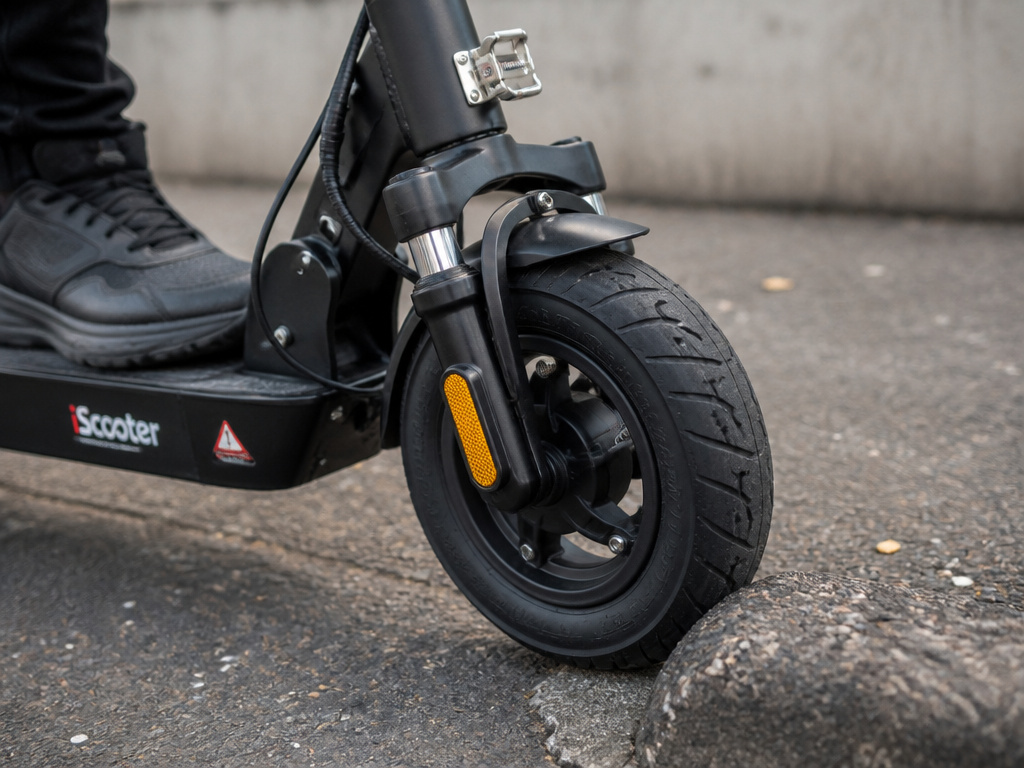
Here’s where owner experiences diverge sharply. The scooter has front and rear double shock absorbers and 10-inch air-filled tires. On paper, that promises a plush ride.
Many users, especially in YouTube first-ride videos, praise the suspension. Some user reviews praise the suspension for smoothing out road irregularities. For lighter riders or on generally smooth pavement, this holds true.
However, a 170 lb rider on Reddit reported the front suspension bottoms out too frequently. Another user with an i10 (non-Max) mentioned the suspension is “fine” but doesn’t have “a massive amount of travel.” The rear suspension is generally noted as being more compliant than the front. If you’re over 200 lbs, expect a firm, occasionally jarring ride over sharp bumps. The suspension is there to take the edge off, not to deliver a cloud-like experience.
The folding mechanism is robust but not particularly refined. It involves a primary latch and a secondary security clip. When folded, a hook on the handlebar clips onto the rear fender to carry it. Owners note this can be awkward, and the plastic fender hook feels like a potential break point.
Smart Features, App, & Error Codes
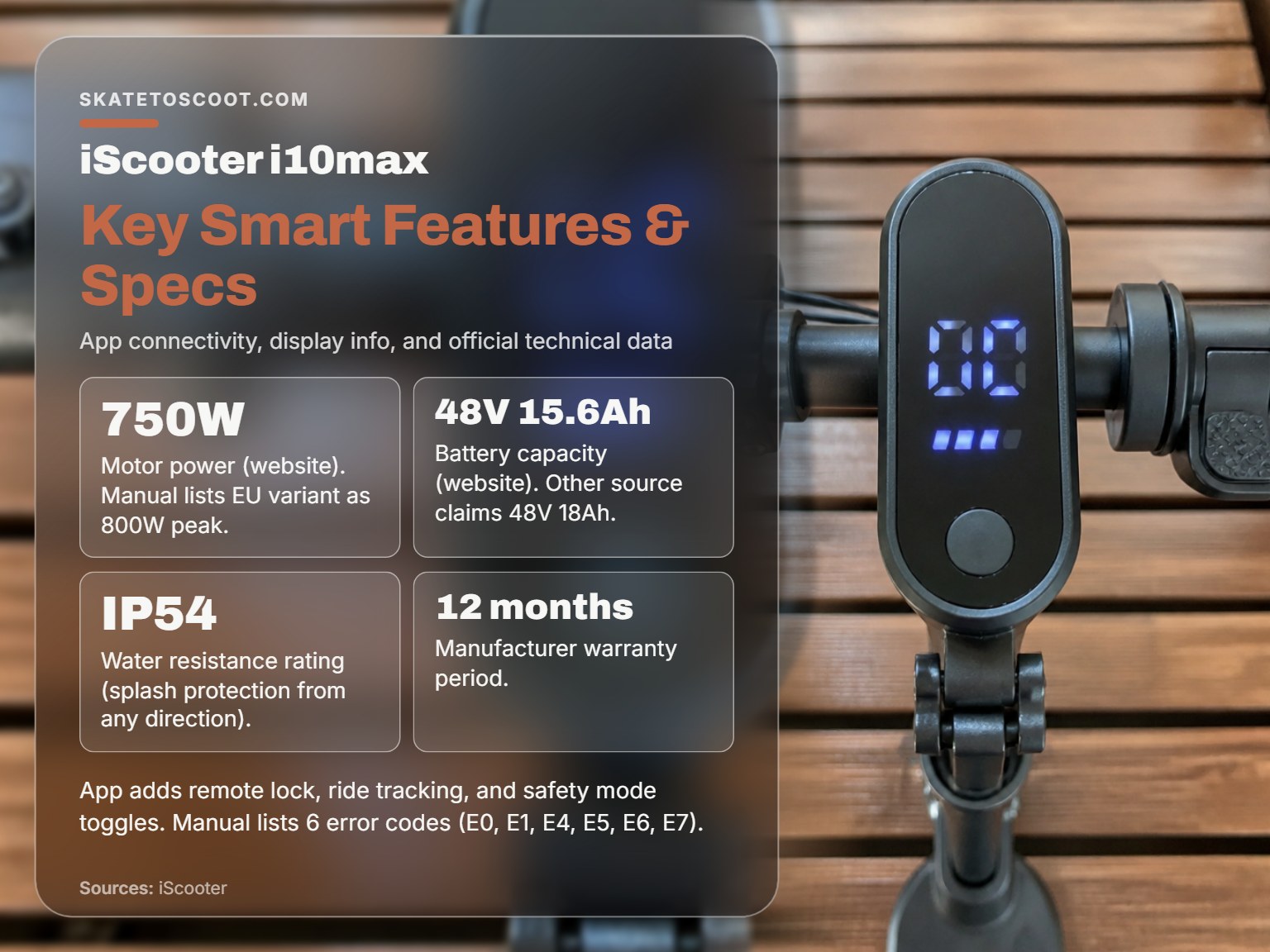
The i10max has a multi-function LED display showing speed, battery level, mode, and odometer. You control four speed modes (Walking, Eco, Drive, Sport) and can toggle the lights and cruise control. A USB output port on the deck is a handy addition for phone charging.
The iScooter App (iOS/Android) adds functionality: you can lock the scooter remotely, track ride data, and adjust settings like zero-start vs. Kick-start. The zero-start mode allows you to accelerate from a standstill just by pressing the throttle, which some find dangerous. The app allows you to disable it, which requires a kick-push to engage the motor. This is a much safer default for beginners.
The manual lists several error codes. Knowing these can save you a panic:
- E0: Over-Voltage
- E1: Communication Fault
- E4: Accelerator Fault
- E5: Brake Lever Fault
- E6: Motor Hall Sensor Fault
- E7: Motor Overheating (100°C)
Owner reports online mention encountering various error codes beyond those listed in the manual. One owner reported motor failure after two weeks. While not everyone has these issues, their existence means you should factor in the 12-month warranty and the responsiveness of iScooter’s customer support, which has mixed reviews online.
Long-Term Reliability & Common Issues
This is the section most reviews miss. Beyond the first-ride hype, what breaks?
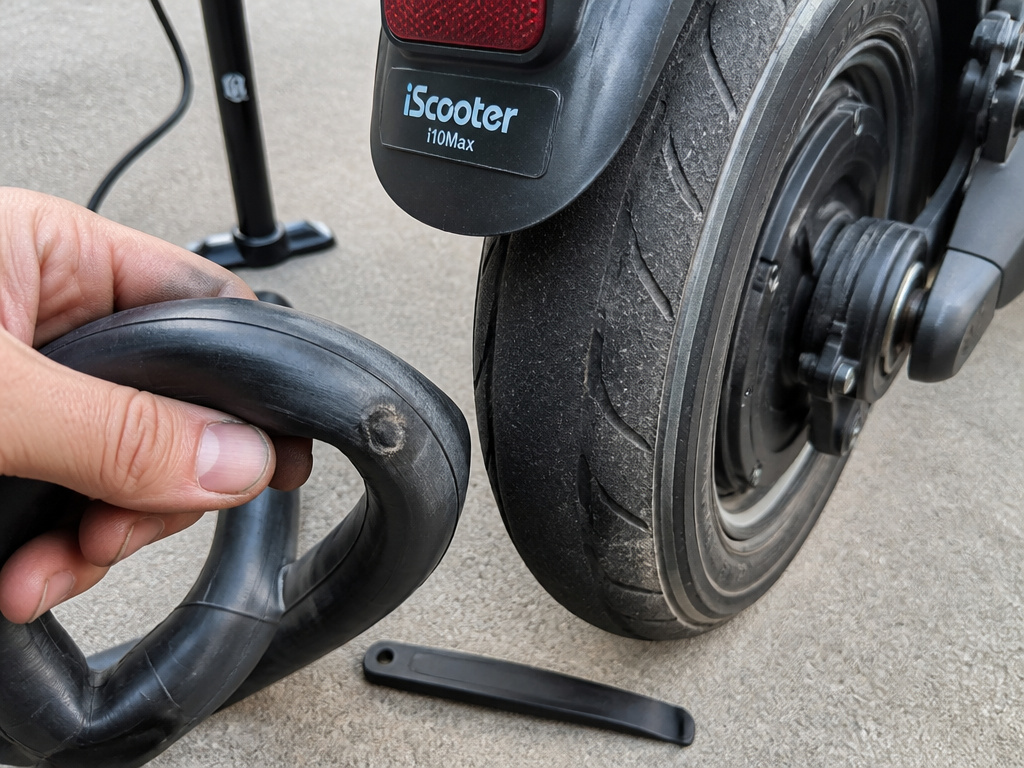
- Tires and Tubes: The stock tires have a recommended pressure; check the sidewall or manual for the specific rating. Owners report they wear quickly and are prone to flats. Several Reddit users have replaced them with higher-pressure tires, which they report as a significant upgrade over the cost of official replacements. Keep your tire pressure at the recommended max to prevent pinch flats.
- Motor Overheating: As noted, this is a recurring anecdote. It suggests the motor is being pushed near its thermal limits in extended use.
- Electronics Failures: Error codes E14, E15, and E16 point to potential quality control issues with the accelerator, brake sensors, or motor controller. Some owners have had flawless units for hundreds of miles; others have had multiple failures.
- Suspension: The front suspension’s tendency to bottom out under heavier riders is a durability question. How many impacts can those springs take before they sag or fail?
- Chargers: At least one owner reported a charger failing within the first month.
The iScooter brand has a mixed reputation for long-term reliability. Some owners love their scooters and have thousands of trouble-free kilometers. Others have had a nightmare experience. Your mileage will literally vary.
iScooter i10max vs. The Competition
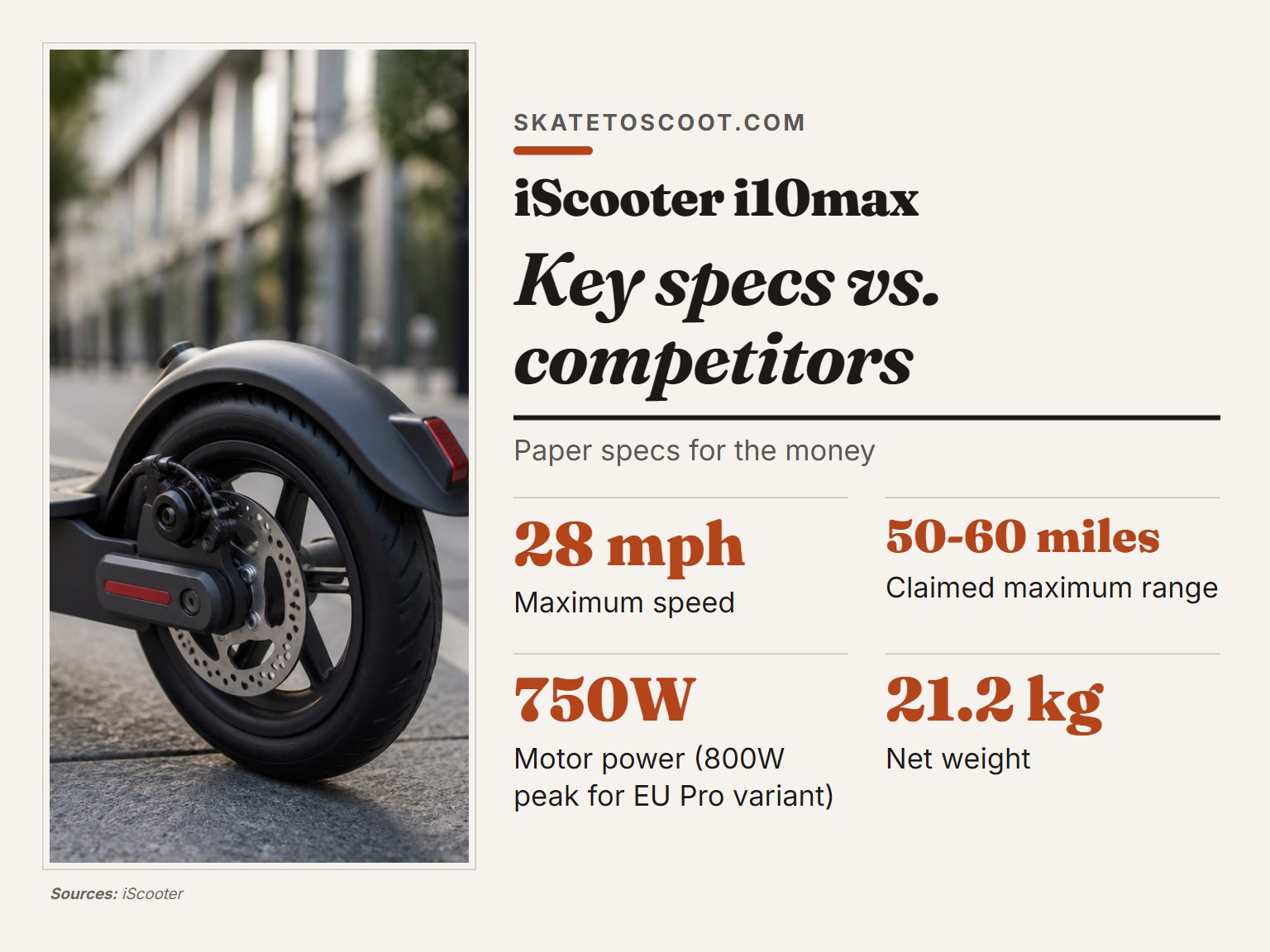
Where does the i10max sit? Its direct competitor is often the Hiboy S2 Pro or similar 500W single-motor commuter scooters.
The i10max’s 750W motor provides a specified power output. Its dual suspension is a feature designed to improve ride comfort.
For a similar price, you might also cross-shop the iScooter i9 or the more powerful iScooter iX4. It’s a crowded field.
The i10max wins on paper specs for the money. It loses if your priority is bulletproof reliability or industry-leading customer support.
Shipping, Delivery, and Return Policies
Always check the specific terms from the vendor you purchase from. The scooter comes with a standard 12-month warranty from the manufacturer, which covers defects in materials or workmanship. The package includes the scooter, a charger, a hex wrench, bolts, a valve extension, and a spare tube.
Comparison to other models (i10 Standard/Pro/Plus)
Comparing the i10 Max to other models in the i10 series requires careful attention to specifications, as they can differ. For instance, an EU i10 Pro variant lists a motor with different peak and rated wattage figures and a different net weight. Key features like the 10-inch wheels, four speed modes, cruise control, and the dual braking system are common across the line, but battery capacity and motor power are the primary areas where you should scrutinize the exact specs for the specific model you are considering.
Frequently Asked Questions
What is the real-world range of the iScooter i10max?
Expect 30 to 40 miles on a single charge for a rider between 170-220 lbs using a mix of speed modes. You will only approach the claimed 50-60 miles under the ideal test conditions specified by the manufacturer.
Is the iScooter i10max waterproof?
It has an IP54 water resistance rating. This means it is protected against dust ingress and water splashes from any direction. It can handle light rain and wet roads, but it is not waterproof. Do not submerge it, ride through deep puddles, or use a pressure washer on it.
What do the error codes mean?
The common error codes are E0 (Over-Voltage), E1 (Communication Fault), E4 (Accelerator Fault), E5 (Brake Lever Fault), E6 (Motor Hall Sensor Fault), and E7 (Motor Overheating). If you see one, consult the manual and contact iScooter support. Codes like E14, E15, and E16 are also reported by owners and indicate faults with the accelerator, brakes, or motor.
Can the iScooter i10max go up hills?
Yes, but with limitations. The 750W motor can handle moderate inclines (up to about 15% grade) reasonably well, especially for lighter riders. For a rider around 220 lbs, expect a significant speed reduction on steeper hills. It is not a hill-climbing powerhouse.
How does it compare to the Hiboy S2 Pro?
The i10max has a more powerful motor (750W vs 500W), a higher top speed (28 mph vs 19 mph), and dual suspension versus a single spring on the Hiboy. The Hiboy may have an edge in brand recognition and customer service support in the US. The i10max offers better performance on paper for a similar price.
The Bottom Line
The iScooter i10max is a specs sheet champion. For the price, you get a 750W motor, a large battery, dual suspension, and a 28 mph top speed that most competitors can’t touch. The first-ride experience is often positive, with strong acceleration and a comfortable ride on decent pavement.
The long-term ownership experience is a coin toss. You might get a unit that racks up 500 trouble-free miles like some Reddit owners. Or you might join the group dealing with premature tire wear, mysterious error codes, or motor overheating. The 12-month warranty is your safety net, but the efficiency of iScooter’s support is inconsistent.
Here’s the rule: if you’re under 200 lbs, your commute is under 15 miles round trip, and the roads are relatively flat and well-paved, the i10max is a compelling, fun option. Just buy a pair of higher-PSI replacement tires upfront and monitor the motor temperature.
If you’re a heavier rider, face big hills, need absolute reliability, or simply hate dealing with potential warranty issues, spend a little more on a brand with a stronger service network or consider a proven model like the iScooter i9 for less demanding needs. The i10max isn’t bad. It just asks you to be a slightly more involved owner.
