Magneto Longboard Review: What to Know Before Buying
This post contains affiliate links. As an Amazon Associate, we earn from qualifying purchases.
A Magneto longboard is a budget-friendly complete board built around a bamboo-composite deck, designed for casual cruising and carving. The value proposition is clear: you get a rideable board with decent components for under $200 (or under $150, according to some sources), but the stock trucks, bushings, and bearings are the first things experienced riders will want to upgrade.
That price tag puts Magneto in a specific slot. It’s not competing with custom $400 setups from Landyachtz or Sector 9. It’s answering the question, “Can I get a real longboard that won’t fall apart immediately without spending a fortune?”
The answer hinges on three things: which model you pick, how you plan to use it, and your willingness to swap a part or two down the line. This magneto longboard review walks through the concrete specs from the manufacturer, the durability reports from actual owners (the good, the bad, and the cracked), and the one upgrade that changes the ride completely. By the end, you’ll know exactly where a Magneto fits in the longboard landscape and whether it’s the right first board for you.
Key Takeaways
- Magneto decks often blend bamboo and fiberglass for a flexible, lively ride (though sources disagree on whether all decks use bamboo or if some use maple), but construction quality varies; some owners report early delamination, especially on early-production models.
- The stock ABEC 5 bearings and gravity-cast trucks are functional but basic; upgrading to Zealous steel bearings and matching your bushings to your weight improves the board’s smoothness and response.
- For heavier riders, the 42-inch Bamboo Cruiser or Dropthrough Carver (rated for 250 lbs) are the safe picks; the 27.5-inch Mini-Cruiser is best for lighter riders or as a portable second board.
- At under $150, Magneto’s value is in getting you rolling immediately with a complete, rideable setup; think of it as a platform for incremental upgrades rather than a finished premium product.
- The brand’s customer service has a reputation for no-questions-asked replacements on defective decks, which is a significant mark in its favor for a budget brand.
The Core Specs: What You Actually Get
This will be broken down step by step. When you unbox a Magneto, you’re getting a specific set of components. The numbers matter because they tell you what the board can and cannot do.
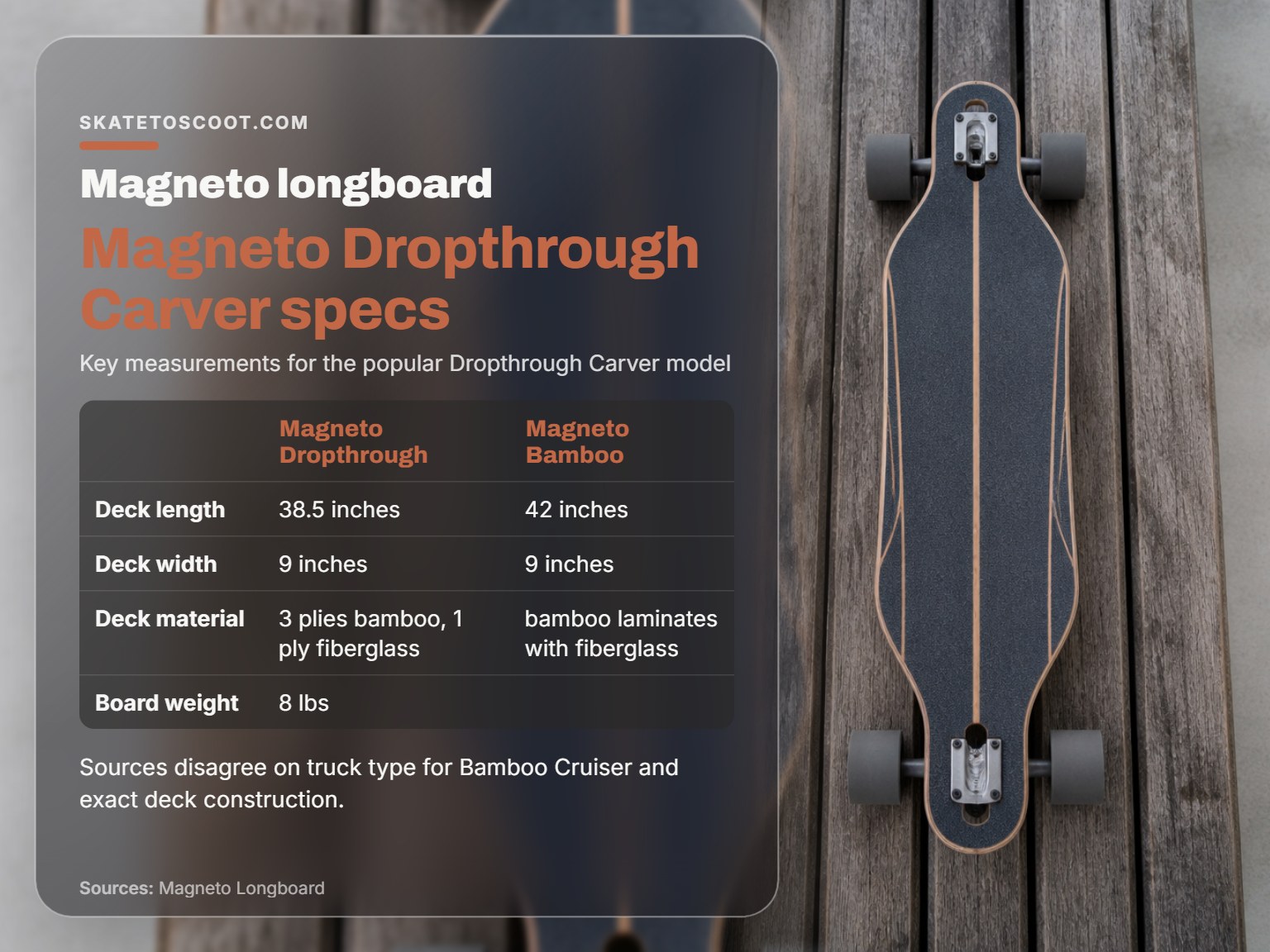
The flagship model, the Dropthrough Carver, ships with a 38.5-inch long, 9-inch wide deck. Magneto builds it with three plies of bamboo and one ply of fiberglass. That combo aims for a specific feel: bamboo’s natural flex for energy return, backed by fiberglass for torsional stiffness. The board weighs 8 lbs and carries a maximum weight capacity of 250 lbs.
The Magneto Dropthrough Carver uses a 3-ply bamboo, 1-ply fiberglass deck, 70mm 78A wheels, gravity-cast aluminum trucks with High Rebound bushings, and ABEC 5 bearings. This configuration prioritizes a lower ride height and carving feel over high-speed stability.
The wheels are 70mm with a 78A durometer. That’s a classic cruiser formula—soft enough to smooth over rough pavement and provide grip, small enough to keep the board low and manageable. The trucks are gravity-cast aluminum, which is the standard manufacturing process for budget and mid-range trucks. They come with “High Rebound” bushings, which is just a marketing term for a medium-soft urethane formula.
Then there are the bearings: ABEC 5. What is often overlooked is that the ABEC rating measures tolerances for high-RPM machinery, not skateboard performance. An ABEC 5 bearing is perfectly adequate for casual riding. Its real limitation isn’t speed; it’s how well it seals out dirt and how long its factory lubricant lasts. A set of Bones Reds or Zealous bearings with built-in spacers and better seals will roll quieter and last longer with less maintenance.
For a different ride, Magneto’s 42-inch Bamboo Cruiser offers a longer, more stable platform. It uses the same bamboo-and-fiberglass blend but in a symmetrical cutout shape with a drop-through mount. The trucks on the Bamboo Cruiser are Paris-style 7-inch aluminum with a 50-degree kingpin angle. That angle is key—it offers a balance between quick turning and stability, making it a true all-rounder for pushing around campus or bike paths.
| Model | Deck Length | Deck Width | Primary Use | Key Spec |
|---|---|---|---|---|
| Dropthrough Carver | 38.5 inches | 9 inches | Carving, casual cruising | 70mm 78A wheels, 250 lbs capacity |
| Bamboo Cruiser | 42 inches | 9 inches | Distance pushing, stable cruising | Paris-style 50° trucks, longer wheelbase |
| Mini-Cruiser | 27.5 inches | 7.5 inches | Portability, quick maneuvers | 60mm wheels, 18-inch wheelbase |
Your choice here sets the baseline experience. The Carver wants to turn. The Cruiser wants to go straight smoothly. The Mini wants to be thrown in a backpack.
Real-World Durability: Owner Reports vs. Marketing
Marketing copy says “well-built and durable.” Real owners have a more nuanced story in every magneto longboard review. This is where you must separate the board’s design from its quality control.
I’ve seen this common mistake a hundred times: a beginner buys a budget board, leans all their weight on the kicktail a week in, and hears a sharp crack. They blame themselves, but often it’s a laminate glue that didn’t cure right or a weak spot in the ply. Forum threads are full of these early failure reports.
One Reddit user posted a photo of their new Magneto cruiser with a visible crack along the edge. They emailed the company and received a replacement deck with no hassle. That tracks. Magneto’s customer service, based in Carlsbad, California, has a consistent reputation for making things right on defective gear. That’s a huge point in their favor—a budget brand that stands behind its product is rare.
But other owners report the opposite. One rider has been using a Magneto deck as a daily driver for two years, and it’s holding up fine. Another user weighing 260 lbs states their board handles their weight well, even with their friend who is over 300 lbs riding it. The discrepancy often comes down to riding style and that specific board’s construction.
Where this goes sideways: Assuming all boards from the same model are identical. Wood composite manufacturing has variances. One deck might have a perfect glue line; the one next to it on the press might have a dry spot. This variability is higher in budget brands where quality control is a cost cutter.
The deck’s “invisible sandblasted grit” top coating is another point of contention. It’s not traditional grip tape; it’s a textured spray-on coating. For casual cruising and carving, it provides enough traction. If you’re doing fast downhill or technical slides where you need to reposition your feet mid-turn, you’ll find it lacking. It’s a cost-saving measure that works for the board’s intended use but limits its performance ceiling.
Who Is It Actually For? Matching Rider to Board
Magneto isn’t trying to be everything to everyone, as noted in any magneto longboard review. Its design choices clearly point to a specific rider profile. We should be honest about who that is.
The Absolute Beginner: This is Magneto’s sweet spot. You want one purchase that gets you a complete, rideable board so you can figure out if you even like longboarding. Spending $150 feels a lot safer than committing $350 to a hobby you might drop in a month. The mellow flex, soft wheels, and overall stability of the Bamboo Cruiser or Dropthrough Carver are forgiving. You’ll outgrow the components before you outgrow the deck.
The Casual Carver/Commuters: If your goal is a pleasant, carvy ride to class or a smooth push around the park, the Dropthrough Carver is built for that. The bamboo/fiberglass deck has a lively flex that makes pumping and carving feel energetic. The 70mm wheels handle cracks and rough pavement. It’s a functional, enjoyable tool for A-to-B transportation where performance tricks aren’t the goal.
The Budget-Conscious Upgrader: You see the value in a complete board but know you’ll want to tweak it. You buy the Magneto for the deck and maybe the wheels, planning to immediately swap the bearings and bushings. This is a smart path. Throwing on a set of Zealous steel bearings and some Venom or Riptide bushings matched to your weight turns a generic complete into a responsive, smooth-rolling board you’ll keep for years.
Who It’s NOT For: The serious downhill rider, the technical slider, or the freestyle dancer. The components aren’t rated for that stress, and the deck’s flex pattern isn’t optimized for it. Comparing a Magneto skateboard to a dedicated downhill setup is like comparing a city bike to a downhill mountain bike.
Upgrade Paths: The One Fix That Changes Everything
The stock components on a Magneto are the bare minimum to make the board functional. That’s not an insult; it’s the business model. The good news is, you can dramatically improve the ride for less than $50.
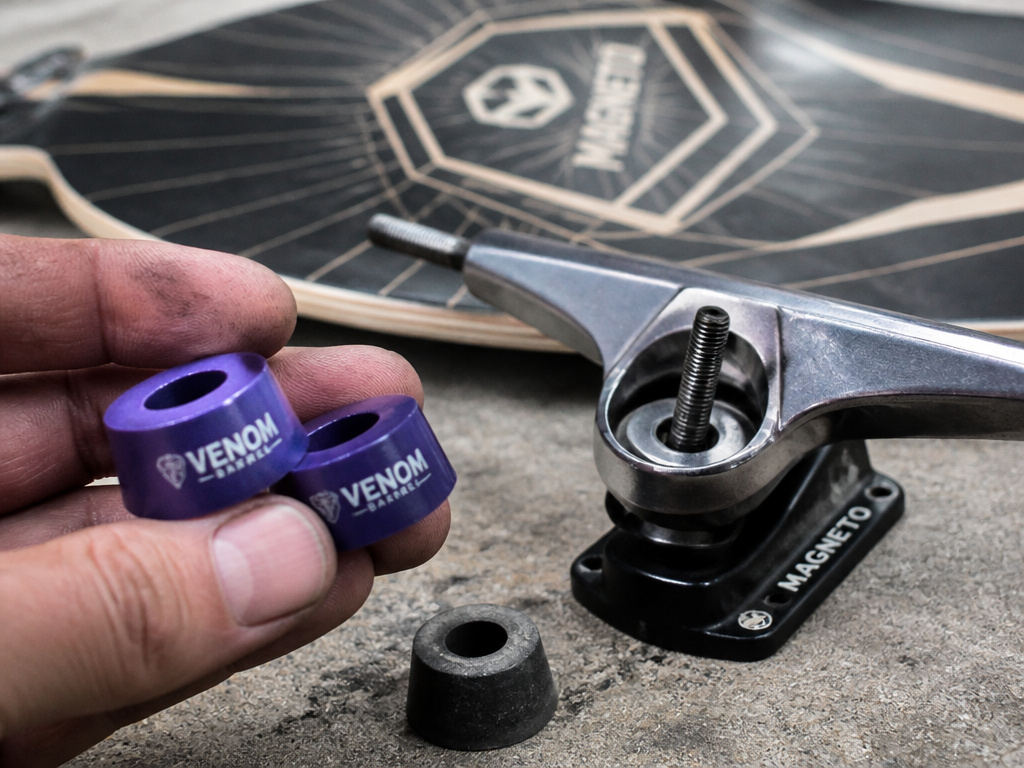
Your first upgrade should always be the bushings. The stock “High Rebound” bushings are a generic medium-soft formula. Bushings are the suspension of your trucks; they dictate how the board leans and rebounds. If you are a heavier rider, those stock bushings may be too soft, leading to sluggish turns and speed wobbles at even moderate speeds. For under $15, a set of barrel/cone bushings from Venom or Riptide, matched to your exact weight, will give you precise, predictable steering. It’s the single most cost-effective performance upgrade in skateboarding.
Next, look at the bearings. The stock ABEC 5 bearings will get the job done, but they often feel gritty and loud out of the box. As one Reddit user put it, “You would likely benefit from getting some decent bearings in there (zealous steels are excellent value for money).” I agree. For around $15, Zealous steel bearings come with built-in spacers and speed rings, are packed with a thick lubricant that lasts, and are nearly sealed against dirt. The difference in roll smoothness and noise is immediate.
The wheels and trucks are serviceable for casual use. The 70mm 78A wheels are a standard all-around size and softness. The gravity-cast trucks are stable enough. Only upgrade these if you have a specific performance goal, like wanting to go faster (bigger, harder wheels) or carve harder (more responsive truck brand). Otherwise, that money is better spent on bushings and bearings.
Common mistake: Upgrading the most expensive part first. Don’t buy $100 trucks while you’re still on stock bushings. The bushings are the interface between you and the trucks. Bad bushings make even the best trucks feel terrible.
Think of a Magneto as a foundation. Higher-end best longboard skateboards start at a higher price because they include upgraded components from the factory. With a Magneto, you’re choosing your own adventure, upgrading piece by piece as you feel the limits of each part.
Magneto vs. The Competition: Sector 9, Retrospec, and Landyachtz
How does Magneto stack up against other brands in the “budget complete” category? It’s not the only player. Here’s a blunt comparison.
Sector 9: Sector 9 is the established name in campus cruising. Their completes start around $200. For that extra $50, you generally get better quality control on the deck laminate, more consistently tuned trucks, and brand-name wheels like Gullwing. A Sector 9 longboard review often highlights their smoother, more polished ride out of the box. Magneto undercuts them on price, but Sector 9 may have fewer reported early deck failures.
Retrospec: Retrospec occupies a very similar price and quality tier to Magneto. Their boards also use bamboo composites and generic components. The choice between them often comes down to which deck graphic or shape you prefer, as the performance will be nearly identical. Reading a Retrospec longboard review will reveal the same pros (price, completeness) and cons (basic trucks, upgradeable bearings).
Landyachtz: This is a step up. Landyachtz completes start around $250 and use higher-grade maple construction, proprietary Bear trucks, and Hawgs wheels. You’re paying for proven durability, better performance, and a brand with a strong reputation in the longboarding community. A Magneto is an entry ticket; a Landyachtz is a long-term investment.
The table below breaks it down by what you’re really buying.
| Brand | Price Point | Deck Material | Component Quality | Best For |
|---|---|---|---|---|
| Magneto | Budget (<$150) | Bamboo/Fiberglass | Basic, needs upgrades | First-time buyers, casual cruisers |
| Retrospec | Budget (<$150) | Bamboo/Maple | Basic, needs upgrades | Price-focused shoppers |
| Sector 9 | Mid-Range (~$200) | Maple/Bamboo | Good out-of-the-box | Riders who want a polished complete |
| Landyachtz | Premium (>$250) | Hardrock Maple | Excellent, performance-ready | Enthusiasts seeking durability & performance |
If your budget is strict, Magneto and Retrospec are your options. If you can stretch another $50, Sector 9 offers a noticeable step up in finish. And if you’re sure you’re in it for the long haul, saving for a Landyachtz is rarely a decision riders regret.
How does it compare to drop-through boards?
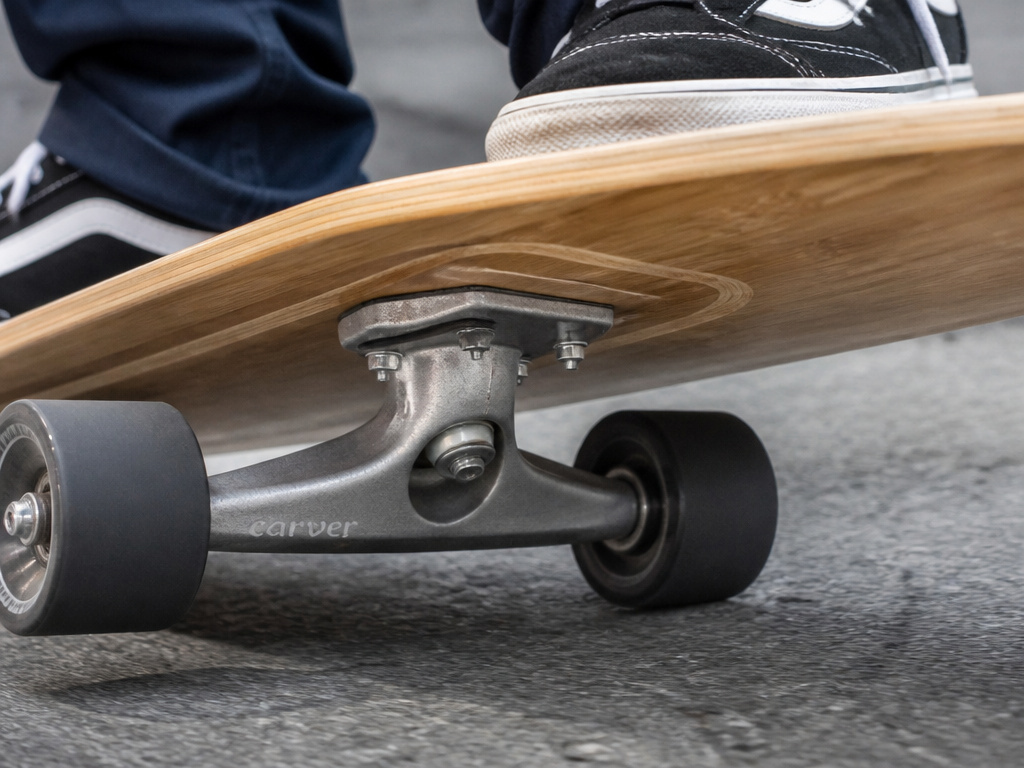
The Magneto Dropthrough Carver is a drop-through board. Its deck is 38.5 inches long and 9 inches wide, and it uses a construction of three plies of bamboo and one ply of fiberglass. This places it in the middle of the size range for drop-through decks, which are known for their lower ride height and stability. The design pushes the trucks through the deck, lowering your center of gravity. This makes pushing easier and provides a more stable platform for cruising at speed compared to top-mount boards. If you’re looking for a carvy, stable cruiser for longer rides, this drop-through design is a practical choice. It’s built for smooth rolling and controlled turns, which defines the experience.
Frequently Asked Questions
Are Magneto longboards good?
For their price and intended use, yes. They are good for beginners and casual riders who want a complete board that works right out of the box. They are not high-performance machines, but they are a solid, affordable entry point into longboarding. Their customer service reputation for handling defects is a significant plus.
What is the best longboard brand on the market?
There is no single “best” brand; it depends on your riding style and budget. For downhill and sliding, brands like Landyachtz, Rayne, and Loaded are top-tier. For cruising and carving, Sector 9 and Arbor have huge followings. For park and street, traditional skateboard brands reign. Magneto competes in the “best budget complete” category.
Which longboard brand is the most durable?
Durability is about materials and construction. Brands that use multiple plies of hardrock maple (Landyachtz, Sector 9’s higher-end lines) are known for lasting years of abuse. Bamboo/composite decks, like Magneto’s, offer a springy, lively feel but can be more susceptible to delamination if the glue bonds fail. Proper care and not exceeding the weight limit matter more for any brand’s longevity.
What is the best longboard for a budget?
The “best” budget longboard is the one that fits your size and riding goals. For adults, the Magneto Bamboo Cruiser (42-inch) or Dropthrough Carver (38.5-inch) are strong contenders under $150. The Retrospec Zed is a direct competitor. Compare them based on deck shape and graphic preference, as the components are similarly basic and will benefit from the same bearing and bushing upgrades.
Can heavier riders use Magneto longboards?
Yes, but they must choose the right model. The Dropthrough Carver and Bamboo Cruiser have a maximum weight capacity of 250 lbs according to the manufacturer. Owners report successful use at 260 lbs and even higher. The smaller Mini-Cruiser is not recommended for heavier riders. Always respect the posted limits—exceeding them risks deck failure and injury.
The Bottom Line
Magneto longboards serve a specific, valuable purpose. They lower the barrier to entry for a hobby that can seem intimidatingly expensive. You get a complete, functional board with a lively bamboo-composite deck for a price that feels like a calculated risk rather than a blind leap.
Trust the process, not just the trick. The process with a Magneto is this: buy it, ride it, identify what you don’t like (likely the bushings’ mushiness or the bearings’ noise), and upgrade that part for $15. Repeat. Within a few months and under $200 total, you can have a genuinely good, personalized setup.
If your goal is to cruise bike paths, carve gentle hills, or have a reliable commuter, and your budget is locked at $150, a Magneto is a defensible choice. Just know you’re buying a platform, not a finished product. For riders who know they’ll stick with it and can save a little longer, stepping up to a Sector 9 complete offers a more refined experience from day one. The question of is a longboard worth it always comes down to use. If you’ll ride it regularly, even a budget board like this is worth every penny.
