Magneto Skateboard Review: What to Know Before Buying
This post contains affiliate links. As an Amazon Associate, we earn from qualifying purchases.
Magneto skateboards are a budget-friendly brand offering a range of cruisers and an electric model, with build quality that varies by model. The decks are generally durable bamboo or maple, but stock components like trucks and grip tape are common points for early upgrades, making them a decent starter board for casual cruising rather than high-performance skating.
That gap between “budget-friendly” and “high-performance” is where most owner opinions live, as you’ll see in any detailed magneto skateboard review. It’s not that the boards are bad, but that they’re built for a specific job: getting you rolling without a major investment. The question is whether that job matches what you actually want to do on a board.
What follows: a breakdown of each major Magneto model’s specs, a look at where the stock parts hold you back, and a straight answer on who should buy one, and who should keep looking.
Key Takeaways
- Magneto decks, especially the bamboo and fiberglass models, are surprisingly durable for the price, but the stock components are the weak link.
- The claimed 250 lb weight capacity is a critical spec, exceeding it risks deck damage and is a common oversight in reviews.
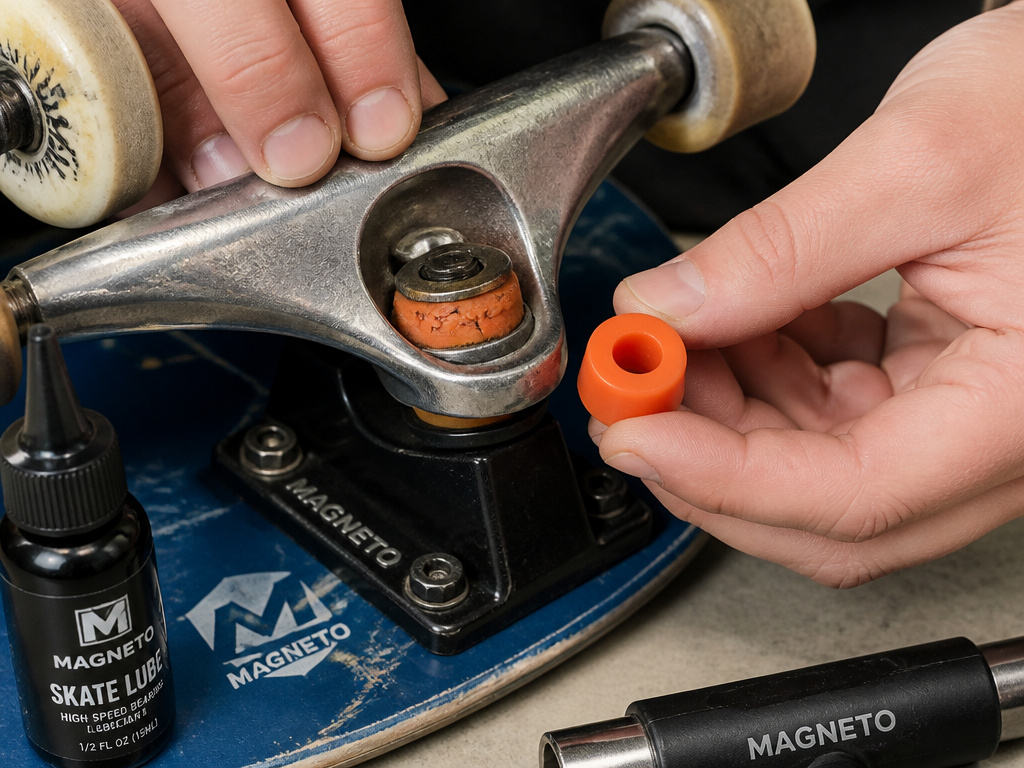
- Upgrading the bushings is the single most effective improvement for ride feel, and it’s a direct recommendation from Magneto’s own guide.
- For pure cruising on a budget, the Magneto Bamboo Cruiser 42“ is the default pick; for electric assist, the Magneto Hybrid Cruiser (with Bustin trucks) is the better bet.
- Skip the spray-on grip tape on some models and add real tape immediately, that “invisible sandblasted grit” wears smooth within a few months of regular use.
Build Quality & Durability: Where the Money Goes
The deck is where Magneto puts its effort. Their bamboo cruisers use a blend of 3 plies bamboo and 2 plies fiberglass, which creates a board that’s both strong and flexy. A generic Magneto longboard is listed with a 3-ply bamboo, 1-ply fiberglass construction. That fiberglass layer is what stops the bamboo from splitting along the grain, it’s a smart, cost-effective way to build a durable cruiser deck.
The maple Mini-Cruiser uses either 6 plies of Canadian Maple or a 5-ply maple core sandwiched in carbon-infused bamboo. Both are solid. In a YouTube stress test featured in a magneto skateboard review, a bamboo Magneto deck held up to significant impact, which is more than you’d expect from a board at this price.
The technical bottom line: Bamboo’s long fibers provide lengthwise strength rivaling steel, but it’s weak across the grain. Laminating it with fiberglass creates a deck that can flex under a rider’s weight without snapping, which is why these boards survive curb nudges that would break a cheap plastic toy.
Where things get less impressive is under the deck. The trucks are gravity-cast aluminum, functional, not precision. The bushings are soft and degrade quickly. The bearings are serviceable but won’t win any downhill races. This is the commodity part of the build, and it’s where you feel the lower price point first.
Component Analysis: Trucks, Wheels, and the Upgrade Path
We will now examine the details. The Magneto Bamboo Cruiser 42″ comes with Paris-style 7″ aluminum trucks with a 50° kingpin angle. The Magneto Mini-Cruiser uses 5″ gravity cast trucks. The Magneto Hybrid Cruiser (the electric one) steps up to Bustin™ R1 177mm 50° trucks, which is a genuine upgrade and a sign of that board’s collaboration.
The wheels follow a similar tier. The Hybrid Cruiser rolls on Five-O™ 83mm 81a wheels. The Bamboo Cruiser uses 70mm x 53mm, 78A durometer cruiser wheels. The Mini-Cruiser has 60mm, 78A wheels.
| Component | Magneto Bamboo Cruiser 42″ | Magneto Mini-Cruiser | Magneto Hybrid Cruiser (Electric) |
|---|---|---|---|
| Trucks | Paris-style 7″ aluminum, 50° | 5″ gravity cast aluminum | Bustin™ R1 177mm 50° |
| Wheels | 70mm x 53mm, 78A | 60mm, 78A | Five-O™ 83mm 81a |
| Key Upgrade | Bushings & Bearings | Bushings & Bearings | Bushings (already better trucks) |
The upgrade path is clear and almost expected. Owners on Reddit and in YouTube comments consistently point to the bushings and bearings as the first things to swap out. A Reddit thread on a kid’s Magneto board noted the “bushings are terrible” and the kid “will have a hard time turning or getting speed.” That’s the universal first impression.
Common mistake: Cranking down the kingpin nut to stiffen loose trucks. Magneto’s own guide warns this will damage the bushings. If you want a stiffer ride after three full rotations of the nut, you need harder bushings, not more force.
Ride Experience & Performance: Casual Cruising Wins
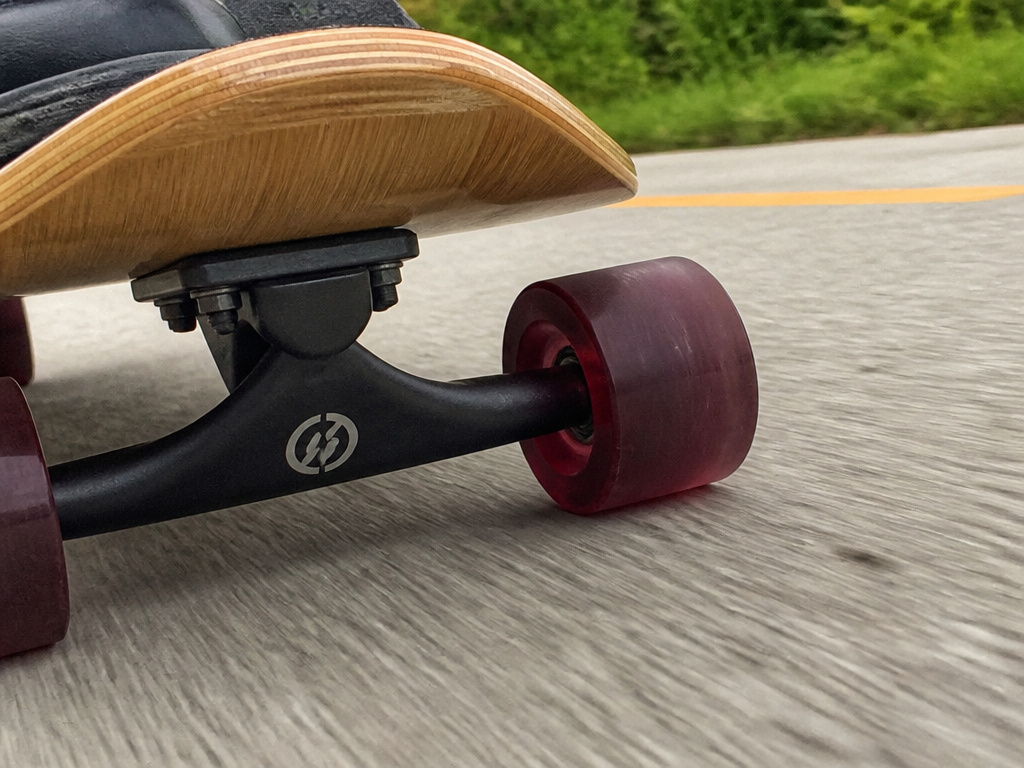
For pushing around campus or a smooth bike path, these boards are fine. The bamboo decks offer a lively flex, the soft 78A wheels soak up cracks, and the lower price means you won’t panic when you have to hop off quickly. The Bamboo Cruiser 42″, with its 34-inch wheelbase and drop-through mounting, is stable and easy to push for distance.
The Mini-Cruiser is nimble and fun for quick trips, though its 18-inch wheelbase and 60mm wheels make it less stable over rough ground. In a YouTube comparison, it was reviewed as a fun, cheap alternative to a Landyachtz Dinghy, but with noticeably slower stock bearings and less refined trucks.
The electric Magneto Hybrid Cruiser claims a 10-12 mile range and a 24 mph top speed. Its Dualomo hub motors and 180Wh battery are built for moderate hills (a claimed 20% max grade, though another Magneto electric model claims 15%). It’s a different beast meant for assisted commuting, not trick riding.
Where this goes sideways: Taking a stock Magneto board into a skatepark or trying to learn serious downhill. The components aren’t meant for that stress. The board might survive, but the ride will feel vague and uncontrollable compared to a setup with precision trucks and performance bearings. That mismatch of expectation and reality is where negative reviews come from.
The Grip Tape Debate: To Add or Not to Add?
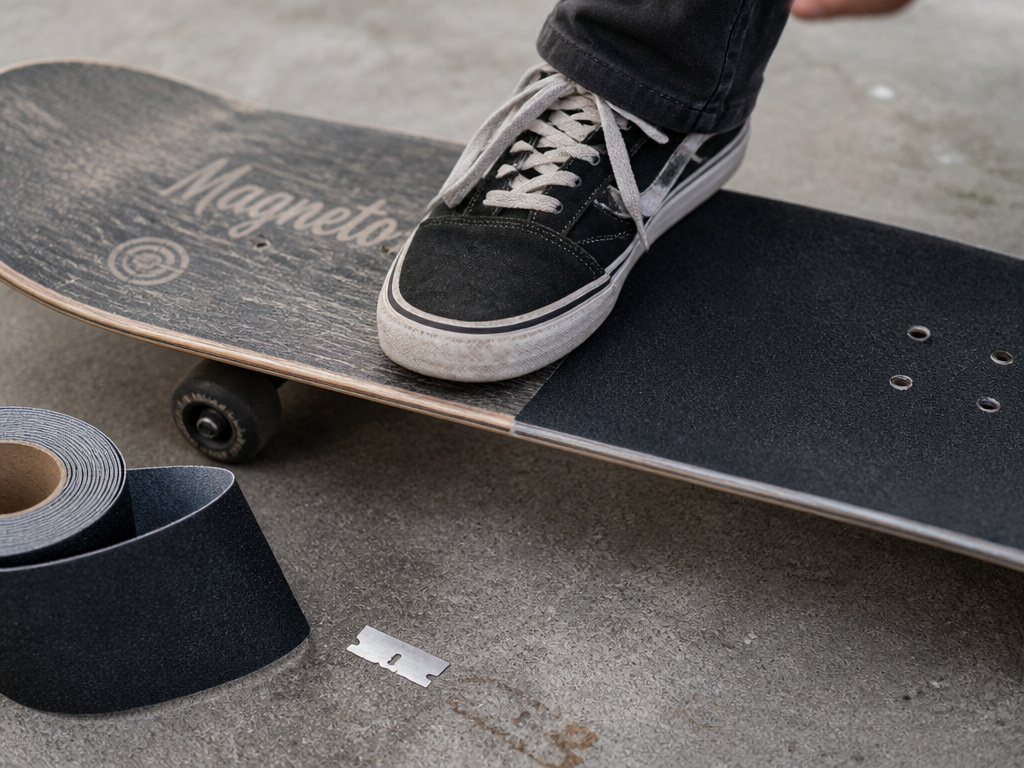
Here’s a clear example of where sources disagree, and it matters for your purchase. Magneto’s official product descriptions state their ‘invisible sandblasted grit’ top coating eliminates the need for added grip tape, but another review notes the spray-on grit doesn’t hold up well and riders may need to apply new grip tape. One source says it “works very well when carving and slashing- no added grip tape necessary.”
Another review directly contradicts this: “The grip tape is a spray-on sand grit that doesn’t hold up well and the rider may need to apply some new grip eventually.”
Who’s right? Both, depending on your use. The spray-on grit provides enough traction for light, dry cruising. Start sweating, riding in damp conditions, or attempting quicker foot maneuvers, and it becomes slick. For most riders, especially beginners who need secure footing, adding a sheet of real grip tape is a mandatory day-one upgrade. Treat the “no grip tape needed” claim as a marketing point, not a performance guarantee.
Weight Limits & Long-Term Reliability
This is the gap most generic reviews miss. A review of a generic Magneto longboard lists a weight capacity of 250 lbs. That’s your hard ceiling. The deck may hold more, but the trucks, wheels, and especially the bushings are not rated for it. Exceeding this limit accelerates wear on every component and turns a stable cruiser into a wobbly, unpredictable ride.
Long-term reliability ties directly to component upgrades and maintenance. The decks hold up. The stock trucks, if not abused, will last years for casual use. The bearings will need cleaning and lubrication with regular riding. The bushings will flatten and lose rebound.
The Magneto Revolution Electric Skateboard comes with a 6-month warranty, as noted on a retailer site. That’s fairly standard for the sector, but it’s not a lifetime guarantee. For non-electric boards, warranty details are harder to pin down, suggesting support may be case-by-case rather than a robust, published policy.
Who It’s For (And Who It’s Not For)
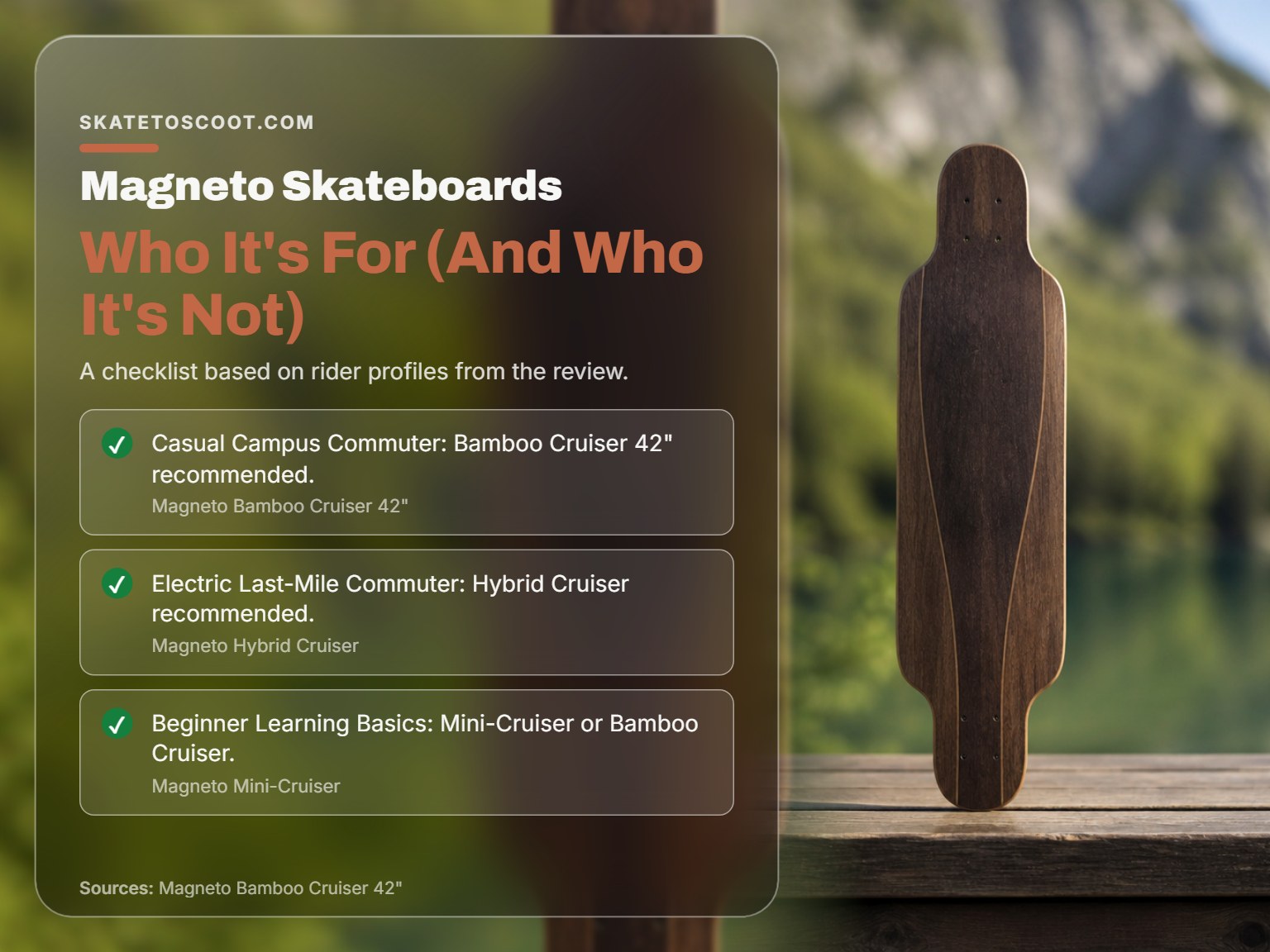
This is the decision table. It commits.
| Rider Profile | Recommended Magneto Model | Why It Works | First Upgrade |
|---|---|---|---|
| Casual Campus Commuter | Bamboo Cruiser 42″ | Stable, smooth push, absorbs pavement cracks. | Bones Reds Bearings |
| Electric Last-Mile Commuter | Hybrid Cruiser | Good range, Bustin trucks are decent out of the box. | Harder Bushings (if needed) |
| Beginner Learning Basics | Mini-Cruiser or Bamboo Cruiser | Low investment, durable deck to survive early mistakes. | Grip Tape & Harder Bushings |
| Park, Downhill, or Aggressive Rider | Not Recommended | Components lack precision and stability for high-speed or impact riding. | Look at other brands |
If you’re trying to decide between a Magneto and something from Landyachtz, Sector 9, or Arbor, the difference is component quality. You’re paying more for better trucks, wheels, and bearings that you won’t need to replace immediately. A Magneto is a project board, you buy the deck and plan to upgrade the parts as you grow into the sport.
Frequently Asked Questions
Are Magneto skateboards any good?
For their intended use, casual cruising on a budget, yes. The decks are well-made, especially the bamboo models. They are not high-performance machines, and treating them as such leads to disappointment. Think of them as a solid starting point that you can upgrade over time.
What is the best cheap skateboard brand?
Magneto is a strong contender in the “cheap” category precisely because the deck isn’t cheaply made. Other brands at similar price points often use plastic composites or weak wood. For a complete budget board that won’t snap on you, Magneto’s bamboo cruisers are a legitimate option.
What is the most reliable skateboard brand?
Reliability depends on components. Brands like Santa Cruz, Powell Peralta, and Landyachtz use quality trucks and bearings from known manufacturers, leading to more consistent long-term performance. Magneto’s reliability is more variable, hinging on the bushings and bearings, which are common failure points.
How does the Magneto electric skateboard compare?
The Magneto Hybrid Cruiser (and the similar Revolution model) sits in the mid-tier of electric skateboards. Its 10-12 mile range and 24 mph speed are respectable. The collaboration with Bustin for the trucks is a plus. It’s not as refined or powerful as some premium electric skateboards. For a first e-skate, it’s a reasonable entry.
Can you learn to skateboard on a Magneto?
Absolutely. The stability of the Bamboo Cruiser 42″ or the manageable size of the Mini-Cruiser makes them fine learner boards. The low cost takes the pressure off when you inevitably drop it, scratch it, or step on it. Just be prepared to add grip tape and consider new bushings once you’re comfortable pushing and turning.
The Bottom Line
Here is the thing, a Magneto skateboard is a tool for a specific job. If your job is “get a board that rolls and won’t break when I lean on it,” they’re a surprisingly good answer. The deck craftsmanship exceeds the price.
But the job is not “keep up with my friends at the skatepark” or “feel locked-in bombing a hill.” For that, the stock components will fight you every step of the way. You’ll spend the money you saved on upgrades within the first year.
So, the real question isn’t if Magneto boards are good. It’s whether you’re buying a complete board or a project platform. If you want a complete, ride-ready experience out of the box, save a little longer and buy from a brand that invests in its components. If you’re okay with a solid deck and a planned upgrade path, a Magneto gives you a great place to start.
TL;DR: Buy a Magneto for the deck, budget for new bushings and grip tape, and you’ll have a capable cruiser. Expect it to be perfect straight from the box, and you’ll be shopping again within six months.
