Ride Kink Snowboard Review: The Jib Stick That Snaps
This post contains affiliate links. As an Amazon Associate, we earn from qualifying purchases.
The Ride Kink is a twin-tip, park-focused snowboard built for rails and street-style jibs. Its Extra Camber profile delivers a snappy, responsive feel, while tech like Cleave Edge and Double Impact Plates aim for durability. For riders with boot sizes 11 and up, the wide versions (154W, 157W) are essential to prevent boot-out.
That “wide version” clause is the first decision point. The manufacturer’s size chart lists waist widths, but it’s a professional review that gives you the real-world rule: size 11 boots need the 154W. For a detailed breakdown, see the Ride Kink snowboard review. That’s the kind of spec that separates a usable board from one that holds you back.
What follows: a breakdown of the Kink’s geometry, the conflicting advice on tuning its edges for jibbing, its surprisingly decent performance at speed, and the durability story that spans nearly two decades of this model’s history.
Key Takeaways
- The Kink’s Extra Camber profile is essentially a taller traditional camber with tiny rocker tips, making it poppy and responsive, not just “buttery.”
- Riders with boot sizes 11 and 11.5 must choose a Wide model (154W or 157W) to avoid boot-out, per professional testing.
- For pure rail and jib use, a professional review advises riders to de-tune the edges, contrasting with the manufacturer’s claim that the Quadratic Sidecut provides predictability and edge hold.
- The board functions outside the park, holding an edge well at moderate speeds, but it is not built for charging difficult all-mountain terrain or powder.
- Historical durability issues (top-sheet peeling, edge cracking on early-2000s models) appear addressed by modern Cleave Edge and Double Impact Plates, but long-term owner data on the 2027 version is still pending.
The Kink’s Geometry & Sizing (What Does a 151 Actually Mean?)
Look at the size chart for the 2027 Ride Kink. It’s a list of numbers. A 151 has a 251mm waist width, a 1157mm effective edge, and a 21-inch reference stance. The board features zero insert setback. Those are facts from the manufacturer.
The Quadratic Sidecut blends three radii (8.5m entry/exit, 7.1m focus) to improve turn initiation while providing grip. This is the technical foundation for the board’s “predictability” claim.
But the number that matters most isn’t on that chart. It’s your boot size. A professional Ride Kink snowboard review for a 2018/2019 Kink found testers with size 11 and 11.5 boots could not ride the standard 151 without boot-out. Their solution was unequivocal: they needed to go with a 154w.
That 154W has a 261mm waist. The 157W is 264mm. If you’re on the line, go wider. A board that doesn’t let you use its full edge is a board that’s working against you.
| Kink Size | Waist Width | Best For Boot Size (Approx.) | Rider Weight Range (lbs) |
|---|---|---|---|
| Kink Size | Waist Width | —————- |
The full size run is 143, 147, 151, 154W, 155, 157W, 158. Notice the W sizes slot between standard lengths. This isn’t an afterthought; it’s a calculated offer for riders who need the surface area without a massive jump in length.
Construction & Tech: What’s Under the Graphic
Ride packs the Kink with features aimed at one thing: surviving urban and park abuse. You can group them into three jobs.
Job 1: Resist Impacts. The Double Impact Plates are fiberglass laminates added under each binding area. Their goal is to improve compressive strength and prevent the board from breaking where you land hardest. The Foundation Core is tip-to-tail Aspen wood, chosen for a balance of durability and retained pop.
Job 2: Protect the Edges. This is where Cleave Edge comes in. Ride claims it uses nearly 50% more steel than a standard edge for resistance to cracking. It’s paired with Slim Walls, a 3D composite sidewall construction meant for better energy transfer and damping. The edges themselves contain 30% recycled materials.
Job 3: Define the Feel. The Extra Camber profile is described as “a higher rise camber” for a snappy, lively response. The Biaxial fiberglass (layers at 0° and 90°) is a forgiving, fun layout. The base is an extruded 1500 Ptex, the industry standard for easy repair and decent wax absorption, not the ultra-fast sintered option.
Where this goes sideways: Assuming the Kink is a soft, floppy noodle because it’s a jib board. The Extra Camber and biaxial glass give it a middle-of-the-road flex that’s playful but has a solid core. You’ll feel it when you load it up.
The tech story is about resilience. It’s a board built to be slammed into frozen rails and concrete-like park features. Whether that translates to real-world longevity for the average rider is the next question.
How It Rides: Jibbing, Jumping, and Everything Else
The manufacturer says the Kink is for “modern freestyle and street performance.” A professional Ride Kink snowboard review says for park/jib use: “you should de-tune the edges and just jib with this.” An owner from 2006 said it performed better than expected at speed: “not too gittery, not wanting to wash out all of the time.”
All three are correct, just for different parts of the mountain.
On Rails and Boxes: This is the Kink’s home. The flex pattern locks into presses and cradles around features. That professional advice to de-tune the edges is crucial, it prevents the board from grabbing unpredictably on metal. The damp, forgiving feel absorbs chatter.
On Jumps: It’s built for small to medium kickers. The camber provides plenty of pop for ollies and side hits. It’s stable enough for the approach, but it is built primarily for park and street features. If you’re eyeing the pro line, you’ll want something with a bigger platform.
On Groomers and at Speed: Here’s the surprise. The board can carve. The Quadratic Sidecut and Slim Walls provide clean edge engagement. It’s not going to win a downhill race, but for getting across the mountain to the park or enjoying a mellow blue run, it’s more than capable. The limitation comes in choppy terrain or real powder, it doesn’t have the float or dampness for that.
Common mistake: Taking the Kink into deep powder or onto aggressively steep, bumpy terrain expecting it to perform like an all-mountain board. It functions, but it’s not designed to “eat up difficult terrain and float on powder.”
The ride feel is best described as confident where it’s meant to be, and politely tolerant everywhere else. It won’t punish you for leaving the park, but it won’t reward you with hidden talents either.
The Durability Conversation: 2005 vs. 2027
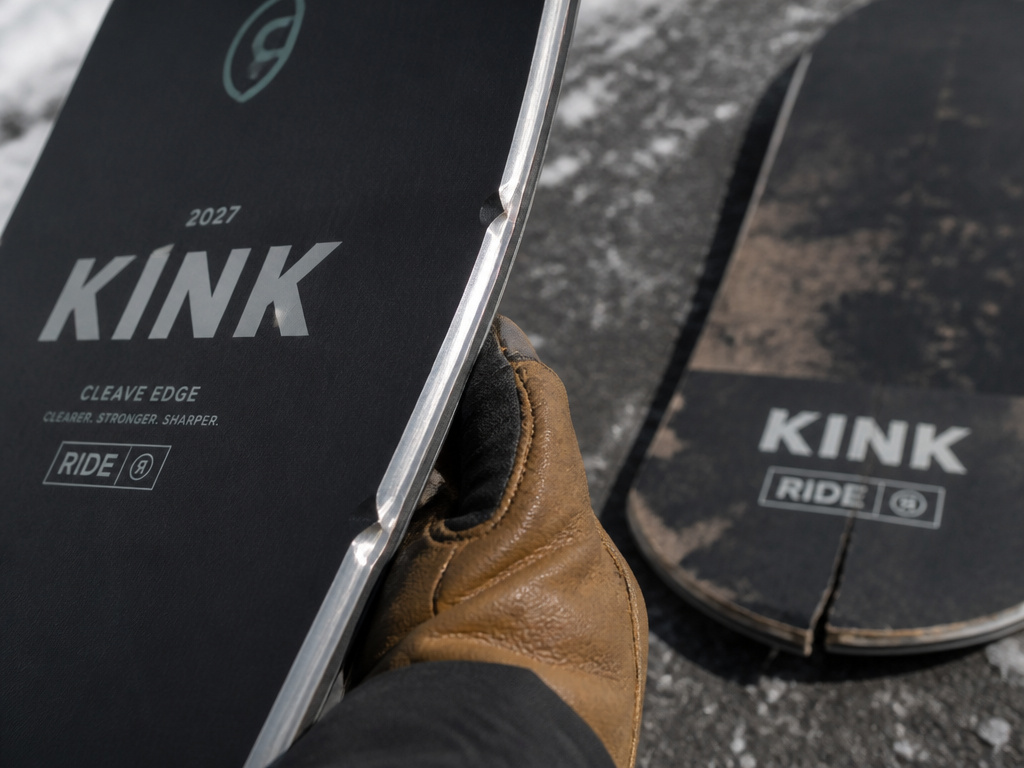
The Kink name has been around for over two decades. That history comes with baggage.
A reviewer of the 2005/2006 model reported weak edges and a crack near the nose after “around 6 weeks of riding,” concluding it wouldn’t have lasted a season. A user of a 2009 model said the top sheet “started peeling off between my bindings after the first day.”
Those are specific, dated failure timelines. They matter because they set a baseline the current technology is trying to overcome.
The 2027 Kink’s response is Cleave Edge, Slim Walls, and Double Impact Plates. The claim is “nearly 50% more steel” for resistance to edge cracking. On paper, it’s a direct answer to the past.
But the proof is in the parking lot. Or rather, in the absence of new, widespread reports of similar failures for recent model years. The current construction seems to have solved the acute failures of the mid-2000s. The extruded base is also a choice that favors easy, at-home repair over ultimate speed, a practical nod to the board’s hard-knocks life.
Setup, Bindings, and the One Tuning Tip You Need
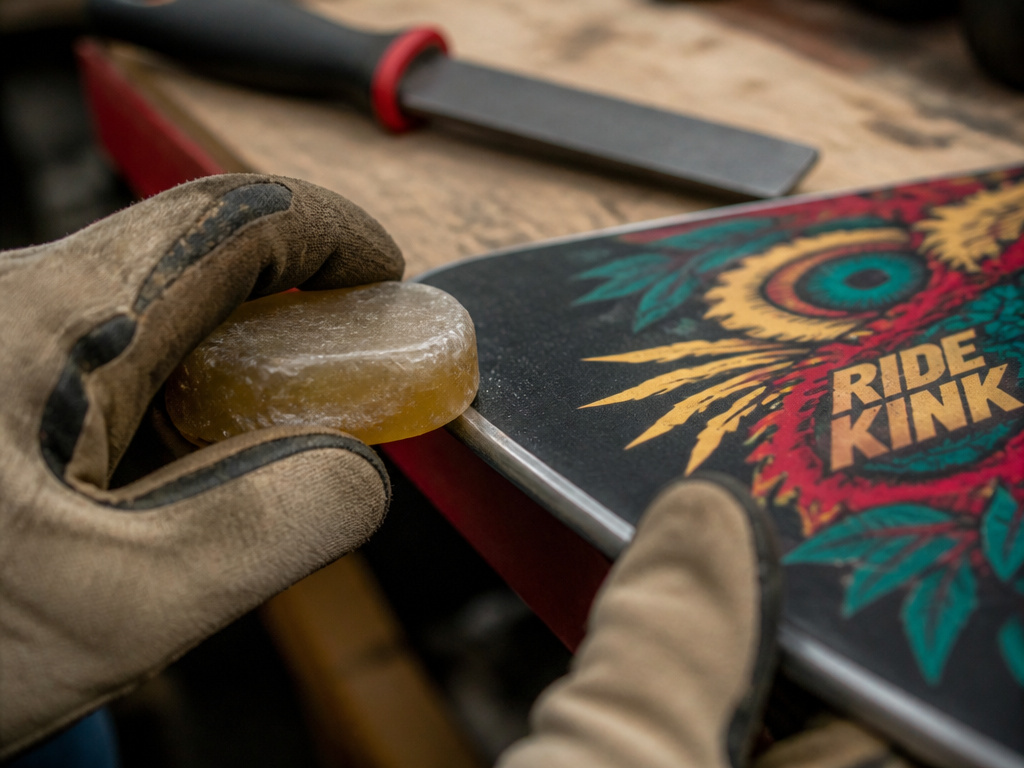
You have the board. Now what?
Bindings: You want a mid-flexing, responsive binding that can communicate the camber’s pop. Brands like Union, Burton, and Ride’s own bindings offer good middle-ground options. Your choice of snowboard bindings should mirror the board’s intent, supportive but not rigid.
Stance: With zero insert setback, you’re on a true twin. Center your bindings.
The Essential Tune: This is the clearest conflict between marketing and reality. Ride’s product page touts the Quadratic Sidecut for “predictability and edge hold.” Yet The Good Ride review explicitly states, for park/jib use: “you should de-tune the edges and just jib with this.”
Listen to the review. Take a file or a gummy stone and lightly dull the contact points near the nose and tail. This prevents catching on rails and makes presses more predictable. It’s a five-minute job that changes the board’s character in the park completely.
Frequently Asked Questions
Is the Ride Kink a good snowboard?
For its intended purpose, park and street jibbing, yes, it’s a very good snowboard. Its Extra Camber provides reliable pop, and its durability-focused construction is built for abuse. It’s less ideal as a one-board quiver for riders who spend most of their time charging all-mountain terrain or deep powder.
Are Ride snowboards a good brand?
Ride Snowboards is a well-established brand with a long history in freestyle and all-mountain riding. They are known for innovative tech like Cleave Edge and often offer strong value. Like any brand, specific models excel at different things; the Kink is a standout in their park lineup, while other boards like the Ride Zero cater to different styles.
What type of rider is the Kink best for?
The Kink is best for intermediate to advanced riders who focus on park riding, specifically rails, boxes, and street-style features. It’s excellent for learning presses, butters, and jibs. Beginners can grow into it, but its camber requires more precise control than a pure rocker board.
Can the Ride Kink handle all-mountain riding?
It can handle all-mountain riding in a functional sense. It holds an edge on groomers and is stable at moderate speeds. However, it is not designed or recommended for aggressive carving, high-speed stability, or powder days. It’s a park board that can get you around the mountain, not a mountain board that can park.
How does the Kink compare to other park boards?
Compared to a stiffer, camber-dominant park board, the Kink is more forgiving and press-friendly. Compared to a softer, full-rocker jib stick, it has much more pop and response. It sits in a sweet spot for riders who want snap without sacrificing a playful, lock-on feel on rails. When looking at other freestyle snowboards, the Kink’s value and focused durability are its key differentiators.
The Bottom Line
The Ride Kink knows what it is: a specialized tool. Its value is in that focus. You get a snappy, twin-tip platform wrapped in durability tech aimed squarely at park and street riding.
If your boot size is 11 or larger, start your search with the 154W. That single decision avoids the most common setup error. Once it’s under your feet, de-tune the edges for the park. The board will thank you with predictable slides and solid lock-ins.
Professional reviews note it is not built for charging difficult all-mountain terrain or powder, though the manufacturer markets it for modern freestyle and street performance and an older owner review found it performed adequately at speed. But for the rider whose season revolves around the sound of a boardslide on steel, the Kink delivers a reliable, poppy feel that’s built to last more than a few park laps. For a look at how it fits within the broader Ride snowboards family, its siblings like the Ride Agenda or Ride Saturday cater to more versatile or specific freestyle needs.
Commit to its purpose, and it’s a hard partner to beat. Ask it to be something else, and you’ll hear the disagreement in every turn.
