Volpam Electric Scooter Review: Specs vs. Performance
This post contains affiliate links. As an Amazon Associate, we earn from qualifying purchases.
Volpam electric scooters are foldable, aluminum-framed commuters with 350W motors, advertised speeds up to 21 mph and ranges up to 28 miles. However, Consumer Reports data shows a specific model topping out at 19 mph and lacking UL 2272 safety certification, while user reports and incident filings reveal significant discrepancies in real-world range, reliability, and potential structural risks.
That 4-5 mph gap between advertised and tested top speed is the first signpost. It tells you the specs on the box are a best-case scenario, not a guarantee. For a commuter tool, the difference between an advertised 17-27 mile range and a real-world 6.5-mile trip is the difference between getting to work and getting stranded. This is a key point in any volpam electric scooter review.
What follows is a breakdown of the numbers from the lab, the streets, and the warranty fine print. We’ll compare the advertised performance against independent testing, look at where owners say these scooters hold up or break down, and walk through the safety certifications that matter more than marketing claims. By the end, you’ll know exactly which Volpam model, if any, fits a short, flat commute, and which one to avoid if your route has hills or you weigh over 200 pounds.
Key Takeaways
- Advertised specs are optimistic. Consumer Reports clocked a Volpam model at a 19 mph top speed, while blog reviews claim speeds up to 21 mph, and real-world range can be less than half of the 17-28 mile advertised span.
- Structural integrity is a documented concern. A 2025 incident report filed with a law firm details a Volpam SPT7 with frame separation and multiple component failures shortly after purchase, highlighting a risk beyond normal wear.
- The 12-month warranty has critical gaps. VOLPAM’s warranty covers defects in materials but excludes damage from accidents or misuse, which may not apply if a structural failure occurs during normal riding.
- Cold weather cripples battery performance. Owners report severely reduced range and power in freezing temperatures; a scooter rated for 20 miles may struggle with a 10-mile commute in the cold.
- Target the dual-suspension models. For a marginally smoother ride on rough pavement, seek out the SPT6 or SP08 variants with front and rear shocks, as the standard solid-tire models transmit every bump directly to the rider.
What Are the Advertised Specs and Tested Performance?
The box says one thing. The road often says another. For Volpam scooters, the gap between advertised bliss and tested reality starts with the most basic numbers: speed, range, and what it can actually carry.
Consumer Reports tested the Volpam Adult Electric Scooter (Model M421289). Their findings are a useful anchor in a sea of marketing claims. The scooter hit a top speed of 19 mph across three selectable modes (8, 11, and 19 mph). It weighed in at 33 lbs and supported a maximum load of 264 lbs. Crucially, their test unit was not certified to the UL 2272 electrical safety standard, a red flag for a device with a lithium-ion battery.
The Volpam Adult Electric Scooter (Model M421289) is an aluminum-framed, foldable model equipped with a front hub motor and solid 8.5-inch wheels. It offers 3 speed modes (8, 11, and 19 mph), along with cruise control and smartphone app integration.. Consumer Reports
Meanwhile, blog reviews and Amazon listings often tout speeds “up to 21 mph” and ranges between 17 and 28 miles from a 36V lithium-ion battery. Charging is typically quoted at 4 to 5 hours. The motors are generally described as 350W brushless, sometimes peaking at 500W.
This table lays out the conflict directly:
| Specification | Advertised (Blog/Amazon) | Tested (Consumer Reports, Model M421289) | Why the Gap Matters |
|---|---|---|---|
| Top Speed | Up to 21 mph | 19 mph | Affects commute time and ability to keep up with traffic. |
| Range | 17-27 miles | Not tested; real-world reports vary wildly (6.5-31 mi) | Determines if the scooter can complete your round-trip without a recharge. |
| Weight | ~26-28 lbs (per manuals) | 33 lbs | Impacts portability when folded and carried. |
| UL 2272 Cert. | Often not mentioned | No | Indicates the electrical system lacks a key safety certification for fire and shock risk. |
The weight discrepancy is telling. Manuals suggest a scooter around 28 lbs, but the tested model was 33 lbs. Five pounds might not sound like much, but when you’re hauling it up subway stairs or lifting it into a trunk, you feel every extra ounce. It points to variability in manufacturing or components between different batches or models.
What Is the Real-World Range of a Volpam Electric Scooter?
Forget the billboard numbers. The real question isn’t “what’s the range?” It’s “what’s the range for you, on your route, with your weight?” For Volpam scooters, the answer can be brutally honest.
One Reddit user weighing 245-250 lbs (within the 264 lb limit) took a Volpam SPT6 on a mixed-mode ride in NYC. The result? Approximately 6.5 miles on a single charge, navigating hills and city streets. Another owner, after six months of use, reported their dual-suspension model could reach about 31 miles on favorable, flat terrain. The advertised range for these models sits between 17 and 27 miles.
Where this goes sideways: Assuming the advertised range for trip planning. A rider needing a 10-mile commute might buy a scooter advertised for 17-27 miles, only to find it dies after 6.5 miles in the cold or on hills, leaving them stranded.
The math from the community is harsh but useful. One experienced rider advised that realistic range is often one-third to one-half less than manufacturer claims. For a cold-weather commute, they suggested looking for a scooter with a 35-40 mile advertised range to reliably cover 10 miles. A Volpam, with its 17-27 mile claim, operates at the very edge of that requirement for many commuters.
Here’s what actually eats the battery:
- Rider Weight: The closer you are to the 264 lb max, the harder the motor works.
- Terrain and Hills: Even slight inclines dramatically increase power draw. The SPT6 owner noted it struggled on steeper hills.
- Speed Mode: Using the higher “Sport” mode (19 mph) drains the battery much faster than the 8 or 11 mph modes.
- Temperature: Lithium-ion batteries hate the cold. Capacity and power output drop significantly in freezing weather. An owner explicitly warned against leaving the scooter outside in the cold.
If your commute is short, flat, and in fair weather, a Volpam might just suffice. If any of those variables change, the risk of a dead battery mid-ride spikes.
How Does It Handle and Who Is It Really For?
Ride quality separates a practical commuter from a bone-shaking chore. Volpam scooters, particularly the base models with solid 8.5-inch honeycomb tires, are infamous for their stiffness. You feel every crack in the pavement, every pebble, every seam in the concrete.
The dual-suspension models (like the SPT6 or SPT7) are the exception. They add front and rear shocks that take the sharp edge off bumps. But even with suspension, the feedback is firm. It’s manageable, not comfortable.
A 350W brushless motor, as advertised for some models, provides adequate acceleration for flat urban environments. It’s not built for steep hills; riders report noticeable slowdowns on inclines. A dual braking system combining electric and drum brakes, as advertised, is a standard setup for the price point. It works, but as with all brakes on budget scooters, regular checking for adjustment and wear is essential.
So, who is this for?
The ideal Volpam rider has a short, flat, well-paved commute under 5 miles. They weigh under 200 lbs to preserve range. They have a place to store it indoors, away from weather extremes. They value low cost over premium ride comfort and are willing to perform basic maintenance. This scooter fits the “last-mile” niche: from a transit stop to an office, or a quick trip to the grocery store.
For anyone with a longer commute, hilly terrain, a heavier build, or a need for a plush ride, the compromises stack up quickly. You’ll be fighting for range, bracing against vibrations, and potentially stressing components not designed for that level of use. In our broader guide to the best electric scooters, models designed for these more demanding conditions start at a higher price point for a reason.
Safety, Reliability & Warranty: Reading the Fine Print
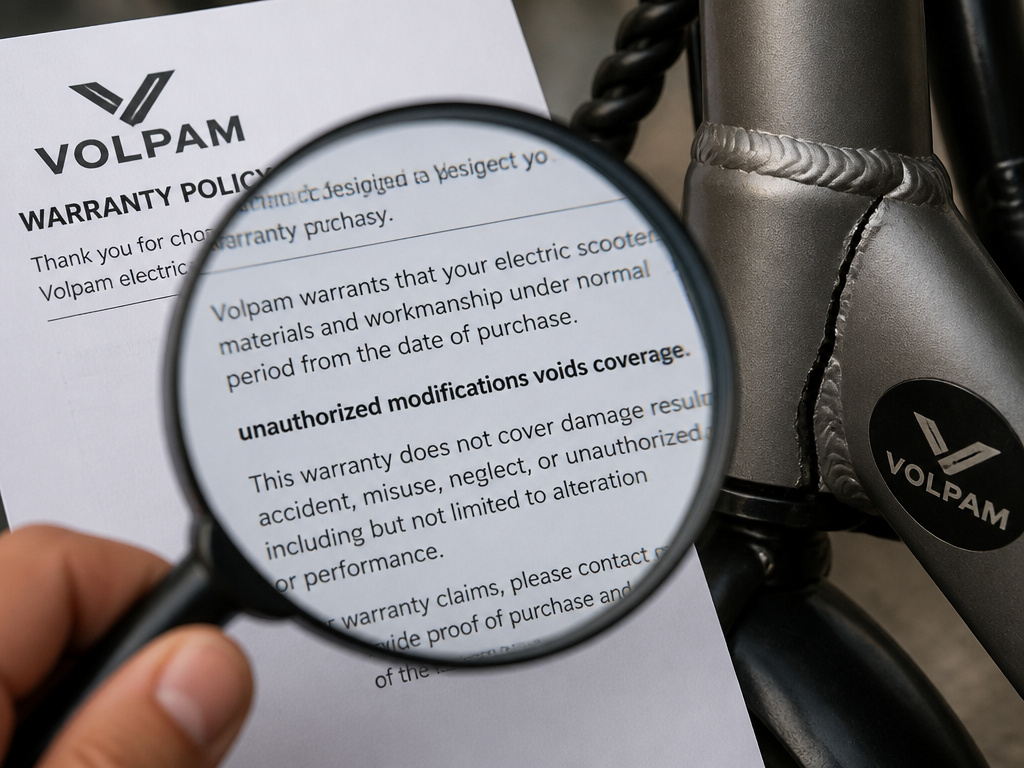
This is where the rubber meets the road, often literally. Safety on an electric scooter isn’t just about wearing a helmet; it’s about the scooter’s fundamental integrity. With Volpam, the picture painted by warranty documents is starkly different from the one emerging from incident reports.
VOLPAM offers a 12-month limited warranty. It covers “repair or replacement of any components or parts that prove to be defective in materials or workmanship.” Sounds standard. The exclusions list is more revealing: damage from accidents, misuse, neglect, or unauthorized modifications voids coverage. This is typical legal language, but it places the burden of proof on the rider if something fails.
Now, read the incident reports. A detailed 2025 report filed with Farzan Law concerned a Volpam SPT7. The rider, within the weight limit, reported catastrophic structural instability, the frame began to separate, alongside failures of the brake assembly, brake light, and throttle, all shortly after purchase. The manufacturer’s proposed solution was a repair or replacement, not a refund or new unit. This incident was detailed in a report filed with a law firm.
The CPSC’s broader data on e-scooter hazards from 2017-2022 lists “Brake Problem” as a factor in 19 out of 89 investigated e-scooter incidents. “Unexpected Power Loss” accounted for 5 incidents. These aren’t abstract fears; they are documented failure patterns in the product category Volpam occupies.
Common mistake: Relying solely on the warranty for peace of mind. The warranty covers defects, but a frame separation during normal use leads to a dispute over what constitutes a “defect” versus “misuse.” The legal and safety risk falls on the rider long before it’s resolved.
This standard specifically covers electrical system safety for personal e-mobility devices, helping mitigate fire and shock risks. Its absence isn’t unique to Volpam in the budget tier, but it’s a verified shortcoming against a recognized safety benchmark.
Reliability, therefore, becomes a lottery. Many owners report trouble-free miles. Others encounter game-breaking issues within weeks. CPSC data on e-scooter hazard patterns suggests the risk is real. When evaluating any Volpam electric scooter review, understanding this spectrum of potential outcomes is crucial. You’re not just buying a scooter; you’re buying into its particular risk profile.
Volpam vs. Other Budget Scooters: A Reality Check
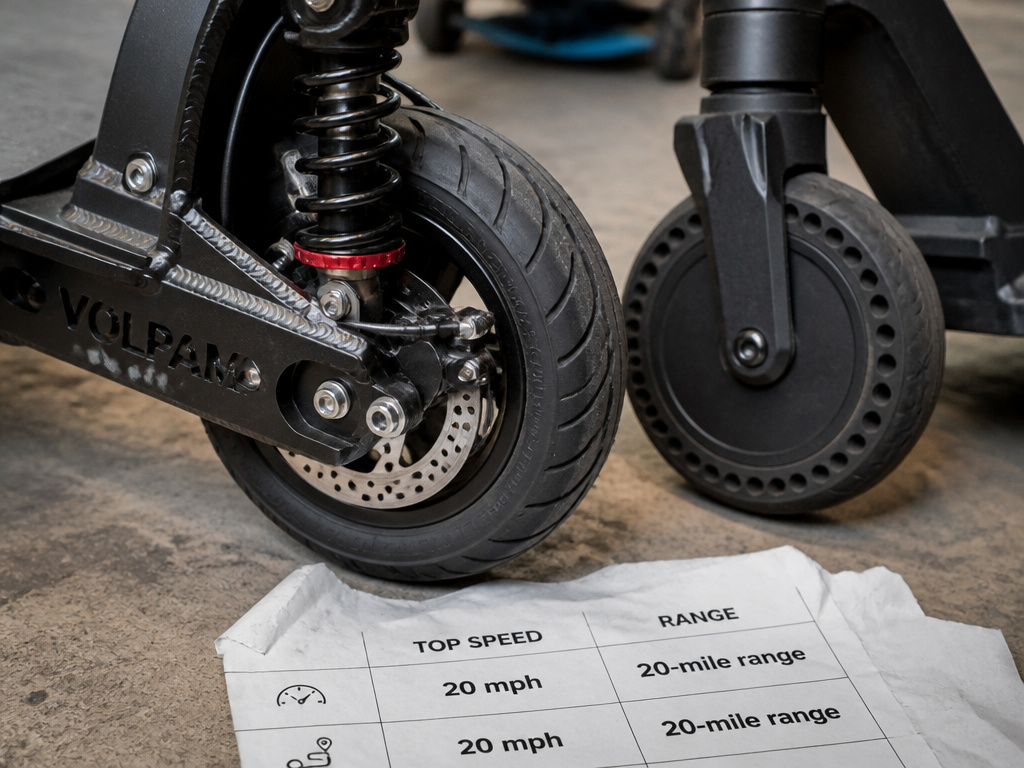
On paper, Volpam’s specs compete directly with other Amazon budget brands: low cost, ~20 mph top speed, ~20-mile advertised range, foldable. The difference often lies in the less-advertised details: the quality of weld points, the battery management system (BMS), the consistency of the electrical components, and the responsiveness of customer service.
Many of these scooters, including Volpam, are variations of a common design originating from the Xiaomi M365. They are often produced by various factories with slight modifications. This isn’t inherently bad, but it means brand reputation is fluid.
Where Volpam seems to differentiate is in its model range, offering some models with dual suspension. The standard solid-tire models garner more complaints about ride harshness and premature wear.
When you compare a Volpam electric scooter review to the broader market in our electric scooter reviews, the decision points become clearer. For a similar price, you might find a scooter from a brand with a longer track record, more consistent presence in online communities for troubleshooting, or a clearer safety certification status. Alternatively, you might find the exact same scooter under a different name for less money.
The Volpam proposition boils down to this: accept the documented variability in quality and the potential for severe defects in exchange for a very low upfront cost. It’s the scooter equivalent of a beater car. It might run fine for years with basic care, or a critical component might fail unexpectedly. Your tolerance for that uncertainty is the deciding factor.
Does the Volpam scooter have a companion app?
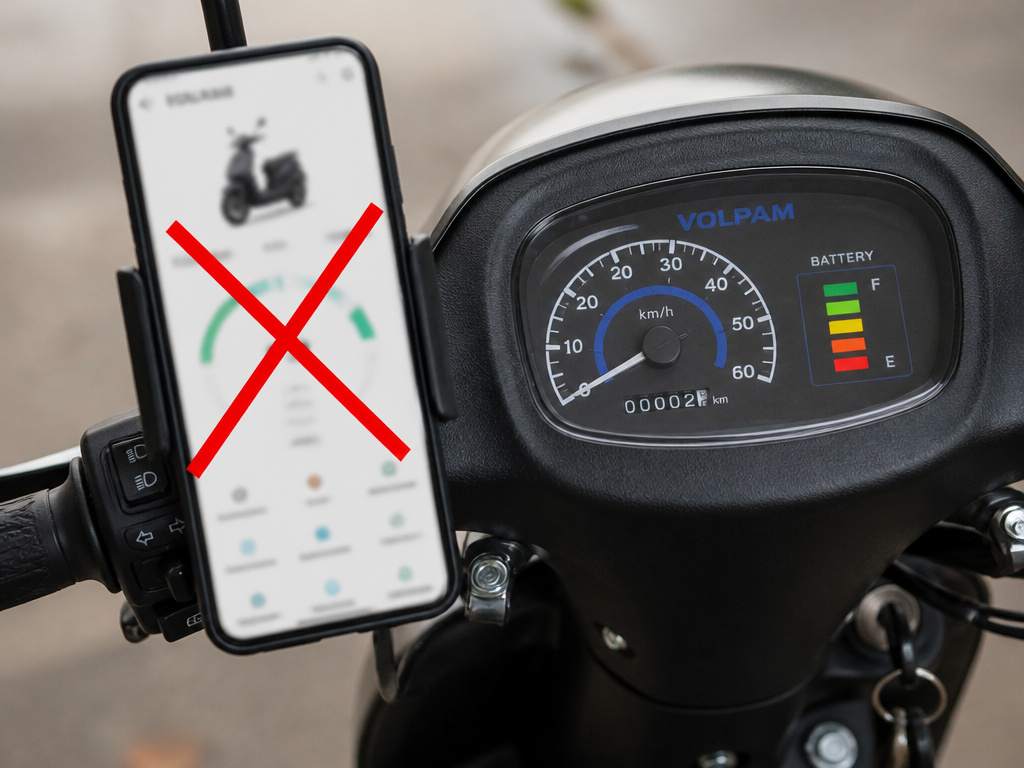
This means you will not find features like remote locking, ride statistics tracking, or firmware updates through a digital interface. For riders who prefer a simple, no-fuss experience without needing a phone, this is a straightforward approach. However, if you rely on an app for theft deterrence or detailed performance logs, you’ll need to look at other brands or consider additional aftermarket security solutions for your scooter.
Frequently Asked Questions
Are Volpam electric scooters good?
They can be adequate for a very specific, low-demand use case: short, flat commutes for lighter riders in good weather. “Good” is subjective. They are inexpensive and fulfill a basic need, but they lack the refinement, proven reliability, and safety certifications of more established brands. Numerous user reports and at least one serious incident filing indicate quality control can be inconsistent.
Who makes Volpam electric scooters?
VOLPAM appears to be an importer or brand name attached to scooters manufactured in China, likely in factories that produce similar models for other budget brands. There is no publicly available information about a dedicated manufacturing company or facility behind the name, which is common for many Amazon-based scooter brands.
How long does a Volpam electric scooter last?
There is no single answer. Some owners report hundreds of trouble-free miles over many months. Others report critical failures within weeks. The 12-month warranty covers defects, but longevity depends heavily on riding conditions, rider weight, maintenance, and plain luck with the unit you receive. It is not engineered for years of heavy daily use.
How fast does the Volpam e-scooter go?
Advertised top speed is “up to 21 mph.” Independent testing by Consumer Reports on the Volpam Adult Electric Scooter (Model M421289) measured a maximum of 19 mph. Real-world speed will be lower when accounting for rider weight, battery charge level, inclines, and wind resistance.
The Bottom Line
Here is the blunt assessment. A Volpam scooter is a financial bet, not a reliable tool. The odds are okay if your needs are minimal: a flat mile or two, a light rider, indoor storage. The moment your commute stretches, gains a hill, or happens in the cold, the odds of disappointment, or worse, a failure, climb fast.
The incident report of frame separation is the line in the sand. It moves the conversation from “this might be uncomfortable” to “this might be dangerous.” You cannot warranty-check a broken collarbone. If your budget is very limited, a Volpam with dual suspension may be a choice from their lineup. Check every bolt before the first ride, and never push its limits.
Otherwise, the smarter play is to save a little longer. You’re not just buying more speed or range; you’re buying predictability. And for a machine you trust your body to, predictability isn’t a luxury. It’s the whole point.
