Volpam Scooter Review: Is It Worth It?
This post contains affiliate links. As an Amazon Associate, we earn from qualifying purchases.
The Volpam scooter is a budget electric scooter offering basic specs like a 350W motor and a top speed of 19 mph, with weight limits around 264-265 lb depending on the model., but its value is undercut by documented safety incidents, a lack of UL 2272 certification, and warranty terms that exclude many critical failures.
That last point is the line. It’s not about whether a scooter is cheap; it’s about what happens when a cheap scooter fails. As noted in a typical Volpam scooter review, the manufacturer’s warranty excludes “normal wear and tear” and “accidents.” When a frame separates at the weld or a brake assembly falls apart during a ride, failures reported to the CPSC, the company can argue that’s not a defect in materials or workmanship. You’re left holding a broken scooter and a repair bill.
What follows: a breakdown of the Consumer Reports test data, two CPSC incident reports with specific failure modes, the real range you can expect, and the one scenario where a Volpam might make sense.
Key Takeaways
- Consumer Reports tested a Volpam Adult Electric Scooter and found it is not certified to meet UL 2272, a critical electrical safety standard.
- A CPSC incident report details a Volpam SPT7 experiencing frame separation and brake assembly disintegration during normal use by a rider within the weight limit.
- Real-world range is roughly half of manufacturer claims; expect 6–15 miles depending on model, rider weight, and terrain.
- The 12-month limited warranty excludes damage from “accidents, misuse, neglect, or improper maintenance,” which can be cited to deny claims for common failure modes.
- For a short, smooth commute under 5 miles where price is the absolute top concern, a Volpam could work. For anyone else, the risks outweigh the savings.
The Volpam Scooter’s Safety Record in Black and White
You don’t have to guess about this scooter’s reliability. The data in any thorough Volpam scooter review exists, and it’s unambiguous.
In July 2024, a rider reported to the U.S. Consumer Product Safety Commission that their Volpam scooter‘s “safety locker”, the folding mechanism, opened unexpectedly while riding at about 15 mph. The rider fell and was injured. The report noted the latch had opened on previous occasions, appearing secure but failing under stress. This isn’t a one-off gripe. It’s a dated, specific incident in a public database.
Where this goes sideways: A folding latch that appears engaged but opens under riding stress. The consequence is a high-speed dismount, and the timeline is immediate, it happens on the ride where the latch fails.
A detailed report was filed for a Volpam SPT7 model. The rider, weighing approximately 180 lbs, reported the frame began to separate, creating a “severe risk of collapse.” The brake assembly components loosened and fell apart during a ride. The brake light failed within the first week. The throttle failed. The battery required daily charging despite normal usage. The rider found numerous other customer reviews reporting identical defects.
These are not “normal wear and tear.” They are critical, safety-of-life failures occurring within months of purchase. The warranty language becomes crucial here.
| Reported Failure | Likely Warranty Classification | Risk to Rider |
|---|---|---|
| Frame separation | “Damage caused by accidents” or “misuse” | Collapse at speed, high-impact fall |
| Brake assembly disintegration | “Improper maintenance” | Inability to stop, collision |
| Folding latch failure | “Normal wear and tear” | Sudden dismount, loss of control |
| Throttle/Brake light failure | “Defect in materials or workmanship” if proven | Erratic acceleration, no brake signal to traffic |
According to the terms, the warranty covers defects in materials or workmanship, a key point in any Volpam scooter review. The company decides what constitutes a defect. When multiple users report the same catastrophic failure, it points to a design or manufacturing flaw, not user error. Yet the burden of proof, and the medical bills, fall on you.
The Specs That Matter (And The Ones That Don’t)
Ignore the marketing claims. The core specs for many Volpam models are a 350W brushless motor, a top speed of 19 mph, and a maximum rider load of about 265 lb. The battery capacity varies by model. Consumer Reports lists the tested model’s battery at 5.2 Wh. OptionCutter, citing manufacturer documentation for the Q2, lists a 36V, 187.2Wh battery. A YouTube reviewer cites a Volpam SP08 with a 48V, 10.5Ah battery (504 Wh). This discrepancy highlights the importance of checking specs for the specific model you’re considering.
Forget the “up to 28 miles” claim on some Amazon listings. Real-world data from owners tells a different story.
- A Reddit user weighing 245-250 lbs reported approximately 6.5 miles on a Volpam SPT6 over a 3-hour mixed-mode ride in NYC.
- A YouTube reviewer achieved 12 miles on a Volpam SP03 ridden in sport mode by a ~180 lb rider on flat terrain.
- The same reviewer achieved 15.03 miles on a Volpam SP08 with suspension, ridden in sport mode on flat terrain.
The pattern is clear. Cut the claimed range in half, then subtract a bit more if you weigh over 200 lbs or encounter hills.
The 15-mile test on the SP08 is the best-case scenario: a lighter rider, sport mode, and perfectly flat ground. Your commute will not be that.
What about the motor? A 350W motor is common on some models and is adequate for flat ground, while other models like the SP08 reportedly have a 500W motor. One reviewer noted a Volpam SP06 struggled on an incline. A 500W motor in the SP08 model handles mild hills better, but it’s still a budget power plant. You won’t be conquering steep grades.
UL 2272 Certification: The Red Flag You Can’t Ignore
This is the single most important line in any detailed Volpam scooter review. UL 2272 is the standard for electrical systems for personal e-mobility devices. It tests for overcharge, short circuit, and other failure modes that can lead to battery fires.
Consumer Reports explicitly states the “Volpam Adult Electric Scooter” they tested is “Certified to meet UL 2272: No.”
Consumer Reports states the tested model is not certified, while some Amazon listings claim it has passed the test, highlighting a critical discrepancy in the information provided to consumers. This isn’t a minor discrepancy. It’s a direct contradiction on a fundamental safety certification. When an independent tester like Consumer Reports says a product lacks certification that the retailer claims it has, your alarm bells should be deafening. It means you cannot trust the listing.
Ride Quality and Real-World Use
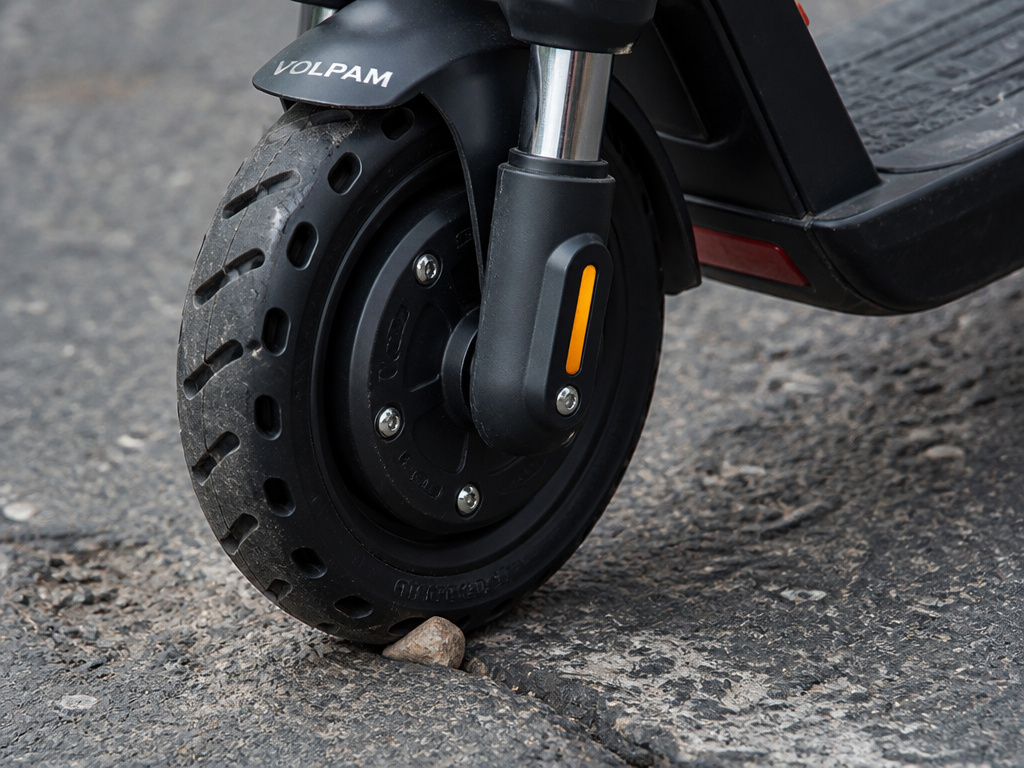
The riding experience is best described by owners. The word from owners is “BUMPY.” Even models with dual suspension transmit a harsh, high-frequency vibration through the deck and handlebars. You feel every pebble, crack, and seam in the pavement.
A Reddit owner’s one-line review: “You feel every single pebble under you.”
Solid tires are the main culprit. They never go flat, which is a genuine advantage for low-maintenance commuting. But they have no give. The suspension on models like the SP08 helps, one reviewer said it “actually does smooth out the bumps”, but it’s a minor improvement on a fundamentally harsh ride. If your sidewalks or bike lanes are anything less than glass-smooth, your hands and feet will go numb after a couple of miles.
The folding mechanism, when it works, is a genuine convenience. The scooter collapses to a relatively compact size, handy for carrying onto a bus or storing in a closet. But as the CPSC incident shows, that latch is a potential single point of catastrophic failure. You must check it every single time, tugging on it to be sure it’s fully engaged.
Who Is The Volpam Scooter Actually For?
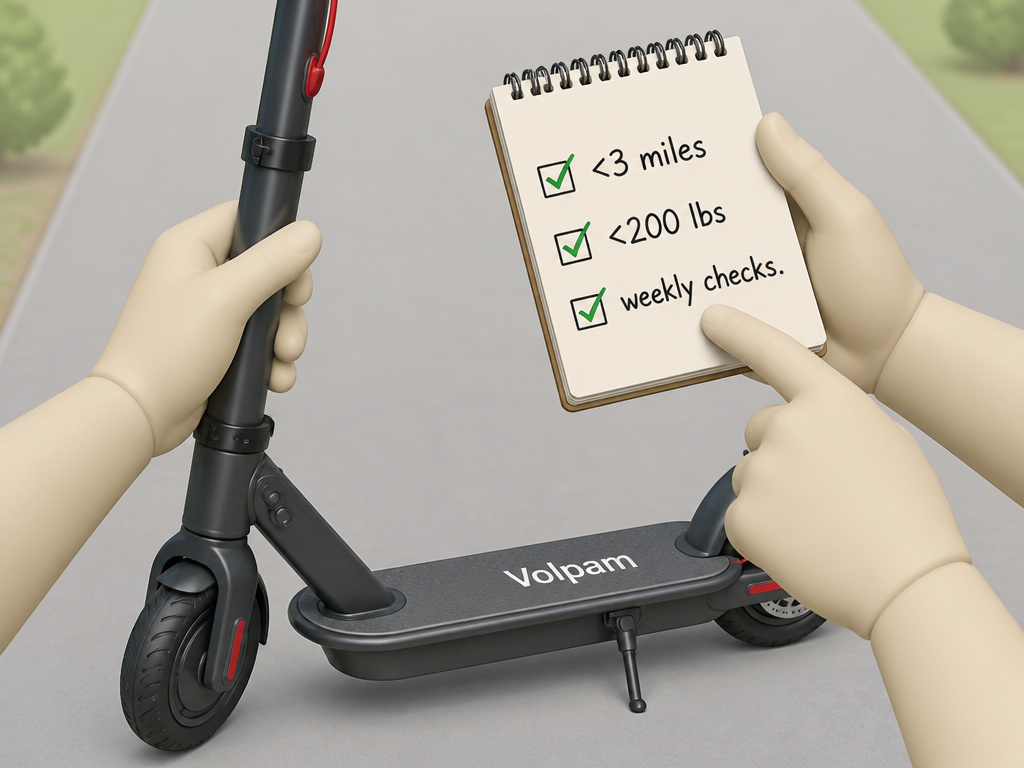
After sifting through the specs, the incidents, and the owner reports, a narrow use case emerges.
The Volpam scooter could be a calculated risk for an adult who:
- Needs to travel less than 3 miles one-way on perfectly smooth, flat pavement.
- Weighs under 200 lbs.
- Has a tight budget and prioritizes upfront cost over long-term ownership.
- Is willing to perform weekly safety checks on the frame, brakes, and folding latch.
- Understands that the warranty may not cover the most likely failures.
For this person, the scooter is a simple, foldable tool. They will charge it after every ride, never push it up a hill, and accept that the range will drop significantly after a year. They are buying a disposable transporter with a known failure rate.
For everyone else, riders with longer commutes, hills, uneven terrain, or a concern for safety documentation, the Volpam is a poor choice. The electric scooters available from brands like Niu or Segway offer similar entry-level models with clear certifications, better suspension, and more reputable warranty support for only a marginally higher investment.
The Warranty: Reading Between The Lines
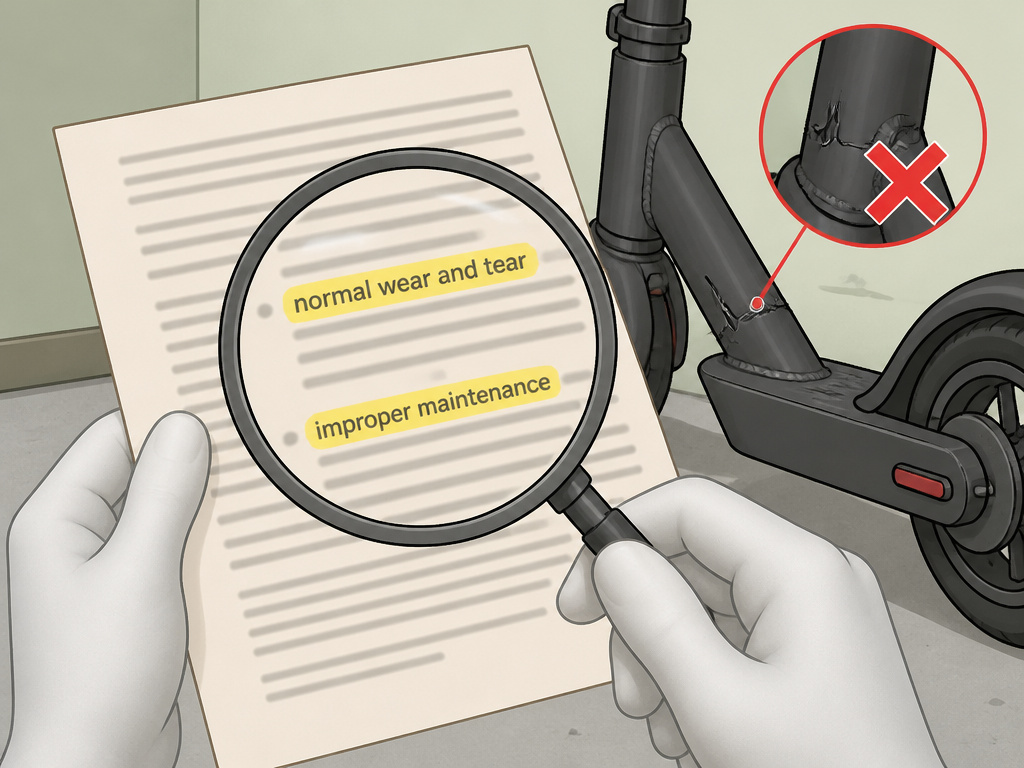
VOLPAM offers a 12-month limited warranty. The policy states it covers “repair or replacement of any components or parts that prove to be defective in materials or workmanship.”
It also lists specific exclusions: damage from accidents, misuse, neglect, improper maintenance, normal wear and tear, and unauthorized modifications.
Here is the thing, this language gives the company wide latitude to deny a claim. A frame weld that fails after six months? That could be argued as “normal wear and tear.” A brake that fails because a bolt rattled loose? That’s “improper maintenance” (you didn’t check the bolt tightness). The burden is on you, the owner, to prove the failure was due to a factory defect and not your usage.
This is standard practice for budget import brands. It’s not illegal. But it means the warranty is far less protective than it first appears. When you buy a Volpam, you are largely self-insuring against mechanical failure.
Frequently Asked Questions
Are Volpam scooters good quality?
The quality is inconsistent. Some units work adequately for a time, while others suffer critical failures like frame separation or brake disintegration early in their life. Independent testing by Consumer Reports shows a lack of key safety certifications. Compared to established brands in the same price bracket, Volpam’s quality and reliability are lower.
What’s the most reliable scooter brand?
Reliability is tied to clear safety certifications (UL 2272), robust customer service, and transparent warranty terms. Brands like Niu, Segway, and Gotrax have longer track records, better documentation, and more consistent quality control than budget import brands like Volpam. For a detailed look at options, browse our e-scooter reviews.
Who makes Volpam electric scooters?
Volpam scooters are manufactured by Yongkang Moxi Technology Co., Ltd., a company based in China. They are sold online through retailers like Amazon and the Volpam website. The brand operates as a typical import model: design and manufacturing overseas, direct-to-consumer sales online with limited physical support infrastructure.
How long does a Volpam electric scooter last?
There is no single answer. Owner reports range from a scooter breaking in half after roughly 1000 miles to another surviving 6 months of daily use. Lifespan depends heavily on riding conditions, rider weight, maintenance, and simple luck of the draw regarding manufacturing defects. Expect battery degradation to noticeably reduce range over time.
The Bottom Line
The Volpam scooter is the definition of “you get what you pay for.” The price is low because the safety margins, component quality, and warranty support are also low.
If your decision comes down purely to dollars and your commute is a short, flat, smooth mile, you might get a year of service out of it. Just wear a helmet, and wrist guards. Check the folding latch like your dental hygiene depends on it. And listen for any new creaks or rattles.
But if you have any other option, take it. The few dollars you save upfront aren’t worth the hassle of a premature failure, the risk of a sudden collapse, or the frustration of a warranty claim that goes nowhere. For reliable, safe transportation, your money is better spent on a scooter from a brand that stands behind its product with verifiable certifications and clear support. Your future self, un-injured and not stranded, will thank you. For a broader look at the market, check out our scooter review hub.
