Apollo Go Scooter Review: Key Takeaways
This post contains affiliate links. As an Amazon Associate, we earn from qualifying purchases.
The Apollo Go is a dual-motor electric scooter designed for urban commuting, delivering a 28 mph top speed and a 36-mile advertised range in a 49 lb package. Its dual 750W motors and regenerative braking provide strong acceleration and low maintenance, but real-world range tests show 15–23 miles depending on speed, and the Apollo app is mandatory to access full performance.
That mandatory app registration is the first thing you’ll notice. The scooter ships locked to 12 mph until you pair it and register your email. Some riders call it a ransom; Apollo calls it a security feature. Either way, it’s the gatekeeper to the scooter’s advertised power. This is a key point in any Apollo Go scooter review.
What follows is a breakdown of the specs that matter, the range you’ll actually get, and the maintenance quirks that define ownership. This isn’t about marketing claims. It’s about matching the scooter’s real capabilities to the demands of a daily commute, based on manufacturer specs, professional testing, and the collective experience of owners who’ve already logged the miles.
Key Takeaways
- The Apollo Go’s real-world range is 15–23 miles, not the advertised 36 miles, with faster speeds cutting range in half.
- You must register via the Apollo app to access the full 28 mph top speed; out of the box, it’s limited to 12 mph.
- The scooter uses 9-inch tubeless pneumatic tires that can be tricky to seat and inflate, requiring a specific “Press & Pump” technique with a high-pressure pump.
- Regenerative braking is powerful and smooth, but the manual warns against using it when the battery is above 90% charge to avoid overcharging damage.
- While the scooter has an IP66 water-resistance rating, it is not fully waterproof, and Apollo advises avoiding deep puddles to protect the electronics.
Performance: Where the Dual Motors Actually Shine
The Apollo Go’s headline feature is its dual 750W motors. On paper, that promises quick acceleration and solid hill-climbing. In practice, it delivers, but only after you jump through the app hoop.
Common mistake: Trying to ride before app registration. The scooter will feel sluggish and cap at 12 mph (20 km/h), leading to immediate disappointment. The full power unlock takes five minutes in the Apollo app.
Once registered, the acceleration is noticeable. Professional testing by ERideHero clocked a hill climb of 250 feet at an 8% grade in 10.1 seconds, with an average speed of 16.9 MPH. For a scooter under 50 lbs, that’s strong. The dual-motor setup provides the torque heavier riders or those in hilly cities need.
The top speed is a contested point. Apollo’s product page advertises “up to 28 mph,” while its instruction manual lists a maximum speed of 20 km/h (about 12.4 mph). This discrepancy likely represents the restricted and full-performance modes.
| Performance Metric | Test Result | Source / Notes |
|---|---|---|
| Top Speed (Advertised) | Up to 28 mph | Apollo product page |
| Top Speed (Out-of-Box) | 12 mph (20 km/h) | Electrek review; requires app unlock |
| Hill Climb (250 ft, 8% grade) | 10.1 seconds, 16.9 MPH avg | ERideHero test |
| Braking Distance (from 15 MPH) | 12.3 feet | ERideHero test (drum + regen) |
| Motor Configuration | Dual 750W motors | Apollo product page |
The takeaway? The performance is there for a commuter scooter. Just budget ten minutes for setup before your first real ride.
The 20-Mile Real-World Range That Decides It
Apollo advertises up to 36 miles of range for the Go. In the real world, with variables like rider weight, hills, and speed, that number drops. Professional range tests tell a more practical story in any Apollo Go scooter review.
ERideHero conducted three tests. Their “Regular” test, meant to simulate typical commuting, yielded 19.8 miles at an average speed of 15.2 MPH. Pushing for speed cut that to 15.4 miles at 19.8 MPH. Trying to maximize range got them 23.7 miles at a slow 12.1 MPH average. The Electrek reviewer reported about 20 miles at higher speeds. Apollo’s 540 Wh battery (or the 504 Wh measured by Electrek) simply can’t sustain 28 mph for long.
A 540Wh battery (36V 15Ah) paired with dual motors is a recipe for high performance, not marathon range. Expect 20 miles as a realistic target for mixed riding. Plan your commute around that.
This has a direct impact on your ride. If your commute is 7 miles each way, you’ll need a charge at work or risk a very slow, battery-conserving ride home. The approximate 7.5-hour charge time with the standard 36V 2A charger means overnight charging is the only practical option for daily use.
Ride Quality, Build, and Portability
Weighing 49 lbs according to Apollo or 46 lbs according to Electrek, the Apollo Go sits in a portable sweet spot. It’s light enough to carry up a flight of stairs or fold for bus storage, but heavy enough to feel stable at speed. The foldable frame design works, though some owners report a slight stem wobble that’s fixable by tightening an internal screw in the folding mechanism.
The ride is cushioned by a basic suspension and those 9-inch tubeless pneumatic tires. The suspension handles city cracks and minor bumps adequately. Don’t expect plush, mountain-bike-level absorption. It’s there to take the edge off.
The tubeless tires with PunctureGuard™ sealant are a selling point for low maintenance, but they introduce a specific quirk noted in Apollo’s own troubleshooting guide. The tire bead may not seal perfectly against the rim out of the box, causing air leaks. The fix is a “Press & Pump” technique: applying firm pressure on the tire against the ground while inflating with a high-pressure pump. A standard bike hand pump often won’t cut it.
Sensory Reality Check: A properly seated tire will make a distinct pop or series of snaps as the bead seals against the rim. If you’re inflating silently, it’s probably leaking.
Common Issues & Long-Term Reliability
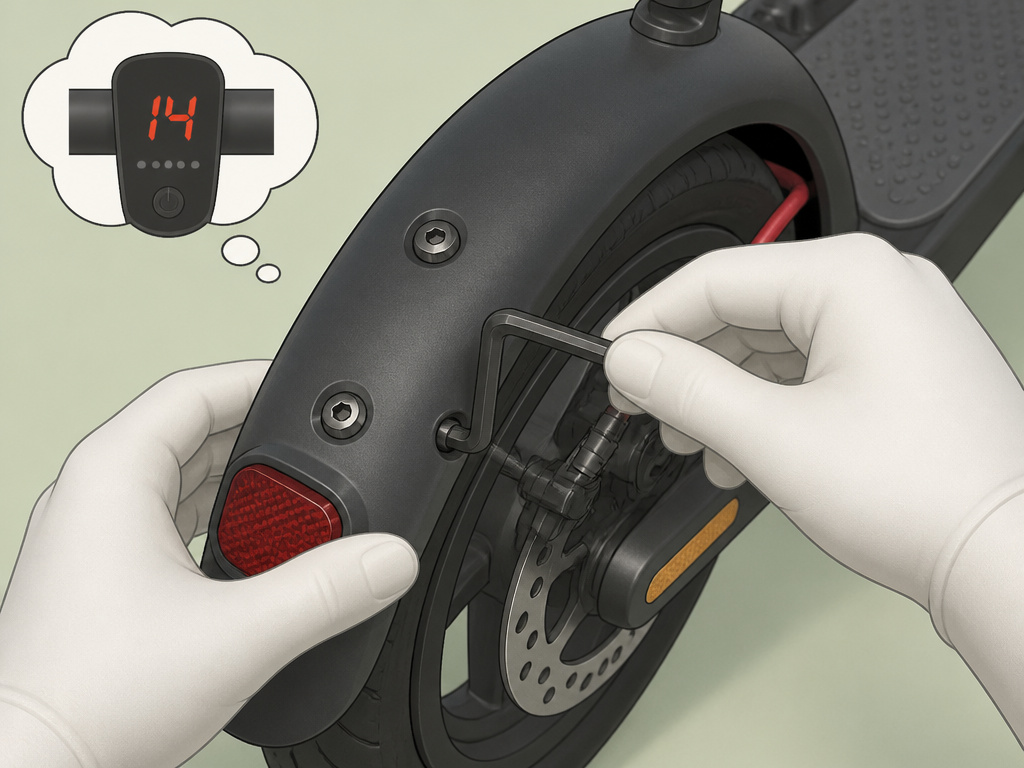
Forums and support pages paint a picture of where the Apollo Go can falter. These aren’t deal-breakers for everyone, but they’re the specifics that turn a generic review into useful prep work.
First, quality control seems variable. Some units ship with squeaky suspension, resolved by applying white lithium grease (per Apollo’s support article). Others have had tire sealing issues straight out of the box.
Second, the app and software are integral. Error codes like E1 (brake sensor) or E7 (motor/overheating) require consulting the app’s diagnostics or following specific reset procedures. The Apollo App is also the only way to adjust regenerative braking strength and update firmware.
Where this goes sideways: Ignoring temperature limits. The operating range is -10℃ to 40℃, but the charge range is stricter: 0℃ to 25℃. Storing the scooter in a cold garage over winter can damage the battery. Condensation from cold-weather riding can also seep into electronics.
Here’s a quick-reference table for common problems and their fixes, drawn directly from Apollo’s troubleshooting guide:
| Symptom / Error | Likely Cause | Recommended Action |
|---|---|---|
| Squeaking suspension | Dry joints from factory | Apply white lithium or silicone-based lubricant under the rubber boot. |
| Tire won’t hold air | Bead not seated on rim | Use “Press & Pump” technique with a high-pressure floor pump or compressor. |
| Error Code E7 | Motor issue or overheating | Run “Motor Detection” in Apollo App. Try motor connector “Swap Test” if comfortable. |
| Clicking noise during acceleration/braking | Motor shifting in swing arm | Tighten and torque the motor screws in the suspension arm. |
| Stem feels wobbly | Loose internal folding mechanism screw | Fold scooter, locate and tighten the internal screw with an Allen key. |
The 12-month limited warranty covers manufacturing defects on major components, with a lifetime warranty on the frame. However, wear items like tires, brake pads, and fenders are not covered. Apollo touts access to 60+ certified repair centers, but user experiences with support responsiveness are mixed.
App, Safety Features, and the Mandatory Pairing
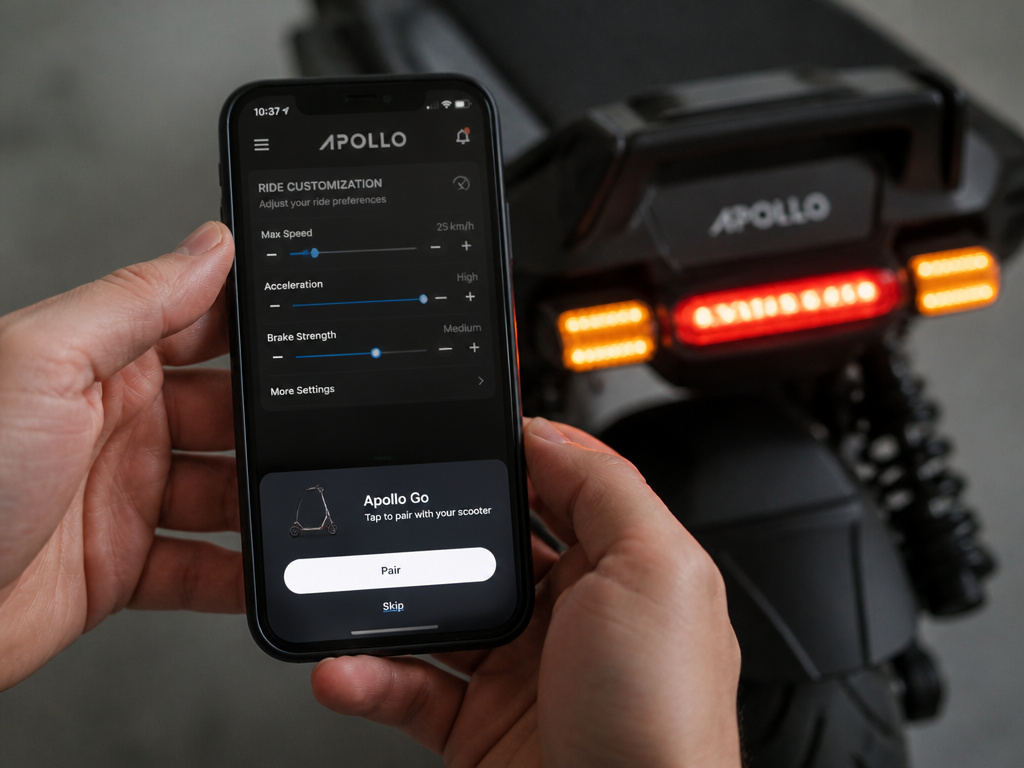
The Apollo App is a central part of the experience, for better or worse. It’s required to initially enable full performance, and it’s the portal for diagnostics, firmware updates, and ride customization.
Safety features are well-considered. The Go includes a headlight, a taillight, and integrated turn signals. The braking system is a highlight: strong regenerative braking backed by a single rear drum brake. The regen is smooth and adjustable, and many riders find they rarely touch the mechanical brake.
The mandatory pairing, however, draws criticism. As the Electrek reviewer put it, “I’m not a huge fan of being forced to pair an app to be able to ride my bikes and scooters.” It’s a data privacy and convenience trade-off. You gain customization and diagnostics, but you lose the ability to just power on and go.
Apollo Go vs. Apollo City: Which Commuter Scooter Wins?
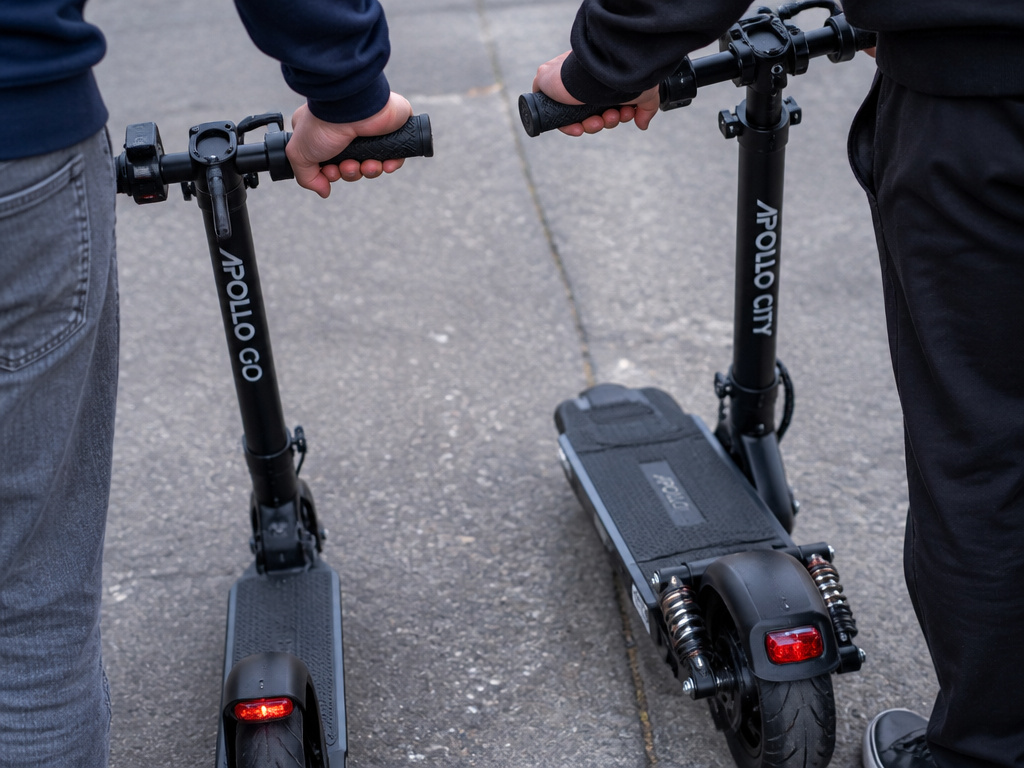
If you’re looking at Apollo’s lineup, the natural comparison is between the Go and the more premium Apollo City. The choice comes down to portability versus comfort.
The Go is the lighter, more portable option at 49 lbs with a simpler suspension. The City is heavier but adds a more sophisticated dual suspension system, larger deck, and generally more robust construction for a smoother ride over rougher pavement. If your commute involves carrying the scooter onto transit or up stairs, the Go’s weight advantage is significant. If your priority is ride comfort over longer distances, the City is worth the step up in price and weight.
For a broader look at how the Go stacks up against other brands, our overview of electric scooters breaks down the key competitors in the mid-weight commuter category.
Verdict: Who Should Actually Buy the Apollo Go?
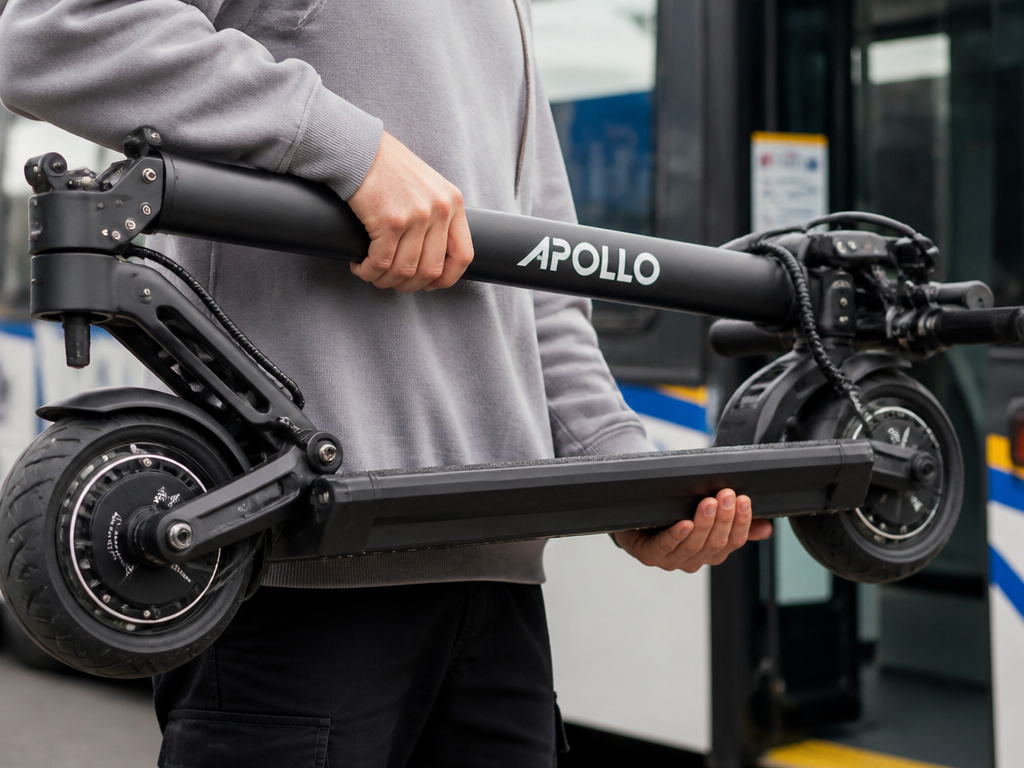
The Apollo Go is a specific tool for a specific job. It’s not the longest-range scooter, nor the most luxurious. It’s a powerful, portable dual-motor commuter for riders who value acceleration and hill-climbing ability in a sub-50 lb package.
Buy it if: Your one-way commute is under 10 miles, you face moderate hills, and you need to carry the scooter on a bus or up stairs. You’re also comfortable with app-dependent features and basic maintenance like tire care.
Skip it if: You need more than 20 miles of real-world range, you prioritize a plush ride over portability, or you want a completely app-free experience. In that case, consider a single-motor scooter with a larger battery or explore our other scooter reviews for alternatives.
The dual motors deliver where it counts, but they come with a battery life trade-off, a central point in an Apollo Go scooter review. The mandatory app is a friction point that won’t bother everyone. And while the tubeless tires are great in theory, be prepared for a potential inflation headache on day one. For the right rider, one who matches its strengths to their daily route, the Apollo Go is a compelling, if imperfect, package.
Is the Apollo Go Worth the Money?
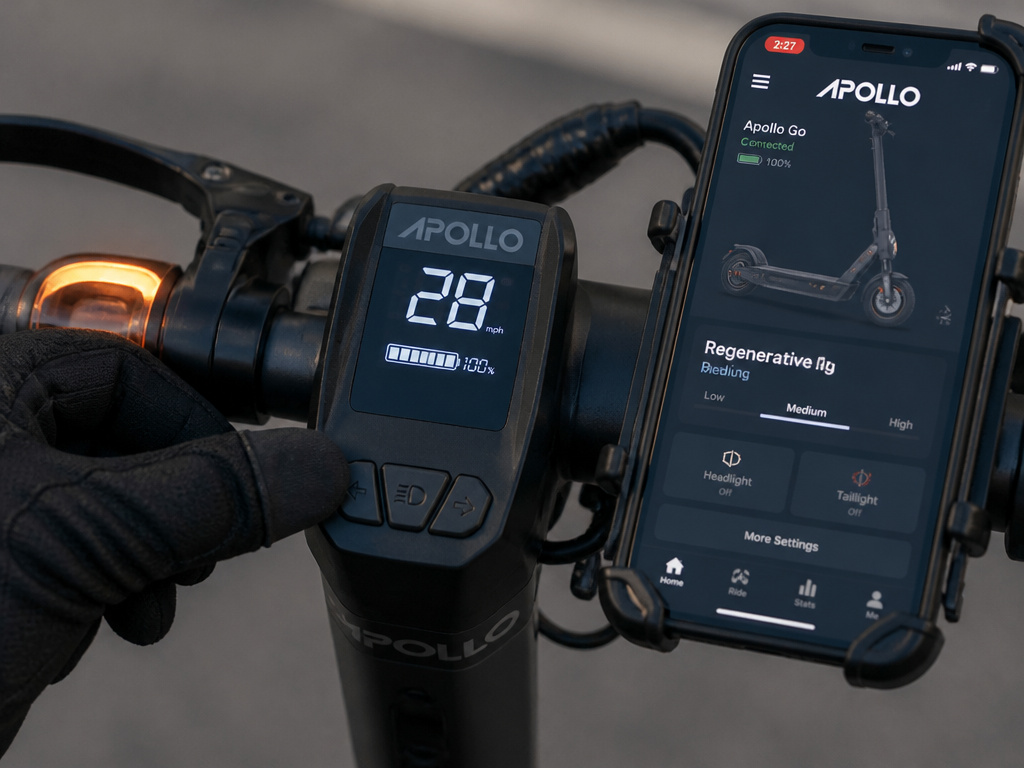
Evaluating the Apollo Go’s value means looking past its sticker price to its performance package. For the cost, you get a dual-motor scooter capable of a manufacturer-claimed 28 mph top speed and up to 36 miles of range. Professional range tests tell a more practical story, with results varying from about 15 to 24 miles depending on your average speed and riding style. The scooter comes with integrated turn signals, a lifetime frame warranty, and a 14-day return guarantee. When you factor in features like the app-adjustable regenerative braking, it presents a strong case for riders seeking a capable, commuter-focused machine without stepping into the premium price tier.
Warranty and Support Experience
Apollo backs the Go with a 12-month limited warranty on the scooter and a lifetime warranty on the frame. Support is primarily accessed through the Apollo app, and the company maintains a network of certified repair centers for professional service. Their online support library is extensive, offering step-by-step troubleshooting for common issues like a squeaky suspension or a tire that needs reseating. It’s wise to familiarize yourself with these resources, as many fixes involve simple steps like applying a specific lubricant or tightening a screw. For major issues, the warranty process and repair network provide a structured path to resolution.
Frequently Asked Questions
Is the Apollo Go a good scooter?
For its intended use as a lightweight, dual-motor urban commuter, yes. It offers strong acceleration and hill-climbing in a portable package. Its limitations are range (15-23 real-world miles) and a mandatory app pairing that some riders dislike. It’s a good scooter if your needs align with its specific performance profile.
Are Apollo Scooters any good?
Apollo has a mixed reputation. Their newer models, like the Go, show improved design and features. However, owner forums frequently cite quality control inconsistencies and variable customer support experiences. It’s advisable to research specific models and recent owner feedback, as seen in our Apollo Ghost review, before purchasing.
Is Apollo or Segway better?
It depends on priorities. Segway (Ninebot) is often praised for reliability, build quality, and widespread service networks. Apollo scooters frequently offer more performance (power, speed) for the price and more advanced features like app integration and turn signals. Segway might be the safer, more polished choice; Apollo can be the more exciting, spec-heavy option.
Which scooter is better, the Apollo City or the Apollo Go?
The Apollo City is better for riders prioritizing ride comfort, range, and a larger deck. It has a more advanced suspension and typically a bigger battery. The Apollo Go is better for riders where portability is key, it’s significantly lighter and easier to carry. Choose the City for comfort, the Go for easy transport.
