How to Carry Roller Skates: Step-by-Step
This post contains affiliate links. As an Amazon Associate, we earn from qualifying purchases.
You can carry roller skates with a skate leash for short walks, a dedicated skate backpack for hands-free mobility, or a shoulder/tote bag for general gear hauling. The right choice depends on distance, terrain, and whether you need to carry safety gear.
The difference between a short walk from the car to the rink and a cross-town commute is more than just distance. It is a change in what you can carry, how your hands are occupied, and how much you are willing to risk a scuffed boot or a dropped skate. This makes knowing how to carry roller skates correctly essential.
What follows is a breakdown of the five core methods, from the cheapest DIY trick to the purpose-built backpack, plus the one storage rule from manufacturer manuals that prevents mold and broken components.
Key Takeaways
- A skate leash or carabiner is the fastest, cheapest option for short distances, but your skates will swing and potentially scuff each other.
- Dedicated skate backpacks offer hands-free carrying and protect your gear, but they are a specific investment.
- For air travel, check your airline’s sporting equipment policy; most allow skates as a carry-on, but you should never check them in a standard suitcase.
- Always remove skates from a bag or backpack after use to let them air dry, preventing mold and material breakdown per Jackson Skate Canada’s care guide.
- Match the carrying method to your actual trip: a leash for a quick session, a backpack for a commute, a rolling bag for all-day travel with full gear.
The Five Carrying Methods, Ranked by Hassle
You have more options than just buying a bag. Start with what you already own.
The fastest method is also the most temporary. Tie the laces of each skate together, then thread one set through the other to make a crude shoulder strap. It works in a pinch for a very short walk. The skates will bounce against your leg. The laces will stretch. It is a solution, not a system.
A step up is the carabiner clip. Loop a climbing-grade carabiner through the reinforced carrying strap on the back of each skate liner, or around the frame if there is no strap. Owners on Reddit forums swear by adding a second, smaller carabiner at the front of the skates to clip them together, which stops the wild swinging that can bang them against doorframes. This is the urban commuter’s quick-draw, cheap, adaptable, and it lives on your gear loop.
Common mistake: Carrying skates by their laces alone over a long distance. The constant bouncing and twisting weakens the lace fibers at the eyelets, and you risk snapping a lace mid-skate.
The dedicated skate leash is the refined version of the carabiner. It is a padded strap with clips designed not to mar the skate’s finish. You sling it over one shoulder like a quiver. The advantage is speed in how to carry roller skates; you are carrying, not packing. The disadvantage is that your skates are exposed to bumps, weather, and curious glances.
The Skate Leash vs. Backpack Trade-Off
This is the first real decision. Do you want your hands completely free, or is a simple shoulder sling enough?
A leash is minimalist. It turns your skates into their own carrying case. For the skater who is traveling light, maybe just skates, helmet, and a water bottle in a small sling bag, it is perfect. You can transition from walking to skating and back without ever opening a zipper. I used a yoga mat strap as a leash for years before buying a marketed one. They are functionally identical, but the real leash has softer clips that do not scratch the plate.
A backpack, however, gives you cargo space and protection. Your skates are either secured snugly to the exterior with dedicated straps or packed inside a padded compartment. Your hands are completely free for a bike, a coffee, or just navigating a crowded sidewalk. More importantly, your pads, tools, extra wheels, and street shoes have a dedicated, organized home.
| Carrying Method | Best For | The Trade-Off |
|---|---|---|
| Skate Leash / Carabiner | Short trips, quick access, minimal gear | Skates are exposed to elements and impacts |
| Skate Backpack | Commuting, carrying full gear, hands-free mobility | Higher cost, can be bulky when empty |
| Shoulder / Tote Bag | Rink trips, carrying a change of clothes | Straps dig in with heavy loads, no back support |
| Rolling Luggage | Air travel, all-day events, carrying multiple setups | Cumbersome on rough terrain, looks out of place |
| DIY (Laces, Shopping Bag) | Emergency situations, forgetting your real bag | Unsecure, high risk of damage or dropping |
The physical feel is the deciding factor in how to carry roller skates. With a leash, you will feel every step as a slight pendulum swing against your hip. With a loaded backpack, the weight settles between your shoulder blades, a centralized load that seasoned commuters prefer.
Choosing a Skate Backpack That Actually Fits
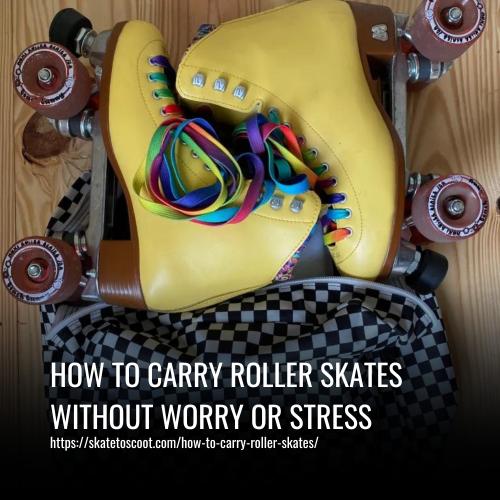
Not all backpacks work. A regular school backpack forces you to cram the skates inside, where the wheels grind against your books and the rigid frames strain the seams.
A dedicated skate backpack like the Rollerblade RB Backpack or Powerslide Skate Backpack has external, reinforced straps that cinch down over the skates’ frames or cuffs. The skates hang securely against the bag’s body, wheels-out, so they do not rub against each other or the bag’s contents. The backpack’s main compartment is then free for your helmet, knee pads, and shoes.
The fit matters. Inline skates, with their longer frame profile, need a backpack with longer, adjustable straps. Quad roller skates are bulkier in the boot but have a shorter wheelbase; choose a bag with wider, more forgiving straps. Some backpacks are notably roomy for quads.
A 2024 Riedell/Moxi/Antik owner’s manual warns that overtightening axle nuts “could lead to breakage.” That same principle applies here: cinch the backpack straps snugly, but do not crank them down so hard you deform the skate’s cuff or put undue stress on the frame bolts.
A common complaint is that accessing the main compartment while the skates are strapped on is a hassle. You learn to loosen one strap, swing the skate aside, get what you need, and re-secure it. It is a five-second tax for a secure carry.
How to Pack a Skate Bag (Without Wrecking Your Gear)
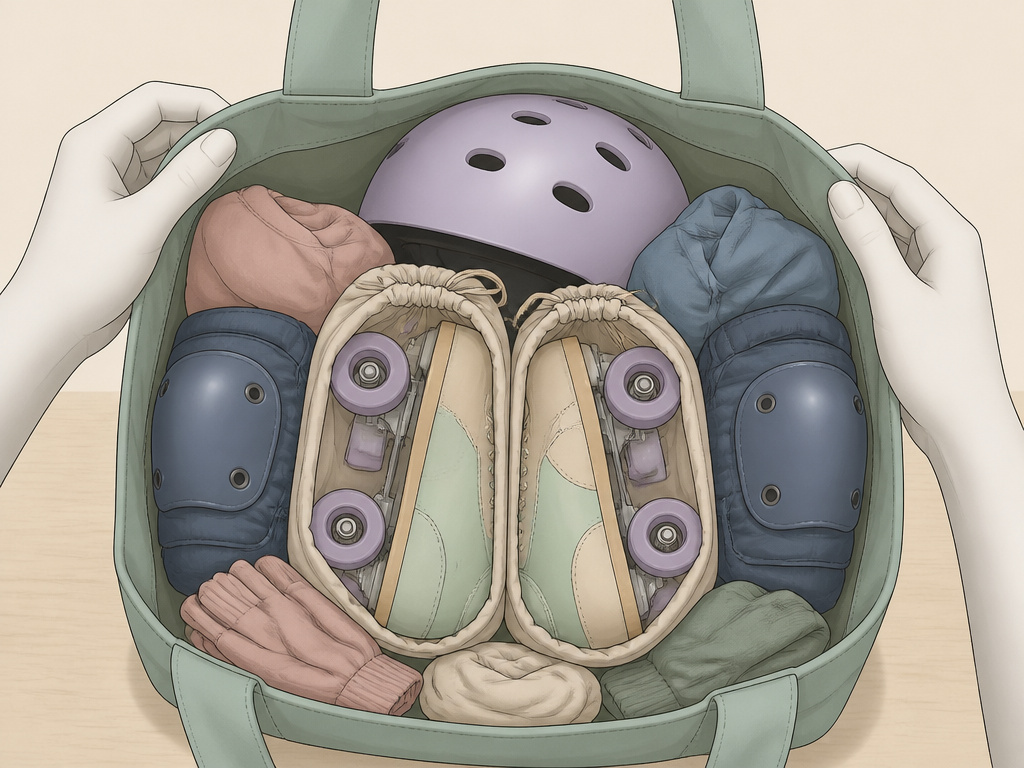
A shoulder bag or tote is the classic choice for rink skaters. It is a simple vessel, but how you pack it decides whether your gear arrives ready or rattled.
First, protect the boots. Slide each skate into a separate cloth boot bag or a long sock. This prevents the hard plates from scraping against each other and stops wheel grease from transferring onto the leather or suede. If you are using a duffel bag, place the skates toe-to-toe in the center.
Second, manage the accessories. Your hard-shell knee and elbow pads can go on either side of the skates to act as buffers. Put your helmet at the “top” of the bag, near the opening. Soft items like gloves, a shirt, and your street shoes can fill the remaining gaps. The goal is a tight pack where nothing can shift violently during transit.
For tools and small parts, a skate tool, extra bearings, axle nuts, use a small zippered pouch or a durable plastic bag. Loose bearings rolling around in the bottom of a bag will find their way into the lining and are a nuisance to retrieve.
This is where a bag designed for roller skates with dedicated compartments pays off. It removes the guesswork and provides a padded slot for each component.
Traveling with Skates: Planes, Trains, and Automobiles
Air travel is the stress test. The universal rule from skaters on Reddit who have flown with gear: never check your skates in a standard suitcase. Checked bags get lost, and baggage handlers are not gentle.
If traveling by air, check your airline’s specific sporting equipment policy regarding skates. You must check your specific airline’s policy the day before you fly, as rules can change.
The safest method for flying is to treat your skates like fragile electronics. If carrying them on a leash, you can simply sling them over your shoulder as you board. The TSA has seen them before. If using a backpack, it is your carry-on. I prefer to use a backpack designed for skates for this, as it looks like standard luggage and the skates are protected within the structure of the bag.
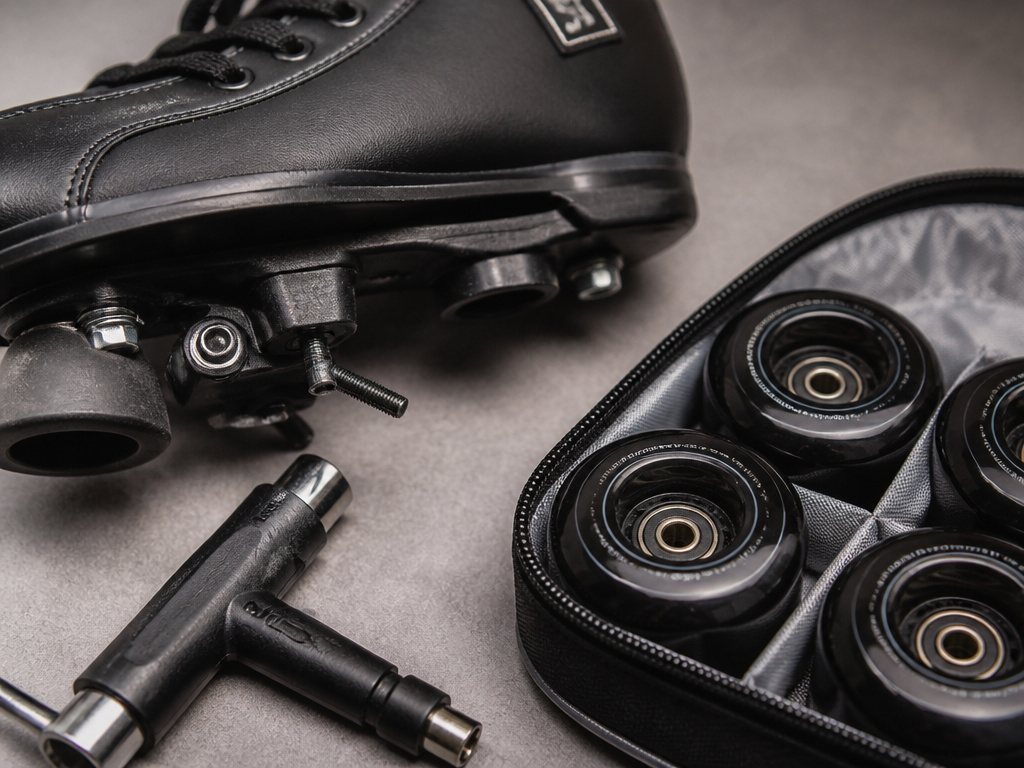
For extreme security, or if airline staff are being difficult, you can partially disassemble the skates. Remove the wheels and pack them in a separate pouch inside your bag. This makes the skate boots more compact and less recognizably “skates,” sometimes easing the path through skeptical gate agents. This is a last resort.
Where this goes sideways: Storing skates in a car trunk long-term. Jackson Skate Canada’s care guide explicitly warns against it due to “extreme temperatures causing premature breakdown.” The same logic applies to leaving them in a sealed backpack in a hot car, the heat and moisture have nowhere to go.
The One Storage Rule Every Manual Mentions (And One Misses)
After you have carried them, you must store them. This is where manufacturer advice becomes specific and mandatory.
Do not use industrial cleaners, solvents, or ammonia-based products. They can dissolve adhesives and break down plastics. After wiping them down, let them air dry completely before putting them away.
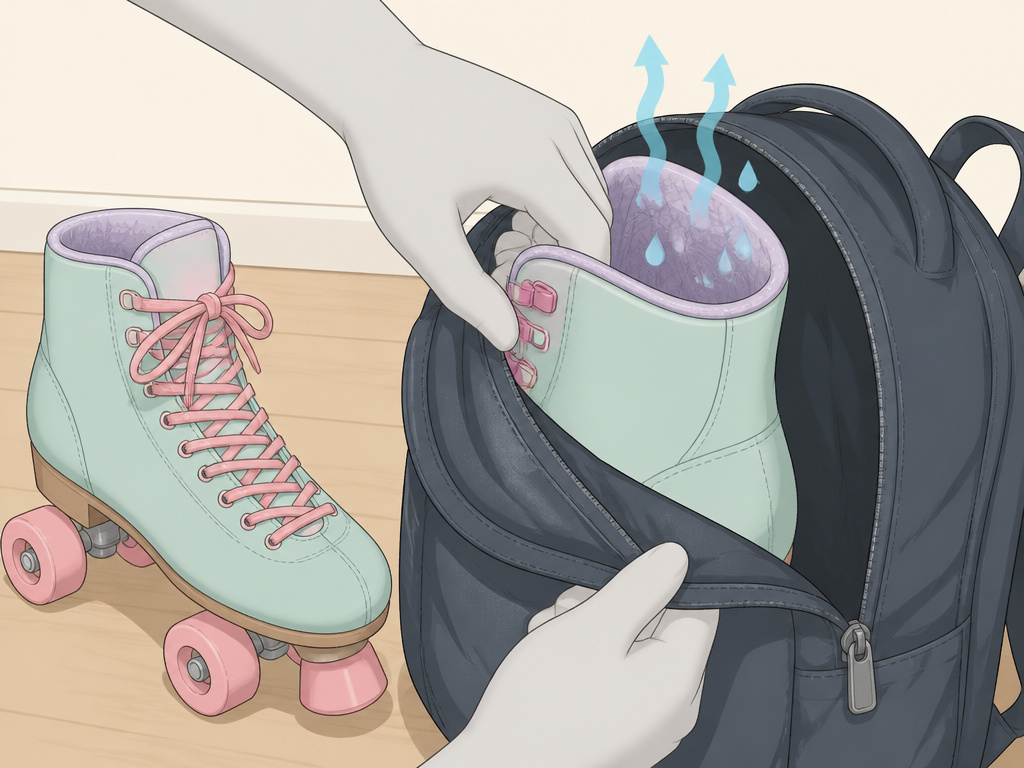
Here is the point of divergence. The Kmart and Riedell manuals advise keeping skates clean and dry but do not mention removal from carrying bags as a specific step, while Jackson Skate Canada adds a critical, specific step: “Always remove skates from skate bags once they have been transported.” Trapped moisture from sweat or ambient humidity is the enemy. It leads to mold inside the liner, rust on the bearings and axle nuts, and a slow breakdown of the boot materials.
The procedure is simple. When you get home, take the skates out of whatever bag or backpack you used. Remove the liners if they are separate. Leave everything in a well-ventilated area, out of direct sunlight and away from heating vents (another Jackson warning), for a few hours. Then you can put them back in the bag for storage if you wish. The bag is for storage, not for wet transit.
This rule turns a simple habit into a longevity hack. A dry skate is a happy skate.
Carrying Your Moxi, Riedell, or Antik Skates
Manufacturer manuals for these brands focus on skate care, not specific carrying products. Their guidance is practical: wipe skates with a damp cloth only, and avoid industrial cleaners or solvents. Overtightening axle nuts can cause breakage. Replace worn components like toe stops promptly. For carrying, this means choosing a method that protects the skate’s integrity. A bag that prevents the skates from knocking together helps avoid damage. The key is to transport them in a way that keeps them clean and dry, then remove them from any bag upon arrival to let them air out, aligning with general storage advice.
Using Rolling Luggage or a Trolley Bag
A wheeled suitcase or dedicated skate trolley can save your back on longer commutes. The primary consideration is protecting your gear. Choose luggage with a rigid or padded compartment to shield the skates from impacts. Once you reach your destination, always remove the skates from the bag. Manufacturer advice consistently warns against leaving skates confined in bags or in places with extreme temperatures, like a car trunk or near a heating vent, to prevent moisture buildup and material breakdown. A trolley is a tool for transport, not for storage.
Frequently Asked Questions
Can I just carry my roller skates by hand?
You can, but it is inefficient and risky. Carrying one in each hand occupies both hands, makes you unbalanced, and increases the chance you will drop one onto a hard surface. It is acceptable for a very short distance, like from a bench to the rink edge.
Are skate leashes secure enough for city commuting?
They are secure for keeping the skates from falling. They are not secure for protecting the skates from bumps, scrapes, or rain. For a city commute where you might be on a bus or navigating crowds, a backpack that fully contains or shields your skates is the safer choice for your gear.
Will a regular duffel bag work for roller skates?
Regular duffel bag works as a container. It does not work as a protective system. Without internal compartments or padding, the skates, pads, and helmet will all tumble together, scratching and scuffing each other. It is a better option than a plastic shopping bag, but a dedicated bag for carrying skates is a clear upgrade.
How do I carry my skates if I’m also riding a bike or scooter?
This is where a backpack is essential. A skate leash or shoulder bag will swing wildly and throw off your balance. A properly fitted skate backpack keeps the weight centered on your back, leaving your hands free to handle the bike or scooter and your posture stable.
Is it okay to store my skates long-term in the backpack I carry them in?
No. This is the most common storage mistake. Even if the backpack is in a closet, any residual moisture is trapped against the skates. Always remove skates from any carrying vessel for long-term storage, following the drying process outlined by Jackson Skate Canada.
The Bottom Line
Start with the method that matches your most frequent trip. If you only skate at a local rink, a simple tote bag and a commitment to drying your skates afterwards is enough. If you are an urban commuter, the investment in a skate backpack pays off in convenience and gear protection in under a month.
The leash versus backpack choice boils down to a single question: are your hands more valuable than your skate’s pristine finish? For quick, casual trips, the leash wins. For any journey where you need to carry more than just skates, or where the skates might get banged around, the backpack is the only serious answer.
Finally, respect the dry-down. That five-minute habit of pulling your skates out of the bag when you get home does more to extend their life than any cleaning product or upgrade. The manuals agree on that much.
