How to Remove Grip Tape From Skateboard Longboard
This post contains affiliate links. As an Amazon Associate, we earn from qualifying purchases.
To remove grip tape from a skateboard or longboard, you need heat, a blade, and patience. Heat the tape with a hairdryer for one to two minutes to soften the adhesive, use a razor blade to lift a corner, then peel slowly while applying more heat ahead of the peel line. Sources disagree on whether leftover adhesive residue must be removed before applying new tape: Tactics and Skateboards.com state it’s not a problem, while The Longboard Store says it’s essential to remove it.
That’s the core process every guide repeats. But the moment your board isn’t a standard popsicle deck, or the tape is a decade old, or you hear a plastic layer crinkle under the heat, that generic advice stops working. Your deck’s size, its concave, and even the type of grip (sheet vs. Spray-on) change the tools and the risks. This is why you need a specific guide on how to remove grip tape from skateboard longboard.
What follows is the standard removal method, then the three situations where it fails, and the manufacturer-specific warnings most skaters never see when you compare a how to remove grip tape from skateboard longboard until they’ve already damaged a sensor or sanded through a graphic.
Key Takeaways
- Heat the tape with a hairdryer for 1–2 minutes before peeling; too much heat in one spot makes the tape rip.
- Remove your trucks first to make peeling around the hardware holes easier and avoid catching the tape.
- Sources disagree on this point: Tactics and Skateboards.com state the old adhesive residue isn’t a problem, while The Longboard Store says it’s essential to remove it.
- For Onewheel or electric boards, heating the grip tape risks damaging the footpad sensor, proceed with extreme caution on a warm setting only.
- Spray-on grip tape doesn’t peel; you must sand it off with a palm sander or by hand.
The 5-Step Removal Process (Hair Dryer & Razor Method)
This is the commodity baseline, the how to remove grip tape from skateboard longboard method you’ll find in every YouTube tutorial. It works perfectly for most skateboards and many longboards with standard sheet grip tape. Follow it exactly, and you’ll avoid the most common mistake: tearing the tape into a hundred frustrating pieces.
Start by removing the trucks. Heat the grip tape evenly with a hairdryer for one to two minutes, using a razor blade to lift a starting corner. Peel slowly, applying more heat ahead of the peel line as you go. Leftover adhesive can be covered with new tape or removed with a solvent like Goo Gone.
Step 1: Gather Your Tools
You don’t need specialty gear. A hairdryer, a utility knife or razor blade, a flathead screwdriver for the trucks, and optionally a bottle of adhesive remover like Goo Gone. A putty knife or wall scraper can help if the tape is stubborn, but your hands and heat will do most of the work.
Step 2: Remove the Trucks
Take the nuts off the mounting hardware and lift the trucks off the deck. This isn’t just about access. It makes peeling the tape around the bolt holes trivial, where otherwise the tape would catch and rip. It adds five minutes to the job and saves twenty minutes of fighting shredded tape later.
Step 3: Apply Heat and Lift a Corner
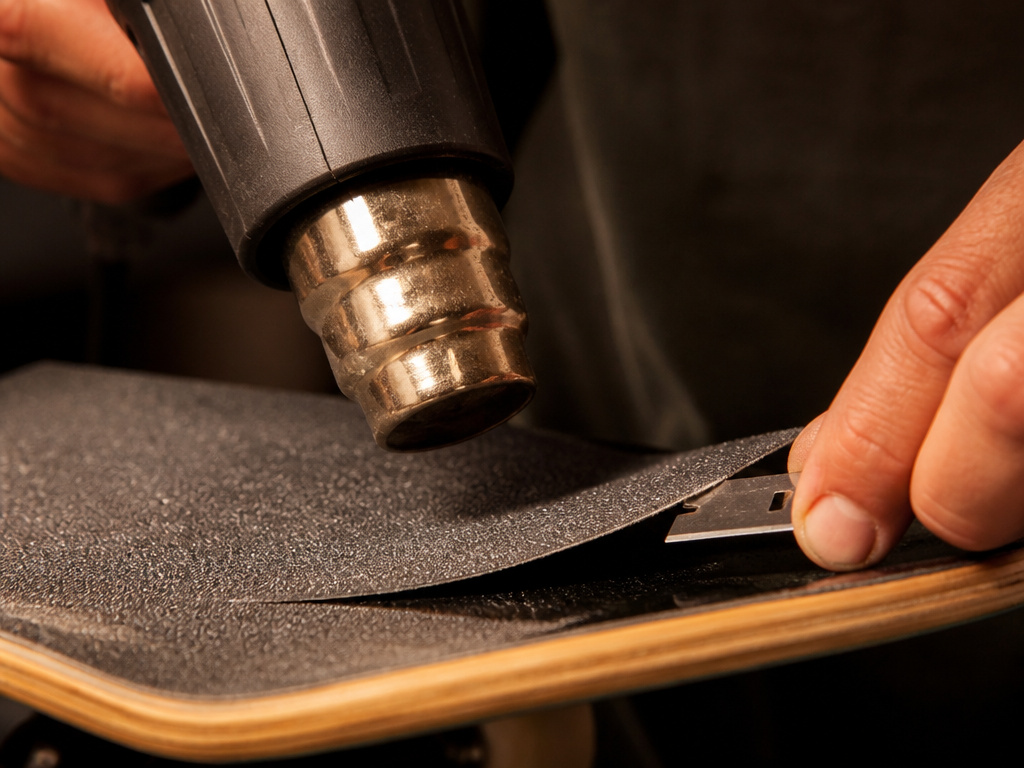
Plug in the hairdryer and set it to a warm or hot setting. Hold it a few inches from the tape and move it constantly over the entire surface for a minute or two. You’re warming the adhesive, not melting the tape. The goal is to make the glue pliable, not hot to the touch on the other side of the deck. Then, take your razor blade. Slide it under a corner of the tape, preferably near the nose or tail where you have a clean edge to work with. The blade should separate the tape from the wood, not dig into the deck’s surface. If it won’t go, apply more heat directly to that corner.
Step 4: Peel Slowly, Heat Ahead
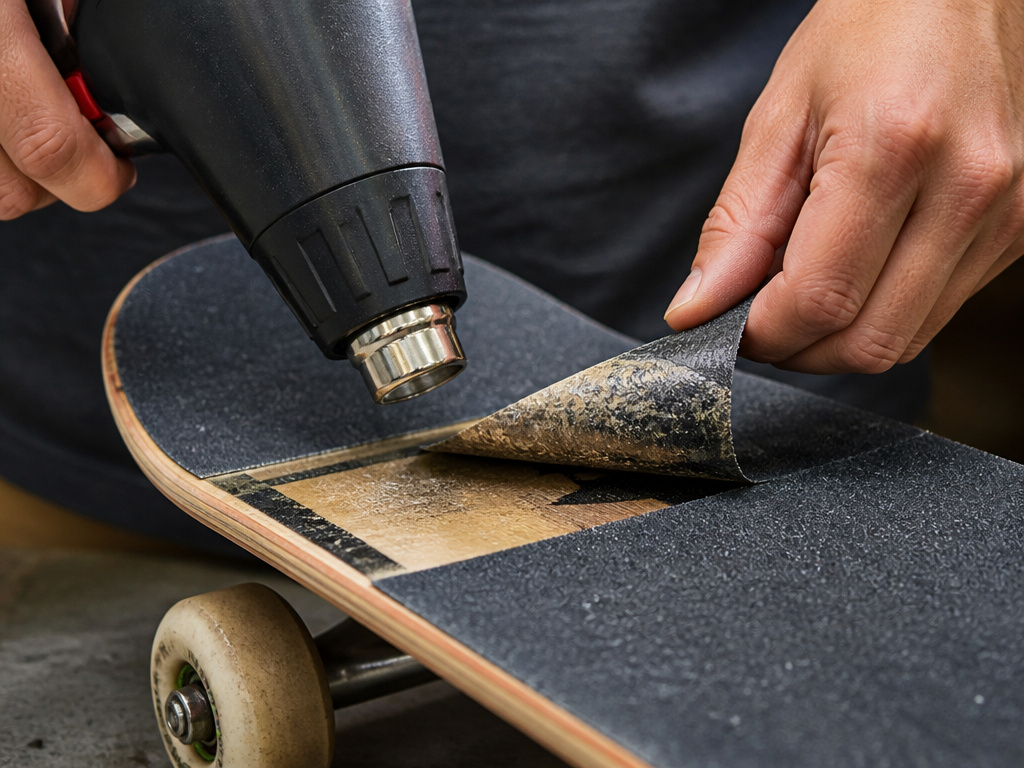
Once you have a few inches of tape lifted, grab it with your fingers. Now, the rhythm starts: heat the area just ahead of where the tape is still stuck, then peel back another few inches. Keep the hairdryer moving in that forward zone. Pull slow. If you hear a tearing sound, stop and apply more heat. Ripping the tape isn’t the end of the world, you can restart from the new edge, but it turns a five-minute peel into a fifteen-minute patchwork job. Older tape is more brittle and tears easier, so give it extra patience.
Step 5: Deal with the Leftover Residue
Once the sheet is off, you’ll see a patchwork of sticky glue left on the deck. Here’s where sources disagree, and your next move depends entirely on your goal.
- If you’re applying new grip tape: The consensus from Tactics and Skateboards.com is clear, leave it. The new tape’s adhesive will bond fine over the old residue, and you’ll never know it’s there. This is the fastest path to a re-grip.
- If you want a clean deck for painting or bare wood: You need to remove the residue. The Longboard Store recommends an adhesive remover or a few drops of oil massaged into the glue. Goo Gone is the most commonly cited product. Apply a small amount, let it sit for a minute, then rub with a cloth. A warning from Skateboards.com: some solvents like acetone or certain oils “could ruin the finish on your board,” so test in an inconspicuous spot first.
| Scenario | Recommended Action | Product/Technique | Risk If Skipped |
|---|---|---|---|
| Applying new grip tape | Leave residue on deck | None | None; new tape adheres fine |
| Cleaning deck for paint/stain | Remove residue | Goo Gone, adhesive remover, isopropyl alcohol | New finish may not adhere properly |
| No new tape, want clean deck | Remove residue | Sandpaper (light grit) | Residual stickiness attracts dirt |
Where the Standard Method Fails (And How to Adapt)
The five steps above assume you have standard sheet grip tape on a traditional wooden deck. Most of the time, that’s true. But when it’s not, forcing the standard process can ruin your board’s graphic or damage critical components. These are the edge cases you find out about on Reddit, after the fact.
What If It’s Spray-On Grip?
You’ll know almost immediately. As one user on r/longboarding found, when you apply heat and try to lift an edge with a blade, you just scrape into the wood or chip off a gritty layer. Spray-on grip, common on boards with full-top graphics or some cheaper completes, is essentially glue and sand sprayed directly onto the deck. It doesn’t come off in a sheet. The only way to remove it is to sand it off. A palm sander with coarse-grit paper makes quick work of it; doing it by hand is a marathon. The goal isn’t to sand deep into the wood, just to remove the gritty layer and the adhesive beneath it. This process will almost certainly remove or damage any graphic on the top of the deck, so only do it if you’re committed to a fresh start.
Common mistake: Treating spray-on grip like sheet tape. Applying heat and prying will only chip the surface and frustrate you. If your blade isn’t finding a clean layer to slide under, you have spray grip.
What If the Board is an Onewheel or Electric Board?
This is the most critical deviation. The standard advice of “apply heat and peel” is dangerous here. Under the grip tape on a Onewheel’s footpad lies a plastic sheet protecting the pressure sensor. Heat can damage the sensor, and peeling too aggressively can lift that protective sheet, ruining the board’s functionality. The Onewheel guide via Ride + Glide recommends using a hair dryer on a warm setting and proceeding with caution. Peel back the tape very slowly with your fingers, constantly checking that you’re only lifting the grip tape layer. If you see a clear plastic layer starting to come up, stop, re-heat gently, and try to separate them. This isn’t a quick job; it’s an exercise in caution. If you’re not confident, consider leaving the old tape or seeking a professional.
What If the Grip Tape is Extremely Old or Brittle?
Age matters. Older adhesive dries out and becomes brittle, and the tape itself loses flexibility. The Reddit consensus is that it still comes off with heat and patience, but it will tear more easily. The fix is the same: when it tears, re-heat the new edge you’ve created and start peeling again. Don’t try to pull through a tear without re-applying heat; you’ll just make a bigger mess. If the tape is so old it’s crumbling, you might need to use a scraper or putty knife to get under larger sections after heating. Work in smaller areas, not trying to take the whole sheet off in one pull.
The One Step Nobody Mentions (But Should)
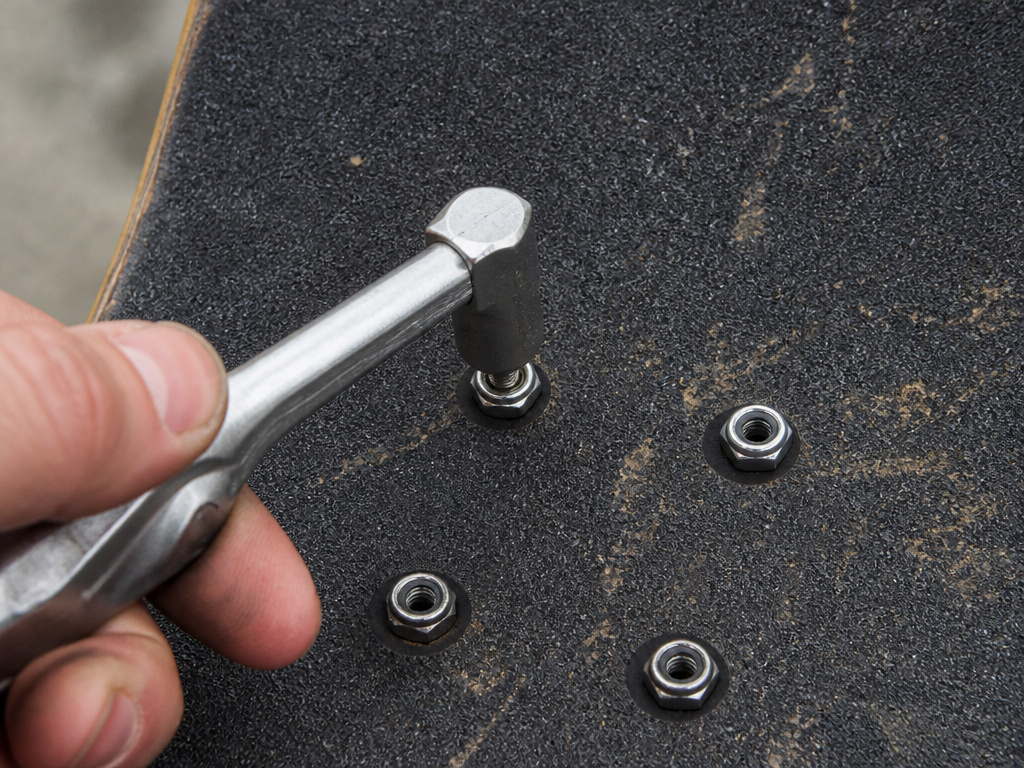
There’s a pause between pulling off the old tape and applying the new one where most guides just say “clean the deck.” But cleaning isn’t just about glue residue. It’s about checking the deck’s surface for damage you might have caused during removal.
Run your fingers over the entire top of the deck. Feel for any gouges from the razor blade or raised grain from moisture or heat. If you plan to apply new tape, small imperfections are fine, they’ll be hidden. But if you plan to stain, paint, or leave the deck bare, now is the time to lightly sand those spots smooth with fine-grit sandpaper. This is also the moment to decide if you’re changing your grip tape style. Maybe the old coarse Mob tape was too abrasive for your shoes, and you want to try a less aggressive brand like Jessup. Your clean deck is a blank slate. If you’re unsure, our guide comparing the coarseness and durability of different grip tape brands breaks down the differences between Mob, Jessup, and Grizzly.
When NOT to Remove Grip Tape
Removal isn’t always the answer. Sometimes, the better move is to leave it alone, clean it, or cover it.
When to just clean it: If the tape is just dirty and lost its grip, a sanding belt cleaner or a stiff brush can restore texture. This is far quicker than a full removal and re-application. For a detailed method, see our tutorial on cleaning a longboard deck.
When to cover it: If you hate the graphic but the tape is still grippy, you can apply a new sheet right over the old one. The thickness change is minimal, and it saves you the removal hassle. This is a common trick for quick board customization.
When it’s a Cycleboard with “bridging”: The Cycleboard manufacturer notes a specific defect where the tape shrinks and bubbles at the tail transition. The fix isn’t removal; it’s localized heating, poking the bubble with a pin to release air, and pressing it back down. Full removal here is overkill.
How to Sand a Deck After Removing Grip Tape
Sanding is a method for cleaning the deck surface after grip tape removal, especially if you are not applying new grip. If you plan to install new grip tape, the leftover adhesive residue is not a problem and the new layer will cover it. However, if you want a completely clean deck, you can use sandpaper to rub off any remaining glue spots. Be careful to avoid using too much force, as you could damage the wood. This approach is practical when you want to remove residue without using chemical products.
How to Clean Grip Tape Without Removing It
Cleaning your existing grip tape is an alternative to full removal, useful for addressing minor issues like small bubbles or bridging. Temperature changes can cause the material to shrink and bubble. To fix this, apply heat from a hairdryer to the affected area, moving it constantly to avoid focusing on one spot for too long. After heating, firmly press down the bubbled area to remove the air and re-adhere the grip tape to the deck. This method can refresh your grip without the hassle of a full replacement.
Frequently Asked Questions
Is it possible to remove grip tape without a hair dryer?
Yes, but it’s harder. You can use a heat gun carefully on a low setting, or on a hot day, leave the board in direct sun to warm the adhesive. Some people start the peel with just a razor blade and elbow grease, but you risk tearing the tape and scratching the deck more easily without heat to soften the glue.
Is skateboard grip tape just sandpaper?
Functionally, yes. It’s a heavy-duty, pressure-sensitive adhesive backing with a layer of silicon carbide or a similar abrasive grit on top. But it’s designed to be more durable and water-resistant than standard sandpaper, and the adhesive is formulated to stick to wood through flex and impact.
Does a longboard need grip tape?
Technically, no. You can ride without it. But for any riding that involves pushing, carving, or foot braking, grip tape is essential for keeping your feet planted. Without it, your shoes will slide on the polished deck, especially when wet. For downhill or high-speed riding, grip tape is essential for safety.
Is it okay to ride a skateboard without grip tape?
You can, but I wouldn’t recommend it for anything beyond rolling on a perfectly flat, smooth surface. Even then, a sudden stop or turn could make your feet slip. The lack of grip makes controlling the board difficult and increases the risk of falling. If you’ve removed old tape and are waiting for new tape to arrive, it’s a bad idea to ride in the meantime.
Can I use Goo Gone on my deck?
Yes, Goo Gone is widely recommended by sources like Tactics and Skateboards.com for removing adhesive residue. The key is to use a small amount, let it penetrate the glue, and wipe it off completely. Avoid petroleum-based products, as they can leave an oily residue that prevents new tape from sticking properly.
Before You Go
The real secret to a clean removal isn’t a special tool; it’s matching the method to your board. For a standard deck, heat and slow peeling gets it done. For a board with a top graphic, assume it’s spray-on and reach for a sander. And for an electric board like a Onewheel, trade speed for extreme caution, the sensors underneath are fragile and expensive to replace.
Your next step should be picking your new tape. If you’re customizing, the clean deck is your canvas. You might want to explore customizing a longboard with new graphics, or if the wood is stained, consider a guide for a bubble-free grip tape application. If the deck itself is worn, a fresh deck painting guide can make an old board look new again.
