iScooter iX3 Review: Specs, Durability, and Long-Term Use
This post contains affiliate links. As an Amazon Associate, we earn from qualifying purchases.
The iScooter iX3 is an 800W, 25 mph electric scooter with dual suspension and 10-inch pneumatic tires, positioned as a budget-friendly off-road-capable commuter. It delivers surprising initial power for its price but suffers from inconsistent build quality, premature tire wear, and a mixed track record for customer service, making it a high-risk, high-reward option for tinkerers rather than a set-and-forget daily driver.
That power-to-price ratio is what hooks most buyers. The 800W motor moves a rider up a 25° incline without stalling, and the dual suspension soaks up curb drops. The problem isn’t the first week. It’s the third month, when the first mechanical gremlins, a loose fender, a brake needing adjustment, a steering column developing play, start to show up. This isn’t a scooter you buy for polish. You buy it knowing you’ll be maintaining it.
What follows is a breakdown of where the iX3 shines and where it consistently fails, grounded in the manufacturer’s manual, conflicting spec sheets, and long-term owner reports from an iscooter ix3 review. This section details the actual range, the maintenance required, and the true value of the 12-month warranty.
Key Takeaways
- The 800W brushless motor provides strong torque for hills and off-road starts, but the 48V 10Ah battery’s real-world range is closer to 18-22 miles, not the advertised 25.
- Tire wear is a known weak point; owners report rear tire tread wearing thin and inner tubes failing within 500-1000 miles, requiring proactive inflation checks and potential early replacement.
- iScooter’s 12-month limited warranty requires you to ship the scooter back at your own cost for service, and community feedback highlights inconsistent response times from their support team.
- For wet weather and storage, heed the manual’s specific limits: do not ride in puddles deeper than 1.5 inches and avoid storage in extremely humid environments to prevent battery-damaging condensation.
- If you want minimal maintenance, look at more established brands; if you enjoy hands-on fixes and want maximum power per dollar, the iX3 is a compelling, if flawed, project.
The iScooter iX3 Spec Sheet
The official numbers tell a story of capable hardware. The 800W rear hub motor is the centerpiece, paired with a 48V 10Ah lithium-ion battery. It rides on 10-inch pneumatic off-road tires, uses front and rear mechanical disc brakes supplemented by electric braking, and has an IPX4 water-resistance rating. The claimed 25 mph top speed and 25-mile range set expectations. The actual performance is more complex, and the specifications are sometimes contradictory.
The iScooter iX3’s core performance is defined by its 800W brushless DC motor and 48V 10Ah (720Wh) lithium-ion battery. It achieves a manufacturer-tested top speed of 25 mph (40 km/h) and is rated for riders up to 264 lbs. The scooter features 10-inch pneumatic tires, dual suspension, mechanical disc brakes with regenerative braking, and an IPX4 splash-resistance rating. Charging from empty requires 6-7 hours using the included 54.6V, 1.5A charger.
You’ll notice two weights listed. The official product page says 52.2 lbs (23.25 kg), while the downloadable manual says 48.5 lbs (22 kg). This isn’t a typo; it’s a discrepancy where sources disagree on the net weight. The range claim is another point of friction. The manual states 18-25 miles (30-40 km), while other product descriptions estimate approximately 30–45 km. Which is it? For a 230-pound rider on mixed terrain, plan for the lower end.
| Specification | Claimed Performance | Real-World Consideration |
|---|---|---|
| Motor Power | 800W Brushless DC | Provides strong torque; adequate for 25° hills. |
| Top Speed | 25 mph (40 km/h) | Achievable on flat ground with a light rider; heavier riders may see 22-23 mph. |
| Max Range | 18-25 miles (30-40 km) | Expect 18-22 miles under typical commuting (mixed mode, moderate rider weight). |
| Battery | 48V 10Ah (720Wh) Lithium-ion | Requires 6-7 hour full charge. Manual advises “fully charge after every use,” which contradicts standard lithium-ion longevity advice. |
| Max Rider Weight | 264 lbs (120 kg) | A hard limit. Exceeding it stresses the frame, motor, and battery, voiding warranty. |
| Tires | 10-inch Pneumatic Off-Road | Prone to premature wear and inner tube failures. Weekly pressure checks are mandatory. |
| Brakes | Front/Rear Mechanical Disc + Electric | Brakes require frequent adjustment (every 2-3 weeks per some owners). |
| Water Resistance | IPX4 (Splash Proof) | Not waterproof. Manual explicitly warns against puddles deeper than 1.5 inches. |
| Charging Time | 6-7 hours | Using the included 54.6V, 1.5A charger. |
The takeaway? The hardware on paper is competitive. The execution and longevity are where the iX3 gets controversial.
Performance: Where the 800W Motor Shines and Stumbles
The first ride is often a revelation. The thumb throttle is responsive, and the jump from Eco mode (10 km/h) to Sport mode (25 km/h) is immediate. The 800W motor has enough grunt to get a full-capacity rider moving from a stoplight without hesitation. That initial surge is the iX3’s best sales pitch.
Hill climbing is a genuine strength. The manufacturer claims a 25° climbing angle. In practice, it handles steep residential streets and packed dirt trails without bogging down. The power delivery feels direct, if a bit abrupt in the highest Sport mode. Where it stumbles is sustained performance at the top end of its range. The motor and controller can get noticeably warm after a long, full-throttle climb on a hot day. You’ll hear a faint high-pitched whine from the motor under maximum load, a normal sound for a brushless motor, but a sign it’s working at its limit.
The three riding modes (Eco, Drive, Sport) are useful, but the speed limits are adjustable via the MiniRobot smartphone app. This is a great feature for limiting a beginner’s speed or conserving battery. The app itself is functional, showing battery voltage, trip metrics, and allowing you to lock the scooter. Its connectivity can be finicky, a common gripe in the iScooter owner community.
Where this goes sideways: Relying on the advertised 25-mile range for a daily commute. The battery is a 720Wh pack. Accounting for stops, starts, and hills, a 200-pound rider will get about 20 miles. Drop the temperature below the operating minimum, and that number falls further. The 18-25 mile range is a best-case, laboratory-condition figure. Plan your routes around 18-20 miles to avoid a long walk.
Build Quality and Durability: The Owner’s Reality Check
This is where the iScooter iX3 review parts ways with the marketing. The frame is aluminum and feels solid when new. The folding mechanism has a positive lock. The deck is wide enough for a size 15 shoe. The problems are in the details, and they have a timeline.
After about 500 miles, owners start reporting specific, repeatable issues. The rear fender, a simple plastic piece, comes loose and rattles against the deck. The fix is easy (tighten the screws), but the fact that it’s a universal complaint points to a design or assembly flaw. The suspension, while comfortable at first, can lose its damping and become stiff or develop play at the joints.
The most significant durability fault lies with the tires. They are standard 10-inch pneumatic tires, but the quality of the rubber and inner tubes is a frequent point of failure. Owner reviews cite premature outer-edge wear leading to unbeading and air leaks. The included spare tube has a longer angled valve stem that, when installed, can knock against internal parts. The manual confirms the tires are replaceable and directs you to a YouTube video for the procedure, a telling admission that you’ll likely need it.
Common mistake: Ignoring tire pressure. These tires lose pressure steadily. Riding them even slightly underinflated accelerates sidewall wear and makes them more susceptible to pinch flats. Check them with a gauge every week. Consult the sidewall for the recommended pressure range.
The brakes are another maintenance item. The mechanical disc brakes require frequent adjustment to maintain a firm lever feel. Owners report needing to tweak them frequently with regular use. If you’re not comfortable with a hex key, this will become a nuisance fast. The bright spot is that parts like brake pads, tires, and tubes are generic and available from third-party sellers, which is good because iScooter’s own parts supply can be inconsistent.
The Ride Experience: On Pavement and Off-Road
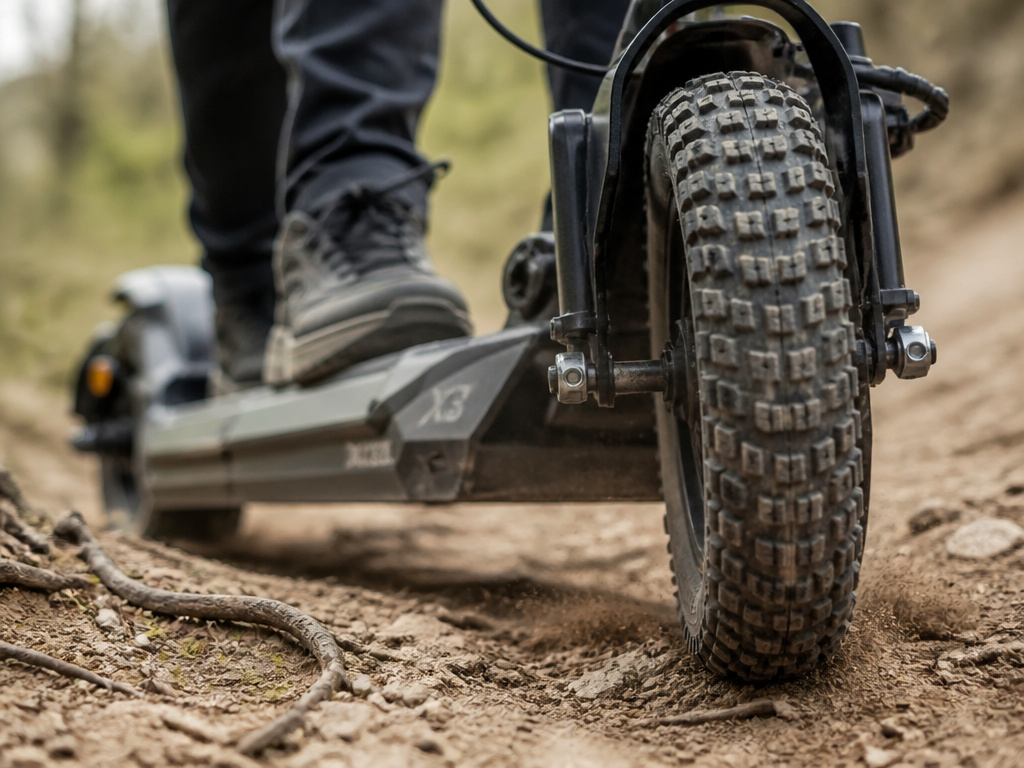
On smooth pavement, the iX3 is confident. The large pneumatic tires and dual suspension absorb small cracks and seams comfortably. At its top speed of 25 mph, the scooter feels planted, though the handlebar can transmit some vibration from rough asphalt. The deck is long enough to shift your stance for comfort.
The off-road capability is what the “X” in iX3 hints at, a point highlighted in every iscooter ix3 review. The knobby tires provide real grip on hard-packed dirt, gravel paths, and grass. The suspension handles bumps and small roots effectively. It’s not a mountain bike, but it opens up park paths and trail shortcuts that a commuter scooter with solid tires would balk at. The ground clearance is sufficient for most curbs.
There’s a sensory detail that defines a healthy iX3 versus a failing one: the sound of the motor. When new, it’s a smooth, medium-pitched electric whir. As bearings wear or the motor is stressed, it can develop a higher-pitched, grating sound or a rhythmic clicking. Your ears are a diagnostic tool.
One limitation buried in the manual is a deal-breaker for some: “Devices are not intended for use at elevations greater than 2000 m above sea level.” The thinner air affects cooling and motor performance. If you live in Denver or any other high-altitude city, the iX3 is not rated for you.
Warranty, Returns, and the Customer Service Maze

IScooter offers a 30-day return policy and a 12-month limited warranty. Reading the fine print is essential. The 30-day return requires the scooter to be in “good physical condition” with all accessories, and the customer bears the return shipping cost. The warranty is a standard limited one, covering defects in materials and workmanship.
The process for a warranty claim, as outlined in the manual, is strict. You must request a Warranty Service Order within the warranty period from your delivery date. You then must ship the scooter, in protective packaging, to an address they specify, again, at your own cost. They will either repair or replace it. Community reports on forums like r/ElectricScooters are mixed. Some users have had smooth experiences; others describe long response delays and being directed to purchase replacement parts themselves for issues that appear within the warranty window.
I won’t recommend relying on the warranty for consumables like tires or brakes, or for damage deemed from “failure to follow instructions.” The manual’s specific warning about high-humidity storage causing condensation damage, for example, gives them an easy out if a battery fails in a coastal climate.
This reality shifts the value proposition. You’re not just buying a scooter; you’re betting that your unit won’t have a major fault, and that if it does, you’re willing to front the time and money to ship it. For many, this risk outweighs the initial savings.
iScooter iX3 vs. The Competition Within the Brand
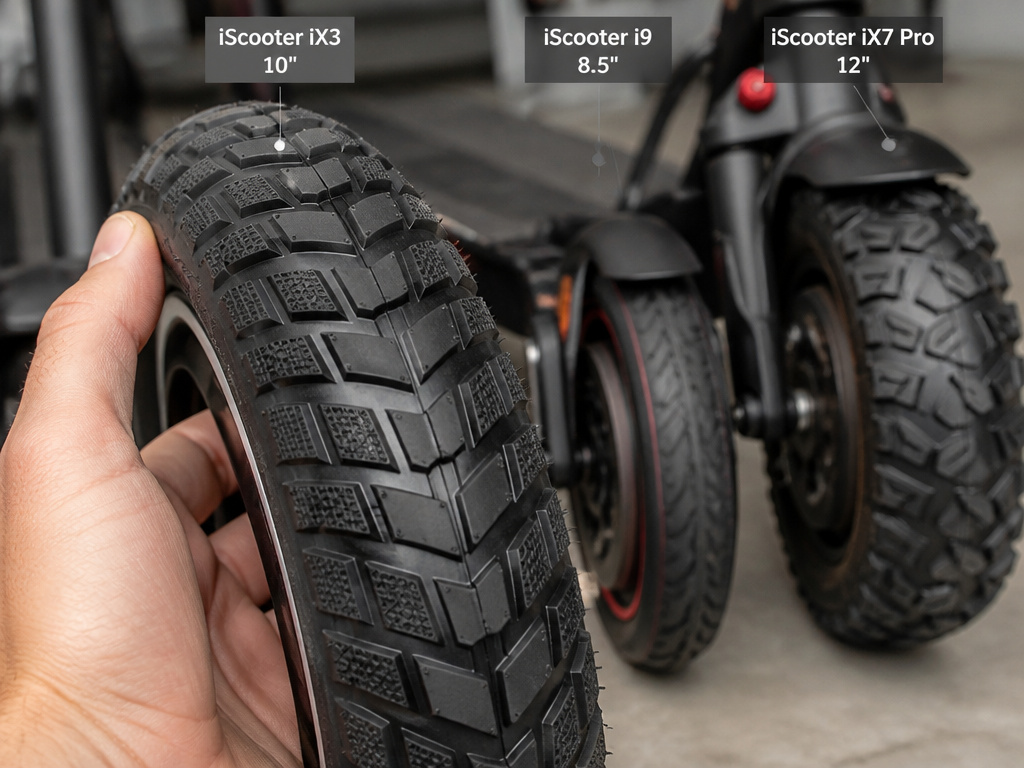
Where does the iX3 sit in the iScooter lineup? It’s the off-road-focused, higher-power option in the mid-tier. Compared to the lighter, more commuter-focused iScooter i9, the iX3 trades portability for robustness and tire size. Against the more premium iScooter iX7 Pro, the iX3 gives up higher-end features like a more refined suspension and potentially better water-sealing for a lower price.
If your priority is all-terrain capability on a budget, the iX3 has a role. If you want a smoother commuter with less maintenance, the iScooter i10 series might be a better fit. Understanding the trade-offs between these models is key, as the brand often markets on specs alone. Compare the iScooter models for details.
| Model | Motor | Key Differentiator | Best For |
|---|---|---|---|
| iScooter iX3 | 800W | 10-inch pneumatic off-road tires, dual suspension | Riders who need to tackle gravel, grass, or uneven pavement regularly. |
| iScooter i9 | 500W | Lighter weight, more compact fold | Urban commuters who need to carry the scooter on a bus or train. |
| iScooter iX7 Pro | 1000W+ | Higher top speed, more advanced suspension, often a larger battery | Riders seeking performance closer to premium brands but within the iScooter ecosystem. |
The choice often comes down to tire size and motor power. The iX3’s 10-inch pneumatics are its greatest asset and its most frequent maintenance item.
Long-Term Ownership: What Breaks First?
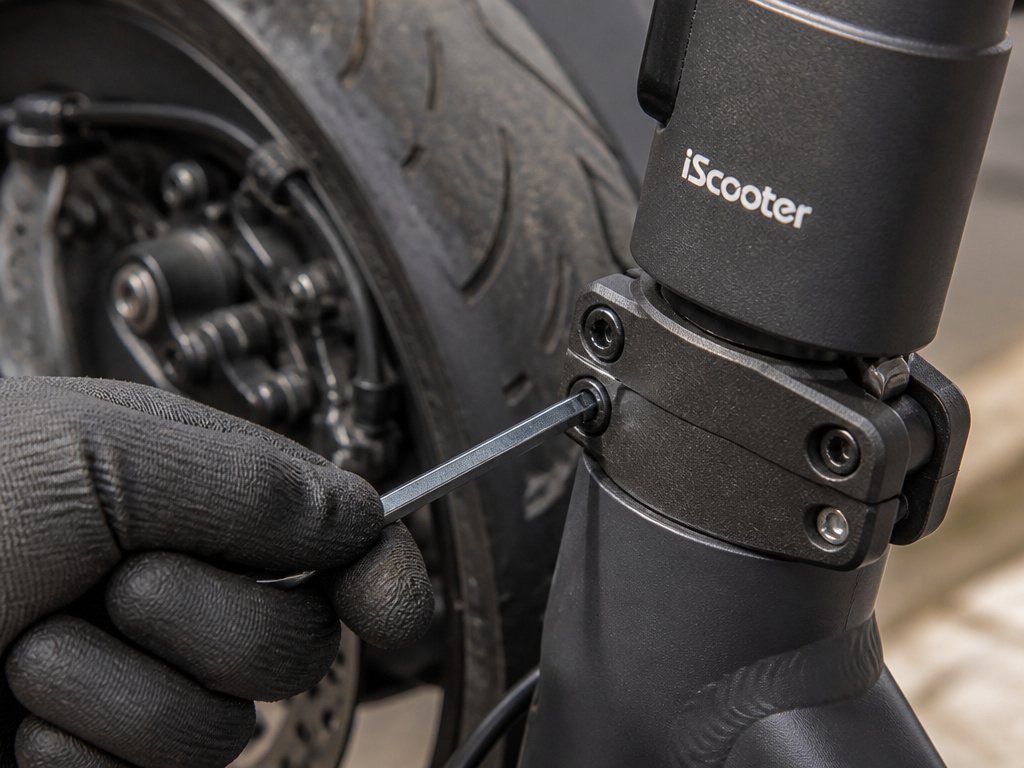
Beyond the initial specs, the real review begins at the 500-mile mark. Forum threads and owner reports coalesce around a predictable failure progression. The first thing you’ll likely adjust is the brakes. Then you’ll tighten the fender. By 1,000 miles, you may be dealing with a worn rear tire and a steering stem that has developed a slight, unsettling wobble that tightening the clamp bolt doesn’t fully eliminate.
The battery’s long-term health is a question mark. The manual’s instruction to “fully charge after every use” goes against the grain of lithium-ion best practices, which suggest avoiding 100% charges for daily storage to extend cycle life. Following iScooter’s advice might shorten the pack’s usable lifespan. Some owners report the battery still functional but with noticeably reduced capacity after extended use.
The part nobody mentions: The weight discrepancy. Is it 48.5 lbs or 52.2 lbs? That’s nearly a 4-pound difference. It matters when you’re carrying it up stairs. The heavier figure feels more accurate in practice. This kind of spec inconsistency erodes trust in the other numbers.
Ownership is a proactive exercise. You check tire pressure weekly. You listen for new rattles after every rough ride. You learn to adjust disc brakes. For some, this is a fun part of the hobby. For others, it’s a deal-breaking hassle. There are many compelling electric scooter reviews for models with more polished ownership experiences.
Frequently Asked Questions
Is the iScooter iX3 a good scooter?
It’s a scooter for a specific buyer: someone who values high power and off-road tires at a low price and isn’t afraid of basic mechanical maintenance. It’s not a scooter for someone who wants a reliable, hands-off daily commuter with strong customer support.
How fast does an iScooter iX3 go?
The iScooter iX3 has a manufacturer-tested top speed of 25 mph (40 km/h). In real-world conditions with an average-weight rider on flat ground, 23-24 mph is typical. The top speed is adjustable downward via the MiniRobot app.
How long does the iScooter iX3 last?
The scooter’s mechanical lifespan depends heavily on maintenance. Key components like tires and brake pads may need replacement within the first year. The motor and frame can last several years if cared for, but the battery will degrade with regular use.
Is iScooter a reliable brand?
IScooter has a mixed reputation. They produce scooters with competitive specs for the price, but consistency in build quality and customer service is frequently cited as a weakness in owner communities. They are considered a budget brand, not a premium one.
Can the iScooter iX3 go off-road?
Yes, the iScooter iX3 is designed for light off-road use. Its 10-inch pneumatic knobby tires and dual suspension can handle gravel paths, hard-packed dirt, dry grass, and uneven pavement. It is not intended for deep mud, sand, or rocky mountain bike trails.
The Bottom Line
The iScooter iX3 is a paradox. Its 800W motor delivers a thrilling, capable ride that punches above its price point. The off-road tires and suspension open up routes other scooters can’t take. For the first 100 miles, you’ll feel like you won the budget-scooter lottery.
Then the maintenance begins. The tire wear, the brake adjustments, the loose parts, they’re not deal-breakers, but they are mandatory homework. This scooter is a project. If you enjoy that, the iX3 offers tremendous value. You get to learn its quirks, source its generic parts, and keep it running.
If you just want to ride, look elsewhere. The potential for warranty hassles and the certainty of ongoing tweaks make it a poor choice for a primary, dependable vehicle. Consider it a capable, entertaining second scooter or a modding platform, not your daily lifeline.
For those who proceed, here’s your first-week checklist: inflate the tires to the sidewall’s max PSI, download the MiniRobot app, and locate your hex keys. Your journey with the iX3 starts in the garage, not on the road.
