Lib Tech Skate Banana Review: Who Is It Actually For?
This post contains affiliate links. As an Amazon Associate, we earn from qualifying purchases.
The Lib Tech Skate Banana is a true twin, rocker-dominant freestyle snowboard built for low-speed creativity in the park and on groomers. It excels at butters, presses, and playful riding but struggles with high-speed stability and aggressive carving, creating a clear divide between the manufacturer’s “awesome everywhere” marketing and the on-snow experience reported by independent reviewers.
That gap between the marketing claim and the real-world feel is where the board’s whole story lives. Lib Tech says it “carves ice” and offers “full contact and control in all conditions,” but multiple reviewers over a decade describe it as “loose and washy” at speed and unstable on hardpack. This isn’t about one side being wrong; it’s about understanding what the board’s unique design is genuinely engineered to do versus what it’s marketed as. For a detailed breakdown, see the lib tech skate banana review.
What follows is a breakdown of the Skate Banana’s construction, a side-by-side look at where sources disagree, and a blunt assessment of who will love it, who will outgrow it, and how to set it up to maximize its strengths.
Key Takeaways
- The Skate Banana’s BTX profile (mild rocker between the feet, mild camber toward tips/tails) creates a catch-free, surfy feel perfect for low-speed freestyle.
- Independent reviews consistently contradict Lib Tech’s “carves ice” and “all conditions” claims, noting the board gets unstable and loose at higher speeds.
- For rider level, it’s doable for beginners but its loose feel can be tricky to control; it’s better suited to playful intermediates focused on park and ground tricks.
- Match it with a medium-flex binding like the Union Strata or Burton Cartel to add some response without fighting the board’s playful nature.
- This is a specialist board, not a daily driver. Buy it for fun presses and park laps, not for charging hard or deep carving.
The Anatomy of a Legend (And Its Contradictions)
The Skate Banana didn’t just launch a board; it launched a rocker revolution. Its construction tells a specific story. The core is a 75% Aspen / 25% Paulownia blend, designed to be light and lively. The base is a Sintered Knife Cut Base for speed. The edge technology is Magne-Traction, featuring seven strategically placed serrations that Lib Tech says “turn ice into powder.”
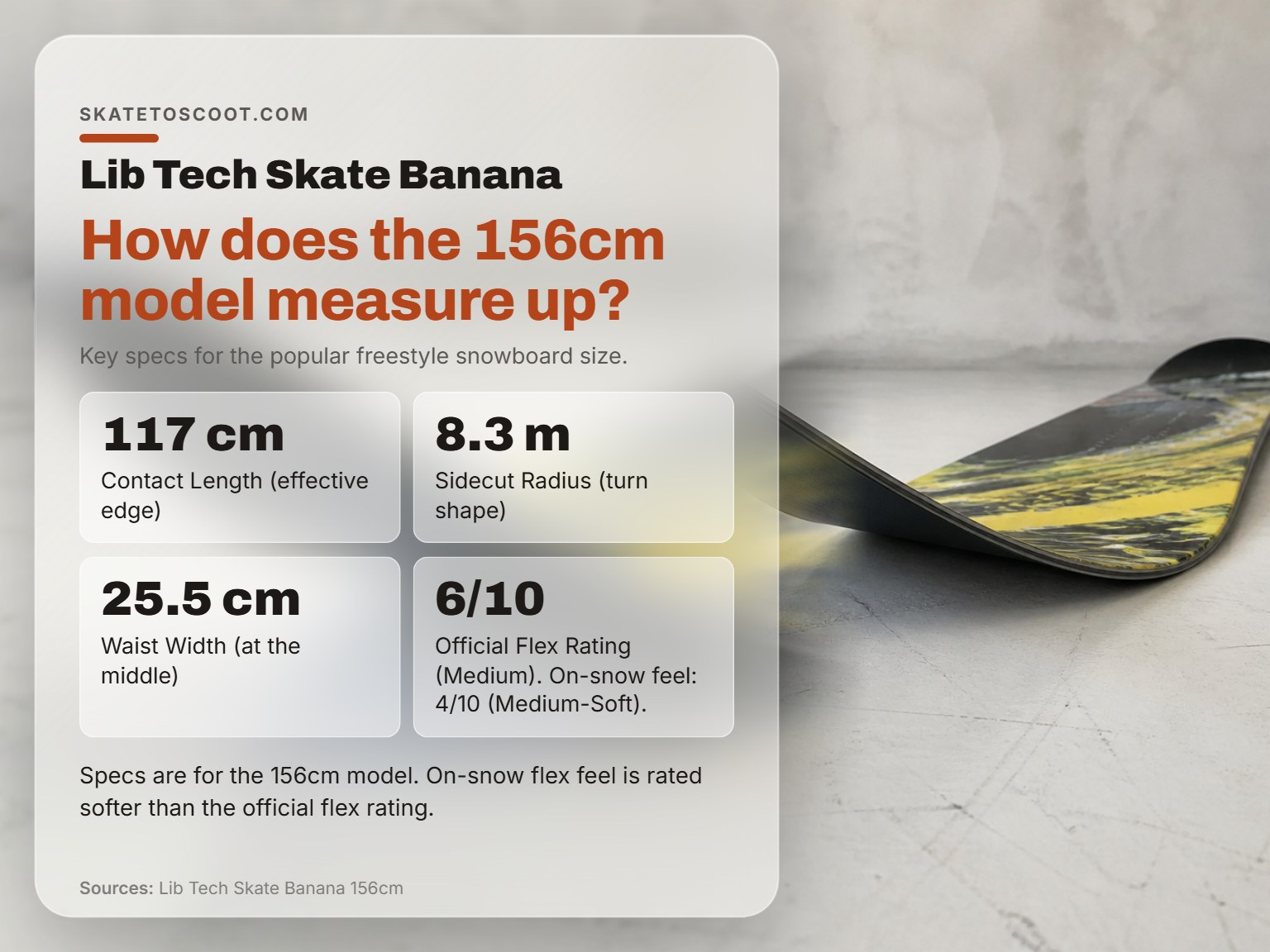
Technical Snapshot: The Lib Tech Skate Banana (156cm) uses a Banana Technology (BTX) hybrid profile with rocker between the feet and camber toward the tips/tails. It features a True Twin shape, a 25.5cm waist width, an 8.3m sidecut radius, a centered stance, and a sintered base. Official flex rating: 6/10 (Medium).
But the most important part is the Banana Technology (BTX) profile: mild rocker between your feet combined with mild cambers to the tips and tails. This design aims for the best of both worlds: the catch-free ease of rocker with a bit of the pop and edge hold of camber. In practice, the rocker dominates the feel.
The board is a True Twin with a centered stance, making it symmetrical for switch riding. The specs for the 156cm model, a 117cm contact length, 25.5cm waist, and 29.5cm nose/tail width, paint a picture of an agile, park-focused shape. Lib Tech recommends it for riders 80+ lbs (35+ kg).
Here’s a quick reference for the 156cm model’s vital stats:
| Specification | Measurement (156cm Model) |
|---|---|
| Contact Length | 117 cm |
| Sidecut Radius | 8.3 m |
| Waist Width | 25.5 cm |
| Nose/Tail Width | 29.5 cm |
| Stance Range | 20.25″ – 25″ (51.5 – 63.5 cm) |
| Official Flex Rating | 6/10 (Medium) |
| Rec. Rider Weight | 80+ lbs / 35+ kg |
The Flex Feel Reality: Specs vs. Experience
This is where the first major contradiction appears, and it’s a perfect example of why you can’t just read the spec sheet. Lib Tech’s official flex rating for the Skate Banana is 6/10, labeled “Medium,” while SnowboardingProfiles’ on-snow assessment rated the “Flex Feel on Snow” as a 4/10, calling it “Medium-Soft.”
That two-point gap is everything. A “6/10 Medium” suggests a board with some backbone, something that can handle a variety of terrain. A “4/10 Medium-Soft” describes a noticeably softer, more forgiving noodle built for flexing and pressing, not for power.
Where this goes sideways: Choosing bindings based on the official 6/10 flex rating. If you mount a stiff, responsive binding expecting a medium-stiff platform, you’ll overpower the soft core and the board will feel dead and unresponsive. It’s a mismatch that kills the fun.
The soft flex is the board’s greatest strength and its most glaring limitation. It’s what makes butters and presses feel effortless, you can load the nose or tail with minimal force. But that same softness is why it “washes out,” as Boarderspeak noted, when you try to ride aggressively or carve hard. The board simply doesn’t have the torsional stiffness to hold a firm edge when you really lean into it.
Performance Breakdown: Marketing Claims vs. Owner Reports
Lib Tech’s marketing is unequivocal: “Full contact and control in all conditions. ‘Awesome everywhere.'” A specific claim on their 20-year anniversary page states it “rips hardpack, carves ice.” A customer review on Lib Tech’s site states it “holds very well at speed on hard snow,” while independent reviews like SnowboardingProfiles and Boarderspeak describe it as unstable at speed.
Independent reviews tell a different, consistent story across years:
- SnowboardingProfiles (2025): “Pretty loose and washy, particularly when carving at good speed” and “didn’t take anything super fast to get it to start to feel unstable.”
- The Good Ride: “Flat basing isn’t that easy” and “is not really an all mountain freestyle board.”
- Bored Yak (2009): “A little too soft to stand up to the chunks” in icy conditions and “high-speed corduroy carving isn’t this one’s forte.”
- Boarderspeak (2026): “Gets squirrelly at high speed.”
This is a persistent, multi-source pattern that directly contradicts the core marketing message. The board’s performance envelope is specific, not universal.
| Terrain/Scenario | Lib Tech Marketing Claim | Independent Review Consensus |
|---|---|---|
| Hardpack/Ice Carving | “Rips hardpack, carves ice.” | Loose, washy feel; lacks edge hold at speed; unstable. |
| All-Mountain Versatility | “Awesome everywhere.” | Park and low-speed specialist; not suited for charging or big air. |
| High-Speed Stability | Customer review: “holds very well at speed.” | “Gets squirrelly at high speed” (Boarderspeak); unstable at moderate speed (SnowboardingProfiles). |
| Beginner Suitability | Listed for “Beginner” rider level. | “Doable for beginners” but loose feel makes control trickier (SnowboardingProfiles). |
The board does have near-universal praise in two areas: butters/presses and jibbing. Its soft flex and rocker pivot point make it a dream for learning and perfecting ground tricks. It’s also noted for being forgiving and fun in powder, especially for a twin, because the rocker provides natural float.
Who Is the Skate Banana Actually For?
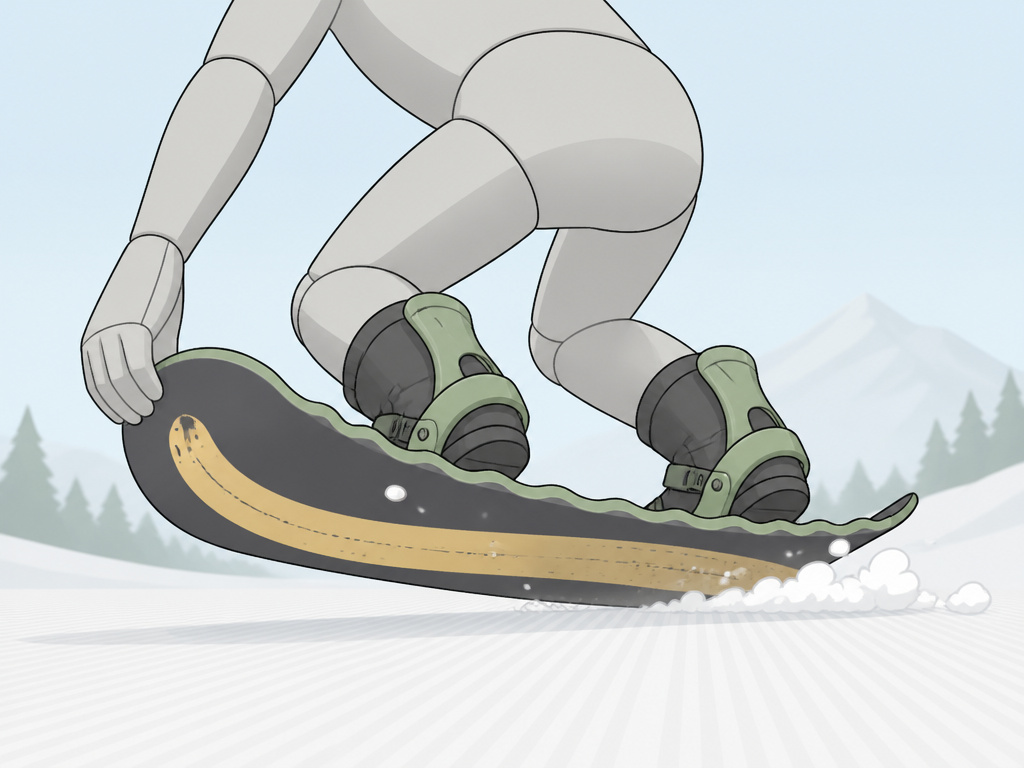
Cutting through the noise, as any good lib tech skate banana review will tell you, the Skate Banana has a clear ideal rider profile. Despite the marketing, it is a tool for a specific job.
You’ll love the Skate Banana if:
- Your primary goal is low-speed freestyle creativity, butters, presses, flat-ground spins, and jibbing.
- You value a playful, forgiving, and catch-free ride over high-speed stability or powerful carving.
- You want a dedicated park board or a fun “second board” for spring slush and casual days.
- You’re an intermediate rider looking to build confidence with presses and switch riding without fighting the board.
You will outgrow or dislike the Skate Banana if:
- You prioritize charging, aggressive carving, or riding steep, technical terrain.
- You need a stable, damp board that feels solid at high speeds.
- You’re looking for a true one-board-quiver to handle everything the mountain throws at you.
- You’re a pure beginner who needs maximum predictability and ease of control (a traditional camber board, while less forgiving, often teaches better habits).
Common mistake: Buying it as your first board because it’s marketed as “Beginner.” A first-timer on a loose, soft board can develop bad habits like skidding turns instead of carving, and they’ll struggle on steeper terrain where a bit more edge hold is crucial. It’s doable, but not ideal.
For progression, think of it as a stepping stone. It’s fantastic for developing a specific skillset, the buttery, playful side of snowboarding. But most riders who start to crave speed, power, and all-mountain versatility will eventually add a stiffer, camber-dominant board to their quiver. As one Reddit user who rode it for years put it, it’s “perfect for park, perfect for mountain… If you aren’t really trying to push it on the freeriding side.”
How to Set It Up: Bindings and Stance
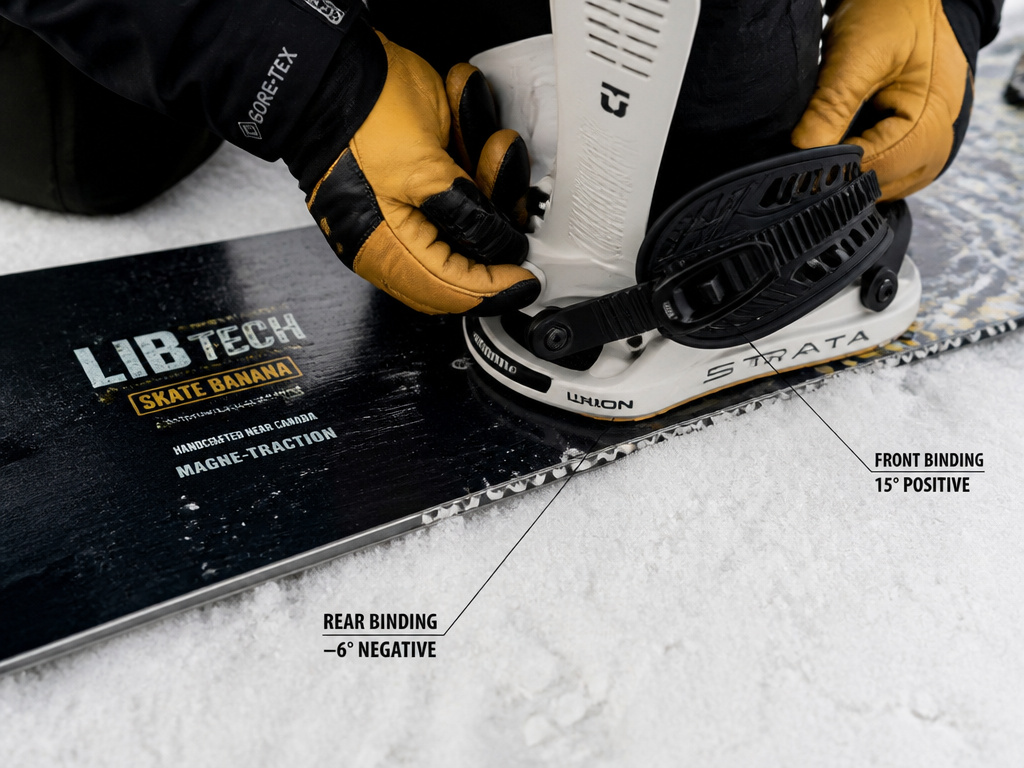
You can’t change the board’s fundamental softness, but you can influence its feel with your setup. The goal is to complement its playful nature, not fight it.
Bindings: Avoid ultra-stiff, high-response models. You want a medium-flex binding that adds some communication without overpowering the soft deck. The Union Strata or Burton Cartel are excellent matches, they provide good feedback for ollies and landings but retain enough flex to work with the board’s buttery personality. A stiffer binding like a Union Force or Burton Malavita will feel disconnected and dead on this soft of a platform.
Stance: The board has a centered stance (0″ setback) because it’s a True Twin. Use it. Start with a shoulder-width stance, angled slightly duck (e.g., +15° front, -12° back) for optimal switch riding and pressability. The stance range is 20.25″ to 25″ (51.5-63.5cm).
Wax and Tune: Keep that Sintered Knife Cut Base fast with regular hot waxing. For edge tuning, be careful with the Magne-Traction serrations. For edge tuning, be careful with the Magne-Traction serrations. The serrations are meant to be distinct grip points.
Evolution and Comparisons: What Has Changed?
The Good Ride review noted a subtle but important change: “The 2014-2025 Lib Tech Skate Banana changed up the BTX profile… The more BTX felt a little more stable between the feet.” This suggests that while the board’s identity hasn’t shifted, later models may have a slightly more stable feel underfoot than the original 2008-2013 versions. If you’re looking at a used model from previous Skate Banana generations, the ride might be a touch looser.
How does it stack up against other popular boards?
- Vs. A Camber Park Board (e.g., Burton Process): The Process will have more pop, better edge hold, and higher-speed stability. The Skate Banana will be easier to press, more forgiving on jibs, and much harder to catch an edge.
- Vs. A Hybrid All-Mountain Board (e.g., GNU Rider’s Choice): The Rider’s Choice has C3 camber (camber between feet, rocker tip/tail), giving it much better carving prowess and stability for all-mountain riding while still being playful. The Skate Banana is softer and more specialized for pure freestyle fun.
- Vs. Other Lib Tech Models: If you like the Lib Tech feel but want more versatility, look at models with C2 or C3 camber profiles in the Lib Tech lineup, like the T.Rice Pro or the Lib Tech Orca. These keep the Magne-Traction but add the edge hold and pop the Skate Banana lacks.
Price and buying options
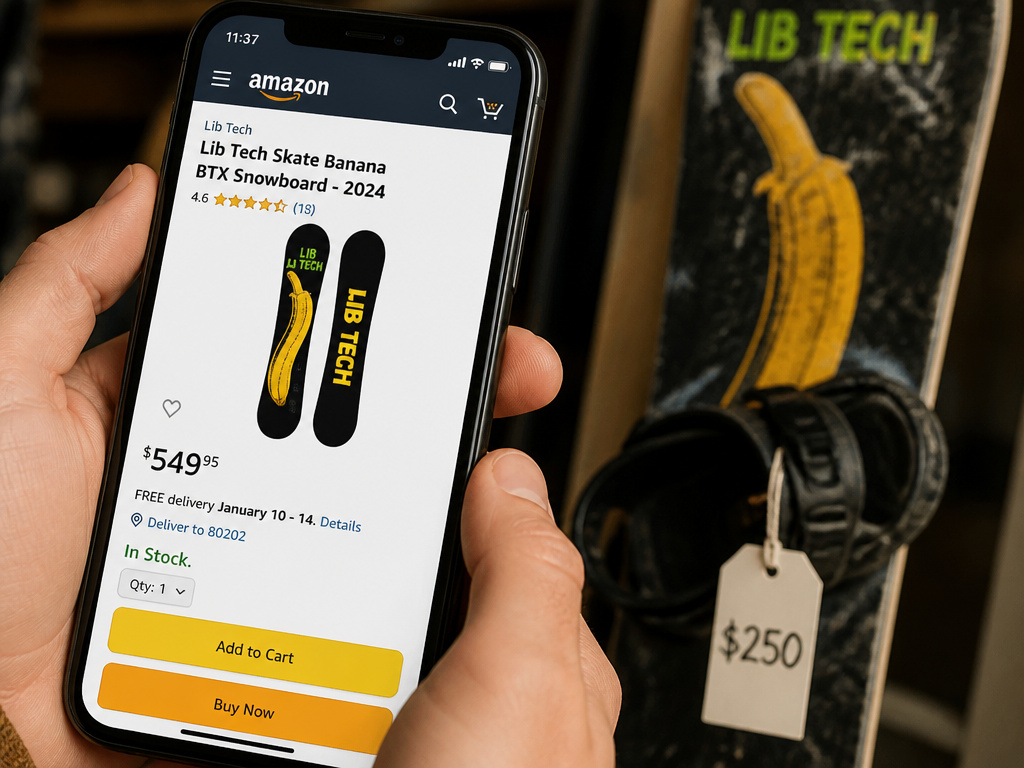
Finding a Skate Banana means checking both new and used markets. For a new board, look at major online snowboard retailers and the manufacturer’s own site.
Frequently Asked Questions
Is the Lib Tech Skate Banana a good beginner board?
It’s doable, but not ideal. Its catch-free rocker makes turn initiation easy and reduces frustrating falls, which is great for confidence. However, its loose, soft feel can be tricky for a first-timer to control precisely, especially at slower speeds or when one-footing.
What kind of board is a Lib Tech Skate Banana?
It’s a true twin, rocker-dominant freestyle snowboard. It’s designed specifically for playful, low-speed riding in the park and on groomers, excelling at butters, presses, jibs, and flat-ground tricks. It is not designed for high-speed charging or aggressive carving.
Is Lib Tech a good brand?
Yes, Lib Tech is a highly respected brand known for innovative technologies like Magne-Traction and Banana Tech, durable construction in their USA factory, and a strong environmental ethos.
Is Lib Tech better than Burton?
“Better” is subjective and depends on the rider. Lib Tech is renowned for its edge-hold technologies (Magne-Traction) and hybrid profiles, appealing to riders who prioritize grip and a playful feel.
The Bottom Line
The Lib Tech Skate Banana is a classic for a reason, but that reason is narrower than the marketing suggests. It is a specialist, a supremely fun, forgiving, and creative tool for the playful side of snowboarding.
Buy it with clear eyes: you’re getting a board that makes pressing effortless, reduces edge catches, and encourages a skate-like, playful approach. You are not getting a board that carves ice, charges hard, or feels stable at speed. That disconnect between claim and performance is the board’s entire legacy.
If your goal is to spend your days buttering, jibbing, and laughing your way down the mountain at a moderate pace, the Skate Banana will deliver smiles for years. Just know its limits. Pair it with a medium-flex snowboard binding and some comfortable Vans snowboard boots, and you’ll have a setup dedicated to pure, uncomplicated fun.
