Maxshot Electric Scooter Review: Who Should Buy It?
This post contains affiliate links. As an Amazon Associate, we earn from qualifying purchases.
The Maxshot V1 is a budget electric scooter that delivers a tested 17.5 mph top speed and 18.2 miles of range for its price, making it a standout for short, flat commutes. Its 350W motor and 375Wh battery outperform many $200-$300 rivals, but the trade-off is a harsh ride on rough pavement and a struggle on hills steeper than a 10% grade.
That performance gap between flat ground and a slope is where the scooter’s value proposition gets specific, as detailed in a Maxshot electric scooter review. On smooth bike paths, it feels quick enough. On a hill, you’re walking pace.
What follows is a breakdown of the tested numbers, the real-world ride feel, a direct comparison to its closest competitors, and a look at what ownership is like after the box is opened. This isn’t about whether it’s “good”, it’s about whether it fits your two-mile commute on city streets, or if you’d be better served saving up or spending down.
Key Takeaways
- The Maxshot V1 hits 17.5 mph, a meaningful step up from the 12-15 mph typical of budget scooters, and covers 18.2 miles on a charge in testing.
- Its 8.5-inch solid honeycomb tires mean zero flats but transmit every bump; ride comfort is its weakest point.
- On a 10% grade hill, speed drops to ~5 mph, requiring rider assistance on anything steeper, check your local terrain first.
- At 27.5 pounds, it’s one of the lighter, more portable options, folding down for easy car or bus storage.
- Support is self-service focused with a 1-year warranty and UL 2272 safety certification, but there’s no dealer network for repairs.
The Measured Numbers: Speed, Range, and Motor
TechGearLab’s instrumented test of the Maxshot V1 recorded a 17.5 mph top speed, while the manufacturer claims speeds up to 19 mph. The motor is a 350W unit paired with a 375Wh battery.
That 17.5 mph figure matters. Many scooters in its price class have lower top speeds. The difference feels significant on a commute, 15 mph skirts the edge of being too slow for traffic flow, while 17.5 mph keeps pace. The acceleration to that speed takes about five seconds. It’s not neck-snapping, but it’s adequate to pull away from a stoplight.
The 375Wh battery capacity helps explain its range. The trade-off is slightly more weight, but the Maxshot V1 still comes in at a tested 27.5 pounds.
Where the motor shows its limit is on an incline. On a 10% grade during testing, the scooter slowed dramatically to roughly 5 mph. That’s walking speed. For anything steeper, you’ll be kicking to assist. If your route has a notable hill, this scooter isn’t the tool for the job. Scooters with more powerful motors, which start at a higher price point, are better suited for consistent hill climbing.
Cold weather also affects the battery. TechGearLab notes that lower temperatures can cause a 10-30% decrease in range. If you’re planning to ride in the fall or winter, factor that in. Storing the scooter in a warm place overnight helps.
Ride Quality and Where the Budget Shows
The Maxshot V1 uses 8.5-inch solid honeycomb tires and has no suspension. This is the single biggest determinant of its ride character.
On smooth, fresh pavement, it’s fine. The solid tires mean you’ll never get a flat, and they require zero maintenance. The moment you hit cracked concrete, brick pavers, or even a pronounced tar seam, you feel it. The vibration travels straight up the stem into your hands and arms. After 18 miles on mixed surfaces, testers reported fatigue.
Common mistake: Assuming solid tires are just a minor comfort trade-off. On a long ride over uneven pavement, they turn the experience from transportation into endurance.
This is a direct result of the scooter’s budget positioning. Pneumatic (air-filled) tires and even basic suspension cost more. Scooters with pneumatic tires, which cost more, generally provide a more forgiving ride. The Maxshot V1 is built for short, predictable trips on maintained paths.
The dual disc and motor braking system performed well in testing, stopping the scooter in 17 feet on a track. Braking is smooth and predictable, which is a critical safety point often overlooked on budget models.
Portability and Everyday Convenience
This is where the Maxshot V1 shines. At 27.5 pounds, it’s light enough to carry with one hand for short distances. The folding mechanism is simple and fast, you can stow it behind a car seat or in a closet in seconds.
That portability makes it a great “last-mile” solution. If your commute involves a bus or train segment, carrying this on and off is trivial. It also fits easily in a car trunk for trips to a park or trailhead. Compared to heavier, bulkier scooters that might offer more comfort or power, the convenience factor is a major win.
The deck is narrow, which keeps the overall folded profile compact. Some riders with larger feet might find the standing space a bit limited, but for most adults, it’s sufficient for the short rides this scooter is designed for.
Maxshot V1 vs. The Competition: Gotrax, Razor, and Volpam
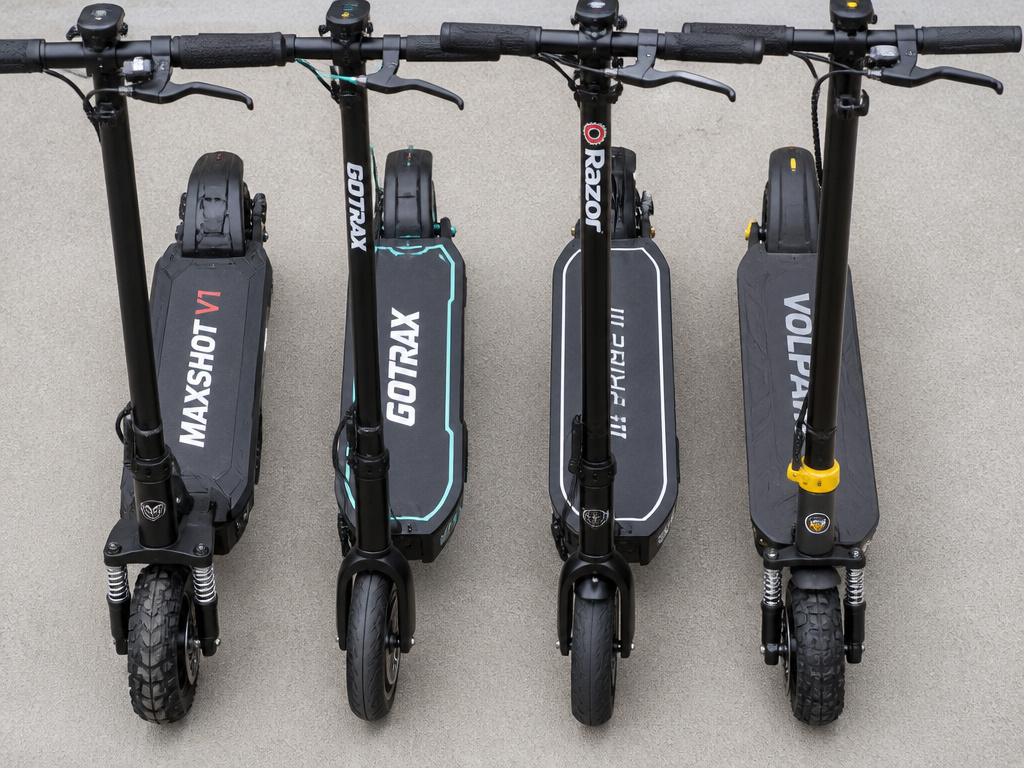
How does it stack up against the other names you’ll see in the sub-$300 category? A quick comparison clarifies who this scooter is for.
| Model | Tested Top Speed | Tested Range | Tires | Weight | Best For |
|---|---|---|---|---|---|
| Maxshot V1 | 17.5 mph | 18.2 miles | 8.5″ solid honeycomb | 27.5 lbs | Flat commutes, portability priority |
| Gotrax G4 | 20 mph | 25 miles | 10″ pneumatic | 37 lbs | Smoother ride, longer range |
| Razor E Prime III | 15 mph | 9 miles | 8″ solid | 24 lbs | Ultra-light, very short trips |
| Volpam Q1 | ~16 mph | ~15 miles | 8.5″ solid | ~28 lbs | Direct design clone, often less expensive |
The Gotrax G4 is a step-up choice that costs more and offers different features. If your budget can stretch, it’s a more versatile daily rider.
The Razor E Prime III is lighter but has different performance characteristics. It’s only a pick if absolute minimal weight is your only concern.
The Volpam Q1 looks similar to the Maxshot V1 and often comes in cheaper. They’re close enough that you should buy based on current price and warranty terms.
For a broader look at how these models fit into the market, our guide to the best electric scooters and a typical Maxshot electric scooter review break down the tiers in more detail.
Ownership: Support, Warranty, and Real-World Reliability
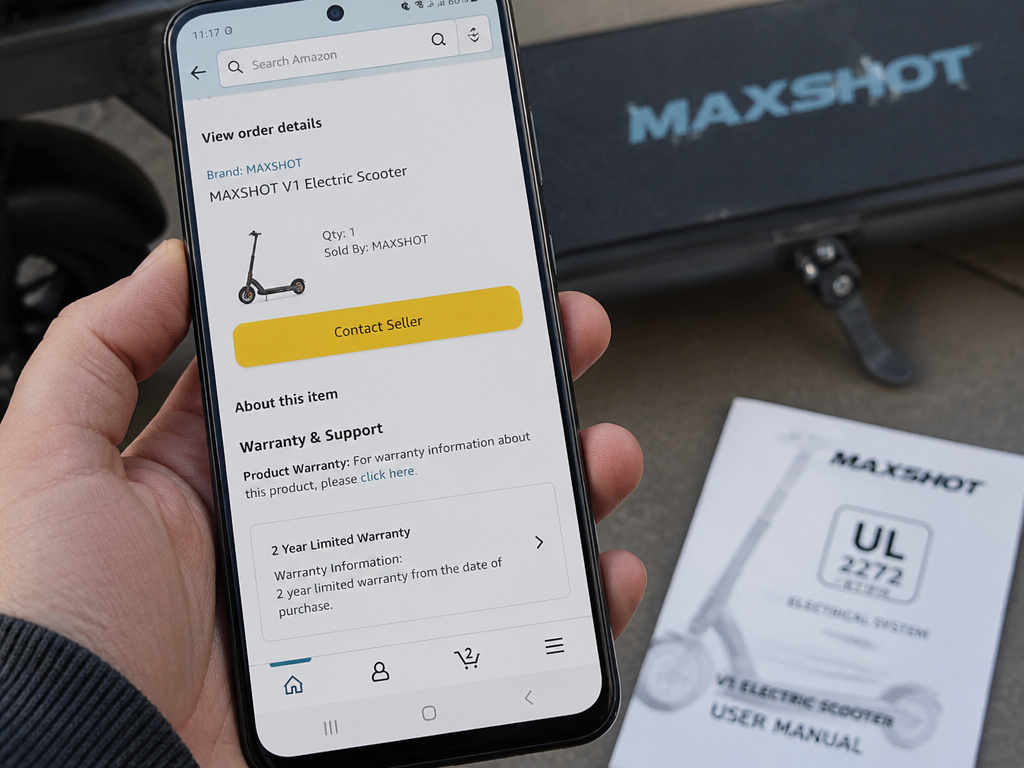
Maxshot sells through Amazon. This defines the ownership experience. There is no dealer network.
Support is a three-part system: your Amazon order page (for warranty claims), the 1-year manufacturer warranty, and self-service repair guides. The scooter is UL 2272 certified for electrical safety, which is an essential baseline for any scooter you trust with a lithium battery.
Where this goes sideways: Expecting a traditional customer service phone line. All support is channeled through your Amazon purchase, which can feel impersonal but is usually efficient for warranty issues.
Common wear items like chargers and batteries are replaceable via Amazon. This is a double-edged sword. It’s convenient and cheap to get parts, but it also means you are your own mechanic for most issues. A local e-bike repair shop can handle more serious mechanical faults, but you’ll pay out of pocket unless it’s a manufacturing defect covered under the first year.
To see how this support model works in practice, our detailed electric scooter review framework and a standard Maxshot electric scooter review cover what to expect from different brands.
The One That Got Away: Maxshot V1SPRO
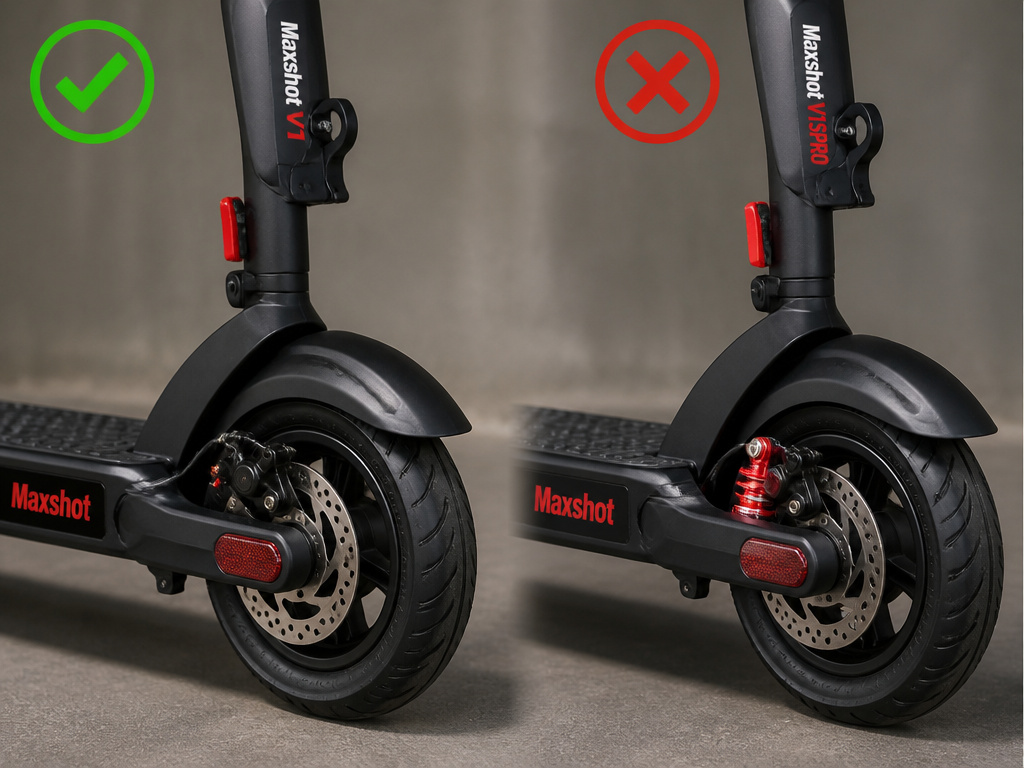
You might see the “PRO” model. Don’t get excited. TechGearLab also tested the Maxshot V1SPRO and doesn’t recommend it.
The Maxshot V1SPRO model is more expensive and includes a shock absorber. The performance is essentially the same, but you pay more and go fewer miles. Stick with the standard V1 if you’re going with this brand.
Who Should (and Shouldn’t) Buy the Maxshot V1
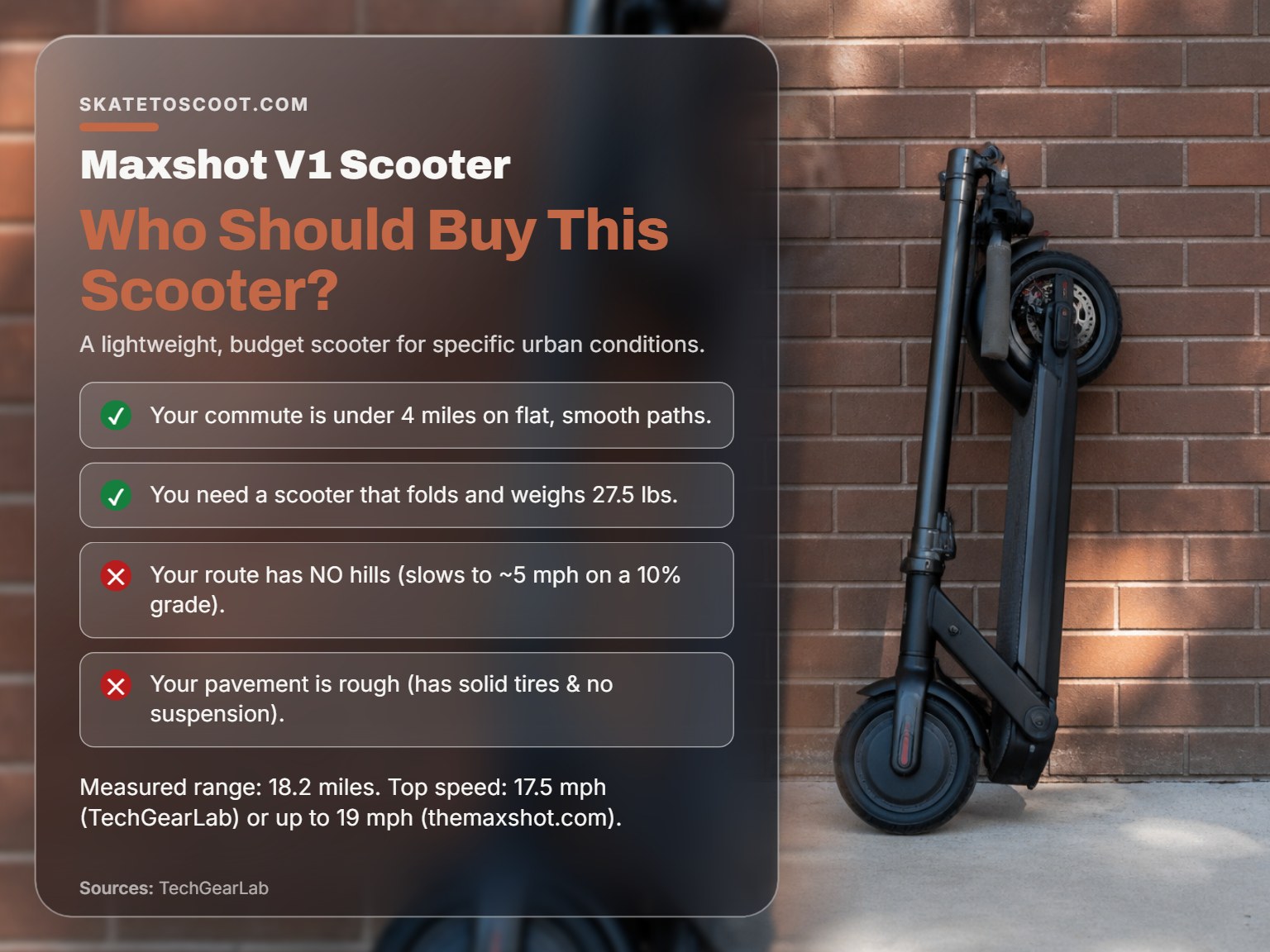
This scooter is a tool for a specific job. It’s not universally good or bad.
Buy the Maxshot V1 if:
- Your commute is under 4 miles each way on relatively smooth, flat paths.
- You need to carry the scooter on public transit or stash it in a small apartment.
- Your budget is firmly in the $200-$300 range and you want the best speed and range for that money.
- You’re okay with a firm ride and are mechanically inclined enough to handle basic part replacements.
Look at other options, like the Hiboy Max, if:
- Your route has hills. You need more motor.
- Your pavement is rough or you want a comfortable ride. You need pneumatic tires or suspension.
- You want longer range for all-day errands.
- You prefer a brand with a more established support network.
For a different take on a budget scooter with a similar urban focus, the UrbanMax C1 offers another configuration to compare.
Frequently Asked Questions
Is Maxshot a good electric scooter brand?
For a budget, Amazon-sold brand, it’s competent. The V1 model delivers on its core promises of speed and range for the price, and it holds necessary safety certifications like UL 2272. It’s not a premium brand with wide dealer support, but within its niche, it represents good value.
How long does the Maxshot electric scooter last?
The scooter itself, with proper care, should last for several years. The battery is the main wear item. TechGearLab notes cold-weather range reduction, and all lithium batteries degrade over time. Like all lithium batteries, it will degrade over time with use. Replacement batteries are available.
Which is better, the Maxshot or the Volpam?
They are extremely similar. Based on testing, the Maxshot V1 has a slight edge in consistent speed and range. In practice, choose based on which one has a better price and warranty at the time you’re buying. The performance difference is marginal for most riders.
What’s the most reliable electric scooter brand?
Reliability is tied to price and support structure. Premium brands like Segway have extensive dealer networks and proven durability, but you pay for it. In the budget category, reliability often means having accessible replacement parts and clear error-code guides, areas where Maxshot’s Amazon-centric model is adequate but not exceptional. For a balance of reliability and cost, brands like Hiboy and Gotrax have larger footprints.
The Bottom Line
The Maxshot V1 is a narrowly focused machine. It wins on two metrics in its price class: speed and range. You feel every victory in your hands and wrists because the comfort isn’t there.
If your daily ride is a flat, two-mile stretch of decent pavement and you’ll fold it under your desk, it’s a smart buy. The moment your route gains a hill or loses its smooth surface, the equation changes. You’re either pushing it uphill or feeling every crack in your elbows.
For that specific, flat-and-short use case, it’s the default pick under $300. For anything else, the extra $100-$150 for a Gotrax G4 or similar model with pneumatic tires is not an upgrade, it’s a necessity. Check your route on a map, check the elevation, and then decide if this scooter’s strengths are the ones you actually need.
