Phantom A10 Smart Electric Scooter Review: Is It Worth It?
This post contains affiliate links. As an Amazon Associate, we earn from qualifying purchases.
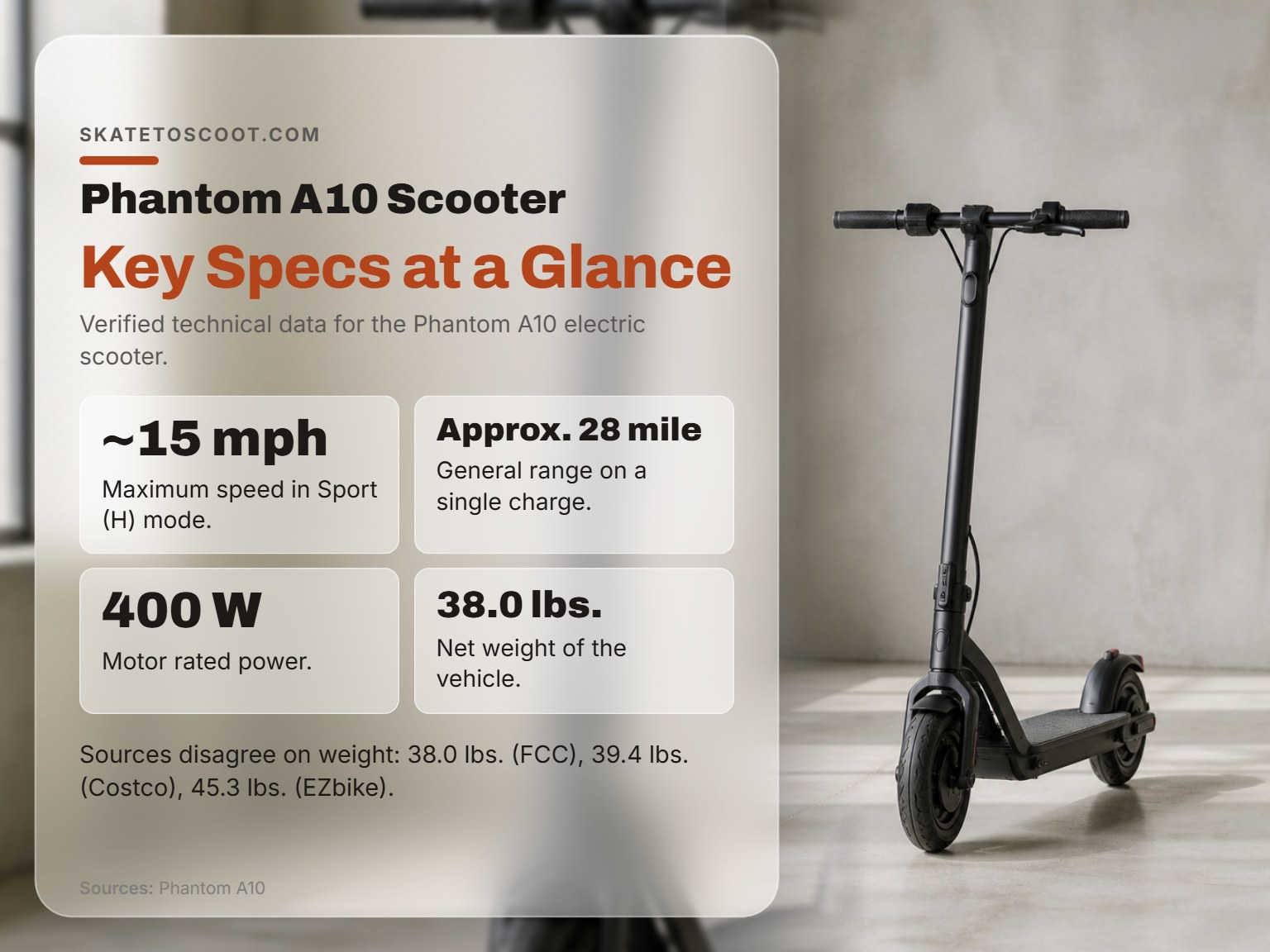
The Phantom A10 Smart Electric Scooter is a 38–39 pound, foldable commuter scooter with a 400W motor, a claimed 28-mile range, and a top speed around 15 mph. It’s sold at Costco, uses a companion app for locking, and has a front drum brake with a rear electronic brake. Its official manual recommends riders be 12+ years old, but a 2026 safety notice from Aurictech Inc. Contradicts that, advising a 13+ minimum due to its speed.
That last point isn’t a footnote. It’s the line that separates a casual purchase from an informed one. The A10 looks like a straightforward deal – a capable scooter at a warehouse price, much like another model in the line, the Phantom Gogo. This Phantom A10 smart electric scooter review will help you decide.
What follows: the hard numbers from its FCC filing, the reality behind its 28-mile claim, the one brake design that changes how you stop, and the safety notice that rewrites the manual.
Key Takeaways
- The 400W motor and 28-mile range are optimistic for real-world use; expect less than the advertised maximum, with speed dropping as the battery depletes.
- The front-only mechanical brake (drum) requires a gentle, progressive pull to avoid wheel lock or pitching forward, especially on declines.
- A 2026 Product Safety Notice from Aurictech Inc. Recommends riders be 13 years or older, conflicting with the manual’s 12+ label and highlighting the importance of checking local regulations.
- With no suspension and 10-inch pneumatic tires, you feel every crack and pebble; this scooter is for smooth, paved surfaces only.
- The GOGO Connect app is required for initial setup and electronic locking; Bluetooth pairing failures can render the scooter unusable until resolved.
The 400W Motor and 28-Mile Range: Claim vs. Reality
The FCC filing for model 2A4CE-A10 lists a 400W rear hub motor and a 36.5V, 10Ah (365Wh) battery pack. On paper, that translates to a 28-mile range and a top speed of about 15 mph in its sport mode. In practice, those numbers are ceilings, not averages.
The 400W motor delivers adequate power for flat commutes, but its performance is tightly bound to the 365Wh battery. Real-world range is highly sensitive to rider weight, hills, and stop-start riding, often landing below the advertised maximum.
That sensitivity isn’t a defect; it’s physics. The motor’s rated power is what it can draw, not what it sustains indefinitely. On a full charge with a 160-pound rider on flat asphalt, you might see 20 miles. Add a backpack, a few gentle inclines, or a headwind, and 15–18 miles is a more realistic target. The speed drops noticeably when the battery indicator starts flashing red at 10% capacity.
The battery itself, model C1387A3, charges via a dedicated 42V, 1.7A charger. A full charge takes about six hours. The manual has specific – and somewhat unusual – storage instructions: fully charge it first, store it in a cool, dry place, and fully recharge it every 30 days. The manual’s storage instructions differ from some general advice for lithium-ion batteries.
| Claimed Spec | Real-World Expectation | Key Limiting Factor |
|---|---|---|
| 28-mile range | 15–22 miles | Rider weight, terrain, riding style |
| 15 mph top speed | 13–15 mph (declines with battery) | Battery state of charge |
| 220 lb max load | Holds true, but reduces range & acceleration | Total system weight |
| 6-hour charge | about 6 hours | Ambient temperature (charger works 0–45°C) |
If your commute is under 5 miles each way on mostly flat ground, the A10 has the juice. If you’re planning longer joyrides or have hills, budget for significantly less than the box promises.
Assembly, App, and the “Smart” Features
Out of the box, the Phantom A10 requires assembly. You’ll connect the handlebar to the front tube, secure it with the included screws and T-handle Allen key, and plug in a data cable. The tricky part isn’t the bolts; it’s the software.
The scooter relies on the GOGO Connect companion app for initial pairing, locking, and trip tracking, similar to the system used on the PhantomGoGo scooter a phantom a10 smart electric scooter review might compare. You must pair the scooter via Bluetooth to enable the electronic lock feature. This step has been a stumbling block.
It’s a reminder that “smart” can mean “dependent on a glitchy wireless connection.” After pairing, the app shows battery level, displays riding statistics, and allows you to switch a cruise control mode on or off.
The dashboard itself is simple: a speedometer, a battery indicator, and a mode button. You cycle through three speed settings: Gear (~3 mph walking mode), M (~9 mph standard), and H (~15 mph sport). The factory default is a non-zero start mode, meaning you need to kick off to about 3 mph before the motor engages – a basic safety feature.
Ride Quality, Safety, and Who It’s Really For
The Phantom A10 has no suspension. Its 10-inch pneumatic tires absorb minor imperfections, but the solid connection between the deck and the road is immediate and unforgiving. The manual explicitly limits use to “cement or asphalt road, with benches of less than 1 cm or crevices narrower than 3 cm.” That’s not being overly cautious; it’s stating the physical limit of the design.
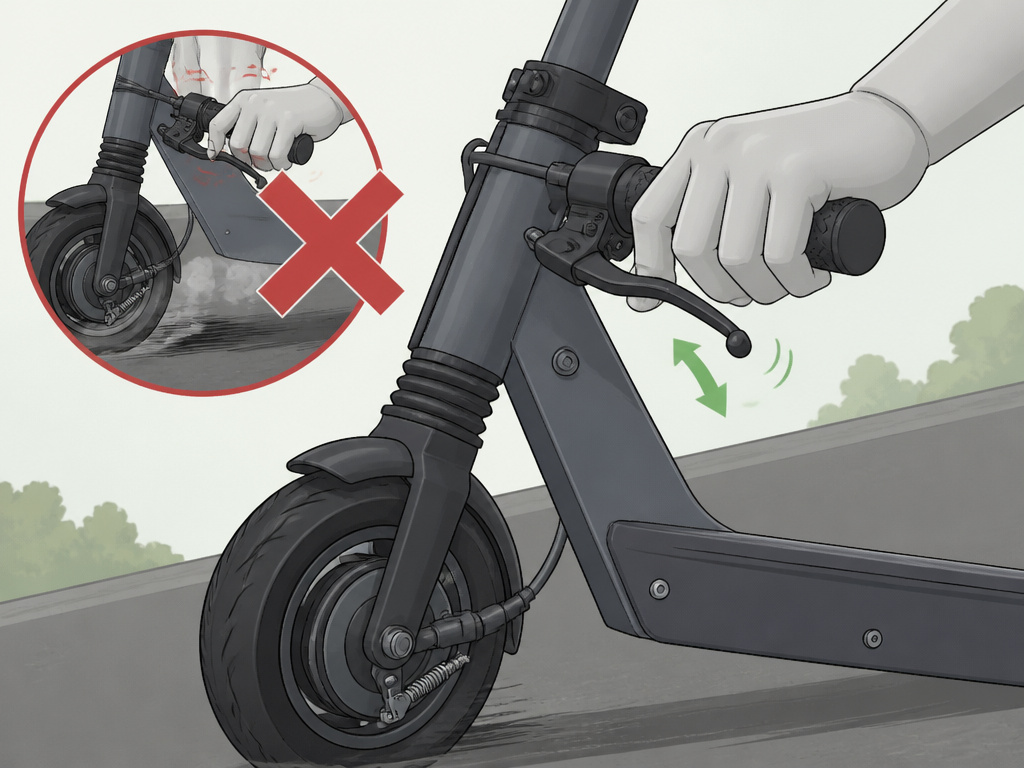
The braking system defines the riding experience – and the risk profile. It uses a front drum brake as the primary mechanical stopper, supplemented by a rear electronic brake (EABS). This front-heavy setup is common on budget scooters to save weight and cost, but it changes stopping dynamics.
Common mistake: Grabbing the front brake lever hard and fast, especially on a decline or mid-bump. The front wheel can lock or skid, causing the scooter to pitch forward sharply. The correct technique is a gentle, progressive squeeze.
There are no turn signals or built-in lighting beyond basic reflectors and an optional headlight (depending on the retailer bundle). This makes the A10 a fair-weather, daytime commuter for controlled environments like college campuses or paved park paths, not for mixing with traffic.
Now, the age question. The manual and product label state “12+ years.” However, a Product Safety Notice issued by Aurictech Inc. Via Costco in September 2026 for scooters sold between April 2025 and September 2026 directly contradicts this. The notice states that “industry safety standards” recommend scooters operating above 16 km/h (10 mph) be used by individuals aged 13 years and older. Since the A10 exceeds that speed, the notice recommends a 13+ minimum. It further advises riders to check municipal or provincial rules, which may set the minimum at 14 or 16.
| Source | Recommended Minimum Age | Notes / Rationale |
|---|---|---|
| Phantom A10 User Manual (FCC Filing) | 12+ years | Printed on product label. |
| Aurictech Inc. Product Safety Notice (2026) | 13+ years | Cites industry standards for devices >16 km/h. |
| Local Municipal Regulations (e.g., various cities) | 14 or 16 years | Varies by location; often includes helmet/road-use laws. |
This isn’t a minor discrepancy. It’s a documented safety conflict between the manufacturer’s label and the distributor’s later assessment. If you’re buying for a 12-year-old, you’re going against the official safety notice. That’s a decision that requires knowing the rules of your specific roads and paths.
Long-Term Ownership: Reliability, Maintenance, and Value
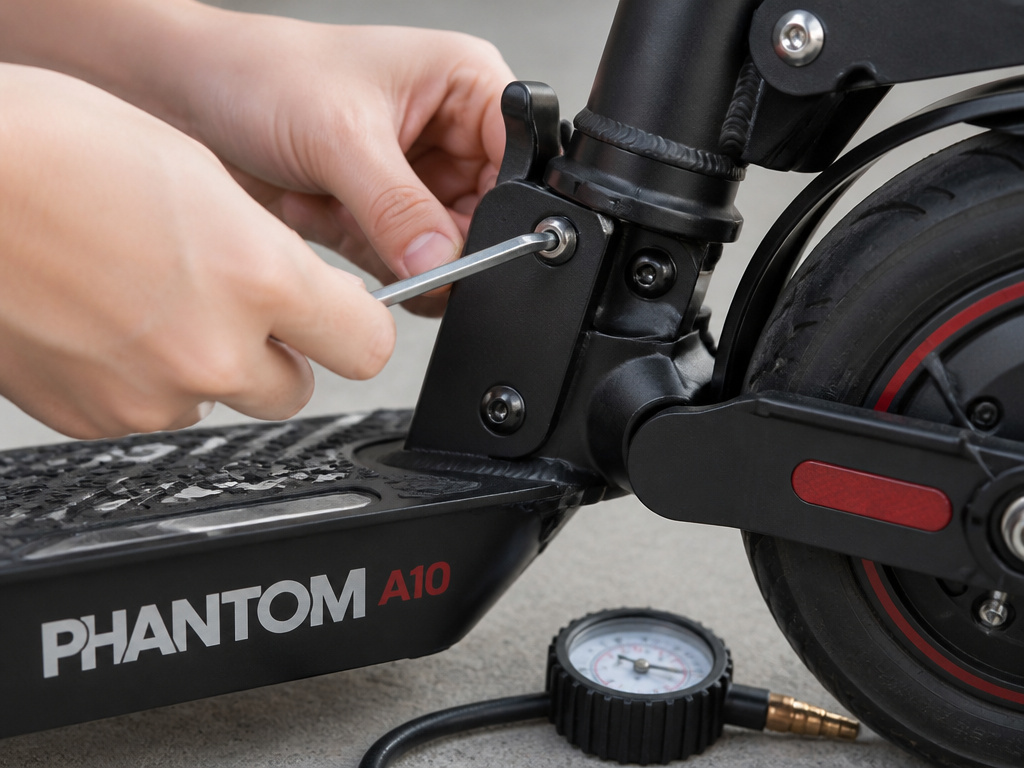
The A10’s IPX5 water-resistance rating means it can handle rain spray, not submersion. Its operating temperature range is -10°C to 45°C. Basic maintenance is straightforward: keep tire pressure checked, clean the deck and wheels, and avoid storing it in temperatures above 122°F or below -4°F.
Long-term reliability is the big unknown. Some owners report trouble-free use for months of light commuting.
Where this goes sideways: Ignoring the torque specs on the folding mechanism and stem bolts. Overtightening can stress the aluminum, while undertightening lets wobble develop. Both paths lead to premature wear or failure. Use the included tools and check them periodically.
When it works, the value proposition is clear: a capable scooter from Costco, with the benefit of their return policy. When it doesn’t, you’re dealing with a device that has limited third-party repair support.
Phantom A10 vs. The Competition
Is it the only scooter in its price range? Not even close. The market for scooters in this category is crowded. Comparing it to frequently mentioned alternatives like the Segway Ninebot MAX G30LP or the NIU KQi2 Pro reveals the A10’s trade-offs, a key point in any phantom a10 smart electric scooter review; for a more powerful competitor, see the Apollo Ghost scooter.
It’s often the benchmark for reliability. The Phantom A10’s main advantage is its immediate availability at Costco warehouses and the no-questions-asked return policy that comes with it.
For a first-time buyer wary of online support, that’s a significant comfort.
Price and where to buy
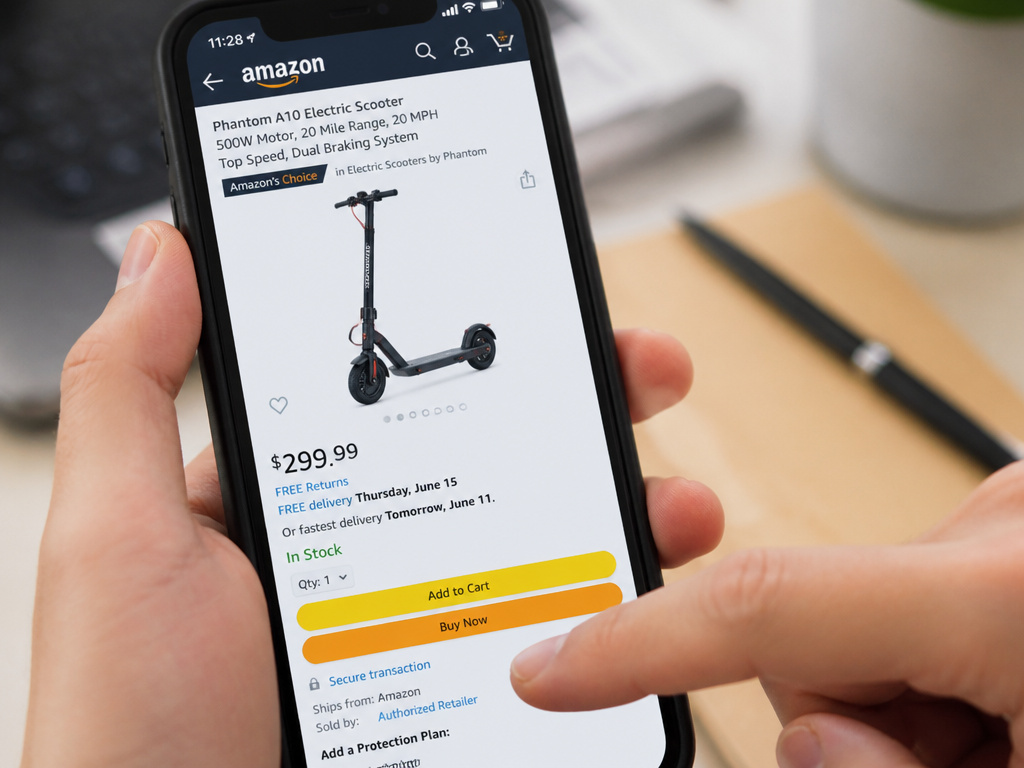
Official retail pricing for the Phantom A10 can vary by retailer and over time. It has been available through major warehouse clubs and online marketplaces. When shopping, it’s crucial to verify you are purchasing from an authorized seller to ensure you receive a genuine product and are eligible for any manufacturer support. Always check the seller’s return policy and warranty details before completing your purchase, as these can differ significantly between vendors.
Charging time
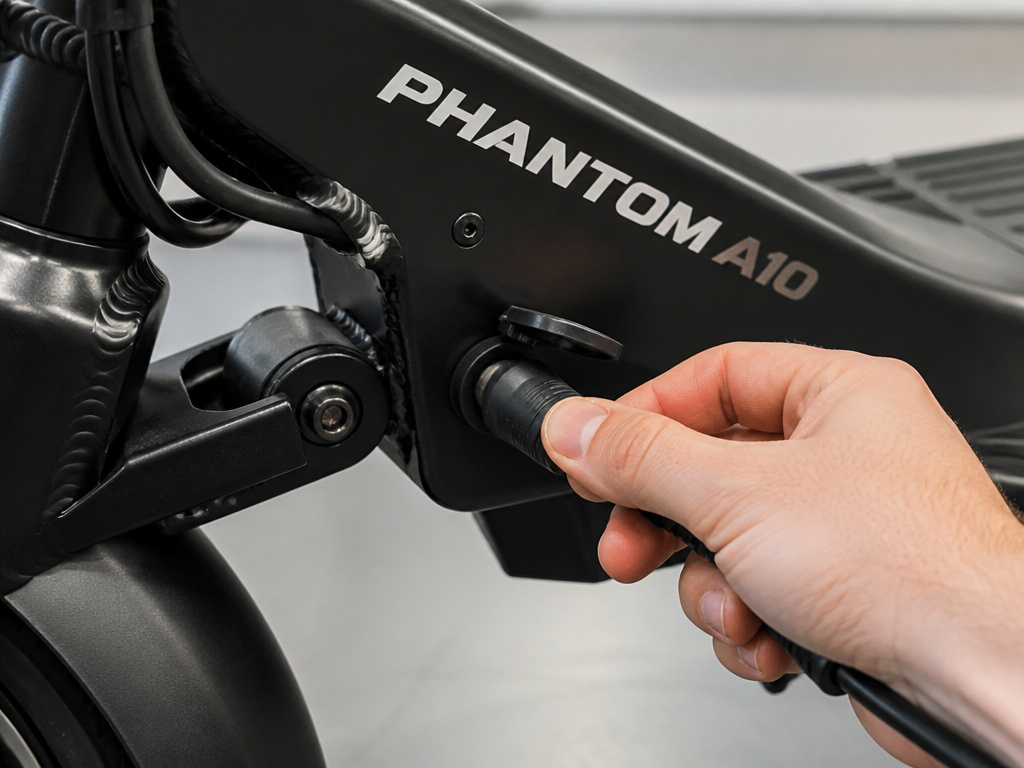
The Phantom A10 requires about 6 hours for a full charge using its specific 42V charger. To ensure safety and battery longevity, only use the original power adapter provided with the scooter. Charging should be done within the specified temperature range, ideally in a cool, dry place away from children, animals, and flammable materials. Plan your charging schedule so the scooter is ready when you need it, as the process cannot be rushed without risking damage to the battery.
Warranty and return policy
Warranty coverage and return windows for the Phantom A10 are set by the retailer where you make your purchase. Policies differ, so review the terms carefully at the point of sale. Some sellers may offer extended protection plans. Keep your original receipt and all packaging in case you need to initiate a return or warranty claim. For any safety notices or recalls, contact the retailer or manufacturer directly using the information included with your scooter.
Frequently Asked Questions
Is the Phantom A10 a good scooter?
It’s adequate for specific, limited use. If you need a simple scooter for short, smooth commutes on private paths or campuses, and you value Costco’s return policy above all else, it can work. Its lack of suspension, front-heavy braking, and app dependency make it a “good enough” choice, not a standout.
How long does the Phantom A10 battery last?
The battery itself is rated for hundreds of charge cycles. The range per charge is the real question. Under ideal conditions, you may get less than the advertised 28-mile maximum. For most riders, real-world range will be less than the advertised maximum.
What is the top speed of the Phantom A10?
Sources disagree on the maximum speed: the FCC filing lists about 15 mph in sport mode, while the Costco product page states 15.5 MPH. Speed decreases as the battery level drops.
Can a 12-year-old ride the Phantom A10?
According to the product label, yes. However, a 2026 Product Safety Notice from the distributor, Aurictech Inc., recommends a minimum age of 13 due to industry standards for scooters over 10 mph. Always check your local laws, as many municipalities set higher age limits (14 or 16) for riding on public roads or paths.
The Bottom Line
The Phantom A10 is a lesson in trade-offs. You get a functional scooter with a generous return policy, but you accept a harsh ride, a braking system that demands technique, and a smart feature set that can be its own point of failure.
One rule cuts through the noise: if your daily route has cracks, bumps, or any incline steeper than 15%, look at a scooter with suspension and dual brakes. The A10 is built for perfect pavement, and it punishes you for anything else.
For everyone else – the college student on a smooth campus, the commuter with a last-mile flat path – the A10 can be a pragmatic tool, though alternatives like the Atto electric scooter exist. Just know its limits are printed in the manual, confirmed by owners, and, in the case of the rider age, clarified in a safety notice most buyers will never see. Your job is to read them before you ride.
