Sisigad Electric Scooter Review: Key Takeaways
This post contains affiliate links. As an Amazon Associate, we earn from qualifying purchases.
A Sisigad electric scooter is a budget-friendly, entry-level option with specs like a 500W motor and a 65-mile claimed range, but real-world reliability and support are inconsistent, some owners report trouble-free commutes over 1,000 miles, while others face dead scooters and unresponsive customer service within a month.
That gap between the advertised performance and the owner-reported reality is the whole story. You are not just buying a motor and a battery. You are buying into a support chain, a parts ecosystem, and a warranty with specific, unavoidable exclusions. A scooter that works is a fantastic value. One that breaks becomes a project. This is the crucial context for any Sisigad electric scooter review.
What follows is a breakdown of the specs you can trust, the common failure points owners actually report, and the practical steps for assembly, maintenance, and, if needed, repair. By the end, you’ll know exactly what a Sisigad scooter can do, where it might let you down, and whether your commute fits its profile.
Key Takeaways
- Real-world range is often significantly less at top speed, not the advertised 30-65 miles, due to rider weight, terrain, and battery conditioning.
- The 12-month warranty has critical exclusions, including water damage from weather and non-SISIGAD parts like tires and batteries; claims require photo or video evidence.
- Parts can be difficult to source directly from SISIGAD; owners often turn to Amazon and eBay for replacement controllers and specific tire sizes.
- Assembly is straightforward (10-20 minutes) but thorough pre-ride checks are essential to avoid loose connections that cause immediate failure.
- For heavier riders or hilly commutes, the Arrow Max Plus with its 450 lb load capacity and fat tires is a better bet than the base Arrow Series (220 lb limit).
The SISIGAD Lineup: Specs You Can Actually Trust
SISIGAD’s website lists several models, but two represent the brand’s range: the basic Arrow Series and the upgraded Arrow Max Plus. The numbers on the page are clear. The base Arrow Series uses a 300W motor (600W peak), a 36V/10.4Ah battery, and claims a 30-mile range with a 220-pound load limit. It rolls on 10-inch solid tires. The Arrow Max Plus steps up to a 500W (1000W peak) motor, a 48V 15Ah battery, a claimed 65-mile range, a 450-pound load limit, and 20×4-inch fat tires.
Those are the manufacturer’s published figures. They are useful for comparison, not prediction. A 300W motor will struggle on any meaningful incline. A solid tire transmits every pavement crack directly to the frame, and your spine. The load limit is a hard ceiling; exceed it and you stress the motor, drain the battery faster, and risk frame damage.
The Arrow Max Plus’s 500W motor and 20×4″ fat tires are engineered for stability and moderate hill-climbing, a significant step up from the base model’s 300W motor and solid 10″ tires. This spec difference directly translates to ride comfort and terrain capability.
The takeaway here is simple: match the scooter’s hard specs to your physical reality. If you weigh over 200 pounds or have hills, the base Arrow Series is underpowered. SISIGAD’s own specifications disagree on load capacity: the Arrow Series (base model) page lists a maximum load of 220 lbs, while another unspecified model spec page lists a weight limit of 154.32 lbs. Go for the higher-capacity model.
What’s the Real-World Range and Speed?
Manufacturers love their “maximum” ratings. SISIGAD claims 65 miles for the Arrow Max Plus and 30 miles for the base Arrow. Real riders get less, often half. One Reddit user reported a SISIGAD scooter range at full speed (approx 20mph) was just shy of 20 miles. Another owner of a different model saw a controller fail after about 980 miles of use. The range number on the box is a best-case scenario, measured under ideal conditions with a light rider on flat ground.
Speed claims follow the same pattern. The Arrow Max Plus is listed at 23 mph, the base Arrow at 21 mph. For the SISIGAD Champ e-bike, claims vary from 20 to 28 mph across sales channels, but a user test video recorded a top speed of 18 mph. A forum member suggested the true speed was likely around 24 mph.
| Metric | Claimed (Arrow Max Plus) | Owner-Reported (Typical) | Why the Gap? |
|---|---|---|---|
| Range | 65 miles | 15-20 miles | Rider weight, hills, battery age, riding at top speed |
| Top Speed | 23 mph | 18-21 mph | Terrain, rider weight, battery charge, possible software limiters |
| Motor Power | 500W (1000W peak) | Adequate for moderate hills | Peak power is short-term; sustained climbing drains battery fast |
The performance you actually get depends on three things: your weight, your route’s incline, and how hard you push the throttle. Expect the lower end of the claimed spectrum. That’s not a scam; it’s physics. If you need a reliable 15-mile commute, a Sisigad can work. If you need 30, look at a scooter with a much larger battery.
Assembly, Setup, and the First Ride
SISIGAD states its scooters arrive 90% assembled, with unpacking and setup taking 10-20 minutes. In practice, it’s a straightforward process: mount the front wheel, handlebar, and any included accessories like a seat post. The toolkit is in the box.
The quick assembly is not where you should rush. This is where you prevent the “dead on arrival” scenario that pops up in forums. Every bolt connection is a potential point of failure. A loose stem can cause speed wobbles. A poorly seated wire connector can kill all power.
Before you start: The electrical connectors are keyed but fragile. You’ll feel a soft click when they’re fully seated. Forcing them breaks the plastic tabs. The mechanical brakes need adjustment out of the box, they often drag, which kills your range and speed.
Here is the step-by-step that the manual assumes you’ll intuit:
- Unbox and lay all parts on a clean surface. Identify the toolkit.
- Insert the front fork into the stem and tighten the clamp bolt firmly. Do not overtighten, strip this bolt and the steering never feels secure.
- Connect the main power cable from the deck to the display unit on the handlebars. Listen for the click.
- Slide the handlebar into the stem and tighten the bolts evenly in a cross pattern.
- Inflate the tires to the PSI printed on the sidewall (if pneumatic). Under-inflated tires feel sluggish and risk damage.
- Power on the scooter. Check that the display lights up and the headlight/taillight function.
- Lift the rear wheel off the ground and gently apply the throttle. Ensure the wheel spins freely and the motor doesn’t make a grinding sound.
- Test the brakes at walking speed before your first real ride.
Skipping step 7 is how people miss a dragging brake or a misaligned motor cable. That drag alone can significantly reduce your range and make the scooter feel underpowered. The initial setup is less about building and more about verifying.
Reliability, Warranty, and the Fine Print

This is where the budget scooter conversation gets real. SISIGAD offers a 12-month full warranty on electric scooters and bikes. The policy has specific, strict terms that drastically shape the ownership experience. Warranty claims require providing the order number and photo or video evidence of the defect. SISIGAD will not replace any part without reviewing this evidence.
Where this goes sideways: The warranty explicitly becomes void if water damage from weather is determined. It also does not cover products or trade accessories not manufactured by SISIGAD, such as motors, tires, wheels, and batteries. An EU Safety Gate Alert for a different brand’s scooter cited water in the footboard causing a short circuit and fire, a stark reminder of why weatherproofing matters.
The support experience is a coin flip. One Reddit user reported a controller failure after three months and 980 miles. They contacted customer service and received a free replacement controller immediately. Another user reported their Arrow Max Plus stopped working entirely after one month of light use, with customer service being slow or non-responsive. A third noted that seeking a replacement tire was difficult because “customer support is suddenly non-existent.”
| Scenario | Warranty Covered? | Owner Action Required |
|---|---|---|
| Controller fails within 3 months | Likely Yes | Provide order number, photos/video of issue, coordinate replacement part shipment. |
| Tire wears out or punctures | No (non-SISIGAD part) | Source replacement tire from Amazon/eBay; match exact size (e.g., 20×4.0″). |
| Water damage from rain ride | No (voids warranty) | Repair out-of-pocket; diagnose and replace damaged controller/battery. |
| Scooter dead on arrival (DOA) | Yes | Document unboxing, provide video of issue, request repair or return authorization within 14 days. |
The warranty is a repair agreement, not a guarantee of hassle-free service. It works if you follow the steps and the failure is on a covered part. For everything else, especially consumables like tires, you are on your own. This mirrors the diligence needed for other gear-heavy activities; just as you’d inspect your skates before a session, you need to understand your scooter’s support boundaries before you rely on it.
Parts, Repairs, and the Long-Term Reality
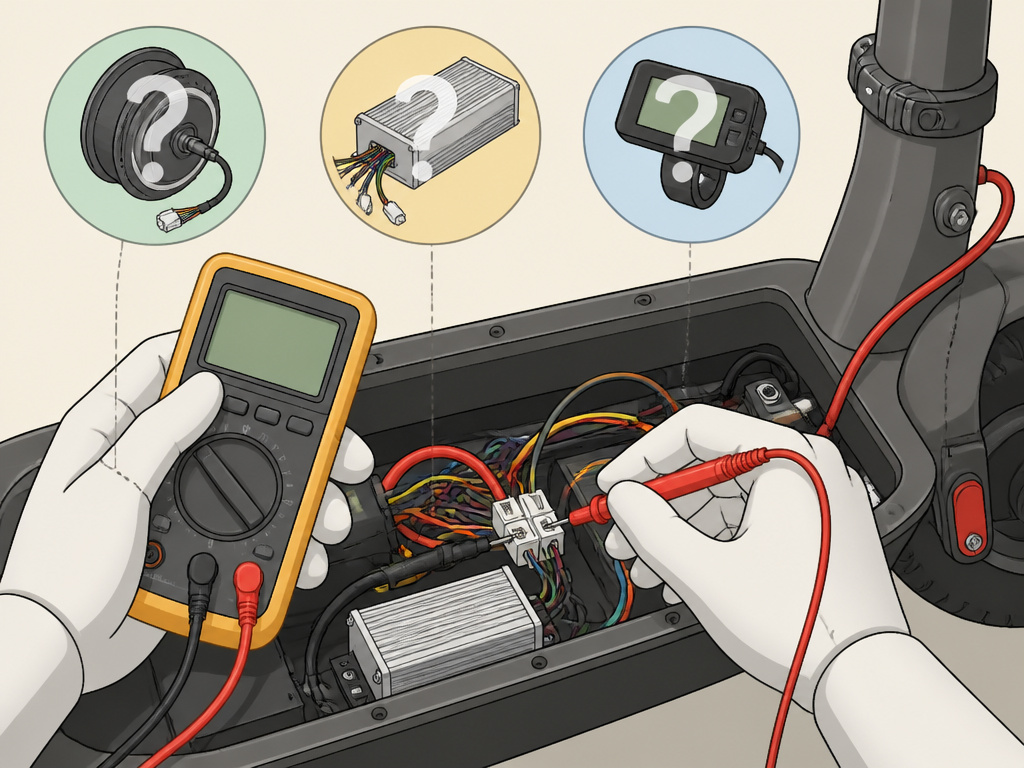
Owners don’t talk about specs after the first week. They talk about repairs. The long-term viability of any budget scooter depends on the availability of replacement parts. For SISIGAD, this is a mixed bag. Common mechanical parts like brake pads, inner tubes for pneumatic tires, and grips are standard sizes you can find anywhere. The proprietary parts, the specific motor, controller, and display, are trickier.
Some owners report finding replacement controllers and displays on Amazon and eBay from verified sellers. Others hit a wall looking for a specific tire size for a model like the Arrow Jr., with customer service offering no help. This is the core risk: the scooter is a system. If one proprietary component fails and you can’t source it, the entire scooter is a paperweight.
SISIGAD’s own FAQ warns about long-term storage issues: battery capacity loss, loose or oxidized circuit connections, tire elasticity loss, and software that may need an update. These are predictable failure modes. They advise storing the scooter in a dry, warm environment and charging it regularly.
Let’s break down the common failures and fixes:
- The scooter won’t turn on. Check the battery connection inside the deck. These can vibrate loose. If the connection is good, the controller or battery management system (BMS) may have failed.
- The motor makes a grinding noise or won’t spin. The motor hall sensors or the controller could be damaged. This is a complex repair often requiring part matching.
- Range has dropped significantly. The battery is aging. Lithium-ion batteries lose capacity over time and with charge cycles. There is no fix, only replacement.
- A tire is flat or worn. For pneumatic tires, replace the inner tube. For solid tires, you must find the exact size. This can be the hardest part to source.
The community fix for many issues is the same: bypass the official channel. For our reviews of other budget scooters like the Hiboy S2 or Jasion JS2, we often see the same pattern, enthusiast forums and third-party marketplaces become the de facto support network. When looking for other scooter reviews to compare, pay close attention to the “repairs” section. It tells you more about longevity than the specs sheet.
Sisigad vs. Other Budget Scooter Brands
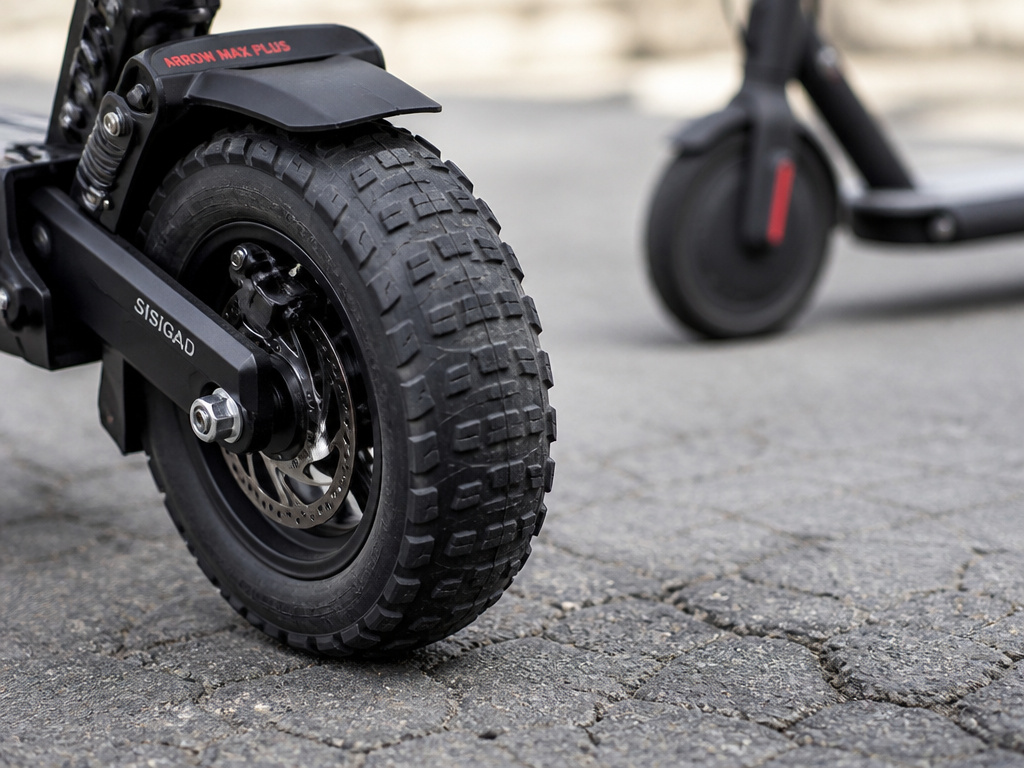
Is Sisigad a good electric scooter? Compared to what? Against established brands like Segway or Ninebot, Sisigad competes on price, not refinement. Against other Amazon-sold brands like Hiboy, Gotrax, or Xiaomi clones, it’s a similar proposition: decent specs, questionable long-term support.
The main differentiator is often the specific model’s features. The Sisigad Arrow Max Plus, with its fat tires and high load capacity, is aimed at a different rider than a Hiboy S2 Pro, which might focus on portability. Your choice should hinge on your essential needs: load capacity, tire type for your terrain, and whether you can stomach being your own mechanic.
Common mistake: Choosing a scooter based solely on top speed or range claims. A scooter with a comfortable ride (good suspension, pneumatic tires) that reliably gets you 10 miles is better than one that claims 20 miles but rattles your fillings loose and breaks in six months.
For heavier riders or those with bumpy commutes, the Sisigad Arrow Max Plus’s design is a legitimate advantage over many skinny-tired competitors. For a lightweight, smooth-pavement commute, a used brand-name scooter might offer better reliability for a similar price. It’s a trade-off. You are buying hardware and hoping the company behind it stays reachable long enough to honor its warranty. Many of our best scooter picks prioritize this balance of performance and proven support.
Frequently Asked Questions
Is Sisigad a good electric scooter?
It can be. For a rider under 200 pounds with a flat, sub-10-mile commute who understands basic maintenance and is comfortable sourcing parts online, a Sisigad scooter represents significant value. For someone needing dependable, long-range daily transportation or who lacks mechanical inclination, the inconsistent support and parts scarcity make it a less reliable choice.
What is the most reliable brand of electric scooter?
Brands like Segway (Ninebot), Xiaomi, and Niu have established track records for reliability and widely available service networks. They cost more upfront. In the budget segment, Hiboy and Gotrax have more extensive review histories and part availability than newer brands like Sisigad, but they still share the “buyer-be-aware” nature of online direct sales.
How long does a Sisigad scooter last?
There is no single answer. Owner reports range from a scooter failing within a month to another logging over 1,300 miles and still running. Lifespan depends on riding conditions, maintenance, and the luck of the draw with electronic components. With proper care and timely repairs, reaching 500-1,000 miles is a reasonable hope, but it’s not a guarantee.
Can you get replacement parts for Sisigad scooters?
Yes, but not always easily from SISIGAD directly. Common wear items (brake pads, tubes) are standard. Proprietary parts (controllers, displays, specific tires) are found on Amazon and eBay via third-party sellers. The difficulty is matching the exact model and version, as SISIGAD does not maintain a public parts store.
Does the warranty cover water damage?
No. SISIGAD’s warranty explicitly becomes void if water damage due to weather is determined. An unspecified SISIGAD model has an IPX4 rating, which is designed for protection against light splashing, not rain rides or puddles. Riding in wet conditions is a risk you assume personally.
The Bottom Line
A Sisigad electric scooter is a tool for a specific job. It’s for the rider who values upfront savings over long-term convenience, who can tighten a bolt and track down a part number online. The specs are real, but they describe a best-case scenario. The warranty exists, but it has fences around it.
Your decision, informed by a thorough Sisigad electric scooter review, comes down to risk tolerance. If your commute is short, flat, and you have a backup plan for the week the scooter is in pieces waiting for a controller from eBay, the value is there. I’ve seen too many riders buy a flashy spec sheet only to be stranded. My rule from the skatepark holds here: check your gear before you check your ego.
For everyone else, especially those relying on the scooter for daily, must-make-it transportation, spending more on a brand with a longer reputation and a clearer path to service is the smarter play. The peace of mind is worth the extra investment. You can explore our Hiboy review or Jasion JS2 review to see how other budget brands handle this balance. A scooter that works every day is cheaper than a cheap scooter that doesn’t.
