What Is a Double Drop Longboard: Uses, Setup, and Limits
This post contains affiliate links. As an Amazon Associate, we earn from qualifying purchases.
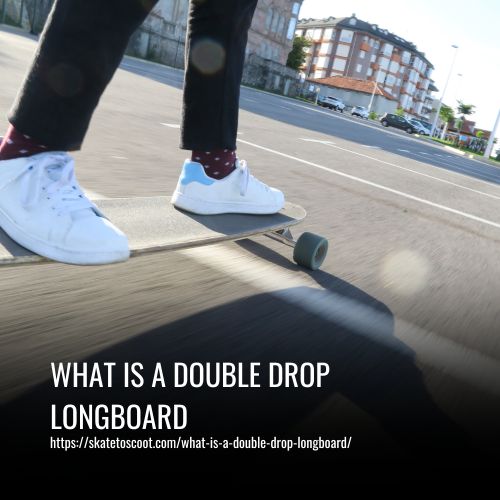
A double drop longboard is a deck that combines two design features: a drop-through truck mount and a dropped standing platform. This double-lowering makes it the most stable and easiest-to-push longboard type, perfect for distance commuting, relaxed cruising, and learning to slide. According to RidingBoards, it is not the best choice for fast downhill racing or aggressive freestyle tricks.
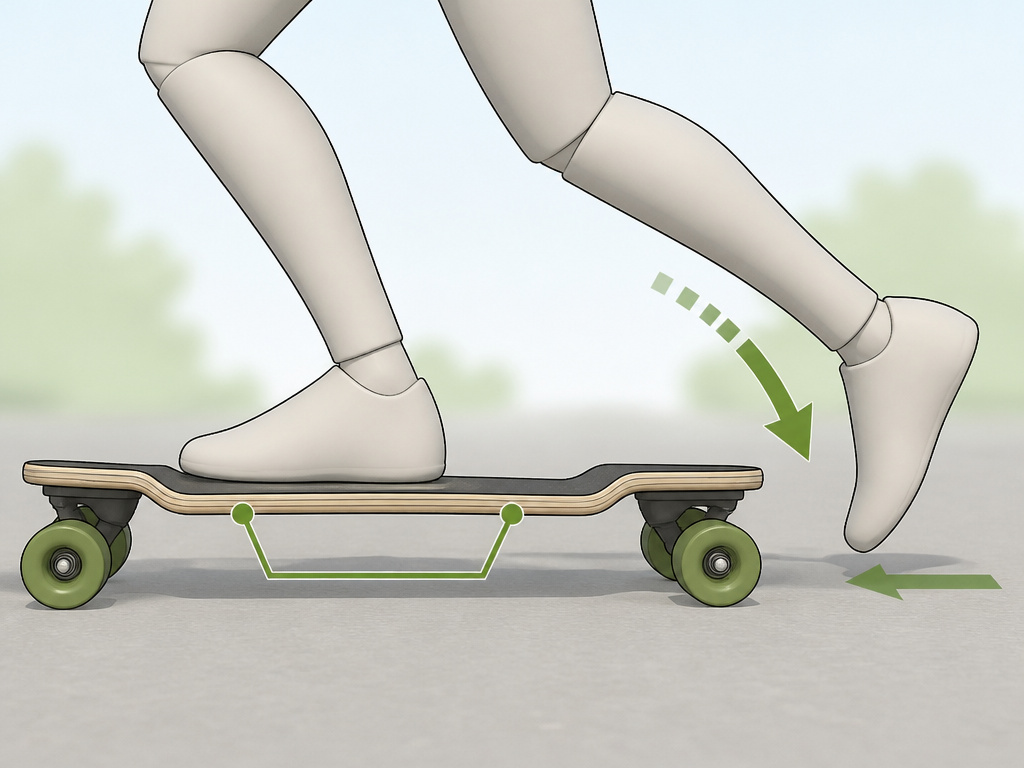
The stability is a measurable outcome of geometry. Your feet sit much closer to the pavement, and your weight presses down between the axles instead of on top of them. That changes everything about how the board moves, accelerates, and slides. This principle is key to understanding what is a double drop longboard.
What follows is a breakdown of how the double drop works, the riding styles it makes possible (and the ones it hinders), and how to set one up so it doesn’t become a pavement-scraping liability. By the end, you’ll know exactly if this is the tool for your skating.
Key Takeaways
- A double drop longboard is defined by its drop-through truck mounting and its dropped deck platform, creating an extremely low ride.
- This design excels at distance pushing and commuting due to minimal leg fatigue, and it’s highly stable for beginners learning to cruise or slide.
- The low center of gravity makes slides easier to initiate but harder to control precisely, and the drop-through mount is structurally weaker than a topmount for high-impact riding.
- Ground clearance is a major limitation; double drops can catch on speed bumps and are not suited for very bumpy roads.
- Proper setup is critical: truck tightness prevents wheel bite, and wheel choice (typically 70mm+) must account for the board’s extreme low profile.
The Double Drop Defined: Two Drops, One Deck
First, a point of clarification. The term “double drop” is a literal description of two distinct drops built into the deck. Miss one, and you’re looking at a different board.
The first drop is the drop-through mounting. The truck’s baseplate sits on top of the deck, and the axle/hanger assembly sticks down through a cutout. This alone lowers the deck compared to a standard topmount. The second is the drop deck (or drop-down platform). Here, the standing area between the trucks is sculpted lower than the truck mounting points. Combine them, and your feet end up remarkably close to the ground.
A double drop longboard deck is a drop-through mounted deck which is also a drop deck. The design results in a very low centre of gravity, with the feet sitting close to the ground on either side and below the trucks.
That’s the textbook definition. On the pavement, it feels like you’re standing on the floor instead of on a table. This isn’t a minor tweak; it’s a fundamental shift in your relationship to the board. You have less direct control over the trucks because your feet are positioned between them, not directly on top. This translates directly to the board’s character: ultra-stable, less twitchy, and far easier to push mile after mile.
Untangling the Terminology: Drop-Through vs. Drop Deck
This is where most guides leave people scratching their heads. A drop-through longboard only has the first feature, trucks mounted through the deck. A drop deck longboard only has the second, a lowered platform, but the trucks might still be top-mounted. The double drop requires both. When you’re looking at boards, check the side profile. If the trucks are mounted on top of the deck and the platform is low, it’s just a drop deck. If the trucks poke through the deck but the platform is flat, it’s just a drop-through. You need to see both.
Who Should (and Shouldn’t) Ride a Double Drop
To understand what is a double drop longboard, know it’s a specialist. It’s the number one choice for serious commuters who cover miles daily, and a fantastic platform for beginners who value stability above all else. According to Longboarder UK, they are also suitable for learning to freeride and slide, while RidingBoards notes they are great for freeride and sliding for less experienced riders. But it’s a terrible choice for anyone whose priority is sharp, aggressive carving or high-speed downhill control.
Best For: The Distance Pusher and Comfort-Seeking Beginner
If your goal is getting from A to B with minimal effort, this is your board. The low platform reduces the effort required for pushing. Your quads and hips will thank you after a long push. That same low stance is why beginners love it. It’s less intimidating, easier to step on and off, and feels incredibly secure at cruising speeds. For learning basic slides, that low center of gravity is a gift, you need less force to break the wheels loose.
Not For: The Downhill Racer or Freestyle Trickster
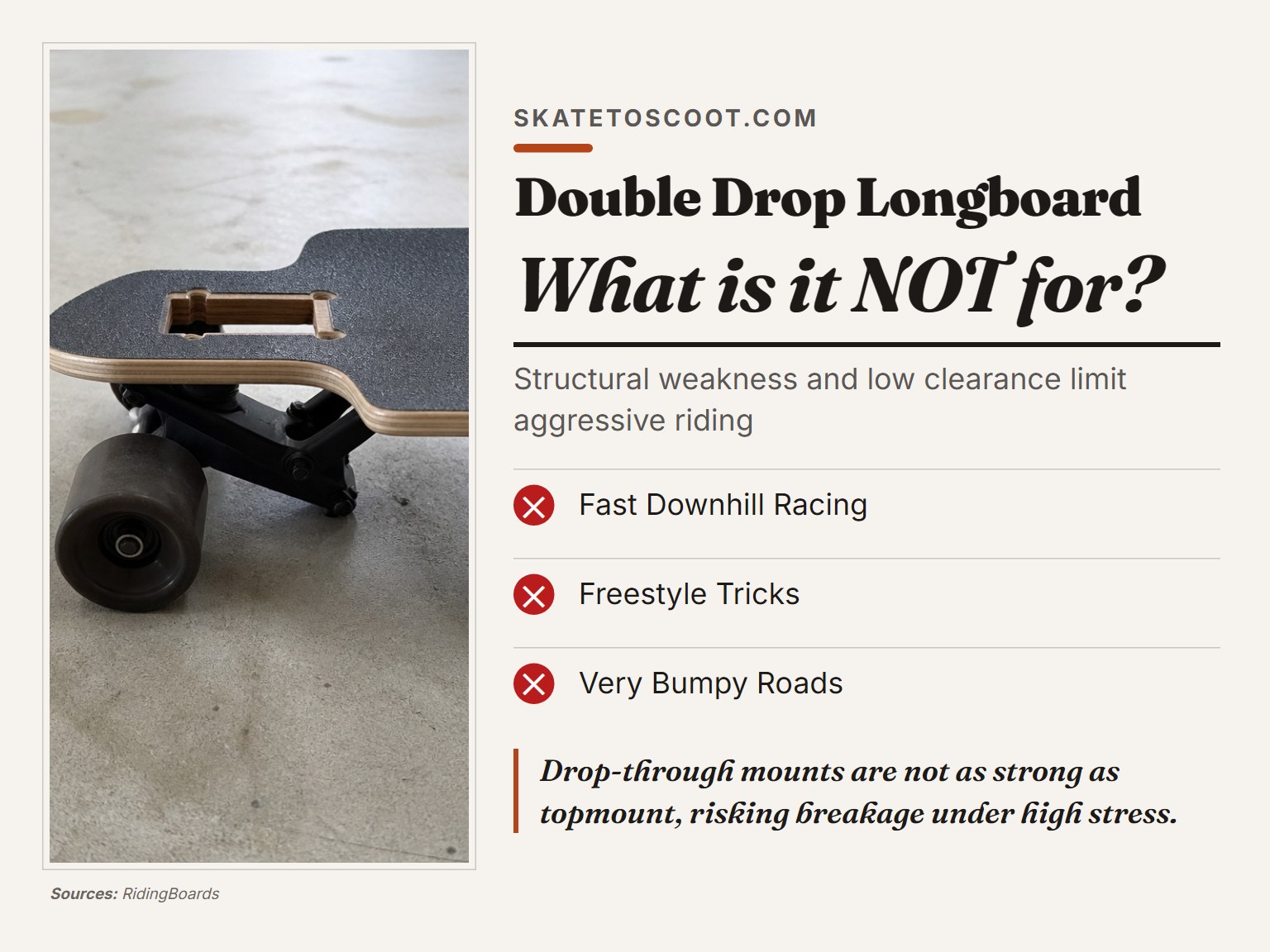
Here’s where sources disagree, and you need to listen to both sides. One source (Longboarder UK) claims the double drop is “the most stable of all Longboards” and remains stable at speed. Another (RidingBoards) is blunt about the mechanics: drop-through mounts are not structurally as strong as topmount. The impact from high-speed turns or landing tricks goes straight into the mount points, not vertically into the hanger. Stiffer drop-through decks are known to be more prone to breaking. So, while a double drop might feel stable in a straight line, it’s not the robust tool you want under you when you’re pushing the limits of grip or impact.
| Riding Style | Suitability for Double Drop | Primary Reason |
|---|---|---|
| Distance Pushing / Commuting | Excellent | Low platform reduces pushing fatigue dramatically. |
| Cruising & Carving | Good | Stable, comfortable, but less responsive than a topmount. |
| Learning to Slide | Good for beginners | Easy initiation, but less slide control for advanced techniques. |
| Fast Downhill Racing | Not Recommended | Structural concerns with drop-through mount at high stress. |
| Freestyle Tricks | Not Recommended | High-impact landings risk deck damage at mount points. |
Where this goes sideways: Using a double drop for commuting on very bumpy roads. They can be so low to the ground they sometimes catch speed bumps – or get scratched by them.
The Trade-Off: Stability vs. Responsiveness
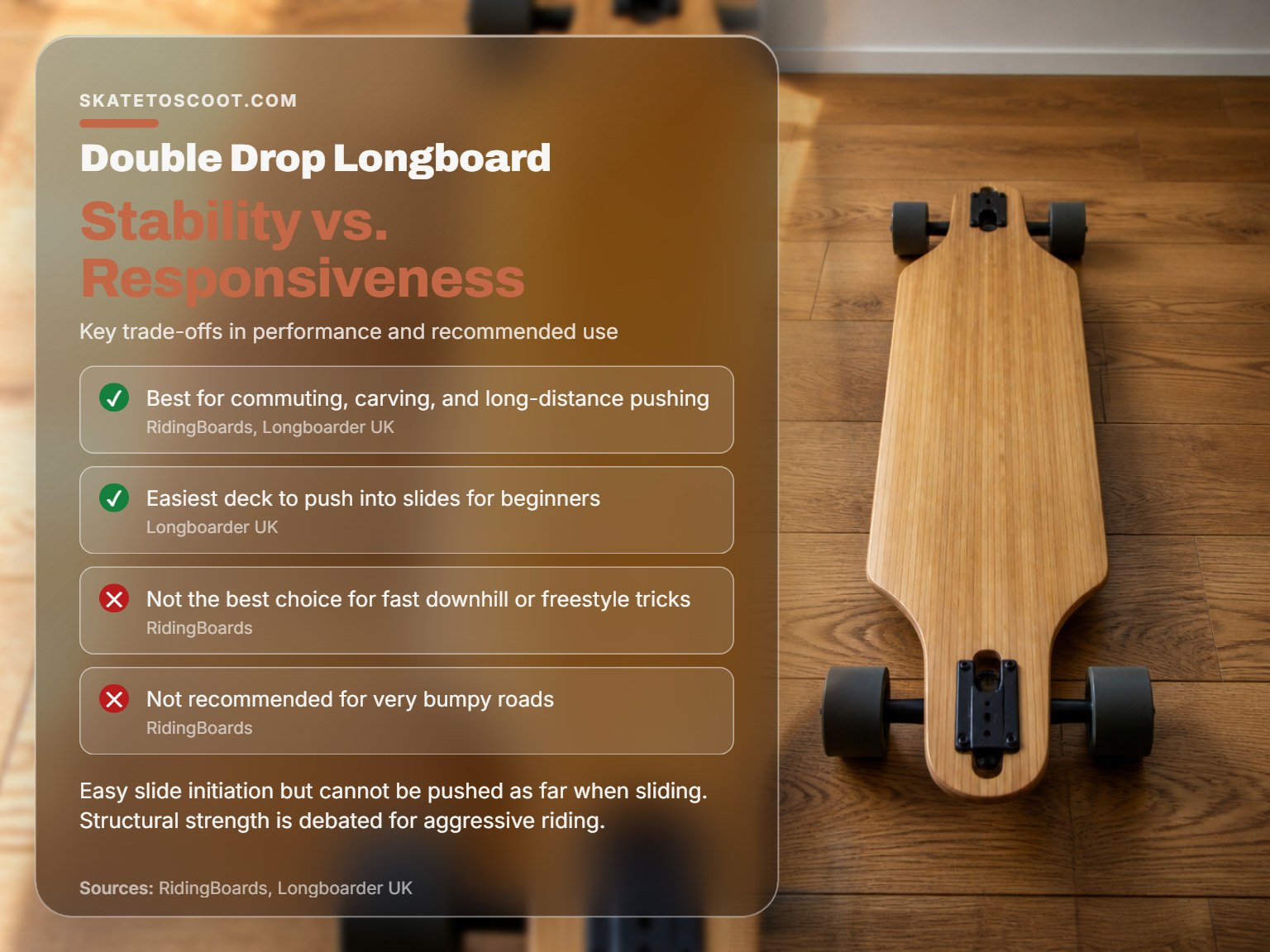
You can’t have the world’s most stable platform and also have the quickest, most responsive turn. The double drop chooses stability, and that choice has concrete effects on how you ride.
Your feet are positioned between the trucks, not on top of them, so you lose that direct control. Turning a double drop feels different due to the foot position between the trucks. This stability is perfect for cruising and carving, but the design is less responsive for quick, tight maneuvers. A topmount board will always feel more connected and agile in those scenarios.
The flip side is slide initiation. That low center of gravity means the board wants to tip over onto its side less. When you push it into a slide, it goes willingly. The trade-off, as noted by Longboarder UK, is that “they can’t… Be pushed as far when sliding.” You get easy starts but less fine control throughout the slide’s length. They are the easiest of decks to push into slides, but they can’t, however, be pushed as far when sliding.
Anatomy of a Double Drop: Specs and Setup
You don’t just buy a double drop; you set it up. And the setup is everything. Get it wrong, and that glorious low ride turns into a constant battle with wheel bite or a deck that feels dead.
Consider two real models to see what’s typical.
TGM Skateboards Double Drop Longboard (Model DECK):
- Deck: 39.75″ long, 9.75″ wide, 30″ wheelbase.
- Trucks: 180mm Downhill Trucks.
- Wheels: 70mm x 51mm, 80a hardness.
- Bearings: Abec 7 Speed Bearings.
- Weight: 8 pounds.
Punked Lowrider Yin Yang Longboard:
- Deck: 40.75″ long, 9.5″ wide, 32.5″ wheelbase. 9-ply Canadian Maple.
- Trucks: 180mm HD7 Heavy Duty Trucks.
- Wheels: 70mm x 52mm, 78A Q-Ball wheels.
- Bearings: Abec 7 Chrome bearings.
Notice the patterns? The wheelbase (distance between trucks) is long, 30 inches or more. The wheels are large, 70mm, which helps maintain speed and roll over cracks, but they’re paired with the board’s extreme low-ness. This is the critical balance.
The Kingpin: Your Tuning Dial
The kingpin is the large bolt in the center of your truck. On a double drop, tuning it is essential.
Tightening the kingpin with a T-tool will make your longboard more rigid. Loosening the kingpin will make it more manoeuvrable. If you loosen the kingpin too much, you may experience wheel bite.
Wheel bite is when your wheel contacts the bottom of the deck during a turn, causing a sudden, jarring stop. On a board this low, it’s a constant threat. You must tighten the kingpin enough to restrict the truck’s turning angle, preventing contact. The Decathlon guide suggests a rule: leave one or two screw threads visible on the kingpin after tightening. This gives you a safe margin. A stiffer ride is the price you pay for not eating pavement.
Wheel and Truck Considerations
Bigger wheels (70mm+) are common on double drops. But bigger wheels also increase the risk of wheel bite. You need to match them with trucks and keep them tightened as described. Softer wheels (like the 78A on the Punked) are often used.
Maintenance and Durability: The Drop-Through Factor
Here’s the part nobody mentions in the glamour shots. The drop-through mount isn’t just a mounting style; it’s a maintenance point. Because the trucks are partially disassembled to install them, basic tasks like changing wheels or cleaning bearings are slightly more involved.
For drop-through trucks, you cannot mount your trucks without disassembling them.
You have to remove the kingpin nut and take the hanger off to get the baseplate off the deck. It’s an extra step, but it’s a different procedure than a topmount, where you just unscrew four bolts. This matters if you like to tinker or swap components frequently.
More importantly, think about deck longevity. The stress on a drop-through mount is different. Forces are applied directly to the cutout edges in the deck. While a 9-ply maple deck like the Punked Lowrider is strong, drop-through boards are known to be more prone to breaking, particularly stiffer decks. This is not a dealbreaker for cruising, but it is a reason to avoid using it as a downhill bomber or for big stair-set jumps. It is best suited for commuting and cruising.
Double Drop vs. Other Longboard Shapes
How does the specialist compare to the generalists? It’s a question of priority.
Double Drop vs. Topmount: This is the classic stability-versus-control debate. The topmount puts you on top of the trucks, giving you more direct control. The double drop sacrifices that direct feel for unparalleled pushing comfort and beginner-friendly stability. For downhill racing and aggressive carving, a topmount is often recommended. For distance pushing and commuting, the double drop excels.
Double Drop vs. Single Drop (Drop Deck or Drop-Through): A single drop deck (just a lowered platform) has top-mounted trucks, while a double drop combines a drop-through mount with a drop deck. A single drop-through (just the through-mount) does not have a dropped standing platform. The double drop is the extreme end of the low-and-stable spectrum.
When to Move On from a Double Drop
You start on a double drop for its stability. You might move off it if you progress to riding styles for which it is not recommended, such as fast downhill racing or freestyle tricks. The double drop is best suited for pushing, commuting, and cruising over longer distances.
Frequently Asked Questions
Are double drop longboards good for beginners?
Yes, they are among the best choices for a true beginner. The extremely low platform makes stepping on and off less intimidating, and the low platform reduces pushing effort. The design offers high stability. Just be mindful of the limited turning responsiveness compared to other boards.
Can you do downhill on a double drop longboard?
You can, but it’s not recommended for serious downhill racing. While the design is very stable in a straight line, the drop-through mounting is structurally weaker than a topmount for handling the high forces of fast, grippy turns. One guide (RidingBoards) explicitly states double drops are “not the best option for downhill racing.”
What is the difference between a drop-through and a double drop?
Drop-through longboard only features trucks mounted through cutouts in the deck. A double drop has that drop-through mounting plus a second feature: a dropped standing platform. The double drop is significantly lower to the ground as a result of combining both design elements.
How do you maintain a drop-through mounted board?
Maintenance requires partially disassembling the trucks for any task involving the baseplate (like deck removal). You must loosen and remove the kingpin nut to detach the hanger from the baseplate. Keep the kingpin tightened to prevent wheel bite, and regularly check the hardware around the deck cutouts for any signs of stress or loosening.
Before You Go
The question of what a double drop longboard is has a clear answer. It is a purpose-built tool that excels at making distance skating comfortable, stable, and accessible. If your vision of skating involves covering ground, exploring bike paths, or a relaxed commute, it’s arguably the most efficient design you can choose.
But view it through that lens. Don’t buy it expecting the razor-sharp handling of a topmount or the bombproof feel of a downhill deck. Its strengths, low effort, high stability, are direct results of its geometric compromises. Your job is to match the tool to the task.
For most new skaters who just want to roll and have fun, the answer is straightforward. Start with a complete double drop like the TGM or Punked models discussed, set the kingpin tight enough to avoid wheel bite, and go explore. That low, solid feel underfoot is the whole point. Everything else is a refinement you can worry about later.
